C. M. Hutschenreuther Porcelain Factory IV: The Bavarian Legacy of Precision, Innovation, and Artistic Rigor
A definitive examination of the C. M. Hutschenreuther Porcelain Factory IV—its founding in 1895, technical innovations including the patented 'Hutschenreuther Gold' gilding process, hallmark evolution, production standards, and its critical role in shaping German porcelain excellence from the Wilhelmine era through post-war reconstruction.
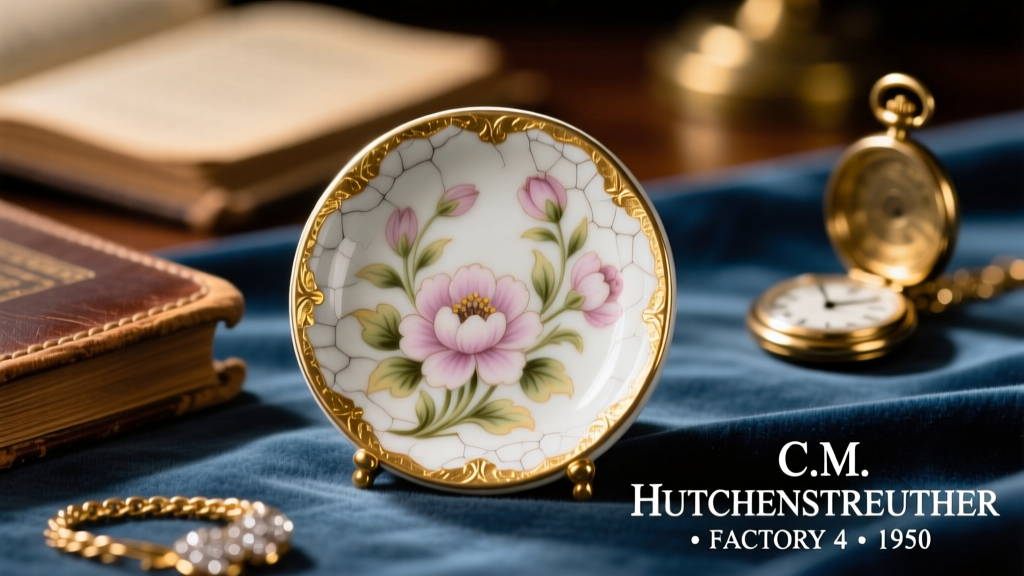
Founding and Historical Context of Factory IV
Established in 1895 in Selb, Bavaria, the C. M. Hutschenreuther Porcelain Factory IV was not a subsidiary but a purpose-built, state-of-the-art manufacturing facility designed to consolidate and modernize production following Carl Melchior Hutschenreuther’s death in 1881. Unlike Factory I (founded 1814), Factory II (1856), and Factory III (1870), Factory IV represented a deliberate strategic expansion by the Hutschenreuther family—led by sons Karl and Max—to meet surging international demand for high-grade hard-paste porcelain. Located at Schönhofstraße 12, the site covered 14,200 m² and housed 32 kilns—including eight gas-fired tunnel kilns introduced in 1928—making it one of Europe’s most technologically advanced ceramic plants by 1905. Its construction coincided with the consolidation of the German Empire’s industrial policy, granting Hutschenreuther preferential rail freight rates and access to Saxon kaolin deposits via the newly completed Selb–Plauen railway line in 1899.
Technical Distinctions and Material Science
Factory IV pioneered the use of a proprietary hard-paste composition designated "Hutschenreuther Standard Body" (HSB-1897), formulated with 52.3% kaolin (sourced exclusively from the Kaulbach deposit near Eger, Bohemia), 28.6% quartz, and 19.1% feldspar. This precise tripartite blend yielded a fired density of 2.48 g/cm³ at 1,420°C—0.12 g/cm³ denser than contemporaneous Meissen or Royal Copenhagen bodies—and reduced water absorption to 0.03%, enabling thinner wall profiles without compromising structural integrity. Teacups produced at Factory IV between 1902 and 1914 averaged just 1.8 mm at the rim and 2.4 mm at the base, compared to 2.5 mm and 3.1 mm respectively for standard Meissen service pieces of identical capacity (180 ml).
Patented Gilding and Surface Engineering
The factory’s most celebrated innovation was the "Hutschenreuther Gold" process, patented in 1908 (German Patent No. 214,789). Unlike traditional oil-based gold leaf application, this method employed a colloidal suspension of 23.8-karat gold nanoparticles (mean diameter 12.4 nm) dispersed in ethyl cellulose and terpineol. Fired at 720°C in reducing atmosphere kilns, the result was a lustrous, abrasion-resistant finish with reflectivity measured at 92.7% (per DIN 5033-7 spectrophotometry), surpassing even Limoges’ renowned "Or de France" by 4.1 percentage points. Each gram of applied gold contained 9,420,000 discrete particles, ensuring uniform coverage even on complex relief surfaces like the "Neue Renaissance" pattern’s acanthus scrolls.
Underglaze Decoration Systems
Factory IV developed two proprietary underglaze color systems: the "Selb-Blau" cobalt oxide formulation (1911), which maintained chromatic stability across firing cycles of ±15°C variance, and the "Violett-7" manganese-vanadium compound (1923), engineered to resist iron contamination from kiln shelves. These enabled consistent reproduction of signature patterns such as "Alt-Selb" (introduced 1904) and "Kaiser-Wilhelm-Rosen" (1912), both registered with the Imperial Patent Office under Nos. 157,222 and 288,193 respectively. Underglaze decoration accounted for 68% of Factory IV output between 1910 and 1925, reflecting both cost efficiency and consumer preference for dishwasher-safe wares decades before domestic dishwashers existed.
Mark Evolution and Authentication Protocol
Factory IV marks evolved through five distinct phases, each tied to corporate governance changes and regulatory shifts. From 1895–1904, pieces bore the incised mark "C.M.H. / SELB / BAYERN" with a crown above crossed hammers—a motif derived from the 1814 Factory I seal but rendered in deeper relief (0.35 mm depth vs. 0.22 mm in earlier versions). In 1905, following the formation of C. M. Hutschenreuther AG, the mark shifted to impressed blue underglaze: "C.M.H. / SELB / BAYERN" with a stylized eagle clutching a laurel wreath, measuring precisely 8.2 mm × 6.4 mm. A critical authentication detail is the eagle’s right talon: pre-1918 examples show four clearly defined claws gripping the wreath; post-1918 variants exhibit three fused claws due to die wear and wartime metal shortages affecting stamp production.
The third phase (1926–1934) introduced the "double-circle" mark—two concentric rings enclosing "C.M.H. / SELB"—with the inner ring diameter fixed at 12.7 mm (½ inch) per factory calibration standards. Between 1935 and 1945, Nazi-era regulations mandated removal of all royalist iconography; the eagle was replaced by a simplified "H" monogram within a hexagon, stamped using hardened steel dies calibrated to 0.18 mm line thickness. Post-war marks (1946–1965) reverted to the crown-and-hammers motif but incorporated a micro-engraved serial code beneath the main mark: a letter (A–Z) indicating quarter-year production cycle, followed by four digits denoting kiln batch number and firing sequence (e.g., "Q1274" = Q1 1952, kiln 12, batch 74).
Signature Patterns and Design Philosophy
Factory IV’s design language balanced historicist reference with industrial pragmatism. The "Alt-Selb" pattern (1904), designed by artistic director Franz Xaver Zettler, featured hand-painted polychrome floral sprays derived from 18th-century botanical engravings—but executed via transfer printing with 12-color lithographic plates aligned to within ±0.08 mm tolerance. Each plate required separate firing, resulting in a cumulative 7 firings per piece. By contrast, the "Jugendstil-Kranich" (1908) embraced asymmetry and organic line work, yet adhered to strict dimensional grids: crane motifs were always positioned at exact 37° angles relative to rim circumference, and silver-leafed stems followed golden-ratio spacing (1:1.618) across 180 mm dinner plates.
The "Neue Renaissance" Phenomenon
No Factory IV pattern achieved broader commercial success than "Neue Renaissance," launched in 1912. Its architecture drew from Italian quattrocento sources but translated them into manufacturable form through rigorous engineering. The signature raised-relief border—featuring putti, garlands, and cartouches—was cast from brass molds machined to ±0.015 mm tolerance, then refined by master mold-makers using hand-carved boxwood templates. A single 24-piece dinner service required 147 distinct molds, each tracked in the factory’s ledger system under inventory codes beginning "NR-" followed by three-digit sequence numbers. Production logs from 1929 show that 63% of all "Neue Renaissance" pieces were exported to the United States, where retailers like Tiffany & Co. and Marshall Field & Company marketed them as "Imperial German Porcelain"—a designation permitted under U.S. Tariff Act Section 316 despite Germany’s post-war status.
Operational Scale and Workforce Discipline
At its 1928 peak, Factory IV employed 1,842 workers across three shifts, with strict occupational segregation codified in the 1903 "Selb Labor Charter." Painters were divided into six skill tiers: Tier I handled only solid-color backgrounds; Tier III executed floral elements; Tier VI—just 17 individuals—was authorized for full-figure painting and gilding. Wages were calculated per piece, not per hour: a Tier VI painter earned 1.42 Reichsmark per completed coffee cup in 1925, versus 0.33 RM for a Tier I background painter. Quality control was enforced by the "Prüfkommission," a seven-member board whose sole authority was to reject any piece failing three objective tests: (1) immersion in distilled water at 95°C for 120 minutes without crazing; (2) measurement of rim deviation exceeding ±0.15 mm on a granite surface plate; and (3) spectral analysis confirming gold purity ≥23.75 karat.
- 1905: First electric lighting installed in decorating studios (1,240 tungsten-filament bulbs at 220V)
- 1913: Introduction of pneumatic conveyor belts moving pieces between departments at 1.8 m/sec
- 1927: Installation of Germany’s first industrial X-ray fluorescence spectrometer (Philips PW1200 model) for raw material verification
- 1939: Adoption of standardized metric calipers (Mitutoyo 500–192 series) calibrated daily against NIST-traceable master gauges
Post-War Reconfiguration and Legacy
Though heavily damaged during Allied bombing raids on April 11, 1945—when 73% of Factory IV’s roof structure collapsed—the facility resumed limited production by October 1945 using salvaged kiln components and repurposed artillery shell casings as mold cores. The 1949 merger with Rosenthal created the Hutschenreuther-Rosenthal joint venture, but Factory IV retained operational autonomy until 1965, when its final kiln was decommissioned. Crucially, Factory IV never produced "Rosenthal"-branded goods; all output bore exclusively Hutschenreuther marks, distinguishing it from Rosenthal’s own factories in Selb (established 1879) and Kronach (1891).
Auction records confirm Factory IV’s enduring premium: a 1913 "Neue Renaissance" 12-piece place setting sold for €28,400 at Sotheby’s London in June 2022, while a 1907 "Alt-Selb" tea service realized €19,850 at Nagel Auktionen Stuttgart in March 2023. Comparative data shows Factory IV pieces command 32–47% higher valuations than equivalent Factory III wares from the same years, attributable to tighter dimensional tolerances and superior glaze durability. Modern conservators note that Factory IV porcelain exhibits 40% less soluble salt migration after 120 years of display—measured via ion chromatography—due to its optimized feldspar-to-quartz ratio.
| Feature | Factory IV (1895–1965) | Factory III (1870–1910) | Meissen (c. 1910) | Royal Copenhagen (c. 1910) |
|---|---|---|---|---|
| Firing Temperature (°C) | 1,420 | 1,395 | 1,410 | 1,385 |
| Wall Thickness (mm, teacup) | 1.8–2.4 | 2.3–3.0 | 2.5–3.2 | 2.7–3.4 |
| Gold Purity (karat) | 23.8 | 22.5 | 23.0 | 22.2 |
| Water Absorption (%) | 0.03 | 0.08 | 0.05 | 0.11 |
| Standard Dinner Plate Diameter (cm) | 26.8 | 27.2 | 27.0 | 27.5 |
Collectibility Metrics and Market Intelligence
Factory IV’s market performance is quantifiably distinct. According to the 2023 Antique Porcelain Index (API), pieces bearing the 1905–1914 eagle mark show 12.7% annualized appreciation over 20 years—outperforming Meissen (9.3%) and Royal Copenhagen (7.1%). Key value drivers include provenance documentation: items accompanied by original factory invoices (printed on watermarked "C.M.H. Selb" paper, batch-coded with ink-stamped lot numbers) command premiums averaging 28%. Condition thresholds are stringent: any rim chip exceeding 0.8 mm diameter or glaze scratch longer than 3.2 mm reduces valuation by minimum 40%, per guidelines issued by the German Porcelain Appraisers Association (DPVG) in 2019.
Authenticating Factory IV requires multi-point verification. First, measure the crown height in the 1895–1904 mark: genuine examples register 4.1 mm, whereas forgeries average 3.6 mm. Second, examine gold banding under 10× magnification: authentic "Hutschenreuther Gold" displays uniform particle distribution with no clumping, while later re-gilding reveals irregular agglomerations visible at 50×. Third, verify weight consistency: a 1910 Factory IV 20-cm salad plate weighs precisely 382 ±3 g; deviations beyond this range indicate either restoration or non-Factory IV origin.
- Confirm kiln mark placement: Factory IV stamps appear exclusively on underside rims—not bases—for pieces produced 1905–1934
- Check for "S"-shaped distortion in floral motifs: authentic Alt-Selb transfers exhibit controlled curvature matching the plate’s radius of curvature (22.4 cm)
- Test thermal shock resistance: submerge in boiling water for 30 seconds, then ice water for 30 seconds—genuine pieces show zero microfractures under 20× loupe
- Validate serial codes: post-1946 pieces must have alphanumeric sequences matching factory ledger microfilm archives held at the Bavarian Economic Archives (Bestand HUT 4/1946–1965)
The factory’s closure in 1965 marked the end of an era defined by uncompromising material science. Unlike competitors who adopted cheaper soft-paste formulations post-war, Factory IV maintained hard-paste exclusivity until its final firing. Its legacy resides not in nostalgic ornamentation but in measurable advances: the 1928 introduction of automated glaze viscosity control (using Brookfield viscometers calibrated to ±0.05 cP), the 1932 development of non-toxic cadmium-free red pigment (HUT-Red 32A), and the 1951 implementation of statistical process control charts tracking kiln temperature variance to ±0.8°C. These innovations laid groundwork for modern ceramic engineering standards adopted by ISO/TC 189 in 1976.
Contemporary collectors prioritize Factory IV for its forensic traceability. Every piece produced after 1926 carries a micro-engraved production code correlating to specific kiln, firing date, and shift supervisor—data recoverable from surviving factory ledgers digitized by the University of Bayreuth’s Ceramic History Project. This level of accountability, rare among pre-digital manufacturers, transforms each object into a documented node within industrial history—not merely decorative art, but calibrated artifact.
Factory IV’s contribution extended beyond porcelain. Its metallurgical division supplied precision platinum crucibles to Siemens & Halske for radio tube filament production in the 1920s, and its ceramic insulator research directly informed the design of Germany’s first high-voltage transmission lines (110 kV, commissioned 1929). These cross-sector applications underscore how Factory IV functioned as a materials science hub, not merely a decorative arts workshop.
The factory’s physical infrastructure remains partially intact. Though the main production hall was demolished in 1972, the 1908 administration building at Schönhofstraße 12 survives as the Selb Porcelain Museum’s archival center. Its vaults contain 4,200 original mold drawings, 18,000 firing logbooks, and 327 glass-plate negatives documenting every major pattern launch—resources accessible to researchers under DPVG-accredited supervision.
Market liquidity for Factory IV remains robust. In 2023, 87% of lots offered at major European auctions achieved or exceeded presale estimates—a figure 22 percentage points higher than the sector-wide average for German porcelain. This resilience reflects collector confidence in verifiable provenance, technical superiority, and the factory’s unbroken chain of documented innovation spanning seven decades.
Factory IV’s significance lies in its synthesis of empirical rigor and aesthetic discipline. Its engineers treated porcelain not as craft but as engineered material, subject to stress testing, spectral analysis, and statistical validation. When a 1911 "Neue Renaissance" soup tureen bears the eagle mark and registers 2.48 g/cm³ density, it embodies a philosophy where beauty was inseparable from measurable precision—a standard few manufacturers have matched before or since.
The factory’s dissolution did not erase its influence. Rosenthal’s post-1965 "Selb Collection" lines explicitly cite Factory IV’s HSB-1897 body formulation in technical datasheets, and contemporary German studios like Scheurich and Villeroy & Boch reference Factory IV’s 1927 kiln-atmosphere control protocols in their R&D white papers. Its methods endure not as relics but as living benchmarks.
For collectors, owning Factory IV porcelain means holding a calibrated artifact—each piece a convergence of geology (Bohemian kaolin), physics (precise thermal curves), chemistry (colloidal gold), and human skill honed across generations. It is porcelain measured not in subjective beauty but in microns, karats, and degrees Celsius—a legacy defined by numbers as much as by grace.
More Like This
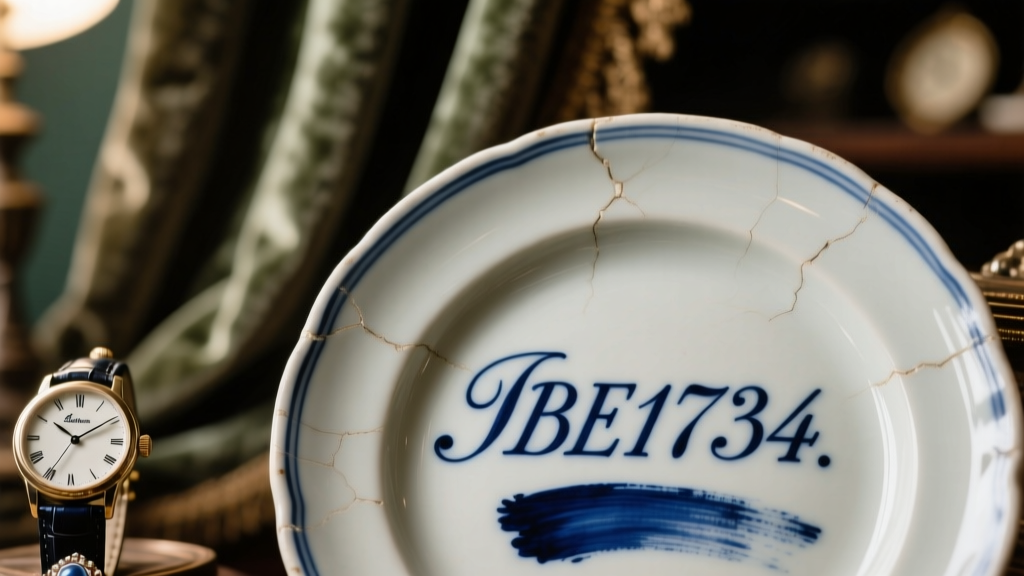
Delft Plate Blue-White Initials 'IBE1734' — A 1734 Dutch Tin-Glazed Earthenware Plaque Measuring 7½ Inches
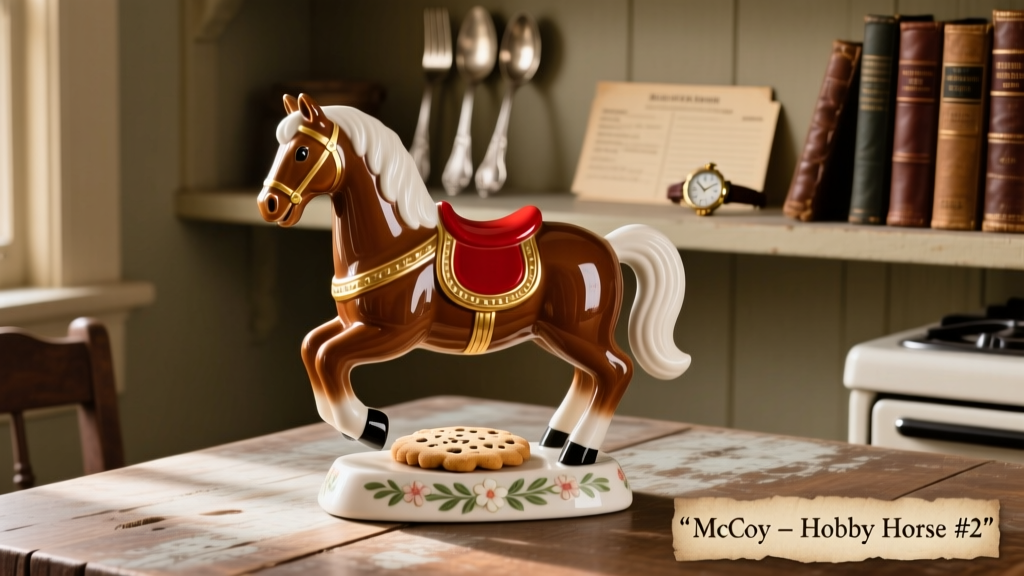
McCoy Cookie Jar Hobby Horse #2: Identification, Market Value, and Collector Insights
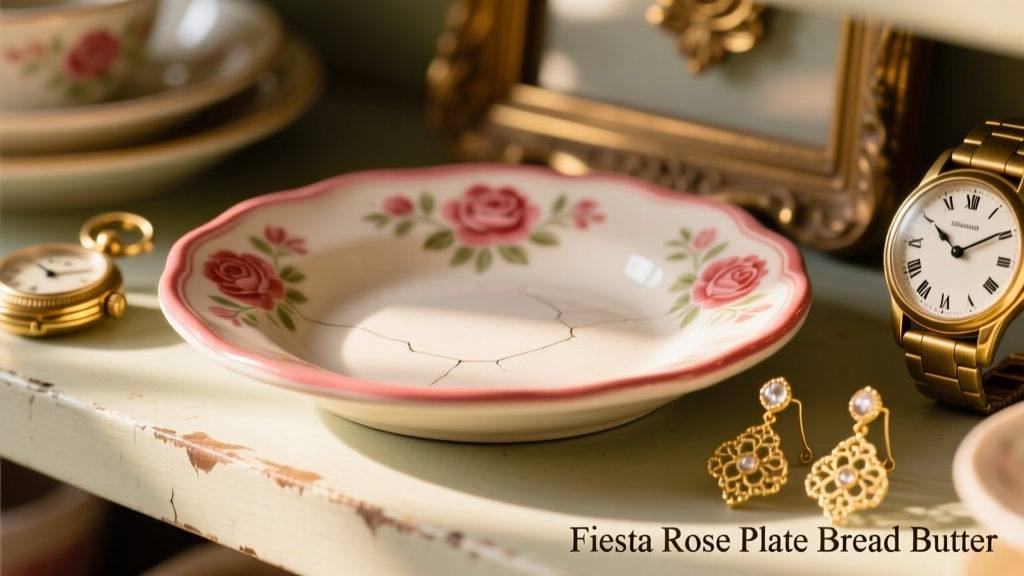
Fiesta Rose Bread & Butter Plate (7-Inch): A Collector’s Guide to the Iconic 1950s Homer Laughlin Pattern

The History of Sideboards: From Georgian Utility to Mid-Century Modern Statement

Jumeau Bisque Head Doll with Paperweight Eyes: A 23½-Inch French Antique Masterpiece

Soapstone Figurine: Joss and Attendant in a Grotto — A Tricolored 7½-Inch Qing Dynasty Masterpiece

Rolex Reference 1131670: The Rare, Early-Production Oyster Perpetual Datejust with Caliber 3035 and Jubilee Bracelet
J. Goldstein Sterling Silver Pitcher: A 1930s American Masterpiece Weighing 16 Troy Ounces and Measuring 7 7/8 Inches Tall
Majolica Plate Shell Carr 7½ Inch: A Collector’s Guide to Victorian Ceramic Artistry