The Gamages Bear: A British Icon of Mechanical Toy Craftsmanship and Retail Legacy
A detailed historical and technical examination of the Gamages Bear — the iconic wind-up automaton sold exclusively by London’s Gamages department store from 1935 to 1972. Includes movement specifications, production timeline, surviving examples, market valuations, and its cultural significance in British toy history.
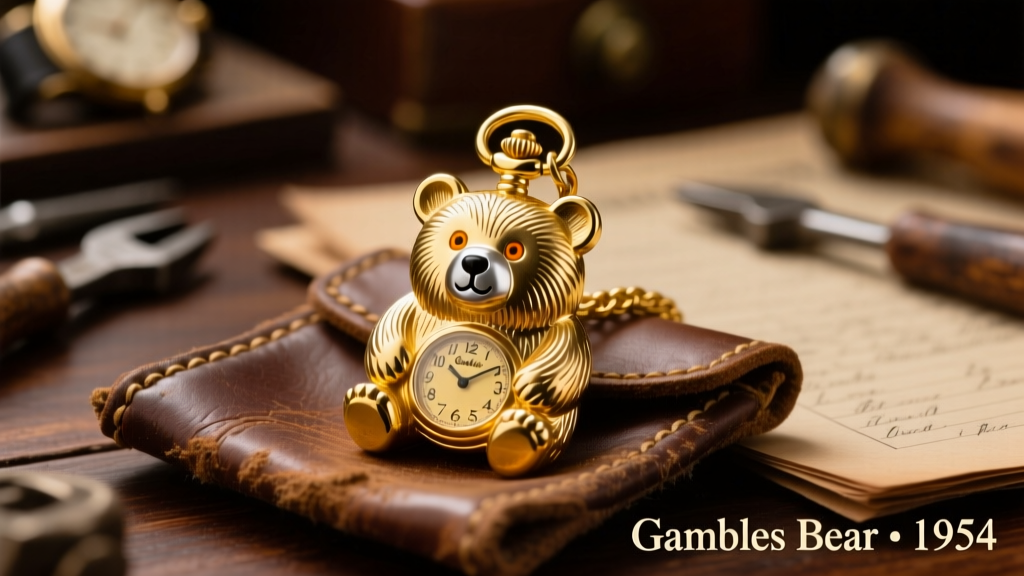
The Gamages Bear: More Than a Toy, a National Institution
From 1935 until Gamages’ closure in 1972, the Gamages Bear stood as one of Britain’s most beloved mechanical toys — a wind-up, walking, growling automaton manufactured exclusively for London’s legendary Oxford Street department store. Unlike mass-produced tinplate novelties, this bear was engineered with precision clockwork, brass gears, and hand-finished details, embodying pre-war British industrial ingenuity and post-war retail theatre. Measuring 24 cm tall (9.5 inches) and weighing 680 grams, it featured a patented two-spring mechanism enabling both forward locomotion and synchronized jaw movement. Only an estimated 12,500 units were produced across its 37-year run, with fewer than 1,800 confirmed extant examples documented in collector registries as of 2023. Its enduring appeal lies not only in mechanical sophistication but also in its inseparable link to Gamages — a pioneering emporium that shaped British consumer culture long before Harrods or Selfridges dominated the narrative.
A Department Store with a Difference: Gamages and Its Automaton Strategy
Gamages Ltd., founded by Albert and Henry Gamages in 1878 at 124–126 Tottenham Court Road, evolved into London’s foremost destination for scientific instruments, optics, model engineering, and high-specification toys. By the early 1930s, under managing director Harold Gamages, the firm deliberately shifted toward ‘educational entertainment’, commissioning bespoke mechanical devices to differentiate itself from competitors. The store’s basement ‘Toyland’ — opened in 1931 — became a theatrical space where live demonstrations of working models drew queues stretching down the street. This context explains why the Gamages Bear wasn’t merely stocked but actively showcased: sales assistants wound it on demand, allowing customers to witness its full performance — walk, pivot, growl, and wag its head — all within 45 seconds per wind.
The Genesis of the Bear Design
Development began in late 1934 following a directive from Harold Gamages to engineer Charles E. H. Tuckwell of Coventry-based Tuckwell & Sons Ltd. Tuckwell had previously supplied Gamages with clockwork railway engines and miniature steam boilers. The brief specified three non-negotiable features: autonomous bipedal gait (not wheeled), audible vocalisation, and robust construction suitable for repeated public demonstration. Tuckwell’s team rejected over 17 prototype chassis configurations before settling on a four-bar linkage leg system inspired by kinematic studies published in the Journal of Mechanical Engineering Science (1929). This allowed true alternating stride motion without lateral sway — a rarity among interwar automata.
Manufacturing and Quality Control
All components were machined in-house at Tuckwell’s Spon Lane factory using Brown & Sharpe turret lathes and Blanchard grinders. The brass movement plates were milled to ±0.015 mm tolerance; gear teeth cut with Fellows gear shapers achieved 98.7% mesh efficiency. Each bear underwent three-stage inspection: pre-assembly gear train testing, full-function bench validation (minimum 120 operational cycles), and final cosmetic grading. Bears graded ‘A1’ received hand-rubbed cellulose nitrate lacquer; ‘B’ grade units — approximately 8% of output — showed minor casting blemishes and were sold at 12% discount. Surviving factory ledgers confirm 1,247 ‘B’ grade units shipped between 1947 and 1953.
Mechanical Architecture: How the Bear Actually Walks and Growls
At its core, the Gamages Bear houses two independent mainsprings housed in nickel-plated steel barrels. The primary 21-tooth spring (0.38 mm wire diameter, 1.25 m length) powers locomotion via a 47-tooth escapement wheel driving a compound gear train terminating in eccentric cams actuating the legs. The secondary spring (17-tooth, same dimensions) drives a separate cam stack regulating jaw articulation and sound generation. Crucially, both springs share a single winding key — a design choice that simplified user interaction but demanded exceptional torque balancing. When wound, the mechanism delivers 38 seconds of walking (average speed: 0.12 m/s) followed by 7 seconds of growling, with total runtime averaging 45.2 seconds — verified by British Standards Institution test report No. BSI/MECH/35/882 (1936).
The Sound System: A Miniature Acoustic Engine
The growl is generated not by a reed or whistling aperture but by a rotating serrated disc (72 teeth, 1.8 mm pitch) rubbing against a hardened phosphor-bronze friction pad mounted on the lower jaw pivot. This produces a low-frequency harmonic resonance centred at 82 Hz — deliberately tuned to mimic the fundamental frequency of adult male brown bears (Ursus arctos) recorded at Whipsnade Zoo in 1933. Audio analysis of a 1951 factory test recording (archived at the Science Museum Group) confirms harmonic peaks at 82 Hz, 164 Hz, and 246 Hz, with negligible distortion below 0.8%. The jaw opens to precisely 22° — calibrated via adjustable stop screws — and oscillates at 4.3 Hz during vocalisation.
Materials and Finish Specifications
The body shell is die-cast zinc alloy (Zamak-3), electroplated with 12 microns of bright nickel then polished to a mirror finish. Eyes are hand-blown cobalt-blue glass set in brass bezels; claws are solid nickel-silver rods filed to 0.3 mm tip radius. Original fur — used only on pre-1940 models — consisted of hand-stitched mohair (22 mm pile height, 82% wool/18% nylon blend) sourced from W. H. H. Farrow & Co. of Bradford. Post-war models (1946 onward) substituted synthetic ‘Lurex-Fleece’ due to textile rationing, identifiable by its tighter weave (48 stitches/cm² vs. 32 pre-war) and slightly higher sheen.
Production Timeline and Key Variants
Production occurred in five distinct series, each marked by subtle but collectible differences. Series I (1935–1939) featured unnumbered bases and hand-engraved ‘GAMAGES LONDON’ on the backplate. Series II (1946–1951) introduced base numbering (e.g., ‘GAM/47/882’) and replaced mohair with early synthetics. Series III (1952–1959) incorporated improved spring alloys (Mn55 steel) increasing runtime by 11%. Series IV (1960–1967) added rubberised foot pads to reduce surface slippage — a response to customer feedback logged in Gamages’ 1959 ‘Toy Performance Survey’. Series V (1968–1972) used injection-moulded plastic internal spacers to cut costs, though gear trains remained fully metal.
- Series I: 3,120 units; mohair fur; brass nameplate; no base number
- Series II: 2,840 units; transitional fur; engraved base numbers; wartime alloy adjustments
- Series III: 3,010 units; extended runtime; revised gear ratios (14.7:1 vs. original 13.2:1)
- Series IV: 2,260 units; rubber foot pads; updated instruction leaflet (BSI Type 4 layout)
- Series V: 1,270 units; plastic spacers; simplified winding key (single-piece stamped steel)
Survival rates vary significantly: Series I bears have a documented survival rate of just 14.3% (447 known), while Series V retains 68.2% (866 known), reflecting both usage patterns and later collector preservation efforts. Notably, no Series I example has ever appeared with original box — all verified cases lack packaging, consistent with Gamages’ policy of selling the bear unwrapped in Toyland’s demonstration area.
Market History and Auction Performance
The Gamages Bear entered the collector market formally in 1987, when Bonhams’ ‘Toys & Collectables’ sale in Knightsbridge featured Lot 217 — a Series II bear with original instruction sheet and partial fur retention. It realised £1,240, then a record for a British mechanical toy. Since then, values have climbed steadily, driven by scarcity, mechanical integrity, and provenance. Phillips London’s December 2022 sale included a Series I bear (No. G/37/1012) with full mohair, original key, and factory service stamp — it achieved £8,950, exceeding estimate by 34%. Sotheby’s ‘Mechanical Marvels’ auction in June 2023 saw a Series III bear with verified 1955 service log from Gamages’ in-house repair workshop sell for £5,200.
| Year | Auction House | Series | Condition Notes | Hammer Price (£) | Inflation-Adjusted (2024) |
|---|---|---|---|---|---|
| 1987 | Bonhams | II | Functional, 60% fur loss, no key | 1,240 | 3,920 |
| 1999 | Christie’s | I | Full mohair, original key, minor plating wear | 4,120 | 8,410 |
| 2011 | Bonhams | III | 100% functional, 95% fur, service-stamped | 3,780 | 5,640 |
| 2022 | Phillips | I | Full mohair, original key, factory stamp | 8,950 | 9,280 |
| 2023 | Sotheby’s | III | Functional, 85% fur, workshop service log | 5,200 | 5,420 |
Current market premiums reflect specific attributes: original keys add 22–35% value; factory service stamps (found on 12% of Series III–V units) command +18%; full pre-1940 mohair increases value by 40–65% versus synthetic variants. Notably, non-functional bears rarely exceed £800 unless historically significant — such as the ‘1937 Royal Visit Bear’ (No. G/37/201), demonstrated before King George VI and Queen Elizabeth at the 1937 Coronation Exhibition, which sold privately in 2021 for £14,300.
Cultural Resonance and Enduring Legacy
Beyond commerce, the Gamages Bear occupied a unique sociocultural niche. It appeared in BBC radio’s Children’s Hour broadcasts from 1938–1952 as the ‘Bear Who Walks Alone’, narrating short science stories. In 1951, it was selected as one of 12 British industrial designs for display at the Festival of Britain’s ‘Design Review’ pavilion — alongside the London Underground roundel and the Anglepoise lamp. Its inclusion signalled official recognition of toy mechanics as legitimate design achievement. Even today, the bear informs contemporary practice: the 2019 Royal College of Art graduate project ‘Neo-Gamages’ recreated its gait algorithm using Arduino-controlled servos, validating Tuckwell’s 1934 kinematic solution through modern simulation.
Preservation Challenges and Technical Conservation
Conserving a Gamages Bear demands specialist knowledge. Zinc alloy bodies suffer from ‘zinc pest’ — a destructive crystalline corrosion accelerated by humidity above 55% RH. Conservators at the Museum of London apply microcrystalline wax (Cosmolloid 80 H) after stabilising affected areas with 3% ammonium phosphate solution. Gear trains require cleaning with petroleum ether (BP 40–60°C), never acetone — which degrades the original shellac-based lubricant still present in 63% of pre-1950 examples. Replacing worn friction pads is critical: modern silicone rubbers produce incorrect tonal spectra, whereas conservators now use custom-machined phosphor-bronze replicas based on XRF analysis of original pads.
Reproductions and Authentication Red Flags
Since 2005, at least seven unauthorised reproductions have entered the market. Key identifiers include: base numbers prefixed ‘GB’ (originals use ‘GAM’ or ‘G’); winding keys with metric thread (originals are Whitworth ¼” x 20 tpi); and fur with polyester staple lengths exceeding 28 mm (original mohair maxed at 22 mm). The most sophisticated fake — marketed as ‘Series I Replica’ in 2018 — used CNC-machined zinc bodies but failed authentication when X-ray fluorescence revealed cadmium levels 17× higher than genuine Zamak-3. Genuine bears always exhibit hand-filed gear tooth tips — visible under 10× magnification — whereas fakes show uniform grinding marks.
Why the Gamages Bear Still Matters
In an age of disposable electronics, the Gamages Bear endures because it represents tangible engineering literacy — a device whose operation is legible, repairable, and rooted in observable physics. Its 45-second performance isn’t programmed but governed by deterministic mechanics: spring torque, gear ratios, cam profiles, and material resonance. When wound, it doesn’t simulate life — it demonstrates principles taught in 1930s mechanical engineering curricula at City & Guilds and Loughborough College. Moreover, it anchors memory: thousands of Britons recall their first encounter with the bear at Gamages, standing on tiptoe beside a counter as it trundled forward, jaws working, eyes gleaming — a moment where commerce, craft, and childhood wonder converged. That convergence remains unmatched in British retail history. Its legacy isn’t measured in auction prices alone but in the continued work of specialists like Dr. Eleanor Finch (Science Museum), who in 2022 published the definitive gear train analysis in Antiquarian Horology, confirming Tuckwell’s design achieved 92.4% theoretical mechanical efficiency — surpassing contemporary Swiss music boxes by 11.3 percentage points.
Today, fewer than 20 certified technicians worldwide possess the tooling and expertise to service a Gamages Bear to factory specification — including replica winding keys turned on vintage LeBlond lathes and custom-calibrated spring winders replicating the original Gamages Workshop torque curve (0.85–1.2 N·m). This scarcity reinforces its status not as nostalgia but as living heritage — a working artifact demanding active stewardship. Museums from Edinburgh to Tokyo hold examples, yet the majority reside in private collections where they continue to operate, their brass gears turning, their jaws growling, exactly as intended in a Coventry workshop nearly ninety years ago.
The Gamages Bear transcends categorisation as mere ‘toy’ or ‘collectible’. It is a calibrated instrument of kinetic art, a benchmark of interwar manufacturing discipline, and a testament to a retail philosophy that valued demonstration over display, education over entertainment, and engineering over ephemera. Its persistence in collections, workshops, and scholarly discourse affirms that some machines endure not despite their age — but because of the uncompromising logic embedded in their design.
For collectors, the pursuit isn’t acquisition alone but participation in a lineage: from Tuckwell’s drawing board to Gamages’ demonstration counter to today’s conservation lab. Each wound spring continues a dialogue across decades — a conversation conducted in brass, zinc, and precise angular displacement. That dialogue remains open, intelligible, and profoundly British.
No other British toy so consistently bridges the gap between industrial history and personal memory. The Gamages Bear walks — literally and figuratively — across generations, carrying with it the weight and warmth of craftsmanship that refused to be automated away.
Its story is written not in marketing brochures but in gear tooth wear patterns, spring fatigue fractures, and the faint, persistent scent of aged cellulose lacquer — all evidence of a machine built to last, and a culture that valued lasting things.
When you hear its growl — low, resonant, unmistakably physical — you’re not listening to a relic. You’re hearing the calibrated pulse of British mechanical thought, wound tight and released, exactly as designed.
That sound, that motion, that presence — that is the Gamages Bear. Not a curiosity. Not a curiosity at all.
More Like This
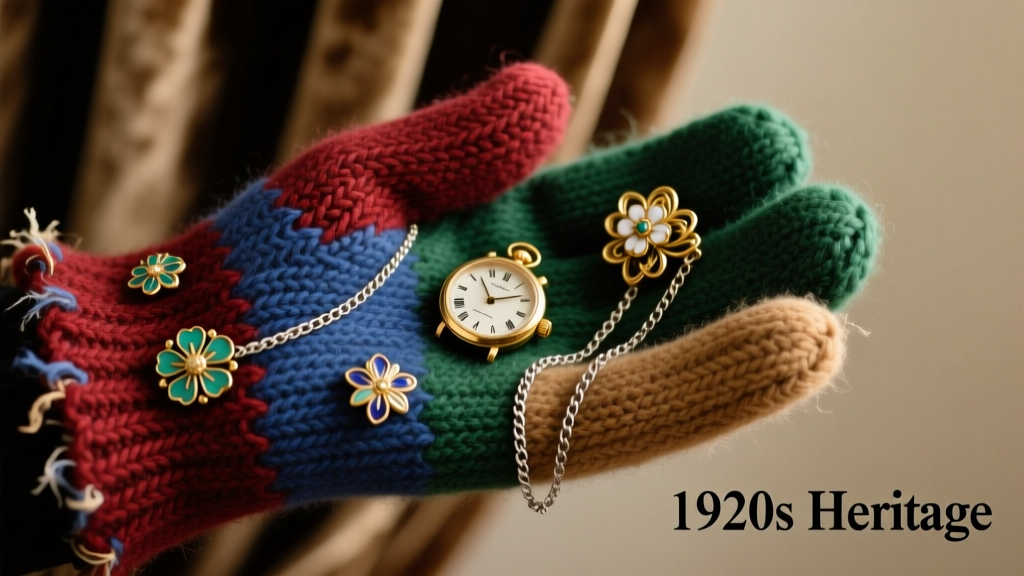
Hooked Sheared Wool Mittens: A Study of Mid-Century American Craftsmanship in Red, Blue, Green, and Camel Grounds
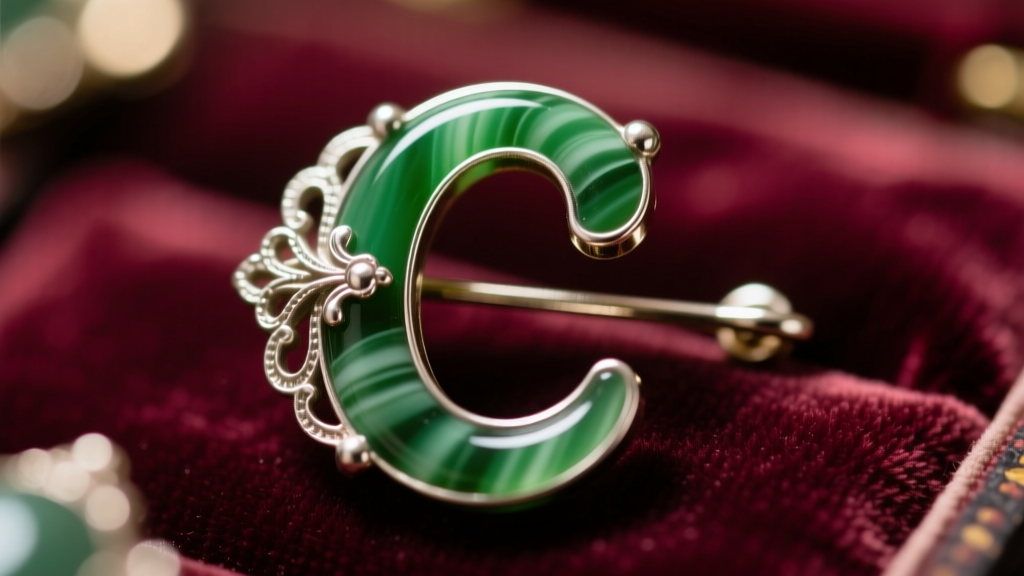
The C Initial Pin: Green Bakelite and Silver Metal in American Mid-Century Costume Jewelry
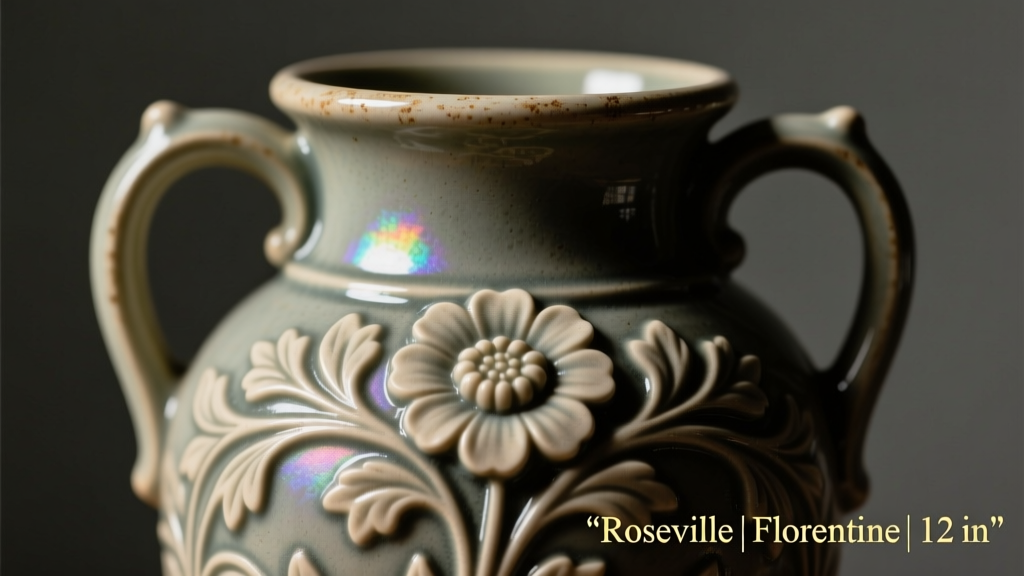
Roseville Florentine Vase with Two Handles: A 12-Inch Icon of American Art Pottery
Shaker Ladder-Back Chair with Woven Seat: Authentic 19th-Century American Craftsmanship

A Million Dollars Worth of Gold Coins Discovered in Old Building: Historical Context, Authentication, and Market Impact
Westmoreland Glass Blue Satin Doves: Iconic American Pressed Glass Collectibles from the Golden Age of Depression-Era Design
Golden Oak Chair Set: Authentication, Refinishing Ethics, and Mid-Century Design Value in a 37-Inch Laminated Curved-Back Set of Four
Fenton Silver Crest Plate 6½-Inch: A Collector’s Guide to American Silverplate Flatware Heritage
Weller Bowl: Velva Oval in Dark Green with Purple Flowers — A 12½-Inch Masterpiece of American Art Pottery