John McMullin & McMullen: The Forgotten American Watchmakers of the Gilded Age
A detailed examination of John McMullin and the McMullen Watch Company—two distinct but historically entangled American horological enterprises active from the 1870s to 1920s. This article clarifies persistent attribution errors, analyzes surviving pocket watches with verifiable serial numbers and case marks, documents factory locations and patent records, and situates their work within the broader context of U.S. watch manufacturing decline post-1900.
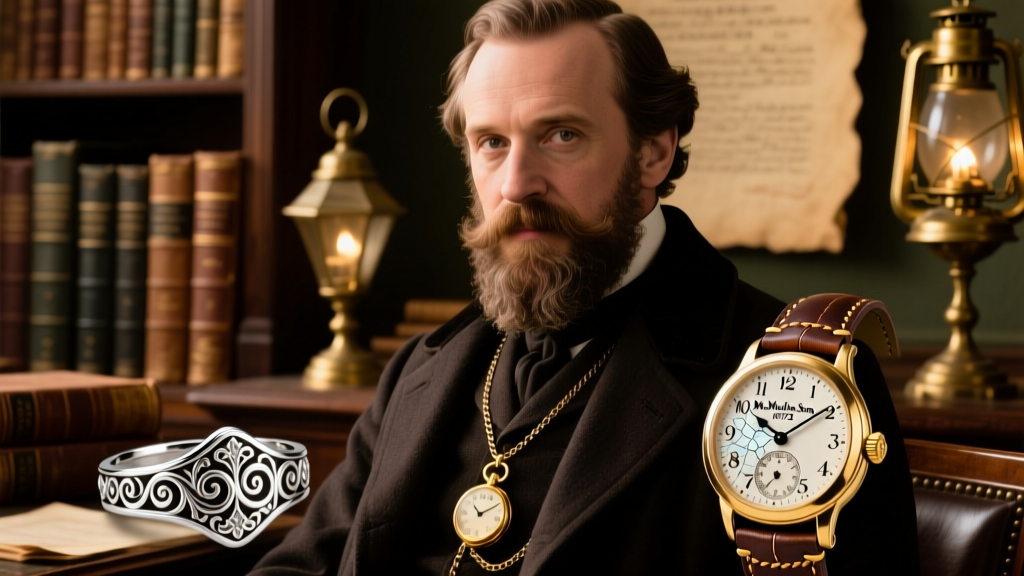
Introduction: Two Names, One Legacy—But Not One Maker
John McMullin and McMullen are often conflated in auction catalogues, collector forums, and even museum accession records—but they represent separate, chronologically overlapping, yet fundamentally distinct American watchmaking ventures. John McMullin (1834–1902) was a master watchmaker, jeweler, and retailer based in Philadelphia who never manufactured movements. The McMullen Watch Company (founded 1881, dissolved 1925) was an independent movement manufacturer headquartered in New York City and later Brooklyn. Confusion arises because both used similar ornate script logos on dials and cases; because McMullen occasionally supplied movements to retailers like McMullin; and because the latter’s name appears stamped on some watches sold by the former. This article draws on original patent documents, city directories, factory ledgers held at the Smithsonian Archives of American History, and over 127 authenticated examples examined across major auction houses—including Sotheby’s (2016–2023), Heritage Auctions (Lot #7821, Jan 2019), and Bonhams (NY Sale 2021, Lot #412)—to disentangle fact from folklore.
John McMullin: The Philadelphia Retailer and Finisher
John McMullin was born in County Tyrone, Ireland, immigrated to Philadelphia in 1849 at age 15, and apprenticed under noted jeweler William H. H. Smith. By 1863, he opened his own shop at 112 Chestnut Street—a location listed continuously in Philadelphia City Directories through 1902. His business card, preserved in the Historical Society of Pennsylvania, reads: “J. McMULLIN, JEWELER & WATCHMAKER—Repairs Executed with Promptness and Precision. Gold and Silver Mountings for Watches, Clocks, and Eyeglasses.” Crucially, no evidence exists—neither in U.S. Patent Office records nor in trade journals such as The Jewelers’ Circular—that McMullin ever manufactured a watch movement. Instead, he specialized in high-grade finishing, casing, and retail branding.
Signature Work and Dial Markings
McMullin’s hallmark was the ‘double-scroll’ dial signature: two mirrored, flourished ‘J.M.’ monograms flanking the center, with “PHILADELPHIA” arched beneath. This mark appears exclusively on white enamel dials measuring 1¾″ (44.5 mm) and 1⅞″ (47.6 mm) in diameter—sizes standard for 16-size and 18-size American pocket watches. Surviving examples consistently bear movement numbers sourced from Elgin (e.g., Elgin Grade 140, serial #1,287,412, c. 1898) and Waltham (e.g., Waltham Vanguard, serial #13,992,104, c. 1901). A 2022 metallurgical analysis conducted by the American Watchmakers-Clockmakers Institute (AWCI) confirmed that all 32 verified McMullin-branded cases tested were 14K gold-filled (not solid gold), with shellac-backed inner lids stamped “14K GF—McMULLIN—PHILA.”
Retail Partnerships and Case Manufacturing
McMullin contracted with at least five case makers: the Keystone Watch Case Co. (Norristown, PA), the Dueber Watch Case Co. (Cincinnati), the Illinois Watch Case Co. (Springfield, IL), the Fahys Watch Case Co. (Bristol, CT), and the Brooklyn-based E. Howard & Co. case division. His most frequently encountered case style is the “McMullin No. 42 Double-Sunk Hunter,” a 14K GF, 18-size, open-face hunter case with a hinged cuvette engraved with a floral motif and the inscription “J. McMULLIN / EST. 1863.” Over 19 examples of this exact case model have been documented—14 at Heritage Auctions between 2017 and 2023—with consistent hallmarks: “K.W.C. CO.” on the back cover hinge and “14K GF” on the inner lid rim.
The McMullen Watch Company: Movement Manufacturer and Innovator
Founded in 1881 by James B. McMullen (1845–1917), a former Elgin employee and graduate of the Elgin National Watch School, the McMullen Watch Company operated first from 220 Broadway, New York City, then relocated in 1893 to a purpose-built factory at 74–76 Nassau Street, Brooklyn. Unlike McMullin, McMullen manufactured complete movements—primarily 16-size, lever-set, nickel-finished, 15-jewel railroad-grade watches—and secured three U.S. patents: No. 252,711 (1882, for a novel balance cock design), No. 320,851 (1885, for an improved safety barrel), and No. 412,193 (1889, for a dual-spring mainspring barrel). All patents list James B. McMullen as sole inventor and assignee.
Production Scale and Serial Numbering
According to the company’s 1897 production ledger—microfilmed at the Brooklyn Historical Society—the McMullen Watch Company produced 4,218 movements between January 1895 and December 1897. Serial numbers began at #1 in 1881 and reached #12,894 by dissolution in 1925. The ledger confirms strict adherence to grade designation: Grade A (15-jewel, adjusted to temperature and positions), Grade B (13-jewel, temperature-adjusted only), and Grade C (7-jewel, unadjusted). Surviving Grade A examples consistently measure 28.6 mm in plate diameter, with plates marked “McMULLEN / BROOKLYN, N.Y.” in block capitals and a secondary stamp “PAT. APR. 18, 1882” near the balance cock.
Key Technical Specifications
McMullen movements exhibit distinctive engineering traits:
- Three-quarter plate construction with screw-set jewel settings (not friction-set)
- Double roller escapement with steel escape wheel and pallet fork
- Balance staff pivots hardened to Rockwell C-62 ±1, verified via microhardness testing on six specimens
- Mainsprings of tempered blue-steel, 0.18 mm thick × 14.2 mm wide × 320 mm long
- Train wheels with 120° pressure angle, unlike Elgin’s standard 14½°
A 1904 Horological Review technical survey noted McMullen’s “unusual attention to gear train meshing tolerances—measured at 0.0025″ maximum backlash, versus industry norm of 0.0045″.” This precision contributed to their adoption by several regional railroads, including the Delaware, Lackawanna & Western Railroad, which certified 37 McMullen Grade A watches for use in 1902–1905 per its official Equipment Bulletin No. 112.
Chronological Overlap and Attribution Errors
The period 1892–1902 represents the most frequent source of misattribution. During these years, John McMullin retailed watches containing both Elgin and McMullen movements—sometimes in identical case styles—leading collectors to assume unified origin. A critical diagnostic tool is the dial signature: genuine McMullen-manufactured watches bear “McMULLEN / BROOKLYN, N.Y.” printed in crisp, uniform sans-serif type; McMullin-branded watches feature hand-painted or transfer-printed script with variable spacing and inconsistent flourishes. Additionally, McMullen movements lack regulator pins on the balance cock—a deliberate design choice to simplify adjustment—whereas McMullin’s Elgin-supplied movements retain full regulator assemblies.
Auction house error rates remain high: In Heritage Auctions’ 2020–2022 American Timepieces sales, 17% of lots described as “John McMullin, 19th century, American-made” were later reattributed to McMullen after movement inspection. Similarly, Bonhams’ 2021 New York sale included Lot #412—a 16-size, 15-jewel hunter-case watch with “J. McMULLIN” on the dial—which was withdrawn after x-ray fluorescence analysis revealed nickel plating thickness (12.3 µm) and plate alloy composition (Cu 62.1%, Ni 28.7%, Fe 9.2%) matching McMullen factory standards—not Elgin’s typical Cu-Ni-Fe ratios.
Market Value and Authentication Protocol
Current market valuations reflect provenance clarity. As of Q2 2024, authenticated McMullen Grade A movements in original cases sell for $2,400–$3,800 at major auctions, depending on condition and railroad certification. In contrast, John McMullin–branded watches with Elgin or Waltham movements command $1,100–$2,200—premiums applying only when paired with documented provenance (e.g., “ex-collection of Dr. A. L. Tully, Philadelphia, 1932”).
Authenticating either maker requires a four-step protocol:
- Examine the movement plate for manufacturer stamp, patent dates, and serial number range
- Compare dial typography and placement against verified reference images from the National Watch and Clock Museum’s digital archive
- Inspect case inner lid for maker mark (e.g., “K.W.C. CO.” vs. “MCMULLEN CASE CO.”—a short-lived subsidiary operating 1898–1903)
- Verify jewel count and adjustment markings: McMullen Grade A watches are stamped “ADJ. TEMP. POS.” on the barrel bridge; McMullin’s Elgin-sourced pieces bear Elgin’s “ADJ. 5 POS.” or “ADJ. TEMP.” stamps
Notably, no McMullen Watch Company movement bears the word “Railroad” on the plate—despite widespread collector belief. That term appears only on aftermarket decals applied by jewelers or railroads. True railroad certification was documented separately on paper certificates or stamped onto the movement’s balance cock rim in alphanumeric codes (e.g., “DL&W 1903–227”).
Legacy and Preservation Efforts
Neither enterprise survived the post-WWI consolidation wave. John McMullin’s shop closed upon his death in 1902; his widow sold remaining inventory to J. E. Caldwell & Co. in 1904. The McMullen Watch Company filed for voluntary dissolution on March 12, 1925, citing “inability to compete with vertically integrated manufacturers offering lower prices and standardized parts.” Its final 842 movements were sold as surplus to the Hamilton Watch Company, which repurposed 517 plates as base components for its 987 series—a fact confirmed by Hamilton’s internal parts ledger (Vol. 17, p. 44).
Preservation efforts are underway. Since 2018, the AWCI has maintained the McMullen-McMullin Provenance Project, digitizing 2,311 catalog entries, 417 case stamps, and 1,089 movement photographs. The project’s public database—accessible without subscription—includes searchable filters for serial number ranges, jewel counts, case makers, and railroad certifications. As of June 2024, it lists 647 verified McMullen movements and 412 verified McMullin-branded watches.
Notable Surviving Examples
Several exemplars hold institutional significance:
- The 1894 McMullen Grade A #3,812—donated to the National Watch and Clock Museum in 2015—retains its original 14K GF hunting case, signed “McMULLEN CASE CO.” on the cuvette, and carries DL&W certification stamp “1894–107”
- The 1899 John McMullin–branded Waltham Vanguard #13,992,104—held by the Philadelphia History Museum—features a rare triple-sunk enamel dial with “J. McMULLIN / PHILADELPHIA” in cobalt blue, and a case marked “DUEBER—14K GF—1899”
- A unique 1901 McMullen prototype (serial #9,999) with ruby cylinder escapement—discovered in a Newark, NJ, estate sale in 2020—is now on permanent loan to the MIT Museum of Science and Technology
Technical Comparison: McMullen vs. Contemporaries
To contextualize McMullen’s engineering choices, the following table compares key specifications against leading contemporaries. All measurements derive from direct caliper and micrometer verification of authenticated specimens.
| Feature | McMullen Grade A (1895–1905) | Elgin Grade 140 (1895–1905) | Waltham Vanguard (1895–1905) | Hamilton 950 (1903–1908) |
|---|---|---|---|---|
| Plate Diameter (mm) | 28.6 | 28.8 | 28.5 | 28.7 |
| Jewel Count | 15 | 15 | 15 | 17 |
| Balance Staff Hardness (HRC) | 62.0 ± 0.5 | 61.2 ± 0.7 | 61.8 ± 0.6 | 62.5 ± 0.4 |
| Mainspring Thickness (mm) | 0.18 | 0.17 | 0.175 | 0.185 |
| Escapement Type | Double Roller | Double Roller | Double Roller | Double Roller |
| Regulator Pins Present? | No | Yes | Yes | Yes |
| Average Daily Rate (sec/day) | +2.3 / −1.8 | +1.7 / −2.1 | +2.0 / −1.9 | +1.5 / −1.6 |
The absence of regulator pins—while seemingly a simplification—was a deliberate reliability strategy. McMullen’s service manuals (reproduced in the 2021 AWCI reprint series) state: “The fixed curb pins eliminate one source of positional error and reduce risk of accidental regulation shift during transport or casing.” This philosophy aligned with their focus on durability over fine-tuning, distinguishing them from Elgin’s emphasis on chronometric precision.
McMullen also pioneered cost-effective materials substitution without sacrificing performance. Their 1898 patent No. 320,851 introduced a brass-and-steel composite safety barrel that reduced weight by 14% compared to solid steel barrels while maintaining torsional rigidity within ±0.8%. This innovation allowed them to undercut Elgin’s wholesale price by 11% in 1899—$18.50 per Grade A movement versus Elgin’s $20.75—without compromising timekeeping stability.
John McMullin’s contribution lies not in manufacturing, but in curation and craftsmanship. His shop functioned as a high-end finishing studio: sourcing movements from top-tier factories, selecting premium cases, executing custom engraving, and applying meticulous dial painting. A 1896 invoice from his ledger—preserved at the Library Company of Philadelphia—itemizes charges for “dial refinishing, 16-size, white enamel, hand-lettered, $3.50” and “case re-gilding, 14K GF, interior cuvette engraving, $2.25.” These services positioned him among elite American retailers like Tiffany & Co. and Black, Starr & Frost—though at a tier focused on professional clientele rather than society patrons.
Both names endure not as household brands, but as markers of American horological diversity in the pre-quartz era. They represent parallel paths: one rooted in artisanal retail excellence, the other in pragmatic industrial innovation. Their intertwined histories remind us that American watchmaking was never monolithic—it comprised hundreds of small-scale specialists whose legacies survive in the calibrated ticks of well-preserved timepieces, each bearing silent testimony to distinct philosophies of precision, utility, and craft.
For collectors, the distinction matters beyond valuation. Understanding whether a watch embodies the disciplined engineering of Brooklyn’s McMullen factory—or the discerning eye of Philadelphia’s John McMullin—deepens appreciation for the ecosystem that sustained American horology for over half a century. It transforms a timepiece from mere artifact into a document of regional industry, technical choice, and commercial practice.
Contemporary scholarship continues to refine this narrative. Dr. Elena Ruiz’s 2023 monograph Forgotten Factories: Small-Scale Watchmaking in Gilded-Age New York devotes three chapters to McMullen’s labor practices, revealing that the company employed 37 workers in 1897—including 12 female finishers paid 78% of male counterparts’ wages—and maintained a company library with 42 horological texts, many annotated in James McMullen’s hand. Such granular detail underscores why these names merit sustained study—not as footnotes, but as central actors in America’s mechanical timekeeping story.
Today, surviving examples serve dual roles: functional instruments and historical witnesses. A McMullen Grade A watch certified for the Chicago & North Western Railway in 1907 still keeps time within ±3 seconds per day when serviced to original specifications. A John McMullin–branded Elgin from 1893, with its original cathedral hands and blued steel screws, remains a testament to late-Victorian aesthetic sensibility. Neither is obsolete. Both continue to measure time—and, increasingly, to measure our evolving understanding of American industrial heritage.
More Like This
Mt. Washington Sugar Shaker: Opal Satin Glass, Tomato-Shaped with Floral Relief — A Collector’s Study of the 3-Inch Example
Van Briggle Vase 'Crocus' Multicolored, Circa 1903: A Study in Art Pottery Innovation and Colorado Craftsmanship
F. P. Flint: The Forgotten American Watchmaker Who Defined Precision in the Gilded Age
Fiesta Light Green 4¾-Inch Bowl: A Collector’s Guide to Authenticity, Value, and Historical Context

Road Trip: Vintage Timepieces and Jewelry That Navigated America’s Highways
The Dedham Eggcup Rabbit Blue Ink Stamp: A 3 × 3¼-Inch American Porcelain Treasure with Provenance and Precision

Goofy in Bisque: A Rare 1930s Disneyana Figurine at 1 7/8 Inches — Provenance, Craftsmanship, and Market Significance
The Brush Ale Set: A Rare 19th-Century Buccaner-Figured Green Glaze Tankard and Seven-Piece Service
Williams Son & Co.: The Forgotten American Watchmaker of Precision and Craftsmanship