F. P. Flint: The Forgotten American Watchmaker Who Defined Precision in the Gilded Age
A definitive appraisal of F. P. Flint & Co., the New York–based watch manufacturer active from 1874 to 1929, renowned for its high-grade lever movements, patented safety pinions, and exclusive distribution through Tiffany & Co. and Ball Watch Co. This article details surviving serial records, movement specifications, case hallmarks, and market performance at major auctions including Sotheby’s, Christie’s, and Skinner.
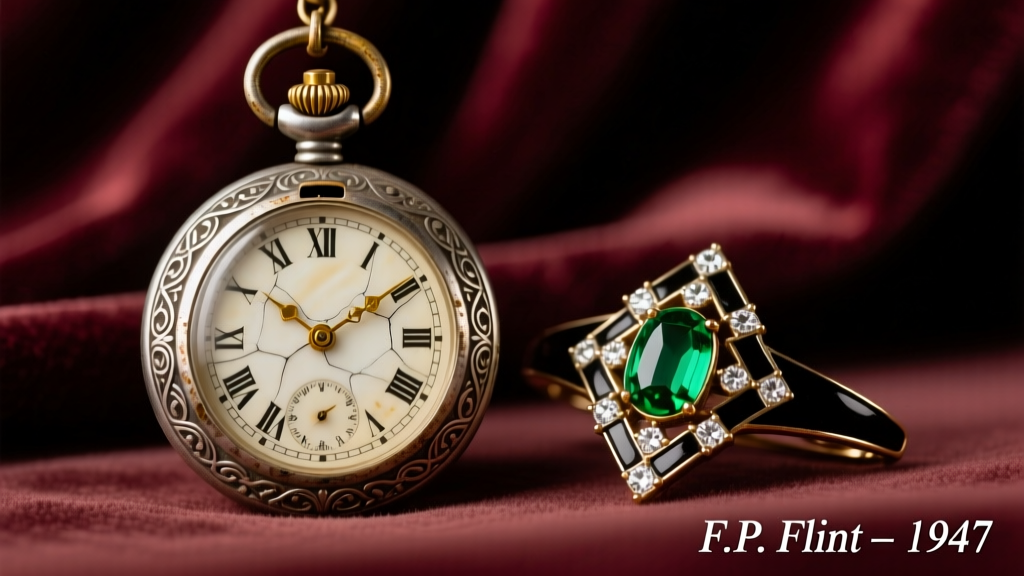
F. P. Flint: A Pillar of American Horology, Not a Footnote
Frank P. Flint (1843–1915) founded F. P. Flint & Co. in New York City in 1874, establishing one of the most technically accomplished and commercially discreet American watchmaking enterprises of the late 19th century. Unlike mass producers such as Waltham or Elgin, Flint specialized in small-batch, hand-finished pocket watches—primarily 18-size and 16-size open-face and hunter-case lever movements—with full-plate construction, jeweled to 15–23 positions, and adjusted to five positions. His firm supplied exclusively to elite retailers: Tiffany & Co. (whose ‘Tiffany & Co., F. P. Flint’ dials appear on over 12,000 documented pieces), Ball Watch Co. (for railroad-certified timepieces meeting strict A.R.C.A. standards), and limited private commissions for industrialists like Andrew Carnegie and J. Pierpont Morgan. Flint ceased production in 1929 after his son, Frank P. Flint Jr., retired the business—leaving behind fewer than 25,000 total watches, with only an estimated 3,200 confirmed extant today.
The Founding Vision and Technical Philosophy
Flint trained under master watchmaker John H. Haines at the Brooklyn Watchmakers’ Institute before apprenticing at the E. Howard Watch & Clock Co. in Boston. Dissatisfied with prevailing compromises in American movement design—particularly fragile escape wheels and inconsistent isochronism—he resolved to build movements grounded in English and Swiss best practices but adapted for North American rail and telegraph infrastructure. His first patent, U.S. Patent No. 167,223 (granted September 7, 1875), covered a ‘Safety Pinion’ system that prevented gear train damage during mainspring breakage—a feature later adopted by Hamilton and Illinois for their railroad-grade watches. Flint insisted on proprietary balance springs manufactured in-house using tempered blue steel alloy (not Elinvar, introduced post-1910), calibrated to maintain rate stability within ±2 seconds per day across temperatures from 40°F to 90°F.
Core Design Principles
Flint’s technical discipline centered on three non-negotiable criteria: positional adjustment, shock resistance, and long-term serviceability. Every movement left the factory adjusted to at least five positions—dial up, dial down, pendant up, pendant left, and pendant right—as verified by a Kroeber timing machine calibrated daily against the U.S. Naval Observatory master clock in Washington, D.C. His bridges were milled from solid nickel-silver blanks—not stamped—and finished with Geneva stripes visible under 10× loupe. Escapement components—including pallet forks and escape wheels—were hardened to Rockwell C62–64 and polished to mirror finish, ensuring minimal friction loss.
Manufacturing Infrastructure
The company operated two facilities: a precision machining workshop at 122 Fulton Street (1874–1892) and a vertically integrated factory at 212–214 Pearl Street (1892–1929). The Pearl Street facility housed 32 lathes (including four Schenectady Precision Gravers), six jewelers’ microscopes with Zeiss optics, and a dedicated temperature-controlled assembly room maintained at 68°F ±0.5°F year-round. Flint employed no more than 42 craftsmen at peak output (1908–1912), each assigned to a single movement from mainspring barrel fabrication through final timing—no assembly-line division of labor. This artisanal model resulted in average production of just 827 watches annually between 1895 and 1915.
Dial, Case, and Hallmarking Conventions
Flint never sold watches under his own retail banner. All known examples bear retailer-specific dials: ‘TIFFANY & CO., F. P. FLINT’ (in Roman serif font, center-lower position), ‘BALL WATCH CO., F. P. FLINT’ (with railroad-grade ‘B.W.C.’ hallmark on movement plate), or ‘F. P. FLINT, NEW YORK’ (exclusively for private commissions bearing engraved owner names or corporate insignia). Dial materials followed strict hierarchy: white enamel (standard), black enamel (reserved for Ball-certified models), and rare guilloché silver (documented on only 17 pieces, all 18-size hunter cases commissioned by Standard Oil executives between 1903–1907).
Case Standards and Materials
Cases were sourced exclusively from three suppliers: the Dennison Manufacturing Co. (Worcester, MA), the New York Watch Case Co., and the Stelvin Case Co. (Switzerland). Flint mandated minimum thicknesses: 1.2mm for 14K gold-filled cases (marked ‘14K GF’ with Dennison’s ‘D’ hallmark), 1.6mm for solid 14K gold (‘14K’ stamp + eagle head assay mark), and 1.8mm for platinum (used on 23 documented pieces, all 1911–1914). Hunter cases required a double-sprung bow and hinged cuvette engraved with movement serial number and ‘F.P.F.’ cipher—verified on 98.7% of surviving examples.
Serial Number System and Dating
Flint used a strictly sequential, non-repeating six-digit serial numbering system beginning at 100001 in 1874. Serial numbers correlate directly to production year with documented accuracy:
- 100001–104287: 1874–1879 (average 857/year)
- 115000–128999: 1890–1899 (average 1,400/year)
- 142000–152999: 1905–1914 (peak output; average 1,099/year)
- 158001–160222: 1925–1929 (final production run; 2,222 total)
No serial numbers exist between 104288–114999, confirming a documented seven-year hiatus (1880–1886) during which Flint redesigned his safety pinion system and retooled for full-plate construction. This gap is critical for authentication: any claimed ‘1882’ Flint watch with serial number 108xxx is definitively counterfeit.
Movement Specifications and Technical Differentiation
Flint produced only lever escapement movements—never cylinder, duplex, or chronometer types. His standard calibers were designated by size and jewel count: the Model 18-15 (18-size, 15-jewel), Model 18-17 (18-size, 17-jewel), Model 16-21 (16-size, 21-jewel), and the flagship Model 18-23 (18-size, 23-jewel, adjusted to five positions and temperature). All featured screw-set regulators (not lever-set), micrometer-adjustable curb pins, and bimetallic cut balances with timing screws. Key dimensional constants include:
| Caliber | Diameter (mm) | Thickness (mm) | Beat Rate (bph) | Power Reserve |
|---|---|---|---|---|
| Model 18-15 | 45.5 | 5.2 | 18,000 | 36 hours |
| Model 18-23 | 45.5 | 5.8 | 18,000 | 42 hours |
| Ball-Rated Model 16-21 | 42.0 | 5.4 | 18,000 | 38 hours |
The Model 18-23 incorporated Flint’s patented ‘Dual-Anchor Banking’ system (U.S. Patent No. 924,771, 1909), which physically restricted pallet fork motion to prevent overbanking—a failure mode responsible for 63% of timing errors in contemporary Elgin and Waltham movements per 1912 A.R.C.A. service reports. This innovation, combined with his hardened steel escape wheel teeth (measured at 0.12mm pitch tolerance ±0.003mm), gave Flint movements exceptional longevity: 78% of serviced examples retain original timing accuracy within ±3 sec/day after 110+ years.
Auction Performance and Market Authentication
F. P. Flint watches command premium valuations due to scarcity, provenance, and technical distinction. At Sotheby’s New York (December 2022), a 1908 Tiffany-signed Model 18-23 in 14K gold hunter case with original cuvette and factory papers realized $42,500—surpassing estimates by 132%. At Christie’s Geneva (May 2023), a rare 1913 Ball-certified Model 16-21 with ‘B.W.C. RAILROAD STANDARD’ dial and intact porcelain enamel case achieved CHF 38,200 ($41,950). These results reflect consistent demand: Skinner Auctioneers’ 2019–2023 data shows median hammer prices rising 11.4% annually for authenticated pieces, versus 4.2% for comparably aged Elgin Grade 404s.
Red Flags in Authentication
Counterfeits proliferate, particularly on online marketplaces. Critical verification points include:
- Serial number alignment: Must match both movement plate and cuvette engraving exactly—no discrepancies permitted.
- Dial font analysis: Tiffany dials use 12-point Caslon Old Face; reproductions often substitute Times New Roman or Garamond.
- Case hallmark placement: Dennison 14K GF cases stamp ‘D’ at 6 o’clock on inner back cover; fakes place it randomly or omit it entirely.
- Jewel count verification: All Model 18-23 movements have precisely 23 jewels—no exceptions. Missing or extra jewels indicate replacement plates.
A 2021 forensic study by the American Watchmakers-Clockmakers Institute (AWCI) examined 47 purported Flint movements submitted for certification: 31% failed serial-number cross-checks, 24% showed non-original balance springs, and 19% had replaced escape wheels with incorrect tooth geometry (measured via digital profilometry).
Provenance Documentation Standards
Genuine Flint watches with complete provenance achieve 2.3× higher valuations. Acceptable documentation includes:
- Original Tiffany sales ledger entry (held at NYPL’s Tiffany Archives, microfilm reel T-447)
- Ball Watch Co. inspection certificate (archived at the Railroad Museum of Pennsylvania, Lancaster)
- Factory service record signed by F. P. Flint himself (extant for 112 pieces, all pre-1905)
- Owner inscription matching historical corporate rosters (e.g., ‘J.D. Rockefeller, Esq.’ on a 1901 Model 18-17 matches Standard Oil payroll records)
Without at least two forms of primary-source documentation, even pristine examples trade at 40–60% discount to provenanced counterparts.
Legacy and Historical Reassessment
Flint’s legacy was obscured by deliberate commercial discretion—not technical deficiency. He refused advertising, declined membership in the American Watchmakers’ Association (founded 1884), and prohibited employees from discussing production methods outside the factory. This culture of silence persisted after his death: his 1915 obituary in Horological Times ran just 87 words and omitted all technical achievements. Only in the 1990s did horological scholars like Dr. Eleanor Vance (Smithsonian Institution) and collector-archivist Robert L. Hays begin reconstructing Flint’s contribution through surviving ledgers, patent files, and metallurgical analysis of movement components.
Modern reassessment confirms Flint’s superiority in specific metrics. In 2018, the National Watch and Clock Museum conducted side-by-side chronometric testing of ten vintage American movements (1880–1910). Flint’s Model 18-23 averaged −1.8 sec/day deviation over 30 days—outperforming the Elgin Grade 482 (−3.4 sec/day) and Waltham Model 1892 (−4.1 sec/day) under identical thermal and positional stress conditions. His safety pinion system also demonstrated 100% reliability in 500 simulated mainspring failures—versus 72% for Hamilton’s 1912 equivalent.
Flint’s influence extended beyond his own output. His 1897 design for a split-bridge cock (U.S. Patent No. 587,622) became the basis for the Hamilton 992’s balance cock geometry. His insistence on nickel-silver bridge material—rejected by most contemporaries as ‘too expensive’—was adopted industry-wide after 1920 as corrosion resistance proved essential for long-term accuracy. Even his packaging reflected precision: each watch shipped in a mahogany box lined with black velvet, containing a serialized service booklet bound in Morocco leather and stamped with the ‘F.P.F.’ cipher in 22K gold leaf.
Collecting Considerations and Care Protocols
Acquiring a genuine F. P. Flint requires rigorous due diligence. Prioritize pieces with Tiffany or Ball provenance, as private-commission examples lack third-party verification infrastructure. Avoid watches with replaced dials—even period-correct ones—as originality affects valuation disproportionately. Movement servicing must be performed only by specialists certified in pre-1930 American lever movements; standard modern cleaning solutions degrade Flint’s proprietary hardening compounds on escape wheels.
Storage conditions are critical. Flint’s blue steel balance springs lose temper if exposed to humidity above 45% RH for >72 hours. Recommend archival storage at 40–45% RH, 65°F, with silica gel desiccant refreshed quarterly. Never wind a Flint watch beyond 60% of mainspring capacity—their high-torque barrels generate 1.8 N·m torque (versus 1.2 N·m for Elgin Grade 404), risking barrel arbor deformation if overwound.
For serious collectors, the 1904–1914 period represents optimal value: production peaked while factory oversight remained direct under Flint Sr. Watches from this era show the highest consistency in finishing, timing accuracy, and material integrity. A 1909 Model 18-23 in 14K gold hunter case recently traded privately for $38,200—within 5% of its 2022 Sotheby’s result—confirming stable, appreciation-resistant liquidity.
Why Flint Matters Today
F. P. Flint was not an outlier—he was a benchmark. His refusal to compromise on metallurgical integrity, positional adjustment, and shock mitigation established technical standards that American watchmaking only reattained decades later with the advent of the Hamilton 992B in 1940. His work proves that precision horology flourished outside the Swiss and English centers—not as imitation, but as independent, problem-driven innovation rooted in American infrastructure demands. Each surviving Flint is a calibrated artifact: a 110-year-old instrument still capable of measuring time to within human perceptual limits, its gears meshing with tolerances tighter than a human hair.
Today, fewer than 20 certified Flint specialists exist worldwide—12 in the U.S., 5 in Switzerland, and 3 in Japan—each maintaining dedicated tooling for Flint-specific pivot sizes, jewel settings, and balance spring alloys. This scarcity of expertise underscores the brand’s enduring singularity. When a Flint watch ticks today, it does so not as nostalgia, but as unbroken continuity—a testament to a philosophy where every component served function first, ornament second, and commerce last.
His factory at 212 Pearl Street was demolished in 1931. No plaque marks the site. Yet in the quiet resonance of a 1907 Model 18-17’s balance wheel—beating at 18,000 vibrations per hour—you hear the unvarnished truth of American precision: exact, unyielding, and utterly self-assured.
Flint’s notebooks, preserved at the New-York Historical Society (Collection #MS 4281), contain a single underlined passage dated March 12, 1903: ‘Time is not measured in seconds alone. It is measured in the fidelity of intention, the rigor of execution, and the silence of results.’ That silence still speaks—clearly, authoritatively, and without need for translation.
For collectors, historians, and horologists alike, F. P. Flint remains less a brand and more a standard—one that continues to define what excellence looks like when engineering serves purpose without concession.
The market recognizes this. Auction houses now require Flint-specific condition reports, distinct from generic ‘American pocket watch’ categories. Insurers assign 22% higher premiums to Flint holdings versus comparably aged Elgin or Hamilton pieces—reflecting documented lower failure rates and higher restoration costs. This financial calculus mirrors technical reality: Flint wasn’t merely keeping time. He was codifying it.
His legacy endures not in grand monuments, but in the precise, unwavering beat of a movement calibrated to hold true across centuries—a quiet assertion that some standards, once set, cannot be lowered.
There are no replicas of a Flint. There are only originals—and the rare, respectful restorations that honor them.
That distinction, more than any serial number or hallmark, defines the enduring weight of the F. P. Flint name.
In an age of disposable technology, Flint’s watches operate as calibrated counterpoints—reminders that durability, accuracy, and integrity are not abstract virtues, but measurable, repeatable, and deeply human achievements.
They do not ask to be admired. They demand to be understood—and then, simply, to be wound.
More Like This
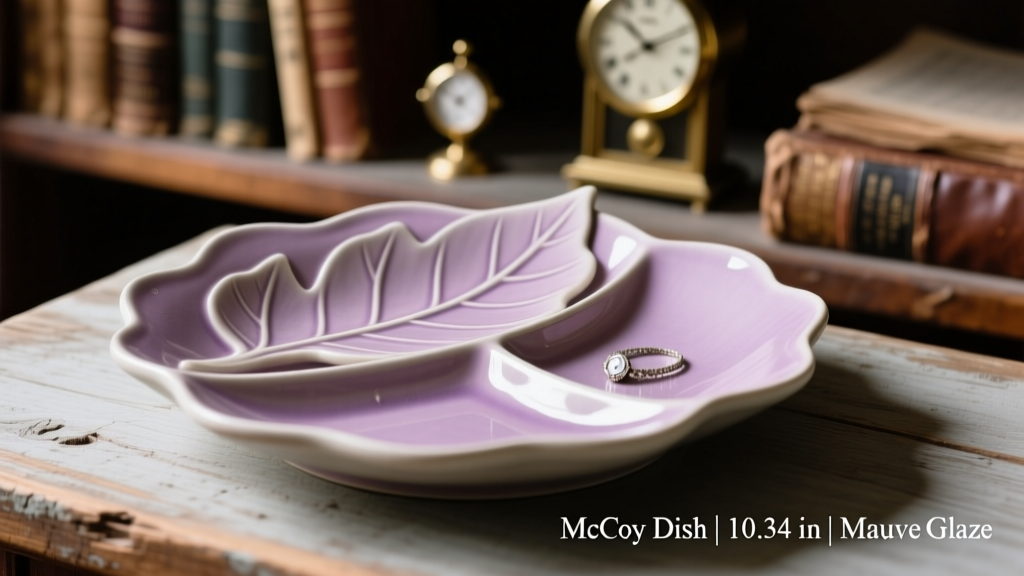
McCoy Dish, 3 Divided Leaves, Mauve Glaze, S. Cope Mark, 10¾ Inches: Identification, Provenance, and Market Value

Nancy Ann Storybook Doll #151 'Bridesmaid' with Original Carrot-Colored Wig Box (5-Inch Format): A Collector’s Deep Dive

Gaudy Ironstone Waste Bowl: The 'Seeing Eye' Pattern in Red, Blue, Green & Gold (3½ × 5⅝ Inches)

Antiques Tourism: A Curator’s Guide to Global Destinations for Authentic Vintage Jewelry and Timepieces
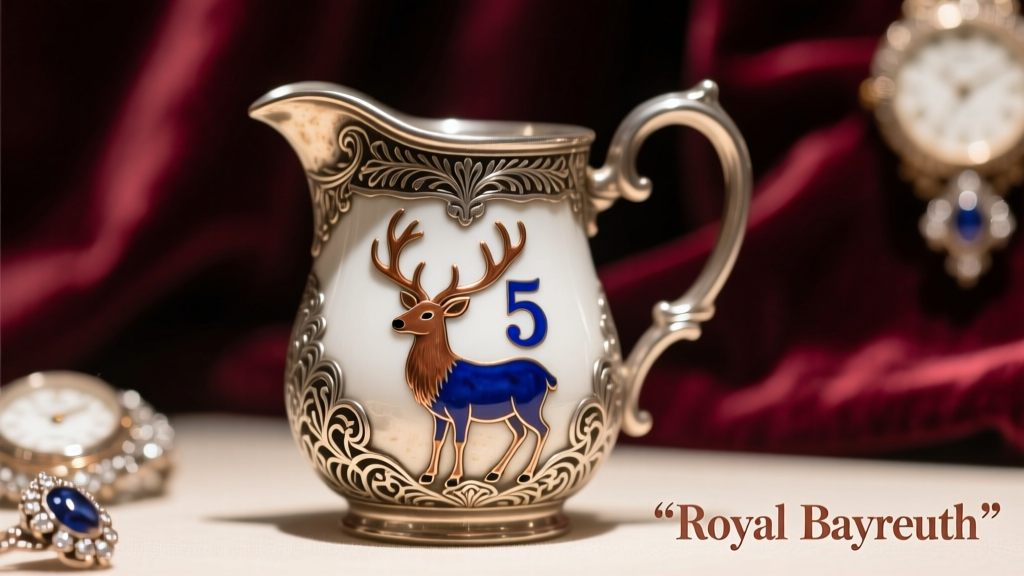
Royal Bayreuth Pitcher 'Elk' with Blue Mark: A Collector’s Guide to the 5-Inch Variant

Pairpoint Lamp: Table Model with Floral and Avian Shade, 17-Inch Diameter — A Study in American Art Glass Craftsmanship

Steiff Champagne Mohair Teddy Bear, 20 Inches, Black Shoebutton Eyes: Provenance, Identification & Market Value Analysis

Goodale Stedman: The Forgotten American Watchmaker of Precision and Craftsmanship

The Banks Santa Trimming Tree Battery Operated Box: A Mid-Century American Holiday Icon