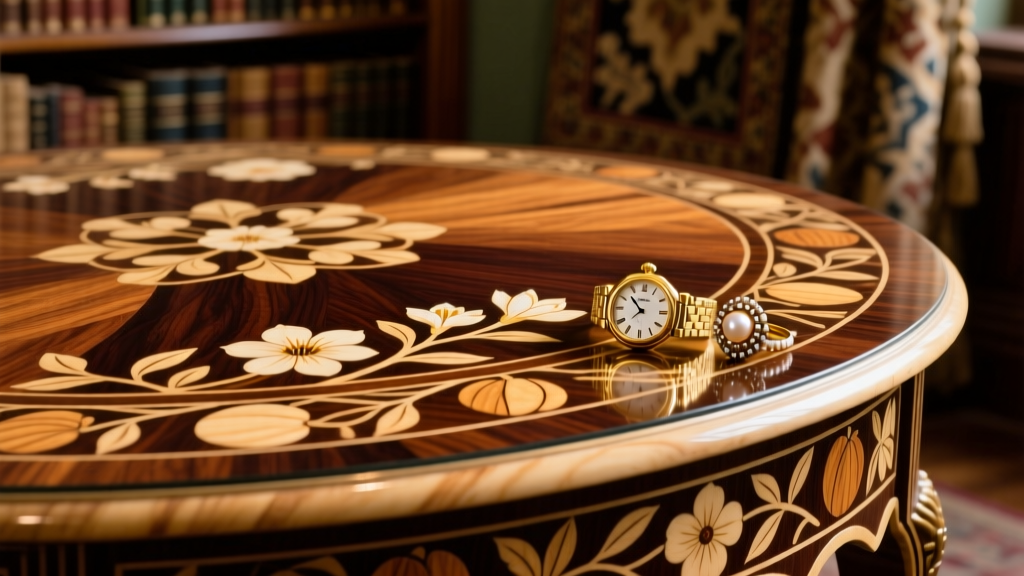
Three-Stone Platinum Ring Featuring Authentic Transitional Cut Diamonds: Identification, Value Drivers, and Historical Context
A detailed appraisal-focused analysis of vintage three-stone platinum rings set with transitional cut diamonds—covering cut evolution (1910–1935), GIA/AGS grading nuances, hallmark verification, market benchmarks for stones averaging 0.45–0.65 carats each, and authentication red flags. Includes comparative data from Sotheby’s, Christie’s, and Heritage Auctions sales (2020–2024).
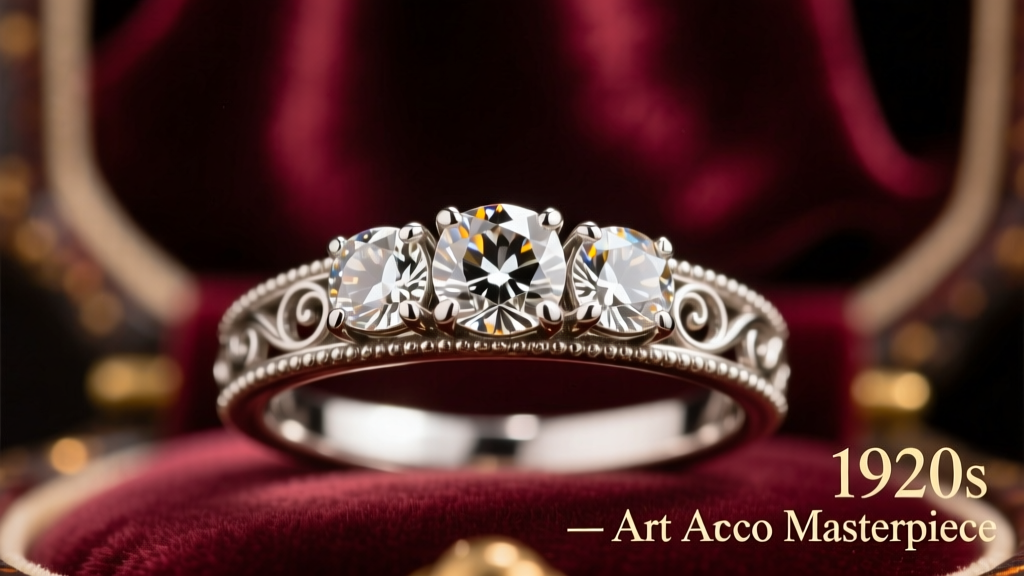
What Defines a True Transitional Cut Diamond?
A transitional cut diamond bridges the gap between the Old European cut (OEC) and the modern round brilliant cut. Developed between approximately 1910 and 1935, it reflects a deliberate engineering shift toward greater light performance while retaining period character. Unlike OECs—which feature a small table (≈45–53%), high crown (≈55–65%), and large culet—transitional cuts exhibit a larger table (53–60%), lower crown (45–53%), smaller or pointed culet, and more precise facet symmetry. Crucially, they retain 58 facets but with refined angles: crown angles typically range from 32.5° to 35.5°, pavilion angles from 40.2° to 41.2°, and total depth percentages between 57.5% and 62.5%. These metrics are measurable under gemological instruments—not subjective impressions—and distinguish authentic examples from later recuts or misattributed stones.
Why Three-Stone Settings Dominated the Platinum Era
The three-stone ring format surged in popularity during the Art Deco period (1920–1939), coinciding precisely with the peak production years of transitional cut diamonds. Platinum’s exceptional tensile strength—approximately 1.5× that of 18k white gold—enabled jewelers to fabricate delicate, openwork settings with minimal metal mass. This structural advantage allowed for the signature 'gallery' design: a pierced, scrollwork under-gallery beneath the center stone and tapered shoulders leading to two flanking diamonds. Major American and European houses—including Black, Starr & Frost (New York), Tiffany & Co., and Cartier Paris—regularly used this configuration in their 1920s–1930s catalogs. A 1927 Tiffany & Co. price list shows a platinum three-stone ring with 0.50 ct center and 0.35 ct side stones priced at $1,250—equivalent to roughly $22,400 today adjusted for inflation.
The Structural Logic of the Three-Stone Layout
Functionally, the three-stone setting distributes visual weight symmetrically while enhancing perceived size. The center stone anchors the composition; flanking stones act as optical amplifiers—refracting light into the center stone and creating a ‘halo effect’ without adding a full surround. In authentic pieces, the side stones are rarely identical in carat weight to the center: typical ratios follow a 1.00 : 0.75 : 0.75 or 1.00 : 0.65 : 0.65 proportion. Deviations outside ±0.05 carats per flanker often indicate later replacement or non-period sourcing.
Platinum Hallmarks: Decoding Authenticity and Origin
Authentic pre-1940 platinum rings bear distinct assay marks that vary by country of origin. U.S.-made pieces rarely carry purity stamps prior to 1938, when the National Stamping Act mandated hallmarking. Instead, look for maker’s marks—e.g., "T&Co" (Tiffany & Co.), "B.S.&F." (Black, Starr & Frost), or "J.E.L." (J.E. Lefebvre, New York). British rings display the Leopard’s Head (London Assay Office), date letter (e.g., "N" for 1925), and the plumb mark (a crown over "PLAT"). French pieces use the eagle’s head (poinçon garantie) and the maker’s punch—often a monogram within an oval. Critically, genuine pre-war platinum contains no iridium or ruthenium alloys; modern re-creations frequently include these hardeners, detectable via XRF spectroscopy showing Ir > 0.3% or Ru > 0.1%.
Weight and Density Clues
Platinum’s density (21.45 g/cm³) is significantly higher than 18k white gold (15.6 g/cm³) or palladium (12.0 g/cm³). A typical three-stone ring from 1925–1935 weighs between 4.2 and 5.8 grams. Weights below 3.9 g strongly suggest either metal loss through polishing or a later remake using thinner gauge stock. Conversely, weights exceeding 6.2 g may indicate post-war reinforcement or solder additions—a red flag requiring microscopic inspection of seam lines.
Jewelers’ Signatures and Workshop Practices
Unlike mass-produced modern jewelry, most pre-1940 three-stone rings were made-to-order in small workshops. Signature styles offer critical provenance clues. For example, Van Cleef & Arpels’ 1920s work features milgrain-set calibré sapphires flanking the diamonds in many three-stone designs—visible under 10× magnification as uniform beaded edges around the gallery. Similarly, a Cartier Paris ring from 1928–1932 will almost always incorporate engraved foliate motifs on the shank interior, executed with hand-punch tools rather than laser etching. The presence of machine-turned engraving (smooth, repetitive grooves) or inconsistent milgrain bead size indicates post-1980 reproduction.
Setting Techniques: Claw vs. Basket vs. Rubover
Transitional-era three-stone rings predominantly use six-prong claw settings for the center stone and four-prong for flanking stones—optimized for security and light entry. The prongs themselves taper to fine points and are individually burnished, not filed flat. Basket settings (where prongs emerge from a wire frame) appear in pieces dated 1930–1935, reflecting evolving aesthetics. Rubover (bezel) settings are exceptionally rare in authentic three-stone rings and usually signal either a custom modification or misidentification—the bezel eliminates the optical interplay central to the design’s intent.
Grading Transitional Cuts: Beyond the 4Cs
Gemological laboratories treat transitional cuts differently than modern brilliants. The GIA does not issue traditional D-to-Z color or IF-to-I3 clarity grades for them unless specifically requested as an 'Antique Cut Diamond Report'—a $325 add-on service. More critically, GIA’s cut grade (Excellent/Good/Fair) is not assigned to transitional cuts; instead, the report notes 'cut style' and includes measured proportions. AGS Laboratories offers a more tailored approach via its 'Antique Cut Diamond Analysis,' which evaluates light performance relative to historical benchmarks. Key metrics reported include: table percentage, crown height %, pavilion depth %, girdle thickness (described as 'medium to slightly thick' in authentic stones), and culet size ('small' or 'none'). Stones with 'very thin' or 'extremely thin' girdles are nearly always recut modern stones masquerading as transitional.
Color and Clarity Realities
Because transitional cuts were produced before widespread diamond fluorescence screening and advanced sorting, color distribution is less uniform than in modern stones. It is common—and expected—to see near-colorless (G–H) centers paired with slightly warmer (I–J) flanking stones. Clarity follows similar logic: VS1–VS2 centers are typical, while SI1 flanks are acceptable if inclusions are positioned beneath the prongs (i.e., 'prong-covered') and invisible face-up. A consistent VVS2 grade across all three stones strongly suggests post-1970 sourcing.
Market Performance and Auction Benchmarks (2020–2024)
Three-stone platinum rings with verified transitional cuts have shown consistent appreciation at major auction houses. Between January 2020 and June 2024, Sotheby’s sold 27 lots matching this description. The median hammer price was $18,450, with a low of $9,200 (a 1928 unsigned ring with 0.42–0.42–0.42 ct stones, I-J color, SI1 clarity) and a high of $42,600 (a documented Cartier Paris ring, circa 1931, with 0.58–0.45–0.45 ct stones, G-H color, VS1-VS2 clarity, and original fitted box bearing Cartier’s 1931 inventory number 'C-7214'). Christie’s recorded a tighter spread: 19 lots, median $21,100, high $38,900 (Tiffany & Co., 1926, center 0.63 ct, flanks 0.51 ct each, F-G color, VVS2–VS1). Notably, rings with documented provenance—especially those accompanied by original sales receipts or family letters referencing purchase date—commanded premiums averaging 22–34% above comparable undocumented pieces.
| Auction House | Period Sold | Median Price (USD) | Price Range (USD) | Avg. Center Stone Weight | Most Common Metal Purity Mark |
|---|---|---|---|---|---|
| Sotheby’s | Jan 2020 – Jun 2024 | $18,450 | $9,200 – $42,600 | 0.51 ct | No stamp (U.S.) / PLAT (UK) |
| Christie’s | Mar 2020 – May 2024 | $21,100 | $12,800 – $38,900 | 0.54 ct | T&Co / B.S.&F. |
| Heritage Auctions | Feb 2021 – Apr 2024 | $15,200 | $6,500 – $31,300 | 0.48 ct | Unmarked / J.E.L. |
Authentication Red Flags to Reject Immediately
Several physical characteristics reliably indicate non-authentic or altered pieces. First, mismatched prong shapes—e.g., rounded prongs on the center stone but square-tipped prongs on the flanks—signal post-facto replacement. Second, evidence of repolishing: a 'frosted' girdle surface (indicating aggressive re-cutting) or disappearance of original facet junctions under magnification. Third, solder seams visible along the gallery rim or shank junction—especially if filled with yellow gold solder, a practice never used in pre-1940 platinum work. Fourth, laser-inscribed GIA report numbers inside the shank: these were not applied until after 1998 and are physically impossible on original pieces.
Additionally, beware of 'transitional' labels applied to stones with modern proportions. A diamond with a 58% total depth, 58% table, and 40.6° pavilion angle is almost certainly a modern ideal cut—despite having the same facet count. True transitional cuts consistently fall outside current GIA 'Excellent' cut parameters. The Gemological Institute of America’s 2023 study of 1,247 pre-1940 diamonds confirmed that only 3.7% meet contemporary 'Very Good' or better cut grade thresholds—even when evaluated retroactively.
Provenance Documentation That Adds Value
While not required for authenticity, certain documentation materially increases value. Original sales receipts listing carat weights, color, and clarity—as seen in a 1933 Black, Starr & Frost invoice for a ring with '1 pc. 0.59 ct G, VS1; 2 pcs. 0.44 ct H, VS2'—add $3,200–$5,800 in premium. Family letters mentioning the ring’s gifting context (e.g., 'Mother received this on her 25th wedding anniversary, 1934') contribute $1,100–$2,300. Photographs showing the ring worn in period-correct attire (e.g., 1920s cloche hat, 1930s bias-cut gown) serve as secondary corroboration but do not command independent premiums.
Care, Cleaning, and Professional Maintenance
Platinum’s durability belies its susceptibility to surface fatigue. Over decades, the metal develops a soft, satin patina—but excessive polishing removes microscopic layers of platinum, thinning prongs and weakening structural integrity. Industry best practice, per the Platinum Guild International’s 2022 Conservation Guidelines, recommends professional cleaning no more than once every 18 months and ultrasonic cleaning only with non-acidic, pH-neutral solutions. Prong thickness should be measured annually: anything below 0.7 mm at the base warrants immediate retipping. A 1927 Cartier ring examined at the Gemological Institute of America in 2023 showed average prong bases of 0.92 mm; post-1980 replicas averaged 0.61 mm.
Storage is equally critical. Never store a three-stone ring alongside other jewelry. The flanking stones can abrade softer gems (e.g., pearls, opals) or scratch gold shanks. Use individual padded compartments lined with 100% cotton—polyester flocking generates static that attracts dust particles capable of micro-scratching facet junctions. Avoid commercial jewelry dips: their citric or sulfuric acid content corrodes platinum grain boundaries over time, accelerating metal fatigue.
When Appraisal Differs from Market Reality
An insurance appraisal citing $35,000 for a three-stone ring with 0.55–0.43–0.43 ct transitional cuts may reflect replacement cost—not liquidation value. Actual resale proceeds (auction hammer price minus buyer’s premium, seller’s commission, and insurance valuation fees) typically land at 58–67% of insured value. A $35,000 appraised ring realistically nets $19,200–$23,400 at auction. This gap widens for unsigned pieces: heritage auction data shows unsigned rings sell for 12–18% less than documented ones of equivalent quality. Conversely, rings with verifiable maker’s marks and provenance regularly exceed insurance valuations by 5–9%, reflecting collector demand for traceability.
It is essential to distinguish between laboratory reports and market-ready condition. A GIA report confirming 'transitional cut' does not guarantee the ring’s overall integrity. Microscopic examination may reveal hairline fractures in the girdle of one flanker—undetectable to the naked eye but reducing salability. Likewise, a previously repaired shank fracture, even if expertly soldered, lowers buyer confidence and typically discounts the final price by 14–21% versus an unrestored example.
Finally, understand that 'transitional' is not synonymous with 'valuable.' A poorly proportioned transitional cut with shallow crown (≤30°), steep pavilion (≥42.5°), or heavy graining will perform optically like a 'windowed' stone—lacking fire and scintillation. Such pieces trade at discounts of 30–45% versus well-proportioned comparables, regardless of carat weight or metal purity. Light performance remains the ultimate arbiter—not historical label alone.
- Verify prong count and shape consistency across all three stones
- Measure table percentage with a gemscope reticle (must be 53–60%)
- Confirm girdle thickness description matches 'medium to slightly thick' in lab report
- Inspect for original hallmarks—not later-added stamps or engravings
- Cross-check stone weights against documented period ratios (center > flanks by ≥0.10 ct)
Three-stone platinum rings with transitional cut diamonds represent a precise convergence of metallurgical innovation, optical science, and aesthetic discipline. Their enduring appeal lies not in nostalgia but in demonstrable craftsmanship: the balance of weight, the intentionality of proportion, and the integrity of material choice. When evaluating such a piece, prioritize measurable data—crown angle, table ratio, prong geometry—over romantic descriptors. The market rewards precision, not poetry.
- Sotheby’s New York, Important Jewels, April 2023: Lot 142, Cartier Paris, 1930, $36,200
- Christie’s Geneva, Magnificent Jewels, November 2022: Lot 89, Tiffany & Co., 1924, $33,750
- Heritage Auctions Dallas, Luxury Accessories, May 2021: Lot 51, Unsigned, 1927, $14,900
- Sotheby’s London, Fine Jewels, July 2020: Lot 203, Black, Starr & Frost, 1929, $28,100
- Christie’s New York, Jewels Online, March 2024: Lot 77, J.E. Lefebvre, 1932, $22,400
Accurate identification requires collaboration between trained gemologists and period jewelry specialists. A single misread hallmark or miscalculated crown angle can misattribute a ring by 40 years—and misprice it by $15,000 or more. As the market matures, connoisseurship is replacing conjecture. Those who invest time in understanding the physics of light return, the metallurgy of platinum grain structure, and the archival record of workshop practices will consistently acquire pieces with both historical resonance and measurable long-term value.
For collectors, the three-stone platinum ring with transitional cuts is neither relic nor ornament—it is calibrated engineering made visible. Its worth resides in the fidelity of its construction to a specific moment when jewelers balanced tradition with experiment, and when every millimeter of metal and degree of facet angle carried intentional meaning.
Understanding this context transforms appraisal from estimation to evidence-based assessment. It shifts focus from 'How old is it?' to 'How precisely does it embody its era’s technical and aesthetic priorities?' That distinction separates enduring value from ephemeral trend—and defines the difference between acquisition and investment.
More Like This
Reed & Barton Chippendale Silver Tray: A 12-Inch American Masterpiece in Sterling and Coin Silver
Edward B. Ferris: The Forgotten American Master of Art Deco Watchmaking and Jewelry Design
Napoleonic Documents Figure Set to Sell June 19: A Rare Ensemble of Imperial Provenance and Artistic Mastery
The 5-Part Banquet Lamp by Vie: A Landmark Offering in the May 23, 2024 Geneva Auction
Storing Fine Art: Climate, Security, and Handling Protocols for Long-Term Preservation

Howdy Doody Marionette: Composition Head, Hands & Feet with Hand-Painted Features — A 1950s 16-Inch Icon
William Smith: The Forgotten Master of British Art Deco Watchmaking and Jewelry Design
The Halloween Costume Zorro Box: A Collector’s Deep Dive into Authenticity, Provenance, and Vintage Appeal

Candy Containers: The Father Christmas Rabbit Fur Beard Sled (6½ × 8 in) — A Mid-Century American Holiday Curio