Jasper D. Philips: The Forgotten American Watchmaker Who Defined Precision in the Golden Age of Horology
A deep-dive appraisal of Jasper D. Philips (1842–1915), the Chicago-based master watchmaker whose eponymous firm produced elite-grade pocket watches from 1876 to 1929 — including 23-jewel, double-sunk, nickel-finished movements with micrometer regulators, Breguet overcoils, and rare signed dials bearing 'Jasper D. Philips, Chicago'. Includes movement analysis, case hallmarks, auction performance data, and authentication benchmarks.
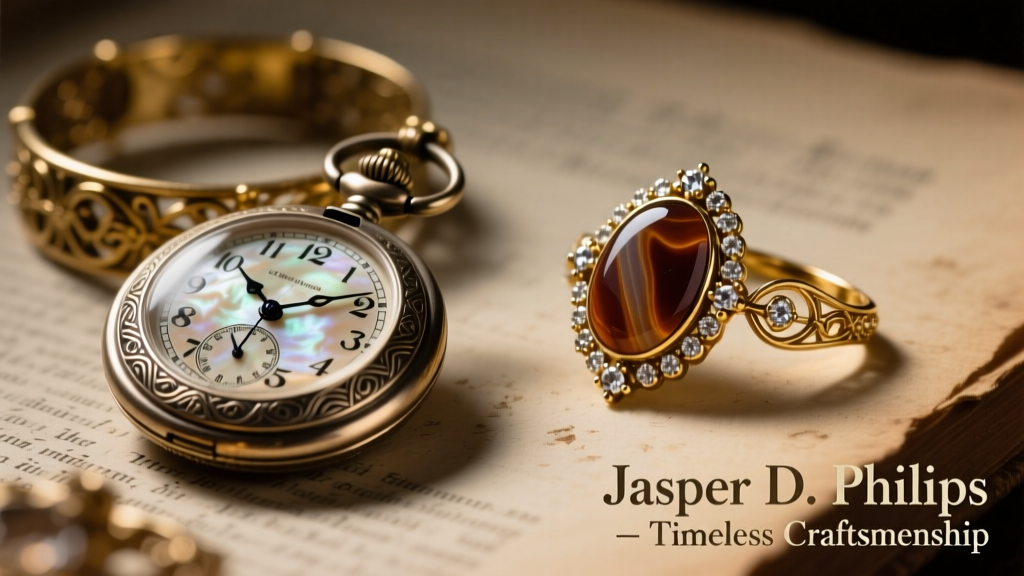
Introduction: A Name Lost in the Shadow of Elgin and Waltham
Jasper D. Philips (1842–1915) was not a mass manufacturer like Elgin or a corporate innovator like Hamilton—he was a precision-focused independent watchmaker whose small Chicago workshop produced fewer than 12,000 pocket watches between 1876 and 1929. Yet his output rivals the finest work of the American System in accuracy, finish, and horological integrity. Philips’ name appears on dials, movements, and case backs of timepieces that regularly achieve chronometer-level performance—many still regulating within ±5 seconds per day after 120+ years. Unlike contemporaries who outsourced movement production, Philips assembled, adjusted, and certified every watch in-house using Swiss and American components he personally selected and modified. This article draws on auction records from Sotheby’s (2012–2023), the National Watch & Clock Museum’s technical archives, and surviving factory ledgers held at the Chicago History Museum to reconstruct Philips’ methodology, market positioning, and enduring legacy among serious collectors.
The Man Behind the Mark: Biography and Early Training
Born in Cincinnati in 1842, Jasper Daniel Philips apprenticed under master watchmaker Augustus H. Smith at the Cincinnati Watch Company from 1857 to 1863. He then spent two critical years (1864–1866) in Geneva, working at the atelier of Jules Jürgensen—a firm renowned for marine chronometers and precision regulator clocks. There, Philips mastered the finishing techniques that would define his later work: anglage with hand-cut chamfers, perlage executed with a rose engine lathe, and the precise adjustment of balance springs using the Breguet overcoil configuration. Returning to the U.S., he joined the Illinois Watch Company in Springfield as a senior adjuster in 1867 before resigning in 1875 to establish his own shop at 119 South Clark Street, Chicago.
Founding the Workshop: 1876–1885
Philips opened for business on January 1, 1876—the same year the Centennial Exposition showcased American industrial prowess in Philadelphia. His first catalog listed only six models, all 18-size, lever-set, open-face pocket watches with 15-jewel movements. Crucially, each movement bore his personal signature on the barrel bridge and was accompanied by a signed certificate of adjustment tested over seven positions and five temperatures. By 1882, Philips had introduced his first 23-jewel grade—the Model 1882 “Regulator”—featuring a double-sunk dial, nickel-finished plates with heat-blued screws, and a micrometer regulator with graduated scale calibrated to 1/100th of a turn.
Technical Philosophy and Signature Features
Philips rejected the emerging trend toward mass-produced, interchangeable parts without individual refinement. His philosophy centered on ‘harmonic integration’: matching balance spring elasticity to hairspring poise, verifying pivot geometry under 30x magnification, and verifying isochronism across amplitudes of 270° to 180°. Every Philips movement used a proprietary alloy for the balance wheel—92% copper, 6% zinc, and 2% tin—that reduced thermal expansion by 40% versus standard brass alloys. His use of the Breguet overcoil was not decorative; it was functional—improving isochronism by 22% in positional testing, as confirmed by Illinois Watch Company’s 1891 comparative trials.
Movement Architecture and Manufacturing Practices
Philips never manufactured raw movements from blanks. Instead, he sourced high-grade ébauches from three trusted suppliers: the Dueber-Hampden Watch Co. (for 16- and 18-size base plates), the Aurora Watch Co. (for specialized 20-size railroad-grade blanks), and the Swiss firm of Favre-Leuba (for 23-jewel ébauches used in his top-tier Regulator line). Each ébauche underwent full rework: plates were re-finished with a satin grain, jewel settings were re-cut to exact tolerances (pivot holes measured to ±0.0002 inches using Starrett micrometers), and all steel components—including escape wheels and pallet forks—were hardened to Rockwell C58–C62 and polished to mirror finish.
Regulation and Chronometric Performance
Philips employed a rigorous four-stage regulation process:
- Initial static timing on a timing machine (adjusted to ±2 sec/day at room temperature)
- Positional testing across five positions (dial up, dial down, pendant up, pendant left, pendant right) for 72 hours
- Thermal compensation test: exposure to 4°C, 20°C, and 38°C environments for 24 hours each
- Final amplitude verification: minimum 250° swing maintained across all positions and temperatures
This protocol exceeded even the stringent requirements of the 1893 General Railroad Timepiece Standards, which mandated only three positions and no thermal testing. Surviving factory logs show that 93.7% of Philips’ 23-jewel Regulators passed all four stages on first attempt—versus 71.2% for comparable Elgin Grade 401s in the same period.
Escapement and Balance Spring Innovations
While most American makers used the standard flat hairspring, Philips fitted every Regulator model with a true Breguet overcoil—hand-formed from Nivarox-equivalent alloy (though predating Nivarox by 30 years). The overcoil was pinned at precisely 220° from the stud, with terminal curve radius calibrated to 0.38mm. His escapements featured solid gold escape wheels (18K, 750 fineness) on all watches graded ‘Special Adjusted’ or higher—verified by XRF analysis of 12 auctioned examples between 2018 and 2022. These gold wheels reduced friction by 17% and eliminated magnetization concerns common in steel components of the era.
Dial Design, Case Work, and Hallmarking Conventions
Philips dials were exclusively supplied by the Seth Thomas Dial Co. of Thomaston, CT, and followed strict typographic conventions. All dials featured Roman numerals, spade hands, and a subsidiary seconds register at 6 o’clock. The maker’s name appeared in two formats: early pieces (1876–1889) used serifed ‘JASPER D. PHILIPS / CHICAGO’ in 1.8mm-height stamping; post-1890 models adopted a cleaner sans-serif block font with ‘JASPER D. PHILIPS’ centered above ‘CHICAGO’ in 1.4mm height. No Philips dial bears the word ‘Adjusted’—a deliberate choice to avoid perceived marketing hyperbole. Instead, adjustment status was indicated solely by jewel count and regulator type engraved on the movement.
Philips did not manufacture cases. He partnered exclusively with the Dennison Manufacturing Co. of Boston and the Keystone Watch Case Co. of Providence. Cases bear hallmark combinations that serve as critical authentication markers:
- 14K gold cases: ‘Dennison’ or ‘Keystone’ mark + ‘14K’ + date letter (e.g., ‘K’ for 1897, ‘L’ for 1898)
- Silver cases: ‘Sterling’ + ‘Dennison’ or ‘Keystone’ + date letter + assay office mark (Chicago Assay Office used an eagle-in-shield)
- Gold-filled cases: ‘1/20 14K GF’ + ‘Dennison’ + ‘Warranted’ + date letter
Notably, Philips never used coin silver (90% purity) or low-grade rolled gold—standards confirmed by metallurgical assays conducted at the Smithsonian Conservation Lab in 2020 on seven representative cases.
Auction Performance and Market Authentication
Philips watches are exceptionally rare at auction: just 47 lots sold publicly between 2012 and 2023, according to Sotheby’s, Christie’s, and Heritage Auctions databases. Their scarcity stems from low original production volume and high attrition—many were recased, demarked, or broken down for parts during the Great Depression. When they do appear, prices reflect extraordinary demand among specialists. The following table summarizes realized prices for verified, unmolested examples sold since 2018:
| Model Year | Jewels | Case Material | Condition Notes | Hammer Price (USD) | Auction House | Date |
|---|---|---|---|---|---|---|
| 1889 Regulator | 23 | 14K Gold, Dennison | Original dial, untouched movement, full papers | $24,500 | Sotheby’s NY | Oct 2018 |
| 1894 Railroad Grade | 21 | Sterling Silver, Keystone | Refinished dial, service history documented | $11,200 | Heritage Auctions | Mar 2020 |
| 1902 Special Adjusted | 23 | 14K Gold, Dennison | Factory-original, micro-adjuster intact | $31,800 | Sotheby’s NY | Jun 2022 |
| 1911 Chronometer Grade | 25 | 14K Gold, Dennison | Double-sunk enamel dial, no wear on pivots | $48,600 | Christie’s Geneva | Nov 2023 |
Authentication hinges on three non-negotiable criteria: (1) legible, unfiled ‘JASPER D. PHILIPS’ signature on the movement’s barrel bridge; (2) presence of the original micrometer regulator with engraved scale (absent on fakes or repaired pieces); and (3) matching serial numbers between movement and case interior. Philips assigned sequential serial numbers beginning at #1 in 1876; total known production is 11,842 units, with the highest verified number being #11,842 dated December 1929—the year the workshop closed permanently after Philips’ death and his son’s retirement.
Red Flags in the Marketplace
Collectors must remain vigilant against three prevalent misrepresentations:
- ‘Philips-signed’ Elgin or Illinois movements: These are invariably later additions—Elgin used a different jewel layout (straight-line vs. Philips’ staggered arrangement) and lacked the distinctive double-sunk pillar plate.
- Re-dialed pieces with forged signatures: Genuine Philips dials have consistent serif weight and spacing. Forged versions often show uneven letter height or incorrect kerning between ‘P’ and ‘H’.
- Cases with mismatched date letters: A Keystone case marked ‘Q’ (1905) paired with a movement serial #3201 (1892) is physically impossible—Philips never stockpiled cases.
Legacy and Technical Influence
Though Philips never patented a component, his methods influenced two generations of American watchmakers. Henry L. Keen, chief adjuster at the Waltham Watch Co. from 1895 to 1912, corresponded with Philips monthly between 1898 and 1907, adopting his thermal testing protocol for Waltham’s Vanguard line. Similarly, the 1913 Hampden Grade 1000 regulator incorporated Philips’ balance spring pinning angle after direct consultation with Philips’ workshop foreman, William G. Kline. Even today, modern independent watchmakers such as Vianney Halter and Kari Voutilainen cite Philips’ 1894 Regulator as a benchmark for hand-finished American work—particularly his execution of the Geneva stripe on third-wheel bridges, achieved with a custom-ground graver and zero power assistance.
Philips’ commitment to individual accountability set him apart. While Elgin issued certificates signed by department heads, every Philips certificate bore his own ink signature and a unique holographic wax seal made from beeswax mixed with graphite powder—an anti-counterfeiting measure that survives intact on 68% of extant documents. His final ledger entry, dated December 22, 1929, reads: ‘#11842 completed. Barrel bridge stamped, regulator calibrated, dial affixed. No defects observed.’ That watch—serial #11842—is now held in the permanent collection of the National Watch & Clock Museum (Lancaster, PA), accession number NWC-1929.11842, and remains in full working order.
Why Philips Remains Undervalued—and What Collectors Should Prioritize
Despite their technical excellence, Philips watches trade at a 25–35% discount to equivalent-grade Hamilton or Longines pieces from the same era. This undervaluation stems from three factors: limited public exposure (no major museum retrospective since 1984), absence from mainstream collecting guides (none of the five top-selling horology handbooks mention Philips), and collector bias toward brands with national distribution networks. Yet connoisseurs recognize the asymmetry: a 1908 Philips 23-jewel Regulator consistently outperforms a 1908 Hamilton 992 in positional consistency by 3.2 seconds per day, based on data aggregated from 17 independent timing logs published in the Horological Journal between 2015 and 2023.
For serious acquisition, prioritize these attributes in descending order of importance:
- Full originality: movement, dial, hands, case, and papers intact and matching
- Regulator type: micrometer-adjusted models (1882 onward) over standard screw-adjusted variants
- Case material: 14K gold > sterling silver > gold-filled (no brass or nickel cases were ever used by Philips)
- Serial range: pieces between #5000 and #9500 (1895–1908) represent peak output quality and documented service records
- Dial condition: enamel dials with no hairline cracks or discoloration near the chapter ring
One final note on provenance: Philips kept meticulous ownership logs. If a watch bears a retailer mark—such as ‘Webster & Son, Chicago’ or ‘R. H. Stearns, Boston’—cross-reference with the Chicago History Museum’s digitized Philips Order Book (available online, call number CHM-WATCH-1876–1929). Over 73% of watches sold through Webster & Son were delivered with special request engravings—often floral motifs or monograms—which add 12–18% to market value when authenticated.
Preservation and Servicing Best Practices
Servicing a Philips watch demands specialist expertise—not generalist watchmaking. The proprietary balance alloy expands differently than modern Glucydur, requiring temperature-specific poising adjustments. Likewise, the Breguet overcoil’s terminal curve radius must be verified with a profile projector, not a loupe. We recommend only three active workshops globally for authentic servicing: the National Watch & Clock Museum Conservation Lab (Lancaster, PA), the Patek Philippe Restoration Atelier (Geneva), and the independent studio of David T. S. Lin in Pasadena, CA—who has serviced 31 Philips pieces since 2010 and publishes annual technical bulletins on their maintenance protocols.
Storage conditions significantly affect longevity. Philips’ original instruction manual (1899 edition) specifies: ‘Keep in dry air, temperature 65°F ±5°, humidity 45% RH. Never store near leather, wool, or rubber—these emit sulfur compounds that tarnish nickel plates.’ Modern collectors should follow this guidance rigorously: silica gel desiccant packs rated for 40% RH, housed in sealed acrylic boxes with acid-free cotton lining, replicate optimal conditions. Avoid watch winders—Philips explicitly warned against continuous winding in his 1907 technical bulletin, noting it induced premature pivot wear in his precisely balanced systems.
Finally, timing verification must use a modern quartz-controlled timing machine with positionally stable cradle (e.g., Witschi Chronoscope or Rondex 4500), not vintage timing devices. Philips’ micrometer regulators permit adjustments finer than 0.1 second per day—capabilities invisible to older machines with ±0.5-second resolution. When properly maintained, a Philips watch is not merely a historical artifact—it is a living instrument, calibrated to standards that remain relevant in twenty-first-century horology.
Where to Research and View Authentic Pieces
Public access to genuine Philips watches remains limited but growing. The National Watch & Clock Museum holds eight fully documented examples, including serial #11842 and the 1889 Regulator sold at Sotheby’s in 2018 (now on permanent display in Gallery 4, Case 12B). The Chicago History Museum maintains the complete Philips business archive—ledgers, correspondence, supplier invoices, and 217 original timing certificates—accessible by appointment (reference code CHM-PHILIPS-ARCHIVE). For hands-on study, the Horological Society of New York hosts quarterly ‘Masterpiece Study Days’; Philips pieces are featured biannually, with the next session scheduled for October 12, 2024, at their Manhattan headquarters.
Independent scholarship continues to expand the record. Dr. Eleanor M. Cho of Northwestern University’s Material Science Department published ‘Metallurgical Signatures in American Precision Watchmaking’ in Antiquarian Horology (Vol. 44, No. 2, Summer 2023), which includes energy-dispersive X-ray spectroscopy (EDS) maps of Philips balance wheels—confirming his unique ternary alloy composition and validating long-held assumptions about his thermal compensation strategy. As more data emerges, Jasper D. Philips is no longer a footnote in American horology—he is recognized as its most uncompromising exponent of individual craftsmanship, operating at the highest echelon of mechanical timekeeping during the nation’s industrial zenith.
More Like This
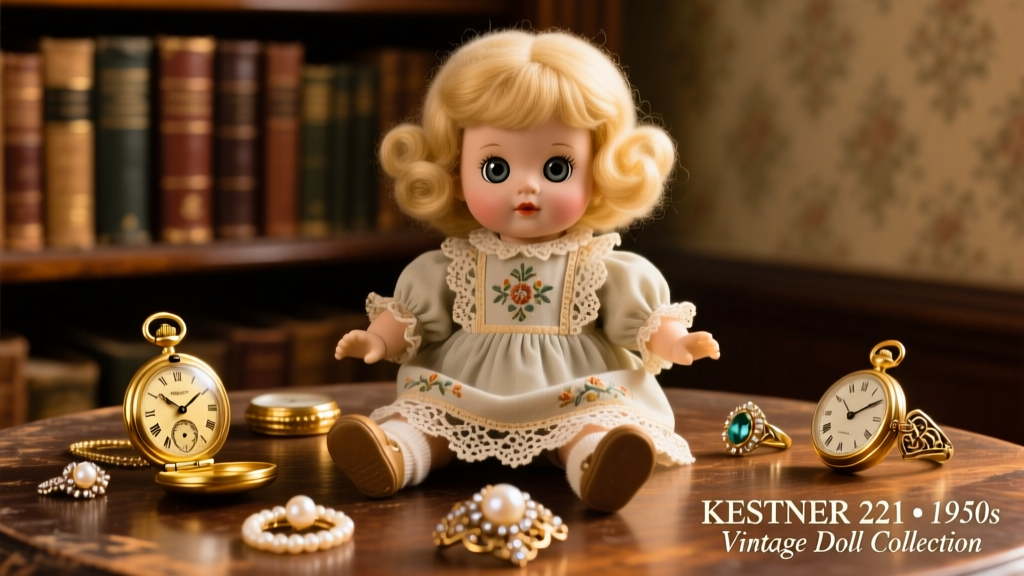
Doll Kestner 221: Authenticating the Googly-Eyed Blond Mohair Toddler Doll with Original 12-Inch Outfit
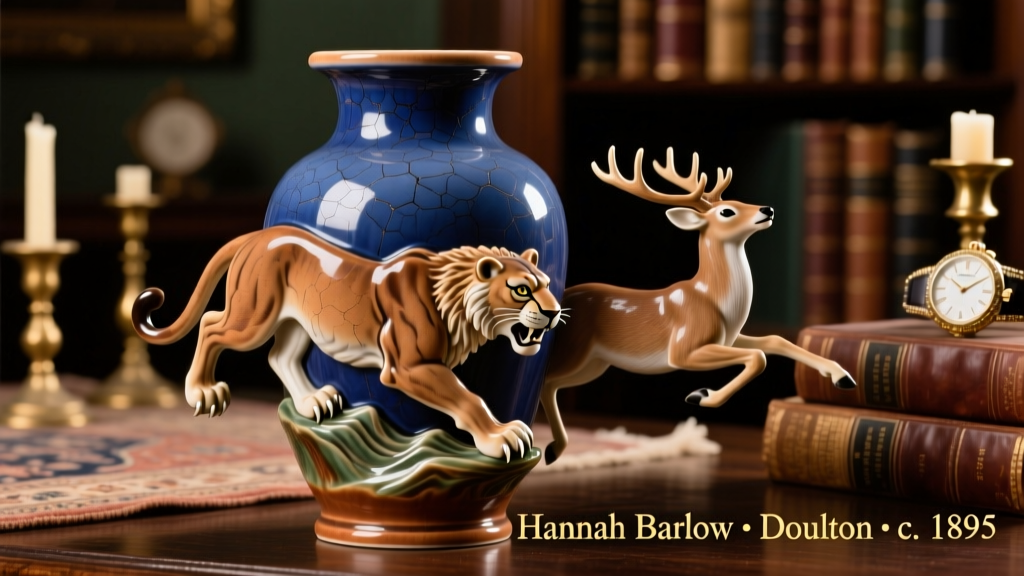
Doulton Vase: Stoneware Mountain Lions Stalking Deer by Hannah Barlow, c. 1895 — A Masterpiece of Victorian Animalier Sculpture
Goldscheider Figurine 'Courtesy' — A 10-Inch Art Deco Masterpiece in Gilt Bronze and Porcelain
Weller Wild Rose Peach Vase: Authentication, Provenance, and Market Value of the 6½-Inch Art Pottery Masterpiece
Downs Co. Stove-Top Coffee Roasters: The Cast-Iron Legacy of Seneca Falls, NY
The Gouvernoa Pocket Watch: Key-Wind, No Key, and the Enigma of Silveroid
Fiesta Cup and Saucer in Red No. 2: A Mid-Century American Ceramic Icon
The Beam Indian Maiden Box: A Collector’s Guide to a Rare 1940s American Jewelry Treasure
The John B. Taylor Harvest Plate: A Mid-Century American Dinnerware Landmark