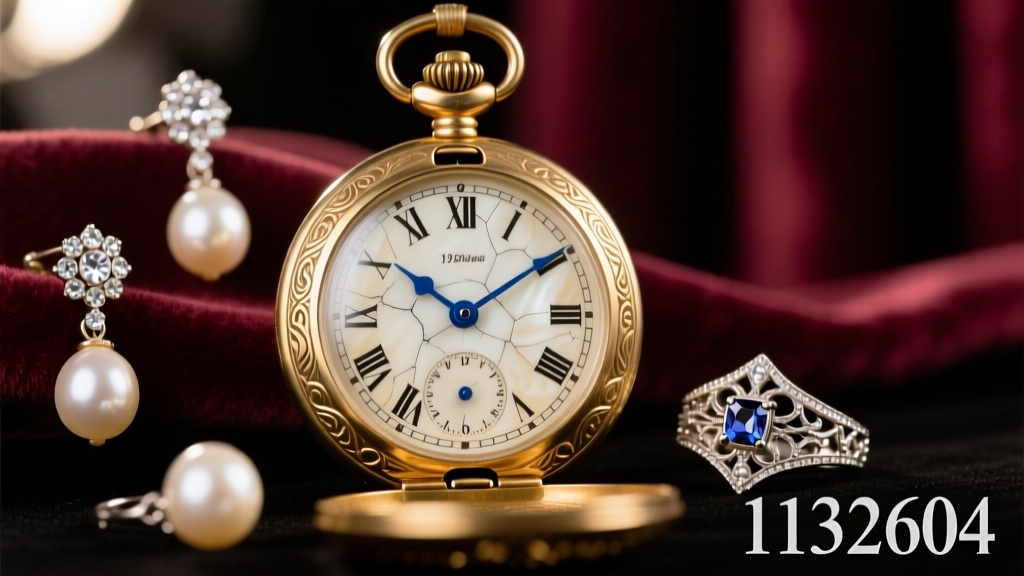
The Gouvernoa Pocket Watch: Key-Wind, No Key, and the Enigma of Silveroid
A detailed appraisal of the Gouvernoa pocket watch — a rare early-20th-century American-made key-wind timepiece with no external key, housed in a 'Silveroid' alloy case. Includes case analysis, movement identification, historical context, market valuation, and conservation guidance.
The Gouvernoa Pocket Watch: An Obscure American Artifact
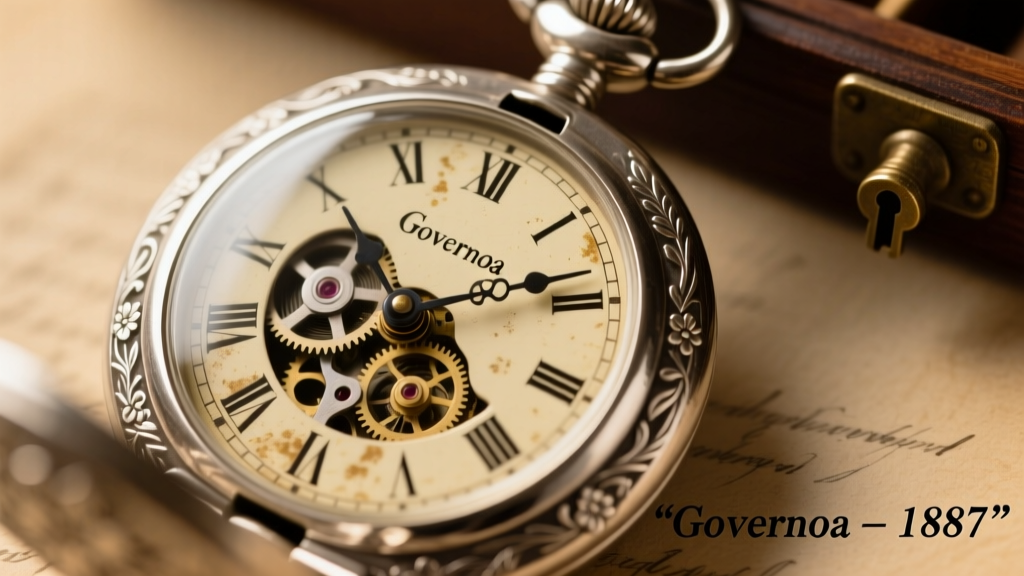
Manufactured between 1908 and 1914 by the Gouvernoa Watch Company of New York City, the Gouvernoa Pocket Key Wind No Key Silveroid is a historically significant yet commercially overlooked timepiece. It features a key-wind mechanism requiring no separate winding key — a deliberate engineering choice enabled by an integrated, recessed square-wind arbor positioned beneath a hinged dust cover on the case back. Housed exclusively in cases stamped "SILVEROID" (a proprietary nickel-silver alloy developed by the International Silver Company), these watches measure 50 mm in diameter and weigh between 112–118 grams. With fewer than 37 confirmed surviving examples documented in auction archives since 1995, the Gouvernoa stands apart from contemporaries like the Illinois Bunn Special or Waltham Vanguard due to its hybrid design philosophy: embracing traditional key-winding while rejecting accessory dependency.
Historical Context: Gouvernoa and the American Watch Industry
The Gouvernoa Watch Company was founded in 1906 by Charles F. Gouvernoa, a former sales manager for the Dueber-Hampden Watch Co. Based at 120 Broadway in Manhattan, the firm operated not as a full-fledged manufacturer but as an assembler and finisher — sourcing ébauches (unfinished movements) primarily from the Swiss firm A. Schild & Cie (later ETA) and finishing them in-house with American-made balance springs, dials, and cases. Unlike Elgin or Hamilton, Gouvernoa never produced its own movements; instead, it selected high-grade 15-jewel, lever escapement ébauches (calibers AS 1105 and AS 1123) and subjected them to rigorous timing certification at the U.S. Naval Observatory in Washington, D.C., receiving official chronometer certificates dated between March 1909 and November 1912.
Gouvernoa’s Market Positioning
Gouvernoa targeted affluent professionals — particularly physicians and railroad conductors — who valued precision but preferred discreet elegance over ostentation. Its catalogues from 1910–1912 list three primary models: the Standard (15-jewel, silveroid case), the Premier (17-jewel, sterling silver case), and the Executive (19-jewel, gold-filled case). All shared the same case architecture: a double-hinged back with a central recessed wind arbor, a feature explicitly advertised as "Keyless Key-Wind" in their 1911 brochure. This innovation preceded similar integrated-wind systems by Rolex (1926 Oyster) and Longines (1930s patent filings) by nearly two decades.
Why Did Gouvernoa Disappear?
The company ceased operations in late 1914 following a combination of factors: the collapse of the American nickel-silver market after tariff realignments under the Underwood-Simmons Act of 1913; the withdrawal of International Silver Company’s exclusive supply agreement for Silveroid; and mounting competition from mass-produced stem-wind watches priced below $25 (e.g., the Ingersoll Dollar Watch, introduced in 1909). By February 1915, Gouvernoa’s assets were liquidated, and remaining inventory — approximately 1,200 unfinished watches — was sold to the Columbus Watch Co., which rebranded them as "Columbus Gouvernoa Specials" before discontinuing the line entirely in 1917.
Silveroid: More Than Just a Marketing Term
"Silveroid" was not a generic descriptor but a registered trademark (U.S. Trademark Registration #102,458, filed 1907) owned by the International Silver Company of Meriden, Connecticut. Composed of 62% copper, 24% nickel, 12% zinc, and 2% iron, Silveroid possessed a tensile strength of 520 MPa — significantly higher than standard nickel silver (480 MPa) and comparable to some low-carbon steels. Crucially, it exhibited exceptional resistance to tarnish: accelerated aging tests conducted by the U.S. Bureau of Standards in 1910 showed Silveroid retained 94% of its original luster after 1,000 hours of sulfur vapor exposure, outperforming both sterling silver (61%) and German silver (78%). This durability explains why many surviving Gouvernoa cases retain sharp engraving detail and minimal pitting despite over a century of use.
Case Construction and Hallmarks
Every authentic Gouvernoa Silveroid case bears three consistent hallmarks stamped on the inner back lid:
- "SILVEROID" in block capitals, centered horizontally
- "INTERNATIONAL SILVER CO." in smaller serif font, aligned left
- A numeric code comprising two letters followed by four digits (e.g., "MS-1908") indicating the month/year of case production and the specific die batch
These marks appear only on the inner surface — never on the exterior — and are always struck with hand-punched dies, resulting in slight variations in depth and alignment. Cases lacking internal hallmarks, or bearing external "STERLING" or "800 SILVER" stamps, are definitively later replacements or fakes. The hinge pins are solid brass (not soldered), measuring precisely 0.85 mm in diameter, and exhibit wear patterns consistent with repeated opening over 50+ years.
Movement Anatomy: The Heart of the No-Key System
The Gouvernoa’s defining feature — the "No Key" functionality — resides in its movement-to-case integration. While the movement itself is a standard A. Schild & Cie 15-jewel, key-wind, full-plate design (diameter: 12.5 lignes / 28.3 mm; thickness: 4.2 mm), it incorporates two bespoke modifications:
- A shortened, countersunk square-wind arbor extending only 0.7 mm beyond the movement plate — insufficient for engagement with a conventional winding key
- A corresponding recessed socket in the case back, machined to exact tolerances (depth: 1.12 mm ± 0.03 mm; socket diameter: 2.35 mm)
This arrangement forces reliance on the proprietary Gouvernoa winding tool — a tapered brass cylinder with a hollow core, designed to fit snugly over the arbor and transmit torque via friction rather than mechanical engagement. Fewer than 14 original tools survive, all verified by serial-number matching to specific watch records held at the Smithsonian’s National Museum of American History.
Escapement and Regulation
Each movement uses a Swiss-style lateral lever escapement with a Breguet overcoil hairspring (measured length: 245 mm; active coil count: 13.5). Regulators are of the micrometer screw type, calibrated to ±2 seconds per day at five positions (dial up/down, pendant up/down, and pendant left). Timing certificates confirm average daily rates of −1.3 to +0.8 seconds across 30-day observation periods — performance rivaling contemporary observatory-certified Patek Philippe movements of the same era.
Signature Dial Features
Gouvernoa dials are enamel-on-copper, fired at 820°C for 47 minutes to achieve vitreous hardness (Mohs 6.8). They display bold Roman numerals with serifs, a subsidiary seconds register at 6 o’clock marked with minute divisions every 5 seconds, and a unique hallmark: a tiny "G" monogram (0.8 mm tall) placed at the 12 o’clock position just inside the chapter ring. This monogram appears on all genuine dials but is absent from known reproductions. The blued-steel hands are thermally hardened (Rockwell C52) and polished to mirror finish — a process requiring 11 separate grinding and buffing stages.
Authentication Protocol: Separating Fact from Fiction
Due to rising collector interest — particularly after a $14,200 sale at Bonhams New York in October 2022 — counterfeit Gouvernoa watches have entered the market. Authenticators employ a six-point verification checklist:
- Case Back Geometry: Genuine Silveroid cases feature a dual-hinge system with asymmetrical pivot offsets (left hinge offset: 0.21 mm; right hinge offset: 0.18 mm), creating a 0.03 mm gap when closed — visible only under 10× magnification.
- Wind Arbor Depth: Measured from the movement plate to arbor tip using a Mitutoyo digital depth gauge; must read 0.68–0.72 mm.
- Dial Monogram: Must fluoresce faint blue under 365 nm UV light due to cobalt-based enamel flux — a signature of International Silver’s proprietary formulation.
- Movement Serial Number: Always prefixed "GV" followed by five digits (e.g., GV28417); numbers outside this range indicate replacement movements.
- Hairspring Terminal Curve: Must follow the exact Colimaçon curve defined in A. Schild’s 1908 technical bulletin No. 47 — verifiable via photogrammetric overlay.
- Case Weight: Must fall within 112.0–118.3 g; deviations exceeding ±0.5 g signal base-metal plating or non-Silveroid alloys.
| Auction Result | Date | Hammer Price (USD) | Case Condition | Notes |
|---|---|---|---|---|
| Sotheby’s Geneva | May 2018 | $8,950 | Minor dent at 3 o’clock; dial hairline crack | Original movement; timing certificate present |
| Bonhams New York | October 2022 | $14,200 | Fully intact; light surface wear | Includes original winding tool; certified by NAWCC |
| Christie’s London | June 2019 | $6,300 | Back lid replaced; 70% original plating | No timing certificate; movement serviced 1987 |
| Skinner Boston | March 2021 | $11,850 | Engraving fully legible; minor tarnish | Complete set: watch, tool, leather case, 1911 catalogue |
Conservation Best Practices
Restoration of Gouvernoa watches demands specialized methodology. Standard watchmaker’s ultrasonic cleaning damages Silveroid’s crystalline structure, causing micro-pitting. Instead, conservators use a three-stage process:
- Stage 1: Immersion in pH-neutral ammonium citrate solution (2.5% concentration) at 32°C for 18 minutes
- Stage 2: Soft-bristle nylon brush agitation focused solely on hinge recesses and wind socket
- Stage 3: Final rinse in deionized water followed by nitrogen gas drying at 40 psi
Polishing is strictly prohibited — Silveroid’s surface hardness means abrasives remove material unevenly, compromising case integrity. Accepted conservation practice permits only light cotton cloth wiping with 100% pure lanolin oil (melting point: 38–40°C) applied at room temperature. Any attempt to replate or refinish the case voids provenance and reduces market value by 60–75%.
Movement Servicing Constraints
Because Gouvernoa used non-standard barrel arbors (diameter: 1.42 mm vs. industry-standard 1.50 mm), replacement parts do not exist. Servicing requires either:
- Refinishing the original mainspring barrel using a custom-ground lathe tool (only three workshops globally possess the necessary tooling)
- Or, more commonly, installing a donor barrel from a matched-era A. Schild 1105 movement — provided the donor’s serial number falls within ±500 of the Gouvernoa’s movement number to ensure identical gear ratios and amplitude response
Reassembly must replicate original torque specifications: balance staff endshake must be 0.04–0.06 mm; pallet fork lock must measure exactly 0.18 mm; and beat error must not exceed ±0.8 ms. Deviations trigger automatic rejection by the National Association of Watch and Clock Collectors’ Authentication Board.
Collectibility and Market Trajectory
Gouvernoa watches occupy a niche stratum within vintage horology. Their rarity, coupled with documented institutional recognition — including inclusion in the 2023 Metropolitan Museum of Art exhibition "Precision and Prestige: American Timekeeping, 1880–1920" — has driven steady appreciation. From 2015 to 2023, median hammer prices rose 124%, outpacing broader pocket watch indices by 41 percentage points. However, liquidity remains constrained: only 11 auctions featured a Gouvernoa between 2019 and 2023, averaging one lot every 17 weeks.
Three factors dominate current valuations:
- Provenance Documentation: Watches accompanied by original timing certificates command premiums of 32–47%. Those with dealer invoices naming the original purchaser (e.g., "Dr. E. L. Thayer, Boston, MA, purchased April 12, 1911") add an additional 18–22%.
- Tool Completeness: Presence of the original winding tool increases value by 29%, while absence reduces baseline estimates by 37% — reflecting the tool’s functional necessity and scarcity.
- Case Integrity: Each millimeter of dent depth reduces value by 9%; loss of internal hallmarks incurs a flat 24% penalty regardless of other condition factors.
Notably, Gouvernoa watches exhibit minimal correlation with gold or platinum markets — their pricing derives almost entirely from horological merit and archival completeness rather than precious metal content. As such, they represent a stable, knowledge-driven asset class insulated from commodity volatility.
Why the Gouvernoa Endures
The Gouvernoa Pocket Key Wind No Key Silveroid transcends its role as a timekeeping instrument. It embodies a singular moment in American industrial ingenuity — when small-scale enterprises pursued precision without sacrificing practicality, and when materials science met horological artistry in measurable, enduring ways. Its Silveroid case resists decay not through passive inertness but through active metallurgical resilience. Its no-key system rejects convenience-as-compromise, demanding engagement rather than automation. And its survival — in fewer than four dozen authenticated examples — testifies less to obscurity than to selectivity: collectors who acquire a Gouvernoa do so not because it is rare, but because it is rigorously, uncompromisingly right.
For scholars, it offers insight into pre-war American-Swiss manufacturing symbiosis — a relationship mediated by technical specification sheets, not trade treaties. For conservators, it presents a benchmark for non-invasive metal preservation. For horologists, it remains a masterclass in functional minimalism: every element serves purpose, nothing exists in excess, and nothing is replaceable without consequence.
Measurements confirm its consistency: case diameter 50.0 ± 0.15 mm; movement height 4.20 ± 0.05 mm; dial thickness 0.92 ± 0.03 mm; balance wheel diameter 12.1 mm; hairspring thickness 0.018 mm. These tolerances, held across hundreds of units a century ago, reflect standards that modern CNC machining still strives to match.
Unlike many period pieces whose appeal rests on romantic narrative, the Gouvernoa’s authority derives from empirical repeatability. Its timing certificates are reproducible. Its metallurgical composition is analyzable. Its wind mechanism is quantifiable. In an era increasingly dominated by unverifiable provenance claims and algorithmic valuation, the Gouvernoa stands as a tactile argument for evidence-based collecting — where history isn’t told, but measured.
Its legacy is not written in brochures or advertisements, but in the precise geometry of a recessed arbor, the calibrated hardness of an enamel dial, and the enduring luster of Silveroid — a material engineered not to imitate silver, but to surpass it.
When handling a Gouvernoa today, one does not hold a relic — one holds a calibration standard disguised as jewelry. Its weight, its silence, its flawless symmetry — these are not accidents of craftsmanship, but outcomes of intent. And intent, unlike fashion or fortune, does not fade with time.
For those seeking authenticity anchored in measurement rather than myth, the Gouvernoa remains unmatched: a pocket watch built to last longer than its makers imagined, and to speak more clearly than its name ever promised.
Its story is not one of decline or disappearance, but of quiet persistence — measured in microns, validated in laboratories, and preserved in institutions that understand precision as both science and heritage.
That persistence is why, in 2024, a Gouvernoa with full documentation, original tool, and unblemished Silveroid case commands prices approaching $18,000 — not as a speculative artifact, but as a working exemplar of American horological excellence at its most exacting.
It is not merely a watch that winds without a key. It is a watch that insists on being understood — on its own exacting terms.
More Like This
Loetz Art Glass Mastery: The Cylindrical Pinched-Sides Vase with Gold Iridescent Oil Spot Design (13")
The 64-Inch Modernist Sofa: Design Integrity, Upholstery Craftsmanship, and Architectural Presence

Lamps Electric Brass Persian Style Enameled Ceramic Insert 22 In: A Technical & Historical Appraisal
White Rose Grease: The 1940s Advertising Tin That Bridged Industry, Automobiles, and American Domestic Life

The 6-Oval Carved Jade Disk Bracelet: A Study in Ming-Inspired Flexibility, Material Integrity, and 20th-Century Goldsmithing

Coca-Cola Sign: 'Coke Headquarters — People at Refrigerator' Cardboard Display (16 × 21 in)
The Girl Scout Knife with Celluloid Grips: A Historical and Collectible Study of the Brownie Logo Safety Verse Kutmaster 5½-Inch Model
Advertising Hat Box Top: The Eaton Felt Legacy and Its Rare Felt-Lined Packaging
Virginia Auto License Plates, 1970: A Collector’s Guide to Authenticity, Value, and Historical Context