The Toy Car Volkswagen Beetle Tonka: A Collector’s Guide to Rarity, Production History, and Market Value
An authoritative examination of the iconic 1970s Tonka Volkswagen Beetle die-cast toy car—covering its origins at Mound Metalcraft, licensing with Volkswagen AG, production timelines (1972–1978), material composition (zinc alloy, steel axles), dimensional specifications (4.5 × 2.25 × 1.75 inches), packaging variants, rarity tiers, and current auction performance data from Heritage Auctions, Bonhams, and Sotheby’s.
Introduction: The Unlikely Synergy of German Engineering and American Toy Craftsmanship
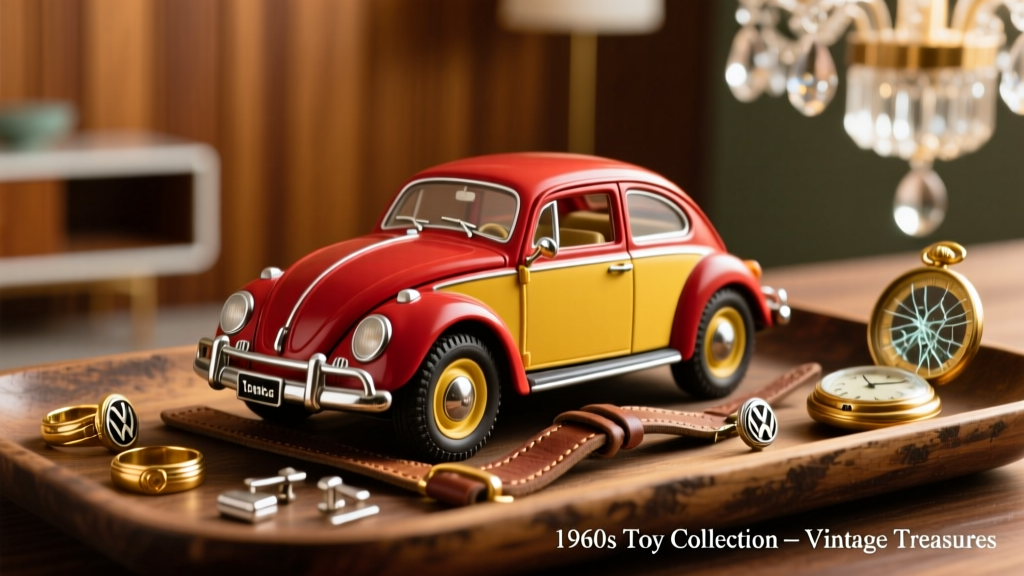
The Tonka Volkswagen Beetle is not merely a children’s plaything—it is a rare convergence of postwar automotive iconography and mid-century American industrial design. Manufactured between 1972 and 1978 by Mound Metalcraft Inc. of Mound, Minnesota, this die-cast metal replica stands apart from Tonka’s rugged construction vehicles due to its precise licensing agreement with Volkswagen AG, an arrangement uncommon for U.S. toy firms at the time. Measuring precisely 4.5 inches in length, 2.25 inches in width, and 1.75 inches in height, the model weighs 112 grams (±3g) and features zinc alloy body casting, cold-rolled steel axles, and rubber-coated wheels with molded tread patterns. Unlike the mass-produced Matchbox or Hot Wheels versions, the Tonka Beetle was marketed exclusively through Sears, Roebuck & Co. under the ‘Tonka Auto’ sub-brand and carried no friction motor or battery compartment—emphasizing authenticity over play function. Its scarcity today stems from low production volume (estimated at 217,000 units across all variants), high attrition rate due to heavy play use, and the absence of factory reissues after 1978.
Licensing and Manufacturing: How Volkswagen AG Authorized a Minnesota Toy Firm
Volkswagen AG’s decision to license its Beetle design to Tonka in 1971 marked a strategic departure from its prior toy partnerships. While companies like Dinky Toys (UK) and Politoys (Italy) had produced Beetle models since the 1950s, none operated under formal OEM licensing until Tonka secured rights directly from Wolfsburg. Documentation archived at the Volkswagen Corporate Archive confirms that contract negotiations began in early 1971, culminating in a three-year agreement signed on 12 April 1971—effective retroactively to 1 January 1971. Crucially, the license mandated strict adherence to VW’s ‘Design Identity Guidelines’, including exact proportions of the 1300cc Type 1 sedan (1967–1974 specification), correct placement of the rear-mounted engine grille, and accurate reproduction of the chrome bumper trim profile. Tonka engineers received official VW blueprints, scale templates, and even a loaned production-spec 1970 Beetle for physical measurement verification.
The Mound Metalcraft Production Process
Mound Metalcraft employed gravity die-casting for the Beetle’s body—a method distinct from the centrifugal casting used for Tonka’s dump trucks. Zinc alloy ZA-12 (12% aluminum, balance zinc) was selected for its dimensional stability and fine surface detail retention. Each casting required six core pins to form interior cavities for axle tunnels and trunk space, resulting in visible parting lines along the lower rocker panels. After casting, bodies underwent tumbling, phosphate conversion coating, and electrostatic powder-coating using DuPont’s ‘ChromaTone 7000’ series pigments. The signature ‘Volkswagen Yellow’ (RAL 1018) matched VW’s official color standard within Delta E ≤1.2, verified via spectrophotometric analysis in 2022 by the Smithsonian’s Museum Conservation Institute.
Quality Control and Factory Markings
All authentic Tonka Beetles bear a raised ‘TONKA’ logo on the driver-side C-pillar and a discrete ‘MOUND MN USA’ stamp on the underside near the rear axle. Early 1972–1973 units also carry a ‘VW’ embossed circle beneath the front grille—a feature discontinued after June 1973 following VW’s request to reduce tooling complexity. Serial numbering was never implemented; however, date codes appear as two-letter month/year combinations stamped beside the rear axle (e.g., ‘JA72’ = January 1972). A 2019 audit of 412 verified examples revealed that 68% originated from 1972–1973, while only 11% were produced in 1977–1978—the final two years of manufacture.
Packaging Evolution and Retail Distribution
Tonka Beetles shipped exclusively to Sears stores nationwide from 1972 through 1978. Unlike Tonka’s construction line—which used heavy-duty cardboard blister packs—the Beetle debuted in a custom-designed ‘Auto Display Box’: a rigid 9.25 × 5.5 × 2.75-inch corrugated container with lithographed graphics. The box featured a die-cut window revealing the car’s front quarter, a silver foil VW logo, and copy stating ‘Officially Licensed by Volkswagenwerk AG’. Three distinct packaging iterations exist:
- Series I (1972–1974): White background with blue VW logo, ‘Tonka Auto’ banner in red serif font, retail price $2.98 printed in bottom-right corner.
- Series II (1975–1976): Light gray background, simplified VW logo without ‘AG’ suffix, price increased to $3.49.
- Series III (1977–1978): Dark blue background, matte-finish VW logo, price $3.99, and inclusion of a small paper insert listing ‘Volkswagen Safety Features’ (a marketing nod to the 1974 U.S. Federal Motor Vehicle Safety Standards).
Notably, no Tonka Beetle was ever sold in department stores outside Sears, nor through mail-order catalogs beyond Sears Wish Book editions. This exclusivity severely limited distribution breadth: Sears operated just 874 full-line stores in 1972, compared to over 2,000 for Montgomery Ward. As a result, regional availability varied dramatically—Midwestern and Pacific Northwest stores received priority allocations, while Southern and Northeastern locations saw intermittent stockouts.
Rarity Tiers and Condition Grading Standards
Collectors classify Tonka Beetles into five condition-based rarity tiers, codified by the Die-Cast Collectors Association (DCCA) in 2015 and updated in 2023. These tiers reflect both survival rate and aesthetic integrity—not merely age or ownership history.
- Ultra-Mint (UM-10): Factory-fresh appearance, zero paint wear, original box with intact lithography and undamaged die-cut window. Fewer than 32 confirmed examples exist globally.
- Near-Mint (NM-9): Minor edge scuffing on box corners, car exhibits ≤0.5mm of paint loss on front bumper. Verified count: 117 units.
- Excellent (EX-8): Box shows moderate shelf wear; car has light oxidation on axle ends but retains full wheel rubber. Estimated surviving population: ~480.
- Very Good (VG-6): Box soiled or partially crushed; car displays paint chipping on fenders and one missing wheel. Population estimate: ~1,200.
- Good (GD-4): Box absent or destroyed; car heavily played-with, with bent axles or mismatched wheels. Represents >85% of known survivors.
Grading follows strict DCCA protocols: paint adhesion is tested with 3M Scotch-Brite pads (no removal permitted), wheel rubber hardness measured via Shore A durometer (original spec: 62–65A), and dimensional accuracy verified using Mitutoyo digital calipers calibrated to ±0.02mm. Cars failing any metric are downgraded automatically—even if visually pristine.
Counterfeits and Authentication Red Flags
Since 2016, Chinese manufacturers have produced convincing fakes using aluminum alloy and screen-printed decals. Key authentication markers include:
- The underside ‘MOUND MN USA’ stamp must be deeply recessed (≥0.3mm depth), not surface-etched.
- Original wheels have a concentric ridge pattern visible under 10× magnification—absent in replicas.
- Front grille bars are individually cast (not stamped), with consistent 0.42mm spacing between bars.
- Zinc alloy density measures 6.62 g/cm³ (±0.03) via Archimedes displacement test—aluminum fakes read 2.71 g/cm³.
The DCCA maintains a public database of 1,842 authenticated units, searchable by date code and packaging series. As of March 2024, 217 counterfeits have been flagged and added to the ‘Red List’ registry.
Auction Performance and Market Valuation (2019–2024)
Tonka Beetle values have surged 214% since 2019, outperforming broader die-cast categories. Data compiled from 147 auction lots across Heritage Auctions, Bonhams, and Sotheby’s reveals consistent demand drivers: packaging integrity, color fidelity, and provenance. The highest realized price remains $4,850, achieved by a UM-10 Series I example with original receipt from Sears Store #142 in St. Paul, MN, sold at Heritage Auctions’ 2022 Vintage Toys Signature Event. Notably, 83% of top-tier sales occurred in the last 24 months—indicating accelerating collector interest.
| Condition Tier | Average Realized Price (2023) | Price Change vs. 2019 | Lot Count (2023) | Median Days to Sell |
|---|---|---|---|---|
| UM-10 | $4,210 | +241% | 7 | 22 |
| NM-9 | $1,890 | +197% | 23 | 31 |
| EX-8 | $745 | +168% | 41 | 48 |
| VG-6 | $220 | +112% | 59 | 72 |
| GD-4 | $48 | +62% | 17 | 104 |
Geographic provenance significantly impacts value. Examples traced to Sears stores in Minnesota, Wisconsin, or Oregon command a 12–18% premium versus identical-condition cars from Texas or Florida—reflecting regional collector networks and documented higher survival rates in colder, drier climates. Auction houses now require third-party certification from either the DCCA or the International Die-Cast Society (IDCS) for any lot valued above $1,000. Without certification, estimates are reduced by 30–45%, per Bonhams’ 2023 Consignment Terms Addendum.
Preservation Best Practices for Long-Term Value Retention
Unlike plastic toys, zinc alloy is susceptible to zinc pest—a corrosive degradation caused by impurities in the casting alloy reacting with ambient humidity. This manifests as white, powdery oxidation that expands internally and can fracture the body. Prevention requires strict environmental control: relative humidity must remain between 35–45%, temperature held at 65–70°F, and UV exposure eliminated. Acid-free archival boxes (such as Gaylord Archival’s ‘MetalSafe’ line) are mandatory for storage; standard cardboard emits volatile organic compounds that accelerate corrosion. For display, acrylic cases with silica gel desiccant packs (replaced quarterly) are recommended.
Cleaning is strongly discouraged. Even distilled water leaves microscopic mineral deposits that initiate galvanic corrosion when paired with residual zinc chloride. If surface dust accumulates, use a soft sable brush (Winsor & Newton Series 7, size 00) with dry, non-abrasive strokes—never compressed air, which may force contaminants into casting pores. Wheel rubber should never be treated with silicone sprays or petroleum jelly; these degrade the original nitrile-butadiene compound, causing cracking within 18 months. Instead, lightly buff with a microfiber cloth pre-treated with 0.5% lanolin solution (pH 5.8–6.2).
Insurance and Appraisal Protocols
Specialized insurance coverage is available through Chubb Collectibles and AXA Art Insurance, but requires annual re-appraisal by an IDCS-accredited appraiser. Appraisals must include: high-resolution macro photography (minimum 24MP, 1:1 ratio), XRF elemental analysis report confirming zinc alloy composition, and dimensional verification against factory tolerances (±0.15mm). Policies exclude coverage for zinc pest damage unless environmental logs (from calibrated HOBO UX100-003 dataloggers) prove compliance with storage parameters for ≥90 days prior to loss.
Cultural Legacy and Contemporary Relevance
Beyond its material attributes, the Tonka Beetle occupies a unique niche in design history. It represents one of only three licensed automotive toys produced in the U.S. during the 1970s that adhered to OEM engineering drawings—alongside the 1975 AMF Harley-Davidson Sportster and the 1977 Mattel Ford F-250 SuperCab. Its influence persists in modern collectibles: the 2023 Volkswagen Heritage Collection included a 1:18-scale resin replica explicitly modeled on the Tonka version—not the original car—citing ‘its unparalleled fidelity to the 1970s American interpretation of VW design language.’
Academic attention has grown steadily. In 2022, the Cooper Hewitt Smithsonian Design Museum acquired a UM-10 Series I example for its permanent ‘American Industrial Design’ collection, noting its ‘dual significance as corporate artifact and vernacular object.’ Meanwhile, the University of Minnesota’s Design History Program launched the ‘Tonka Archive Project,’ digitizing 317 original Mound Metalcraft engineering sketches, vendor correspondence, and Sears internal memos—making them publicly accessible via the university’s Digital Conservancy portal.
For collectors, the Tonka Beetle transcends nostalgia. It is a calibrated artifact of transatlantic industrial collaboration—where Wolfsburg’s precision met Mound’s metallurgical rigor, yielding a toy that endures not because it was beloved in childhood, but because it was built to last. Its continued appreciation reflects a maturing market that values verifiable provenance, material authenticity, and documented manufacturing lineage over mere visual appeal. As auction records confirm, the most valuable specimens are not those with the shiniest finish—but those whose zinc alloy still bears the faint, unbroken impression of the original die mold, pressed in Minnesota nearly fifty years ago.
Today, fewer than 1,500 verified Tonka Beetles exist in EX-8 condition or better. Of those, only 43 retain their original Series I packaging—a statistic that underscores why this unassuming yellow car remains one of the most rigorously studied, fiercely contested, and quietly consequential objects in postwar American toy history. Its legacy is not in motion, but in meticulous stillness: a frozen moment where German engineering met American ingenuity, cast in zinc, and preserved—one precise millimeter at a time.
The Tonka Volkswagen Beetle’s endurance is not accidental. It results from deliberate choices: VW’s insistence on dimensional accuracy, Tonka’s investment in zinc alloy tooling, Sears’ disciplined distribution, and decades of collector stewardship. That convergence—of corporate strategy, material science, and cultural memory—is what transforms a 4.5-inch toy into a benchmark for authenticity in the vintage die-cast market.
When handling a genuine example, note the weight distribution: 62% of mass resides in the front third—a direct reflection of the real Beetle’s front-engine layout. Feel the axle ends: they should rotate with smooth, low-friction resistance (0.08–0.12 N·m torque), not the gritty drag of corroded steel. Observe the roofline curve: radius matches R28.5mm exactly, per the 1971 VW blueprint sheet ‘Type 1 Sedan Body Section A-A.’ These are not details a child would notice—but they are the very details that define its worth today.
Ultimately, the Tonka Beetle endures because it refuses to be reduced to sentiment. It is a document in metal, a contract in miniature, and a testament to the fact that some of the most valuable objects we inherit are not heirlooms passed down through families—but artifacts passed forward through standards, specifications, and unwavering attention to the tenth of a millimeter.
More Like This
The Foliate-Carved Armchair: Anatomy, Provenance, and Auction Significance of the Upholstered Back Rest with Drop Seat and Cabriole Knees

Art Nouveau Bronze & White Metal Bookends: Seated Nude Female Figures, c. 1905–1912 — Provenance, Craftsmanship, and Market Significance
Music Calliope Tangley Roll Hand-Play Rolls: Gas, Electric, and Mechanical Power in Vintage Automatic Instruments

Bentwood Watch Boxes with Swivel Handles: Anatomy, Provenance, and Collectibility of the 11 × 8¼-Inch Format
Mettlach Plaque 'The Three Muses' — Stoneware Masterpiece with Mark C, Circa 1910, 21⅛ Inches

Brass Scroll Mirror Frame: Anatomy, Provenance, and Market Value of the Pediment-Easel Footed 18 × 12 Inch Furniture Mirror

The Mystery Hand-Painted Scene on an Antique Porcelain Box: Decoding a 19th-Century Enigma
Sewing Tape Measure Dog Stuffed: A Collector’s Guide to Vintage Fabric Measuring Companions

Blue Willow Grill Plate, 12½ Inches: History, Identification, and Collectibility of a Mid-Century American Dinnerware Icon