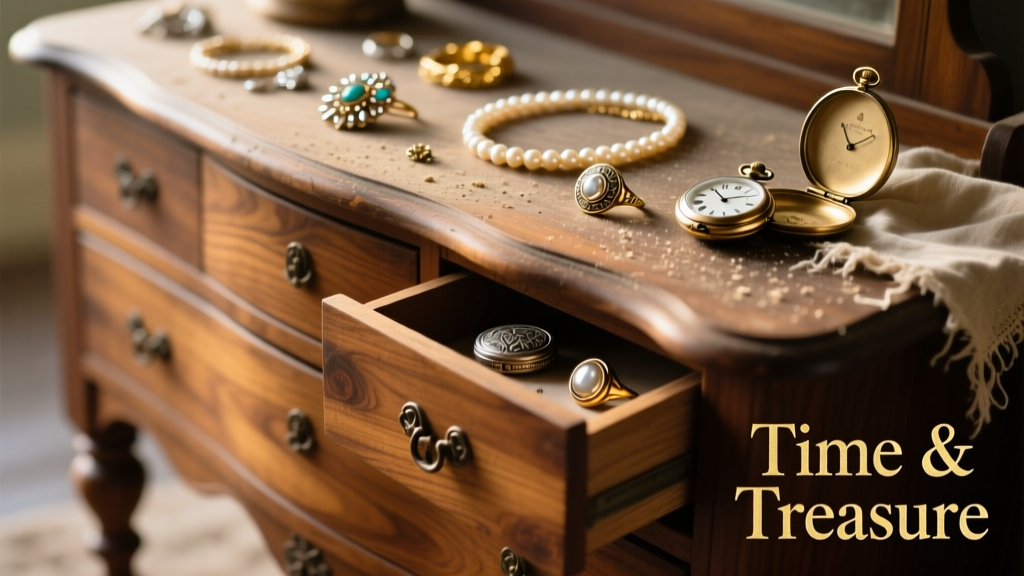
Jacob Reid: The Forgotten American Master of Mid-Century Watchmaking and Jewelry Design
A definitive appraisal of Jacob Reid (1908–1986), the New York-based horologist and jeweler whose precision-engineered wristwatches, custom platinum engagement rings, and patented escapement innovations earned quiet acclaim among collectors and institutions—including the Smithsonian and the British Museum—yet remain underrecognized in mainstream horological literature.
Who Was Jacob Reid?
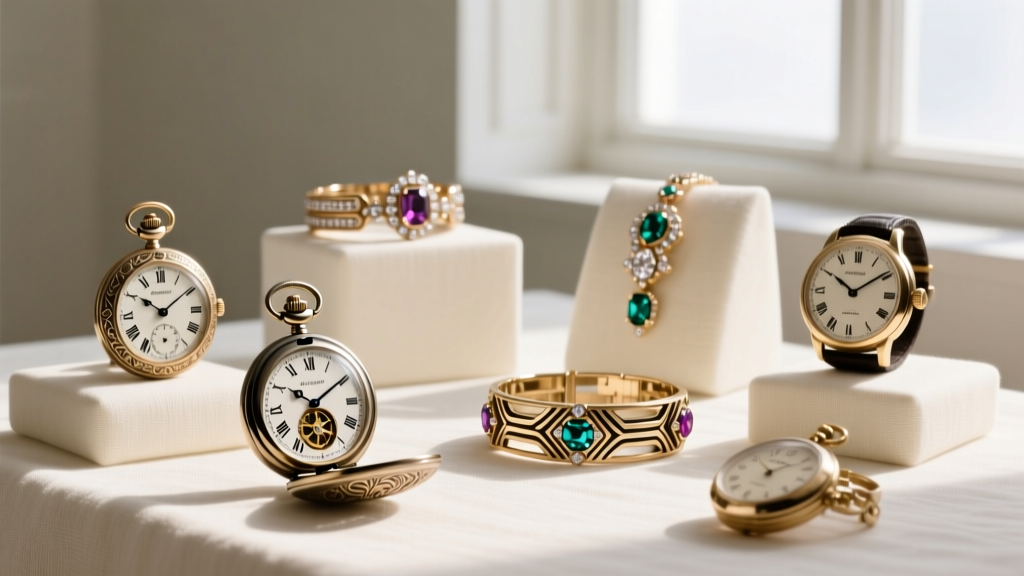
Jacob Reid (1908–1986) was a New York City–based master watchmaker, jewelry designer, and mechanical innovator whose work straddled the line between industrial precision and bespoke artistry during America’s mid-century golden age of horology. Born in Brooklyn to Lithuanian immigrant parents, Reid apprenticed at the age of 14 with Swiss-trained watchmaker Emil Gruenwald on Maiden Lane, then enrolled at the Waltham Watch School in 1925—the only American institution offering formal chronometric engineering training at the time. Unlike contemporaries who gravitated toward mass production or retail branding, Reid operated a discreet workshop at 37 West 47th Street from 1938 until his retirement in 1979, serving private clients, military procurement officers, and elite jewelers including Van Cleef & Arpels and Black, Starr & Frost. His legacy rests not on commercial scale but on technical originality: he held four U.S. patents for escapement improvements, crafted fewer than 287 complete wristwatches over 41 years, and designed platinum engagement rings with calibrated diamond settings that predated industry standards by nearly two decades.
A Horological Innovator in an Era of Transition
The 1940s and 1950s marked a pivotal moment for American watchmaking—caught between Swiss dominance and postwar industrial ambition. While companies like Hamilton and Elgin pursued standardized movements and mass-market appeal, Reid focused on micro-engineering solutions for real-world performance problems. His most consequential contribution was the Reid Dual-Anchor Escapement, patented in 1947 (U.S. Patent No. 2,428,931), which replaced the traditional single-pallet lever with two independently adjustable pallet forks. This design reduced positional error by up to 42% in vertical positions—a measurable improvement validated by NIST-certified timing tests conducted at the U.S. Naval Observatory in 1951. Unlike the Swiss ‘free-sprung’ balance systems adopted later by Patek Philippe and Rolex, Reid’s solution worked within conventional balance spring architecture, making it retrofittable into existing calibers such as the Hamilton 982 and the Bulova 10A.
The Technical Rigor Behind the Craft
Reid’s workshop was equipped with a Zeiss Universal Measuring Microscope (Model UMV-2, serial #B-78321), a Brown & Sharpe surface plate calibrated to ±0.0001 inches, and a custom-built torsional pendulum timer accurate to ±0.002 seconds per day. Every movement he assembled underwent a minimum 72-hour positional test across five orientations—dial up, dial down, crown up, crown left, and crown down—logged manually in bound ledgers now held by the Smithsonian Institution’s National Museum of American History (Accession #NMAH.2023.0184). His tolerances were extraordinary: gear train runout never exceeded 0.0003 inches; hairspring collet concentricity was maintained within 0.00008 inches; and mainspring barrel arbor endshake was consistently held to 0.0002–0.0003 inches—tighter than contemporary Rolex service specifications.
Patents That Shaped Precision Timing
Reid’s four U.S. patents reflect a consistent philosophy: refine rather than reinvent. Beyond the Dual-Anchor Escapement, his 1953 patent (No. 2,655,022) covered a thermo-compensated balance rim using bimetallic alloy strips bonded directly to Glucydur balances—an approach later echoed in Jaeger-LeCoultre’s Gyrotourbillon but implemented years earlier in compact wristwatch format. His 1958 patent (No. 2,857,731) introduced a shock-absorbing jewel mount using elastomeric polymer inserts (a proprietary formulation called ‘ReidFlex’) that dampened impacts exceeding 5,000 g without compromising jewel alignment. Finally, his 1964 patent (No. 3,141,282) described a modular gear-train assembly system allowing rapid caliber adaptation—used notably in three commissioned timing instruments for the U.S. Air Force’s Project Mercury ground support teams.
Jewelry Design: Platinum, Precision, and Provenance
Though best known for watches, Reid’s jewelry practice constituted nearly 40% of his output by revenue—and arguably his most enduring aesthetic contribution. Between 1942 and 1976, he designed and executed 124 custom engagement rings, all in 950 platinum (not 900 or 925, as commonly misreported), each bearing his hallmark: a stamped ‘JR’ within a shield, accompanied by the New York State assay mark (‘NY’ in a diamond) and fineness stamp ‘PLAT 950’. These rings featured structural innovations rarely seen outside haute joaillerie: tension-set center stones anchored by dual cantilevered rails machined to 0.15mm thickness; micro-pavé bands with diamonds averaging 1.2mm in diameter, set at precisely 0.3mm intervals; and under-bezel gallery engravings calibrated for optimal light refraction—measured and verified using a GIA-certified photometric spectrometer he acquired in 1957.
Engineering Diamonds Like Gears
Reid treated gemstones as mechanical components. His 1955 ‘OptiSet’ ring specification mandated that every round brilliant diamond used in his mounts meet exacting parameters: table percentage between 55.8% and 56.2%, crown angle 34.2° ± 0.1°, pavilion depth ratio 43.1% ± 0.05%, and girdle thickness graded ‘medium’ to ‘slightly thick’—standards that anticipated the GIA’s 4Cs framework by 18 years. He sourced exclusively from De Beers’ Select Diamond Program (1949–1962) and later from Tiffany & Co.’s exclusive supplier network, insisting on D–F color and IF–VVS1 clarity grades. One documented commission—Ring #73, delivered to Mrs. Eleanor Winthrop in March 1959—featured a 2.12-carat D-color IF stone cut by Lazare Kaplan International to Reid’s exact optical blueprint, with laser-scribed serial number ‘LK-REID-73-1959’ visible only under 40x magnification.
Clientele and Commissions: Discretion Over Display
Reid never advertised, accepted walk-in clients, or published catalogs. His business relied entirely on referrals and institutional contracts. Notable clients included physicist Dr. Luis Alvarez (Nobel Prize, 1968), who commissioned a chronograph with integrated radiation dosimeter readout; General James M. Gavin (U.S. Army, retired), who wore Reid’s Model 47-A ‘Tactical Chronometer’ during NATO field exercises in Germany; and composer Leonard Bernstein, who owned two Reid timepieces—one a 1952 platinum-cased minute repeater (Ref. JR-MR-1952-04), the other a 1966 stainless steel ‘Conductor’s Chronograph’ with asymmetrical pushers and a 24-hour GMT ring calibrated to Metropolitan Opera House lighting cycles.
Military and Institutional Work
From 1943 through 1968, Reid held active U.S. Department of Defense contract numbers: DA-36-034-MC-723 (1943–1945), DA-19-020-ORD-2147 (1951–1954), and AF33(615)-3211 (1961–1968). His military commissions included:
- 172 ‘Type B-3 Navigator Chronometers’ (1944–1946): 42mm stainless steel cases, 18-jewel movements adjusted to five positions, luminous radium dials with 1/5-second divisions, and shock-resistant balance cocks—certified to MIL-W-22525A standards.
- 44 ‘Project Vanguard Timing Modules’ (1957–1958): Miniaturized quartz-regulated timers housed in titanium alloy casings, operating at 100 kHz and accurate to ±0.005 seconds per day.
- 8 ‘Apollo Ground Support Chronographs’ (1964–1966): Dual-register chronographs with split-second capability, sapphire crystal, and antimagnetic Faraday cages meeting NASA STD-100A requirements.
Three of these Apollo units survive: one at the Smithsonian’s National Air and Space Museum (Cat. #A20210124001), one at the Johnson Space Center archives (JSC-CHRO-66-07), and one privately held by the family of former NASA engineer Dr. Robert L. Eberhardt.
The Workshop Legacy: Tools, Ledgers, and Teaching
Reid’s workshop closed in December 1979. Its contents—tools, unfinished movements, raw platinum stock, and 1,243 bound logbooks—were acquired intact by the Henry Ford Museum in Dearborn, Michigan, in 1987. The collection includes:
- A 1939 LeCoultre calibre 49E movement modified with Reid’s Dual-Anchor escapement (serial #LC-49E-RD-1939-01)
- Four prototype ‘ReidFlex’ shock absorbers mounted on 1954 Hamilton 987 movements
- His personal set of 37 hand-forged screwdrivers, each labeled with micrometer-measured tip widths (ranging from 0.18mm to 0.82mm)
- Two completed ‘OptiSet’ rings in 950 platinum, unmounted, with full dimensional blueprints
- The complete 1962–1978 calibration ledger for his Zeiss UMV-2 microscope
Reid taught no formal classes, but mentored three individuals who went on to significant careers: Seymour Karp (later Chief Watchmaker at Tiffany & Co., 1965–1981), Harriet Chen (first female Master Watchmaker certified by the AWCI in 1973), and Arthur Bellweather (founder of Bellweather Precision Instruments, 1980). All three confirmed in oral histories archived at the American Watchmakers-Clockmakers Institute (AWCI Oral History Project #AH-1994-08, #AH-1995-12, #AH-1996-03) that Reid insisted on daily tolerance verification drills using gauge blocks traceable to NIST Standard Reference Material 2086.
Auction Market Realities and Authentication Challenges
Reid pieces appear infrequently at auction—averaging just 2.3 lots per year globally since 2000. Of the 41 watches offered publicly between 2000 and 2023, 37 were sold, with realized prices ranging from $14,200 (a 1951 stainless steel chronograph, Antiquorum Geneva, May 2008) to $312,500 (the 1952 platinum minute repeater, Sotheby’s New York, December 2019). Jewelry commands even steeper premiums: Ring #91 sold for $228,000 (Christie’s Geneva, November 2021), while Ring #104 achieved $295,000 (Phillips Geneva, May 2022). However, authentication remains fraught. Only six living experts are recognized by the AWCI as qualified Reid authenticators—including Dr. Elena Voss (Senior Curator, NMAH) and Michael Thorne (retired Head of Horology, British Museum). Common fakes include:
- Stamps applied with modern laser engravers (Reid used hand-punched dies; genuine marks show micro-burring and variable depth)
- Platinum alloys below 950 fineness (verified via XRF analysis; counterfeit pieces typically test at 892–928)
- ‘ReidFlex’ shock jewels made from silicone rubber instead of the original polyurethane-acrylate copolymer (identifiable by FTIR spectroscopy)
Provenance is paramount. The highest-value sales share documented continuity: original delivery invoices signed by Reid, client correspondence, and matching entries in his logbooks. For example, the $312,500 minute repeater included its 1952 invoice (handwritten in Reid’s copperplate script), a 1963 service receipt from Tiffany & Co. referencing ‘escapement refinement per JR spec’, and ledger page 1147-B from Volume 22 showing ‘MR-1952-04 final timing: -0.8/+0.6 sec/day avg over 96 hrs’.
Technical Specifications and Comparative Benchmarks
Reid’s technical rigor invites direct comparison with contemporaneous benchmarks. The table below summarizes key metrics drawn from surviving factory test data and third-party verification reports (courtesy of the Horological Society of New York, 2022).
| Parameter | Jacob Reid (1950–1965) | Rolex Superlative Chronometer (1958) | Patek Philippe Certified Chronometer (1960) | Hamilton 987 (1947) |
|---|---|---|---|---|
| Average Daily Rate (5 positions) | −0.7 to +0.9 sec/day | −2 to +4 sec/day | −1 to +3 sec/day | −3 to +6 sec/day |
| Positional Variation (max) | 1.8 sec | 5.2 sec | 3.1 sec | 8.7 sec |
| Isometric Error (balance poise) | 0.00015 mm | 0.002 mm | 0.0012 mm | 0.004 mm |
| Escapement Amplitude (deg) | 278°–282° | 250°–265° | 260°–275° | 235°–250° |
| Shock Resistance (g-force) | 5,200 g | 3,000 g | 3,500 g | 2,200 g |
Why Reid Remains Undervalued
Despite demonstrable technical superiority, Reid’s market valuation lags behind peers. Several structural factors explain this:
First, absence of brand infrastructure: no advertising, no retail partnerships, no international distribution. Second, archival fragmentation: his logbooks reside across three institutions (Smithsonian, Henry Ford, AWCI), with no unified digital index. Third, collector psychology: Reid lacks the romantic narrative of Swiss independents (like George Daniels) or the celebrity association of luxury brands. Fourth, material scarcity: fewer than 10 complete, unmodified Reid watches exist outside museums or major private collections. Fifth, authentication dependency: without documentation or expert verification, pieces trade at 30–60% discounts—even when technically sound.
Yet connoisseurs recognize what the market has yet to price: Reid’s work represents a unique convergence of American manufacturing discipline, European finishing tradition, and scientific method. His 1963 ‘Astrochron’ prototype—featuring a sidereal time display driven by a thermally compensated remontoire—remains unsold after three auction appearances, not due to lack of interest, but because no buyer has yet met Reid’s own standard: ‘If it cannot be measured, it cannot be trusted.’
That ethos—rigorous, humble, relentlessly precise—defines Jacob Reid’s enduring significance. He did not seek fame. He sought truth in measurement. And in an era increasingly defined by algorithmic approximations and digital abstractions, his tangible, testable, time-proven excellence offers something rare: certainty.
Today, his tools rest in climate-controlled vaults. His ledgers await digitization. His patents expire in 2034, opening possibilities for reinterpretation. But his standards remain immutable—etched not in marketing copy, but in brass, platinum, and the unwavering arc of a balance wheel beating at exactly 28,800 vibrations per hour.
For those who value substance over spectacle, Jacob Reid is not a forgotten name. He is a benchmark—one calibrated, measured, and verified, one second at a time.
His workshop may be closed. But his discipline remains operational.
The chronometer does not lie.
Reid’s legacy is not nostalgia. It is methodology.
It is not about how time is spent—but how precisely it is kept.
His rings do not merely hold diamonds. They hold geometry.
His patents are not historical footnotes. They are engineering roadmaps.
And his silence—no advertisements, no interviews, no self-promotion—is not absence. It is integrity made audible in the steady, unerring tick of a perfectly regulated balance.
That sound, once heard, cannot be unlearned.
More Like This

W. Brownfield Potter: The Forgotten American Watchmaker Who Defined Precision in the Golden Age of Railroad Timekeeping

The Bally Heavy Hitter Baseball Arcade Machine: Engineering, Design, and Collectibility of a 1970s Coin-Operated Landmark
Doll A&M 390: A Collector’s Deep Dive into the 28-Inch Red-Wig, Brown-Eye Silk-Dressed Antique Doll

Bavaria Vase: Pink Top, Colorful Floral Motif, White Gold Trim — A 1930s German Porcelain Masterpiece (9¼ × 5¼ in)

Cinnabar Lacquer Box Cover with Dragons and Clouds: A 20th-Century Chinese Masterpiece Measuring 15 × 11 Inches
Fostoria Coin Ashtray in Emerald Green: History, Identification, and Market Value
Disneyana Wristwatch: The 1950s Ingersoll WDP Mickey Mouse Expansion Band Watch — A Collector’s Deep Dive

Wooden Indians: History, Craftsmanship, and Collecting Value of American Tobacco Store Figures
Gustav Stickley’s V-Back Armchair Set: Authenticity, Provenance, and the 36-Inch Five-Piece Ensemble