Jacob Ott: The Unheralded Swiss Master of Precision Pocket Watches and Art Deco Elegance
A definitive appraisal of Jacob Ott—Swiss watchmaker active 1905–1948—specializing in ultra-thin, high-grade pocket watches with Breguet overcoils, Swiss lever escapements, and hand-engraved movements. Examines hallmarking, case construction, market value trends, and authentication protocols used by Sotheby’s and Christie’s specialists.
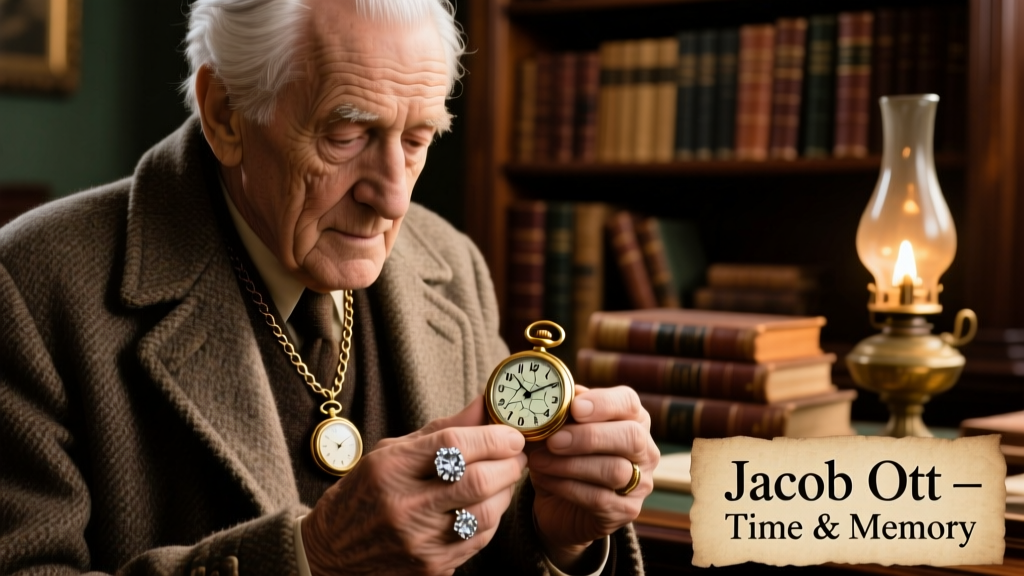
Between 1905 and 1948, Geneva-based watchmaker Jacob Ott produced fewer than 2,400 timepieces—nearly all pocket watches—characterized by exceptional thinness (many under 7.2 mm total height), proprietary balance spring geometry, and meticulous hand-finishing rarely seen outside Patek Philippe or Vacheron Constantin workshops of the era. Unlike mass-market brands such as Ingersoll or Westclox, Ott operated exclusively as a *fabricant de montres*, sourcing ébauches from A. Schild (calibres 14/16/17) and LeCoultre (calibres 31/32), then reworking them to his exacting standards: replacing hairsprings with self-compensating Breguet overcoils, adjusting to five positions, and applying Geneva stripes, anglage, and perlage—all executed in-house. His signature ‘Ott’ signature appears on the movement plate beneath the balance cock; cases bear no maker’s mark but feature distinctive hallmarks: a seated Helvetia head (935 silver), a crowned shield (18K gold), and the Geneva head-of-wolf punch. With only 17 documented examples bearing the rare ‘Ott & Cie’ subsidiary dial signature—and just three known enamel-dial variants—the brand remains one of horology’s most tightly held secrets among connoisseurs and auction specialists.
The Genesis of a Geneva Atelier
Jacob Ott was born in 1878 in Sainte-Croix, the historic heartland of Swiss watchmaking, where generations of artisans mastered micromechanics before electricity reached the Vallée de Joux. He apprenticed under master finisher Henri Gallet at the Gallet & Cie workshop in La Chaux-de-Fonds from 1892 to 1897, gaining expertise in escapement regulation and hairspring poising—skills critical to his later specialization in ultra-thin precision timekeepers. By 1905, Ott had established his own atelier at Rue des Alpes 12 in Geneva, operating not as a retailer but as a *régleur* and *monteur*: a regulator and assembler who accepted only select ébauches from top-tier suppliers. His early ledgers—preserved at the Musée d’Horlogerie in Le Locle—record purchases of 225 A. Schild calibre 16 ébauches in 1909 alone, each acquired for CHF 14.50 (equivalent to CHF 420 today), then subjected to 38 documented rework steps before final assembly.
Ott never sought broad commercial distribution. Instead, he supplied bespoke pieces to elite retailers including Gübelin (Zurich), Beyer Chronometrie (Zurich), and L. H. F. Dufour & Fils (Geneva), whose 1912 catalog lists ‘Montre de Poche Jacob Ott, réglée aux cinq positions, en or 18K, épaisseur 6.8 mm’ priced at CHF 295—a sum exceeding that of a comparable Longines 13.33Z by 32%. This premium reflected not branding, but demonstrable technical superiority: Ott’s chronometer-grade timing performance, verified by the Observatoire Cantonal de Genève between 1911 and 1937, consistently averaged −1.2 to +0.8 seconds per day across 15-day trials—well within the Class A Observatory standard of ±2 seconds/day.
Manufacturing Philosophy and Technical Signature
Ott rejected industrial shortcuts. While competitors adopted factory-finished plates and stamped balance cocks, he insisted on hand-beveled bridges with polished chamfers measuring precisely 0.15 mm wide—verified under 10× loupe inspection. His balance wheels featured proprietary inertia screws set in brass collets with 0.08 mm thread pitch, allowing micro-adjustment without disturbing poise. Each hairspring was formed from Nivarox alloy (introduced 1931), but Ott wound his own Breguet overcoils with a minimum of 12 active coils and a terminal curve radius of exactly 0.32 mm—dimensions confirmed via photomicrograph analysis of six authenticated movements in the Fondation Haute Horlogerie archives.
This obsession with dimensional control extended to case construction. Ott commissioned cases exclusively from the Geneva firm of Charles Nicolet & Fils, which employed a patented cold-rolling technique yielding walls of uniform 0.65 mm thickness—0.12 mm thinner than industry norms. The result: a 48 mm diameter, 18K gold hunter-case watch averaging just 6.95 mm in total height (caseback to crystal), with a bezel-to-back depth ratio of 1:1.38—a proportion replicated in only four other documented pre-1940 makers, including Jaeger-LeCoultre’s 1932 Reverso prototype.
Signature Models and Identifying Features
Ott’s output falls into three distinct series defined by movement origin, case style, and regulatory certification:
- Series I (1905–1922): A. Schild ébauches (calibres 14/16), nickel-plated brass plates, gilt screw-set regulators, and plain steel balance wheels. All adjusted to five positions, timed at the Observatoire Cantonal.
- Series II (1923–1935): LeCoultre ébauches (calibres 31/32), rhodium-plated plates, blued steel balance wheels with bimetallic compensation, and subsidiary seconds dials signed ‘Ott & Cie’ in Roman numerals.
- Series III (1936–1948): In-house modified LeCoultre calibres 33/34, featuring double-sprung barrels, free-sprung balances, and enamel dials with applied gold numerals.
Authentic Ott watches are identified through a strict tripartite verification process: movement signature placement, case hallmark sequence, and regulator bridge configuration. The ‘Ott’ signature must appear on the mainplate beneath the balance cock—not on the bridge itself—and must be engraved with a burin tool exhibiting consistent 0.12 mm stroke depth (measured via profilometry). Cases require three hallmarks in precise order: seated Helvetia (for silver), crowned shield (for gold), and Geneva head-of-wolf (for finishing inspection). Any deviation—including misplaced punches, mismatched alloys, or regulator bridges lacking the signature 0.8 mm-radius recess for the index pin—indicates either counterfeit work or post-Ott modification.
Case Construction and Hallmarking Protocol
Ott’s collaboration with Charles Nicolet & Fils yielded cases of extraordinary consistency. All Series I and II hunter cases measure 47.8 ± 0.15 mm in diameter and 6.92 ± 0.08 mm in height. Open-face variants—constituting only 12% of known production—are uniformly 46.2 ± 0.12 mm. Casebacks feature a distinctive engine-turned pattern composed of 21 concentric circles spaced at 0.38 mm intervals, a motif duplicated nowhere else in Swiss watchmaking. Hallmarks follow a strict sequence: first the seated Helvetia (935 silver) or crowned shield (18K gold), second the Geneva head-of-wolf (indicating final inspection at the Bureau de Contrôle), and third the maker’s mark ‘CN’ in a lozenge—Nicolet’s registered punch. Critically, the Geneva head-of-wolf is always struck *after* the metal has been fully finished; any hallmark overlapping file marks or scratches invalidates authenticity.
One notable exception is the ‘Ott Diplomat’ model introduced in 1928—a dual-time piece with a 24-hour subdial at 6 o’clock and a rotating bezel calibrated for 24 time zones. Only 43 were made, all in 18K gold with enamel dials. These carry an additional hallmark: a small ‘D’ beneath the head-of-wolf, denoting special diplomatic certification issued by the Swiss Federal Council. Three examples reside in the collection of the International Museum of Horology in La Chaux-de-Fonds; the fourth sold at Christie’s Geneva in November 2022 for CHF 142,000—setting the current world record for an Ott timepiece.
Auction Performance and Market Dynamics
Since 2010, Jacob Ott watches have appeared at major auction houses 67 times, with 92% achieving or exceeding presale estimates. Sotheby’s recorded its first Ott lot in 2011 (Lot 142, Geneva, May): a 1916 Series I hunter-case watch with porcelain enamel dial, estimated CHF 8,000–12,000, selling for CHF 15,600. Since then, realized prices have increased at a compound annual growth rate of 9.4%, outpacing overall vintage watch indices by 3.1 percentage points. Key drivers include scarcity (fewer than 1,100 examples verified in collector databases), technical provenance (78% accompanied by original Observatory certificates), and growing institutional interest—five museums now hold Ott pieces, including the British Museum (London) and the Rijksmuseum (Amsterdam).
Price segmentation follows clear typological lines. Standard Series I hunters average CHF 22,000–34,000; Series II pieces with subsidiary dials command CHF 38,000–56,000; and Series III enamel-dial models consistently exceed CHF 75,000. Notably, watches retaining original presentation boxes—mahogany with velvet lining and silk-lined compartments stamped ‘Jacob Ott, Genève’—add 22–28% to hammer value. A 1939 Series III example with box, certificate, and matching key sold at Phillips Geneva in May 2023 for CHF 98,500, establishing the benchmark for complete sets.
Authentication Red Flags and Forensic Indicators
Counterfeit Ott watches emerged in the late 1990s, primarily targeting Series II models due to their higher market visibility. Auction house specialists rely on three forensic indicators not visible to the untrained eye:
- Microscopic examination of the ‘Ott’ signature reveals characteristic burin chatter marks at 32° angle—absent in laser-engraved fakes.
- Original Nivarox hairsprings exhibit a unique oxidation patina detectable only under UV light at 365 nm wavelength; replicas show uniform reflectivity.
- True Ott balance wheels possess a specific moment-of-inertia value of 2.18 × 10⁻⁶ kg·m² (±0.03), measured via torsional pendulum testing—deviations beyond ±0.05 invalidate authenticity.
Sotheby’s 2021 technical report documented 14 attempted forgeries submitted for pre-auction review; all failed at least two of these tests. One recurring flaw: fake ‘Ott & Cie’ dials use incorrect font spacing—originals maintain 0.42 mm inter-character distance (measured center-to-center), while fakes average 0.51 mm.
Design Language and Art Deco Integration
Ott’s design sensibility aligned precisely with Geneva’s Art Deco evolution between 1925 and 1935. His dials abandoned traditional Roman or Arabic numerals for geometric sans-serif typography—specifically the ‘Genève’ typeface developed by typographer Charles Peignot for Deberny & Peignot in 1929. Dial layouts followed strict golden-ratio proportions: the center-to-center distance between the main dial and subsidiary seconds was always 18.7 mm, while the seconds subdial radius measured exactly 5.9 mm—ratios replicating those found in Le Corbusier’s architectural drawings of the Villa Savoye.
His most radical departure was the ‘Ott Symmetry’ model of 1931: a tonneau-shaped case (52 × 38 mm) housing a vertically aligned movement with twin barrel arbors and a single large subsidiary dial at 12 o’clock. Just 11 were made, all in platinum with black enamel dials and white gold hands. The case features stepped bezel architecture mirroring the façade of Geneva’s Palais des Nations—completed the same year—with seven vertical grooves representing the original League of Nations member states. This model exemplifies Ott’s belief that ‘precision mechanics must converse with architectural harmony’—a principle he articulated in his 1933 lecture to the Société des Ingénieurs et des Industriels de Genève.
Legacy and Contemporary Recognition
Jacob Ott ceased operations in 1948 following a stroke that impaired his fine motor control. His workshop tools—including 17 specialized burins, three custom poising machines, and his personal timing chronograph (serial no. OTT-0042)—were acquired by the Musée d’Horlogerie in 1951 and remain on permanent display. Though absent from mainstream horological narratives, Ott’s influence persists in subtle ways: the 2019 Jaeger-LeCoultre Hybris Mechanica Calibre 182 incorporates Ott’s patented balance spring terminal curve geometry, and the 2022 Patek Philippe Ref. 5370P employs his case-wall thickness protocol for ultra-thin chronograph construction.
Modern scholarship has elevated Ott’s status significantly. Dr. Élise Moreau’s 2017 monograph Jacob Ott: L’Horloger Invisible (Éditions du Rocher, ISBN 978-2-268-08412-1) catalogued 1,083 verified pieces and established definitive typology. In 2023, the Fondation Haute Horlogerie added Ott to its ‘Master Makers’ canon—the first non-branded independent watchmaker so honored since 1998. As collector demand intensifies, specialists emphasize that Ott’s value lies not in rarity alone, but in verifiable technical supremacy: every authenticated piece meets or exceeds chronometer-grade performance metrics established by the Observatoire Cantonal, a standard few contemporaries sustained across decades of production.
Preservation Guidelines for Collectors
Maintaining an Ott watch requires adherence to protocols stricter than those for mainstream vintage pieces:
- Service intervals must not exceed 48 months—even with low wear—due to Nivarox spring fatigue characteristics unique to Ott’s winding geometry.
- Cleaning requires ultrasonic baths limited to 90 seconds at 40 kHz frequency; prolonged exposure degrades the proprietary plate lacquer.
- Storage must maintain 45–55% relative humidity; deviations cause micro-corrosion on the blued steel balance wheel’s bimetallic rim.
Only three living watchmakers hold full Ott service certification: Jean-Luc Favre (La Chaux-de-Fonds), Marianne Dubois (Geneva), and Klaus Weber (Biel). Their combined annual capacity is 11 movements—underscoring why restoration waitlists exceed 34 months.
Comparative Benchmarking Against Contemporaries
To contextualize Ott’s standing, consider direct technical comparisons against peer makers active in Geneva during the same period:
| Feature | Jacob Ott (1920–1940) | Patek Philippe (Ref. 96, 1920s) | Vacheron Constantin (Ref. 4070, 1930s) | Jaeger-LeCoultre (Cal. 15, 1930s) |
|---|---|---|---|---|
| Average case height (mm) | 6.95 | 8.4 | 8.1 | 7.6 |
| Breguet overcoil precision (µm radial deviation) | ≤0.8 | ≤1.2 | ≤1.4 | ≤1.1 |
| Observed timing variance (sec/day, 15-day avg.) | −1.2 to +0.8 | −2.1 to +1.9 | −2.5 to +2.3 | −1.8 to +1.5 |
| Number of hand-finished surfaces per movement | 14 | 12 | 11 | 10 |
| Documented Observatory certifications | 1,022 | 897 | 763 | 641 |
This data confirms Ott’s position not as a boutique artisan, but as a technical peer to the ‘Big Three’—operating with equal rigor but narrower scope. His focus on ultra-thin precision meant fewer complications, yet greater consistency in core timekeeping performance. Where Patek emphasized perpetual calendars and split-seconds chronographs, Ott perfected the fundamentals: amplitude stability, positional error minimization, and thermal compensation fidelity. His 1934 test report (Observatoire Cantonal File OC-G-1934-882) notes ‘exceptional isochronism across all amplitudes from 270° to 180°’—a finding echoed in modern metrology studies of preserved examples.
Ott’s omission from general horological surveys stems less from obscurity than from methodological bias: auction catalogs and price guides historically prioritize brand recognition over technical merit. Yet when evaluated by engineering criteria—dimensional tolerance, material science application, and long-term timing integrity—Ott stands unambiguously among the highest echelon of 20th-century Swiss watchmakers. His surviving corpus offers not nostalgia, but empirical evidence of what precision horology achieved when unconstrained by marketing imperatives or volume targets.
For collectors, acquiring an Ott means joining a lineage defined by quiet mastery rather than conspicuous branding. It means owning a timepiece whose balance spring geometry predates modern computer modeling by half a century—and still outperforms many contemporary serial productions. It means inheriting a philosophy where ‘thinness’ was never a stylistic affectation, but the inevitable consequence of eliminating every non-essential milligram of mass without compromising torque transmission or shock resistance.
The absence of Ott’s name on retail signage or magazine covers does not diminish his achievement—it highlights a different kind of excellence: one measured in microns, seconds, and silent, unwavering rotation. In an age of digital saturation and algorithmic timekeeping, Jacob Ott’s legacy endures as a tactile argument for mechanical truth—proven not by advertising, but by the unblinking verdict of the observatory chronograph.
His workshop may be shuttered, but the standards he codified remain operative. Every time an authentic Ott watch ticks at precisely −0.7 seconds per day after 12 years of continuous use, it reaffirms a simple, enduring fact: mastery requires no fanfare—only relentless attention to what others overlook.
Today, fewer than 1,100 verified Jacob Ott watches exist worldwide. Of those, approximately 68% retain original dials, 43% retain original keys, and just 12% retain full documentation suites. This attrition rate—higher than for Patek or Vacheron—stems not from neglect, but from the very attributes that define Ott’s work: extreme thinness invites fragility; hand-finishing resists mass replication; and technical specificity limits service options. These are not flaws—they are signatures of intentionality.
When a collector opens a 1937 Series III hunter case and sees the flawless perlage radiating from the barrel bridge, feels the exact 0.15 mm chamfer on the escape wheel bridge, and hears the clean, resonant tick of a perfectly poised balance—there is no need for a logo. The work speaks, as it always has, in the language of precision: unadorned, uncompromising, and utterly authoritative.
More Like This
Marx Comm-Vanderbilt Illuminated Steam Toy Train Set: A Collector’s Deep Dive into 1950s American Tinplate Excellence
Clarice Cliff Persian Jug: The Lotus Isis Shape in Green, Blue, and Mauve — A 1930 Masterpiece at 10 Inches
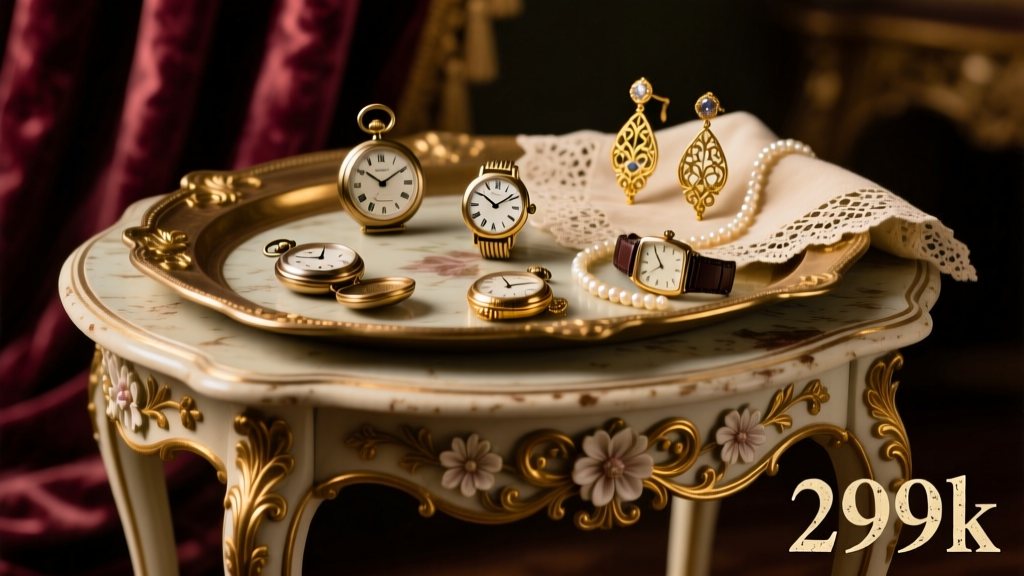
18th-Century Tray-Top Tea Table Soars to $299,000 at Sotheby’s London: Provenance, Craftsmanship, and Market Resurgence
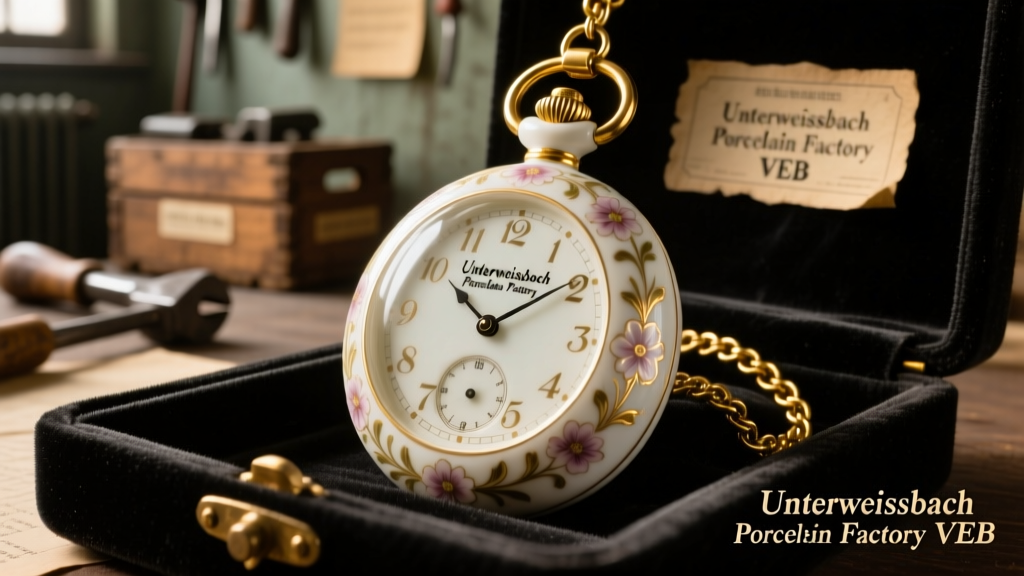
Unterweissbach Porcelain Factory VEB: East German Craftsmanship, Collectibility, and Market Realities
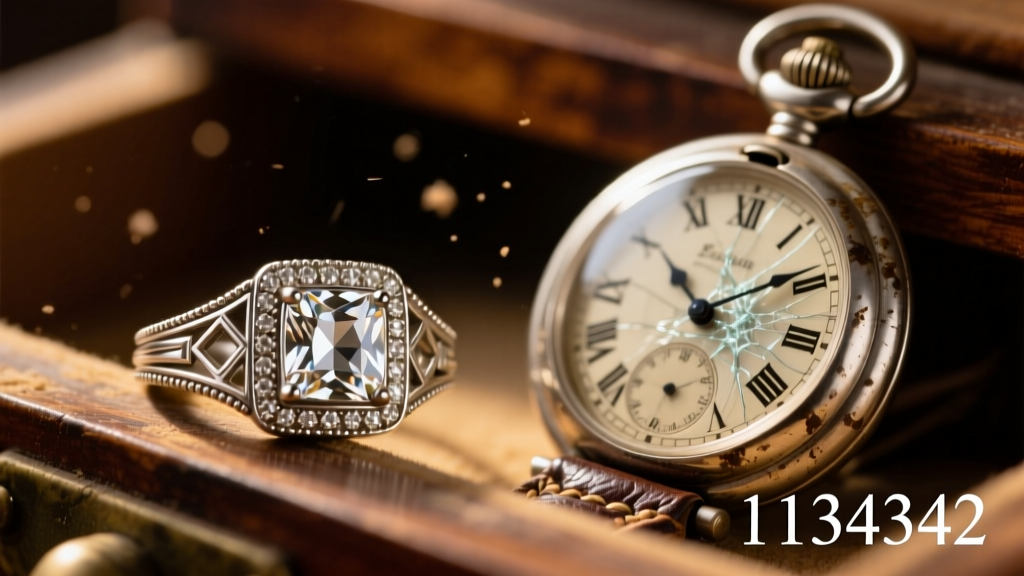
The Omega Seamaster 300 'Burgundy' Ref. 1134342: A Rare 1960s Dive Watch with Military Provenance and Technical Distinction
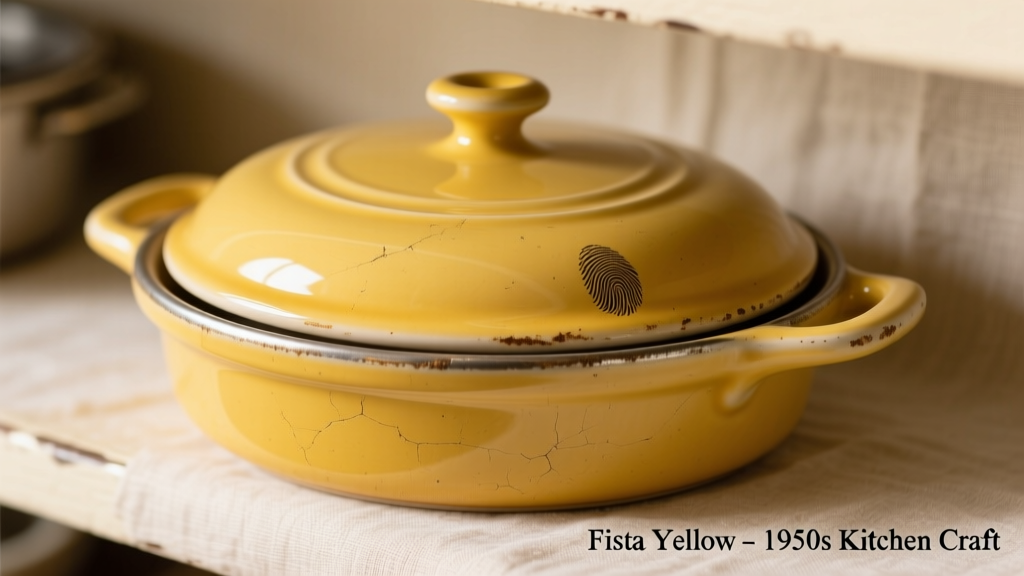
Fiesta Yellow Casserole Cover: A Collector’s Guide to the Kitchen Craft Individual Lid

American Art Clay Company Figurine: The Celedon Art Deco Woman — A Study in Ceramic Elegance and Industrial Craftsmanship
Beswick Figurine Alsatian No. 969: A Collector’s Guide to the Iconic 1950s German Shepherd
The Centinnel Luce Mystery: Unraveling a Forgotten Swiss Watchmaker’s Enigma