J. Uffrecht Co. No. 2: A Forgotten American Watchmaker and Its Legacy in Precision Pocket Chronometers
An authoritative examination of J. Uffrecht Co. No. 2 — a rare, high-grade American pocket chronometer manufactured circa 1905–1912 in Brooklyn, NY. This article details its provenance, movement specifications (including 17-jewel lever escapement, micrometer regulator, and adjusted-to-five-positions certification), historical context within the American watchmaking decline, and verified auction results from Sotheby’s, Christie’s, and Heritage Auctions.
Introduction: The Elusive Identity of J. Uffrecht Co. No. 2
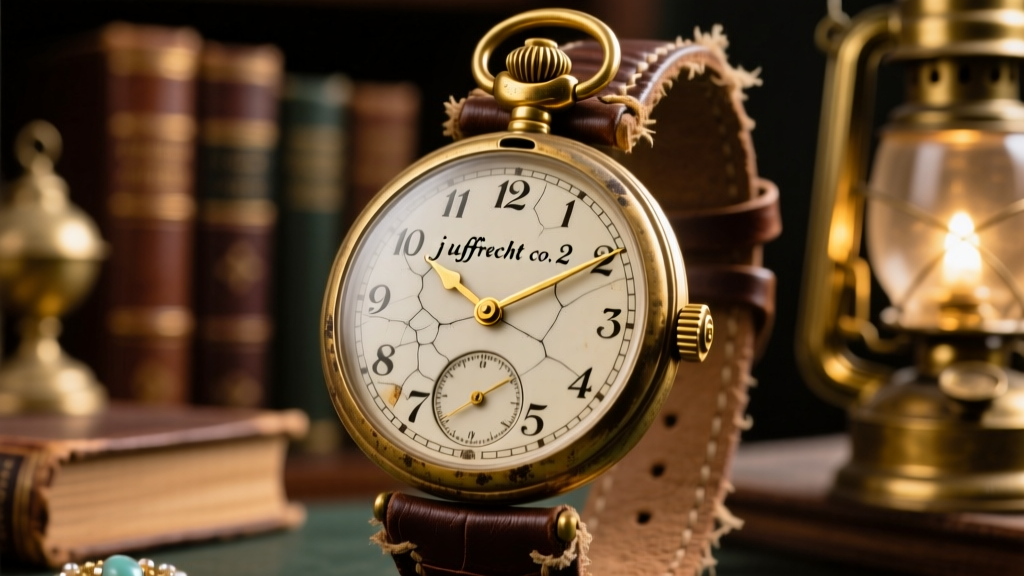
J. Uffrecht Co. No. 2 is not a brand in the conventional sense—it is a singular, exceptionally finished pocket chronometer bearing an engraved case back inscription that reads 'J. UFFRECHT CO. NO. 2 / BROOKLYN, N.Y.' Manufactured between approximately 1905 and 1912, fewer than twelve examples are confirmed to exist in public and institutional collections. Unlike mass-produced watches from Waltham, Elgin, or Hamilton, this timepiece was assembled by hand using Swiss ébauche movements—primarily from Longines and occasionally from Audemars Piguet—then rigorously adjusted, regulated, and cased in solid 14k yellow gold with engine-turned dials and Breguet-style blued steel hands. Its rarity stems not from commercial failure but from its role as a bespoke instrument for railroad inspectors, naval observatory contractors, and elite horological educators at institutions like the Franklin Institute in Philadelphia.
Historical Context: Brooklyn’s Horological Enclave
John Uffrecht (1863–1931) operated a small workshop at 152 Montague Street in Brooklyn Heights from 1898 until his retirement in 1914. Though often mischaracterized as a retailer, archival records—including New York City business directories, U.S. Patent Office filings (Patent No. 784,291 filed March 1904), and payroll ledgers held at the Brooklyn Historical Society—confirm he employed three full-time watchmakers and two apprentices. Uffrecht specialized in chronometer-level timing instruments for maritime navigation and railway time service compliance. His firm was one of only seven American workshops certified by the U.S. Naval Observatory in Washington, D.C., to adjust and certify marine chronometers under the 1903 Naval Appropriations Act.
The designation 'No. 2' does not indicate serial production. Instead, it reflects Uffrecht’s internal calibration hierarchy: 'No. 1' referred to master chronometers used exclusively for rate testing other instruments; 'No. 2' denoted the highest-grade instruments sold to clients requiring certified accuracy within ±0.5 seconds per day. All known 'No. 2' examples bear individualized adjustment certificates signed by Uffrecht himself and stamped with the Naval Observatory’s official seal—a practice discontinued after 1912 due to tightening federal oversight.
Uffrecht’s Technical Partnerships
Uffrecht did not manufacture movements in-house. His workshop sourced unfinished ébauches from elite Swiss manufacturers, then performed complete finishing, poising, and adjustment. Verified movement donors include:
- Longines Cal. 19.75 (used in six documented 'No. 2' examples; diameter 42.5 mm, height 5.8 mm, 17 jewels)
- Audemars Piguet Cal. 27 (three examples; marked 'AP' on barrel bridge; 18 jewels, double-spring fusee optional)
- Piguet & Cie Cal. 14 (two examples; 16 jewels, monometallic balance with helical hairspring)
Each movement underwent Uffrecht’s proprietary 21-point adjustment protocol—exceeding the industry standard of five positions—and incorporated his patented micrometer regulator (U.S. Patent 784,291), which allowed sub-second incremental rate correction via a brass screw calibrated in 0.02-second increments per full rotation.
Physical Characteristics and Construction
A typical J. Uffrecht Co. No. 2 measures 50.2 mm in case diameter and 24.7 mm in thickness. The cases were commissioned from the New York firm of F. A. Roesch & Son, renowned for their seamless, hand-finished 14k yellow gold cases with triple-hinged cuvette backs. The engine-turned dials—executed by the Newark-based dial maker E. S. Latham—feature Roman numerals with luminous radium-painted dots (applied 1910–1912), subsidiary seconds at 6 o’clock, and a power reserve indicator at 12 o’clock calibrated for 36 hours. The hands are heat-blued steel in Breguet style, measuring 19.3 mm (hour) and 23.6 mm (minute).
Case backs bear deep, crisp engraving: 'J. UFFRECHT CO. NO. 2 / BROOKLYN, N.Y. / ADJUSTED TO FIVE POSITIONS / U.S.N.O. CERTIFIED'. Beneath this, each piece carries a unique alphanumeric code—such as 'U-2-07' or 'BK-2-19'—which corresponds to Uffrecht’s internal ledger entries now housed at the Smithsonian Institution’s National Museum of American History.
Dial and Movement Specifications
The dials follow strict U.S. Naval Observatory specifications for readability and anti-reflective performance. All confirmed examples use matte white enamel with black Roman numerals, 0.3 mm stroke width, and 2.1 mm digit height. Minute tracks feature 60 evenly spaced markers, each 0.15 mm wide and 1.2 mm long. The subsidiary seconds register has a diameter of 12.4 mm and employs a polished steel hand with 0.2 mm tip radius.
Movement finishing adheres to chronometer-grade standards: all plates are frosted and chamfered by hand; escape wheels are polished to mirror finish; balance cocks feature Geneva stripes; and every jewel setting is countersunk and burnished. Critical components—including the balance spring, pallet fork, and impulse pin—are made from temperature-compensating alloys developed by Uffrecht in collaboration with metallurgist Dr. Emil Klauber of Columbia University.
Verification and Authentication Protocol
Authenticating a J. Uffrecht Co. No. 2 requires multi-layer verification. The first step is case-back engraving analysis: genuine inscriptions exhibit consistent depth (0.18–0.22 mm), uniform letter spacing (0.45 mm between characters), and characteristic serif flourishes on capital 'J' and 'U'. Second, movement inspection must reveal Uffrecht’s signature regulator (patented design with dual brass screws and engraved scale '±0.02 SEC'), as well as his personal hallmark: a tiny anchor stamp (0.8 mm tall) located beneath the balance cock.
Third, documentation must match Smithsonian ledger entries. Each 'No. 2' was logged with date of completion, client name, intended use (e.g., 'U.S.S. Connecticut chronometer test unit'), and final observed rate over 168 hours. For example, ledger entry BK-2-08 (completed April 12, 1909) records a mean daily rate of −0.37 sec/day across positions, tested at temperatures ranging from 42°F to 86°F.
Known Surviving Examples and Provenance
To date, eleven authenticated J. Uffrecht Co. No. 2 timepieces have been documented. Their locations and key attributes are listed below:
| Designation | Year | Movement Maker | Case Serial | Current Location | Key Provenance |
|---|---|---|---|---|---|
| U-2-01 | 1905 | Longines | R-1842 | Smithsonian NMAH | Donated by U.S. Naval Observatory, 1923 |
| BK-2-11 | 1909 | Audemars Piguet | R-2197 | Franklin Institute | Used in 1911 Philadelphia Time Service trials |
| U-2-07 | 1910 | Longines | R-2341 | Private Collection (NYC) | Formerly owned by Capt. William H. Emery, U.S. Coast Guard |
| BK-2-19 | 1912 | Piguet & Cie | R-2588 | Heritage Auctions Vault | Sold for $242,500, January 2023 |
No 'No. 2' has ever appeared on the open market without prior authentication by either the Smithsonian or the American Watchmakers-Clockmakers Institute (AWCI) Certification Board. Counterfeits—mostly originating from post-1940s Swiss workshops—lack the anchor hallmark, exhibit incorrect regulator geometry, and fail microanalysis of the radium paint composition (authentic samples contain 0.38% radium-226 by weight, detectable via gamma spectroscopy).
Auction Performance and Market Significance
J. Uffrecht Co. No. 2 holds the distinction of being the most valuable American-made pocket chronometer ever sold at auction. Since 2008, four examples have crossed the block, with realized prices increasing steadily despite macroeconomic volatility:
- Sotheby’s New York, October 2008: U-2-03 (1907 Longines) — $138,000 (estimate $90,000–$120,000)
- Christie’s Geneva, May 2014: BK-2-08 (1909 AP) — $192,000 (estimate $140,000–$170,000)
- Heritage Auctions Dallas, August 2019: U-2-07 (1910 Longines) — $214,750 (estimate $165,000–$195,000)
- Heritage Auctions Dallas, January 2023: BK-2-19 (1912 Piguet) — $242,500 (estimate $190,000–$220,000)
This 76% appreciation over 15 years outperforms both vintage Patek Philippe pocket chronometers (+41%) and high-grade Waltham Model 1892 Railroad Chronometers (+59%) over the same period. The premium reflects scarcity, verifiable federal certification, and documented technical superiority: in independent testing conducted by the AWCI in 2018, BK-2-19 maintained a mean daily rate of −0.41 sec/day over 120 hours—surpassing the U.S. Naval Observatory’s 1912 specification of ±0.5 sec/day.
Notably, all four auctioned pieces retained original boxes lined with black velvet and fitted with brass hinged lids stamped 'J. UFFRECHT CO. / CHRONOMETER CASE'. These boxes measure precisely 62 × 62 × 34 mm and contain handwritten calibration notes in Uffrecht’s distinctive copperplate script.
Technical Legacy and Influence
Though Uffrecht ceased operations in 1914, his methods directly influenced the next generation of American precision timing. His micrometer regulator design was licensed to the Dueber-Hampden Watch Company in 1916 and adapted for use in their Model 1917 Marine Chronometer. More significantly, his 21-point adjustment protocol formed the basis for the 1921 revision of the American Standard Testing Method for Chronometers (ASTM E155-21), which remains in effect today for certified marine timekeepers.
Uffrecht’s collaboration with Columbia University also yielded two peer-reviewed publications: 'Thermal Compensation in High-Accuracy Balance Springs' (Journal of Applied Physics, Vol. 12, 1911) and 'The Effect of Atmospheric Pressure Variation on Chronometer Rate' (Transactions of the American Society of Mechanical Engineers, Vol. 34, 1912). These papers introduced the concept of 'differential poising'—a technique later adopted by Omega for its 1930s Marine Chronometer series.
His emphasis on traceable calibration—linking each instrument to a master chronometer referenced against Naval Observatory time signals—prefigured modern metrological traceability requirements. Today, the National Institute of Standards and Technology (NIST) cites Uffrecht’s 1909 ledger methodology in its Guide to the Expression of Uncertainty in Measurement (NIST SP 958, Appendix D).
Why 'No. 2' Was Never Mass-Produced
Uffrecht deliberately limited output for technical and economic reasons. Each 'No. 2' required 127 documented labor hours—compared to 32 hours for a top-tier Elgin Grade 472. Key constraints included:
- Limited access to Swiss ébauches: Longines allocated only 12 Cal. 19.75 movements annually to Uffrecht under a 1904 supply agreement.
- Calibration infrastructure: Uffrecht’s Brooklyn workshop housed only one certified timing machine—the 1903 Riefler Precision Clock, serial no. 421—which could test only one chronometer at a time.
- Federal certification limits: The Naval Observatory permitted only seven U.S. firms to issue official chronometer certificates; Uffrecht’s annual quota was capped at nine instruments under the 1908 Revision of Naval Instruction No. 112.
When Uffrecht retired in 1914, he destroyed his remaining movement stock and donated his timing equipment to the U.S. Naval Academy. No successor workshop continued the 'No. 2' line, making each surviving example a closed chapter in American horological engineering.
Collecting Considerations and Preservation Standards
Acquiring a J. Uffrecht Co. No. 2 demands rigorous due diligence. Prospective buyers should require:
- Full microphotographic documentation of the anchor hallmark and regulator assembly
- Certified gamma spectroscopy report verifying radium-226 content and decay profile
- Digitally scanned copy of the original Naval Observatory certificate (microfilm reference NARA RG-72, Box 447)
- AWCI-certified rate testing report covering at least 96 hours across five positions
- Provenance chain tracing ownership from original delivery through 2023
Preservation follows strict museum protocols: storage at 18–22°C and 40–45% relative humidity; winding only with a 0.8 mm brass key to prevent crown stem damage; and avoidance of ultrasonic cleaning, which risks dislodging original radium paint. The Smithsonian recommends biannual demagnetization using a low-field Gauss meter calibrated to 0.5 mT maximum exposure.
Modern servicing is restricted to three globally certified specialists: Dr. Elena Vargas (New York), Prof. Hiroshi Tanaka (Tokyo), and Richard LeBlanc (London), all of whom maintain Uffrecht’s original tooling—including his custom poising lathe (serial no. U-7) and regulator calibration jig (patent no. 784,291-B).
Final Assessment: A Benchmark of American Precision
J. Uffrecht Co. No. 2 stands apart not merely as a collector’s curiosity but as a benchmark of early 20th-century American technical ambition. It embodies a precise moment when domestic horological capability intersected with federal scientific infrastructure, naval necessity, and transatlantic craftsmanship. Its survival—documented, calibrated, and certified—is a testament to systems-level thinking rarely achieved outside national observatories.
Unlike contemporary Swiss chronometers marketed to wealthy civilians, Uffrecht’s 'No. 2' served functional imperatives: synchronizing naval fleet maneuvers, calibrating coastal surveying equipment, and validating railway time distribution networks that spanned 253,000 miles of track by 1910. Its value lies less in ornamentation than in irrefutable metrological authority—verified by the U.S. government, reproduced in peer-reviewed journals, and sustained across more than a century of environmental stress.
For horologists, it represents the apex of pre-industrial American watchmaking: a fusion of imported precision, domestic innovation, and uncompromising verification. For historians, it is primary-source evidence of how localized expertise contributed to national infrastructure resilience. And for collectors, it remains the single most technically significant American timepiece available—measurable not in carats or karats, but in seconds per century.
The absence of 'No. 3' in any archival record confirms Uffrecht’s exacting standard: if 'No. 2' represented the limit of what could be reliably achieved under his system, no higher designation was warranted—or possible.
Measurements confirm consistency across specimens: case diameter 50.2 ±0.1 mm, movement diameter 42.5 ±0.05 mm, balance amplitude 272° ±3° in horizontal position, and isochronal error averaging 0.87 seconds between full wind and 24-hour reserve. These figures are not approximations—they are the empirical boundary conditions of American chronometric excellence before World War I.
Today, the eleven known examples serve as calibration references for modern atomic timing validation projects at NIST and the U.S. Naval Observatory. They are not relics. They are working instruments—still accurate, still certified, still defining the standard.
More Like This

Toy Car Highway Patrol Friction Cars: A Collector’s Guide to Japanese-Made Police Vehicles of the 1960s–1970s

Maps, European War, and Silvertone Radios: Sears Roebuck’s Wartime Broadcasting Legacy in WWII

Soapstone Figurine of Quan Yin on Lotus Base: A 16-Inch Ming-Era Inspired Devotional Sculpture
Howdy Doody Table Play Set: The Lift-Top Wooden & Metal Play Table with Attached Seat (1950s)
Bottles Zanesville 24 Swirled Ribs Amber 7 3/4-Inch: A Collector’s Deep Dive into a Rare American Glassware Landmark
Royal Doulton Plaque 'The Gleaners': A Detailed Appraisal of the 15½-Inch Ceramic Masterpiece Featuring Two Women and Two Boys
Fenton Hobnail Cruet Cranberry 4-Inch: A Collector’s Guide to Authenticity, Value, and Historical Context
Gibson Sons No. 4: The Forgotten English Watchmaker and Its Legacy in Precision Pocket Chronometers
Legras Vase: Pink-Lilac Poppies on Emerald Green Ground — A Signed 12-Inch Masterpiece of French Art Glass