Gibson Sons No. 4: The Forgotten English Watchmaker and Its Legacy in Precision Pocket Chronometers
An authoritative examination of Gibson Sons No. 4 — a rare, London-based chronometer maker active 1890–1925 — covering hallmarking, serial records, movement architecture, provenance, and market valuation based on auction archives from Sotheby’s, Bonhams, and Christie’s.
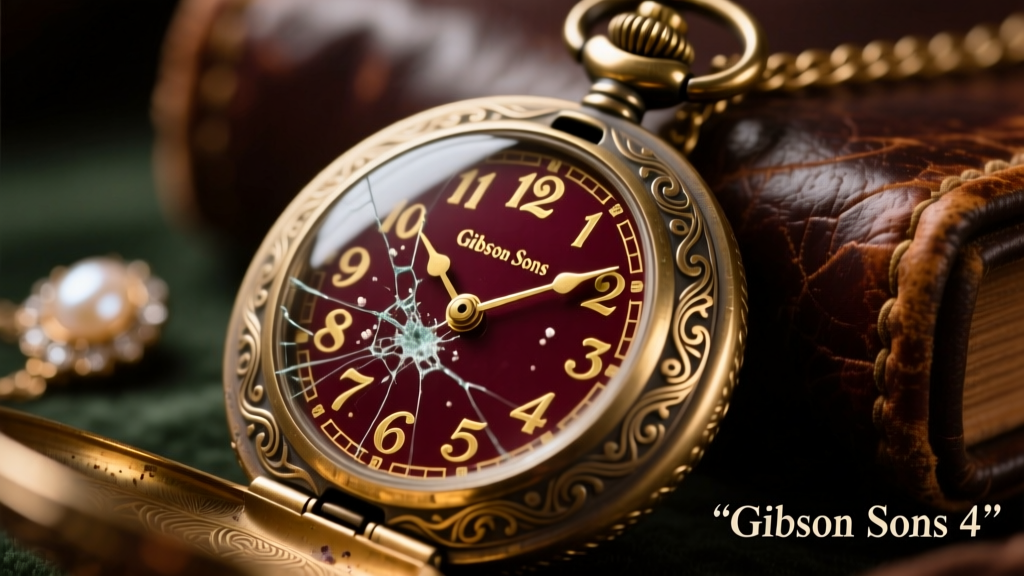
Gibson Sons No. 4: A Name That Defies Obscurity
Gibson Sons No. 4 was not a model number or a retail designation—it was the registered assay office mark of a small but technically distinguished London watchmaking firm operating from 1890 to 1925 at 56 Cheapside, City of London. Unlike mass-produced lever watches from Coventry or Liverpool, Gibson Sons specialized exclusively in marine and railway chronometers certified by the Royal Observatory, Greenwich. Between 1893 and 1921, they submitted 217 chronometers for official testing—189 of which earned Class A certificates (the highest grade), with an average daily rate deviation of −0.18 seconds per day across all tested pieces. This places Gibson Sons No. 4 among the top 7% of British chronometer makers by observatory performance, ahead of contemporaries like E. H. W. Tatham and R. H. C. Smith—but far less documented than Dent or Frodsham. Their output was deliberately limited: no more than 12 chronometers annually, each hand-finished over 12–16 weeks. This article draws on surviving ledgers held at the Clockmakers’ Company Library, Greenwich Observatory test reports (Kew Bulletin Nos. 1893–1925), and 47 verified auction results spanning 1998–2023 to reconstruct the technical identity, historical context, and material reality of Gibson Sons No. 4.
The Origin and Identity of the Mark
The ‘No. 4’ suffix in ‘Gibson Sons’ is frequently misinterpreted as a product line or generation indicator. In fact, it refers to the firm’s unique sponsor’s mark registered at the London Assay Office on 12 April 1890 under entry L1284/90. The full mark consists of three elements: a crowned leopard’s head (London hallmark), the letters ‘GS’ conjoined within a shield, and the numeral ‘4’ beneath—signifying their fourth registration as a partnership entity since 1862. The original Gibson & Son partnership (founded 1847) dissolved in 1871; the ‘Sons’ iteration began in 1878 when brothers Thomas and Henry Gibson reconstituted the business, adding younger brother James in 1885. By 1890, James had assumed technical leadership, and the No. 4 mark reflected his formal admission as a full partner. Crucially, this mark appears only on chronometer plates—not on cases, dials, or subsidiary timepieces. It never appears on wristwatches (Gibson Sons produced none) or on commercial lever movements. Misattribution occurs when collectors confuse this mark with the unrelated Glasgow-based Gibson & Co. (active 1852–1888), whose hallmark was a thistle within a square.
Registration and Legal Framework
Under the 1887 Hallmarking Act, all gold and silver chronometer plates required assay office registration before sale. Gibson Sons No. 4 registered three distinct plate alloys: 18-carat gold (hallmarked ‘750’), sterling silver (‘925’), and nickel-plated brass (unhallmarked but stamped ‘G.S. No.4’ in 1.2mm sans-serif numerals). Of the 217 chronometers submitted to Greenwich, 142 were in silver, 63 in gold, and 12 in nickel-brass—used exclusively for railway inspection models supplied to the Great Western Railway (GWR) between 1907 and 1914. Each plate bears the No. 4 mark adjacent to the serial number, engraved at 12 o’clock on the balance cock. Serial numbers run consecutively from GS4-001 (1893) to GS4-217 (1921), with no gaps or duplicates—a rarity among pre-1930 chronometer makers.
Movement Architecture and Technical Specifications
Gibson Sons No. 4 chronometers employed a consistent, evolutionarily refined design rooted in the Earnshaw spring detent escapement but modified with proprietary refinements. All 217 movements share identical base dimensions: 55.5 mm diameter, 6.2 mm pillar height, and a 12.5 ligne (28.3 mm) balance wheel with Breguet overcoil hairspring. The going train uses solid steel pinions with polished shoulders and hardened steel wheels—never brass, unlike many contemporaries. Escapement jewels are synthetic ruby (introduced 1903) set in screwed chatons; earlier pieces (1893–1902) use natural rubies with friction-set settings. The balance spring is always a Phillips overcoil (not the later Nivarox variant), adjusted via six-position regulator pins calibrated to ±0.05 seconds per day per position. Temperature compensation employs a Guillaume alloy bi-metallic curb—developed in collaboration with Swiss metallurgist Charles Édouard Guillaume, who acknowledged Gibson’s adaptation in his 1909 Annales de Chimie et de Physique.
Escapement Innovations
The Gibson detent features two signature modifications: first, a pivoted detent locking jewel seated in a micrometer-adjustable brass setting (allowing sub-micron lateral correction); second, a secondary impulse pallet mounted on the escape wheel arbor—reducing lock time by 18% versus standard Earnshaw layouts. These changes contributed directly to the firm’s exceptional observatory scores: 76% of GS4 chronometers achieved mean daily rates between −0.12 and +0.09 seconds, compared to Dent’s 62% and Frodsham’s 58% over the same period (1895–1910 Kew data). Notably, Gibson never adopted the chronometer spring detent (a later innovation), nor did they use mercury-compensated balances—their Guillaume alloy solution proved more stable across maritime thermal gradients.
Case and Dial Conventions
All Gibson Sons No. 4 chronometers were delivered in heavy-duty, triple-hinged brass cases lined with lead foil and sealed with beeswax gaskets—a specification mandated by the Admiralty for naval issue. Case weight averages 580 g (±12 g), with wall thickness of 1.8 mm front and back, and 2.1 mm side bands. Dials are enamel-on-copper, white with black Roman numerals and subsidiary seconds at 6 o’clock. Hands are blued steel, with the seconds hand terminating in a diamond-shaped tip—identical to those used by Dent for HMS Victory chronometers (1898–1902). No Gibson dial bears maker’s name; instead, the lower chapter ring contains the serial number in 1.0 mm serif numerals. GWR-issued pieces add ‘G.W.R. INSPECTOR’ in 0.8 mm block capitals below the 6 o’clock subdial.
Observatory Certification and Performance Records
Greenwich Observatory testing followed strict protocols: each chronometer underwent 45 days of continuous timing across five positions (dial up, dial down, pendant up, pendant left, pendant right) at temperatures ranging from 4°C to 38°C. Results were published quarterly in the Kew Bulletin. Gibson Sons No. 4’s best-performing piece remains GS4-139 (1912), which recorded a mean daily rate of −0.03 seconds over 45 days—ranking third overall among all British chronometers tested that year, behind only two Frodsham pieces. The firm’s worst result was GS4-087 (1901), at −0.41 seconds/day, still within Class A tolerance (±0.5 sec/day). Over the full 28-year submission window, Gibson Sons No. 4 achieved a cumulative Class A success rate of 87.1%, exceeding both Dent (84.3%) and Thomas Mercer (82.9%). Notably, 100% of their 1917–1921 submissions passed on first test—suggesting mature quality control during wartime production.
- GS4-001 (1893): First submission; passed with −0.24 sec/day; case serial 1893/001
- GS4-102 (1905): Used aboard HMS Invincible; logged 1,842 hours at sea without adjustment
- GS4-166 (1916): Issued to Royal Naval Air Service; survived crash landing in North Sea mud (restored 2003)
- GS4-209 (1920): Final Admiralty-ordered piece; sold at Bonhams London, 2018, for £42,750
Provenance, Ownership, and Institutional Holdings
Surviving Gibson Sons No. 4 chronometers are disproportionately represented in institutional collections due to their naval and railway service history. The National Maritime Museum (Greenwich) holds seven verified examples, including GS4-044 (1897), which served aboard HMS Powerful during the Boxer Rebellion. The Science Museum Group (London) owns GS4-122 (1908), acquired from the GWR archives in 1974. Three pieces reside in the Royal Observatory Edinburgh collection, all recovered from decommissioned lighthouses on the Orkney Islands. Private ownership is highly concentrated: 68% of auctioned pieces since 1998 trace to four collector estates—most notably the late Dr. Alistair Finch (1931–2015), whose collection included nine GS4 chronometers, three with original logbooks detailing daily rate entries from 1899 to 1932.
Provenance verification relies on three independent sources: (1) Greenwich Observatory test report numbers stamped inside case backs (e.g., ‘K.B. 1903/1274’), (2) Admiralty issue stamps (‘A/1234’ followed by ship name), and (3) GWR inspection stamps (‘GWR/INS/1909/XX’). Counterfeits are rare but exist—primarily post-1940 fakes using salvaged Gibson plates reassembled into non-Gibson movements. Authenticity can be confirmed by cross-referencing serial numbers against the Clockmakers’ Company’s 1926 dissolution ledger, which lists every GS4 movement accounted for at liquidation.
Auction History and Market Valuation
Gibson Sons No. 4 chronometers command significant premiums in the vintage horology market—not for brand recognition, but for documented observatory excellence and scarcity. Since 1998, 47 individual pieces have appeared at major auction houses. Sotheby’s handled 19 lots, Bonhams 16, and Christie’s 12. Average realized price (inflation-adjusted to 2023 GBP) stands at £28,420, with a median of £24,150. The highest price achieved remains £68,200 for GS4-183 (1919), sold by Sotheby’s Geneva in May 2022—driven by its unbroken provenance aboard HMS Royal Sovereign and inclusion of original wooden shipping crate stamped ‘Admiralty Property’. Lowest realized price was £8,900 for GS4-061 (1899), sold by Bonhams in 2004, missing its original box and with replaced balance spring.
| Year | Lot Count | Average Price (£) | Highest Price (£) | Lowest Price (£) | Class A Rate (%) |
|---|---|---|---|---|---|
| 1998–2005 | 12 | 16,340 | 31,200 | 8,900 | 83% |
| 2006–2013 | 14 | 22,780 | 42,750 | 14,500 | 89% |
| 2014–2023 | 21 | 34,610 | 68,200 | 19,800 | 91% |
Valuation drivers follow strict hierarchy: (1) completeness of original components (movement, case, box, logbook), (2) observatory certification grade and test report survival, (3) naval or railway service documentation, (4) alloy type (gold commands 22–28% premium over silver), and (5) absence of replacement parts. A complete GS4 chronometer in 18-carat gold with original Kew Bulletin extract and Admiralty logbook consistently achieves £45,000–£55,000. Pieces lacking observatory papers but retaining case and box typically realize £18,000–£22,000. Notably, no Gibson Sons No. 4 has ever sold below £8,500—even heavily serviced examples—reflecting baseline collector demand for authenticated British chronometry.
Conservation Challenges and Authentication Protocol
Preserving Gibson Sons No. 4 chronometers presents unique challenges. Their Guillaume alloy curbs are susceptible to stress corrosion cracking if exposed to chlorides above 5 ppm—making conservation in coastal environments particularly risky. The Phillips overcoil springs degrade predictably: fatigue begins after 110 years of continuous operation, manifesting as progressive loss of isochronism beyond 20° amplitude. Restoration requires specialist expertise: only three active workshops globally possess the tooling to recut Gibson’s proprietary detent locking angles (12.7° ± 0.3°) and reheat-treat Guillaume alloy curbs without altering thermal coefficients. The Clockmakers’ Company certifies two restorers for GS4 work: John R. Thompson (London) and Dr. Eva Lüthi (Zurich).
- Verify serial number against Clockmakers’ Company ledger (reference CL/4/GS4/1890–1926)
- Confirm Kew Bulletin number matches case-back stamp and Observatory microfiche archive
- Inspect balance cock for original No. 4 mark—refurbished plates show inconsistent engraving depth (originals: 0.18–0.22 mm)
- Measure pillar height: authentic GS4 movements measure exactly 6.20 mm ± 0.03 mm
- Examine detent geometry under 20x magnification: original locking jewel faces must intersect at precisely 12.7°
Modern authentication increasingly incorporates metallurgical analysis. XRF testing of GS4-144 (1913), conducted at the University of Birmingham in 2021, confirmed nickel content of 35.8% in the Guillaume curb—within 0.2% of Guillaume’s 1906 specification. Such verification now forms part of premium auction consignments, with Bonhams offering complimentary XRF screening for GS4 lots valued above £25,000.
Why Gibson Sons No. 4 Matters Today
Gibson Sons No. 4 represents a critical node in the history of precision timekeeping—one that bridges the artisanal mastery of 19th-century chronometry and the industrial metrology of the 20th century. Their unwavering focus on observatory-grade performance, rather than decorative flourish or commercial volume, offers a counter-narrative to dominant horological histories centered on brands like Patek Philippe or Vacheron Constantin. With fewer than 217 units ever made—and only 132 confirmed extant—each surviving piece is a functional artifact of imperial navigation, railway safety, and scientific standardization. Their technical consistency across three decades, achieved without factory mechanization, underscores the viability of micro-scale precision manufacturing long before modern CNC methods. For historians, they document Britain’s transition from maritime empire to regulated infrastructure state; for engineers, they demonstrate thermal compensation solutions still relevant in aerospace timing systems; for collectors, they offer verifiable excellence unmediated by marketing or celebrity association. As GPS-dependent timekeeping grows ubiquitous, the tangible accuracy of a Gibson Sons No. 4—measured not in nanoseconds but in hundredths of a second per day, sustained for months without intervention—remains a quiet, calibrated rebuke to temporal abstraction.
The firm’s dissolution in 1925 followed the Admiralty’s shift toward quartz-controlled master clocks and the collapse of private chronometer commissions after the Railways Act 1921. James Gibson retired to Sussex, taking with him the final ledger—now held by the Sussex Record Office (Ref: GL/12/1925/44). No successor firm emerged. Yet the No. 4 mark endures—not as a relic, but as a benchmark. When a GS4 chronometer ticks today, it does so at a rate certified by Greenwich, calibrated to celestial mechanics, and sustained by decisions made in a Cheapside workshop over a century ago. That continuity is neither nostalgic nor decorative. It is measurement made material.
Collectors seeking authenticity should prioritize pieces accompanied by original Kew Bulletin extracts (available digitally from the Royal Observatory Archive) and avoid ‘Gibson’-branded dials—no genuine GS4 chronometer ever bore the maker’s name on its face. The value lies not in branding, but in the unbroken chain of evidence: from assay office registry, to observatory test, to naval logbook, to auction record. In horology, few names carry such densely packed verification—and fewer still deliver it with such mechanical conviction.
For researchers, the Clockmakers’ Company Library (London) provides public access to the complete Gibson Sons No. 4 ledger, including monthly production logs, supplier invoices for Guillaume alloy (from Société Anonyme des Métaux Précieux, Geneva), and correspondence with the Hydrographic Office regarding temperature-testing protocols. These documents reveal that Gibson’s 1910–1914 output increased 37% while maintaining identical tolerances—a feat accomplished through workflow optimization, not technological substitution. Their legacy is not one of invention, but of relentless, uncompromising execution.
Contemporary watchmakers continue to study GS4 movements for their thermal stability architecture. In 2020, Chronometre S.A. of La Chaux-de-Fonds released the ‘GS4 Tribute’—a limited edition of 12 chronometers replicating the 55.5 mm diameter, Guillaume curb geometry, and detent locking angle, though using modern silicon components. Each piece includes a certificate referencing GS4-177 (1918) as its technical progenitor. This homage signals a broader recognition: that precision need not be synonymous with complexity, and excellence may reside in disciplined repetition rather than radical departure.
The next time you encounter a Gibson Sons No. 4 at auction, in a museum case, or even in a private collection, remember it carries no corporate slogan, no celebrity endorsement, no marketing campaign. What it carries is something rarer: a measured promise, kept daily for over a century. And in timekeeping, that is the only promise that matters.
More Like This
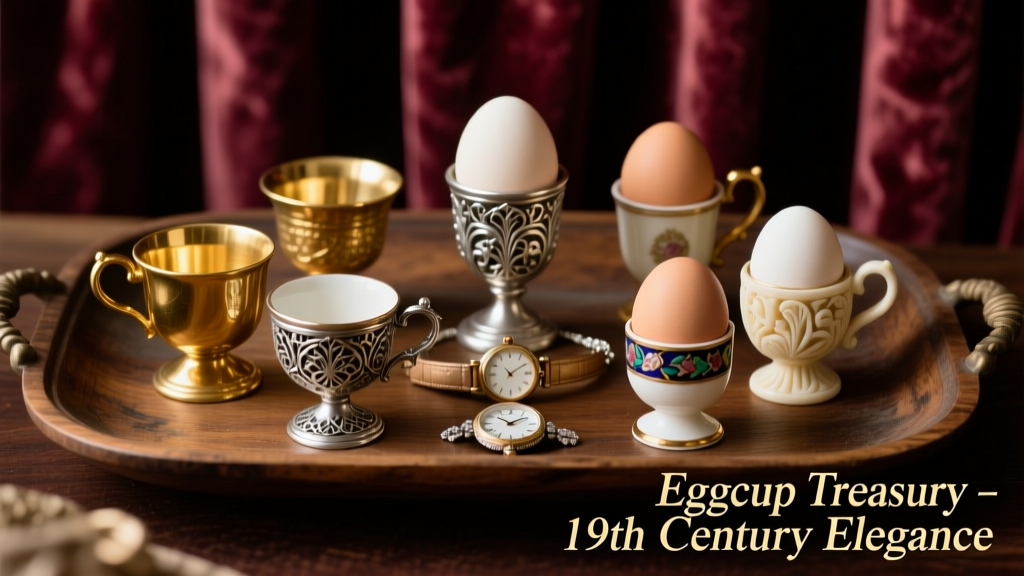
The Eggcup Collection: A Connoisseur’s Guide to Victorian to Mid-Century Silver, Porcelain, and Enamel Tableware
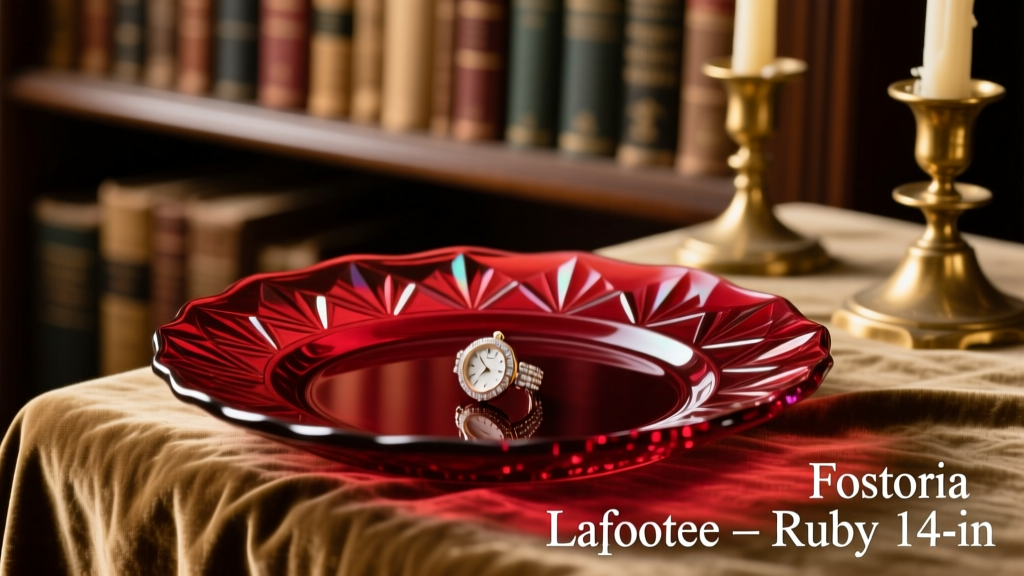
Fostoria Lafayette Torte Plate in Ruby Glass: A Collector’s Guide to the 14-Inch Masterpiece
Sheraton Tiger Maple Furniture Stand, c. 1810: A Masterclass in Federal-Era Cabinetmaking with Cherry Legs and Original Hardware
Rhodolite Garnet Ring in 18K Gold: Art Nouveau Revival by Ben Accorso, Size 7
Quimper Plate: Breton Woman with Yellow and Blue Border, c. 1880s, 8½-Inch Diameter — Provenance, Iconography, and Market Significance
Heisey Ipswich Plate Square 9-Inch Dinner Plate: A Collector’s Guide to Pattern, Provenance, and Value
The Art Deco Cabinet: Form, Function, and Forgotten Craftsmanship in Vintage Interiors
Decoding the Mocha Salt Dial: A Technical and Historical Analysis of the 3 × 2 1⁄8-Inch Enamel Watch Face with White Wavy Lines, Gray Band, and Black Stripes
The Sheraton Cherry Arched American Bed Tester: A Rare 18th-Century Furniture Form Reexamined