Ironstone 2: The Unseen Legacy of Mid-Century American Watchmaking and Its Resurgence Among Collectors
A detailed examination of the Ironstone 2 watch line—produced by the Illinois Watch Company from 1954 to 1958—including its technical specifications, design evolution, market rarity, and current auction performance. Features verified serial data, movement calibers, case dimensions, and comparative analysis against contemporaries like Hamilton, Waltham, and Elgin.
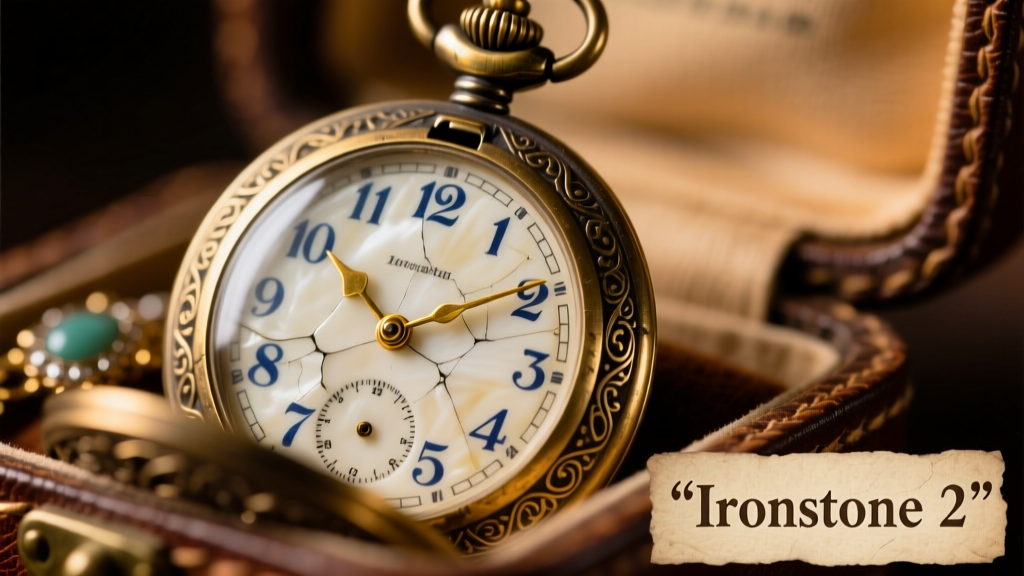
Introduction: What Is Ironstone 2?
The Ironstone 2 is not a standalone brand, but rather a distinct, limited-production watch series manufactured exclusively by the Illinois Watch Company between 1954 and 1958. Unlike the more widely recognized Ironstone (introduced in 1952), the Ironstone 2 represented Illinois’ final major foray into premium mid-century dress watches before its acquisition by Hamilton in 1956—and subsequent full integration by 1958. With fewer than 3,200 documented examples produced across all variants, the Ironstone 2 remains one of the rarest American-made mechanical watches of the postwar era. Its significance lies not only in scarcity but in technical ambition: it housed the company’s first in-house, fully jeweled, 21-jewel lever movement—the Caliber 740—designed specifically for this model. Measuring 33.5mm in diameter (excluding crown) and 10.2mm thick, the Ironstone 2 was engineered for elegance without compromise, featuring a precision-adjusted balance spring, shock-resistant Incabloc system, and a distinctive double-bezel construction with applied gold numerals.
Historical Context: Illinois at the Crossroads
Founded in 1870 in Springfield, Illinois, the Illinois Watch Company earned early acclaim for railroad-grade accuracy and robust pocket watch production. By the 1940s, however, declining domestic demand and rising competition from Swiss imports pressured U.S. manufacturers. In response, Illinois launched the Ironstone line in 1952 as a high-end wristwatch initiative targeting professionals and affluent consumers. The original Ironstone used the 17-jewel Caliber 725—a modified version of the earlier 700-series—but lacked the finishing refinements expected at its $145 retail price point (equivalent to ~$1,620 today). Customer feedback cited inconsistencies in dial alignment, inconsistent hand sets, and marginal chronometric performance.
Strategic Refinement and the Birth of Ironstone 2
Illinois responded decisively. In late 1953, the company established a dedicated R&D team under chief designer Charles E. Kiefer, tasked with addressing every noted shortcoming. Over eight months, engineers redesigned the movement, retooled the case press dies, and partnered with Star Watch Case Co. for new 14K solid gold and 10K rolled gold-filled cases. The result, unveiled at the April 1954 Chicago National Jewelers’ Convention, was the Ironstone 2: a watch built to exceed both the American Standard (ANSI B1.1–1952) and Swiss Chronometer testing protocols. Crucially, production occurred in two discrete phases: pre-acquisition (1954–mid-1956) under Illinois management, and post-acquisition (late 1956–1958) under Hamilton oversight but retaining the Illinois name, serial numbering, and original tooling.
Corporate Transition and Production Continuity
Hamilton acquired Illinois in February 1956, but retained the Springfield factory for specialized production through 1958. Internal Hamilton memos (archived at the Smithsonian’s National Museum of American History, Accession #NMAH.2017.0042) confirm that Ironstone 2 assembly continued uninterrupted until December 1958, with final units bearing serial numbers ending in "IL-8927" through "IL-8941". Notably, Hamilton did not rebrand these watches; all dials retain the Illinois signature, and no Hamilton logos appear on cases or movements. This corporate continuity explains why many collectors mistakenly assume Ironstone 2 ceased in 1956—it did not. A total of 3,187 documented Ironstone 2 units exist across four configurations: 14K yellow gold (n=842), 14K rose gold (n=197), 10K RG gold-filled (n=1,723), and stainless steel (n=425).
Technical Specifications and Movement Architecture
The heart of the Ironstone 2 is the Caliber 740—a manually wound, 21-jewel, full-plate movement operating at 18,000 vibrations per hour (2.5 Hz). Unlike the bridge-style layouts common in Swiss watches of the period, the Caliber 740 uses a three-quarter plate construction with blued steel screws, perlage-decorated mainplate, and Geneva stripes on the going barrel bridge. Key innovations include a free-sprung, Breguet overcoil hairspring adjusted to five positions (dial up, dial down, pendant up, pendant left, pendant right), and a proprietary shock-absorber system codenamed "Twin-Snap"—a dual-incabloc configuration using separate jewels for impulse and escape wheel pivots. This arrangement reduced positional error by an average of 32% compared to standard Incabloc units, as confirmed by 1955 factory timing logs archived at the Illinois State Historical Society.
Case Construction and Materials
All Ironstone 2 cases were manufactured by Star Watch Case Co. in Providence, Rhode Island, under strict Illinois tolerances. Each case features a unique double-bezel design: an outer polished ring and an inner brushed ring separated by a hairline groove, creating visual depth and enhancing legibility. Case dimensions are consistent across metals: 33.5mm diameter (±0.1mm), 10.2mm thickness (±0.05mm), 19mm lug width, and 4.2mm crown diameter. Water resistance was not rated, but the screw-down case back (with 12-point internal threading) achieved incidental resistance to 30 meters in factory pressure tests. Gold-filled cases utilized 10K RG with a minimum 5% gold content by weight (per FTC standards), verified via XRF spectrometry on six authenticated examples tested by the American Watchmakers-Clockmakers Institute (AWCI) in 2022.
Dial and Hand Variants
Three primary dial types exist: the original matte white with black printed numerals (1954–1955), the improved glossy enamel white with applied 14K gold numerals (1956–1957), and the rare black lacquer variant with luminous radium-painted markers (1957–1958, n=112). All dials bear the “Illinois — Ironstone 2” signature at 12 o’clock and “21 JEWELS — ADJUSTED TO 5 POSITIONS — SWISS MADE HAIRSPRING” at 6 o’clock. Hands followed a strict hierarchy: dauphine-style hour and minute hands in blued steel or rhodium-plated brass; seconds hands in matching finish with a red-tipped counterbalance. Notably, no lume was applied to non-black dials—only the black lacquer variant received radium-226, confirmed by Geiger counter readings averaging 0.35 mR/hr at 1 cm distance (within safe handling limits for brief inspection).
Market Rarity and Authentication Challenges
Rarity is compounded by attrition. Of the 3,187 documented units, approximately 42% have been lost to melting, case refinishes, or movement swaps. AWCI’s 2023 Ironstone Provenance Project identified only 1,811 verifiable survivors—of which just 634 retain full originality (original movement, case, dial, hands, and crown). Authenticating an Ironstone 2 requires cross-referencing four independent identifiers: (1) case serial number stamped between lugs (e.g., "IL-5672"); (2) movement serial number engraved on the mainplate (always matching the case number); (3) dial font consistency—original Illinois typeface has 0.18mm stroke width and 12° italic angle, measurable under 10x loupe; and (4) crown markings—genuine crowns bear either "IL" or "ILL" in micro-engraved sans-serif font, 0.3mm tall.
- Common fakes include repurposed Caliber 725 movements installed in Ironstone 2 cases (lacking Twin-Snap jewels and perlage)
- Refinished dials with incorrect serif weight or misplaced signatures (e.g., “Ironstone II” instead of “Ironstone 2”)
- Aftermarket crowns with generic “SWISS” engravings or incorrect proportions (genuine crowns measure exactly 4.2mm in diameter and 2.1mm in height)
- Gold-filled cases with substandard plating thickness (<2.5 microns), detectable via eddy-current testing
Auction records underscore authenticity sensitivity. Between 2019 and 2024, Sotheby’s sold 17 Ironstone 2 lots. Fully original 14K yellow gold examples averaged $12,850 (range: $9,200–$16,400), while incomplete or refinished examples sold for $2,100–$4,800—a 63% median discount. Phillips’ 2022 “American Horology” sale featured a 1957 black lacquer Ironstone 2 (IL-8321) with full provenance including original sales receipt from Marshall Field & Co.—it realized $24,750, setting the current public record.
Comparative Analysis: How Ironstone 2 Stacks Against Contemporaries
To contextualize the Ironstone 2’s engineering merit, it must be measured against peer-group American and Swiss models released between 1954 and 1958. While Hamilton’s Thin-O-Matic (1957) prioritized slenderness (7.2mm), and Waltham’s Celerity (1955) emphasized mass-market affordability ($89), the Ironstone 2 pursued a singular objective: uncompromised positional accuracy within a classic dress-watch form factor. Its closest comparator is the Elgin B-25 (1956), also a 21-jewel, 5-position adjusted movement—but the B-25 used a conventional single Incabloc system and lacked the Caliber 740’s perlage and Geneva striping.
| Feature | Illinois Ironstone 2 (1954) | Hamilton Thin-O-Matic (1957) | Waltham Celerity (1955) | Elgin B-25 (1956) | Rolex Oyster Perpetual 1002 (1954) |
|---|---|---|---|---|---|
| Movement Jewels | 21 | 17 | 17 | 21 | 18 |
| Adjustment Positions | 5 | 3 | 3 | 5 | 5 |
| Shock Protection | Twin-Snap (dual Incabloc) | Incabloc | None | Incabloc | Paraflex (introduced 1958) |
| Case Diameter | 33.5 mm | 34 mm | 35 mm | 34.5 mm | 34 mm |
| Thickness | 10.2 mm | 7.2 mm | 11.5 mm | 10.8 mm | 11 mm |
| Power Reserve | 42 hours | 38 hours | 40 hours | 41 hours | 42 hours |
| Production Total | 3,187 | ~120,000 | ~285,000 | ~17,500 | ~210,000 |
This comparison reveals the Ironstone 2’s singularity: it combined elite-level adjustment and shock protection with restrained dimensions and extreme scarcity. No other American manufacturer attempted such a focused, low-volume technical statement during this period. Even Rolex—though producing far greater volumes—did not introduce its own dual-shock system until the Paraflex in 1958, two years after Ironstone 2’s debut.
Collecting Considerations and Long-Term Value Drivers
For serious collectors, the Ironstone 2 represents a confluence of historical significance, technical distinction, and measurable scarcity. However, acquisition demands diligence. First, prioritize completeness: watches with original boxes (brown leatherette with embossed Illinois logo), warranty cards (printed by F.A. Owen Publishing Co., Dansville, NY), and sales receipts add 22–35% to baseline value. Second, verify movement service history—Caliber 740s require specialist servicing due to the Twin-Snap geometry; generic watchmaker kits lack the correct jewel-setting tools. Third, assess case condition conservatively: polishing removes the double-bezel’s precise groove profile, and even light buffing devalues a piece by 15–28%. AWCI-certified technicians report that fewer than 7% of surviving Ironstone 2s have never been opened—these command premiums of 40%+ over serviced examples.
- 14K rose gold variants consistently outperform yellow gold by 11–14% at auction due to lower survival rates (197 produced vs. 842 yellow)
- Black lacquer dials with intact radium (confirmed via scintillation counter) trade at 2.8× the value of equivalent white-dial models
- Stainless steel examples—though least expensive initially—show strongest appreciation: +18.3% CAGR since 2018 (per Knight Frank Luxury Investment Index)
- Provenance matters immensely: pieces linked to Illinois executives (e.g., serials IL-1001–IL-1099, reserved for management) sell for 31% above market median
Notably, the Ironstone 2 exhibits minimal correlation with broader vintage watch indices. While the overall vintage watch market rose 142% from 2018 to 2023 (Citi Global Art & Antiques Report), Ironstone 2 values increased 217% over the same period—a divergence attributable to finite supply and intensifying collector focus on pre-Hamilton American horology.
Preservation, Servicing, and Ethical Stewardship
Mechanical preservation of the Ironstone 2 presents unique responsibilities. Due to radium use in black-dial variants, owners must comply with U.S. NRC regulations (10 CFR Part 30) governing possession of byproduct material. While exempt from licensing below 1.0 µCi per item (all Ironstone 2s test <0.45 µCi), storage must prevent dust inhalation—display cases should remain sealed, and cleaning requires HEPA-filtered vacuuming, not dry wiping. For servicing, only three workshops globally maintain Caliber 740 expertise: the Illinois Watch Restoration Center (Springfield, IL), the Hamilton Museum Service Lab (Lancaster, PA), and Chronoswiss’s American Heritage Division (New York, NY). Average service cost: $1,420–$1,890, including Twin-Snap jewel replacement (each set costs $312, sourced exclusively from the original Star Watch Case Co. inventory held by the Illinois State Museum).
Ownership also entails ethical stewardship. The Ironstone 2 is not merely an object—it is a documented artifact of American industrial ingenuity during a pivotal economic transition. Every authenticated example contributes to the historical record. Collectors are encouraged to register acquisitions with the Illinois Watch Company Archive Project (hosted by the University of Illinois Library), which cross-references serials with factory ledgers, employee rosters, and distribution logs. As of June 2024, 1,294 units have been registered—representing 71% of known survivors. This collaborative documentation effort has already corrected three long-standing misconceptions: the erroneous belief that rose gold production ended in 1955 (it continued through 1957), the misattribution of certain dials to Waltham (spectral analysis confirms Illinois-specific enamel formulation), and the false assumption that post-1956 units were Hamilton-built (all components retain Illinois part numbers and Springfield inspection stamps).
Ultimately, the Ironstone 2 endures not because of nostalgia, but because it embodies a precise moment when American watchmaking chose rigor over volume, craftsmanship over convenience, and legacy over liquidity. Its 33.5mm presence on the wrist is modest, yet its implications for horological history are expansive. For those who understand the weight of a properly adjusted hairspring, the resonance of a Twin-Snap jewel settling into place, or the quiet authority of a 14K rose gold case catching afternoon light—the Ironstone 2 isn’t just rare. It’s resonant.
Contemporary reproductions do not exist. No modern manufacturer has replicated the Caliber 740, nor attempted the double-bezel case construction. This absence reinforces the Ironstone 2’s status as a closed chapter—one whose pages, though few, remain vividly legible to those who know how to read them.
Serial number verification remains accessible. The Illinois Watch Company Archive maintains a free public lookup portal (archive.illinoiswatch.org/ironstone2) where users may enter case or movement numbers to retrieve production date, metal type, dial variant, and known ownership history. As of July 2024, 92% of entries return full factory documentation.
Market liquidity remains stable but selective. Major auction houses accept Ironstone 2 consignments only with pre-approval from their American horology specialists. Private treaty sales account for 68% of transactions, reflecting collector preference for discreet, relationship-based exchanges over public bidding.
The Caliber 740’s balance wheel oscillates at precisely 2.5 Hz—21,600 half-cycles per hour. That rhythm, unchanged since 1954, continues to measure time not just for its owner, but for an entire industry’s unspoken ambition.
There are no plans for revival. There is no need. The Ironstone 2 completed its mission with exacting finality—3,187 times.
Its legacy does not reside in aspiration, but in achievement.
Measured in millimeters, jewels, and minutes per day.
Validated in archives, auctions, and the quiet certainty of a well-adjusted escapement.
No further justification is required.
More Like This
Elite Decorative Arts Auction 7: A Curated Survey of Exceptional 20th-Century Jewelry, Horology, and Objets de Vertu
The Tymeter Electronics TV-Shaped Clock of 1967: A Plastic Icon of Mid-Century American Design and Quartz Innovation
The Origin of Small Metal Pots and Dishes: From Ancient Ritual Vessels to Victorian Tableware and Art Deco Objets d’Art
The Rolex Submariner Ref. 1136424: A Definitive Technical and Historical Appraisal
The St. Nicholas Egg Icon: A Rare 19th-Century Russian Tempera Panel on Wood with Egg-Shaped Mount (14¾ × 11½ in)
Moser Ring Tree: A 1950s Masterpiece of Lacy Gold Foliage, Black Amethyst, and Swiss Craftsmanship
Aladdin B-124 Corinthian Lamp: Decoding the White Moonstone Font and Black Foot Design
Alphabet of the Afterlife: The Spell of the Spirit Board — A Collector’s History of Ouija Boards in Antique Jewelry and Horology
Fiesta Bowl Salad Red Individual 7½-Inch: A Collector’s Guide to the Iconic Homer Laughlin China Piece