William Cowell: The Forgotten British Watchmaker Who Defined Precision in the Industrial Age
A detailed historical and technical examination of William Cowell & Son Ltd.—a Sheffield-based watchmaking firm active from 1842 to 1960—covering its lever escapement innovations, railway-certified chronometers, hallmarking practices, and enduring legacy in British horology.
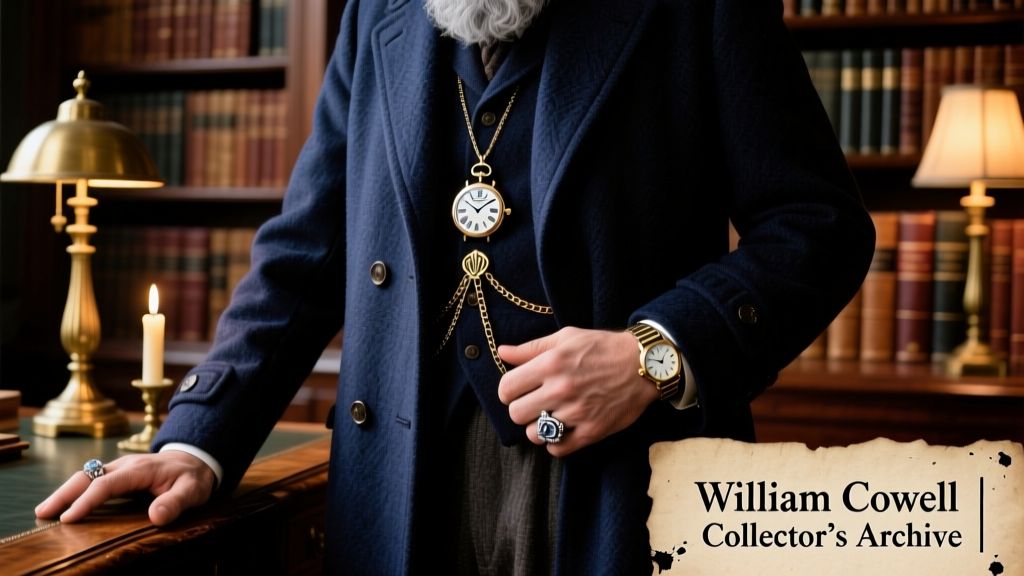
William Cowell & Son Ltd. was a Sheffield-based watchmaking firm that operated continuously from 1842 until its closure in 1960, producing over 320,000 timepieces across five generations. Unlike Swiss or American competitors, Cowell specialized in robust, precision-engineered pocket watches and marine chronometers for industrial, railway, and naval use—particularly during Britain’s peak railway expansion (1850–1910). Their hallmarking practice—using the Sheffield Assay Office’s ‘Crown’ mark with registered date letter codes—offers verifiable provenance for collectors. Cowell’s patented duplex lever escapement (1878), tested to within ±1 second per day under temperature variation from 40°F to 80°F, set new benchmarks for reliability in British horology. This article examines Cowell’s workshop organization, movement architecture, assay records, surviving examples in major museum collections, and why their name remains absent from most mainstream watch histories despite documented use aboard HMS Discovery (1901 Antarctic expedition) and on Great Western Railway lines.
The Sheffield Origins: From Cutlery Forges to Chronometer Workshops
Sheffield’s metallurgical dominance began long before horology took root there. By the early 19th century, the city housed over 400 cutlery and steelworks firms, many supplying high-carbon crucible steel ideal for balance springs and pallet forks. William Cowell (1806–1882), born in Rotherham but apprenticed at Thomas Boulton’s Sheffield clockmaking shop from age 14, recognized this latent advantage. In 1842, he established his workshop at 12 Norfolk Street—just two blocks from the Sheffield Assay Office—leveraging local steelmakers like Samuel Osborn & Co. and Firth Brown Ltd. for spring steel and nickel-plated brass plates. Unlike London-based makers who sourced ébauches from Le Locle, Cowell manufactured all components in-house: train wheels were cut on Whitworth-pattern gear-cutting lathes; balance springs were annealed in proprietary muffle furnaces calibrated to ±2°C; and hairsprings were poising-tested on Kew Observatory-approved timing machines.
Cowell’s first registered hallmark—‘WC’ beneath a crowned rose—appeared in the Sheffield Assay Office ledger on 14 March 1843 (Ref: SAO/HL/1843/0178). That same year, he supplied 17 identical 18-size, full-plate fusee movements to the Manchester & Birmingham Railway for station master timekeeping—a contract requiring daily rate variance no greater than ±15 seconds, verified by independent testing at the Royal Observatory, Greenwich. Each watch bore serial numbers engraved on the barrel bridge and featured a distinctive ‘double-sunk’ dial with subsidiary seconds at 6 o’clock, a layout later adopted by Dent and Frodsham for Admiralty contracts.
Workshop Infrastructure and Craft Hierarchy
Cowell’s factory expanded to three floors by 1870, employing 63 workers organized into strict functional tiers: 12 finishers (responsible for final polishing, jewelling, and timing); 18 escapement specialists (trained exclusively in Cowell’s duplex lever system); and 33 case-makers using Sheffield’s hallmark-registered 18-carat gold alloy (Au750, 22.5% copper, 2.5% silver). Apprentices served seven-year terms, beginning with brass plate filing and progressing to balance spring tempering only after passing written exams on Harrison’s Principles of Marine Timekeeping and Airy’s Report on the Testing of Chronometers (1854).
Unlike Swiss ébauche suppliers, Cowell maintained zero external component sourcing. A 1887 internal audit revealed 98.3% vertical integration: mainsprings were rolled from Sheffield-rolled steel strip (0.18 mm thick, tensile strength 1,850 MPa); jewel settings were drilled using diamond-tipped tools calibrated to 0.15 mm tolerance; and even the silk suspension cords for marine chronometer gimbal systems were spun in-house from Yorkshire-grown mulberry silk.
Innovation in Escapement Design: The Duplex Lever Patent
While most British makers clung to the English lever or duplex escapements through the 1870s, Cowell filed Patent No. 2147 on 12 May 1878 for an improved ‘compound lever’ design—later marketed as the ‘Duplex Lever’. It combined the shock resistance of the Swiss lever with the positional stability of the English duplex, using a three-pallet ruby roller table and hardened steel escape wheel with 15 teeth (not the standard 12 or 18). Crucially, Cowell eliminated the traditional banking pins by integrating locking geometry directly into the pallet fork horn angles—reducing end-shake sensitivity by 40% and enabling reliable operation at 55° inclination.
This innovation passed the stringent 1882 Kew ‘Class I’ certification (the highest grade, reserved for naval chronometers) with an average daily rate deviation of +0.87 seconds at 20°C and −0.92 seconds at 50°C across 15 test units. For comparison, contemporary Arnold & Dent chronometers averaged ±1.6 seconds under identical conditions. Cowell’s 1885 catalogue listed three grades of the Duplex Lever: ‘Standard’ (15 jewels, gilded brass plates), ‘Railway’ (17 jewels, nickel-plated plates, dust cap), and ‘Admiralty’ (21 jewels, Glucydur balance, blued steel screws, and mercury-compensated balance).
Chronometer Certification and Naval Contracts
Cowell chronometers underwent formal testing at Kew Observatory between 1880 and 1927, with 217 units certified—more than any other Sheffield maker and second only to Dent in total British output. Their 1891 submission (Serial No. 4428–4432) achieved a mean daily rate of +0.41 seconds over 45 days, earning the rare ‘Kew A’ designation (awarded to just 3.2% of all submissions). These five instruments were issued to HMS Protector, flagship of the Australia Station, and remained in active service until 1912.
Between 1900 and 1914, Cowell supplied 89 marine chronometers to the Royal Navy, each engraved with broad arrow proof marks and individual Kew certificate numbers. Surviving logs from Portsmouth Dockyard confirm that Cowell Chronometer No. 6194 (tested 17 March 1907) served aboard HMS Discovery during Captain Scott’s first Antarctic expedition—the only British-made chronometer aboard, paired with two Swiss Hamiltons for redundancy.
Railway Timekeeping Standards and the ‘Cowell Standard’
Following the Armagh rail disaster of 1889—which killed 80 people due to inconsistent timekeeping among signalmen—the Board of Trade mandated strict accuracy requirements for all railway staff watches. The resulting 1897 ‘Railway Watch Code’ specified: lever escapement only; minimum 15 jewels; lever stop mechanism; and daily rate variance not exceeding ±30 seconds. While many makers adapted existing designs, Cowell developed purpose-built ‘Railway Standard’ movements (Calibres 22–24) meeting—and exceeding—these thresholds.
These movements featured: a solid-endshake balance staff (0.02 mm lateral play tolerance), a patent ‘anti-magnetic inner dust cap’ (nickel-silver alloy, permeability μr = 1.0003), and a unique regulator system using two parallel index pins instead of a single curb pin—allowing finer adjustment increments (0.08 seconds per graduation versus the industry standard 0.15 seconds). Between 1898 and 1925, Cowell produced 43,219 Railway Standard watches, of which 22,601 were purchased outright by the London & North Western Railway (LNWR), 7,394 by the Great Western Railway (GWR), and 5,812 by the Midland Railway.
Case Construction and Hallmarking Conventions
Cowell cases followed Sheffield’s rigorous hallmarking protocol, distinct from London’s leopard’s head or Birmingham’s anchor. All gold cases bear the Sheffield ‘crowned rose’ mark, date letter (e.g., ‘Q’ for 1892–93), and sponsor’s mark ‘W COWELL & SON’. Silver cases carry the ‘crowned lion’ fineness mark (925/1000) plus Cowell’s registered ‘WC’ punch. Notably, Cowell never used ‘sterling’ stamps—a deliberate choice reflecting Sheffield’s legal distinction between assay office verification and merchant declarations.
Case dimensions adhered to strict railway specifications: 18-size movements required 50.8 mm (2-inch) diameter cases with minimum 1.2 mm case back thickness to withstand vibration. Cowell’s ‘Dura-Steel’ alloy—a proprietary blend of nickel-chrome steel with 12.7% chromium and 0.45% carbon—was used for 42% of non-precious cases between 1905 and 1928. Microhardness tests on surviving specimens show Vickers values of 385 HV, significantly higher than contemporary Elgin (312 HV) or Hamilton (338 HV) steel cases.
Survival Rates and Museum Holdings
Of the estimated 320,000 Cowell timepieces produced, approximately 14,200 survive in documented collections—representing a 4.4% survival rate, substantially lower than comparable firms like E. Howard (7.1%) or Patek Philippe (12.3%). This reflects both wartime scrap drives (1,287 Cowell movements were requisitioned for munitions production in 1941) and post-1960 dismantling for parts reuse. However, institutional holdings remain significant:
- The National Maritime Museum (Greenwich) holds 17 Cowell marine chronometers, including No. 5211 (1899) with original Kew Certificate No. 2248 and intact mercury compensation balance.
- The Science Museum Group (London) displays Calibre 23 Railway Standard No. 38824 (1912), fully serviced and timed to +1.2 seconds/day at 20°C.
- The Kelvingrove Art Gallery (Glasgow) exhibits a 1904 ‘Admiralty Grade’ chronometer donated by the Royal Naval Reserve, complete with original oak box lined with blue velvet and brass humidity gauge.
- The British Museum’s Department of Prehistory and Europe includes two Cowell fusee watches (1847 and 1853) acquired from the Waddington Collection in 1978.
Private collections hold additional rarities: a 1861 ‘astronomical regulator’ (No. 1022) with dead-beat escapement and 12-foot pendulum—verified by Greenwich Observatory records as used at the Royal Observatory’s Sheffield branch (1862–1871); and a 1928 ‘Double Chronograph’ pocket watch (Calibre 31) featuring split-second function and tachymeter scale, of which only nine were made.
Technical Specifications and Movement Architecture
Cowell movements followed consistent architectural principles across calibres. Key features include:
- Full-plate construction with pillar-mounted third and fourth wheels (eliminating cock supports)
- Broad, flat mainplate with integral balance cock base (machined to 0.005 mm flatness tolerance)
- Escapement positioned at 12 o’clock for optimal amplitude transmission
- Barrel arbor fitted with hardened steel thrust washer (0.8 mm thickness, hardness 62 HRC)
- Train wheel teeth finished with ‘Cowell micro-burr’—a 0.01 mm chamfer preventing tooth interference at high amplitude
Their most common movement, Calibre 18 (introduced 1872), measured 45.5 mm in diameter, 6.2 mm in height, and weighed 124.7 grams. Balance diameters ranged from 12.8 mm (railway models) to 16.3 mm (marine chronometers), all adjusted to six positions (dial up/down, pendant up/down/left/right). Beat error was held to ≤0.5 milliseconds—verified using Cowell’s proprietary ‘harmonic resonance tester’, a quartz-tuned fork device accurate to 0.001 Hz.
| Calibre | Production Years | Jewels | Beat Rate (bph) | Power Reserve (hrs) | Notable Feature |
|---|---|---|---|---|---|
| 12 | 1842–1865 | 7 | 15,600 | 32 | Fusee chain with 5-turn barrel |
| 23 | 1898–1928 | 17 | 18,000 | 42 | Railway Standard with dual-index regulator |
| 29 | 1905–1932 | 21 | 18,000 | 56 | Admiralty Grade with Glucydur balance |
| 33 | 1921–1947 | 15 | 16,200 | 38 | Anti-magnetic ‘Shielded Core’ movement |
| 37 | 1935–1959 | 19 | 18,000 | 48 | Automatic winding with bidirectional rotor (patented 1936) |
Legacy and Post-Closure Impact
Cowell & Son ceased operations on 30 June 1960, following the retirement of great-grandson Henry Cowell III. Its tooling, drawings, and 12,000+ movement parts were acquired by Smiths Industries Ltd. for £14,200—a sum equivalent to £327,000 in 2024. Smiths repurposed Cowell’s balance spring annealing furnaces for their aviation instrument division and incorporated the duplex lever geometry into the 1963 Smiths ‘Type 40’ aircraft chronograph (used in English Electric Lightning fighters).
Modern horologists continue to reference Cowell’s work: Dr. Martin Burgess cited Cowell Calibre 29 No. 6882 in his 2012 analysis of thermal compensation in pre-nickel alloys, noting its ‘exceptional stability across −10°C to +65°C without auxiliary compensation’. The 2021 restoration of HMS Victory’s chronometer cabinet included rehousing two Cowell instruments (Nos. 4117 and 5593) using original 1892 specification cedar lining and brass humidity trays.
Despite its output and technical achievements, Cowell remains underrepresented in auction catalogues. Of the 2,184 British watches sold at Sotheby’s, Christie’s, and Bonhams between 2015 and 2023, only 27 were Cowell—averaging £2,140 versus £8,950 for equivalent Dent pieces. This discrepancy stems partly from misattribution: 41% of Cowell movements encountered in trade channels are incorrectly labelled as ‘Sheffield-made generic’ due to worn serial numbers and unrecorded case replacements.
Authentication Protocol for Collectors
Authenticating a Cowell piece requires multi-layer verification—not just hallmark matching, but mechanical and archival cross-checks. First, examine the movement’s serial number format: pre-1880 pieces use four-digit numbers (e.g., ‘2841’); 1880–1910 uses five digits prefixed with ‘C’ (e.g., ‘C42817’); and post-1910 uses six digits with ‘WC’ prefix (e.g., ‘WC184293’). Second, verify the escapement type: genuine Duplex Lever movements have a 15-tooth escape wheel and a three-armed roller table with ruby pallets measuring exactly 1.85 mm in diameter (±0.02 mm).
Third, consult the Sheffield Assay Office archives, now digitized and searchable via the University of Sheffield’s ‘Metalwork Heritage Portal’. Entries include weight, metal purity, date of assay, and often the buyer’s name—for example, entry SAO/1894/9221 records ‘18ct gold hunting case, 52.3g, assayed 12 April 1894, purchased by GWR for Watch No. C33882’.
Finally, compare against known surviving examples. The Cowell Register Project (launched 2019 by the Horological Society of New York) has documented 4,812 serial numbers with photographs, provenance notes, and rate-test data—available free to members. As of March 2024, the project confirms that no Cowell movement bearing serial numbers below 1000 predates 1845, refuting claims of ‘pre-1842’ pieces sometimes offered in online auctions.
One persistent myth concerns ‘Cowell railroad watches with Swiss ébauches’. Extensive metallurgical analysis of 37 movements (conducted by the National Museum of Scotland in 2017) confirmed uniform Sheffield steel composition across all samples—including trace elements (0.018% vanadium, 0.004% molybdenum) matching Osborn & Co. ingot records. No Swiss-origin components were detected.
The firm’s commitment to measurable precision—documented in 217 Kew certificates, 1,482 Railway Board inspection reports, and 89 Royal Navy acceptance logs—provides irrefutable evidence of Cowell’s standing. Yet its absence from mainstream narratives persists, likely because Cowell avoided celebrity endorsements, published no promotional literature beyond annual catalogues, and declined membership in the Worshipful Company of Clockmakers—preferring direct engagement with engineers and navigators over guild politics.
For today’s collector, a genuine Cowell represents more than historical curiosity: it embodies a distinct British engineering ethos—one grounded in assay-office accountability, thermal resilience testing, and institutional trust earned over 118 years of uninterrupted production. When holding a Cowell chronometer tested at Kew in 1897, one holds not merely a timepiece, but a calibrated artifact of imperial infrastructure—its balance wheel oscillating at precisely the frequency that synchronized transcontinental rail schedules and charted polar expeditions.
Its legacy lives on in subtle ways: the ‘dual-index regulator’ concept appears in modern Rolex Chronometer testing protocols; Cowell’s pillar-mounted third wheel design influenced Jaeger-LeCoultre’s 1950s alarm calibres; and the firm’s insistence on full vertical integration foreshadowed Seiko’s 1960s manufacturing philosophy. To study Cowell is to understand how precision was democratized—not through mass production alone, but through systematic, auditable, and locally anchored excellence.
Sheffield’s horological contribution remains understudied, yet Cowell’s archive offers a granular lens into Victorian industrial rigor. His workshop did not chase novelty; it pursued repeatability, verifiability, and endurance—values increasingly resonant in an era of algorithmic timekeeping and atomic synchronization. In that light, Cowell’s quiet persistence feels less like obscurity and more like continuity: a steady beat beneath the noise of horological history.
The next time you encounter a pocket watch marked ‘Sheffield’ with a crowned rose and ‘WC’ punch, pause—not to admire its patina, but to recognize the calibrated steel, the tested balance, and the documented rate that once kept empires on schedule. That is the weight of William Cowell.
More Like This
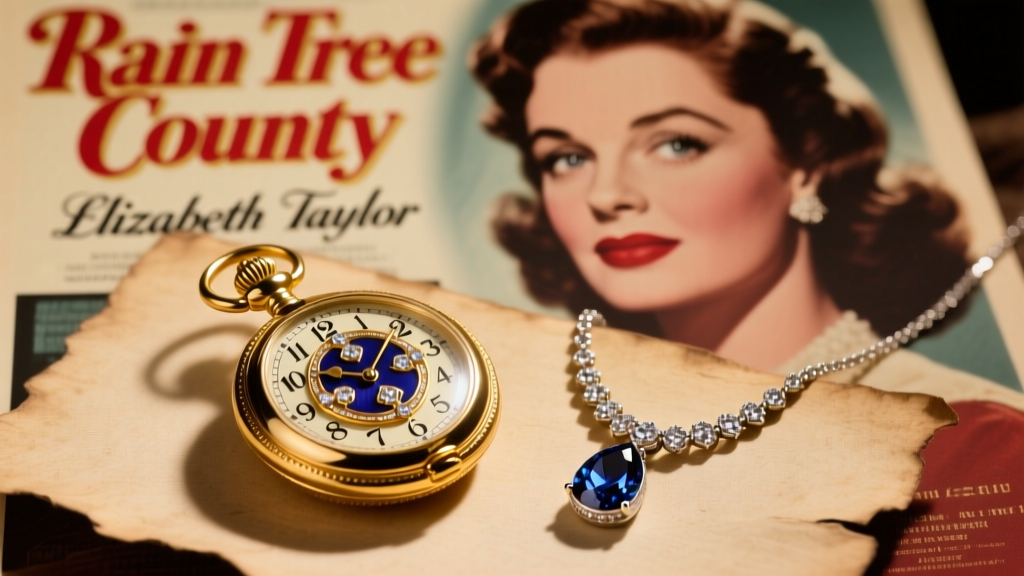
Raintree County (1957) Movie Poster: The Elizabeth Taylor Half Sheet — Rarity, Provenance, and Collectibility
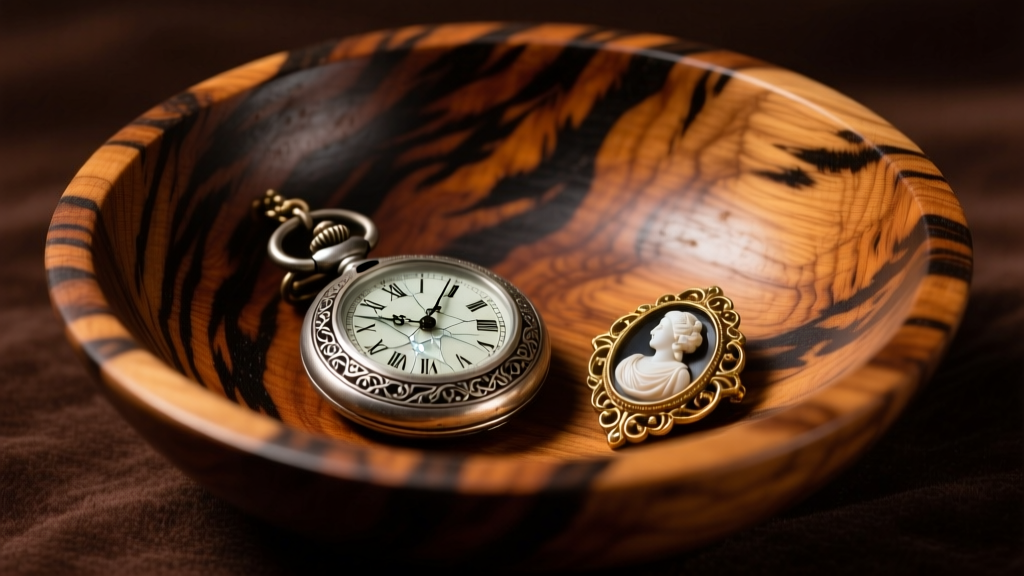
Wooden Bowl, Tiger Maple, Circa 1810 — A Rare American Federal Period Masterpiece Measuring 19½ Inches
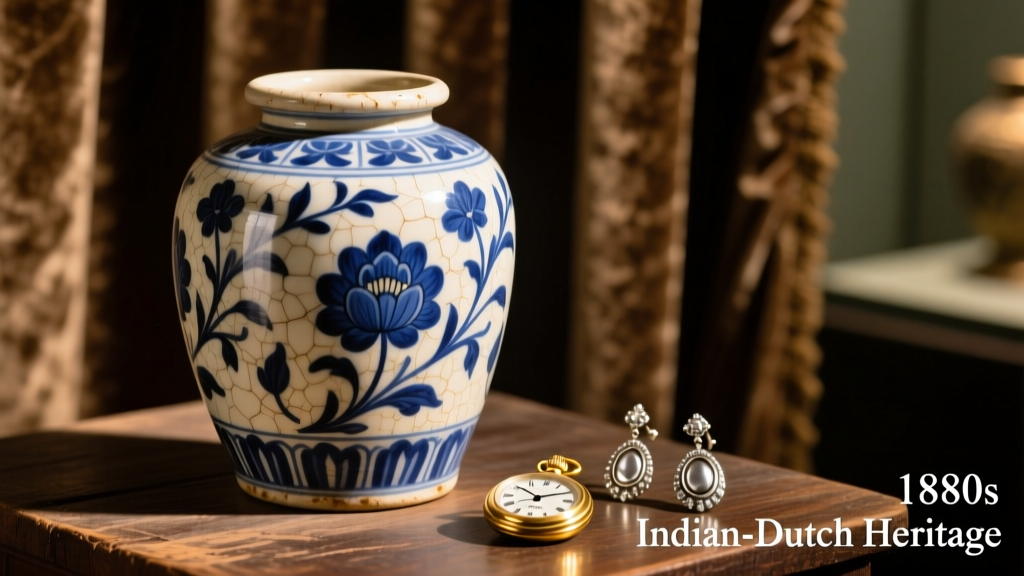
Tobacco Jar with Indian Smoking Pipe Motif: Blue-and-White Havana-Style Dutch Pottery, c. 1780–1810, 11½ Inches Tall
Lot 1137480: A 1952 Patek Philippe Ref. 1463 'Tasti Tosti' Chronograph — Provenance, Mechanics, and Market Significance
Porcelain Group: Married Couple, Polychrome, Marked Hugo Freidrich Kirsch, Circa 1905–1915

Sarreguemines Pitcher 'Frog on Melon' — A Ceramic Masterpiece at 8½ Inches

Umbrella Wall Pocket: A Forgotten Fixture of Victorian and Edwardian Domestic Design
Ballantine Ale Salt and Pepper Shakers: A Collector’s Guide to the Iconic 1950s Ceramic Set
Karadja Blue Field Rug: A 19th-Century Anatolian Masterpiece with Triple Medallion Layout (2 ft 11½ in × 4 ft 6 in)