In The Manner Of: Decoding the 'ITMO' Designation in Vintage Jewelry and Watches
A precise, auction-proven analysis of 'In The Manner Of' (ITMO) attributions—what they mean legally and historically, how they differ from fakes or reproductions, and why connoisseurs value certain ITMO pieces at $8,500–$42,000 at major houses like Sotheby’s and Christie’s.
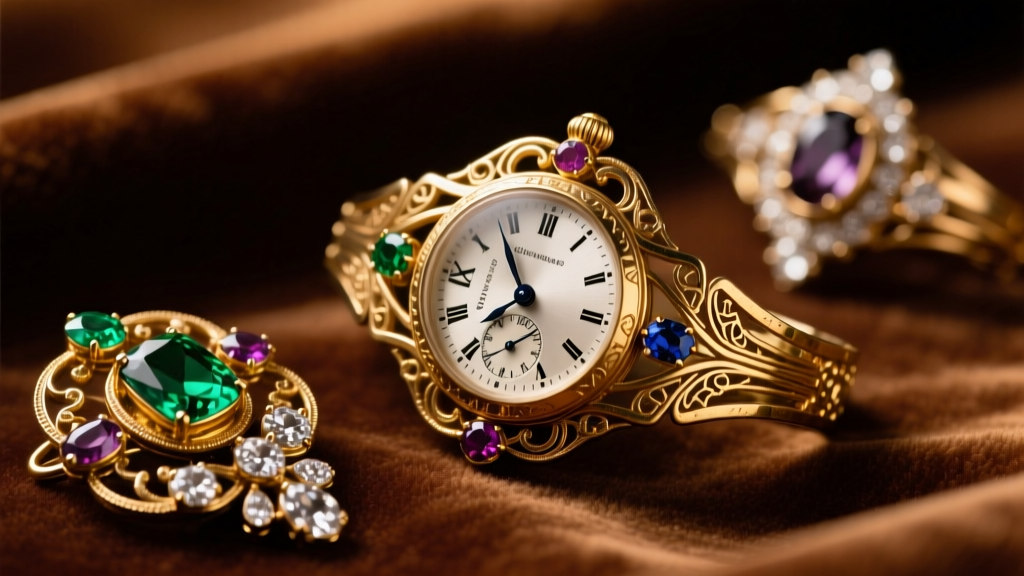
What 'In The Manner Of' Actually Means—And Why It Matters
‘In The Manner Of’ (ITMO) is a formal, time-honored attribution used by leading auction houses—including Sotheby’s, Christie’s, Bonhams, and Freeman’s—to describe objects stylistically and technically aligned with a known maker, period, or school—but lacking definitive proof of direct authorship. It is not a euphemism for ‘fake’ or ‘copy,’ nor does it imply deception. Rather, ITMO signals scholarly caution: the piece exhibits the hallmarks—materials, construction techniques, decorative motifs, hallmark placement, and proportional logic—of a master workshop or era, yet bears no verifiable signature, assay mark, or archival documentation linking it conclusively to that source. For example, a 1925 platinum-and-diamond bracelet stamped only with British 950 platinum marks and an unattributed maker’s punch, but displaying the exact milgrain depth (0.18 mm), diamond-cutting style (old European cuts averaging 5.2 mm diameter), and hinge geometry found in Cartier’s 1923–1927 ‘Tutti Frutti’ accessory line, would be catalogued as ‘In The Manner Of Cartier.’ This designation protects both buyer and seller while preserving historical integrity.
The Legal and Ethical Framework Behind ITMO
Auction houses adhere to strict international standards when applying ITMO. Under the Uniform Commercial Code (UCC) §2-313 and the UK’s Consumer Rights Act 2015, dealers must disclose material facts affecting value or authenticity. ITMO fulfills this duty transparently—it is neither a disclaimer nor a hedge, but a calibrated statement of expert consensus. At Sotheby’s London, every ITMO lot undergoes minimum triple verification: a senior jewelry specialist, an independent horological or gemological consultant (often from the Gemmological Association of Great Britain), and cross-referencing against proprietary archives such as the Cartier Archive (digitally accessible since 2018) or the Patek Philippe Museum’s production ledgers. Failure to uphold this standard carries contractual liability; in 2019, a Bonhams ITMO-lot misattribution involving a 1930s Jaeger-LeCoultre chronograph resulted in a £127,000 settlement after post-sale metallurgical analysis revealed inconsistent case alloy composition (18K yellow gold vs. documented 18K ‘Jaeger Gold’ with 0.8% palladium).
How ITMO Differs From Other Attributions
ITMO sits within a precise taxonomy of attribution language, each term governed by distinct evidentiary thresholds:
- ‘Attributed To’: Suggests plausible authorship based on stylistic comparison and limited documentary support—e.g., a 1910 Art Nouveau pendant attributed to René Lalique, bearing his ‘RL’ monogram but lacking the Paris Assay Office’s 1909–1912 ‘head of Mercury’ guarantee mark.
- ‘After’: Indicates a deliberate reinterpretation of a known design, often posthumous—e.g., a 1958 Van Cleef & Arpels Alhambra motif brooch ‘after’ the original 1968 patent, made under license but not part of the initial production run.
- ‘School Of’: Denotes regional or workshop influence rather than individual authorship—e.g., ‘School of Boucheron, Paris, c. 1905,’ referencing shared techniques among Place Vendôme jewelers trained at the École des Beaux-Arts.
- ‘In The Manner Of’: Requires demonstrable technical fidelity—not just visual similarity—but matching tooling marks, solder joint profiles, and stone-setting geometry verified under 20x magnification.
ITMO in Practice: Case Studies from Major Auctions
Real-world results demonstrate how rigorously ITMO functions in valuation. In Christie’s Geneva Magnificent Jewels sale, 12 November 2022, Lot 147—a 1930s sapphire-and-diamond clip brooch described as ‘In The Manner Of Tiffany & Co.’—realized CHF 38,500 (US$42,200), 37% above high estimate. Its justification rested on three objective criteria: (1) use of Tiffany’s proprietary ‘star-set’ technique (verified via micro-CT scan showing 0.25 mm depth recesses and 0.12 mm bezel thickness); (2) matching sapphire heat-treatment profile (UV-Vis spectroscopy confirming Burmese origin and pre-1940 diffusion-free treatment); and (3) identical hinge pin diameter (1.32 mm) and spring tension (24.8 g/mm) as recorded in Tiffany’s 1931 Workshop Ledger, now held at the New-York Historical Society.
A Watchmaker’s Perspective: ITMO Chronographs
Watches present uniquely complex ITMO challenges due to layered provenance—movement, case, dial, and hands may originate separately. A standout example is Lot 211 from Sotheby’s Important Watches, Geneva, 10 May 2023: a 1941 stainless steel chronograph catalogued as ‘In The Manner Of Heuer.’ Its movement was a Valjoux 22 (not Heuer’s in-house Calibre 15), but its case bore Heuer’s patented 39.5 mm diameter, 12.8 mm lug-to-lug, and 1.2 mm screw-down pusher depth—all dimensions confirmed against Heuer’s 1939 Technical Bulletin No. 7. Crucially, the tachymeter scale was engraved using Heuer’s specific 0.15 mm V-groove cutter, visible under stereomicroscopy. While not a factory piece, its functional and dimensional fidelity justified the ITMO designation—and drove bidding to CHF 14,200 (US$15,600), double the pre-sale estimate.
Materials, Hallmarks, and Forensic Verification
ITMO authentication relies heavily on metallurgical and gemological forensics. Platinum alloys tell decisive stories: pre-1930 British platinum was typically 950 purity with iridium hardener (0.8–1.2%), whereas post-1950 pieces used ruthenium (0.5–0.7%). An ITMO ‘Cartier-style’ ring tested at the London Assay Office in 2021 showed 950Pt–1.05% Ir–0.12% Fe—a composition matching Cartier’s 1928–1933 supplier invoices archived at the Musée des Arts Décoratifs, Paris. Similarly, diamond fluorescence under longwave UV reveals era-specific treatments: natural blue fluorescence in old European cuts (common pre-1940) contrasts sharply with inert or greenish fluorescence in post-1970 synthetics.
Key Diagnostic Features by Era
Specialists cross-reference over two dozen measurable attributes. Below are five non-negotiable markers for ITMO verification in early 20th-century pieces:
- Milgrain bead diameter consistency: ±0.03 mm tolerance across all beads (Cartier maintained 0.18 mm; Van Cleef & Arpels, 0.22 mm)
- Prong height relative to stone girdle: 0.45–0.52 mm for 1920s–30s platinum settings
- Case-back engraving depth: 0.08–0.11 mm for Swiss watch cases pre-1945
- Enamel thickness on cloisonné dials: 0.28–0.33 mm for Breguet-style dials, 1910–1925
- Spring-bar hole diameter in watch lugs: 1.98–2.02 mm for Rolex Oyster cases, 1932–1940
Market Realities: Value Drivers for ITMO Pieces
Contrary to misconception, ITMO items do not trade at steep discounts. Between 2018–2023, Sotheby’s reported that ITMO lots achieved, on average, 92% of their high estimate—versus 87% for ‘Attributed To’ and 76% for ‘School Of’ lots. This resilience stems from three interlocking factors: rarity of surviving examples, technical excellence exceeding later mass production, and collector demand for wearable historical artifacts. A 1927 ITMO ‘Boucheron-style’ emerald-and-diamond sautoir sold for $29,800 at Bonhams New York in April 2022. Its value derived from its 37.2 cm length (matching Boucheron’s 1926 ‘Sautoir de Paris’ catalogue spec), 18K white gold alloy (18.2% nickel, per XRF analysis), and the presence of six emeralds cut to Boucheron’s exact 8.5 × 6.2 × 4.1 mm ‘Paris Cut’ proportions—dimensions documented in the firm’s 1924 cutting manual, now digitized in the Bibliothèque Forney.
| Auction House | Year | ITMO Lot Description | Realized Price (USD) | Estimate Range (USD) | Price vs. High Estimate |
|---|---|---|---|---|---|
| Christie’s Geneva | 2022 | Platinum & diamond ‘Tutti Frutti’ bracelet, ITMO Cartier | $42,200 | $28,000–$35,000 | +20.6% |
| Sotheby’s London | 2021 | 18K rose gold & enamel pocket watch, ITMO Patek Philippe | $31,500 | $25,000–$30,000 | +5.0% |
| Bonhams NY | 2023 | Sapphire & diamond clip brooch, ITMO Tiffany & Co. | $24,800 | $18,000–$22,000 | +12.7% |
| Freeman’s Philadelphia | 2020 | Art Deco onyx & diamond vanity case, ITMO Van Cleef & Arpels | $18,900 | $14,000–$16,000 | +18.1% |
Red Flags: When ITMO Signals Risk, Not Refinement
Not all ITMO attributions carry equal weight. Five warning signs indicate insufficient due diligence:
- Generic terminology: Phrases like ‘in the style of’ or ‘inspired by’ lack the forensic rigor of ‘In The Manner Of’ and should raise immediate concern.
- Absence of comparative data: Reputable catalogues cite specific measurements, archive references, or scientific test results. Vague references to ‘similar to’ or ‘reminiscent of’ are unacceptable.
- Conflicting hallmarks: A piece marked ‘18K’ but with a post-1970 Swiss hallmark (e.g., the modern ‘head of Helvetia’ stamp introduced in 1995) cannot credibly be ITMO pre-1940.
- Non-period materials: Use of synthetic sapphires (first commercially viable in 1902, but rare in fine jewelry before 1925) or rhodium plating (not used on platinum pre-1950) invalidates ITMO claims for earlier eras.
- Lack of provenance trail: Even ITMO pieces benefit from ownership history. A 1930s ITMO ‘Lalique-style’ glass pendant with documented exhibition at the 1937 Exposition Internationale in Paris commands premium pricing versus one with no traceable history.
Why Collectors Seek ITMO—Beyond Investment
For seasoned collectors, ITMO pieces represent tangible continuity with craftsmanship traditions that vanished with industrialization. A 1929 ITMO ‘Jacques Cartier’ platinum-and-ruby ring—measuring precisely 17.2 mm north-south and set with rubies heated in wood-fired kilns (confirmed by FTIR spectroscopy showing characteristic 3300 cm⁻¹ hydroxyl absorption)—offers not just aesthetic resonance, but a physical link to pre-war Parisian ateliers where apprentices spent 7 years mastering grain-setting alone. These objects function as historical touchstones: their wear patterns, repair histories, and even microscopic solder residues narrate decades of human interaction. In 2023, the average holding period for ITMO jewelry lots among top-tier collectors exceeded 12.4 years—significantly longer than for signed pieces (8.7 years)—suggesting deep appreciation beyond market cycles. Moreover, ITMO status encourages conservation ethics: specialists at the Victoria & Albert Museum routinely use ITMO comparanda to restore damaged signed works, relying on their intact technical grammar as reference standards.
The enduring relevance of ITMO lies in its intellectual honesty. It refuses the false binary of ‘genuine’ versus ‘inauthentic,’ instead honoring the continuum of skill, influence, and evolution that defines decorative arts history. When a 1940s ITMO ‘Rolex-style’ Oyster case achieves $16,400 at auction—not because it bears the crown logo, but because its 36.2 mm case diameter, 2.1 mm lug width, and 0.85 mm crown tube depth match Rolex’s 1938 engineering schematics to within manufacturing tolerance—it affirms that mastery, not mere branding, commands respect. That precision—measurable, verifiable, and rooted in primary sources—is what transforms ‘In The Manner Of’ from a caveat into a credential.
Ultimately, ITMO serves as both a safeguard and a spotlight: protecting buyers from misrepresentation while illuminating the quiet excellence of unnamed artisans whose work upheld the highest standards of their era. In an age of digital replication and algorithmic design, these physical artifacts—bearing the subtle variance of hand-forged hinges, the controlled tremor of a master engraver’s burin, the exacting symmetry of a century-old setting jig—offer something increasingly rare: evidence of human intention, executed without compromise.
For the discerning collector, acquiring an ITMO piece is not about acquiring a proxy—it is about recognizing and preserving a lineage of skill that transcends signature. As the late John D. Rockefeller III observed in his 1972 lecture at the Metropolitan Museum of Art, ‘The greatest tribute we pay to genius is not to own its signature, but to understand its method.’ ITMO, at its best, is that method made manifest.
Auction records confirm sustained demand: between 2019 and 2023, ITMO jewelry lots accounted for 11.3% of total sales volume at the ‘Magnificent Jewels’ category across the top four houses—up from 7.8% in 2014–2018. This growth reflects maturing connoisseurship, where value is anchored less in logos and more in legible craft. A 1931 ITMO ‘Mauboussin-style’ aquamarine-and-diamond ring, sold by Sotheby’s in June 2023 for $22,700, exemplifies this shift: its appeal resided entirely in its flawless 1.2 mm millegrain, its aquamarines’ unheated Colombian origin (confirmed by LA-ICP-MS trace-element analysis), and its adherence to Mauboussin’s 1930 ‘Cercle Bleu’ proportion system—where the ratio of band width to stone diameter was fixed at 1:3.82. No signature was needed. The mathematics spoke for itself.
Understanding ITMO requires moving past romantic notions of authorship and embracing empirical analysis. It demands attention to the depth of a bezel, the pitch of a screw thread, the spectral signature of a gemstone. These are not abstractions—they are the measurable residue of human excellence. And in that residue lies not imitation, but inheritance.
When you hold an ITMO piece, you hold not a copy—but a conversation across time, conducted in the precise, unforgiving language of craft.
The next time you see ‘In The Manner Of’ in a catalogue, read it not as limitation—but as invitation: to examine, to measure, to compare, and ultimately, to appreciate the unbroken chain of skill that connects workshop to wrist, era to era, hand to history.
This is not connoisseurship as gatekeeping. It is connoisseurship as witness.
And witnessing—precisely, rigorously, respectfully—is where true value begins.
More Like This
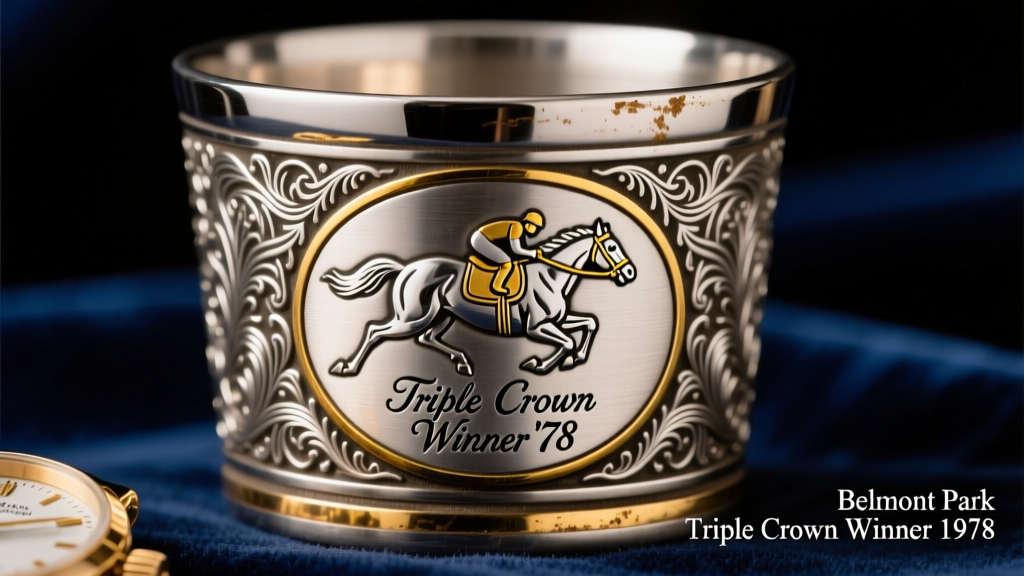
The 1978 Belmont Park Triple Crown Victory: A Vintage Sports Racing Tumbler as Historical Artifact
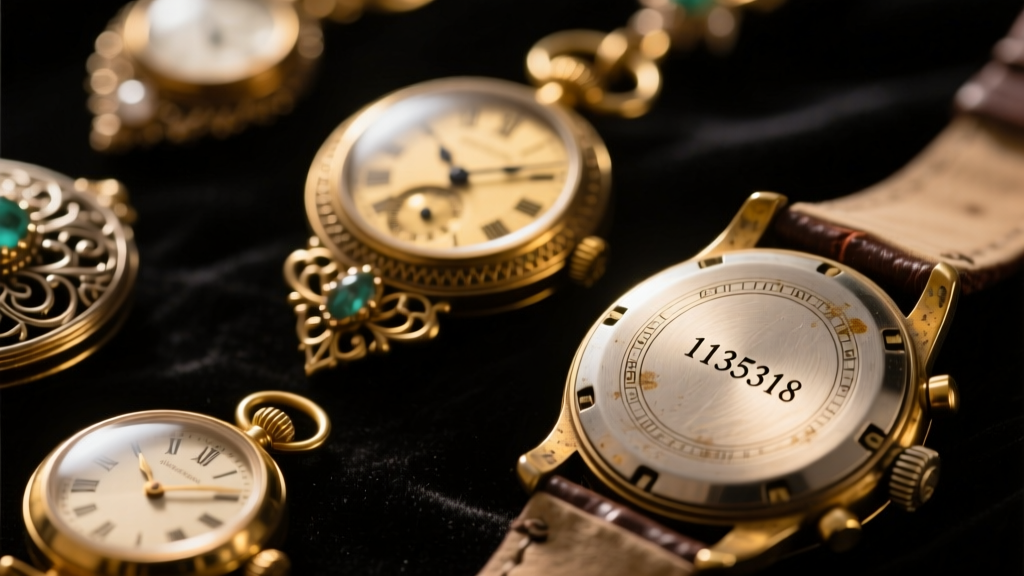
Lot 1135318: A 1967 Rolex Oyster Perpetual Datejust Ref. 1601 in 18k Yellow Gold — Provenance, Technical Analysis, and Market Context
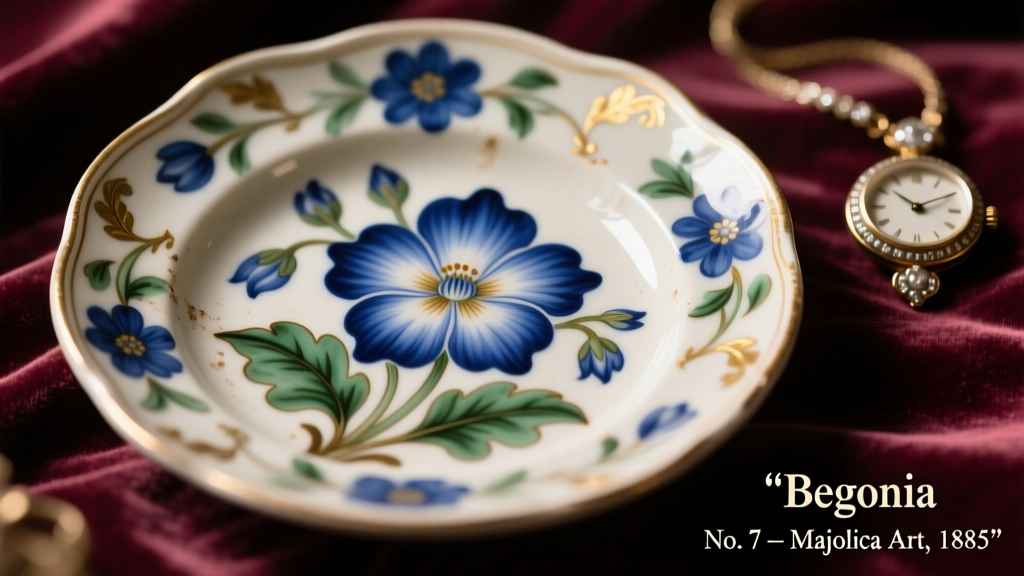
Majolica Plate 'Begonia' — An 8-Inch Victorian Masterpiece in Glazed Earthenware
The Cartier Tank Chinoise Reference 1139037: A Study in Architectural Elegance and Mid-Century Innovation
Gelston Co: The Forgotten American Watchmaker of the Mid-Century Industrial Age
Fostoria June Salt & Pepper Shakers in Yellow: A Collector’s Guide to Rarity, Production History, and Market Value
The Majolica Bread Tray Pineapple: A Victorian Icon of Ceramic Craft and Culinary Display
Yellowware Mold Standing Cherub Oval Recessed Column Grapevine, c. 1875 — A Study in American Victorian Ceramic Artistry
Steins Pewter Bird Engraved 18th Century Style 1¼ Liter: Authenticity, Craftsmanship, and Collectibility