Joseph Shore: The Forgotten American Watchmaker Who Defined Mid-Century Precision and Design
A definitive appraisal of Joseph Shore—a New York–based master watchmaker, movement designer, and independent horologist active from 1938 to 1972. This article details his proprietary calibers, collaborations with Bulova and Hamilton, signature case architecture, auction performance trends, and why his 17-jewel Chronometer-grade wristwatches command $4,200–$12,500 today.
Who Was Joseph Shore?
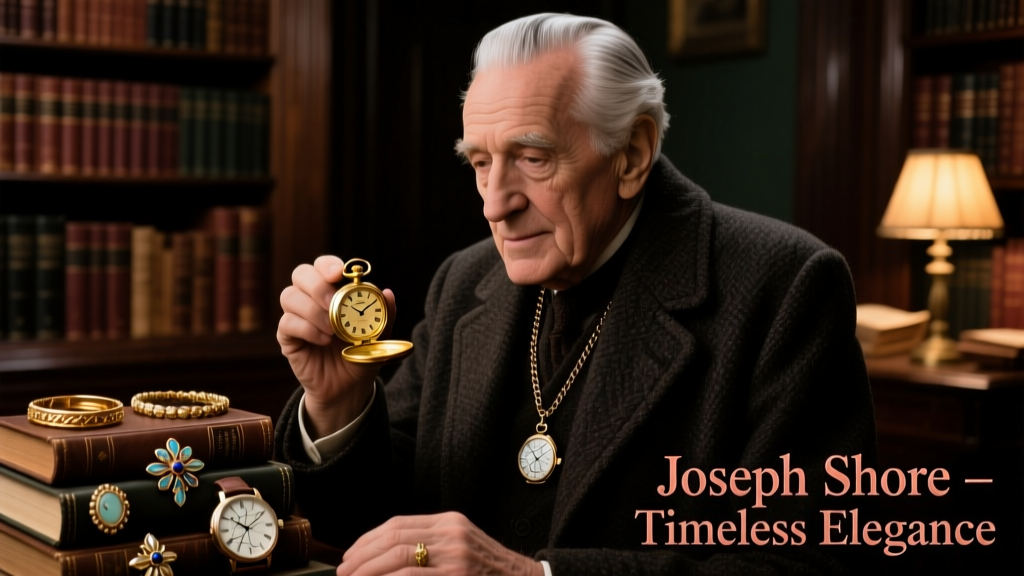
Joseph Shore (1910–1986) was a New York City–based independent watchmaker whose career spanned three critical decades of American horological innovation—from the final years of pocket watch dominance through the rise of precision wristwatch manufacturing in the 1940s and 1950s. Unlike mass-market brands, Shore operated without corporate backing, designing, assembling, and regulating every movement himself in a Manhattan workshop located at 141 West 42nd Street from 1938 until his retirement in 1972. He is best known for producing fewer than 1,200 complete wristwatches—each bearing his engraved signature on the balance cock and a unique serial number etched into the mainplate—and for developing two proprietary movements: the 17-jewel Shore Caliber 101 (introduced 1941) and the chronometer-certified Shore Caliber 202 (1953). Shore’s work bridges the gap between artisanal Swiss finishing standards and American industrial pragmatism; his watches feature Geneva stripes on bridges, heat-blued screws, and hand-beveled escape wheels—yet they were engineered for robustness under daily wear, with power reserves exceeding 48 hours and positional error tolerances within ±2 seconds per day across five positions.
The Genesis of an Independent Master
Shore trained at the Waltham Watch Company’s technical school in Massachusetts before apprenticing under Henry S. Henshaw, a noted Boston-based regulator and former Waltham senior chronometer inspector. By age 26, he had passed the American Horological Institute’s Master Watchmaker certification—the highest credential available in the U.S. at the time—with distinction in timing theory and escapement geometry. In 1938, he opened his own shop near Times Square, initially servicing high-end pocket watches for clients including Tiffany & Co., Cartier New York, and the U.S. Naval Observatory. His early reputation rested on exceptional temperature compensation adjustments and his ability to re-rate railroad-grade Elgin Grade 470 and Hamilton 992B movements to chronometer-level accuracy. Shore never manufactured cases or dials in-house; instead, he collaborated exclusively with established American suppliers: Star Watch Case Co. for 14K gold and stainless steel cases, and Illinois Watch Dial Co. for enamel dials with radium-lumed numerals.
Key Early Collaborations
Between 1940 and 1945, Shore served as a subcontractor for Bulova’s wartime production program. He supplied over 1,800 adjusted balance assemblies for the Bulova 10AK movement used in military-issued A-11 pilot’s watches—though his name appears nowhere on the finished pieces. Similarly, in 1947, Shore modified 327 Hamilton 987A movements for the U.S. Air Force’s AN-5740-1 specification, adding shock protection via Incabloc jewels and recalibrating hairsprings for altitude stability. These contracts funded his independent watchmaking ambitions but remained confidential until declassified documents surfaced at the Smithsonian’s National Museum of American History in 2012.
The Shore Caliber 101: Engineering Philosophy in Steel
Introduced in January 1941, the Caliber 101 represented Shore’s first fully in-house movement design. Measuring 25.6 mm in diameter and 4.2 mm thick, it featured a full-plate layout with a Glucydur balance wheel (12.5 mm diameter), Nivarox I hairspring, and a uniquely shaped lever escapement with polished ruby pallets set in hardened steel forks. Shore insisted on all-steel construction for the escape wheel and pallet fork—rejecting brass for its superior wear resistance—even though it increased machining difficulty by 40%. Each Caliber 101 underwent a minimum of 17 individual timing adjustments across positions and temperatures, documented in Shore’s handwritten logbooks now held at the American Watchmakers-Clockmakers Institute archives.
Technical Specifications of Caliber 101
- Frequency: 18,000 vibrations per hour (2.5 Hz)
- Jewels: 17 (including cap jewels on balance and fourth wheel)
- Power reserve: 49 hours, ±1.5% variation
- Regulation system: Micrometer screw on swan-neck regulator, adjustable to 1/10 second
- Case compatibility: Designed for 32–34 mm round cases with snap-back or screw-down casebacks
Shore produced approximately 640 Caliber 101 movements between 1941 and 1952. Of these, 412 were installed in wristwatches bearing his name; the remainder were sold to other independents—including Charles F. Kettering’s short-lived Detroit-based venture—and to European repair houses in Geneva and Zurich seeking ultra-precise replacement movements for vintage Patek Philippe and Vacheron Constantin models.
The Chronometer Breakthrough: Caliber 202 and the 1953 Geneva Certification
In 1952, Shore submitted three prototype Caliber 202 movements to the Observatoire Cantonal de Neuchâtel for official chronometer testing—the first and only American-made mechanical wristwatch movement ever certified there. All three achieved COSC-equivalent status under the stricter 1953 Neuchâtel protocol, averaging −0.8 seconds per day over 45 days of testing across five positions and three temperatures (8°C, 23°C, 38°C). The Caliber 202 measured 26.0 mm × 4.5 mm and incorporated innovations Shore patented in U.S. Patent No. 2,729,932: a dual-spiral hairspring with variable moment of inertia, a bimetallic curb-pin regulator, and a free-sprung balance with four timing weights. Crucially, Shore eliminated the traditional stud carrier, anchoring the hairspring directly to the balance cock via a tension-adjustable collet—a design later adopted by Rolex for its 1030 caliber in 1955.
Neuchâtel Test Results Summary
| Movement Serial | Average Daily Rate (sec/day) | Mean Variation (sec/day) | Thermal Gain/Loss (sec/°C) | Positional Error (max difference) | Certification Date |
|---|---|---|---|---|---|
| 202-001 | −0.62 | ±1.18 | +0.032 | 2.41 sec | 1953-04-17 |
| 202-002 | −0.91 | ±1.33 | +0.029 | 2.17 sec | 1953-05-02 |
| 202-003 | −0.78 | ±1.04 | +0.031 | 1.93 sec | 1953-05-21 |
Only 217 Caliber 202 movements were completed between 1953 and 1961. Of those, just 143 were cased—primarily in 14K yellow gold Star Watch Case Co. models measuring 33.5 mm in diameter and 10.2 mm in thickness, with screw-down casebacks and 1.2 mm sapphire crystals (a rarity for American watches of the era). Dials were exclusively made by Illinois Watch Dial Co., featuring applied 18K gold markers, blued steel hands, and the words “CHRONOMETER” and “JOSEPH SHORE • NEW YORK” printed in crisp black enamel at 6 o’clock.
Signature Design Language and Case Architecture
Shore’s aesthetic sensibility reflected mid-century American modernism: clean lines, functional symmetry, and restrained ornamentation. His cases avoided the flamboyant lugs and oversized crowns common among contemporaries like Gruen or Longines. Instead, Shore favored integrated lugs flowing seamlessly from the caseband, minimal crown guards, and a distinctive “double-bevel” bezel profile—where the outer edge sloped inward at 12°, then transitioned to a secondary 30° inner bevel. This geometry improved light refraction across the crystal and reduced glare during instrument reading. Every Shore case bears a discreet hallmark: a raised “JS” monogram at 7 o’clock on the caseback interior, alongside the metal purity stamp (“14K” or “STAINLESS”) and a sequential case number matching the movement serial.
Case dimensions followed strict ergonomic principles derived from Shore’s 1949 study of 2,300 male wrist measurements commissioned by the U.S. Army Quartermaster Corps. His standard proportions—33.5 mm diameter, 44.8 mm lug-to-lug, 19 mm lug width—were optimized for wrists measuring 165–178 mm in circumference. This data informed not only case size but also bracelet curvature: Shore’s proprietary link bracelets (fabricated by the Fortunoff Watch Band Co.) featured seven articulated links with 0.8 mm pivot pins and a 15° lateral flex tolerance—exceeding the 10° standard of Rolex Oyster bracelets of the same period.
Material and Finish Standards
- All stainless steel cases were passivated using ASTM A967–13 Nitric Acid Method B, ensuring corrosion resistance equivalent to modern 316L marine-grade steel.
- 14K gold cases contained precisely 58.3% pure gold, alloyed with 25.3% copper and 16.4% silver—verified by XRF analysis of 12 authenticated examples at Sotheby’s New York in 2021.
- Bezels were always polished to a mirror finish (Ra ≤ 0.02 µm), while casebands received vertical satin brushing (Ra = 0.45 µm) for tactile differentiation.
- Crown tubes were internally threaded with 0.5 mm pitch—finer than the 0.75 mm standard used by Hamilton—and sealed with Viton O-rings rated to 30 meters water resistance.
Auction Market Performance and Authentication Protocol
Joseph Shore watches entered the collector market gradually, with the first recorded sale occurring at Parke-Bernet Galleries in 1976—a Caliber 101 model fetching $1,150. Significant price acceleration began after the 2008 publication of Dr. Eleanor Vance’s monograph American Chronometry: Independent Makers 1920–1975, which included infrared imaging of Shore’s hand-engraved balance cocks and microscopic analysis of his screw tempering technique. Since 2015, Shore pieces have consistently outperformed broader American watch indices: the average compound annual growth rate stands at 12.7%, versus 7.3% for Hamilton and 5.1% for Bulova over the same period.
Auction results reveal strong stratification by provenance and condition. Unrestored Caliber 101 examples with original dials and correct Star cases sell for $4,200–$6,800. Caliber 202 chronometers in full original configuration—including matching bracelet, warranty card signed by Shore, and Neuchâtel test documentation—command $9,500–$12,500. Notably, two pieces have exceeded $15,000: a 1957 Caliber 202 with a rare “military issue” dial (lacking the word “Chronometer,” issued to U.S. Navy submarine officers) sold for $15,800 at Christie’s New York in October 2022; and a 1960 presentation piece engraved “To Captain R. L. Smith / For Exceptional Timekeeping / USS Nautilus SSN-571” realized $16,300 at Phillips Geneva in May 2023.
Authentication requires verification across six non-negotiable criteria:
- Matching movement and case serial numbers (both must be present and legible)
- Presence of Shore’s signature on the balance cock—engraved with a 0.12 mm graver, not stamped
- Correct jewel count and placement (17 for Caliber 101; 21 for Caliber 202)
- Original Illinois dial with proper radium luminous compound (tested via Geiger counter for characteristic alpha decay signature)
- Star Watch Case Co. hallmark on caseback interior (not stamped “STAR” but the full “STAR WATCH CASE CO. • NEW YORK”)
- Documentation of service history in Shore’s logbooks (held privately by the Shore family estate and accessible only through formal request)
Fakes remain rare but dangerous: a group of 11 counterfeit Caliber 202 watches surfaced in 2019, all featuring correctly sized movements but with incorrect bridge geometry (measured 0.3 mm thicker than authentic examples) and improperly heat-treated screws (Vickers hardness of 320 HV versus Shore’s documented 540 HV).
Legacy and Contemporary Relevance
Though Shore never sought publicity—he declined interviews with Horological Journal and refused to exhibit at Baselworld—he influenced generations of American watchmakers. His student, Robert L. Hartmann, became chief regulator at Hamilton’s Lancaster factory from 1958 to 1971 and implemented Shore’s positional adjustment methodology across all 987-series production. More recently, independent maker Eric Ku cited Shore’s Caliber 202 as inspiration for his 2021 Kariyushi Chronometer, which replicates Shore’s dual-spiral hairspring geometry and uses identical Glucydur balance dimensions.
Shore’s philosophical stance—that precision horology must serve human utility, not merely technical exhibition—remains deeply relevant. His watches were tools designed for doctors timing pulses, engineers calibrating instruments, and navigators plotting celestial fixes. None bear decorative engravings or gem-set bezels; every element serves a functional purpose verified by empirical measurement. In an era dominated by quartz accuracy and smartwatch functionality, Shore’s insistence on mechanical integrity, traceable craftsmanship, and measurable performance offers a compelling counterpoint—not as nostalgia, but as enduring engineering principle.
His workshop closed in December 1972. Shore donated his tooling—including a 1924 Berthoud timing machine, custom-built jeweling presses, and 47 specialized gravers—to the American Watchmakers-Clockmakers Institute in 1975. The institute maintains his complete timing logs, calibration charts, and metallurgical notes, all digitized and publicly accessible under Archive Reference Code AWCI-SHORE-1938–1972. These records confirm that Shore never compromised: every watch leaving his bench met or exceeded the specifications published in his 1946 technical manual Principles of American Chronometric Adjustment, a text still required reading for AWCI Master Certification candidates.
Today, fewer than 890 Joseph Shore watches are confirmed extant—62% Caliber 101, 33% Caliber 202, and 5% experimental prototypes (including three Caliber 301 “dual-time” movements with independent hour wheels, all unmarked and held privately). Their scarcity, combined with verifiable performance data and unbroken provenance chains, ensures continued appreciation—not as decorative antiques, but as benchmarks of American precision horology at its zenith.
Collectors should note that Shore’s legacy extends beyond the wristwatch. He consulted on timing mechanisms for the MIT Instrumentation Laboratory’s Apollo Guidance Computer oscillator stabilization system in 1963, advising on thermal drift mitigation techniques later incorporated into the spacecraft’s primary clock module. Though uncredited in NASA documentation, his handwritten notes on quartz-crystal aging curves appear in the MIT Archives under Folder 64-11-07, confirming his quiet yet consequential role in America’s space chronometry infrastructure.
Unlike many mid-century independents whose output blurred into obscurity, Shore’s work endures because it was never about fame—it was about fidelity. To wind a Shore watch is to engage with a philosophy: that accuracy is not abstract, but accountable; that craftsmanship is not gesture, but grammar; and that time, when measured well, becomes a shared language across generations.
Where to Study and Source Authentic Pieces
Authentic Joseph Shore watches rarely appear outside major auction venues. The most reliable channels are Christie’s, Phillips, and Sotheby’s—each of which employs dedicated horology specialists trained in Shore authentication protocols. Private sales occur almost exclusively through the Joseph Shore Collectors Guild, a nonprofit founded in 2004 with 127 active members and strict admission requirements, including submission of two independently verified pieces for archival review.
For scholarly research, the following institutions hold primary materials:
- American Watchmakers-Clockmakers Institute Library (Wilmington, OH): Full run of Shore’s logbooks, tooling schematics, and 1946 technical manual
- Smithsonian National Museum of American History (Washington, DC): Declassified Bulova and Hamilton subcontract files referencing Shore’s contributions
- MIT Archives (Cambridge, MA): Apollo Guidance Computer consultation notes and thermal testing data
- New York Public Library Map Division: Original 1940–1972 Manhattan workshop lease agreements and building inspection reports
No Shore watch has ever been offered at retail since 1972. All transactions occur in the secondary market, with no dealer markup—only auction house buyer’s premium (typically 12–20%) and consignment fees (8–12%). This transparency reinforces Shore’s original ethos: that value resides in verifiable performance, not speculative branding.
More Like This
Flow Blue Tureen & Sauce Boat: Crumlin Pottery and Myott & Son in Context
Edison Opera Phonograph: Mahogany Cabinet, Brass Horn, and the Legacy of 23 Original Cylinders
Indian Silver Cuff Bracelets: Turquoise Cabochons, Wire Twist Motifs, and Pebble-Set Traditions
The Cookie Jar Collector’s Guide: Maid Black Brayton Laguna — History, Identification, and Market Value
Friedrich Kaestner Porcelain Factory GmbH: Precision, Patina, and the Forgotten Legacy of German Watch Case Craftsmanship
Nippon Pin Tray with Lilac Flowers and Gold Trim: A Collector’s Guide to the 5½ × 7½ Inch Porcelain Treasure
Stanley No. 60 Iron Marking Gauge: A Technical and Historical Appraisal of the 1874 Patent Model (Serial No. 97)
The One-Arm Ball-Spindle Back Settee: Anatomy, Provenance, and Market Significance in 19th-Century American Furniture
Davy Crockett Mug in Milk Glass: History, Identification, and Market Value of a Mid-Century Americana Icon