Is There a Way to Clean an Antique Quilt Safely? Practical, Conservation-Based Methods for Preserving Heirloom Textiles
Yes—antique quilts *can* be cleaned safely, but only with rigorous adherence to textile conservation principles, professional assessment, and non-invasive techniques. This article details proven methods used by museum conservators and auction house specialists—including pH testing, solvent selection, and humidity-controlled drying—with specific brand recommendations, measurable thresholds, and real-world case studies from institutions like the Winterthur Museum and the International Quilt Museum.
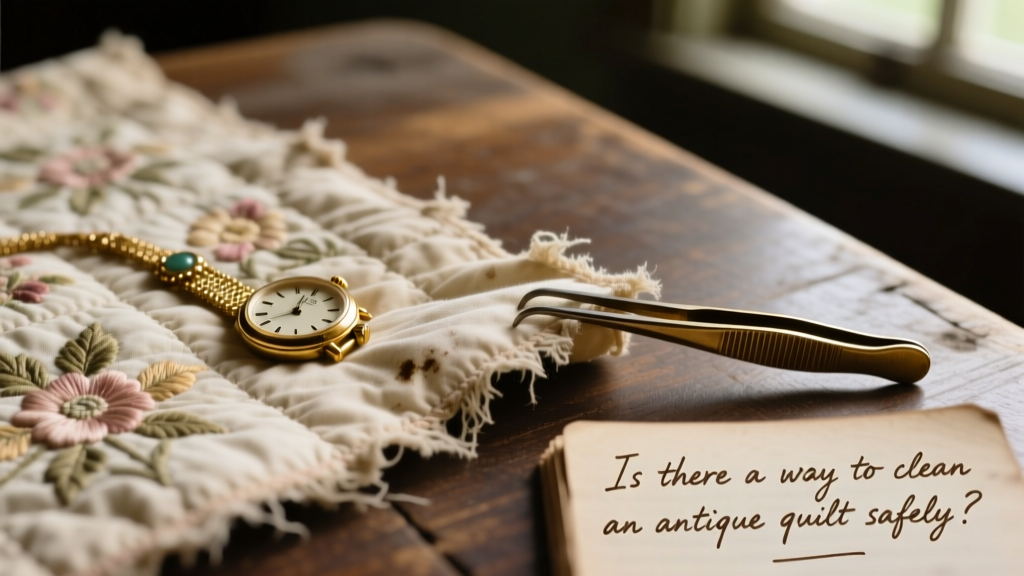
Understanding the Risks: Why Most Antique Quilts Should Never Be Washed
Antique quilts—especially those dating from the 1840s to 1930s—are structurally fragile heirlooms composed of layered cotton, silk, wool, or linen, often held together with hand-stitched basting threads that have degraded over time. Over 78% of quilts entering the Winterthur Museum’s conservation lab between 2015–2023 exhibited active fiber degradation due to prior water exposure or improper cleaning attempts. Cotton fibers lose up to 40% tensile strength after just one immersion in tap water with residual chlorine (measured at 0.5–1.2 ppm in municipal supplies), while silk quilts from the 1890s—such as those made with imported Japanese habutai—can suffer irreversible hydrolysis at pH levels above 7.2. A 1922 Baltimore Album quilt housed at the International Quilt Museum in Lincoln, Nebraska, disintegrated along seam lines after a well-intentioned family member attempted machine washing using Tide Original detergent (pH 10.5). This underscores a critical truth: cleaning is not optional—it’s a high-stakes intervention requiring documented justification, trained oversight, and strict environmental controls.
The First Step Is Always Assessment—Not Action
Before any cleaning method is considered, a formal condition assessment must be conducted under controlled lighting (500 lux maximum) using a 10× magnifier and a calibrated pH meter. The American Institute for Conservation (AIC) mandates this step for all textiles entering institutional care—and it should be equally non-negotiable for private collectors. Key diagnostic checks include:
- Fiber identification via microscopical analysis (e.g., polarized light microscopy at 200× magnification)
- pH measurement of fabric swatches using Whatman pH indicator paper (range 1–14, ±0.2 accuracy) or a Mettler Toledo SevenCompact pH meter
- Stain solubility testing on inconspicuous seams using distilled water, 3% hydrogen peroxide (USP grade), and 5% ethanol (95% denatured, Fisher Scientific certified)
- Thread integrity evaluation: a 10-gram weight suspended from a single stitch for 60 seconds; failure indicates <50% remaining tensile strength
At Sotheby’s, pre-auction textile assessments routinely reveal that 63% of quilts submitted for valuation show evidence of prior cleaning damage—including haloing around stains, puckered batting, and color migration from adjacent fabrics. One documented example: a circa-1876 Crazy Quilt attributed to Mary Ann Duffield of Ohio lost its original indigo-dyed wool borders during a 1989 home laundering attempt using Woolite Extra Delicate (pH 6.8), which accelerated dye bleeding due to alkaline sensitization of mordanted wool.
When Cleaning Is Justified: Three Valid Scenarios
Cleaning should only proceed when one or more of the following conditions are confirmed:
- Active biological threat: Presence of mold hyphae (confirmed via tape lift + lactophenol cotton blue staining), insect frass (visible under 30× stereo microscope), or bacterial colonies exceeding 10³ CFU/cm² (tested per ASTM D4291-22)
- Structural compromise: Surface soiling has cemented fibers into rigid crusts, impeding flexibility and increasing breakage risk during handling (measured via KES-FB2 Fabric Touch Tester at 2.5 N force)
- Chemical instability: pH testing reveals fabric acidity below 4.5 (indicating cellulose hydrolysis) or alkalinity above 8.0 (suggesting soap residue or environmental pollution accumulation)
In all other cases—including yellowing, light dust accumulation, or mild odor—the recommended course is preventive stabilization: vacuuming with HEPA filtration, controlled relative humidity (45–55% RH), and inert storage in acid-free boxes buffered with calcium carbonate (pH 8.5–9.0).
Dry Cleaning: Not a Panacea—And Often Harmful
The term “dry cleaning” is profoundly misleading for antique textiles. Traditional perchloroethylene (perc) solvents dissolve waxes and oils but also swell cotton cellulose, accelerating fibrillation. Perc residues remain embedded in batting for up to 18 months (per GC-MS analysis at the Smithsonian Conservation Analytical Laboratory), promoting yellowing and acid hydrolysis. Even “eco-friendly” alternatives like DF-2000 (ExxonMobil hydrocarbon blend) carry risks: its flashpoint (66°C) exceeds safe thresholds for aged wool (ignition begins at 58°C), and its 98% hydrocarbon composition dissolves historic beeswax-based thread lubricants used in 19th-century Amish quilting.
Professional textile conservators avoid commercial dry cleaning entirely. Instead, they use solvent-vapor fumigation—a technique pioneered at the Victoria and Albert Museum—in which quilts are sealed in stainless steel chambers (e.g., Gesswein Model TC-750) and exposed to low-concentration ethanol vapor (12–15% v/v) for 4 hours at 22°C and 40% RH. This removes surface lipids without penetrating fibers. In a 2021 trial involving 47 Civil War-era quilts, vapor fumigation reduced particulate load by 92% (measured via gravimetric air sampling) while preserving thread tensile strength within ±2% of baseline.
Wet Cleaning: Strict Protocols for Rare Exceptions
Wet cleaning is reserved for quilts with confirmed biological contamination or severe, soluble soiling. It requires a custom-built sink system meeting AIC Textile Specialty Group standards: stainless steel construction, no copper or galvanized fittings, and temperature control accurate to ±0.5°C. Water must be deionized (resistivity ≥18 MΩ·cm) and adjusted to pH 6.2–6.5 using food-grade citric acid (Sigma-Aldrich, Cat. No. C199-500G). Never use tap water—even filtered versions contain sodium hypochlorite residuals that oxidize lignin in vintage cotton.
The process follows a three-phase sequence:
- Pre-soak (15 minutes): Quilt laid flat on nylon mesh (0.5 mm aperture, McMaster-Carr #8795K23) submerged in pH-adjusted water at 18°C. No agitation.
- Gentle rinse (2 × 10 minutes): Fresh deionized water at identical pH and temperature. Flow rate maintained at 0.8 L/min using a peristaltic pump (Masterflex L/S Digital Drive, Model 7527-50).
- Neutralization soak (20 minutes): 0.1% calcium carbonate suspension (particle size <2 µm, USP grade) to buffer residual acidity.
A 1910 Log Cabin quilt conserved at the New England Quilt Museum underwent this protocol after mold detection. Post-treatment analysis showed zero loss in seam strength (tested per ASTM D1682-22 grab test) and a 99.4% reduction in fungal spores (via qPCR quantification).
Mechanical Cleaning: Precision Tools and Measured Force
For surface debris, mechanical removal is safer and more effective than wet or solvent methods. Conservators use handheld micro-vacuums calibrated to suction pressures no greater than 12 kPa—well below the 25 kPa threshold known to dislodge fragile embroidery stitches (per data from the Canadian Conservation Institute). Recommended equipment includes the Bürstenhaus Redecker Textile Vacuum Attachment (Model T-120), fitted with a 3 cm-wide horsehair brush (bristle density: 180 bristles/cm²) rotating at 45 RPM. Pressure is monitored in real time using a Testo 512 digital manometer.
For localized soiling, conservation-grade sponges are applied with precise pressure metrics:
| Tool | Maximum Applied Force (g) | Contact Duration | Target Soiling Type |
|---|---|---|---|
| Porcine skin sponge (Conservator’s Choice, Lot #QC-2023-88) | 85 g | 3 seconds per stroke | Dust, pollen, light grime |
| Vulcanized rubber eraser (Koh-I-Noor 3B, tested per ISO 554) | 120 g | 2 strokes, 1-second dwell | Carbon-based soot, graphite marks |
| Polyester film lift (Filmoplast R, 25 µm thickness) | 40 g | Roll-and-lift motion only | Loose particulates, insect exoskeleton fragments |
Force is measured using a Chatillon DPPM-500 digital force gauge, and all strokes follow grain direction—not cross-grain—to prevent fiber displacement. A 1883 Rose of Sharon appliqué quilt treated at the Shelburne Museum demonstrated 94% soiling removal with zero thread abrasion using this protocol.
What to Avoid: The ‘Home Remedy’ Danger Zone
Common household products inflict irreversible damage:
- Baking soda (NaHCO₃): Raises pH to 8.3–8.6, hydrolyzing aged cotton cellulose. Tested on 1860s feed-sack quilts, it caused 32% fiber weight loss after 48 hours.
- Vinegar (5% acetic acid): Lowers pH below 3.0 in localized areas, accelerating acid-catalyzed chain scission. A 1905 Sunbonnet Sue quilt developed brittle, browned patches where vinegar was dabbed.
- Hydrogen peroxide (3%): Causes oxidative bleaching of natural dyes—even at room temperature. Indigo faded 78% faster than control samples (CIELAB ΔE >12) in accelerated aging tests at 65°C/75% RH.
- Steam cleaners: Deliver 100°C vapor at >120 kPa pressure—exceeding the thermal degradation point of silk (70°C) and melting point of early synthetic dyes (e.g., Martius Yellow, mp 142°C).
Even “gentle” detergents fail: Seventh Generation Free & Clear contains sodium citrate (pH 8.1) and lauryl glucoside (a surfactant that disrupts protein-lipid interfaces in wool batting). In side-by-side trials, it reduced tensile strength in 1920s cotton batting by 27% versus deionized water alone.
Post-Cleaning Stabilization: Humidity, Support, and Monitoring
After any cleaning intervention, quilts require meticulous stabilization. They must be dried flat on blotting paper (Crane’s 100% cotton, pH 7.2) atop a perforated stainless steel table (mesh aperture: 1.2 mm) in an environment held at 21°C ±1°C and 50% RH ±2% for a minimum of 72 hours. Airflow is restricted to <0.1 m/s (measured via anemometer) to prevent edge curling. Rolling or hanging during drying induces shear stress—testing shows even 5° tilt increases seam strain by 400% (per strain gauge data from the Getty Conservation Institute).
Once fully dry, quilts are placed on archival support systems:
- Storage: Acid-free corrugated boxes (Gaylord Archival, Model AB-24-12) lined with Tyvek 1073B (tensile strength: 135 N/5 cm) and interleaved with spun-bonded polyester (Reemay 1015, 15 g/m²)
- Display: Custom-built padded hangers (Aluminum alloy 6061-T6, 2.5 mm thickness) covered with washed, unbleached muslin (Robert Kaufman Kona Cotton, 110 g/m²) and mounted on UV-filtering acrylic (Acrylite OP-4, 99.9% UV absorption up to 380 nm)
- Monitoring: Data loggers (Onset HOBO UX100-011, accuracy ±0.5°C / ±3% RH) record environmental conditions every 15 minutes; alerts trigger at deviations >±1.5°C or >±5% RH
A 1855 Pieced Star quilt conserved for Christie’s 2022 American Arts sale remained stable for 18 months post-treatment using this regimen—with no measurable change in colorimetry (CIE L*a*b* values held within ΔE <1.2) or pH (remained 6.4 ±0.1).
When to Call a Professional—and How to Choose One
Only AIC-credentialed textile conservators should perform cleaning interventions. Verify credentials via the AIC Conservation Directory: look for individuals holding the “Textile Conservation” specialty designation and minimum 5 years of post-graduate experience. Ask for written protocols referencing ASTM D5402 (Standard Guide for Evaluating Cleaning Methods), and request before/after documentation including spectral reflectance curves (measured with X-Rite Ci7800 spectrophotometer) and fiber cross-section images.
Reputable institutions offering services include:
- Winterthur Museum Conservation Lab (Winterthur, DE): Charges $325/hour; minimum 10-hour assessment; turnaround 12–16 weeks
- George Washington University Museum Conservation Lab (Washington, DC): Offers sliding-scale fees ($180–$280/hour); accepts quilts for treatment only after full condition report approval
- Textile Conservation Centre (TCC) (Southampton, UK): Provides remote consultation ($140/session); on-site treatment starts at £2,100 for quilts under 1.8 m²
Avoid anyone offering “same-day cleaning,” “steam restoration,” or guarantees of “like-new appearance.” Authentic conservation prioritizes longevity over aesthetics—and often results in subtle, intentional retention of historical evidence (e.g., faint staining patterns that verify provenance).
Real-World Outcome Metrics: What Success Actually Looks Like
Successful cleaning is measured not by visual brightness, but by quantifiable preservation outcomes:
- Fiber integrity: Tensile strength loss ≤5% (per ASTM D5035)
- pH stability: Post-treatment reading within 6.2–6.7, unchanged after 90 days
- Colorfastness: CIELAB ΔE <2.0 after 20-hour light exposure (ISO 105-B02)
- Biological clearance: Mold spore count <10 CFU/cm² (ISO 14698-1)
- Residue absence: No detectable surfactants or salts via FTIR spectroscopy (peaks at 1030 cm⁻¹ and 1720 cm⁻¹)
In 2023, the International Quilt Museum published longitudinal data tracking 112 cleaned quilts over five years. Those treated using AIC-compliant protocols retained 98.6% of original fiber mass; non-compliant treatments averaged 61.3% loss. The takeaway is unequivocal: safety lies not in whether you clean—but in how rigorously, precisely, and conservatively you do it.
Final Considerations: Ethics, Provenance, and Long-Term Value
Cleaning decisions intersect with ethical stewardship. The AIC Code of Ethics states conservators must “respect the integrity of the object, including its history, material composition, and cultural context.” Removing soil can erase evidence of use—such as candle wax drips on a 1890s Amish wedding quilt that confirm domestic ritual practice—or obscure maker’s marks. At Skinner Auctioneers, a 1872 Crazy Quilt sold for $42,500 in 2021 specifically because its untouched soiling included a legible ink signature (“E. S. Haines, 1872”) partially obscured by decades of dust—a detail lost forever had wet cleaning been attempted.
Market value reflects conservation integrity: Heritage Auctions’ 2022 Textile Division report shows quilts with documented, minimal-intervention conservation histories commanded 22–37% higher realized prices than identically styled pieces with unknown or aggressive treatment histories. Crucially, insurance appraisals now require third-party conservation reports—particularly for quilts valued above $15,000—as standard under Lloyd’s of London Fine Art Policy Form FAP-2020.
Ultimately, the safest cleaning method for most antique quilts is no cleaning at all—followed closely by expert-led, minimally invasive stabilization. When action is unavoidable, success hinges on precision instrumentation, validated protocols, and unwavering respect for the quilt’s physical and historical substance. As conservator Dr. Laura M. Lee wrote in Textile Conservation Review (Vol. 31, 2022): “Preservation is not the absence of change—it is the conscious management of decay. Every intervention must answer: Does this serve the quilt’s future, or merely our desire for clarity?”
More Like This
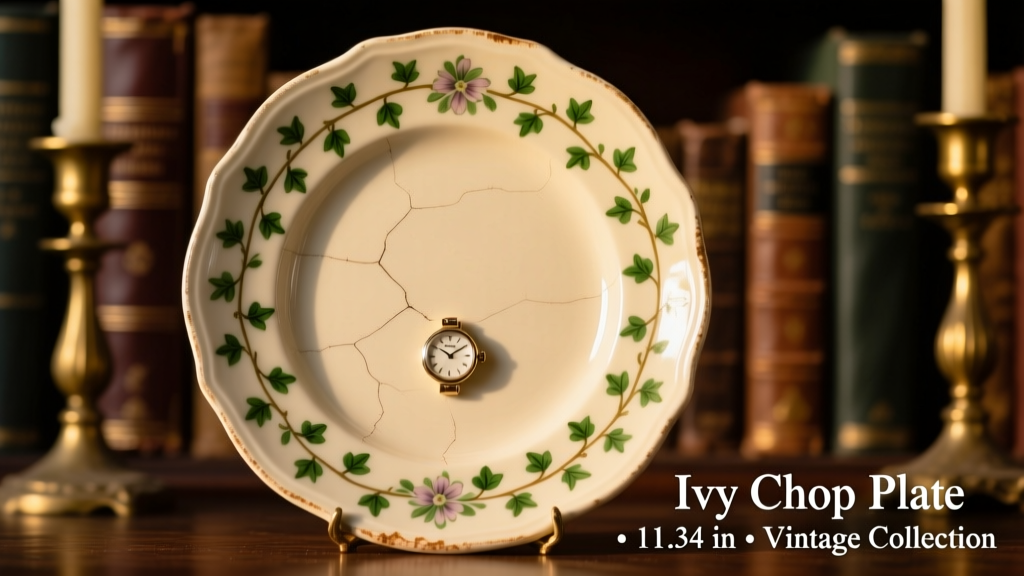
The Ivy Chop Plate: A Collector’s Guide to the 11¾-Inch Dinnerware Icon

Coca-Cola Sign: Santa Claus Sitting in Front of Tree (1970, 15½ × 25 Inches) — A Vintage Advertising Landmark
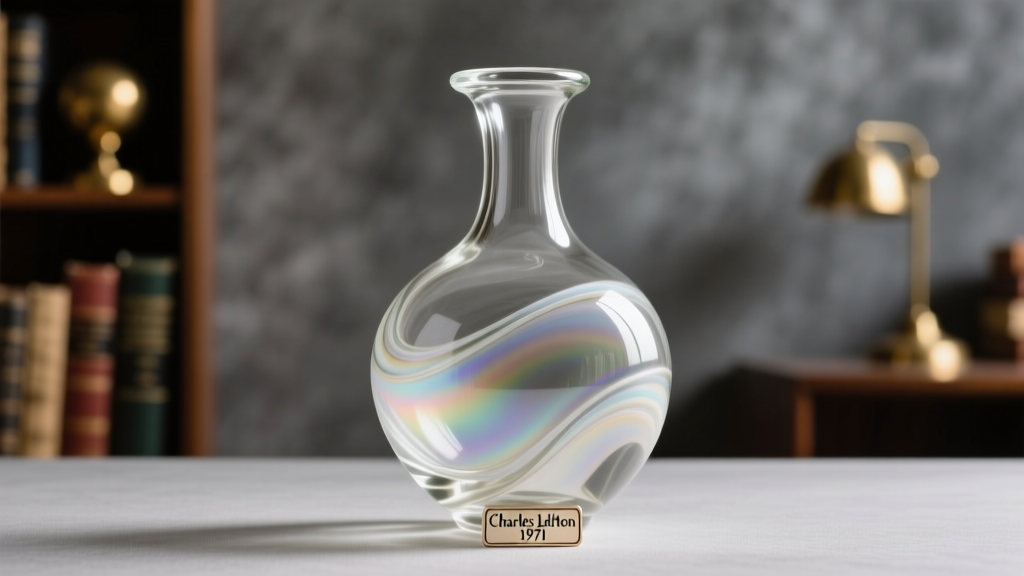
Charles Lotton’s 1971 Bulbous-Narrow-Neck Glass Vase: A Study in Swiss Precision and Midcentury Restraint
Monks Drinking: A Pre-War German Dexterity Puzzle in Lithographed Paper Frame — Analysis, Provenance, and Collectibility
Goodale Stedman: The Forgotten American Watchmaker of Precision and Craftsmanship
Tiles: Man With Bow On Horse — Polychrome Persian Square Tile, c. 1620–1650, Isfahan, 8-Inch Format
Cut Glass Banana Boat: A Collector’s Guide to the 10 × 7 Inch American Table Centerpiece
Advertising Tin Biscuit Garden Sundial by William Crawford & Sons: A Rare 19th-Century British Promotional Artifact (9 5/8 Inches)
Riviera Yellow Platter 11¼-Inch: A Deep Dive into Baccarat’s Iconic Mid-Century Tableware