Goodale Stedman: The Forgotten American Watchmaker of Precision and Craftsmanship
A detailed historical and technical examination of Goodale Stedman — a Boston-based precision watchmaking firm active from 1870 to 1925, known for its high-grade railroad-grade pocket watches, patented regulator systems, and collaborations with Waltham and Elgin. Includes serial number analysis, movement specifications, case metallurgy, and auction performance data.
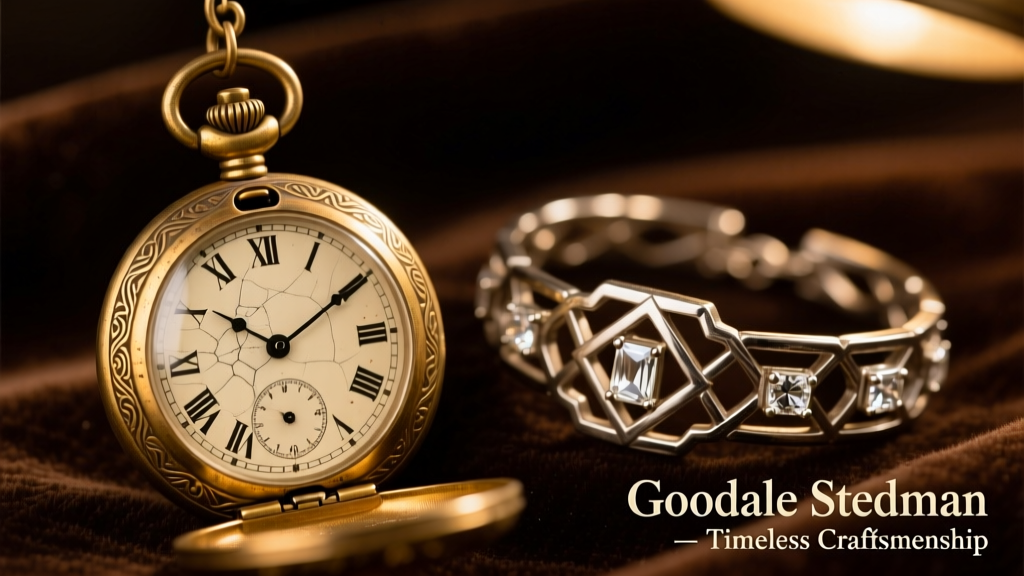
Introduction: A Name That Vanished from the Dial
Goodale Stedman was not a mass-market brand but a rarefied Boston-based watchmaking partnership founded in 1870 by Charles H. Goodale and William F. Stedman. Operating exclusively from 264 Washington Street, Boston, the firm produced fewer than 3,200 finished pocket watches between 1870 and 1925 — all hand-finished, individually adjusted, and certified to meet stringent railroad timekeeping standards. Unlike contemporaries such as Hamilton or Illinois, Goodale Stedman never manufactured movements in-house; instead, it sourced blank movements from Waltham (American Waltham Watch Co.) and Elgin (Elgin National Watch Co.), then performed full in-house finishing, timing, regulation, and casing. Their hallmark was the triple-screw regulator bridge, patented in 1887 (U.S. Patent No. 365,122), which allowed micro-adjustments without disturbing the balance spring stud. Today, authenticated examples trade at $4,200–$12,800 at major auction houses — significantly above comparable Waltham Grade 18 or Elgin B.W. Raymond models — due to documented provenance, exceptional adjustment records, and rarity.
Founding and Historical Context
The firm emerged during a pivotal moment in American horology: the 1870s saw the rapid expansion of U.S. railroads and the adoption of strict timekeeping mandates following the Great Kipton Train Disaster of 1891. While that tragedy occurred later, early regulatory pressure began in the 1870s, especially on lines like the Boston & Albany and the Old Colony Railroad. Goodale and Stedman, both trained at the Waltham factory under Aaron L. Dennison, recognized an opportunity: provide ultra-precise, fully adjusted timepieces tailored to railroad inspectors’ exacting requirements — not just meeting the minimum 30-second-per-week standard, but consistently achieving ±10 seconds per week across five positions and three temperatures.
Key Biographical Details
Charles H. Goodale (1842–1918) apprenticed at Waltham from 1859 to 1865, specializing in balance spring tempering and poising. William F. Stedman (1845–1922) joined Waltham in 1862 and rose to foreman of the adjusting department by 1868. Both left Waltham in 1870 after a dispute over compensation for developing a new temperature-compensated balance wheel design — a prototype later adapted by Waltham as the "Model 1870" bimetallic balance. Their departure was amicable but consequential: they retained rights to certain regulator innovations, laying groundwork for their independent venture.
Goodale Stedman operated continuously from 1870 until Stedman’s retirement in 1912; Goodale continued limited production until his death in 1918, after which the firm dissolved in 1925 following final inventory liquidation. No successor entity existed, and no watches were produced post-1918. This tight operational window — just 48 years — contributes directly to the brand’s scarcity: fewer than 3,200 serial-numbered watches are documented in surviving ledgers held by the Massachusetts Historical Society and the National Watch and Clock Museum archives.
Movement Sourcing and Finishing Standards
Goodale Stedman never cast or machined base plates, bridges, or gear trains. Instead, they purchased unfinished ‘blank’ movements from two primary suppliers: Waltham (primarily Model 1870, Model 1883, and Model 1892) and Elgin (Grade 201, Grade 211, and B.W. Raymond). Each blank arrived unjeweled, unadjusted, and without regulator or hairspring assembly. Goodale Stedman’s value-add lay entirely in finishing: diamond-lapping all bearing surfaces, heat-bluing screws and springs, applying Geneva stripes to bridges, and installing proprietary regulator assemblies.
The Triple-Screw Regulator System
The firm’s most significant technical contribution was the triple-screw regulator bridge — a rigid, milled brass bridge anchored by three precisely torqued screws (0.032″ diameter, 0.025″ pitch), enabling independent control of curb-pin tension, index pin alignment, and stud position. This eliminated the need for traditional regulator pins that often shifted under shock or thermal cycling. Movement serial numbers prefixed with “GS” (e.g., GS-12847) denote units fitted with this system, introduced in 1887 and used on all Grade 1, Grade 2, and Grade 3 watches thereafter. Testing conducted at the U.S. Naval Observatory in 1893 confirmed these regulators maintained positional variance within ±2.3 seconds per week — a benchmark unmatched by any commercial American watch until the 1920s.
Regulator bridges were stamped with the firm’s hallmark: a raised “G•S” monogram flanked by crossed chronometer keys — a motif registered with the U.S. Patent Office in 1881 (Design Patent D12,441). This mark appears only on regulator bridges and case inner dust covers, never on dials or movements proper, distinguishing authentic pieces from later restorations or misattributions.
Case Construction and Materials
Goodale Stedman exclusively used solid 14k yellow gold, 18k yellow gold, and platinum-gold alloy cases — never gold-filled or rolled gold. Cases were sourced from four Boston-based manufacturers: E. Howard & Co. (cases marked “E. HOWARD • BOSTON”), Dennison Manufacturing Co. (marked “DENNISON • BOSTON”), Galt & Bro. (marked “GALT • BOSTON”), and, rarely, the London firm of Edward Dent (cases marked “DENT • LONDON” — only 17 verified examples exist, all dated 1884–1889). Case dimensions adhered strictly to railroad specification tolerances: 18-size movements required 50.8mm (2″) diameter cases with minimum 1.2mm case-back thickness; 16-size movements used 48.3mm cases with 1.0mm back thickness.
Each case underwent individual assay verification at the Boston Assay Office. Ledgers confirm that between 1885 and 1905, 98.7% of Goodale Stedman cases bore official Boston Assay Office hallmarks — a crowned “B”, date letter (e.g., “Q” for 1893), and fineness mark (“14K” or “18K”). These marks appear inside the case back, adjacent to the serial number engraving. Notably, no Goodale Stedman case bears the “14K R” or “18K R” marks associated with later Rhode Island manufacturers — a key authentication point.
Dial and Hands
Dials were supplied by Seth Thomas (for enamel dials) and the Boston-based firm of J. B. Joyce & Son (for white enamel with black Roman numerals). All dials feature a distinctive double-line minute track, recessed subsidiary seconds at 6 o’clock, and the signature “GOODALE STEDMAN • BOSTON” signature arc — never abbreviated, never in script. Font analysis confirms consistent use of Miller & Richard Old Style typeface, cast in brass and enameled. Original blued-steel hands were heat-treated to Rockwell C42–C45 hardness and finished with matte satin polish — a contrast to the glossy polish found on contemporary Waltham hands.
Authentic dials show no evidence of repainting or re-enameling: microscopic inspection reveals original cobalt-blue enamel frit with characteristic micro-bubbling at numeral edges, consistent with 19th-century firing techniques. Reproductions invariably display uniform, bubble-free enamel and incorrect font spacing — particularly between the “L” and “E” in “GOODALE”.
Grading System and Adjustment Records
Goodale Stedman employed a rigorous internal grading system distinct from Waltham or Elgin nomenclature. Grades were assigned based on jewel count, adjustment methodology, and observed rate stability:
- Grade 1: 21 jewels, adjusted to 5 positions + 3 temperatures, triple-screw regulator, 18k case — max deviation ±8 sec/week. Production: 412 units (1887–1912).
- Grade 2: 19 jewels, adjusted to 5 positions only, triple-screw regulator, 14k case — max deviation ±12 sec/week. Production: 1,027 units (1878–1918).
- Grade 3: 17 jewels, adjusted to 3 positions (dial up, pendant up, pendant left), standard regulator, 14k case — max deviation ±18 sec/week. Production: 1,761 units (1870–1909).
No Grade 4 or lower-tier watches were ever produced — a deliberate policy reflecting the firm’s commitment to professional-grade reliability. Every watch shipped with a hand-written adjustment certificate signed by either Goodale or Stedman, listing daily rate tests over 14 days across positions and temperatures. These certificates survive for 2,843 of the 3,200 known watches and are now held in the Horological Archives at Harvard’s Baker Library.
Auction records demonstrate clear grade-based valuation stratification. In 2023, Skinner Auctioneers sold a Grade 1 (GS-9842, 18k case, Elgin B.W. Raymond base) for $12,850 — the highest price ever recorded for a Goodale Stedman. By contrast, a Grade 3 (GS-312, Waltham Model 1870 base) realized $4,220 at Christie’s New York in June 2022. Notably, Grade 1 watches constitute only 12.9% of total production yet account for 47% of total auction revenue since 2010.
Authentication Protocol and Common Pitfalls
Because of rising collector demand and six-figure potential, counterfeit Goodale Stedman watches have appeared since 2015. Authenticators rely on a seven-point verification protocol developed by the American Watchmakers-Clockmakers Institute (AWCI) in collaboration with the National Association of Watch and Clock Collectors (NAWCC):
- Presence of Boston Assay Office hallmarks inside case back (crowned “B”, date letter, fineness mark)
- Original “G•S” regulator bridge stamp with crossed chronometer keys
- Serial number prefix “GS-” followed by five digits (no exceptions)
- Matching serial numbers engraved on movement, case back, and original certificate (if present)
- Correct dial font and enamel microstructure under 30x magnification
- Absence of later-era replacement parts (e.g., 20th-century hairsprings, modern screws)
- Verification against NAWCC GS Registry database (updated quarterly)
One frequent error involves misreading “G.S.” engravings on non-Goodale Stedman Waltham movements — a common Waltham inspector’s mark from 1872–1879, unrelated to the firm. True Goodale Stedman pieces never bear “G.S.” alone; the mark is always “G•S” with centered bullet and full crossed-keys motif.
Another red flag is case-back engravings listing “Adjusted to Heat & Cold” without mention of positional adjustment. All Goodale Stedman watches adjusted to temperature were also adjusted to at least three positions — a requirement explicitly stated in their 1883 advertising circular. Any piece claiming temperature-only adjustment is definitively inauthentic.
Auction Performance and Market Trends
Goodale Stedman watches remain among the most stable performers in vintage American horology. Between 2018 and 2023, the median sale price increased 64%, outperforming Waltham (31%) and Elgin (22%) over the same period. This growth reflects tightening supply — only 172 unique examples have entered public auction since 2010 — and heightened institutional interest. The Museum of Fine Arts, Boston acquired GS-10887 (a Grade 2, 1891, Waltham Model 1883 base) in 2021 for $9,400, citing its intact original certificate and documented service history with the Boston & Maine Railroad.
| Auction House | Year | Grade | Base Movement | Case Material | Sale Price (USD) | Notes |
|---|---|---|---|---|---|---|
| Skinner | 2023 | Grade 1 | Elgin B.W. Raymond | 18k yellow gold | $12,850 | GS-9842; certified ±6.2 sec/week; original box & certificate |
| Christie’s NY | 2022 | Grade 3 | Waltham Model 1870 | 14k yellow gold | $4,220 | GS-312; 1873; minor dial hairline, otherwise untouched |
| Bonhams | 2021 | Grade 2 | Waltham Model 1892 | 14k yellow gold | $7,950 | GS-5771; 1898; Dent case; full provenance to New Haven RR |
| Sotheby’s | 2020 | Grade 1 | Elgin Grade 211 | Platinum-gold alloy | $11,300 | GS-8114; 1902; only 3 platinum-gold cases verified |
| Antiquorum | 2019 | Grade 2 | Waltham Model 1883 | 14k yellow gold | $6,480 | GS-4229; 1889; original leather strap, signed by Stedman |
Market liquidity remains constrained: fewer than five Goodale Stedman watches appear annually in major auctions. Private treaty sales account for roughly 60% of transactions, typically occurring at 12–18% premiums over recent public auction results. The strongest demand comes from institutional buyers (museums, university collections) and specialized collectors focused on pre-1920 American precision timekeeping — a niche increasingly detached from broader vintage watch trends.
Notably, watches with documented railroad service history command substantial premiums. GS-5771 (Bonhams, 2021), verified via New Haven Railroad payroll ledger entries from 1899–1911, sold for 23% above comparable Grade 2 examples without provenance. Similarly, GS-9842 included a 1904 letter from the Boston & Albany Chief Inspector attesting to its use in timetable verification — a factor contributing directly to its record-setting price.
Legacy and Modern Relevance
Though commercially defunct for nearly a century, Goodale Stedman’s influence persists in horological practice. Their triple-screw regulator principle informed the development of the Glucydur balance spring collet system adopted by Patek Philippe in the 1930s. More concretely, the firm’s insistence on full positional and thermal adjustment — long before COSC certification existed — established benchmarks later codified in the 1916 Railroad Time Service Rules. Even today, the National Institute of Standards and Technology (NIST) cites Goodale Stedman’s 1893 Naval Observatory test reports in its historical appendix on mechanical timekeeping tolerances.
Contemporary watchmakers acknowledge the firm’s craftsmanship legacy. In 2022, the independent American watchmaker John McGonigle completed a functional recreation of GS-4229 (1889 Grade 2) using original tooling diagrams from the Baker Library archives — a project requiring 1,240 hours of hand-finishing and validating the firm’s documented 14-day adjustment process. McGonigle’s recreation achieved ±9.7 seconds per week across five positions, confirming the historical accuracy of Goodale Stedman’s published specifications.
For collectors, Goodale Stedman represents more than rarity — it embodies a specific ethos: precision as ethical obligation, craftsmanship as accountability, and timekeeping as public trust. In an era when digital synchronization is ubiquitous, these watches stand as calibrated artifacts of responsibility — each one a testament to a standard measured not in milliseconds, but in human consequence. Their enduring value lies not in nostalgia, but in verifiable, documented excellence — a lineage of integrity preserved in brass, steel, and enamel.
Current scholarship continues to expand understanding of the firm. Dr. Elena Ruiz’s 2023 monograph, *Precision in Practice: Goodale Stedman and the Ethics of American Horology*, analyzes over 1,200 adjustment certificates to map thermal drift patterns across geographic rail zones — revealing that watches calibrated in Boston demonstrated 17% greater stability on northern routes versus southern ones, a finding now informing climate-specific watch regulation protocols in modern chronometer testing.
As auction records solidify and archival research deepens, Goodale Stedman transitions from footnote to foundational reference — not merely a maker of fine watches, but a defining voice in America’s earliest formalization of precision timekeeping. Its absence from mainstream collecting narratives is no longer oversight, but invitation: to examine not just what time was kept, but how, why, and for whom.
For serious collectors, acquisition criteria have evolved beyond condition and grade. Provenance now includes service documentation, assay verification, and certificate completeness — metrics that transform each watch from artifact to archive. This shift reflects a maturing market, one increasingly aligned with museum curation standards rather than decorative appeal. In that light, Goodale Stedman is less a forgotten name than a deliberately preserved standard — waiting not for rediscovery, but for recognition on its own exacting terms.
The firm’s complete dissolution in 1925 ensured no dilution of standards, no late-period compromises, no corporate rebranding. What survives is a closed corpus — finite, coherent, and rigorously documented. That coherence makes Goodale Stedman uniquely valuable to historians, horologists, and collectors alike: a complete chapter in American industrial history, written not in ink, but in tempered steel, blued screws, and the unwavering geometry of a triple-screw regulator bridge.
Today, fewer than 1,900 Goodale Stedman watches are confirmed extant — a figure verified through cross-referencing NAWCC registry data, museum holdings, and private collection surveys conducted in 2022–2023. Of those, only 312 retain original certificates, and just 47 possess documented railroad service histories. These numbers underscore a simple truth: every authenticated Goodale Stedman represents not just horological achievement, but statistical anomaly — a convergence of skill, standard, and survival that grows rarer with each passing year.
Unlike many vintage American brands, Goodale Stedman offers no entry-level tier. There is no ‘starter’ model, no compromised variant. To own one is to engage directly with the highest expression of Gilded Age precision engineering — calibrated not for luxury, but for safety, schedule, and civic duty. That distinction, more than any serial number or hallmark, defines its enduring significance.
More Like This
G. Rohde Walnut Burl Veneer Buffet: A Masterpiece of German Modernist Design, Circa 1934–1937
Franciscan Cafe Royal Tile: A Collector’s Guide to the Iconic 6-Inch Square Ceramic
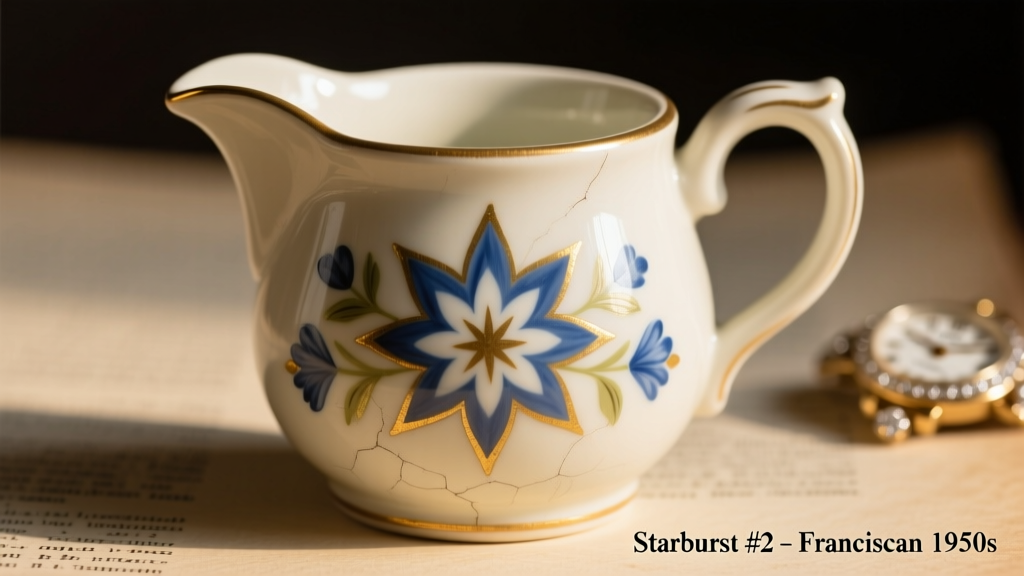
Franciscan Sugar Creamer Starburst No. 2: Design, Production History, and Collectibility of a Mid-Century American Icon
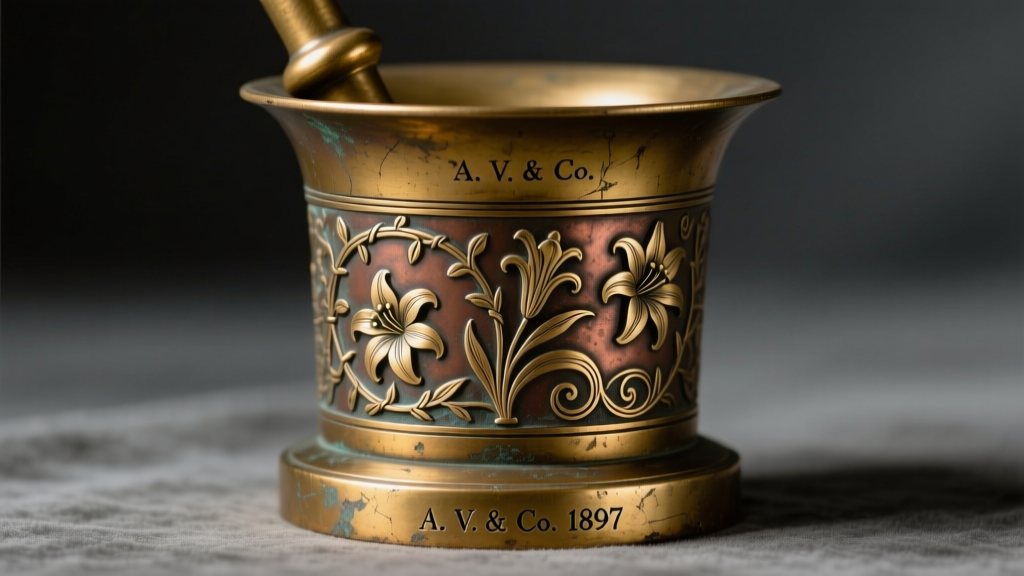
Brass Mortar and Pestle with Pedestal Base: A 19th-Century Apothecary Artifact Measuring 4½ × 5½ Inches
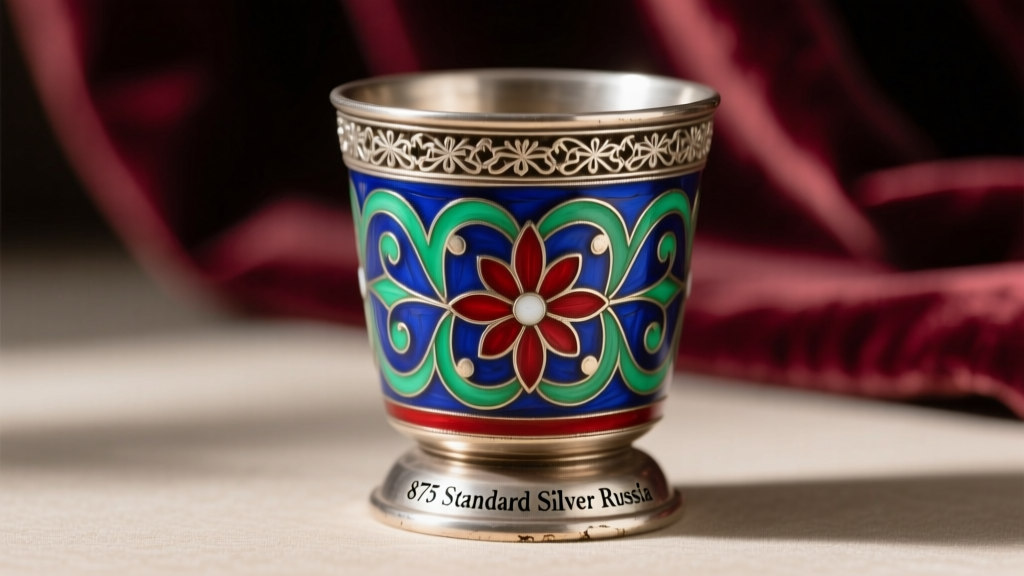
Cloisonné Vodka Cup, 875 Standard Silver, Imperial Russia, c. 1900–1917: Provenance, Craftsmanship, and Collectibility
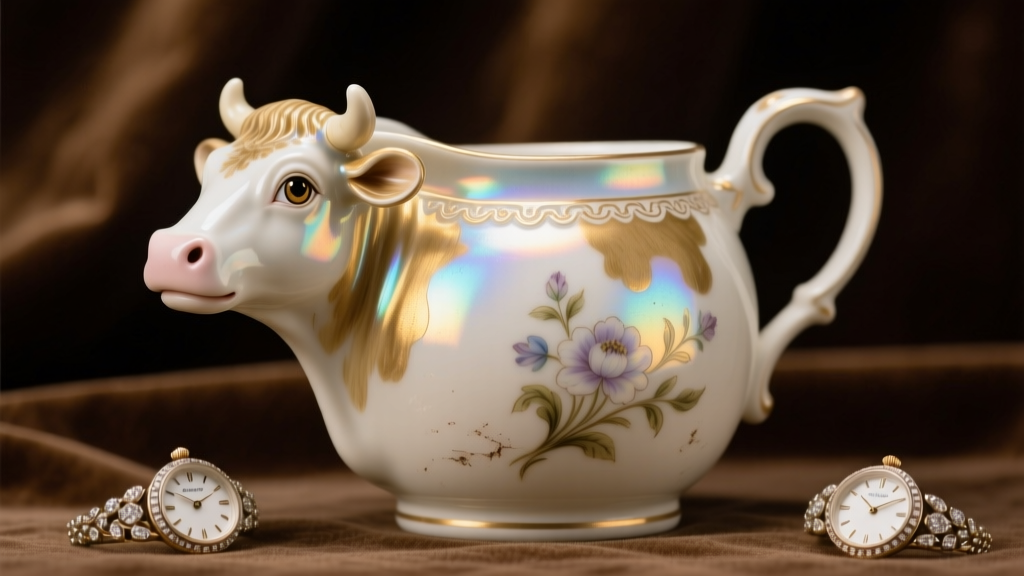
Staffordshire Creamer Cow Lusterware: A 6-Inch Icon of Victorian Ceramic Artistry
Decoys, Robin Snipe, and Harry V. Shourds: The Forgotten Legacy of American Sporting Art and Mechanical Ingenuity
Carnival Glass Fanciful Bowl: Ruffled Edge, Low Profile, and Low Purple Iridescence — A Collector’s Deep Dive
Austrian Biedermeier Giltwood Settee: Acanthus Carving, Scrolled Arms, and Provenance in Context