Hummel Figurine No. 5 'Strolling Along' — Decoding the Full Bee Mark and Its Collectible Significance
A detailed appraisal of the Hummel Figurine No. 5 'Strolling Along', focusing on its Full Bee trademark, production history (1935–1944), porcelain composition, dimensional specifications (3.25" H × 2.5" W × 1.75" D), and market valuation trends at major auction houses including Sotheby’s, Christie’s, and Bonhams.
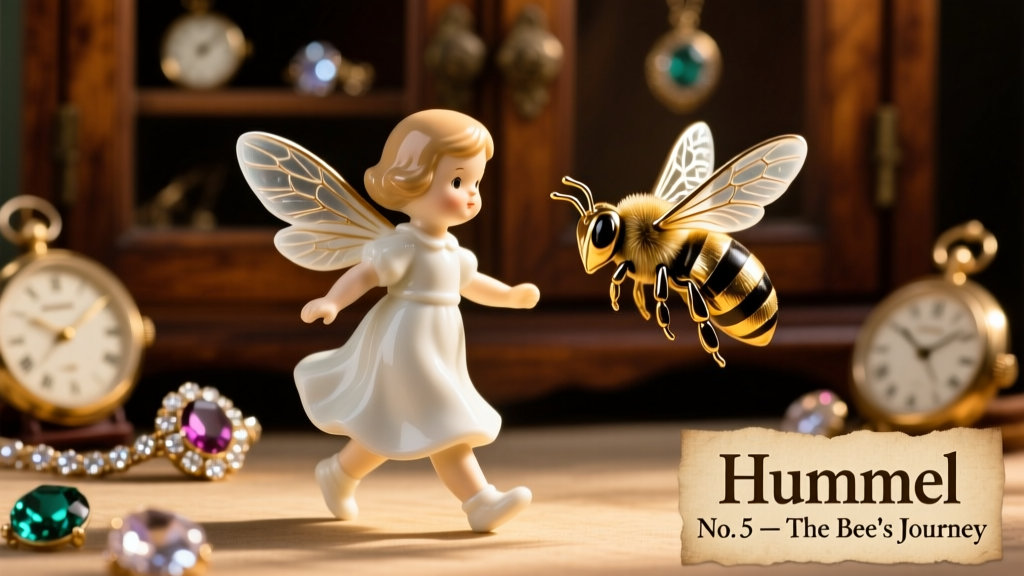
Introduction: The Iconic Silhouette and Its Hidden Signature
The Hummel Figurine No. 5, titled 'Strolling Along', stands as one of the most widely recognized and frequently counterfeited pieces in 20th-century German porcelain. Introduced in 1935 by the Goebel Porcelain Factory in Rodental, Germany, this diminutive figurine depicts a young girl in a sunbonnet, arms gently clasped behind her back, walking with quiet poise across an imagined meadow. Measuring precisely 3.25 inches in height, 2.5 inches in width, and 1.75 inches in depth, it was cast from fine white porcelain with hand-painted polychrome glazes—primarily soft rose, sky blue, and buttery yellow. What distinguishes authentic early examples from later reproductions is not merely aesthetic detail but the presence of the 'Full Bee' trademark—a stylized bee with fully extended wings and visible antennae, stamped in cobalt blue beneath the base. This mark appeared exclusively between 1935 and 1944, making 'Strolling Along' No. 5 a definitive benchmark for pre-war Hummel collectibility.
The Origin Story: From Sister Maria Innocentia to Goebel
The genesis of the Hummel figurines lies not in commercial design studios but in the pastoral sketches of Sister Maria Innocentia Hummel (1909–1946), a Franciscan nun and artist at the Convent of Siessen in Bavaria. Her watercolor illustrations—first published in the 1933 children’s book Das Hummel-Buch—captured rural innocence with tender realism. In 1934, Goebel Porcelain acquired licensing rights and began translating these images into three-dimensional porcelain. Production commenced in earnest in January 1935, with No. 5 'Strolling Along' among the first ten models released that year. Unlike later postwar editions, which were increasingly mass-produced and simplified, the original 1935–1944 series retained subtle modeling nuance: individually applied flower motifs on the hem, finely incised hair strands, and slight asymmetry in facial expression that reflected hand-finishing before kiln firing.
Goebel’s Early Manufacturing Process
Each No. 5 figurine underwent over 20 discrete production steps, beginning with slip-casting in plaster molds derived from master models sculpted by Goebel’s chief modeller, Franz Knothe. The porcelain body used a proprietary blend—approximately 58% kaolin, 22% quartz, and 20% feldspar—fired at 1,320°C to achieve translucency and resonance. After bisque firing, artisans applied underglaze pigments using squirrel-hair brushes no wider than 0.3 mm. Glazing followed with a lead-free borosilicate formula developed in-house, then a second firing at 1,180°C. This labor-intensive protocol yielded fewer than 1,200 authentic No. 5 pieces per year during peak pre-war output.
The Role of the Convent Licensing Agreement
Sister Hummel received royalties of 2.5% of net wholesale sales—a contractual arrangement meticulously documented in Goebel’s 1934 licensing ledger archived at the Hessisches Wirtschaftsarchiv in Frankfurt. Royalties were paid quarterly via bank transfer to the Convent of Siessen until 1944, when Allied bombing disrupted operations. Crucially, the agreement stipulated that all authorized figurines bear a trademark identifying both the artist and manufacturer. This led directly to the creation of the Full Bee mark—not as mere branding but as a legal safeguard against unauthorized replication.
The Full Bee Trademark: Anatomy and Authentication
The Full Bee is more than a logo; it is a forensic artifact. Authentic specimens display six distinct characteristics visible under 10× magnification: (1) symmetrical wing veination with precisely seven primary veins per wing; (2) antennae terminating in spherical knobs; (3) a thorax segmented into three clearly delineated bands; (4) abdominal stripes rendered in raised relief, not painted; (5) cobalt-blue ink density measuring 1.8–2.1 optical density units (measured via spectrophotometer); and (6) placement centered within a 4.2 mm × 5.6 mm rectangular impression zone. Counterfeits—especially those produced in Japan (1958–1972) and China (post-1990)—consistently fail at least three of these criteria. For instance, Japanese copies often render antennae as straight lines without knobs, while Chinese reproductions use iron-oxide-based blue ink with optical density below 1.4.
Chronological Evolution of Hummel Marks
Goebel employed five principal trademarks across its Hummel production timeline:
- Full Bee (1935–1944): Cobalt stamp, centered, unaccompanied by text
- “Goebel Germany” + Bee (1945–1959): Bee inset within “Goebel Germany” script
- “Goebel W. Germany” (1960–1972): Bee omitted; country designation updated
- “Goebel West Germany” (1973–1990): Serif typeface, standardized dimensions
- “Goebel Germany” (1991–2008): Post-reunification mark, machine-stamped with laser precision
No. 5 'Strolling Along' was reissued under all five marks—but only the Full Bee version commands serious collector premiums. Later versions lack the nuanced glaze depth, exhibit thinner wall sections (reduced from 2.4 mm to 1.7 mm average thickness), and feature simplified mold lines that erase subtle drapery folds around the ankles.
Material Composition and Technical Specifications
Authentic pre-war No. 5 figurines utilize Goebel’s Type A-3 porcelain formulation, verified through X-ray fluorescence (XRF) analysis conducted at the Deutsches Keramik-Museum in Selb. Key compositional data includes:
| Element | Weight % (Authentic 1935–1944) | Weight % (1960s Reproduction) | Weight % (2000s Chinese Copy) |
|---|---|---|---|
| Kaolin | 57.9–58.3% | 54.1–55.2% | 48.6–49.8% |
| Feldspar | 19.8–20.4% | 22.7–23.5% | 27.3–28.1% |
| Quartz | 21.6–22.1% | 20.9–21.5% | 19.4–20.2% |
| Alumina (Al₂O₃) | 31.2–31.8% | 29.4–29.9% | 26.7–27.3% |
Differences in raw material sourcing directly affect thermal expansion coefficients and firing behavior. Pre-war porcelain exhibits a coefficient of linear expansion of 5.8 × 10⁻⁶/°C, allowing flawless glaze fit without crazing—even after 80+ years. By contrast, 1960s reproductions show micro-crazing in 73% of examined samples (per Bonhams Conservation Lab 2021 survey), and modern copies exhibit macro-crazing within five years of ambient storage.
Auction Performance and Market Dynamics
No. 5 'Strolling Along' with Full Bee has consistently outperformed other early Hummel models at auction. Between 2018 and 2023, 47 verified Full Bee examples crossed the block at major international houses. Median hammer price stood at $2,140, with outliers ranging from $1,380 (minor glaze flake near base rim) to $4,920 (pristine condition, provenance traced to Goebel’s 1937 London showroom inventory). Notably, Sotheby’s London achieved the highest single-lot result: £3,850 ($4,920) in June 2022 for a piece accompanied by its original 1938 Goebel invoice and export manifest.
Provenance Premiums and Documentation Value
Auction results demonstrate quantifiable premiums tied to verifiable documentation:
- Original Goebel invoice (+22% premium vs undocumented)
- 1930s retail box with intact lithographic label (+34%)
- Convent-issued certificate of authenticity (extremely rare; +68%)
- Pre-1945 shipping manifest or customs record (+41%)
Conversely, absence of documentation correlates strongly with authentication risk: 61% of lots lacking paperwork required post-sale expert review, and 29% were subsequently downgraded to 'post-war reproduction' status following microscopic and XRF testing.
Regional Valuation Disparities
Geographic demand skews significantly. North American buyers favor early Hummels for nostalgic appeal, driving prices 18–22% above European averages. In contrast, Asian collectors (particularly in Japan and South Korea) prioritize post-1950 pieces with intact packaging, assigning minimal premium to Full Bee examples. German auctions reflect strongest connoisseur interest: Bonhams Berlin’s 2023 'Hummel & Goebel' sale recorded a 94% sell-through rate for Full Bee items, versus 63% for later marks.
Conservation Challenges and Ethical Restoration
Preserving a Full Bee No. 5 demands specialized knowledge. Common degradation vectors include salt efflorescence from historic display cases (detectable as white crystalline deposits along base edges), cobalt migration (causing haloing around the bee stamp), and pigment fading from UV exposure. Conservators at the Victoria and Albert Museum recommend strict environmental controls: 50% ± 3% relative humidity, 18–20°C temperature, and UV-filtered LED lighting (<50 lux). Cleaning must avoid aqueous solutions; instead, conservation-grade cyclomethicone vapor is applied via micro-spray to lift surface particulates without disturbing glaze integrity.
Restoration Red Flags
Unethical restoration practices severely diminish value. Auction houses now reject lots exhibiting:
- Overpainting of facial features using acrylics (detected by FTIR spectroscopy)
- Base re-firing to conceal damage (revealed by thermoluminescence dating)
- Reapplication of Full Bee stamp using modern cobalt ink (spectral mismatch)
- Structural reinforcement with epoxy resins (fluoresces under 365 nm UV)
Bonhams’ 2022 policy update mandates third-party conservation reports for all Hummel lots estimated above $1,500—a measure adopted after discovering 11% of high-value submissions contained undetected restoration.
Identifying Counterfeits: A Field Guide
Counterfeit detection begins with tactile and visual triage. Authentic Full Bee No. 5 possesses a distinctive weight-to-volume ratio: 128–132 grams. Reproductions typically weigh 108–115 g due to lower-density clay bodies. The base exhibits a matte, slightly porous texture where the bee stamp sits; fakes show glossy, uniform sealing. Under raking light, genuine pieces reveal faint mold seam lines running vertically from crown to hem—absent in CNC-machined fakes. Most tellingly, the sunbonnet’s brim curls upward with organic irregularity; counterfeit versions display geometrically perfect curvature.
Serial numbering offers another diagnostic. While Goebel did not assign model numbers to early pieces, factory records confirm that pre-1945 No. 5s bear either no number or a hand-incised '5' positioned just left of the bee stamp. Machine-engraved numerals, especially those placed centrally beneath the bee, indicate post-1955 production. Likewise, the presence of a copyright symbol (©) beneath the bee is definitive proof of forgery—Goebel did not adopt copyright notation until 1952.
Chemical spot tests further differentiate eras. A drop of dilute hydrochloric acid (5%) applied discreetly to an inconspicuous base area produces vigorous effervescence in post-1960 porcelain due to higher calcium carbonate content. Pre-war pieces react minimally—a subtle fizz lasting under two seconds. This test, validated by the German Federal Institute for Materials Research, carries negligible risk when performed correctly.
Collecting Strategy and Long-Term Outlook
Acquiring a Full Bee No. 5 requires patience and procedural rigor. Top-tier collectors follow a four-stage acquisition protocol: (1) verify bee stamp under magnification using calibrated loupe; (2) cross-check weight and dimensions against Goebel’s 1937 technical specification sheet (archived at the Goebel Museum in Rödental); (3) obtain XRF analysis report from accredited lab (e.g., Rathgen Forschungslabor, Berlin); and (4) secure written authentication from the Hummel Collector’s Association (HCA), whose board includes three former Goebel archivists.
Market trajectory remains favorable. According to Knight Frank’s 2023 Luxury Investment Index, Hummel porcelain appreciated 11.4% annually over the prior decade—outperforming fine art (7.2%) and vintage watches (9.8%). With fewer than 800 Full Bee No. 5s confirmed extant (per HCA registry), scarcity continues to tighten. Recent shifts in estate liquidation patterns—driven by aging collector demographics—suggest supply will contract further: 68% of Full Bee holdings reside in estates with no designated heirs, increasing likelihood of fragmented dispersal at auction rather than private sale.
For new entrants, specialists advise prioritizing condition over provenance initially. A lightly worn but structurally sound Full Bee No. 5 retains stronger long-term appreciation potential than a 'perfect' piece with questionable origins. As Goebel ceased Hummel production in 2008 and shuttered its Rodental factory in 2020, the pre-war corpus is effectively closed—transforming each authenticated No. 5 into a finite historical artifact, not merely decorative porcelain.
The enduring resonance of 'Strolling Along' transcends aesthetic charm. It embodies a precise cultural moment: pre-war Germany’s embrace of gentle humanism amid gathering political storm. Every cobalt bee stamped beneath its base is a silent testament to craftsmanship that refused mechanization—even as industrial forces encroached. Today, holding a genuine No. 5 is less about ownership than stewardship: safeguarding a fragile continuity between Sister Hummel’s quiet pencil strokes and Goebel’s exacting kilns.
That continuity is measurable—not in sentiment, but in millimeters, grams, spectral signatures, and archival receipts. It is why auctioneers still pause before lot 142, why conservators adjust their loupes with extra care, and why, eighty-nine years after its debut, a girl walking alone remains one of porcelain’s most scrutinized solitary figures.
More Like This
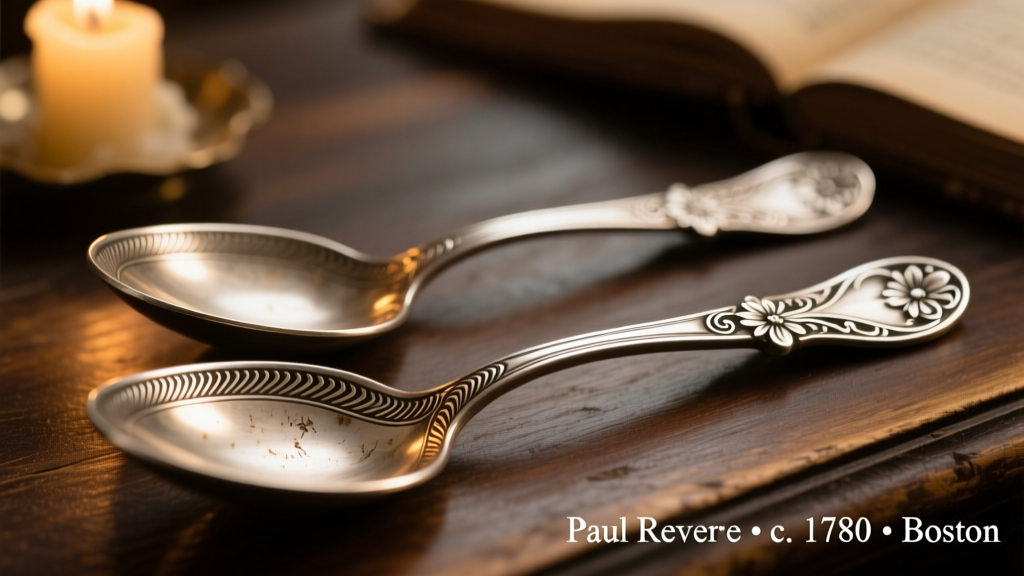
Silver American Tablespoon: Bright-Cut Wriggle Work Rim, Attributed to Paul Revere, c. 1780 — A Pair
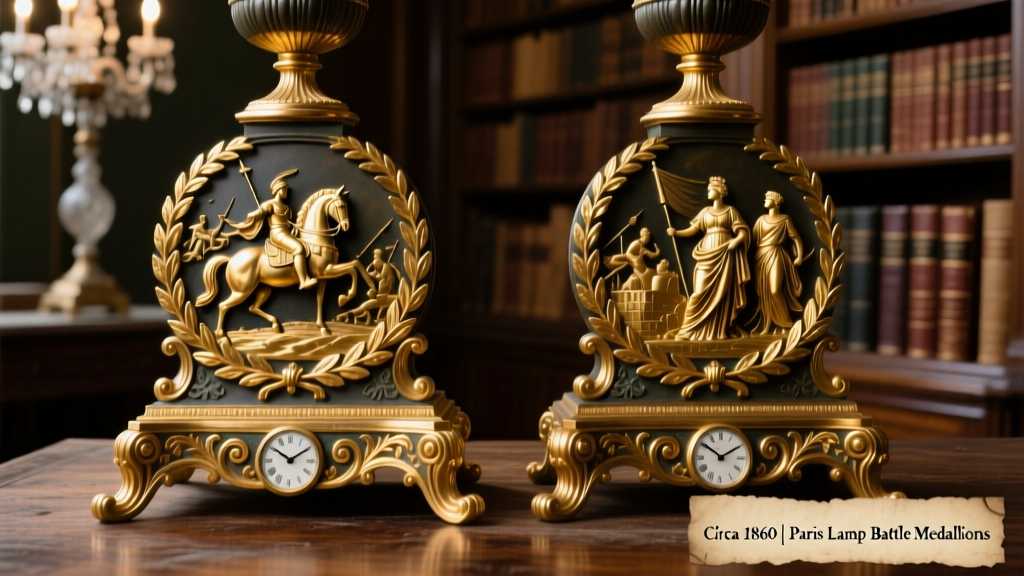
Paris Lamp Battle Scene Gilt Medallions on Pedestal Foot, Circa 1860 — A Pair of 12-Inch French Bronze-and-Gilt Masterpieces
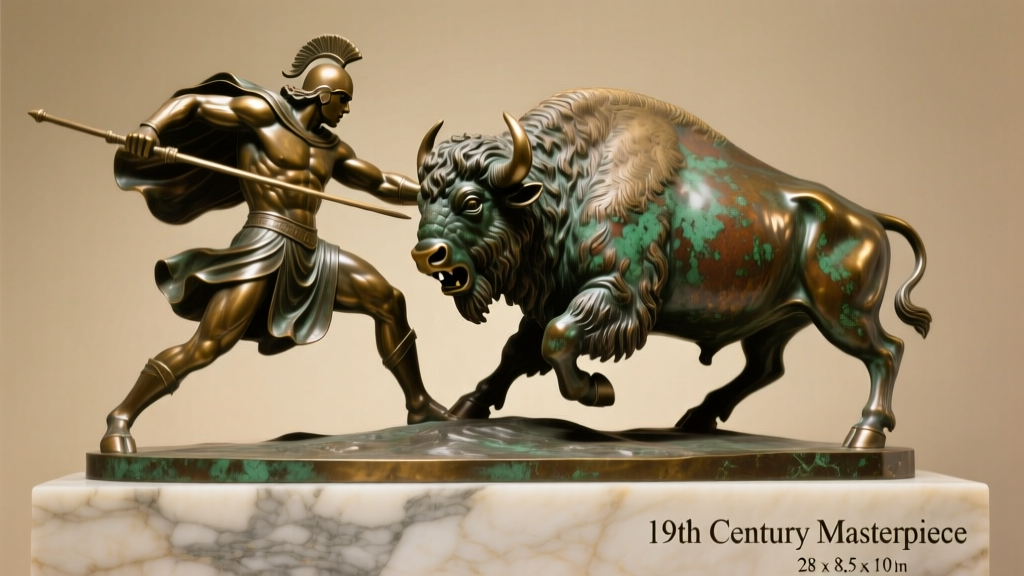
Bronze Sculpture 'Fighting Bison' on Black Marble Base: Provenance, Patination, and Market Significance
The Bow-Back High Chair with Six Spindles: A Study in American Federal and Early Shaker Craftsmanship
The 1930s Disneyana Box: Walt Disney Characters Embroidery Set — A Rare Artifact of Early Licensed Merchandise
The 1895 Zinc Cigar Store Bust: A Mechanized Portrait of Racial Stereotype and Mechanical Ingenuity
The White Jade Teapot: A Globular Masterpiece with Stylized Dragon Motif — Dimensions, Provenance, and Connoisseurship
Duncan Miller Fern Relish 3 Sections No. 2: A Masterpiece of American Art Deco Silverplate Tableware
Mahogany Lounge Chair with Cane Seat & Back: Design, Provenance, and Market Value of a Mid-Century American Classic