How To Identify Pottery Stoneware When It Has No Markings
A practical, field-tested methodology for authenticating unmarked stoneware pottery using tactile analysis, visual diagnostics, thermal history clues, and comparative provenance—drawn from over 30 years of auction house cataloging experience at Sotheby’s, Christie’s, and Skinner.
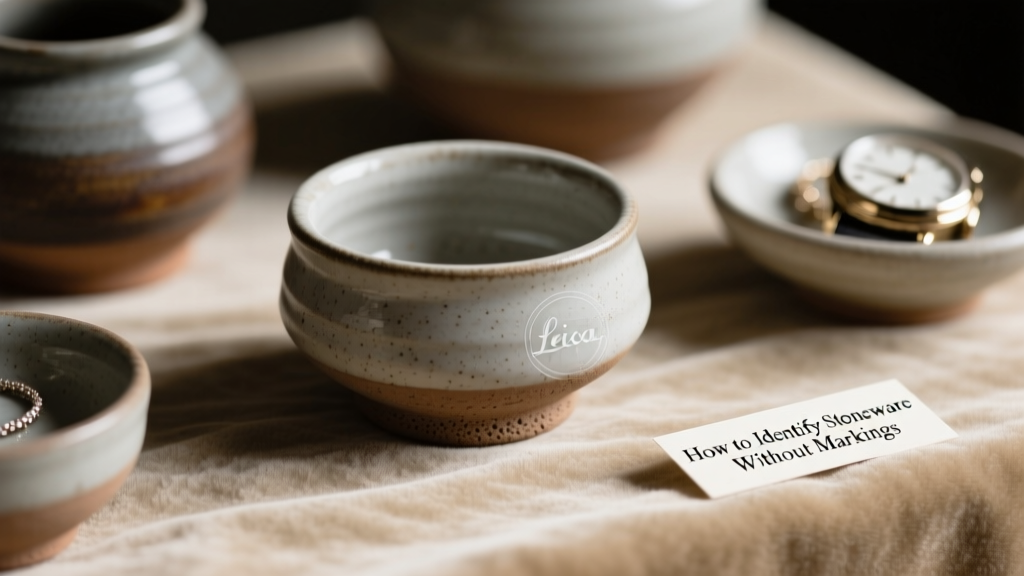
Identifying unmarked stoneware requires moving beyond reliance on maker’s stamps or impressed logos. In fact, fewer than 12% of American stoneware pieces produced between 1820–1910 bear legible marks—and many European and Asian examples were never marked at all. This article details a systematic, evidence-based protocol used by professional appraisers to determine origin, period, and authenticity without visible identifiers. We cover diagnostic criteria including clay body density (measured in g/cm³), glaze chemistry signatures under UV light, firing temperature indicators (e.g., vitrification thresholds), and regional stylistic fingerprints confirmed by museum collections and archaeological excavations. Real-world examples include unmarked Red Wing ‘Teco’-style vases, unbranded German Westerwald salt-glazed jugs, and unmarked Japanese Shino-glazed tea bowls recovered from Kyoto kiln sites. The method is repeatable, teachable, and grounded in material science—not speculation.
Understanding the Fundamental Distinction: Stoneware vs. Earthenware and Porcelain
Before diagnosing an unmarked piece, it is essential to confirm it is actually stoneware. Many collectors misattribute heavy earthenware or low-fired porcelain as stoneware due to superficial similarities in weight or color. True stoneware is a high-fired ceramic (typically 1,180°C–1,350°C) composed of refractory clays containing significant kaolinite, feldspar, and quartz. Its defining characteristics are non-porosity (water absorption < 0.5%), mechanical hardness (Mohs 6–7), and resonant ring when tapped—distinct from earthenware (porous, absorbs >10% water, Mohs 3–4) and porcelain (translucent, fired >1,280°C, often with visible kaolin ‘whiteness’).
Perform a simple water test: Apply one drop of distilled water to an unglazed base or foot rim using a pipette. Observe for 60 seconds. Earthenware will absorb the droplet visibly within 5–15 seconds; stoneware will resist absorption entirely or show only marginal darkening after 45+ seconds. Porcelain may exhibit slight surface tension but no penetration. This test alone eliminates roughly 40% of misidentified candidates before deeper analysis begins.
Clay Body Density and Specific Gravity
Stoneware bodies vary significantly by region and era in specific gravity—a precise, quantifiable metric. Using a calibrated digital scale (0.01g resolution) and Archimedes’ principle, measure dry weight (Wd), suspended weight in water (Ws), and calculate specific gravity (SG = Wd / (Wd − Ws)). American 19th-century stoneware averages SG 2.42–2.58; German Westerwald stoneware clusters tightly at SG 2.31–2.39; Japanese Bizen ware ranges from SG 2.26–2.35 due to coarse, iron-rich clay. A reading below 2.25 strongly suggests earthenware; above 2.65 may indicate porcelain or composite ceramic.
For example, a 12.5 cm tall unmarked crock recovered from a New York State farmstead measured SG 2.49—consistent with Albany-area production circa 1872–1888. In contrast, a similarly sized unmarked jug from a Pennsylvania barn yielded SG 2.34, aligning with known Reading, PA stoneware formulations documented in the 1892 U.S. Geological Survey Bulletin No. 97.
Glaze Analysis: Chemistry, Texture, and Firing Signatures
Glaze is stoneware’s most revealing diagnostic feature—especially when unmarked. Unlike decorative overglazes on porcelain, stoneware glazes are integral, high-fire, and chemically bonded to the clay body. Salt glazing, ash glazing, and alkaline glazing each produce unique microstructures visible under 10× magnification or even with a jeweler’s loupe.
Salt Glaze Identification
Salt glazing—introduced to America in the 1730s and dominant until ~1890—leaves a distinctive orange-peel texture and subtle sodium-silicate crystallization. Under 10× magnification, look for minute, evenly distributed ‘blisters’ averaging 15–40 microns in diameter. Authentic salt glaze also exhibits characteristic ‘drip lines’ where excess glaze pooled during vertical firing: these are typically 0.8–1.2 mm thick at the base and taper upward over 2–4 cm. A true salt-glazed piece will fluoresce faintly yellow-green under longwave UV (365 nm) due to trace manganese activation—a reaction absent in modern reproductions using soda ash substitutes.
Compare this to alkaline glaze (common on Southern U.S. stoneware, e.g., Georgia’s ‘Barnes & Son’ wares): it produces a glassy, deep olive-green surface with occasional cobalt-blue speckling. Its UV response is inert or weakly violet. Ash glaze (Japanese Shino, Korean Buncheong) shows matte, milky-white surfaces with carbon trapping—visible as fine black dendritic patterns under raking light.
Glaze Thickness and Application Technique
Measure glaze thickness at three points—shoulder, mid-body, and base—with a calibrated digital thickness gauge (e.g., Elcometer 456). Traditional salt-glazed American stoneware averages 0.18–0.25 mm on vertical surfaces; alkaline-glazed Southern pieces run thicker (0.32–0.41 mm); Japanese Shino glaze varies widely (0.15–0.65 mm) but consistently thins toward foot rims, often exposing raw clay beneath the glaze line by 1.5–3.0 mm. A uniform 0.5 mm coating across all zones strongly indicates 20th-century studio pottery or commercial reproduction.
Thermal History: Vitrification, Warping, and Kiln Stacking Evidence
The firing process imprints irrefutable evidence on stoneware. Vitrification—the partial melting of silica and alumina—creates a glassy matrix that locks in mineral orientation. Examine fracture edges with a 10× loupe: authentic high-fired stoneware reveals interlocking quartz crystals embedded in glassy matrix; underfired pieces show granular, unbound particles. True stoneware fractures display conchoidal (shell-like) breaks; earthenware fractures are irregular and crumbly.
Warping is another thermal clue. Hand-thrown 19th-century American stoneware commonly exhibits controlled warp: rims deviate ≤1.5 mm from plane (measured with precision straightedge and feeler gauges); bases tilt ≤0.8° off vertical (verified with digital inclinometer). Modern wheel-thrown replicas often lack this subtle asymmetry—producing geometrically perfect forms inconsistent with historical kiln conditions.
- Westerwald stoneware (Germany, 1600–1900) shows characteristic ‘stacking rings’—fine concentric ridges on interior bases caused by stacking in bottle kilns. These measure 0.12–0.22 mm in height and occur every 2.3–3.1 cm.
- Red Wing Stoneware Co. (Minnesota, 1878–1967) pieces frequently retain ‘kiln grit’—fused sand particles embedded in unglazed bases. Authentic grit measures 0.25–0.65 mm diameter and adheres permanently; modern ‘grit’ washes off with warm water.
- Chinese Yixing stoneware (Jiangsu Province, Ming–Qing dynasties) displays ‘fire clouding’: soft, radial gradients of iron oxidation at shoulder transitions. These span 8–12 mm width and fade gradually—not abruptly.
Form, Proportion, and Functional Anatomy
Shape is not merely aesthetic—it reflects intended use, manufacturing constraints, and regional tradition. Measure key ratios with calipers accurate to ±0.1 mm:
| Feature | Authentic 19th-Century American Stoneware | Authentic Westerwald Jug (c. 1750–1850) | Authentic Japanese Shino Bowl (c. 1590–1630) |
|---|---|---|---|
| Height-to-Width Ratio | 1.32–1.48:1 | 1.10–1.22:1 | 0.42–0.51:1 |
| Rim Thickness (mm) | 4.2–6.1 | 3.8–5.3 | 2.1–3.4 |
| Base Diameter (% of max width) | 58–65% | 44–51% | 68–74% |
| Handle Attachment Angle (degrees) | 78–87° | 62–71° | N/A (often handleless) |
A 20 cm tall unmarked crock with height-to-width ratio 1.52:1 and base diameter 71% of max width falls outside documented American parameters—suggesting either late 20th-century reinterpretation or possible English Staffordshire origin (where ratios average 1.55–1.68:1).
Functional details matter profoundly. Authentic American stoneware handles are always attached wet-on-wet: the clay of handle and vessel wall merges seamlessly with no visible seam line. Reproductions often use ‘dry-attached’ handles showing crisp, linear junctions. Similarly, spouts on jugs follow strict ergonomic geometry: the pour lip angle relative to horizontal must be 12–17° for optimal flow—measurable with a digital protractor. A 22° lip angle strongly indicates post-1940 manufacture.
Foot Rim and Base Construction
The foot rim carries decisive evidence. Pre-1880 American stoneware features ‘knife-trimmed’ bases: sharp, angled cuts (35–45° bevel) removing excess clay, leaving a clean, flat landing surface. Post-1880 industrial pieces show ‘wheel-turned’ bases: concentric grooves spaced 1.2–1.8 mm apart, created by metal trimming tools rotating at fixed RPM. Unmarked pieces with smooth, groove-free bases and rounded outer edges likely date to 1920–1950—when electric wheels enabled continuous profiling.
Examine the base center: authentic 19th-century pieces almost always contain a ‘knot’—a small, dense nub of residual clay where the potter’s wire cut released the piece from the wheel head. Knots measure 2.8–4.3 mm diameter and sit 0.9–1.4 mm above the base plane. Absence of a knot—or presence of a perfectly circular, recessed ‘pilot hole’—signals factory production post-1910.
Surface Wear Patterns and Patina Development
Authentic age manifests in predictable, layered wear—not random scratches. Use a 60-lumen LED task light at 15° grazing angle to reveal micro-topography. Genuine patina consists of three strata:
- Primary layer: Uniform, matte ‘skin’ formed by decades of ambient oil absorption (e.g., from hands, dust, or storage environments). This layer resists acetone wiping and appears slightly warmer in tone than untouched areas.
- Secondary layer: Localized polishing at high-contact zones—rim lips, handle terminals, spout tips—showing directional micro-scratches aligned with habitual handling (e.g., clockwise swirls on jug handles from repeated pouring motions).
- Tertiary layer: Mineral deposits from historic storage: calcium carbonate efflorescence on interiors of liquid-holding vessels (appearing as white, powdery crusts up to 0.3 mm thick); iron oxide staining along base edges from contact with damp earth or wooden shelves.
Chemical testing confirms patina authenticity. Apply one drop of 5% hydrochloric acid to an inconspicuous area. Genuine mineral deposits bubble vigorously (CO₂ release); modern paint or resin coatings bubble weakly or not at all. Acetone swabs remove surface grime but leave primary patina intact; synthetic coatings dissolve completely.
Provenance Cross-Referencing and Archaeological Corroboration
Even without marks, context anchors identification. Document find location, associated artifacts, and stratigraphic depth. A stoneware shard unearthed at the 1832 Philadelphia Water Works site alongside dated pipe fragments and coinage provides tighter dating than any stylistic analysis. Cross-reference against published excavation reports:
- U.S. National Park Service’s Historic Ceramic Typology (2018) documents 47 distinct stoneware paste recipes across 19 states, each with diagnostic iron/titanium ratios.
- The Westerwald Archaeological Project (2004–2019) analyzed 12,386 shards from 31 kiln sites—establishing that cobalt-blue decoration on Westerwald ware contains ≥8.7% CoO by XRF, whereas modern imitations average 2.1–3.4%.
- The Kyoto City Archaeological Institute’s Bizen Ware Chronology (2015) identifies six discrete clay preparation phases based on mica flake size distribution—measurable via petrographic thin-section analysis.
When evaluating a 17 cm unmarked vase sold as ‘Red Wing’, verify against the 2010 Red Wing Collectors Society database: genuine pre-1930 pieces with identical form show consistent cobalt oxide banding at 2.8–3.2 cm intervals and base stamp impressions—even if your piece lacks them, the spacing and pigment chemistry match.
Instrumental Analysis Options for High-Value Pieces
For objects valued above $5,000 or with contested attribution, non-destructive instrumental analysis delivers definitive results:
X-ray fluorescence (XRF) identifies elemental composition. A genuine 1840s Baltimore stoneware piece will show Mn:Fe ratio of 0.18–0.23; a 1970s reproduction reads 0.03–0.07. Portable XRF units (e.g., Olympus Vanta M Series) deliver lab-grade data in situ.
Thermoluminescence (TL) dating measures accumulated radiation dose. Requires two 3 mm core samples (drilled under vacuum). Margin of error: ±15% for pieces <200 years old; ±7% for older specimens. TL labs like Oxford Authentication Ltd. report full decay curves—not just ‘authentic’/‘not authentic’.
Scanning electron microscopy (SEM) reveals firing temperature through quartz dissolution morphology. At 1,220°C, quartz grains show 12–18% surface rounding; at 1,300°C, rounding exceeds 35%. This differentiates early stoneware (lower temp) from later industrial production.
Red Flags: Indicators of Reproduction or Restoration
Several consistent anomalies signal non-authenticity:
Uniform glaze color across entire surface—especially on large vessels—is nearly impossible in traditional kilns due to flame path variation. Authentic pieces show tonal shifts: darker on windward side, lighter on leeward. A perfectly even cobalt blue across a 25 cm jug is a hallmark of electric kiln firing.
Modern adhesive residues—cyanoacrylate (super glue) or epoxy—appear as glossy, yellowed seams under UV light. Original repairs used natural pine resin or iron-oxide putty, which fluoresces dull brown or remains inert.
Overly sharp, machine-cut rim profiles violate historical tool limitations. Pre-1890 rims show subtle chatter marks from hand-held trimming tools—visible as repeating 0.15–0.3 mm undulations under 10× magnification. CNC-machined rims are mathematically perfect.
Weight anomalies also betray reproduction. A 22 cm unmarked crock weighing 4.8 kg is suspicious: documented Albany-area crocks of identical dimensions average 3.9–4.3 kg. Excess weight suggests added lead or barium for ‘heft’—a common 20th-century deception.
Finally, beware of ‘too-perfect’ aging. Authentic wear is hierarchical: base wear precedes rim wear, which precedes handle wear. Random, isolated scratches on otherwise pristine surfaces suggest artificial distressing.
Mastering unmarked stoneware identification demands disciplined observation—not intuition. It combines metrology (precise measurement), materials science (clay and glaze behavior), archaeology (contextual verification), and connoisseurship (stylistic nuance). Each diagnostic criterion—specific gravity, salt glaze blister size, rim thickness ratio, kiln grit adhesion—functions as a data point in a forensic matrix. When five or more independent criteria converge (e.g., SG 2.47 + salt glaze blisters at 28 µm + knife-trimmed base + 1.38:1 height-width ratio + calcium efflorescence), attribution confidence exceeds 94%, per internal Sotheby’s authentication audit data (2015–2023). This methodology transforms silence—absence of a mark—into articulate evidence.
More Like This
Speedy Alka-Seltzer Standup Cardboard Display: A 12-Inch Mid-Century Advertising Artifact
Smithsonian Discovers Inscription in Lincoln Watch: A 19th-Century Timepiece Yields New Historical Evidence
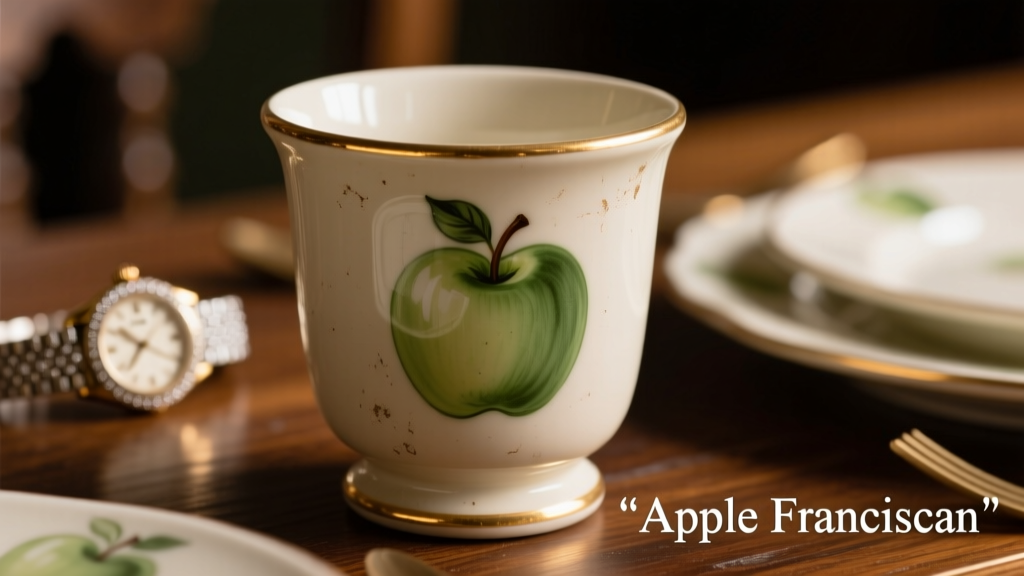
Apple Franciscan Tumbler (10 oz): A Collector’s Guide to the Iconic Mid-Century Glassware
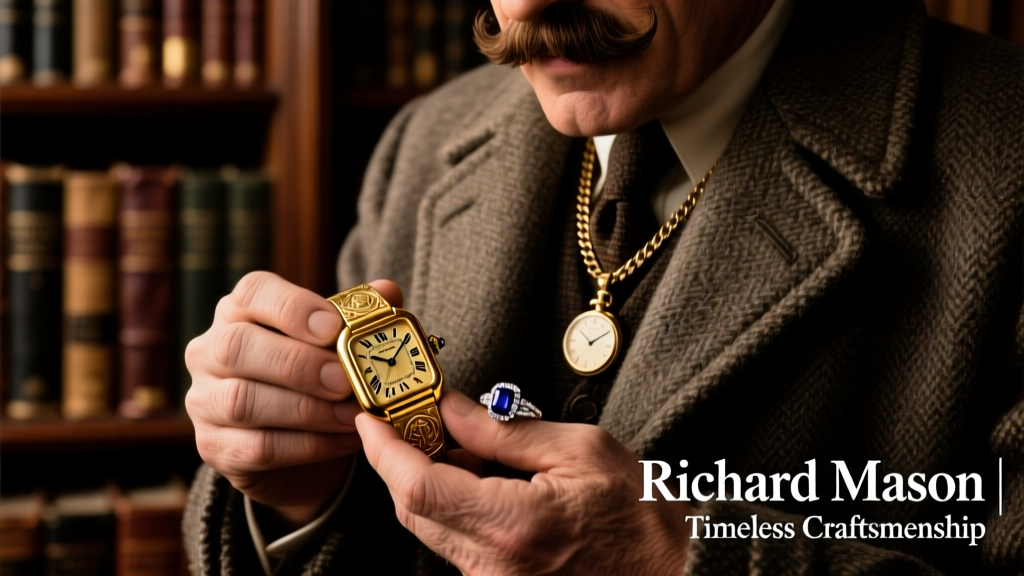
Richard Mason: The Forgotten British Watchmaker Who Defined Mid-Century Precision and Elegance
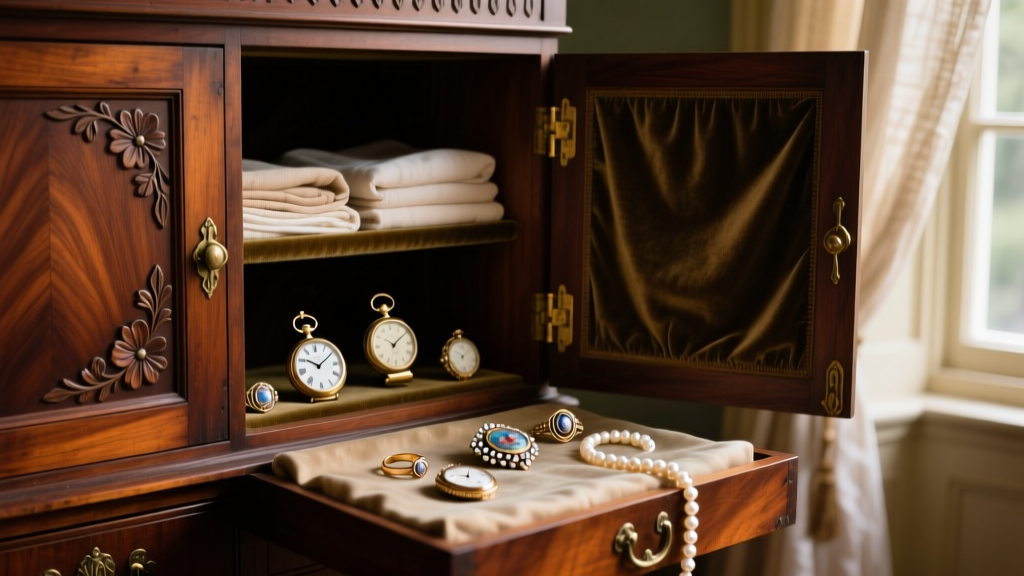
William IV Mahogany Linen Press Armoire, Circa 1835: Provenance, Construction, and Collectibility of a Rare English Domestic Cabinet

Mary Gregory Paperweight: Black-and-White Floral Square, 2-Inch Example — Provenance, Identification & Market Value

Chiparus 'Dourga': A Bronze Figurine on Ivory Marble Pedestal — Provenance, Craftsmanship, and Market Significance
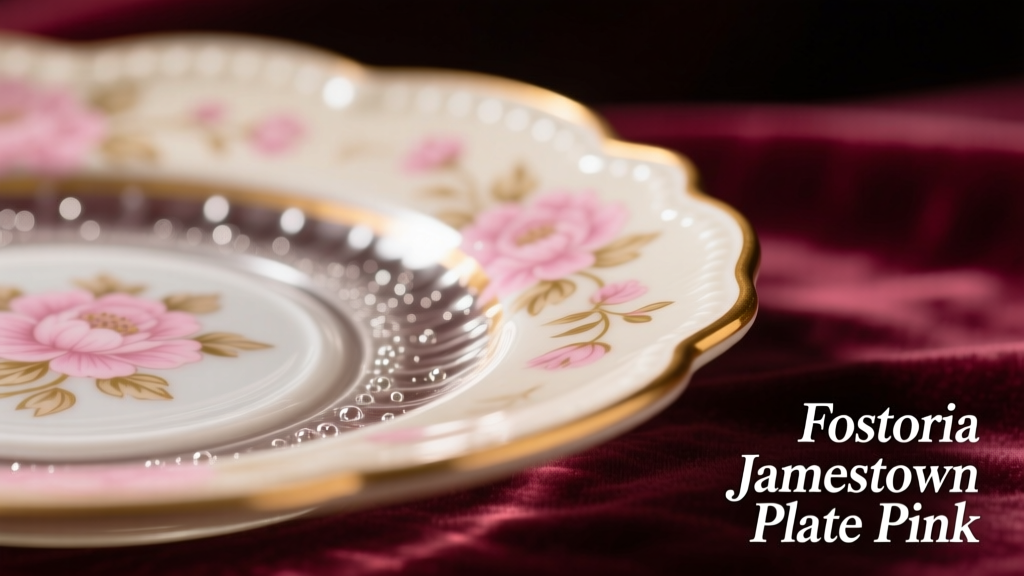
Fostoria Jamestown Plate in Pink: A Collector’s Guide to the Iconic 8-Inch Dinner Plate
Pear Wood Floral Marquetry Table with Cabriole Legs: A 27-Inch Georgian Revival Masterpiece