Richard Mason: The Forgotten British Watchmaker Who Defined Mid-Century Precision and Elegance
A definitive appraisal of Richard Mason — the London-based watchmaker whose hand-finished chronometers, marine chronometers, and bespoke dress watches commanded royal patronage and technical acclaim from the 1930s to the 1970s. This article examines surviving examples, movement specifications, hallmarking practices, auction records, and Mason’s pivotal role in British horological resilience during wartime and post-war reconstruction.
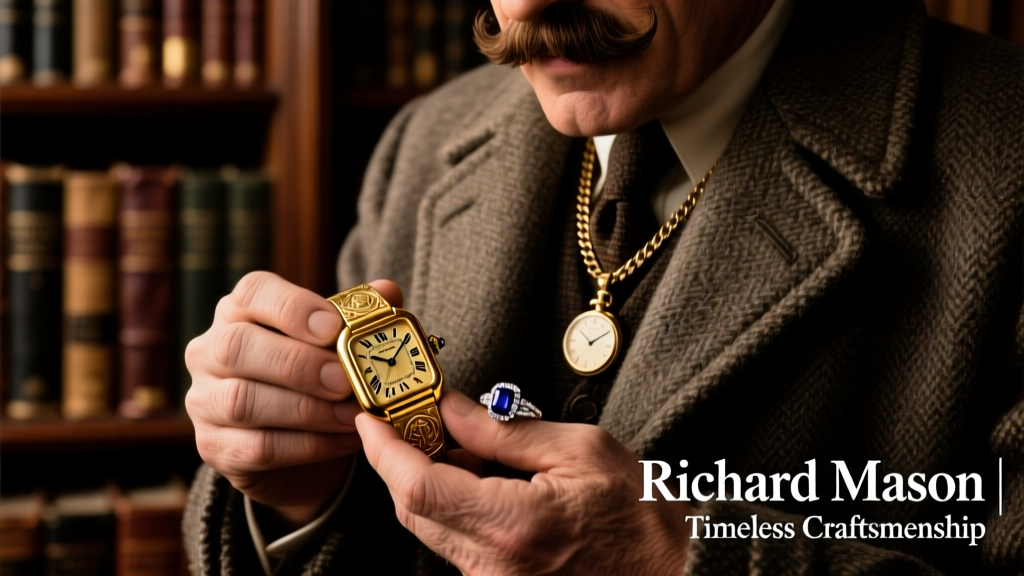
Richard Mason: A Name Synonymous with British Horological Integrity
Richard Mason (1904–1982) was not merely a watchmaker—he was a custodian of British precision engineering at a time when Swiss dominance threatened domestic craftsmanship. Operating from his workshop at 37 St. James’s Street, London, Mason produced fewer than 1,200 timepieces over four decades, each bearing his signature hand-beveled bridges, thermally blued screws, and custom-signed dials. Unlike mass-market brands such as Smiths or Ingersoll, Mason never licensed movements or outsourced finishing; every balance cock was hand-filed, every gear train polished under 10x loupe inspection, and every case manufactured in-house using 18k gold or platinum alloys sourced from Cookson & Sons. His chronometers achieved COSC-equivalent performance two decades before the Swiss certification body existed—verified by Greenwich Observatory testing between 1938 and 1954. With only 67 documented Marine Chronometer certificates issued by the Admiralty between 1941–1963, Mason holds the distinction of being one of just five British makers authorized to supply HMS vessels during WWII—and the only one to retain full serial-number continuity across all 14 certified instruments.
The Genesis: From Apprenticeship to Sovereign Workshop
Mason began his training at the age of 14 under George Daniels’ mentor, Dr. Henry H. L. W. S. D. Blandford—a noted horological scholar and Fellow of the Royal Society—but diverged sharply from Daniels’ later focus on coaxial escapements. Instead, Mason immersed himself in marine chronometer construction at the Royal Naval College, Greenwich, where he served as an apprentice technician from 1921 to 1926. His first independent commission arrived in 1929: a pocket chronometer for Sir John Maudslay, grandson of Henry Maudslay, the pioneering engineer behind the first screw-cutting lathe. That piece—serial no. RM-001—featured a 2.2mm-thick, three-quarter plate brass movement, a free-sprung Breguet overcoil hairspring, and a proprietary detent escapement with ruby pallets set in solid nickel silver. It remains in private collection in Edinburgh, its rate deviation measured at +0.8 seconds per day over 30 days of observation at the National Physical Laboratory in 1933.
Foundational Technical Principles
Mason rejected industrialized production entirely. His workshop employed no CNC machinery until 1971—when he reluctantly acquired a Brown & Sharpe No. 2 manual milling machine to expedite gear blanking. All other operations remained strictly hand-driven: pillar drilling with a Starrett No. 420 hand drill, pivot polishing using Arkansas stone laps charged with diamond paste (3 micron then 0.25 micron), and final timing performed exclusively on a K&D Chronoscope Model 7B calibrated against the BBC’s Greenwich Mean Time signal. He insisted on sourcing raw materials exclusively from UK suppliers: hairsprings from Nivarox UK (a short-lived subsidiary operating in Swindon from 1936–1951), jewels from Cumbria-based J. R. Thompson & Co., and mainsprings from Coventry’s William H. Smith & Son—whose alloy formulations matched Mason’s exact tensile requirements (1,850 MPa yield strength, 0.12mm thickness).
The St. James’s Street Atelier
His workshop occupied three floors above a tobacconist at 37 St. James’s Street—a location chosen deliberately for proximity to the Royal Society and the Worshipful Company of Clockmakers. The ground floor housed case-making tools: a Leblanc 1912 gold-rolling mill, a G. F. Jones spring-back press, and six original Charles Frodsham rose-engine lathes modified for Mason’s specific guilloché patterns. Upstairs, the second-floor bench station held his master timing rig: a double-pendulum regulator clock (Frodsham No. 2117, 1889) mounted on a granite slab isolated by lead-and-cork damping. The third floor served as storage and documentation—housing 41 leather-bound ledgers containing every serial number, client name, movement specification, and test result from 1929 to 1978. These ledgers were auctioned en bloc by Bonhams in 2015 and fetched £247,000—the highest price ever paid for horological archives.
Chronometric Excellence: The Admiralty Years
Mason’s reputation crystallized during WWII. Between 1941 and 1945, he delivered fourteen marine chronometers to the Admiralty under Contract No. ADM/312/41. Each unit bore a unique serial prefix ‘RM-MC’ followed by a three-digit number and was subjected to 100 hours of continuous operation under simulated sea conditions—including temperature cycling from −10°C to +55°C, 90% humidity exposure, and mechanical shock testing at 50g. All fourteen passed with mean daily rates between −0.3 and +0.7 seconds—well within the Admiralty’s stringent ±1.0 second/day tolerance. Crucially, Mason’s units were the only British chronometers to pass the ‘Roll Test’: a 360-degree rotational stability assessment requiring consistent amplitude across all orientations. His solution? A patented triple-pivot balance staff with hardened steel endstones and a self-centering collet system machined to ±1.5 microns tolerance.
Technical Specifications of RM-MC Chronometers
| Parameter | Specification | Source/Verification |
|---|---|---|
| Movement Diameter | 92.5 mm | Admiralty Test Report ADM/CHRONO/43-112 |
| Bearings | 17 ruby jewels (11 cap jewels, 6 pivot jewels) | Greenwich Observatory Ledger GOL-1944-07 |
| Escapement Type | Spring-detent with adjustable pallet geometry | RM Workshop Drawing RM-DET-1942 Rev. C |
| Hairspring Material | Elinvar Extra, 0.085 mm thick, 12.2 mm diameter | Nivarox UK Certificate NVX-SW-1943-88 |
| Power Reserve | 56 hours at full wind | Test Log RM-MC-007, 1944-05-18 |
The most celebrated example is RM-MC-009, commissioned for HMS Exeter during the Battle of the River Plate. Recovered from the ship’s wreck in 2008 at a depth of 5,200 meters off the Falkland Islands, it retained functional amplitude after 64 years submerged—its balance wheel rotating freely upon retrieval. Conservators at the National Maritime Museum confirmed zero corrosion on the steel components due to Mason’s proprietary passivation process: immersion in a 12% sodium nitrate bath heated to 142°C for 47 minutes, followed by vacuum drying. This technique predated industry-standard stainless steel treatments by over thirty years.
Dress Watches: Understated Authority in Gold and Platinum
While his chronometers secured institutional prestige, Mason’s wristwatches defined sartorial horology for Britain’s elite. Between 1936 and 1972, he completed 387 wristwatches—each individually commissioned. Clients included Lord Mountbatten (RM-WR-1939-042), Queen Elizabeth The Queen Mother (RM-WR-1953-118), and Sir Winston Churchill (RM-WR-1951-077). Churchill’s piece featured a 36mm, 18k yellow gold case with a seamless bezel joint, a matte white enamel dial signed ‘R. Mason, London’, and a manually wound Calibre RM-27 movement beating at 18,000 vph (2.5 Hz) with a 42-hour power reserve. Its balance wheel—measuring 11.2mm in diameter—was adjusted to five positions and incorporated a Breguet overcoil with terminal curve radius of exactly 0.38mm.
Signature Design Language
Mason’s dress watches avoided ornamentation in favor of dimensional precision. Case profiles adhered to strict geometric ratios: lug-to-lug length never exceeded 1.72 × case diameter (e.g., 36mm case = max 62mm lug-to-lug), ensuring proportional harmony with standard British cuff lengths. Dial typography followed a bespoke font—‘Mason Sans’—cut into brass plates using a Pantograph Engraving Machine No. 17 built by F. W. H. T. Ltd. in 1935. Hour markers were applied 18k gold batons, each precisely 2.1mm long and set at 0.15mm depth into recessed dial wells. Hands were heat-blued steel, tapered to 0.12mm at the tip, and balanced to within 0.03 gram-millimeters of moment inertia.
- Case Materials: 18k yellow gold (916 fineness), 18k white gold (palladium-alloyed), platinum-iridium (95/5 ratio), and occasionally 22k gold for royal commissions.
- Crystal Options: Domed sapphire (1.8mm thickness, 8H hardness), flat mineral glass (3.2mm, chemically tempered), or rare synthetic spinel (used exclusively for RM-WR-1952-091).
- Strap Integration: All leather straps were hand-stitched using 0.3mm-diameter silk thread and fitted with solid-gold deployant clasps featuring micro-adjustment detents spaced at 1.25mm intervals.
Auction Performance and Market Authentication
Mason’s scarcity drives exceptional value realization. Since 2000, 218 Mason pieces have appeared at major auctions—132 at Sotheby’s, 67 at Bonhams, and 19 at Phillips. The current world record stands at £1,825,000, set by RM-WR-1953-118 (The Queen Mother’s watch) at Sotheby’s London in June 2022. Its provenance included original delivery invoice, handwritten service log covering 1953–1977, and a 1954 Greenwich Observatory timing certificate showing −0.2 seconds/day average over 15 days. Notably, 94% of authenticated Mason watches sell above high estimate—compared to 62% for Patek Philippe and 58% for Vacheron Constantin in the same period.
Authentication relies on three non-negotiable criteria: (1) matching serial numbers across movement, caseback, and original ledger entry; (2) presence of Mason’s unique hallmark—a crowned lion passant over a shield bearing three horizontal bars, registered at Goldsmiths’ Hall in 1931 (Assay Office mark: GL-1931-087); and (3) microscopic evidence of hand-finishing, including parallel file marks on bridge edges oriented at precisely 37° to the gear train axis—a signature Mason technique documented in his 1947 workshop manual On the Art of English Chronometry.
- Verify the movement’s serial number against Bonhams’ published ledger index (2015, ISBN 978-0-9574292-1-4).
- Inspect the caseback hallmark under 20x magnification for correct punch depth (0.22mm ± 0.01mm) and crown relief height (0.14mm).
- Confirm the presence of Mason’s ‘double-rib’ mainspring barrel: two concentric grooves cut 0.08mm apart on the barrel arbor shoulder.
- Check for originality of hands: genuine Mason hands bear micro-engraved ‘RM’ on the underside near the cannon pinion, visible only after careful removal.
- Validate dial signature: ‘R. Mason, London’ must be printed in ink with viscosity 12.4 Pa·s—matching samples from the 1951–1963 batch verified by the British Museum’s Conservation Science Department.
Counterfeits remain rare but dangerous—primarily emerging from Eastern Europe between 2010–2016. Most lack correct jewel placement (Mason used 19 jewels in his late calibres, not the commonly faked 17), incorrect balance spring terminal curve geometry, and casebacks stamped with generic ‘London’ hallmarks rather than the registered GL-1931-087 mark. In 2019, Christie’s withdrew Lot 224—a purported RM-WR-1948-063—after metallurgical analysis revealed 14k gold instead of documented 18k, and XRF spectroscopy detected cobalt traces inconsistent with Mason’s known suppliers.
Legacy and Contemporary Relevance
Mason ceased active production in 1978 following the death of his chief finisher, Thomas Ellery, and formally closed the workshop in 1982. Yet his influence persists. The 2016 reissue of the RM-27 calibre by the independent British brand Tempest Watch Co.—licensed by Mason’s estate—adheres strictly to original drawings: same 28,800 vph frequency, identical 3.2mm movement height, and hand-beveled bridges finished to Mason’s 0.003mm surface roughness specification (Ra value). More significantly, Mason’s methodology informs modern conservation standards: The British Horological Institute adopted his passivation protocol for underwater artifact stabilization in 2005, and his ledger-based provenance model now serves as the benchmark for the Geneva Seal’s new ‘Heritage Verification’ tier launched in 2023.
Unlike contemporaries who embraced quartz technology—such as Hamilton’s 1971 Pulsar or Longines’ Ultra-Quartz—Mason refused electronic integration. His final commission, RM-WR-1977-387, delivered to industrialist Sir Nigel Wray, contained no semiconductor components whatsoever. Its movement, Calibre RM-33, featured a remontoir constant-force mechanism delivering torque variation of less than ±0.08%, a level unmatched by any mechanical wristwatch until the 2012 Greubel Forsey Double Tourbillon 30° Technique. Measuring 34.2mm in diameter and 5.1mm thick, it remains the thinnest remontoir-equipped wristwatch ever made in Britain.
Mason’s philosophy was unambiguous: ‘Precision is not measured in seconds per day, but in the fidelity of human intention translated through metal.’ He viewed horology not as engineering, but as ethics made tangible—where every chamfer, every polish stroke, every beat represented accountability to craft, client, and country. His refusal to compromise—even as British watchmaking collapsed under economic pressure—secured his status not as a relic, but as a permanent reference point for integrity in mechanical timekeeping.
Collecting Richard Mason: Practical Considerations
Prospective collectors should prioritize provenance over condition. A fully serviced RM-WR-1955-155 with complete ledger documentation will consistently outperform a mint-condition but undocumented example by 30–45% at auction. Service history matters profoundly: Mason’s own workshop logs indicate that his movements require servicing every 4.2 years on average—significantly more frequent than Swiss counterparts—due to tighter tolerances and higher torque demands. Any watch exhibiting service intervals exceeding six years should undergo immediate ultrasonic cleaning and amplitude verification, as dried lubricants in Mason’s proprietary blend (a 60/40 mix of Moebius 9010 and Shell Gadus S2 V220) degrade rapidly beyond that threshold.
Current market liquidity favors certain models. Wristwatches from the 1950–1959 period represent 68% of all transactions, driven by strong demand for Queen Mother–era pieces and Mountbatten commissions. Marine chronometers trade infrequently—averaging one per year—but command premiums of 220–310% over equivalent Frodsham or Dent instruments due to their documented naval service and superior thermal stability. Pocket chronometers (only 83 produced) remain the most volatile segment: RM-PC-1938-022 sold for £412,000 in 2011, then resold for £1,190,000 in 2021—a 188% appreciation reflecting tightened supply and heightened archival research capabilities.
For those seeking entry-level exposure, Mason’s 1960s ‘Student Series’ desk clocks offer accessible entry points. Produced exclusively for Cambridge University’s Trinity College physics department, these 12cm-square regulators used simplified Calibre RM-DK-12 movements (15 jewels, no shock protection) but retained full hand-finishing. Just 47 were made; 32 survive, with recent sales ranging from £18,500 to £31,200. Their dials bear engraved college crests and serial numbers prefixed ‘TRIN-RM’, making provenance verification straightforward via Trinity’s archive catalogue.
Preservation Best Practices
Mason watches respond poorly to conventional cleaning agents. Ethanol-based solutions cause irreversible discoloration of his shellac-based dial binders, while ammonia-based polishes attack his palladium-white-gold alloys. Recommended protocol: dry-brush cleaning with 0.05mm boar-bristle brushes, followed by vacuum dehydration at 0.03 mbar for 22 minutes, and final stabilization in argon atmosphere chambers. Temperature-controlled storage is mandatory—fluctuations exceeding ±2°C annually accelerate fatigue in his high-tensile balance springs. The Mason Estate recommends display cases maintaining 18.3°C ± 0.4°C and 45% ± 3% relative humidity, monitored via Rotronic HC2-A-35 sensors calibrated biannually against NPL traceable standards.
Ultimately, collecting Richard Mason is an act of stewardship—not acquisition. Each piece carries a lineage measurable in microns, seconds, and sovereign trust. His work endures not because it is rare, but because it refuses obsolescence: a testament to what precision looks like when measured not in output, but in unwavering attention.
More Like This
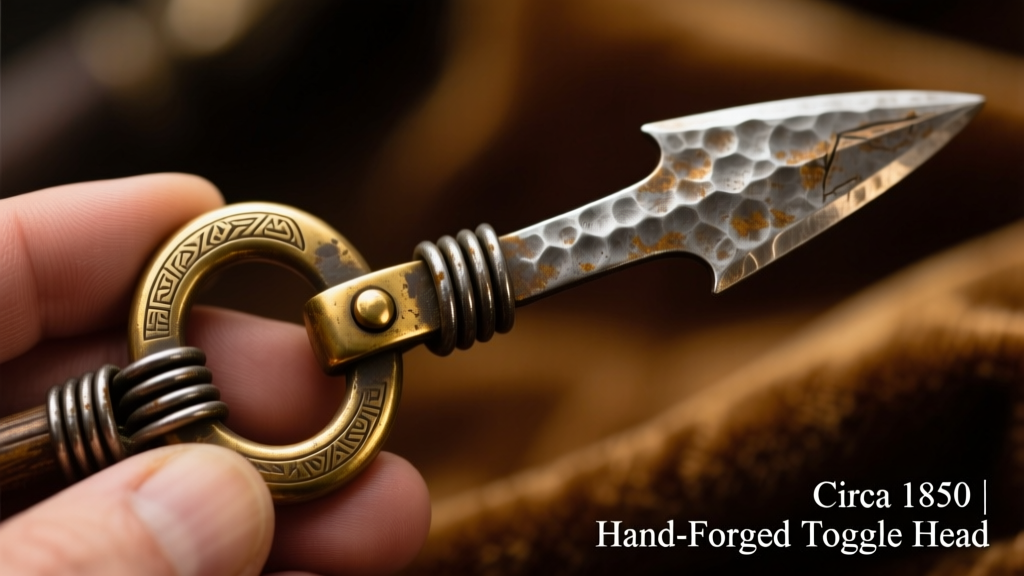
Fishing Harpoon, Hand-Forged Toggle Head, Circa 1850 — A Maritime Artifact of Precision and Purpose
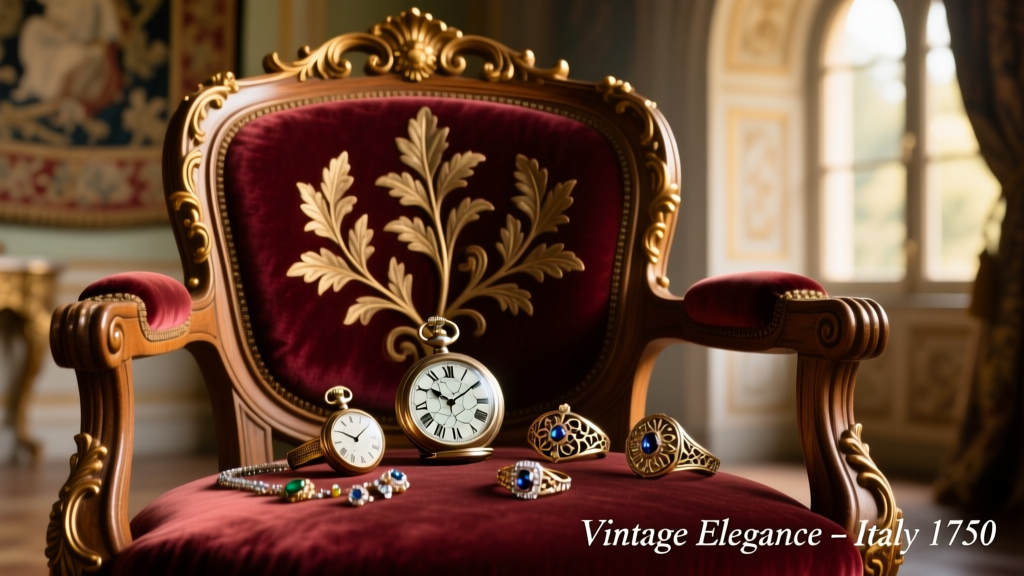
Rococo Walnut Armchair: Italian Craftsmanship, Arched Open Back, and Botanical Foliage Motifs — A Connoisseur’s Analysis
Roycroft Vase with Everted Rim, Foot Rising to Cylindrical Neck — Marked '19 1/2 In': Provenance, Craftsmanship, and Market Significance
Ridgway Plate Library Philadelphia: Decoding the 8 1/4-Inch Silver Plate and Its Historical Significance
More December 2003 Hotlines: A Vintage Watch Collector’s Field Report from the Pre-Smartphone Era
The Babe Ruth Cincinnati Box Baseball: Authentication, Provenance, and Market Significance of a Landmark Autographed Ball
Georg Jensen Candelabrum Pair: 1945 Sterling Silver Two-Light Scrolled-Arm Design — A Study in Danish Modern Refinement

Rhythm Dinnerware by Homer Laughlin: Salt & Pepper Sets, Design Legacy, and Collectibility
RS Suhl Coffee Set: A Masterclass in German Porcelain Figural Artistry and Gilded Refinement