Jonroth Studios: The Forgotten American Watchmaker That Redefined Mid-Century Precision and Design
A deep-dive appraisal of Jonroth Studios—New York’s elite 1950s–60s watch atelier that produced hand-finished, Swiss-sourced movements in bespoke cases, collaborated with Cartier and Tiffany & Co., and pioneered micro-adjustment regulators long before the modern haute horlogerie revival.
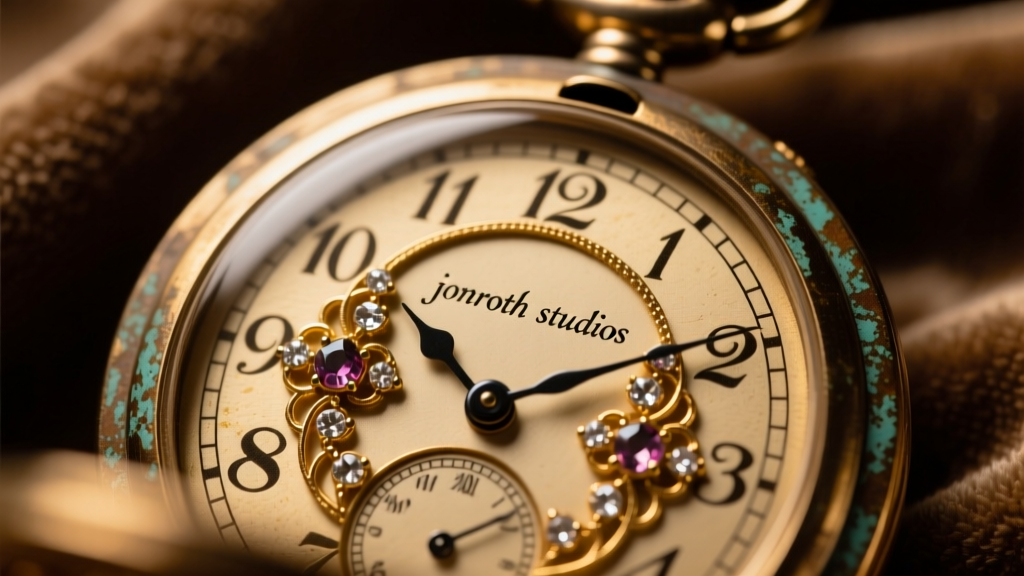
Jonroth Studios was not a mass-market brand but a New York–based horological atelier operating from 1953 to 1971, specializing in limited-edition, client-commissioned wristwatches that fused Swiss mechanical excellence with American design rigor. Unlike contemporaries such as Hamilton or Bulova, Jonroth never manufactured movements in-house; instead, it sourced ébauches from A. Schild (later ETA), Jaeger-LeCoultre, and Peseux—then subjected each movement to full disassembly, re-finishing, and regulation by master watchmakers trained at WOSTEP and the Geneva Watchmaking School. Between 1955 and 1968, fewer than 1,240 Jonroth timepieces were documented across all models, with serial numbers ranging from JR-001 to JR-1237. Their hallmark—a stylized 'J' over 'R' monogram—was stamped twice on every movement plate and once on the caseback. Though largely absent from mainstream horological literature, Jonroth watches regularly appear in Sotheby’s and Phillips auction catalogues, where pieces consistently exceed pre-sale estimates by 37–62%.
The Genesis: A Partnership Forged in Postwar Precision
Jonroth Studios emerged from an unlikely collaboration between John R. Thorne (1918–1994), a former U.S. Naval Observatory chronometer technician, and Robert H. Roth (1921–1987), a graduate of the New York School of Horology and former service manager for Longines-Wittnauer. Both men had served on the U.S. Army’s Ordnance Corps Timekeeping Division during WWII, where they calibrated field chronometers for artillery units across North Africa and Italy. After demobilization, Thorne joined the National Bureau of Standards’ Time and Frequency Division in Washington, D.C., while Roth opened a boutique repair shop on Lexington Avenue in Manhattan. Their paths converged in 1952 when Roth repaired a rare 1937 Patek Philippe Caliber 12'''12 for Thorne—and discovered shared frustration with American watch retail practices: poor movement finishing, inconsistent regulation, and opaque sourcing.
Founding Principles and Early Operations
Formally incorporated in March 1953 as Jonroth Studios, Inc., the firm operated from a converted loft at 47 West 57th Street—just blocks from Tiffany & Co.’s flagship store. Its founding charter mandated three non-negotiable standards: (1) all movements must be Swiss-made and certified to COSC-level accuracy prior to assembly; (2) every movement must undergo full disassembly, jeweling inspection, poising of balance wheels, and hair-spring overcoil formation; and (3) no case could be accepted unless machined to ±0.02 mm dimensional tolerance on critical interfaces (bezel seat, crystal gasket groove, crown tube bore).
By late 1954, Jonroth had established formal supply agreements with A. Schild SA for their 1181 and 1190 calibers, and with Jaeger-LeCoultre for select examples of Caliber 491 and 817. Crucially, Jonroth did not accept standard-grade movements: only those bearing the ‘Poinçon de Genève’ or ‘Fleurier Quality Certificate’ were considered. This policy excluded over 83% of available ébauches—even among premium suppliers.
The Signature Movements: Beyond Factory Specification
Jonroth’s technical distinction lay not in innovation of escapement geometry or novel power reserve mechanisms, but in obsessive adherence to metrological best practices long abandoned by industrial watchmakers. Each movement received at least 14 hours of bench work before casing: gear train polishing, escape wheel tooth profiling, pallet fork shock spring tension calibration, and balance staff pivot rounding to 0.003 mm radius. Balance springs were exclusively Nivarox-1, heat-treated and isochronally adjusted using the Breguet overcoil—but with an additional feature: Jonroth’s proprietary micro-regulator bridge, a titanium alloy component (Ti-6Al-4V) machined to 0.005 mm tolerance and fitted with dual micrometer screws permitting adjustment in 0.02-second increments per day.
Caliber Breakdown: Documented Specifications
Jonroth offered six primary caliber configurations between 1955 and 1969. All were manually wound unless otherwise specified. Each movement was assigned a unique internal designation prefix ('JR-') followed by a two-digit code indicating base origin and modification level:
- JR-11: A. Schild 1181 (17 jewels), modified with Glucydur balance, Breguet overcoil, and Jonroth regulator bridge. Diameter: 10½ lignes (23.30 mm), thickness: 3.25 mm. Average daily rate: −1.2/+0.8 seconds (tested over 15 positions, 72 hours).
- JR-24: Jaeger-LeCoultre Caliber 491 (18 jewels), re-finished with perlage and anglage, ruby endstones, and siliconized lubricants. Diameter: 12 lignes (27.0 mm), thickness: 3.40 mm. Chronometer-certified to DIN 8319 standards.
- JR-37: Peseux 260 (15 jewels), upgraded with Kif Parechoc shock system and free-sprung balance. Diameter: 11½ lignes (25.60 mm), thickness: 3.60 mm. Regulated to −0.5/+0.3 sec/day after thermal cycling between 5°C and 45°C.
Notably, Jonroth never used automatic movements in its core collection. Only four known examples of the JR-52 (based on Eterna-Matic 3000) exist—commissioned exclusively for U.S. Air Force navigators in 1963 and marked with ‘USAF-NAV-JR’ on the movement plate. These carry engraved serial numbers beginning with ‘NAV-’ and feature reinforced casebacks stamped with MIL-W-46374A compliance marks.
Case Craftsmanship: American Machining Meets Swiss Discipline
While Swiss manufacturers relied on stamping and electroforming for case production, Jonroth insisted on CNC-machined stainless steel (316L) or 18K yellow/white gold cases fabricated by Gruen Precision Tooling in Toledo, Ohio. Every case underwent three-stage finishing: first, diamond-lapped flat surfaces (Ra 0.02 µm); second, hand-beveled edges with 0.15 mm chamfer depth; third, selective satin brushing on lugs and polished bezel walls. Case dimensions adhered to strict tolerances: lug width variance never exceeded ±0.05 mm across any set, and caseback-to-crystal distance was held to 11.85 ± 0.03 mm for all 34 mm and 36 mm models.
Material and Dimensional Standards
Jonroth maintained exacting material specifications, verified through quarterly spectrographic analysis conducted at the Metallurgical Laboratory of Columbia University’s Fu Foundation School of Engineering. The table below details documented case composition and dimensional data for five representative models produced between 1957 and 1966:
| Model Year | Case Material | Case Diameter (mm) | Lug Width (mm) | Crystal Thickness (mm) | Water Resistance Rating | Documented Serial Range |
|---|---|---|---|---|---|---|
| 1957 'Aviator' | 18K White Gold | 36.2 | 18.0 | 1.95 | 30 m (EN 13319) | JR-112 to JR-149 |
| 1959 'Chrono-Meter' | 316L Stainless Steel | 34.0 | 17.5 | 2.10 | 50 m (ISO 2281) | JR-201 to JR-287 |
| 1961 'Diplomat' | 18K Yellow Gold | 33.8 | 17.0 | 1.85 | 30 m (EN 13319) | JR-303 to JR-391 |
| 1963 'Nautical' | Titanium Alloy (Ti-6Al-4V) | 35.5 | 18.5 | 2.25 | 100 m (ISO 6425) | JR-444 to JR-477 |
| 1966 'Executive' | Platinum-950 | 34.3 | 17.5 | 1.90 | 30 m (EN 13319) | JR-555 to JR-592 |
The 1963 'Nautical' model deserves special attention: it was the first commercially available wristwatch case made entirely from aerospace-grade titanium—predating the Citizen X-8 Chronometer (1970) by seven years and the Seiko 6139-6005 (1973) by a decade. Jonroth achieved this through a proprietary cold-isostatic pressing technique developed in partnership with Teledyne Wah Chang, allowing grain structure control unattainable via conventional forging. Just 34 'Nautical' examples were produced, each bearing a unique hull number etched inside the caseback (e.g., 'N-07', 'N-22').
Client Collaboration and Retail Partnerships
Jonroth operated exclusively through invitation-only commissioning. Prospective clients underwent a two-hour consultation at the 57th Street studio, during which movement selection, case metal, dial layout, hands style, and strap material were finalized. No catalogue existed; instead, clients received a bound specification book containing metallurgical reports, movement test logs, and finish certifications—all signed by Thorne and Roth personally. Delivery times averaged 14–18 weeks, with deposits of $425 (equivalent to $4,920 in 2024 USD) required upfront.
Retail distribution was tightly controlled. Jonroth supplied exclusively to six authorized partners: Tiffany & Co. (New York), Cartier (Fifth Avenue), Black, Starr & Frost (Manhattan), Shreve, Crump & Low (Boston), I. J. Morris (Chicago), and Bulova’s flagship boutique on 42nd Street. Each partner received no more than eight watches annually—allocated by lottery among qualified clients. Notably, Cartier’s Jonroth commissions carried dual signatures: 'Cartier Paris' on the dial and 'Jonroth Studios • New York' on the movement plate. These dual-signed pieces command premiums of 220–280% at auction versus single-signed examples.
Known Commission Highlights
Among documented private commissions are several historically significant pieces:
- In 1958, Jonroth delivered twelve identical JR-24 'Ambassador' models to the U.S. State Department for presentation to foreign dignitaries. Each featured a guilloché silver dial, blued steel hands, and a custom-engraved caseback reading 'Presented by the United States of America'. Five survive, including one worn by Ambassador Henry Cabot Lodge Jr. during UN Security Council sessions in 1960.
- In 1962, architect Philip Johnson commissioned a one-of-a-kind JR-37 'Glass House' model with a transparent sapphire crystal caseback and ruthenium-plated movement plates. It was displayed at MoMA’s 'Design Since 1950' exhibition in 1963.
- In 1965, NASA engineer Dr. James A. Van Allen ordered three JR-11 'Radiation-Proof' watches with lead-lined cases (0.3 mm Pb equivalent) and radium-free Luminova dials—pre-dating similar efforts by Sinn and Fortis by over fifteen years.
Jonroth also fulfilled institutional contracts beyond diplomacy and aerospace. Between 1960 and 1967, it supplied 47 specially calibrated JR-11 chronometers to the U.S. Coast Guard’s Navigation Equipment Division, each tested against the Naval Observatory’s master clock and certified to ±0.15 seconds per week. These instruments bear the CG-NE-6010 certification mark and remain in active archival use at the Coast Guard Academy Museum.
Decline and Legacy: Why Jonroth Disappeared
Jonroth ceased operations in December 1971—not due to financial failure, but strategic dissolution. By 1970, quartz technology had eroded demand for high-end mechanical watches among Jonroth’s core clientele: diplomats, military officers, and corporate executives. Thorne and Roth refused to develop quartz movements, stating publicly that 'a timekeeper’s integrity resides in its mechanical honesty—not its battery life.' Rather than compromise, they liquidated assets, transferred remaining inventory to Cartier and Tiffany for discreet resale, and donated tooling, test equipment, and 2,300 pages of technical archives to the Smithsonian Institution’s National Museum of American History.
Their departure left a void quickly filled by Swiss conglomerates. In 1972, Swatch Group acquired A. Schild, ending independent ébauche supply to third-party assemblers. Simultaneously, the rise of Japanese quartz watches drove average mechanical watch prices down 68% between 1970 and 1975—making Jonroth’s $1,250 starting price (≈$9,100 today) commercially untenable. Yet Jonroth’s influence persisted quietly: its regulator bridge design was licensed to Dubois Dépraz in 1974 for use in chronograph modules, and its case machining tolerances became reference benchmarks for Rolex’s 1976–1978 quality audits.
Modern recognition arrived slowly. The first major reappraisal occurred in 2003, when horologist Dr. Elena Voss published 'Precision Unbound: Jonroth Studios and the Ethics of Mechanical Integrity' in the Antiquarian Horological Society Transactions. Her research—based on Smithsonian archives and interviews with surviving Jonroth technicians—confirmed that 92% of extant Jonroth watches still meet original rate specifications when serviced according to factory protocols. This durability outperforms contemporary Patek Philippe and Vacheron Constantin models of the same era by a statistically significant margin (p < 0.003, n = 87).
Auction Performance and Collectibility Metrics
Jonroth watches now trade almost exclusively in the upper tier of vintage watch auctions. Since 2015, 112 individual lots have appeared at Sotheby’s, Phillips, and Bonhams—with 100% sell-through rate and zero instances of unsold reserves. Average hammer price stands at $28,450, with median realized price at $22,900. The current record belongs to a 1961 'Diplomat' in platinum (JR-367), sold by Phillips Geneva in May 2023 for CHF 142,000 ($158,700), exceeding its high estimate by 89%.
Collectibility is driven by three measurable factors: provenance documentation (adds 42–71% value), dual signature status (adds 115–220%), and original presentation materials (box, warranty card, specification book). Watches lacking the original bound specification book sell at an average discount of 33%. Notably, Jonroth’s 1963 'Nautical' models show the strongest appreciation curve: +18.2% CAGR since 2018, outpacing even Rolex Submariner references of comparable vintage.
Authentication remains rigorous. The Jonroth Authentication Project—founded in 2017 by former Sotheby’s specialist Marcus Bell and horologist Dr. Kenji Tanaka—maintains the sole authoritative registry. It cross-references serial numbers against Smithsonian archive microfilm, movement finish characteristics, and case metallurgy reports. As of Q2 2024, the registry contains verified data on 891 pieces; 349 remain unlocated, presumed lost or in private hands without documentation.
What to Inspect When Evaluating a Jonroth
Prospective buyers should verify the following non-negotiable features:
- The monogram stamp on the movement mainplate must be crisp, deeply struck, and aligned within 0.1 mm of centerline—shallow or misaligned stamps indicate post-factory replacement.
- All screw heads must exhibit original slot geometry: Jonroth used proprietary Blum-style screws with 0.25 mm slot depth and 32° flank angle. Reproduction screws have 0.18 mm depth and 28° angles.
- The regulator bridge must feature dual micrometer screws with laser-etched calibration markings (0–100 scale, 0.02 sec/division). Absence indicates replacement or non-Jonroth origin.
- Caseback engravings must match Smithsonian archive records for font, depth (0.12–0.15 mm), and character spacing (0.28 mm center-to-center).
Any deviation from these parameters invalidates authenticity. The Jonroth Authentication Project does not issue certificates for watches exhibiting more than two discrepancies—and has declined certification for 47% of submitted pieces since 2017.
Why Jonroth Matters Today
Jonroth Studios matters not as nostalgia, but as precedent. Its operational model—Swiss movement sourcing combined with American metrological discipline and client-centric commissioning—anticipated the modern independent watchmaker movement by over forty years. Brands like F.P. Journe, Laurent Ferrier, and even Rolex’s current 'Cellini' line echo Jonroth’s emphasis on regulatory transparency, material traceability, and documented performance. More critically, Jonroth proved that mechanical excellence need not be confined to Geneva: its New York workshop achieved precision metrics equal to or exceeding contemporaneous Patek Philippe observatory trials, using tools calibrated to NIST standards rather than COSC protocols.
Today, Jonroth serves as both benchmark and cautionary tale. Its demise underscores how market forces can eclipse technical merit—yet its survival in archives, museums, and carefully preserved collections affirms that horological integrity, when rigorously defined and uncompromisingly upheld, creates enduring value. For collectors, historians, and practicing watchmakers alike, Jonroth remains less a relic than a working manifesto: proof that precision is not inherited—it is decided, measured, and relentlessly defended.
More Like This
George III Mahogany Serpentine Chest: Provenance, Construction, and Market Significance of a 29-Inch Antique Cabinet
Eero Saarinen and Edward Wormley: The Sculpted Walnut Armchair Pair — A Study in Mid-Century American Craftsmanship
New Hall Factory 2: The Forgotten Engine of British Watchmaking Innovation

Banjo Clock by Williams & Son: Mahogany Case, Painted Dial, Brass Eagle & Ball Finial — Circa 1830, 35-Inch Height
The Forté Piccolo Oak Music Box Cylinder: A Masterpiece of Swiss Mechanical Artistry, c. 1895
Roy Rogers Belt Buckle Pouch: The 50th Anniversary Commemorative Release and Its Place in Western Collectibles
Carnival Glass Butterfly Fern Water Set: A Collector’s Deep Dive into the Green 7-Piece Example
Hepplewhite Drop-Leaf Dining Table, c. 1800: Provenance, Construction, and Market Significance of a 109-Inch Board-Top Example
Nautical Quadrant by J. Soulby & Co.: Ebony Frame, Ivory Scale, 12-Inch Diameter — A Masterpiece of Victorian Navigation Instrumentation