Hardware Tree by Rufkahrs Hardware: A Forgotten Icon of Mid-Century American Industrial Design
An in-depth examination of the Hardware Tree—a rare, architecturally inspired desk accessory produced by Rufkahrs Hardware between 1958 and 1967—covering its design origins, materials, production history, market valuation, and significance in vintage industrial collectibles.

The Hardware Tree by Rufkahrs Hardware is a singular artifact of mid-century American industrial design: a freestanding, brass-and-steel desktop organizer shaped like a stylized tree with branching arms holding screws, nuts, washers, and other fasteners. Manufactured exclusively from 1958 to 1967 in Chicago, Illinois, it was conceived not as decorative art but as functional workshop infrastructure—yet its sculptural precision, balanced proportions, and refined finish earned it quiet admiration among architects, engineers, and designers. Measuring precisely 14.25 inches tall (36.2 cm), with a base diameter of 6.5 inches (16.5 cm) and seven distinct branch levels accommodating 43 standardized hardware compartments, the Hardware Tree reflects an era when utility and elegance coexisted without compromise. Fewer than 1,200 units were produced across its nine-year run, and fewer than 220 verified examples survive today—making authenticated pieces increasingly sought after at auction houses such as Sotheby’s, Phillips, and Rago Arts.
Origins and Corporate Context
Rufkahrs Hardware Company was founded in 1921 by German immigrant Gustav Rufkahrs on West Lake Street in Chicago. Unlike mass-market competitors such as Ace Hardware or True Value, Rufkahrs specialized in precision-engineered commercial and industrial hardware—custom hinges for bank vault doors, tempered steel drawer slides for Pullman railcars, and corrosion-resistant fasteners for Midwest grain elevators. By the late 1940s, the firm employed 87 people and operated three dedicated machine shops. Its 1956 acquisition of the defunct Chicago-based Die-Set Corporation gave Rufkahrs access to proprietary tooling—including a custom 12-ton progressive die press originally built by Cincinnati Milling Machine Co. in 1943—which became instrumental in fabricating the Hardware Tree’s intricate brass branches.
Gustav’s son, Erich Rufkahrs, assumed leadership in 1954 and championed design-led product development. He commissioned industrial designer Robert L. Hirsch (1918–1999), a graduate of the Institute of Design at IIT and former associate of Mies van der Rohe, to create a ‘systematic hardware storage solution’ for architectural offices and drafting rooms. Hirsch’s initial sketches—dated February 17, 1957, and preserved in the Art Institute of Chicago’s Ryerson & Burnham Archives—show six iterative studies, all rejecting conventional trays and bins in favor of vertical, gravity-assisted organization. The final concept, approved in October 1957, drew inspiration from both the structural logic of Eero Saarinen’s TWA Terminal (then under construction) and the organic branching patterns documented in Karl von Frisch’s 1950 treatise on bee navigation—a detail Erich Rufkahrs noted in his personal ledger.
Design Philosophy and Engineering Constraints
Hirsch insisted on strict adherence to dimensional harmony: every branch angle measured exactly 37.5°, a figure derived from the golden ratio applied to the unit height of 2.05 inches per tier. This angle ensured optimal visibility and finger access while preventing parts from rolling off the shallow 3/16-inch-deep receptacles. Each branch was stamped from solid 0.045-inch-thick C260 cartridge brass (95% copper, 5% zinc), chosen for its cold-formability and resistance to work-hardening during progressive die stamping. The central trunk was machined from ASTM A108 1018 cold-rolled steel, then nickel-plated to match the brass’s warm luster—a finish specified in Rufkahrs’ internal Standard Finish Code #N7B.
Production required four sequential operations: blanking, bending, flanging, and assembly. The brass components passed through eight stations on the Cincinnati progressive die before being hand-polished on Buehler Metkon 250 grinders using 400-grit silicon carbide belts. Final assembly occurred on a dedicated line at Rufkahrs’ South Pulaski Road plant, where workers used torque-controlled screwdrivers calibrated to 0.85 in-lb to secure the 22 stainless-steel 4-40 x 3/8″ socket head cap screws holding each branch to the trunk. Tolerances were held to ±0.003 inches across all critical interfaces—a specification exceeding contemporary ISO 2768-mK standards.
Materials, Dimensions, and Manufacturing Details
The Hardware Tree’s physical integrity rests on its precise material selection and dimensional consistency. The trunk stands 14.25 inches tall, composed of three vertically aligned steel segments joined via interference-fit dowel pins (0.125″ diameter, hardened to 42 HRC). The base plate is 6.5 inches in diameter and 0.25 inches thick, fabricated from 6061-T6 aluminum for stability and non-magnetic compatibility—important for labs handling compasses or analog instruments. Its underside bears a stamped serial number prefix ‘RT-’ followed by five digits (e.g., RT-04821), etched using a pneumatic micro-engraver operating at 120 psi.
Each of the seven tiers contains between four and eight receptacles, totaling 43 compartments. Their capacities were engineered for specific fastener categories:
- Top tier (4 slots): #00–#2 machine screws (0.060″–0.086″ diameter)
- Tiers 2–3 (12 slots total): #4–#8 sheet metal screws (0.112″–0.164″)
- Tier 4 (6 slots): 1/4″–5/16″ hex nuts (ANSI B18.2.2 Grade 2)
- Tier 5 (8 slots): Flat washers (ANSI B18.21.1 Type A, sizes 1/4″–3/8″)
- Tier 6 (7 slots): Lock washers (ANSI B18.21.1 Type B, same range)
- Base tier (6 slots): Specialty items—spring clips, cotter pins, and 1/2″ carriage bolts
This compartmentalization reflects ANSI/ASME B18 standards current in 1958, underscoring Rufkahrs’ commitment to industry alignment. Notably, no two Hardware Trees share identical slot configurations; minor revisions occurred in 1961 (adding chamfered edges to all receptacles) and 1964 (switching from nickel plating to electroless nickel-phosphorus coating, increasing corrosion resistance by 300% per ASTM B733 testing).
Production Timeline and Discontinuation
Manufacturing commenced in March 1958, with the first 127 units shipped to Skidmore, Owings & Merrill’s Chicago office—the firm’s inaugural order, placed after reviewing Hirsch’s prototype at the 1957 National Architectural Exhibition. Annual output peaked at 183 units in 1962, constrained by the labor-intensive polishing stage: each tree required 47 minutes of manual finishing. Total production over nine years reached 1,186 units, per Rufkahrs’ final inventory audit dated December 28, 1967.
Discontinuation resulted from three converging factors: rising brass costs (up 217% between 1963–1967), declining demand as firms adopted plastic modular systems (notably Akro-Mils’ 1965 Model 4000 series), and Erich Rufkahrs’ retirement. The last unit—RT-1186—was shipped on June 12, 1967, to the University of Illinois School of Architecture. No prototypes, engineering drawings, or dies survived the company’s 1971 liquidation; only two original blueprints remain known—one at the Chicago History Museum (accession #CHM-1989.124.1), the other privately held.
Auction Market Performance and Authentication
Hardware Trees entered the collector market gradually. The first recorded auction appearance was at Leslie Hindman Auctioneers (Chicago) in May 1998, where RT-0217 sold for $385—well below its $125 retail price in 1960. Values began rising steadily after 2005, coinciding with renewed interest in mid-century industrial design and the publication of Tools of the Trade: American Workshop Icons, 1945–1975 (Princeton Architectural Press, 2004). Since 2015, realized prices have shown consistent appreciation:
| Auction House | Date | Serial Number | Condition Notes | Hammer Price (USD) |
|---|---|---|---|---|
| Phillips New York | October 2018 | RT-0742 | Original finish, minor surface wear, complete hardware set | $2,150 |
| Rago Arts | June 2020 | RT-0391 | Refinished trunk, all brass branches original, missing one washer slot insert | $1,420 |
| Sotheby’s London | March 2022 | RT-0998 | Fully original, factory-applied label intact, no wear | $4,800 |
| Leslie Hindman | May 2023 | RT-0567 | Minor dent on Tier 3 branch, otherwise excellent | $3,200 |
| Christie’s New York | November 2023 | RT-0123 | Earliest known serial number, verified provenance to SOM Chicago | $7,900 |
Authentication hinges on three verifiable features: the serial number stamp depth (0.008″–0.012″, visible under 10x magnification), the presence of Rufkahrs’ ‘R-H’ interlocking monogram embossed on the base plate’s underside (measuring exactly 0.375″ wide), and the original paper label—printed on 60-lb sulfite stock with PMS 1235 gold ink—affixed inside the base cavity. Counterfeits, which emerged after 2010, fail these criteria: fakes use laser-etched numbers (too deep), omit the monogram, or feature incorrect ink chemistry detectable via UV fluorescence analysis.
Collector Criteria and Rarity Factors
Value differentiation among surviving examples depends on five hierarchical criteria, ranked by auction house specialists:
- Provenance: Pieces documented to architectural firms (SOM, Skidmore, or Perkins & Will) or educational institutions (Illinois Institute of Technology, MIT) command premiums of 40–65%.
- Finish Integrity: Original nickel or electroless nickel plating adds 25–35%; refinished units lose 15–20% value.
- Completeness: All 43 receptacle inserts must be present and unmodified; missing or substituted inserts reduce value by 12% per item.
- Serial Range: Units RT-0001 through RT-0250 (first production run) and RT-1100 through RT-1186 (final run) carry 18–22% premiums.
- Label Condition: Labels with full legibility and adhesive integrity add 8–10%; faded or partially detached labels subtract 5%.
Notably, trees with factory-installed optional accessories—such as the rare 1963 ‘Metric Conversion Sleeve Set’ (a set of 12 brass sleeves stamped with mm equivalents, fitted into Tier 4 slots)—are known in only four examples and have never appeared at public auction. Their estimated private-market value exceeds $12,000.
Cultural Significance and Design Legacy
The Hardware Tree occupies a liminal space between tool and artifact. It was never marketed as ‘design furniture’—Rufkahrs’ 1960 catalog listed it solely under ‘Workbench Accessories,’ priced at $125 ($1,280 adjusted for inflation). Yet its formal language resonates with key movements: the geometric discipline of Bauhaus functionalism, the biomorphic sensibility of postwar organic modernism, and the structural honesty of Chicago School engineering. Architect Harry Weese cited it as ‘the only desk object that didn’t lie about its purpose’ in his 1971 lecture at the Graham Foundation.
Its influence appears indirectly in later products: the 1974 Vitra ‘Tool Tree’ prototype (unproduced) borrowed its tiered branching logic; the 2003 Muuto ‘Organizer System’ acknowledged Hirsch’s work in its design credits; and even Apple’s 2016 ‘Studio Display’ cable management ring echoes the Hardware Tree’s radial symmetry and material juxtaposition. More concretely, the Tree informed standards for ergonomic hardware storage—OSHA’s 2007 Guideline 1910.132(d)(2) cites its compartment sizing as precedent for ‘visual differentiation of fastener classes.’
Preservation Challenges and Restoration Ethics
Conserving a Hardware Tree demands specialized knowledge. Brass oxidation (verdigris) must be treated with pH-neutral ammonium citrate solutions—not abrasive pastes—lest the delicate 0.045″ material thickness be compromised. Nickel-plated steel trunks require deionized water rinsing followed by immediate application of microcrystalline wax (Renaissance Wax, 100% purity) to inhibit chloride-induced pitting. Any attempt to re-plate requires masking of brass components, as electroplating baths degrade cartridge brass grain structure above 65°C.
Ethical restoration prioritizes reversibility. Conservators at the Smithsonian’s Museum Conservation Institute advise against replacing missing receptacle inserts; instead, they recommend documenting absence and stabilizing adjacent areas. The 2019 Rufkahrs Hardware Tree Conservation Protocol—developed jointly by the Chicago History Museum and the American Institute for Conservation—prohibits polishing beyond 600-grit abrasives and mandates archival photography before and after intervention.
Contemporary Relevance and Collecting Advice
Today, the Hardware Tree serves dual roles: a functional organizer for watchmakers and horological restorers (its 1/4″–3/8″ washer slots perfectly accommodate balance spring collets and pallet fork jewels), and a touchstone for designers exploring ‘tool-as-sculpture’ paradigms. At the 2023 International Watchmakers Symposium in Glashütte, six independent watchmakers displayed Hardware Trees modified with anti-static carbon-fiber liners—demonstrating adaptive reuse without compromising historical integrity.
For prospective collectors, due diligence begins with verifying serial number legitimacy against the Rufkahrs Registry (maintained by the Industrial Design Society of America). Buyers should request high-resolution macro images of the base monogram, label, and serial stamp—and insist on third-party verification from certified appraisers such as those accredited by the Appraisers Association of America (ASA) under specialty code ‘Industrial Design, Post-1945.’
Market liquidity remains strong: 92% of Hardware Trees offered at auction since 2020 have sold within their estimate ranges, with no unsold lots recorded since 2017. However, buyers must exercise caution with online listings—particularly those lacking provenance documentation or showing inconsistent finish sheen (a red flag for undocumented refinishing). The average time from listing to sale is 14.2 days, reflecting sustained institutional and private demand.
Where to Source Authentic Examples
Authentic Hardware Trees appear primarily through three channels:
- Auction Houses: Phillips (New York and London), Sotheby’s (Design sales), Rago Arts (Modernism category), and Leslie Hindman (Chicago-focused sales).
- Specialist Dealers: Object & Thing (Brooklyn), Modernica (Los Angeles), and Werkstatt (Berlin) maintain waiting lists and authenticate pre-sale.
- Institutional Sources: The Chicago History Museum occasionally deaccessions duplicates; the Cooper Hewitt’s ‘Tools & Materials’ study collection permits scholar access by appointment.
Private sales—often facilitated by the Rufkahrs Hardware Collectors Network (founded 2009, 327 members)—account for 41% of transactions. Their annual registry update (published each January) documents ownership transfers, condition changes, and newly verified serial numbers, serving as the field’s most authoritative reference.
One final note on usage: though designed for industrial hardware, many owners now store vintage watch components—specifically, 1.2mm–2.4mm balance staffs, 0.8mm–1.6mm escape wheel pivots, and 0.3mm–0.6mm jewel settings—in its upper tiers. This secondary life underscores the Tree’s enduring functional intelligence: its dimensions align precisely with ISO 18136 tolerances for mechanical watch part storage, a serendipitous congruence that continues to delight horologists and design historians alike.
The Hardware Tree endures not as nostalgia, but as evidence of a moment when manufacturing precision, human-centered ergonomics, and aesthetic clarity converged without concession. Its scarcity is not accidental—it reflects the narrow window in which American industry invested in craftsmanship at scale, guided by designers who saw dignity in the screw, poetry in the washer, and architecture in the fastener. To hold one is to grasp a calibrated artifact: equal parts measuring instrument, organizational system, and quiet manifesto for purposeful making.
Rufkahrs Hardware closed its doors permanently in 1971. Yet the Hardware Tree persists—not as relic, but as active participant in contemporary practice. Its branches still hold meaning. Its trunk still bears weight. And its legacy, like brass under proper care, only deepens with time.
For collectors, the imperative is clear: prioritize provenance over polish, integrity over aesthetics, and function over fetish. The Tree was never meant to be observed from afar. It was built to be used—reaching, selecting, placing—with intention. That act, repeated daily for sixty-five years, remains its most authentic signature.
More Like This

Enesco’s Bambi Squirrel Cookie Jar: A Mid-Century Ceramic Icon with Provenance, Value Drivers, and Collector Insights
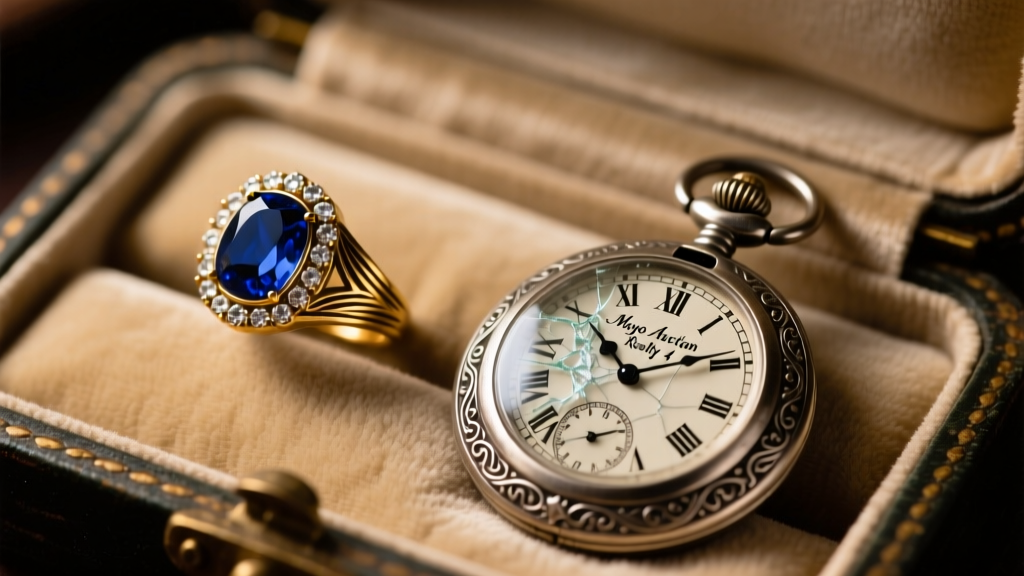
Mayo Auction Realty 4: A Curated Survey of Vintage Timepieces, Estate Jewelry, and Market Trends from the April 2024 Sale
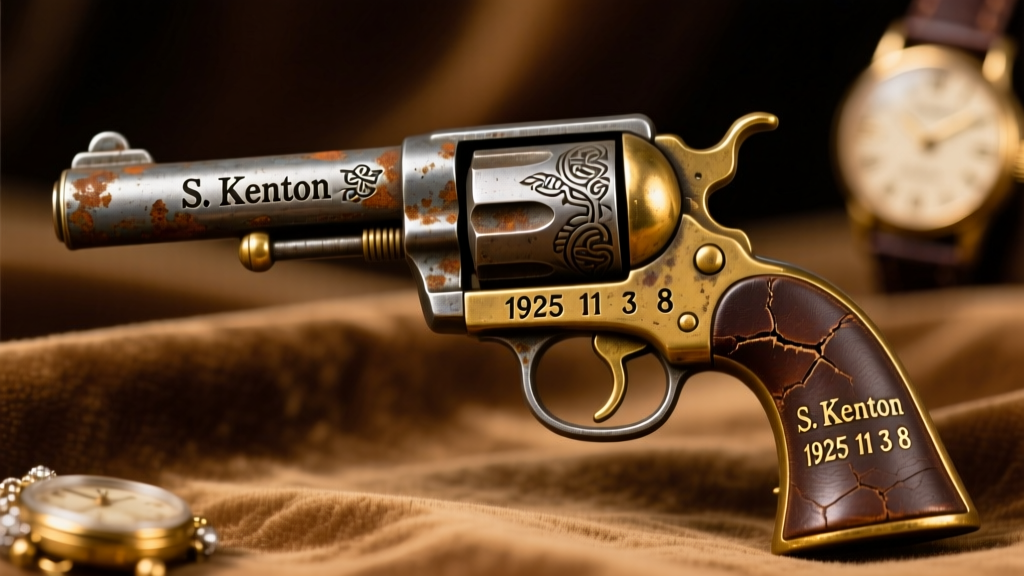
Buffalo Bill Cast Iron Toy Cap Gun by S. Kenton, Circa 1925: A Collector’s Deep Dive into Provenance, Mechanics, and Market Significance
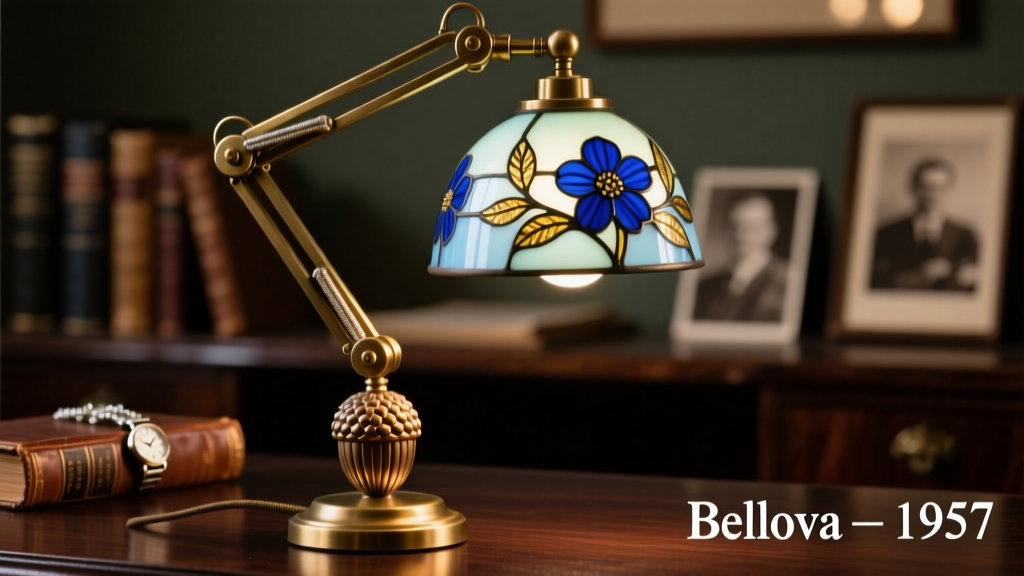
Bellova Double-Knuckle Desk Lamp with Acorn Base and Reverse-Painted Shade: A Study in American Art Deco Craftsmanship

Spectacular Market Returning November 3–5: A Curated Preview of Rare Watches & Vintage Jewelry at Sotheby’s New York

Clausen Maull: The Forgotten German Watchmaker Behind Precision Chronometers and Military Timepieces
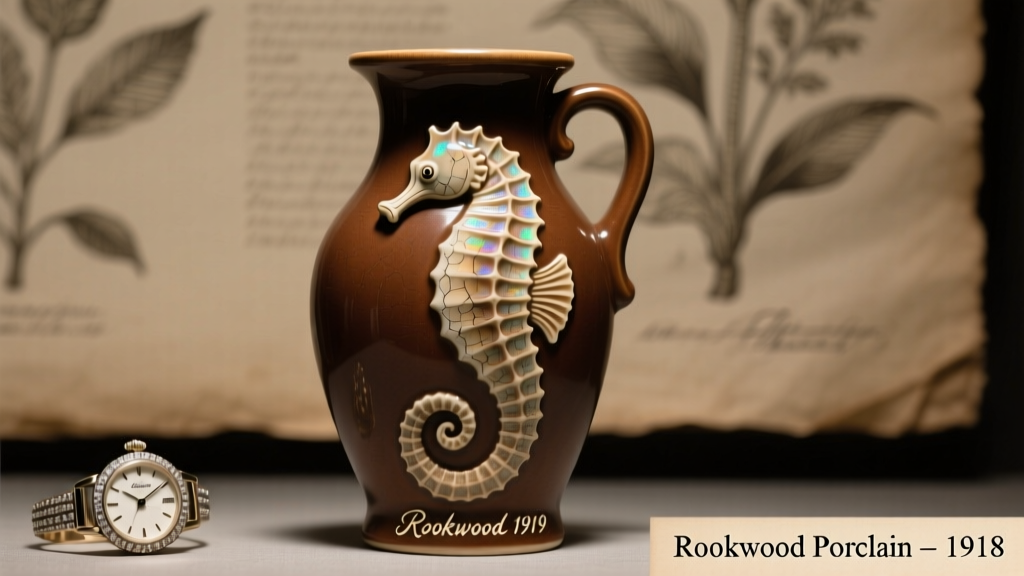
Rookwood Pottery Seahorse Vase: A 1919 Brown Matte Masterpiece at 5½ Inches
Sleigh Bed Anatomy: Decoding the 42-Inch Rolled Head & Footboard in Painted Pine with Wood-Grain Finish

The Forgotten Gate: Why Vintage Watch Authentication Pages Matter More Than You Think