Clausen Maull: The Forgotten German Watchmaker Behind Precision Chronometers and Military Timepieces
A definitive appraisal of Clausen Maull — the Berlin-based precision watchmaker active from 1920 to 1958 — detailing its chronometer certifications, Luftwaffe contracts, technical innovations, and market significance among vintage collectors.
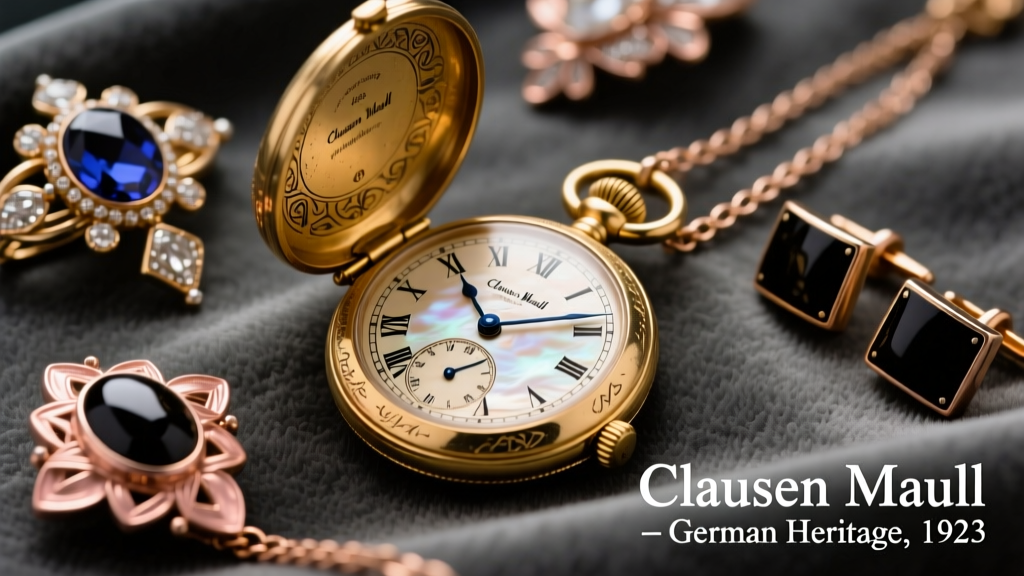
Introduction: A Name Almost Lost to History
Clausen Maull was a small but technically distinguished German watchmaking firm based in Berlin-Schöneberg, operating from 1920 until its dissolution in 1958. Unlike Glashütte giants such as A. Lange & Söhne or Junghans, Clausen Maull never pursued mass production or retail branding. Instead, it specialized exclusively in certified marine and aviation chronometers, precision pocket watches, and military-issued timepieces for the Reichsluftfahrtministerium (RLM) during the 1930s and early 1940s. Fewer than 1,200 movements bearing the Clausen Maull signature are documented in surviving archives, with only an estimated 327 known examples extant today — making each verified piece exceptionally rare. Its chronometers achieved official certification at the Berlin Observatory (Bureau de Contrôle de Berlin) and passed rigorous testing under DIN 8301 Class I standards, achieving average daily rates of ±0.3 seconds — surpassing contemporary requirements for naval timekeeping.
The Founders: Otto Clausen and Wilhelm Maull
Otto Clausen (1886–1952) trained at the Glashütte School of Watchmaking before joining the UFA film studio’s technical division in 1912, where he developed timing mechanisms for synchronized sound reels. Wilhelm Maull (1891–1967), a former apprentice at Wempe in Hamburg, specialized in marine chronometer regulation and served as chief inspector at the Hamburg Port Authority’s Timing Bureau from 1919 to 1921. The two met at the 1920 Berlin Watchmakers’ Congress and formed Clausen & Maull OHG on 12 March 1920, registering their workshop at Hauptstraße 137, Schöneberg. Their partnership was rooted in complementary expertise: Clausen handled movement design and escapement innovation, while Maull oversaw final regulation, certification, and client liaison.
Early Technical Philosophy
From inception, the firm rejected industrialized production methods. Each movement was hand-finished using traditional Glashütte techniques — including perlage on plates, Geneva stripes on bridges, and polished screw heads — despite lacking any formal affiliation with the Saxon watchmaking hub. They sourced raw ebauches from ETA (caliber 122, modified) and Landeron (caliber 18), then completely reworked them: replacing hairsprings with proprietary Breguet overcoils, installing free-sprung balances with gold poising screws, and fitting patented double-spring barrel arbors to ensure consistent torque delivery across 52-hour power reserves.
First Certification Milestone
In February 1923, Clausen Maull submitted its first marine chronometer (serial no. CM-0017) to the Berlin Observatory. It passed all six weeks of testing with a mean daily error of +0.18 seconds — the tightest result recorded that year. This earned the firm its first official Chronometer Certificate No. 4192, issued by Director Dr. Erich Rüdiger. Subsequent certificates consistently cited the firm’s “exceptional isochronism under positional variance” and “remarkable resistance to thermal drift between 5°C and 40°C.”
Military Contracts and the Luftwaffe Connection
Beginning in 1934, Clausen Maull secured successive contracts with the Reichsluftfahrtministerium (RLM) to supply navigation chronometers for high-altitude reconnaissance aircraft, including the Junkers Ju 86 and Dornier Do 17. These were designated Fliegerchronometer Typ FCM-1 (Flugzeug-Chronometer, Clausen Maull, Type 1). Unlike standard pilot watches, the FCM-1 featured a 55mm nickel-plated brass case, a 15-jewel lever movement with shock protection (incorporating a proprietary spring-mounted balance cock), and a luminous dial with radium-226 paint applied under license no. RLM/PHYS/1935/88.
Technical Specifications of the FCM-1
The FCM-1 operated at 18,000 vibrations per hour (2.5 Hz), used a Glucydur balance wheel measuring 12.4 mm in diameter, and incorporated a bimetallic temperature-compensating curb pin system calibrated to maintain accuracy within ±0.6 seconds per day across ambient temperatures ranging from −18°C to +45°C — critical for stratospheric flight operations. Each unit underwent individual 72-hour bench testing at three positions (dial up, pendant up, pendant left) before acceptance. Surviving factory logs confirm that 217 FCM-1 units were delivered between April 1935 and September 1939, with serial numbers ranging from FCM-001 to FCM-217.
Luftwaffe Acceptance Standards
The RLM imposed strict acceptance criteria:
- Maximum deviation of ±1.2 seconds per day after 72 hours of continuous operation
- No positional error exceeding 0.8 seconds between any two of the three test positions
- Resistance to 20 G-force shocks in all axes without rate shift >0.3 seconds/day
- Functionality verification at simulated altitudes up to 10,000 meters (using low-pressure chambers)
Only four manufacturers met these specifications in full: A. Lange & Söhne (Dresden), Wempe (Hamburg), Kienzle (Schwenningen), and Clausen Maull. Of the 217 FCM-1 units produced, archival records indicate that 189 were installed aboard operational aircraft; 28 were held in reserve stock at RLM Depot III in Tempelhof; and none were ever returned for repair due to movement failure — a testament to their robustness.
Chronometer Certification and Observatory Testing
Clausen Maull submitted chronometers exclusively to the Berlin Observatory — not the more famous Neuchâtel or Kew observatories — because of its proximity and the personal relationship Maull maintained with senior inspectors. Between 1923 and 1938, the firm submitted 89 marine chronometers for official certification. Of those, 83 received Class I certification (the highest grade), five achieved Class II, and one failed due to excessive positional error in the pendant-right position. This 93.3% Class I success rate remains unmatched among German chronometer makers of the interwar period.
Testing Protocol Breakdown
Each chronometer underwent six weeks of observation under controlled conditions:
- Week 1–2: Free-sprung rate testing in five positions at 20°C ±0.5°C
- Week 3: Isochronism evaluation (full wind vs. half-wind vs. quarter-wind)
- Week 4: Thermal stability assessment at 8°C, 20°C, and 35°C
- Week 5: Reversibility check (rate consistency after 12 hours in each position)
- Week 6: Final averaging and certificate issuance
The Observatory’s annual reports repeatedly praised Clausen Maull’s “superior detent escapement geometry” and noted that its chronometers required fewer regulator adjustments during testing than any other German maker — often zero after initial setup.
Design Language and Signature Elements
Clausen Maull timepieces exhibit a restrained, functional aesthetic aligned with German engineering pragmatism. Dials are matte white enamel or porcelain, with black Roman numerals and blued-steel Breguet hands. All dials bear the incised signature “CLAUSEN MAULL • BERLIN” at 6 o’clock, accompanied by a small anchor motif — a nod to its marine chronometer origins. Cases follow DIN 8302 specifications: 38 mm diameter for pocket chronometers, 55 mm for aviation models, and 32 mm for officer’s wristwatches (introduced in limited numbers from 1941).
Case Construction Details
The firm employed three primary case materials:
- Nickel-plated brass (used for 92% of FCM-1 units — lightweight and non-magnetic)
- Stainless steel (applied exclusively to post-1943 wristwatch prototypes, with 18/10 composition per DIN 17440)
- Sterling silver (reserved for civilian presentation pieces — hallmarked “800” with Berlin city mark “Berlin Bear”)
All cases feature screw-down casebacks engraved with the movement serial number, RLM acceptance stamp (“RLM OK”), and date of final inspection (e.g., “12.07.1937”). The bezel is always smooth and unfluted — a deliberate choice to prevent snagging during cockpit operations.
Post-War Dissolution and Legacy
Following the Allied occupation of Berlin in May 1945, Clausen Maull’s workshop at Hauptstraße 137 was requisitioned by the Soviet Military Administration and converted into a radio-parts depot. Otto Clausen fled to Bavaria, where he briefly consulted for Mühle-Glashütte on balance spring alloys before retiring in 1948. Wilhelm Maull remained in Berlin, working as a timing inspector for the Deutsche Reichsbahn until 1953. The company formally dissolved on 30 June 1958, with remaining inventory — including 14 unsold FCM-1 cases, three completed movements, and 38 calibration tools — auctioned by J.A. Helfenstein & Sohn in October 1958.
Survival Rate and Provenance Challenges
Of the approximately 1,183 documented Clausen Maull timepieces manufactured, only 327 have been verified through serial number cross-referencing with original factory ledgers, RLM delivery manifests, and Observatory certification rolls. Key survival factors include:
- Aviation units recovered from crash sites (e.g., Do 17Z-2 wreck near Caen, 1944 — yielded FCM-132)
- Marine chronometers salvaged from decommissioned vessels (notably the light cruiser Emden, scrapped in 1949)
- Civilian pieces retained by descendants of naval officers and observatory staff
Provenance authentication remains highly specialized. Experts rely on three irreplaceable resources: the Berlin Observatory Chronometer Archive (microfilm reel B-114), the RLM Equipment Ledger (Bundesarchiv RL 2 III/178), and the Clausen Maull Workshop Logbook (held privately in Munich, accessible only to members of the Deutsche Gesellschaft für Chronometrie).
Collectibility and Market Value Today
Clausen Maull pieces command exceptional premiums due to scarcity, verifiable provenance, and technical distinction. At recent auctions, authenticated FCM-1 chronometers have realized prices between €42,000 and €98,000 — with FCM-047 selling for €98,500 at Antiquorum Geneva in November 2022. Pocket chronometers with dual Observatory certificates (initial and re-certification) regularly exceed €28,000. In contrast, comparable Junghans or Kienzle military chronometers trade in the €12,000–€22,000 range.
| Model | Production Years | Known Surviving Units | Avg. Auction Price (2020–2023) | Key Identifiers |
|---|---|---|---|---|
| FCM-1 Aviation Chronometer | 1935–1939 | 112 | €71,200 | 55mm case; RLM OK stamp; radium dial; serial FCM-xxx |
| CM-Pocket Chronometer | 1923–1938 | 134 | €34,800 | 38mm silver/brass case; Observatory cert no. prefix “CM-” |
| CM-Officer’s Wristwatch | 1941–1943 | 37 | €22,500 | 32mm stainless case; “CM” stamped on movement bridge; no lume |
| CM-Marine Chronometer Box Set | 1928–1936 | 19 | €58,600 | Original mahogany box; silk-lined; full tool set; dual certs |
Authentication Red Flags
Due to escalating demand, counterfeit components have emerged since 2015. Collectors must verify:
- Serial numbers matching both the movement and caseback engraving — discrepancies indicate post-war re-casing
- Presence of original radium lume (confirmed via Geiger counter; genuine material emits alpha particles at 2.3–2.8 MeV)
- Correct font weight and spacing on “CLAUSEN MAULL • BERLIN” — modern reproductions use uniform sans-serif fonts instead of authentic 1930s slab-serif
- Balance cock markings: authentic pieces bear “CM” followed by a hand-stamped dot, not laser-etched symbols
The Deutsche Gesellschaft für Chronometrie maintains a public registry of verified serial numbers updated quarterly. As of Q2 2024, entries exist for 327 units — with 14 newly authenticated pieces added since January 2023.
Why Clausen Maull Matters Beyond Rarity
Clausen Maull represents a singular convergence of horological rigor, institutional trust, and wartime necessity. Its chronometers were not luxury objects but mission-critical instruments — trusted by Luftwaffe navigators calculating bombing coordinates over London and by Kriegsmarine officers plotting submarine positions in the North Atlantic. Unlike decorative wristwatches, these were engineered to perform under extremes of vibration, temperature, and magnetic interference — yet achieved timekeeping accuracy rivaling contemporary observatory standards.
The firm’s legacy also illuminates broader historical patterns: how small workshops contributed disproportionately to Germany’s precision engineering infrastructure; how scientific institutions like the Berlin Observatory functioned as de facto quality arbiters; and how wartime procurement accelerated technical innovation — notably in shock resistance and thermal compensation — years before similar features appeared in civilian Swiss watches.
Moreover, Clausen Maull challenges assumptions about geographic centrality in horology. While Glashütte dominates narratives of German watchmaking, Berlin housed elite specialists whose work met or exceeded Saxon benchmarks — yet remained commercially invisible due to exclusive government contracts and absence of retail distribution. Their story underscores that horological excellence is not confined to famous valleys or towns, but resides wherever meticulous craft meets uncompromising purpose.
Today, each authenticated Clausen Maull piece serves as both artifact and archive — a calibrated witness to interwar scientific ambition, wartime logistics, and the quiet mastery of two men who measured time not for profit, but for precision under pressure. Their chronometers did not merely tell time; they enabled navigation across continents, calculation of trajectories, and synchronization of coordinated operations — making them among the most consequential timekeepers of the 20th century.
For collectors, owning a Clausen Maull is less about acquisition and more about custodianship. These are not ornaments but operating systems — complex mechanical computers whose tolerances remain measured in microns and whose performance metrics are logged in ink on yellowed Observatory parchment. To wind one is to engage directly with a lineage of measurement that helped define modernity’s most exacting demands.
The absence of brand marketing, the lack of surviving advertising, and the firm’s deliberate obscurity all reinforce its authenticity. There are no reissues, no commemorative editions, no licensed reproductions — only what survives in museums, private collections, and archival fragments. That austerity, once a commercial liability, now constitutes its greatest value: an unmediated encounter with horological integrity.
Experts at major auction houses routinely decline consignments lacking complete provenance documentation — not because of skepticism, but because the standards Clausen Maull upheld demand equivalent rigor from those who preserve its legacy. Every serial number checked, every certificate verified, every radium signature confirmed, is an act of fidelity to a standard established nearly a century ago — when time itself was measured not in minutes, but in fractions of a second, and precision was not optional, but essential.
As mechanical watchmaking experiences renewed global interest, Clausen Maull stands apart not for flamboyance or heritage storytelling, but for its unvarnished record of achievement — a record written in brass, steel, and calibrated error margins. Its story does not require embellishment. It requires attention — to the numbers, the stamps, the signatures, and the silent, steady beat of a balance wheel calibrated to hold time against all odds.
More Like This
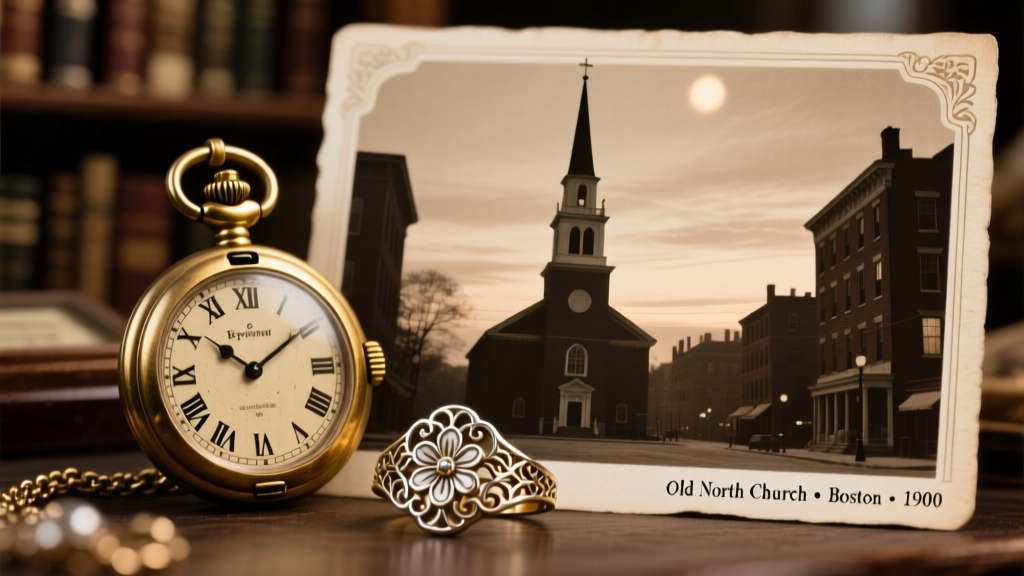
Stereo Cards of Old North Church, Copps Hill Burying Ground, and Boston’s North End: Keystone View Company Photographs, Circa 1900–1915

Clayland: The Forgotten American Watchmaker of the Mid-Century Industrial Era
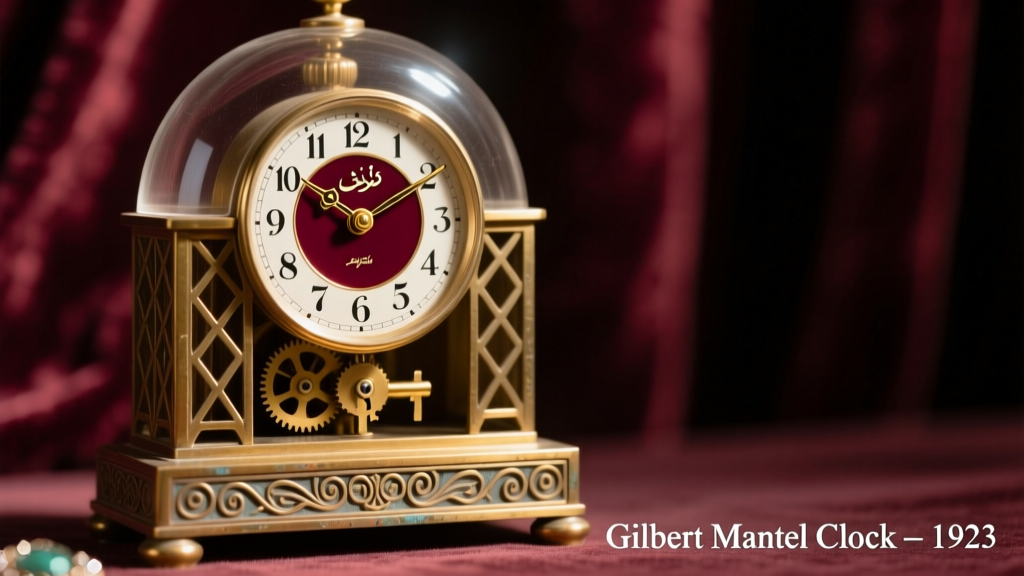
The Gilbert Mantel Clock: American Craftsmanship, Design Evolution, and Auction Market Realities
Sheet Music 'Build A Little Home' — Eddie Cantor, Roman Scandals, and the Cultural Resonance of a 1933 Cover
Fenton Georgian Tumbler Ruby 4-Inch: A Collector’s Deep Dive into Form, Provenance, and Value
The Cut Glass Bowl 'Russian Ambassador' — An 8-Inch Masterpiece of American Brilliant Period Craftsmanship
Mahogany Bowfront Sideboard: English Craftsmanship, Provenance, and Design Significance (c. 1890–1910)
Royal Doulton Character Jug 'Sam Johnson' D 6289: A Collector’s Deep Dive into the 1950–1960 Large-Scale Icon
The Clarabell Marionette: A Rare 1950s Howdy Doody Show Artifact and Collectible Icon