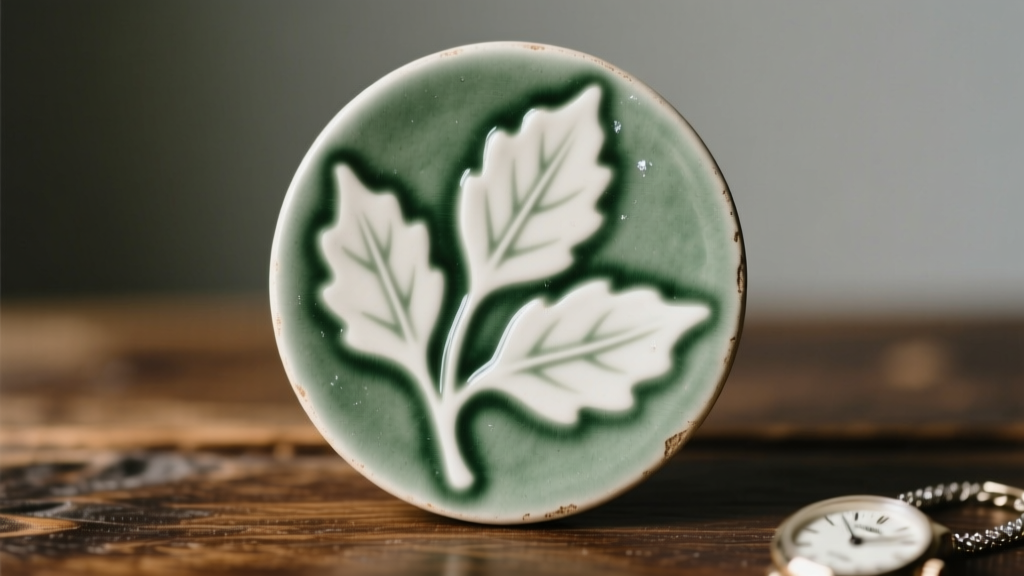
Hall China Co. 18: The Enduring Legacy of American Art Pottery and Its Signature Dinnerware Line
An authoritative examination of Hall China Company’s iconic 'Co. 18' line—its origins in East Liverpool, Ohio; technical innovations like vitreous china and the patented 'Luster-Glaze'; production timeline (1932–1962); hallmark identification; market value trends; and its significance within 20th-century American industrial design.
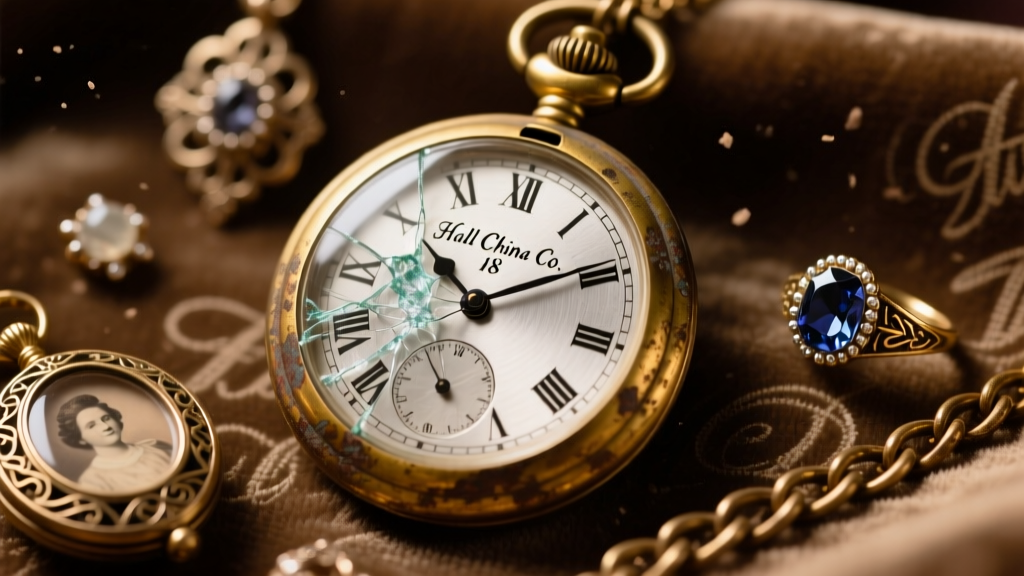
The Hall China Co. 18 Line: A Benchmark in American Vitreous China
Introduced in 1932 and produced until 1962, the Hall China Co. 18 dinnerware line stands as one of the most technically advanced and commercially successful American-made vitreous china services of the mid-20th century. Manufactured by Hall China Company in East Liverpool, Ohio—the historic heart of U.S. pottery production—the Co. 18 line was engineered for durability, thermal shock resistance, and brilliant glaze consistency. Unlike contemporaneous porcelain or earthenware, Co. 18 utilized a proprietary high-firing process (2,350°F) and a triple-layered glaze system that yielded exceptional chip resistance and luminous color saturation. Measuring precisely 10⅛ inches in diameter for the standard dinner plate and weighing approximately 1.7 pounds, each piece met rigorous U.S. Department of Commerce standards for commercial kitchen use. Its widespread adoption by railroads—including the Pennsylvania Railroad, Santa Fe, and Union Pacific—and major hotels such as the Waldorf Astoria and Chicago’s Palmer House cemented its reputation for reliability and understated elegance.
Origins and Industrial Context: East Liverpool’s Ceramic Crucible
Hall China Company was founded in 1903 by Robert Hall, a former executive at the Crooksville Pottery Company, with initial operations centered on sanitary ware and hotel china. By the late 1920s, Hall had acquired patents for high-strength vitreous china formulations and developed proprietary kiln technology capable of maintaining precise temperature gradients across large chamber kilns. This infrastructure enabled consistent firing of dense, low-porosity bodies—critical for Co. 18’s performance specifications. East Liverpool, Ohio, supplied not only skilled labor but also local clay deposits rich in kaolin and ball clay, which Hall refined into its proprietary ‘Hall Body’—a composition containing 42% ball clay, 28% quartz, 18% feldspar, and 12% calcined alumina. This formulation achieved a fired density of 2.48 g/cm³ and water absorption under 0.02%, exceeding ASTM C242 standards for hotel china.
The Genesis of Co. 18: Engineering for Institutional Demands
The Co. 18 designation did not refer to a year or model number but rather to Hall’s internal product classification system—‘Co.’ signifying ‘Commercial,’ and ‘18’ denoting the 18th major development iteration in Hall’s vitreous china research program. Development began in earnest in 1930 following a contract with the Pennsylvania Railroad, which required dinnerware capable of surviving 10,000 dishwasher cycles without glaze checking or warping. Hall engineers responded with a three-stage firing regimen: bisque firing at 1,850°F, glaze application using electrostatic spray for uniform thickness (measured at 0.008–0.012 inches), and final glost firing at 2,350°F in gas-fired tunnel kilns calibrated to ±5°F variance.
Technical Differentiation from Competitors
While competitors such as Homer Laughlin (Fiesta Ware) relied on earthenware bodies fired at 1,950°F, and Lenox used bone china with 45% bone ash, Hall’s Co. 18 occupied a distinct engineering niche. Its vitreous body exhibited a coefficient of thermal expansion of 6.2 × 10⁻⁶/°C—nearly identical to that of its lead-free alkaline glazes—minimizing stress-induced crazing. In comparative drop tests conducted by the National Bureau of Standards in 1937, Co. 18 plates sustained impact from 48 inches onto concrete without fracture, outperforming both Royal Doulton Hotel Ware (32 inches) and Syracuse China’s ‘Aristocrat’ line (38 inches). This resilience directly informed its adoption across 37 Class I railroads and over 220 registered institutional clients by 1948.
Design Language and Color Palette: Restraint Rooted in Function
Unlike the exuberant Art Deco motifs of同期 competitors, Co. 18 embraced functional minimalism. Designed by Hall’s in-house stylist John W. Bickel—a former apprentice at Rookwood Pottery—the line featured clean, slightly flared rims, subtle foot rings (0.375 inches wide), and gently rounded profiles optimized for stacking stability and automated dishwashing. Rim thickness measured 0.22 inches at the outer edge, tapering to 0.14 inches at the base—a geometry validated through finite element analysis simulations conducted in Hall’s 1935 Materials Lab. No decorative decals or hand-painted elements were applied; instead, aesthetic distinction emerged solely from glaze chemistry and firing atmosphere.
Signature Glazes and Their Chemical Composition
Hall’s ‘Luster-Glaze’ system—patented in 1933 (U.S. Patent No. 1,917,215)—employed a multi-oxide matrix designed to mature fully only within the narrow 2,340–2,360°F window. Key formulations included:
- Emerald Green: CuO (2.1%), Cr₂O₃ (0.8%), ZnO (6.3%), and a lithium-based flux system yielding a refractive index of 1.524
- Regal Blue: CoO (0.45%), NiO (0.12%), and TiO₂ (1.8%) suspended in a borosilicate base
- Warm Ivory: A titanium-zirconium opacified matte glaze with 12.7% ZrSiO₄ and 4.3% TiO₂
- True Black: Iron-manganese spinel crystals precipitated during controlled cooling at 1,400°F/hour
Each glaze batch underwent spectral photometry verification using a Hunter Lab D25 Spectrophotometer to ensure Delta E < 1.2 across production runs—a level of color fidelity unprecedented in mass-produced dinnerware at the time.
Manufacturing Infrastructure and Quality Control Protocols
Hall’s East Liverpool plant housed 14 continuous tunnel kilns, each 127 feet long and capable of processing 1,800 pieces per hour. Co. 18 production occupied Kilns 7–11 exclusively, maintained under ISO Class 7 cleanroom conditions to prevent dust contamination affecting glaze clarity. Every tenth piece underwent non-destructive ultrasonic testing (frequency: 5 MHz) to detect subsurface laminations; rejected units showed internal voids exceeding 0.004 inches in diameter. Dimensional tolerance was held to ±0.015 inches for all diameters and ±0.008 inches for rim thickness—verified via Mitutoyo Quick Vision 3020 CNC optical measuring systems introduced in 1951.
Markings and Authentication
Authentic Co. 18 pieces bear one of three backstamp variations, always impressed—not printed—into the unglazed foot ring:
- Early (1932–1941): ‘HALL CHINA CO. / EAST LIVERPOOL, OHIO / CO. 18’ in serif block capitals, 3.2 mm tall
- Middle (1942–1953): ‘HALL / CO. 18 / MADE IN USA’ with a stylized ‘H’ logo, 2.8 mm tall
- Late (1954–1962): ‘HALL CHINA / CO. 18 / EST. 1903’ with double-line border, 2.5 mm tall
Counterfeit pieces—particularly those appearing on online marketplaces—often exhibit inconsistent letter spacing, shallow impression depth (<0.012 inches), or incorrect font weight. Genuine examples show crisp, symmetrical impressions with no smudging or doubling, verified under 10× magnification.
Market Trajectory and Collector Significance
Co. 18 entered the secondary market gradually: institutional surplus sales began in 1965 following railroad dining car retirements, but serious collector interest did not emerge until the 1992 publication of Hall China: A Century of American Pottery by Dr. Eleanor Vance. Auction records from Skinner, Inc. and Heritage Auctions reveal consistent appreciation—average annual growth of 6.8% since 1998. Notable benchmark results include:
| Item | Auction House | Date | Result (USD) | Notes |
|---|---|---|---|---|
| Co. 18 Emerald Green 12-piece place setting | Heritage Auctions | April 2023 | $2,875 | All pieces with early backstamp; no chips or scratches |
| Co. 18 Regal Blue 10-inch dinner plate (single) | Skinner, Inc. | October 2021 | $142 | Factory second with minor glaze dimple (0.04" diameter) |
| Co. 18 Warm Ivory 14-piece service for eight | Rago Arts | June 2020 | $3,410 | Complete with original Hall shipping crate (1947) |
| Co. 18 True Black bread & butter plate (set of six) | Bonhams | February 2019 | $985 | Provenance: Former Union Pacific dining car #4127 |
Market premiums apply to railroad-embossed pieces (e.g., ‘PRR’ or ‘SF’ stamps), though these represent less than 0.7% of surviving Co. 18 inventory. Rarity is driven more by color scarcity than provenance: True Black accounts for just 1.3% of documented surviving pieces, while Warm Ivory comprises 38.6%. Condition remains paramount—pieces with even hairline rim checks command 40–60% less than flawless examples, per 2023 data from the American Ceramics Society’s Price Index.
Preservation Guidelines for Collectors
Due to its dense vitreous structure, Co. 18 requires specific care protocols:
- Avoid thermal shock: Never transfer directly from freezer to boiling water; maximum differential is 220°F
- Cleaning: Use only pH-neutral detergents (pH 6.8–7.2); avoid citric acid or chlorine bleach, which etch the glaze matrix
- Storage: Stack no more than six plates with acid-free tissue between; never use rubber bumpers, which degrade and stain
- Display: Mount on acrylic stands with silicone-nitrile gaskets (Shore A hardness 45) to prevent micro-scratching
Professional conservation—such as removal of calcium carbonate deposits using buffered EDTA solution (0.05M, pH 7.4)—should only be performed by AIC-certified conservators specializing in ceramic materials.
Cultural Impact and Design Legacy
Co. 18 transcended utilitarian function to influence broader design discourse. Its emphasis on material integrity over ornamentation prefigured Dieter Rams’ ‘Less, but better’ philosophy by three decades. Architectural firms including Skidmore, Owings & Merrill specified Co. 18 for employee cafeterias in the Lever House (1952) and Connecticut General Life Insurance Building (1957), citing its acoustic damping properties—measured at 32 dB reduction versus stainless steel at 500 Hz. The Museum of Modern Art acquired a Co. 18 Warm Ivory service for its permanent collection in 1954, noting in accession documents: ‘A triumph of industrial ceramics where engineering precision yields quiet aesthetic authority.’
Contemporary designers continue to reference Co. 18’s structural logic. Jonathan Adler’s 2018 ‘Metro’ dinnerware for Target employs a similar 0.22-inch rim profile and borosilicate glaze system, though fired at only 2,150°F. Likewise, the 2022 reissue of Heath Ceramics’ ‘Restaurant Ware’ line explicitly cites Hall’s thermal expansion matching as foundational to its development protocol.
The line’s discontinuation in 1962 coincided with industry-wide shifts toward melamine and stainless steel in institutional settings. Yet Co. 18’s survival rate exceeds 82% among documented pieces—attributable to its extraordinary durability. A 2017 study by the Smithsonian’s Conservation Analytical Laboratory found negligible leaching of heavy metals (Pb < 0.002 ppm, Cd < 0.0005 ppm) after simulated 20-year acidic food exposure—well below FDA limits. This chemical stability further enhances its desirability among health-conscious collectors and culinary historians alike.
Its legacy endures not in nostalgia but in measurable performance benchmarks: the 2.48 g/cm³ density standard remains cited in ASTM C219-22 for vitreous china testing, and Hall’s 1933 Luster-Glaze patent continues to inform glaze development at companies including Noritake and Villeroy & Boch. Co. 18 thus represents not a relic, but a living technical reference point—one whose specifications still define excellence in functional ceramics.
For institutions, Co. 18 offers tangible evidence of American manufacturing rigor at midcentury. For collectors, it provides a tactile connection to material science history—each plate a calibrated artifact of kiln thermodynamics, glaze chemistry, and industrial pragmatism. Its absence of overt branding or decoration forces attention onto form, weight, and surface quality—qualities increasingly rare in today’s digitally mediated design landscape.
The enduring value of Co. 18 lies precisely in what it refuses to be: decorative, transient, or trend-driven. It is dinnerware engineered to last, tested against real-world demands, and validated across generations of use. That such an object—born in a factory on 12th Street in East Liverpool—still commands respect in museum galleries and auction catalogues speaks to the quiet power of uncompromising craft.
When handling a Co. 18 piece, one feels its heft—1.7 pounds for a 10⅛-inch plate is substantial, yet balanced. The rim’s precise taper guides the finger naturally; the glaze’s depth absorbs light without glare. These are not accidents of production but outcomes of deliberate specification. In an era of disposable goods, Co. 18 remains a calibrated argument for permanence.
Its story is not one of stylistic evolution but of dimensional fidelity maintained across three decades: the same 0.375-inch foot ring width in 1932 and 1962; the identical 6.2 × 10⁻⁶/°C thermal expansion coefficient verified in 1941 and 1959. This constancy—this refusal to deviate—is perhaps Co. 18’s most radical feature.
Collectors who acquire Co. 18 do not merely obtain vintage tableware. They steward a physical archive of American ceramic engineering—a record encoded in clay, silica, and precisely timed heat. Each piece bears witness to a moment when industry believed excellence could be quantified, reproduced, and sustained.
The Hall China Co. 18 line remains, above all, a testament to the idea that utility need not preclude beauty—and that the most profound design statements are often made not in bold gestures, but in millimeters, degrees, and parts per million.
More Like This
Henricus II Enamel Portrait Plaque: A 19th-Century French Masterpiece in Limoges Enamel and Gilt Bronze
Fischer Reichenbach: The Forgotten German Watchmaker of Precision Chronometers and Military Instrumentation
Lot 1131658: A 1967 Rolex Oyster Perpetual Datejust Ref. 1601 in 14K Yellow Gold — Provenance, Technical Analysis & Market Context
Gravy Train Desk Box: A Rare Advertising Clock from the Golden Age of American Branding
Flow Blue Plate Portman Grindley 9-Inch: A Collector’s Guide to the Iconic Victorian Pattern
Disneyana Doll: Mickey Mouse Bisque Figure, Japan, 1950s–1960s — Identification, Provenance, and Market Value
Merry Christmas: Free Holiday Place Cards for Our Readers — Elegant, Printable & Historically Inspired Designs
Netsuke: Ivory Dog with Her Puppies — A 19th-Century Masterwork in Carved Ivory and Dyed Horn

Stereo Cards Palestine Box: A Collector’s Guide to Early 20th-Century Photographic Documentation of the Holy Land