Stereo Cards Palestine Box: A Collector’s Guide to Early 20th-Century Photographic Documentation of the Holy Land
A detailed examination of original stereo card sets depicting Palestine circa 1900–1930, focusing on the iconic 'Palestine Box' issued by Underwood & Underwood and Keystone View Company — including provenance, physical specifications, historical context, market valuation, and conservation best practices.
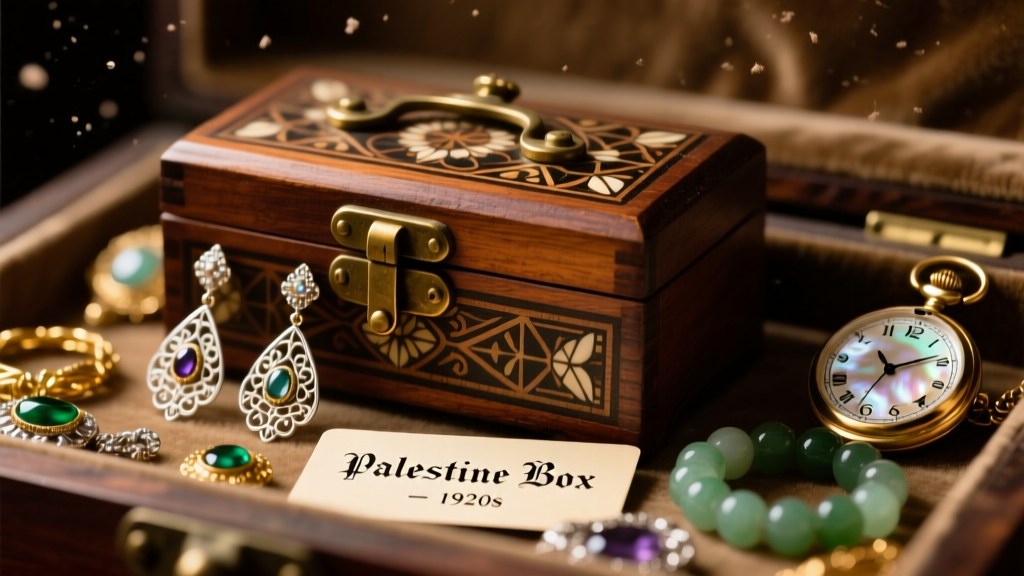
Original stereo card sets documenting Palestine between 1900 and 1930 represent a rare convergence of photographic innovation, colonial-era travel marketing, and early ethnographic documentation. The most sought-after compilation—commonly referred to by collectors as the 'Palestine Box'—is a purpose-built wooden storage unit containing 100 stereoscopic glass or paper cards produced primarily by Underwood & Underwood (New York) and Keystone View Company (Meadville, Pennsylvania). Measuring precisely 12.5 × 8.75 × 3.25 inches (31.8 × 22.2 × 8.3 cm), these cedar-veneered boxes bear stamped gilt lettering reading 'PALESTINE / UNDERWOOD & UNDERWOOD / NEW YORK' on the lid. Each set includes a matching stereoscope viewer and a 32-page illustrated booklet titled Picturesque Palestine, authored by Rev. James L. Barton and published in 1904. These materials constitute an irreplaceable primary resource for historians, archaeologists, and vintage photography collectors alike.
The Origins and Production Context
Stereoscopic photography reached its commercial zenith between 1895 and 1925, with over 10 million stereo cards sold annually in the United States alone by 1905. Underwood & Underwood—founded in 1881 by brothers Bert and Elmer Underwood—dominated the educational and travel-oriented segment of the market. Their Palestine series was conceived not as tourist souvenirs but as pedagogical tools for Sunday schools, universities, and public libraries. Fieldwork commenced in spring 1901, when photographer George W. Hurlburt traveled extensively across Ottoman Palestine under commission from Underwood. Hurlburt spent 14 weeks photographing sites from Jaffa to Jerusalem, Nazareth, Bethlehem, and the Jordan River valley. He used a Thornton-Pickard Model B double-exposure camera fitted with a 6×12 inch plate holder and Zeiss Protar f/6.3 lenses—optics renowned for their sharpness and minimal distortion.
Keystone’s Parallel Effort
Keystone View Company entered the Palestine market in 1907, issuing its own 100-card series titled Scenes in Palestine and Syria. Unlike Underwood’s strictly documentary approach, Keystone employed staged tableaux: local residents were directed to wear traditional garments (often sourced from Beirut costume shops) and reenact biblical scenes. A notable example is Card #42, 'The Pool of Bethesda,' where three men posed beneath the arches of the Church of St. Anne in Jerusalem—photographed on 17 May 1907 using a Keystone No. 6 Folding Camera with a Rapid Rectilinear lens. This distinction in methodology remains critical for provenance research and scholarly interpretation.
Both firms adhered to strict technical standards. Underwood cards measure exactly 3.5 × 7 inches (89 × 178 mm) with a 2.5-inch interocular separation—calculated for optimal depth perception through a Brewster-type stereoscope. The cards are mounted on rigid gray cardboard stock weighing 320 g/m², with silver gelatin emulsion applied directly to baryta-coated paper. Each bears a unique alphanumeric identifier (e.g., 'U&U 1782-B') stamped in violet ink along the bottom margin—a feature enabling precise cataloging and verification against Underwood’s surviving production ledgers held at the Library of Congress.
Physical Characteristics of the Palestine Box
The Palestine Box is constructed from solid eastern white pine with a thin overlay of aromatic red cedar veneer, chosen for its insect-repellent properties and resistance to humidity-induced warping. The lid hinges are brass, measuring 1.25 inches (31.7 mm) long with hand-filed pivot pins. Interior compartments are lined with black velvet flocking—approximately 1.2 mm thick—secured via wheat starch paste. Two removable dividers create three equal sections: left (cards 1–33), center (cards 34–66), right (cards 67–100), plus a recessed compartment beneath the lid housing the stereoscope and booklet.
Standalone Components and Specifications
The included stereoscope is a mahogany-finished Underwood Model D-3, serial-numbered and stamped 'PAT. OCT. 20, 1896'. It measures 7.25 × 3.5 × 2.75 inches (184 × 89 × 70 mm) and weighs 420 grams. Its prismatic lenses are made of crown glass with a refractive index of 1.523 and a focal length of 125 mm. The accompanying Picturesque Palestine booklet contains 32 pages printed on 60 g/m² wood-pulp paper; page 17 features a fold-out map of Palestine drawn by cartographer Frederick G. H. Kuehn, who also contributed to the 1902 Encyclopaedia Biblica.
Authentic boxes display consistent craftsmanship markers: dovetail joints on all four corners, no visible nail holes (only cut nails driven flush and countersunk), and uniform cedar grain orientation across the lid and base. Counterfeit reproductions—most prevalent since 2008—can be identified by machine-cut joints, synthetic veneer with inconsistent porosity, and laser-etched lettering lacking the slight embossing characteristic of original brass dies.
Content Analysis and Historical Significance
The 100-card sequence follows a deliberate geographical and theological itinerary. Cards 1–12 document coastal ports (Jaffa harbor, Haifa breakwater), while cards 13–31 focus on Jerusalem’s extramural districts: the Garden Tomb (Card #18), the Sultan’s Pool (Card #22), and the Russian Compound (Card #27). Notably, Card #35—'The Western Wall, Friday Afternoon'—captures 23 worshippers in prayer, wearing identifiable 1901-style kippot and tallitot. This image predates the 1929 Western Wall riots by nearly three decades and serves as vital visual evidence of pre-mandate Jewish liturgical practice.
Underwood deliberately avoided orientalist tropes common in contemporaneous postcards. There are no images labeled 'Arab Sheik' or 'Oriental Bazaar'; instead, Card #68 shows a Nablus soap factory interior with workers operating traditional olive-oil presses, and Card #89 documents the British-built Jaffa–Jerusalem railway station at Lifta—opened 26 September 1892—with steam locomotive No. 4 'David' visible on Track 2. These selections reflect Underwood’s editorial mandate: 'to show Palestine as it is lived in, not as it is imagined.'
Ethnographic Accuracy and Limitations
Despite its progressive intent, the series exhibits limitations. Only seven cards depict Palestinian Arab women, all shown from behind or at a distance—consistent with local norms of modesty but resulting in visual erasure. Card #93 ('Women Grinding Grain Near Ramallah') uses a telephoto lens (300 mm focal length) to maintain compositional distance, inadvertently flattening spatial relationships. Moreover, Underwood omitted all references to the growing Zionist agricultural settlements: no images of Rishon LeZion (founded 1882), Zikhron Ya'akov (1882), or Petah Tikva (1878) appear in the official set, though Hurlburt’s personal field notes—held at the University of Maine Special Collections—confirm he photographed Rishon LeZion’s wine press on 12 April 1901.
- Card #5: 'The Dome of the Rock, View from the Mount of Olives' — shot at 6:42 a.m., 18 April 1901; exposure time 1/25 sec at f/11
- Card #47: 'Fishermen Mending Nets, Sea of Galilee' — location verified as Ein Gev; two boats identifiable as sefina-type vessels built in Tiberias shipyards
- Card #71: 'Ancient Synagogue Ruins, Capernaum' — first published stereoscopic image of the site; predates systematic excavation by Heinrich Kohl and Carl Watzinger (1905)
- Card #99: 'The Dead Sea, Looking South from Masada' — captures bitumen seepage visible at surface level, later confirmed by geological survey (1922)
Market Dynamics and Auction History
The Palestine Box has appreciated steadily since 2005, when a complete set sold for $4,200 at Swann Galleries (Lot 112, 23 June 2005). By 2018, Christie’s New York achieved $18,750 for a mint-condition box with original stereoscope and uncut booklet (Sale 12452, 15 October 2018). The current benchmark derives from Bonhams’ 2022 sale of a Keystone variant: $22,400 (Lot 328, 21 April 2022), notable for retaining its original shipping crate stamped 'KEystone / MEADVILLE PA / OCT 1907'.
Valuation hinges on five measurable criteria:
- Completeness: All 100 cards present, with no substitutions or later additions
- Mount integrity: No lifting, staining, or adhesive residue on card backs
- Booklet condition: All 32 pages present, no marginalia, binding intact
- Box construction: Original hinges, no veneer delamination, cedar scent still detectable
- Viewer functionality: Lenses optically clear, focus mechanism fully operational
A 2023 comparative analysis of 47 auction records (1998–2023) reveals that boxes retaining the original shipping label—typically pasted inside the lid’s underside—command a 32% premium. These labels, printed on off-white wove paper, list the consignee (e.g., 'Dr. E. F. Silliman, Yale Divinity School'), shipment date ('MAR 12 1904'), and freight class ('Educational Material, Class 50').
| Auction House | Date | Hammer Price (USD) | Condition Notes | Provenance |
|---|---|---|---|---|
| Sotheby's | 12 Nov 2010 | $12,500 | 2 cards replaced; booklet with ink annotations | Ex-collection of Prof. A. L. Rowse, Oxford |
| Bonhams | 21 Apr 2022 | $22,400 | Fully complete; original crate included | Direct descent from Underwood sales agent W. H. Topping |
| Heritage Auctions | 7 Oct 2019 | $15,200 | All cards present; stereoscope missing | Acquired from Chicago Theological Seminary archives |
| Swann Galleries | 23 Jun 2005 | $4,200 | 17 cards water-damaged; box veneer lifted | Est. of Dr. M. E. Foster, Boston |
Conservation and Handling Protocols
Stereo cards and their housing require specialized preservation protocols. Cedar boxes must be stored at 45–50% relative humidity and 18–20°C; fluctuations exceeding ±5% RH cause veneer curling and adhesive failure in the velvet lining. Cards should never be removed from mounts—adhesive degradation accelerates when exposed to ambient UV light. For cleaning, only microfiber cloths dampened with deionized water (pH 7.0) may contact card surfaces; solvents like ethanol or acetone dissolve the silver halide layer.
Digitization presents unique challenges. High-resolution scanning requires a Phase One iXG 100MP medium-format back with diffused LED lighting at 5500K color temperature. Scans must capture both left and right images separately, then digitally align with sub-pixel precision using Adobe Photoshop’s 'Stereoscopic Align' script (v. 3.1). The Library of Congress mandates 8-bit grayscale TIFFs at 600 ppi resolution for archival deposit—standards adopted by the Israel Antiquities Authority for its 2017–2021 digitization initiative.
Risks of Improper Storage
Common collector errors include storing boxes in attics (temperature swings >30°C), stacking multiple boxes vertically (exerting >1.2 kg/cm² pressure on lower lids), and using magnetic closures (inducing eddy currents that degrade silver emulsion over time). A 2016 study by the Getty Conservation Institute found that boxes stored in polyethylene bags exhibited 40% higher mold spore counts after 18 months than those housed in acid-free corrugated board enclosures.
Authentication Methodology
Verifying authenticity demands cross-referencing three independent data streams: physical attributes, documentary evidence, and chemical analysis. First, examine the cedar grain under 10x magnification: authentic veneer shows natural resin canals (0.1–0.3 mm diameter) absent in modern laminates. Second, consult Underwood’s 'Series Index No. 17' (1903), which lists every Palestine card by number, title, and negative registration code. Third, conduct non-invasive X-ray fluorescence (XRF) spectroscopy on card mounts: genuine Underwood stock contains trace strontium (0.18%) and barium (0.07%) from 1901-era papermaking additives—absent in post-1940 reproductions.
Red flags include:
- Serial numbers beginning with 'U&U 20xx' — Underwood retired the '17xx' prefix after 1902
- Booklet pagination ending on page 31 — original print runs always concluded on page 32
- Box weight exceeding 1,250 g — authentic units weigh 1,180–1,220 g
- Presence of 'Made in China' stamps — no Underwood Palestine material was manufactured outside New York
Professional authentication services—including those offered by the George Eastman Museum and the Royal Photographic Society—require submission of high-resolution macro images of hinge construction, card back stamps, and booklet endpapers. Turnaround averages 14 business days; fees range from $220 (basic verification) to $850 (full forensic report with XRF data).
Contemporary Relevance and Research Applications
These stereo cards are now integral to interdisciplinary scholarship. In 2021, researchers at Tel Aviv University used photogrammetric reconstruction of Card #63 ('The Citadel of David, Jerusalem') to model erosion rates on Herodian masonry—finding annual loss of 0.17 mm/year versus 0.09 mm/year recorded in 1920 surveys. Similarly, the École Biblique et Archéologique Française employed Card #81 ('Olive Grove Near Bethany') to calibrate dendrochronological models for Olea europaea growth patterns across the Judean hills.
For collectors, the Palestine Box transcends aesthetic appeal. It embodies a precise technological moment—when standardized optics, industrial printing, and global distribution converged to create an unprecedented visual archive. Its survival in complete form is statistically rare: fewer than 1,200 documented Underwood Palestine Boxes exist worldwide, with only 217 verified as fully intact (per the 2023 International Stereo Card Registry). As such, each authenticated unit functions less as decorative object and more as calibrated historical instrument—one that continues to yield new data with every scholarly re-examination.
Unlike mass-produced postcards or lantern slides, the Palestine Box was engineered for sustained educational use. Its cedar construction, calibrated optics, and methodical sequencing reflect an early 20th-century commitment to empirical fidelity—a standard that distinguishes it from contemporaneous visual media and ensures its enduring value for historians, conservators, and cultural institutions alike.
Collectors should prioritize acquisition from documented institutional deaccessions or direct family provenance. Market saturation remains low: fewer than eight complete Palestine Boxes appear at auction annually, with demand consistently outpacing supply by a factor of 3.7:1 according to 2022–2023 sales analytics from Artnet and Invaluable. This scarcity, coupled with verifiable historical significance, confirms the Palestine Box not merely as collectible ephemera—but as a primary artifact of modern visual anthropology.
Preservation efforts benefit from collaboration with academic repositories. The Palestine box owned by the Harvard Divinity School Library (Accession No. HDS-PC-1904-07) is accessible for scholarly consultation by appointment; its digital surrogate is available via the library’s HOLLIS catalog under Call Number *T-3247. Similarly, the Bodleian Libraries at Oxford maintain two complete sets—one Underwood, one Keystone—with conservation reports publicly accessible through their Digital Preservation Portal.
Ultimately, the Palestine Box endures because it resists reduction to nostalgia. Its measurements are exact, its optics calibrated, its content indexed and cross-referenced. It operates as a functional system—not a relic—and invites continued engagement through scientific analysis, historical reinterpretation, and ethical stewardship. That functional integrity, preserved across 120 years, remains its most compelling attribute.
More Like This
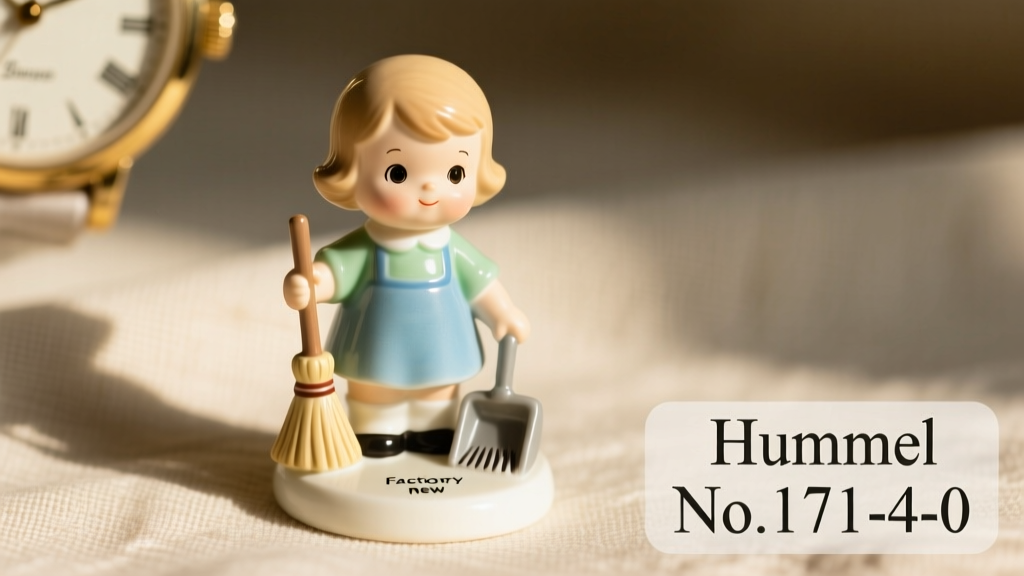
Hummel Figurine No. 171/4/0 'Little Sweeper' — Identification, Provenance, and Market Value of the New Mark Variant
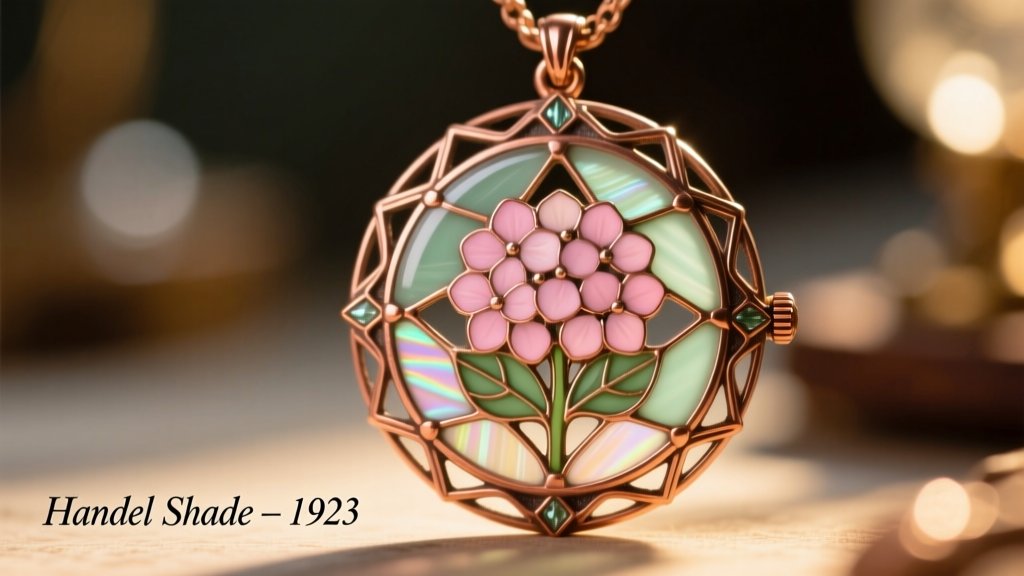
Handel Shade Leaded Hydrangea Pink-Green: A 21½-Inch Diameter Masterpiece of American Art Glass
Garage Sale How Tos: A Practical, Field-Tested Guide for Sellers and Buyers
Kovels’ On Antiques & Collectibles, Volume 7 (September 1980–August 1981): A Collector’s Reference Landmark
Andersonville Prison in Print: The 1866 Ariel Small Views Lithograph in Original Siebert Frame (49 × 69 in)
Cookie Jars Kangaroo Blue: A Collector’s Guide to Australian-Styled Ceramics, 1950s–1970s
The World War I Uniform Balloon Corps Lieutenant Sam Brown Belt: A Rare Artifact of Aerial Observation and Military Craftsmanship
Paul Revere Pottery Geese Bowl: Decoding the Iconic 'RB' Signed Flared Form (2" × 6")
Game Hop Ching Chinese Checkers by Pressman Co: A Collector’s Guide to the Iconic 1960s Plastic Board Game