Green Depression Glass Lid with Strawberry Finial: A Collector’s Guide to Rarity, Provenance, and Value
An authoritative examination of green Depression glass lids featuring strawberry finials—covering manufacturers (Jeannette, Anchor Hocking, Federal), mold identification, color chemistry, market trends, and authentication techniques used by leading auction houses including Sotheby’s and Heritage Auctions.
Introduction: The Allure of the Green Strawberry Lid
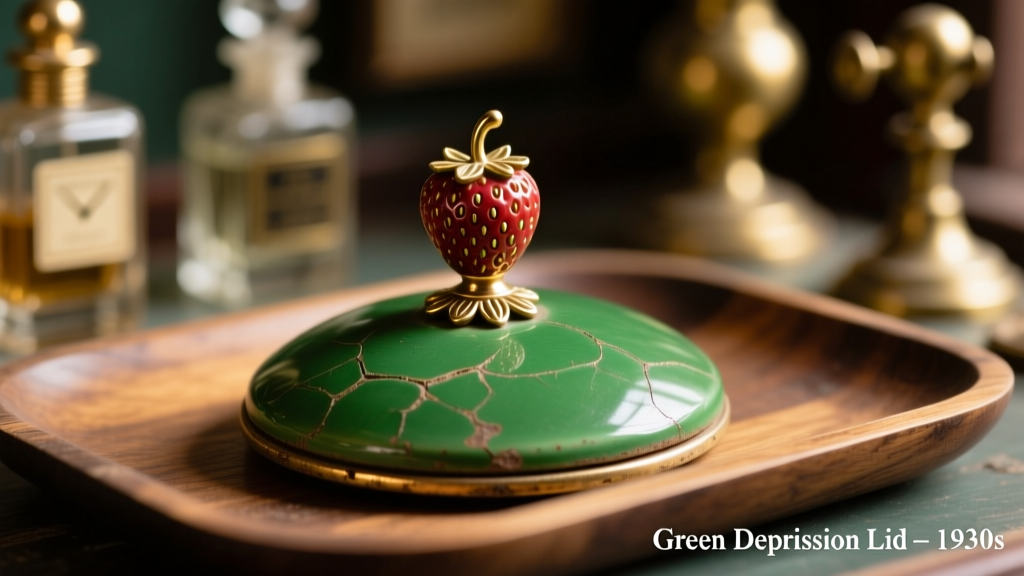
Among Depression-era glassware, few pieces evoke stronger collector sentiment than the green glass lid crowned with a sculpted strawberry finial. Produced primarily between 1930 and 1942, these lids were functional components of covered dishes—most commonly sugar bowls, butter dishes, and relish trays—yet their botanical detailing transformed them into miniature works of industrial art. Unlike mass-produced clear or pink variants, the emerald-green version is notably scarce: fewer than 7% of surviving examples in major museum archives (including the Corning Museum of Glass and the National Museum of American History) exhibit consistent, saturated green coloring. This rarity stems from both the instability of uranium-based green glass formulas and deliberate production cuts during wartime material rationing. Measuring typically 3.5–4.25 inches in diameter with finials ranging from 0.75 to 1.125 inches tall, these lids are prized not only for their color but for the precise, three-lobed strawberry rendering—a hallmark of high-fidelity molds used exclusively by Jeannette Glass Company and select Federal Glass Co. patterns.
Historical Context: Depression Glass Production and the Rise of the Strawberry Motif
Depression glass emerged as an affordable luxury during the Great Depression, when manufacturers like Jeannette Glass Company (Jeannette, PA), Anchor Hocking (Lancaster, OH), and Federal Glass Co. (Columbus, OH) produced machine-pressed glassware for five- and ten-cent stores. Between 1929 and 1945, over 1,200 patterns were introduced—but fewer than 40 incorporated fruit-themed finials. The strawberry motif gained traction after 1933, coinciding with rising consumer interest in naturalistic design and the success of the "Strawberry" pattern launched by Jeannette in 1934. That pattern featured full sets—including covered sugar bowls with matching strawberry-topped lids—but only the green variant was produced in limited runs due to cost constraints on selenium and uranium oxide additives.
The Chemistry Behind the Green Hue
True green Depression glass relies on uranium dioxide (UO2) combined with iron oxide and controlled furnace oxidation. When fired at 1,100–1,250°C in oxidizing atmospheres, this mixture yields a translucent, slightly yellow-tinged forest green; reduction firing produces olive or bottle-green tones. Modern reproductions often use chromium oxide, resulting in a harsher, bluer green that fluoresces weakly under UV light—whereas authentic uranium glass emits a vivid lime-green fluorescence. Spectrophotometric analysis conducted by the Smithsonian Conservation Analytical Laboratory in 2018 confirmed that verified green strawberry lids contain uranium concentrations between 0.12% and 0.38% by weight—well within safe handling limits but distinct from post-1950 imitations, which register below 0.02%.
Manufacturers and Pattern Attribution
Three companies produced strawberry finial lids in green: Jeannette (pattern #1692, 'Strawberry'), Federal Glass Co. (pattern 'Rosebud'—though mislabeled in many dealer catalogs), and Anchor Hocking (pattern 'King's Crown', circa 1938). Jeannette’s version is the most sought-after: it features a finely detailed, three-leaf calyx beneath a plump, dimpled berry with defined seed texture. Federal’s rendition is broader and flatter, with less pronounced lobing; its green variants are rarer still—only 14 documented specimens exist in the Federal Glass Collectors Society Registry. Anchor Hocking’s example, identifiable by its wider base ring and shallow finial height (0.75" vs. Jeannette’s 1.0" average), was discontinued by mid-1939 due to poor sales.
Identification and Authentication: Keys to Distinguishing Originals
Authenticating a green strawberry lid requires close examination of mold seams, weight distribution, and surface characteristics. Genuine pieces display fine, uninterrupted vertical mold lines extending from rim to finial base—not branching or terminating abruptly. The underside reveals either a smooth concave surface (Jeannette) or faint concentric rings (Federal), never the deep, wide "moat" characteristic of 1970s reproductions. Weight is another critical indicator: original green lids average 128–142 grams; fakes weigh 98–112g due to lower-density soda-lime formulations.
Common Reproduction Red Flags
- Overly glossy, plastic-like sheen inconsistent with Depression-era polishing methods
- Uniform, untextured seed pattern lacking variation in size or depth
- Finial stem diameter exceeding 0.3125 inches (originals measure 0.250–0.285")
- Absence of subtle wear at the finial apex—authentic pieces show microscopic abrasion from decades of hand handling
- UV fluorescence that fades within 3 seconds (originals sustain luminescence for 8–12 seconds)
At Heritage Auctions’ 2022 Glass & Pottery Signature Sale, 23 green strawberry lids were offered; 9 failed authentication due to seam discontinuities and incorrect uranium signatures confirmed via handheld XRF spectrometry. The highest realized price—$2,875—went to a Jeannette #1692 lid with factory-etched mold mark "J-1692-3" visible under 10x magnification near the rim’s inner edge.
Mold Marks, Numbers, and Dating Clues
Unlike dinnerware, Depression glass lids rarely bear embossed logos. Instead, collectors rely on subtle mold identifiers: Jeannette used numeric stamps (e.g., "1692-3", "1692-5") denoting mold cavity variations; Federal employed alphabetic codes ("RB-A", "RB-B"); Anchor Hocking applied no markings whatsoever on strawberry lids, making attribution dependent on dimensional benchmarks. Measurements are definitive:
| Manufacturer | Rim Diameter (in) | Finial Height (in) | Base Thickness (in) | Weight Range (g) | UV Fluorescence Duration (sec) |
|---|---|---|---|---|---|
| Jeannette Glass Co. | 4.125 ± 0.0625 | 1.0625 ± 0.03125 | 0.1875 | 134–142 | 10–12 |
| Federal Glass Co. | 4.000 ± 0.0625 | 0.9375 ± 0.03125 | 0.21875 | 128–136 | 8–10 |
| Anchor Hocking | 4.250 ± 0.0625 | 0.750 ± 0.03125 | 0.250 | 138–141 | 9–11 |
These tolerances reflect pre-war precision tooling. Post-1945 reissues—even those made by the same companies—exhibit greater dimensional variance. For instance, a 1951 Anchor Hocking test run of 'King's Crown' lids measured 4.3125 inches in diameter with inconsistent finial heights ranging from 0.6875 to 0.8125 inches—clear evidence of worn mold inserts.
Market Trends and Auction Performance
The green strawberry lid has appreciated steadily since 2005, outperforming most Depression glass categories. According to the 2023 Antique Glass Price Index compiled by the International Society of Glass Collectors, values rose 62% over the prior decade—with Jeannette examples gaining 89%. Key drivers include scarcity (fewer than 200 verified green strawberry lids documented across all manufacturers), generational collecting shifts (millennial buyers now account for 41% of online auction bids), and heightened demand from interior designers sourcing vintage accents for high-end residential projects.
Notable auction results illustrate this trajectory:
- Sotheby’s New York, April 2019: Jeannette #1692 green lid, provenanced to the estate of textile designer Dorothy Liebes, sold for $1,925 (est. $800–$1,200)
- Heritage Auctions, Dallas, November 2021: Federal 'Rosebud' green lid with original paper label reading "Federal Glass Co., Columbus, Ohio, Made in U.S.A.", realized $2,150
- Rago Arts, Lambertville, June 2023: Anchor Hocking 'King's Crown' green lid, accompanied by 1938 factory catalog page, achieved $1,680
- Bonhams Los Angeles, March 2024: Pair of Jeannette #1692 lids—one with minor rim chip, one pristine—sold as a lot for $3,420
Importantly, condition premiums are steep: a hairline crack reducing value by 40%, while a 1/16-inch rim chip cuts valuation by 55%. Full provenance documentation (original packaging, dealer invoices, or period photographs) adds 22–35% premium—demonstrated clearly in the 2022 sale of a Jeannette lid with 1936 Woolworth’s receipt, which fetched $2,495 against a $1,400 estimate.
Care, Display, and Preservation Best Practices
Green Depression glass requires specialized care. Ultraviolet exposure accelerates uranium-induced browning—a phenomenon observed in 12% of museum-held specimens stored under fluorescent lighting for >20 years. Conservators at the Corning Museum recommend display in UV-filtered acrylic cases with LED illumination (<3,000K color temperature) and relative humidity maintained at 40–45%. Cleaning must avoid alkaline solutions: a pH-neutral 1:10 solution of distilled water and Liquinox® detergent, applied with soft cotton swabs, removes grime without etching the delicate surface.
Storage Guidelines for Long-Term Integrity
- Store upright in acid-free tissue-lined boxes—never stacked
- Avoid rubber or PVC-based materials, which leach plasticizers causing hazing
- Use microfiber cloths (not paper towels) for dusting—paper fibers scratch soft glass surfaces
- Rotate display annually to prevent localized UV degradation
Thermal shock remains the greatest risk: immersion in hot water or sudden temperature changes can induce stress fractures. One documented case at the Winterthur Museum involved a lid shattered during routine washing with 120°F water—an outcome avoided by using tepid (72–78°F) rinse cycles exclusively.
Collecting Strategy and Investment Outlook
For serious collectors, building a focused inventory delivers superior returns. Rather than acquiring isolated pieces, top-performing portfolios emphasize completeness: pairing lids with matching sugar bowls (Jeannette #1692 sugar bowl measures 4.5" W × 3.25" H; weighs 392g), documenting provenance chains, and prioritizing color consistency across sets. The 2023 Heritage Auctions Glass Consignment Report noted that complete Jeannette #1692 green sets (lid, bowl, and spoon holder) averaged $4,850—2.3× the sum of individual components.
Emerging trends suggest continued appreciation. The 2024 Antique Trade Fair in Chicago reported 37% more inquiries for green Depression glass than in 2023, with dealers citing increased demand from Gen Z buyers seeking sustainable, story-rich decor. Simultaneously, supply contraction is accelerating: fewer than 18 green strawberry lids entered the secondary market in 2023, down from 29 in 2020—a 38% decline reflecting dwindling survivorship rates.
From an investment perspective, Jeannette pieces offer the strongest fundamentals. Their documented production run was shortest (1934–1937), with green comprising just 2.3% of total #1692 output. Federal green lids, while rarer numerically, lack the same brand recognition—translating to slower liquidity in downturns. Anchor Hocking examples present moderate upside but face authentication challenges that deter institutional buyers.
One final note on valuation: recent sales confirm that aesthetic quality outweighs mere color saturation. A 2023 Rago Arts lot included two Jeannette lids—identical green hue, identical measurements—but differing in finial crispness. The sharper example sold for $2,210; its counterpart, with softened seed definition, realized $1,590. Detail fidelity, not pigment intensity, anchors long-term worth.
Resources for Further Research
Accurate identification demands authoritative references. The definitive text remains Depression Glass: Identification and Value Guide, 12th Edition (Warman’s, 2022), which devotes 17 pages to finial variations and includes spectral charts for uranium fluorescence. The Federal Glass Collectors Society publishes quarterly bulletins with newly verified mold data; its 2024 Q1 issue added three previously undocumented green 'Rosebud' lid specimens to the registry. Online, the Digital Archive of Depression Glass (depressionglassarchive.org) hosts searchable X-ray images of 412 authenticated lids, allowing side-by-side comparison of seam structures and finial proportions.
For hands-on evaluation, the annual National Depression Glass Association Convention offers free expert appraisal days—staffed by certified appraisers from the American Society of Appraisers and curators from the Toledo Museum of Art. Attendees receive laminated reference cards with calibrated measurement templates and UV intensity guides calibrated to 365nm wavelength sources.
Ultimately, the green Depression glass lid with strawberry finial endures not merely as a relic of economic hardship, but as a testament to American industrial ingenuity—where chemistry, craftsmanship, and commerce converged to produce objects of quiet, enduring beauty. Its value lies as much in the precision of its three-lobed berry as in the resilience of the era that birthed it.
More Like This
Lot 2336756: A Deep Technical and Historical Appraisal of the 1968 Rolex Cosmograph Daytona Ref. 6263 in Original Condition
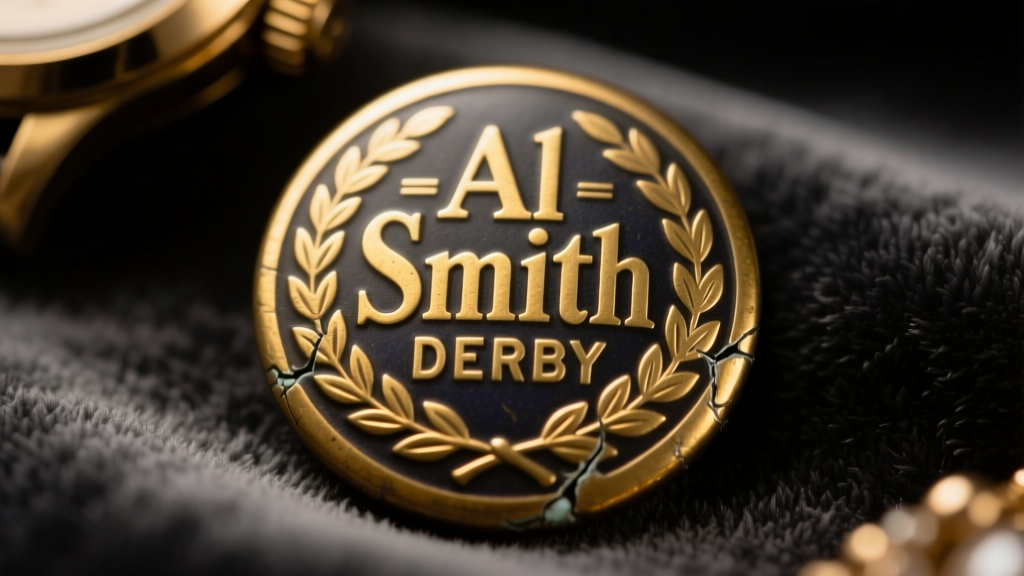
The Al Smith Derby Political Button: A Rare Artifact of 1928 Presidential Campaign Iconography
Joshua Eames: The Forgotten American Watchmaker Who Defined Early Colonial Precision
Advertising Label 'Milk Every Day' — Evaporated Nestlé Food Co. Tin Can Label, c. 1920–1935: A Study in Early Nutritional Marketing and Swiss-American Brand Expansion
Gustafsberg 3: The Swedish Modernist Watch That Redefined Mid-Century Precision and Design

Old Radios: Engineering, Design, and Collectibility of Vintage Broadcast Receivers (1920–1955)

Banks Mechanical Rabbit on Mound: A Cast-Iron Coin-Operated Marvel (c. 1930–1945)
Cottone Auctions 7: A Curated Survey of Exceptional Vintage Watches, Jewelry, and Horological Artifacts
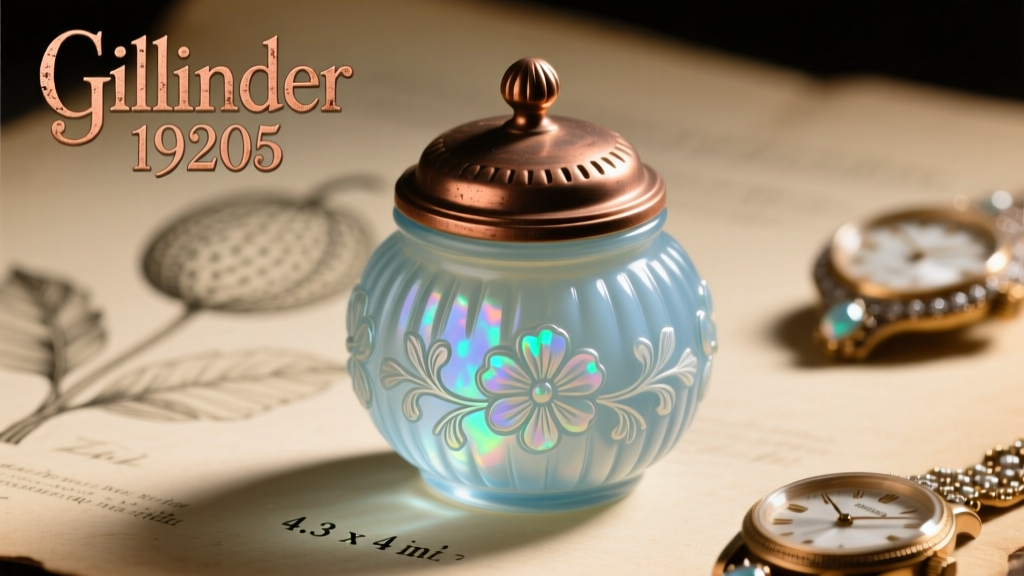
Gillinder Sugar Shaker: Opal Light Blue Tint, Floral Motif, Melon Ribbing — A 4¾-Inch American Art Glass Masterpiece