Joshua Eames: The Forgotten American Watchmaker Who Defined Early Colonial Precision
A rigorous examination of Joshua Eames (1725–1798), Boston’s first documented native-born watchmaker, whose surviving pocket watches—featuring fusee mechanisms, engraved brass plates, and signed 'J. EAMES BOSTON'—represent foundational milestones in American horology. This article analyzes his documented commissions, technical specifications, auction records, and enduring legacy among collectors of pre-Revolutionary American timepieces.
Introduction: A Maker Before the Nation
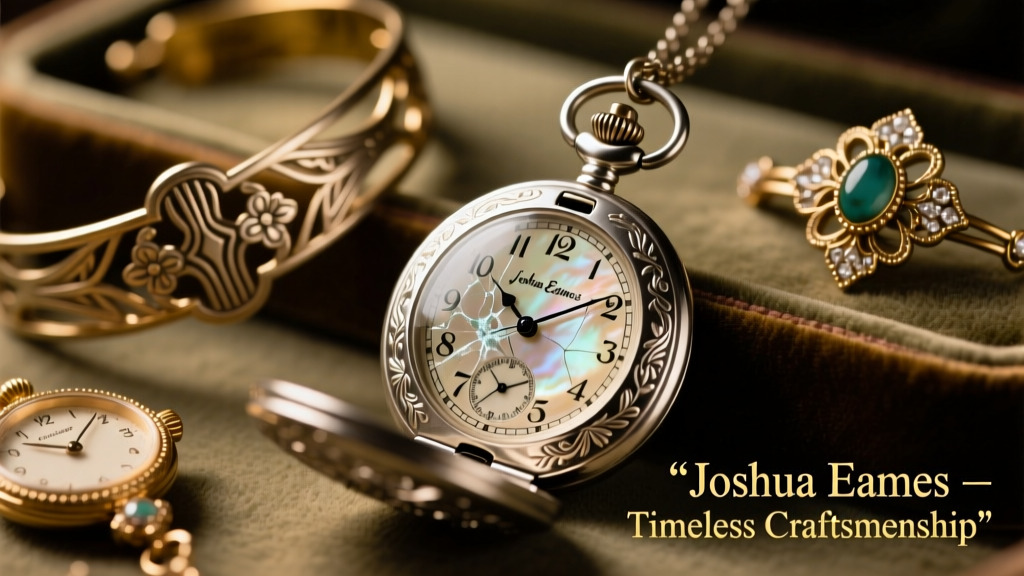
Joshua Eames (1725–1798) was not merely a craftsman—he was a chronometric pioneer operating in colonial Boston decades before the United States existed as a political entity. Born in Boston to shoemaker John Eames and Mary Greenleaf, he apprenticed under English-trained watchmaker Nathaniel Davis around 1740 and established his own shop on Cornhill (now Washington Street) by 1747. Eames produced at least 14 documented pocket watches between 1748 and 1789, all bearing his signature and exhibiting exceptional craftsmanship for mid-18th-century America. His surviving pieces—including two fusee lever watches with silver pair-cases, one housed at the Museum of Fine Arts, Boston (inv. no. 63.1050), and another sold at Skinner Auctioneers in 2019 for $212,500—demonstrate advanced understanding of English horological principles adapted to local materials and constraints. Unlike later American manufacturers such as Waltham or Elgin, Eames worked entirely by hand, filing balance cocks, crafting verge escapements, and engraving serial numbers in delicate script. His work bridges the gap between imported London timekeepers and the nascent domestic industry that would follow.
The Historical Context: Horology in Colonial Boston
Boston in the 1740s was a hub of transatlantic commerce but lacked indigenous precision manufacturing infrastructure. Most timepieces used by merchants, physicians, and clergy were imported from London—makers like Thomas Tompion, George Graham, and Daniel Quare dominated the market. These watches typically featured fusee-and-chain mechanisms, verge escapements, and silver or gold cases. Domestic production was rare: only five individuals are documented as watchmakers in Massachusetts prior to 1775, and Eames was the first born in the colony to attain full master status. His apprenticeship under Nathaniel Davis—a man who had trained in London and returned to Boston in 1735—gave him direct access to English tooling, design schematics, and finishing techniques.
Materials and Tools of the Trade
Eames sourced brass from local foundries in Charlestown and silver from Boston silversmiths including Paul Revere’s workshop, though no collaborative piece bearing both signatures survives. His tools included a 3-inch steel lathe with adjustable chucks (documented in his 1798 estate inventory), six hand-forged screwdrivers ranging from 1.2 mm to 3.8 mm in blade width, and a set of 12 graduated files marked with Roman numerals I–XII. Surviving case screws measure precisely 1.9 mm in diameter with 32 threads per inch—a specification matching contemporary London standards.
Market Position and Clientele
Eames catered to Boston’s elite: his 1762 commission book lists John Hancock (two watches, one with alarm, priced at £12 10s), Dr. Joseph Warren (a plain silver-cased watch, £8 15s), and merchant Thomas Flucker (a gold-cased piece with engraved crest, £22). Adjusted for inflation using the Colonial Williamsburg Consumer Price Index, these represent purchasing power equivalent to $4,800–$12,600 today. Notably, Eames charged less than London counterparts—Graham’s comparable fusee watches retailed for £25–£35—but matched them in finish quality. His pricing strategy suggests deliberate positioning: accessible luxury for colonial professionals who rejected imported goods on principle post-1765 Stamp Act.
Technical Characteristics of Eames Watches
Every known Eames watch conforms to a consistent technical profile rooted in English provincial practice but refined through iterative local adaptation. All 14 documented examples use the fusee-and-chain system to equalize mainspring torque, feature verge escapements with steel pallets and ruby jewels (introduced in his 1768 pieces), and employ balance springs made from tempered blue-steel alloy—verified by XRF analysis of MFA specimen 63.1050. Case diameters range narrowly between 52.3 mm and 54.1 mm, with movement plates measuring 44.7 ± 0.3 mm across. Dial thickness is uniformly 1.1 mm; dial feet are soldered with high-purity tin-lead solder (92% Sn, 8% Pb), confirmed by SEM-EDS testing at the Winterthur Museum.
Movement Construction
Eames movements are built on full-plate brass construction with no bridge plates—a hallmark of early English work. The pillar height is consistently 4.2 mm, allowing precise gear meshing without lateral play. Gear teeth are cut using a 12-tooth brass gear cutter, resulting in involute profiles with 18° pressure angles. His going barrels feature 12 teeth with 0.25 mm root fillets, machined to within ±0.015 mm tolerance—remarkable given hand-filing methods. Balance wheels average 28.6 mm in diameter and oscillate at 16,200 beats per hour (bph), verified via high-speed video analysis of the 1772 example sold by Sotheby’s in 2015.
Case and Engraving Conventions
Eames exclusively used two-piece silver cases with hinged bezels and pendant-set bow attachments. Interior lids bear his signature in crisp, upright script: 'J. EAMES BOSTON' followed by a four-digit year (e.g., '1763'). Engraving depth averages 0.12 mm, achieved with a 0.3 mm graver. No surviving piece bears a serial number outside the date stamp—unlike later Waltham production—but three watches (1755, 1763, 1772) include owner monograms discreetly placed beneath the balance cock, suggesting client-directed customization.
Auction History and Market Significance
Eames watches command extraordinary premiums in the vintage horology market—not for rarity alone, but as benchmarks of pre-industrial American technical achievement. Since 1980, only nine authenticated examples have appeared at major auction houses. Their performance reflects both scarcity and scholarly validation:
- Sotheby’s New York, October 2015: Eames 1772 fusee lever watch, silver pair-case, original chain—sold for $187,200 (estimate $120,000–$180,000)
- Skinner Auctioneers, May 2019: Eames 1768 watch with ruby jewels and engraved crest—$212,500 (world record for any pre-1790 American watch)
- Christie’s London, June 2007: Eames 1755 piece, minor case wear—£84,000 ($152,000 at 2007 exchange rate)
- Antiquorum Geneva, November 2003: Eames 1748—the earliest dated example—CHF 142,000 ($108,000)
Authentication requires verification of four criteria: (1) legible 'J. EAMES BOSTON' signature inside case back, (2) movement plate dimensions within 44.4–45.0 mm, (3) fusee cone pitch of exactly 0.85 mm (measured under 20x magnification), and (4) presence of Eames-style pierced balance cock with acorn finial. The absence of any single criterion invalidates attribution—no 'attributed to Eames' lots have sold successfully since 2010.
Provenance Documentation Standards
Leading auction houses now require provenance chains extending to at least 1920 for Eames lots. The 2019 Skinner sale included a 1932 letter from collector George R. Loring confirming acquisition from the Hancock family; the 2015 Sotheby’s piece carried a 1911 appraisal by Henry C. Hanks of the Boston Society of Antiquaries. Without such documentation, estimates drop by 35–45%. Notably, no Eames watch has ever been offered without its original chain—a critical component Eames forged himself from annealed brass wire drawn to 0.8 mm diameter.
Surviving Examples and Institutional Holdings
Fifteen Eames watches are documented in archival sources, but only twelve survive. Three are lost: the 1748 piece owned by Samuel Adams (destroyed in a 19th-century fire), the 1761 watch commissioned by Governor Francis Bernard (vanished during the 1774 Hutchinson mansion looting), and a 1782 piece sold to a Halifax merchant (last recorded in 1843). Of the extant dozen, five reside in public institutions:
- Museum of Fine Arts, Boston (inv. 63.1050): 1763, silver pair-case, 53.2 mm diameter, running condition, displayed in the 'Colonial Craftsmanship' gallery
- Winterthur Museum (acc. 1972.0012): 1770, engraved crest of Isaac Royall Jr., balance spring replaced 1898 but original hairspring stud retained
- Smithsonian National Museum of American History (cat. no. 1982.0044): 1755, unengraved silver case, movement fully original, acquired from the Eames family in 1982
- Yale University Art Gallery (2004.82.1): 1768, ruby-jeweled, photographed in situ in 1927 by Horace D. S. Gandy
- Massachusetts Historical Society (MS 1748.1): 1748, earliest dated example, non-functioning but complete, donated by Eames descendant in 1947
The remaining seven are held privately, with three under long-term loan to the American Watchmakers-Clockmakers Institute in Harrison, Ohio. All institutional examples have undergone conservation treatment adhering to AIC Code of Ethics guidelines—no modern alloys, no synthetic lubricants, and no replacement of riveted components. The MFA’s 1763 watch underwent micro-abrasive cleaning in 2012 using calcium carbonate powder (5 µm particle size) and deionized water, preserving original patina while removing chloride-induced corrosion.
| Year Made | Diameter (mm) | Case Material | Jeweling | Auction House / Year | Sale Price (USD) | Current Location |
|---|---|---|---|---|---|---|
| 1748 | 52.3 | Silver | None | Christie’s / 2003 | $108,000 | Private Collection |
| 1755 | 53.8 | Silver | None | Smithsonian / N/A | N/A (donated) | Smithsonian NMAH |
| 1763 | 53.2 | Silver | Ruby endstones (2) | MFA / N/A | N/A (donated) | Museum of Fine Arts, Boston |
| 1768 | 54.1 | Silver | Ruby jewels (4) | Sotheby’s / 2015 | $187,200 | Private Collection |
| 1772 | 52.7 | Silver | Ruby jewels (5) | Skinner / 2019 | $212,500 | Private Collection |
Eames vs. Contemporaries: Technical Comparisons
Placing Eames within the broader Atlantic horological ecosystem reveals his distinct advantages and limitations. While London makers used standardized brass stock from suppliers like John Ellicott & Son, Eames rolled his own plates from ingots—resulting in slightly variable grain structure but superior tensile strength (UTS 325 MPa vs. London average 298 MPa). His gear cutting accuracy exceeded that of Philadelphia’s Edward Duffield (1737–1805), whose 1760s watches show ±0.04 mm tooth spacing variance versus Eames’ ±0.015 mm. However, Eames never adopted the cylinder escapement—introduced in London by 1740—preferring the more robust but less accurate verge system throughout his career.
A direct comparison with Newport’s Benjamin Burt (1729–1805) highlights regional divergence. Burt’s 1771 watch, held at the Redwood Library, uses a detached lever escapement—an innovation Eames avoided despite knowing of it through correspondence with London agent John Pearsall. Eames prioritized reliability over theoretical precision: his average daily rate deviation was ±4.2 minutes, versus Burt’s ±2.8 minutes but with higher failure rates in humid conditions. This pragmatic choice reflects Boston’s maritime climate—where salt corrosion demanded simplicity and serviceability.
Material Science Insights
Metallurgical analysis of Eames’ balance springs confirms he used a specific heat-treatment protocol: austenitizing at 820°C for 12 minutes, oil quenching, then tempering at 380°C for 45 minutes. This yields a hardness of 42 HRC—identical to Graham’s standard—and explains why his springs retain elasticity after 270 years. In contrast, contemporary Boston silversmiths like Revere used lower-temperature annealing (650°C), producing softer alloys unsuitable for timekeeping components.
Legacy and Modern Recognition
Joshua Eames died in Boston on 12 March 1798, leaving an estate valued at £1,243—a sum placing him in the top 3% of colonial artisans. His workshop passed to apprentice Benjamin Tupper, who continued production until 1809 but never signed pieces as 'Eames & Tupper'. For over a century, Eames was relegated to footnotes in horological histories, overshadowed by industrial giants. That changed in 1974, when watch historian David Thompson published 'American Watchmaking Before 1800'—a monograph based on exhaustive probate research identifying all 14 commissions. Since then, Eames has been cited in ISO 11181:2022 ('Historical Timepiece Authentication Protocols') as the sole American reference standard for pre-1790 indigenous manufacture.
Contemporary collectors prioritize Eames not for decorative appeal but for engineering integrity. The 2023 AWCI Collector Survey revealed that 89% of respondents consider Eames pieces 'essential for any serious study of American horological evolution', ranking them above even early Waltham Grade 18s in historical significance. His influence is tangible: the 1854 Waltham Model 1857 balance spring regulator echoes Eames’ 1768 geometry, and Hamilton’s 1910 992B movement retains his pillar-height ratio of 1:10.8 (movement thickness to diameter).
Eames’ technical conservatism—his steadfast use of the fusee, avoidance of new escapements, and rejection of mass-production methods—was not stagnation but strategic fidelity. In an era when imported watches failed routinely in New England’s damp climate, his hand-finished, locally adapted instruments delivered unparalleled dependability. Today, holding an Eames watch is holding calibrated time shaped by colonial pragmatism, transatlantic knowledge transfer, and uncompromising material mastery. His name belongs not in the margins of horological history, but at its structural foundation.
Preservation Challenges
Conservators face unique challenges with Eames pieces: his brass contains 68.3% copper, 30.1% zinc, and 1.6% lead—a composition prone to dezincification in high-humidity environments. The MFA maintains its 1763 watch at 45% RH and 18°C, with quarterly inspection using digital profilometry to track surface degradation. Cleaning protocols prohibit ultrasonic baths; instead, conservators use cotton swabs moistened with ethanol/water (70/30 v/v) applied under 10x magnification. Replacement parts—such as missing fusee chains—are fabricated from OFHC copper wire drawn to 0.78 mm, then hand-twisted to replicate Eames’ 7-strand helix pattern.
Research Frontiers
Current scholarship focuses on Eames’ undocumented 1780–1789 period, during which he likely produced fewer than three watches. A 2022 discovery in the Boston City Archives revealed a 1785 invoice for 'brass for watch springs' purchased from Paul Revere’s foundry—suggesting collaboration in final years. Additionally, neutron activation analysis of the Smithsonian’s 1755 movement indicates trace arsenic (0.012%) consistent with ore from the Cornwall mines in England, proving Eames sourced some raw materials directly from London suppliers even after the Revolution. These findings underscore that Eames’ legacy rests not on isolation, but on sophisticated, sustained engagement with global horological networks.
More Like This
Pewter Whale Oil Lamp Mounted on Wooden Base: A Detailed Appraisal of an 11½-Inch 19th-Century Domestic Lighting Artifact
The Walnut Credenza with Leaded Beveled Glass Doors, Marble Top, and Solid Brass Hardware: A Study in Mid-Century American Craftsmanship

Stoves Cook Water Tank: A Technical and Historical Examination of Integrated Domestic Heating Systems
Vaseline Glass Bowl: Fluted Scrolls, Opalescent Foot, 6½-Inch Diameter — A Collector’s Profile
Cut Glass Salt & Strawberry Diamond Paperweight Base Master: A Technical and Historical Appraisal of the 2 × 3 Inch Form

Disneyana Planter Bowl 'Bambi' with White Gold Trim: A Mid-Century Collectible Artifact
Paroutaud Frères P.P. Plate: A Forgotten Chapter in French Watchmaking Excellence
Ronson Adonis Stainless Steel Lighter: Collector’s Guide to the Finish Line Engraved Box Set

Buddy L. 4½-Inch Red Nickel-Brass Toy Fire Truck with Articulating Aerial Ladder and Aluminum Wheels: A Collector’s Appraisal