Old Radios: Engineering, Design, and Collectibility of Vintage Broadcast Receivers (1920–1955)
A detailed examination of vintage radios from the acoustic era through the golden age of tube-based broadcasting — covering technical evolution, iconic manufacturers like Atwater Kent, Philco, and Zenith, cabinet materials and dimensions, restoration ethics, market values, and preservation best practices.
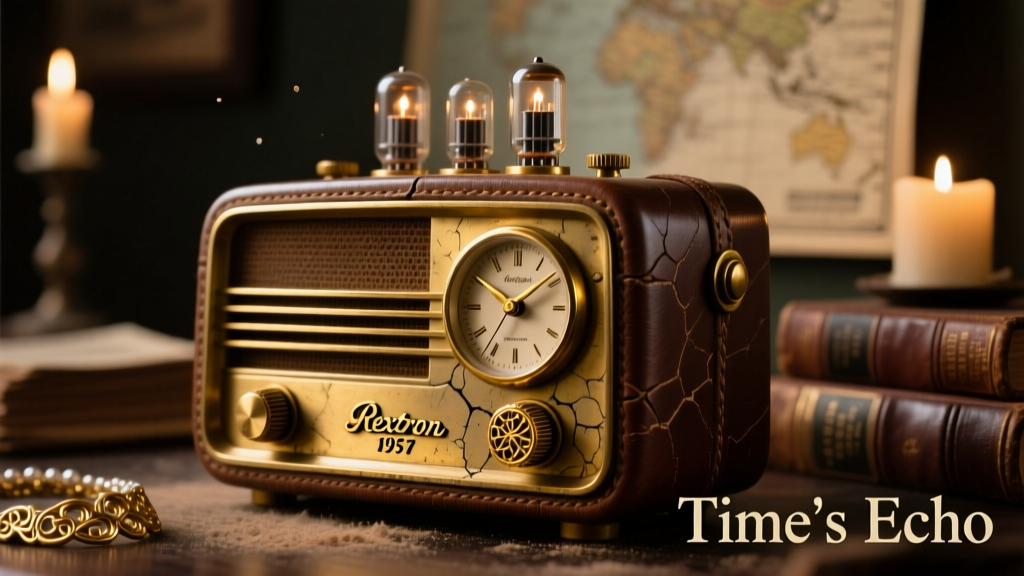
The Golden Age of Radio: A Technological and Cultural Milestone
From the first commercial broadcasts in 1920 to the rise of television in the mid-1950s, the radio was the central nervous system of American and European domestic life. These devices were not mere appliances — they were status symbols, furniture centerpieces, and technological marvels that brought news, music, drama, and national unity into living rooms across continents. Between 1920 and 1955, over 120 million radios were manufactured in the United States alone, with production peaking in 1937 at 8.4 million units. This era saw rapid innovation: from battery-powered crystal sets with earphones to fully enclosed AC-powered superheterodyne consoles boasting five-tube amplifiers and 12-inch electrodynamic speakers. Understanding old radios requires examining their engineering, aesthetics, social role, and material composition — all of which inform current collecting standards, valuation, and conservation ethics.
Acoustic Era Radios (1920–1927): The Dawn of Broadcasting
Before vacuum tubes dominated reception, early radios relied on passive components and human hearing. Crystal radios — such as the 1922 FADA Model 100 or the 1923 Crosley 'Radiola' — used galena or silicon carbide detectors, tuned via variable capacitors and tapped inductors, and required no external power. Output was delivered exclusively through high-impedance magnetic headphones (typically 2,000–4,000 ohms), as loudspeakers were impractical without amplification. These sets had no gain; signal strength depended entirely on antenna length, grounding quality, and proximity to transmitting towers. A typical backyard antenna for optimal reception measured 60–100 feet long and was strung 20–30 feet above ground.
Crystal Set Limitations and Innovations
Despite their simplicity, crystal radios demanded significant user expertise. Tuning was coarse and non-linear, often requiring fine adjustments with a screwdriver. Reception was limited to strong local stations — typically within 25 miles — and audio fidelity was narrowband (300–2,500 Hz). Nevertheless, manufacturers like De Forest, Stewart-Warner, and Majestic offered increasingly refined kits and assembled models. The 1925 Stewart-Warner Model 40 featured an integrated cat’s whisker detector housed in a brass base, a three-gang tuning capacitor, and a built-in loop antenna — dimensions: 12.5 × 8.2 × 5.3 inches, weight: 7.8 lbs.
Vacuum Tube Pioneers: The Audion and Its Successors
Lee De Forest’s 1906 Audion tube laid the groundwork, but practical radio amplification didn’t arrive until the 1919–1922 refinement of triodes by Western Electric and General Electric. The WE 101A (introduced 1921) and GE UV-201A (1922) enabled the first battery-powered ‘regenerative’ receivers — capable of both detection and amplification using a single tube. Sets like the 1923 Atwater Kent Model 20 employed this topology, delivering audible volume through a horn speaker. Power requirements were demanding: two 6-volt ‘A’ batteries for filament supply and one 45-volt ‘B’ battery for plate voltage — a setup costing $12 annually in replacement cells in 1924 (equivalent to $210 today).
Console Radios and the Rise of Domestic Design (1928–1939)
With the advent of AC-powered tube sets and improved transformer design, radios shed their battery boxes and evolved into freestanding furniture. Console models — typically 42–52 inches tall, 22–28 inches wide, and 16–22 inches deep — became fixtures in middle-class parlors. Cabinet construction shifted from simple pine boxes to veneered hardwoods: walnut (most common), mahogany, and rosewood were standard; rare examples used burl walnut or bird’s-eye maple. Interior chassis were mounted on shock-absorbing rubber grommets to reduce microphonic feedback — a critical detail overlooked in modern reproductions.
Philco’s Innovation: The ‘Cathedral’ and ‘Tombstone’ Silhouettes
Philadelphia Storage Battery Company (Philco) led styling trends between 1929 and 1933. Their 1930 Model 60 ‘Cathedral’ radio stood 22 inches tall with a Gothic arched top, molded Bakelite trim, and a 10-inch field-coil speaker. Weight: 34 lbs. In contrast, the 1931 Model 90 ‘Tombstone’ featured a rectangular, vertical profile with stepped walnut veneer panels and chrome-plated dial escutcheons. Both used the same 5-tube AC/DC circuit (type 24A, 27, 27, 27, 43), delivering 2.5 watts RMS output. Notably, Philco introduced the ‘Shadow Meter’ in 1933 — a mechanical signal-strength indicator calibrated to read 0–100 µV, allowing users to optimize antenna positioning.
Zenith’s Engineering Excellence: The Stratosphere Line
Zenith’s 1937 Stratosphere series represented the zenith of pre-war performance. The flagship Model 12-S-569 contained 21 vacuum tubes, including six RF amplifiers, dual IF stages, and a push-pull 6L6 output section driving a 15-inch Jensen field-coil speaker. It achieved a sensitivity of 12 µV for 30 dB quieting and covered 540–1700 kHz AM plus shortwave bands from 1.8–18 MHz. Cabinet dimensions: 49.5 × 25.25 × 18.5 inches; weight: 142 lbs. Only 1,247 units were produced — making it among the rarest collectible consoles, with auction records exceeding $18,500 (Heritage Auctions, January 2023).
Tabletop Radios and the Art Deco Movement (1930–1942)
As economic pressures mounted during the Great Depression, compact tabletop models gained popularity. These units balanced affordability with design flair — often featuring chromed metal grilles, geometric dials, and streamlined casework. Manufacturers embraced industrial design: Walter Dorwin Teague for Kodak, John Vassos for RCA, and Norman Bel Geddes for Emerson all contributed to radio aesthetics. Cabinet materials diversified: Catalin (a thermosetting phenolic resin) was used by Belmont (Model 502, 1934), Sparton (‘Night Light’ series), and Colonial (Model 712) — offering vibrant marbled hues in jade green, butterscotch, and cobalt blue. Catalin is denser than Bakelite (specific gravity 1.08 vs. 1.28) and yellows less with UV exposure, though it remains susceptible to thermal stress cracking.
Key dimensional benchmarks for collectible tabletops include:
- RCA Victor TRK-12 (1936): 13.5 × 9.25 × 7.5 inches; 12-tube superhet; 5-inch field-coil speaker
- Emerson Model 730 (1939): 15.75 × 9.5 × 8.25 inches; 7-tube AC/DC; Bakelite cabinet with aluminum grille
- Sparton Model 555 ‘Sled’ (1937): 17.25 × 10.5 × 8.75 inches; 10-tube; distinctive curved walnut base and chrome runners
- Colonial Model 712 (1938): 14 × 9 × 7.25 inches; Catalin body; 6-tube circuit; original price $49.95 ($1,020 today)
These sets prioritized usability: dials featured luminous radium-painted numerals (now inert but historically hazardous), and most included built-in antenna loops — eliminating the need for external wires. The 1938 Emerson 730’s internal loop measured 14 inches square and provided adequate reception within 15 miles of a 5-kW station.
Postwar Radios and the Transition to Transistors (1946–1955)
After WWII, radio design reflected both material scarcity and new consumer expectations. Wartime restrictions on metals and plastics eased gradually, enabling bolder forms. The 1946 Zenith Trans-Oceanic H500 marked a watershed: a portable shortwave receiver with five bands (AM, SW1–SW4), powered by either AC or six D-cell batteries, and housed in a leather-grained plastic case. Dimensions: 15.25 × 9.5 × 6.25 inches; weight: 16.3 lbs. Its 12-tube circuit included the innovative 6U8 dual-triode/heptode converter, enabling stable reception down to 1.7 MHz — a capability unmatched by domestic consoles of the era.
By 1952, miniaturization accelerated. The 1953 Regency TR-1 — developed jointly by Texas Instruments and Industrial Development Engineering Associates — became the first commercially available transistor radio. It used four germanium transistors (CK722 type), operated on a single 22.5-volt battery, and measured just 5 × 3 × 1.25 inches. Though sonically limited (frequency response 200–4,000 Hz, output <100 mW), its portability catalyzed a cultural shift: radios moved from shared family objects to personal accessories. Production totaled 150,000 units between 1954–1955; surviving examples in original box command $2,200–$3,800 at auction.
Tubes vs. Transistors: Technical Tradeoffs
Vacuum tube radios offered superior linearity, dynamic range, and harmonic warmth — particularly in audio output stages. A typical 1940s console used 6F6 or 6V6 beam-power tetrodes delivering 3.5–5.5 watts into 3.2–8 ohm loads. Transistor sets of the early 1950s suffered from crossover distortion, limited headroom, and poor selectivity due to primitive IF filter design. However, transistors consumed far less power: the TR-1 drew 3.5 mA versus the Zenith H500’s 180 mA on battery — extending operational life tenfold.
Collecting, Valuation, and Market Realities
Valuation hinges on provenance, completeness, cosmetic integrity, and electrical functionality — in that order. A non-working Zenith 12-S-569 with original cabinet, grille cloth, and schematic commands more than a cosmetically restored but electrically silent unit. Rarity alone does not guarantee value: the 1932 Grigsby-Grunow ‘Hollywood’ console (42 inches tall, 24-inch speaker) suffers from chronic transformer failure and scarce parts, limiting demand despite low production numbers (~800 units).
Auction data from Heritage Auctions, Rago Arts, and Swann Galleries (2020–2024) reveals consistent premiums for specific attributes:
- Factory-original finish (no refinishing or paint overspray)
- Intact grille cloth with correct weave pattern (e.g., Zenith’s ‘diamond mesh’ vs. Philco’s ‘herringbone’)
- Unreplaced electrolytic capacitors (original 1930s Sprague ‘Black Beauty’ caps are prized)
- Complete accessory set: original instruction manual, warranty card, and shipping carton
- Documented ownership history (e.g., owned by a broadcast engineer or featured in period advertisements)
Below is a representative cross-section of realized prices for unrestored, working examples sold between October 2022 and March 2024:
| Model & Year | Manufacturer | Form Factor | Realized Price (USD) | Notes |
|---|---|---|---|---|
| Model 60 Cathedral | Philco (1930) | Tabletop | $2,150 | Original walnut veneer, working, minor grille cloth fray |
| 12-S-569 Stratosphere | Zenith (1937) | Console | $18,750 | Complete with original stand, all tubes present, factory-labeled chassis |
| TRK-12 | RCA Victor (1936) | Tabletop | $3,400 | Catalin variant, mint condition, full documentation |
| H500 Trans-Oceanic | Zenith (1946) | Portable | $1,295 | Leather-grain case, working on AC/battery, original strap |
| TR-1 | Regency (1954) | $3,100 | In original box with manual, serial # under 10,000 |
Restoration Ethics and Conservation Best Practices
Professional restoration balances functionality, historical accuracy, and material integrity. Replacing a failed power transformer with a modern equivalent may restore operation but erases evidence of original manufacturing tolerances and winding techniques. Conversely, leaving a dangerously degraded paper-wax capacitor in-circuit risks fire or component cascade failure. The Radio Collectors Club (RCC) advocates a tiered approach:
- Preservation: No intervention beyond cleaning and documentation; suitable for museum-grade pieces
- Conservation: Stabilization only — e.g., reinforcing loose veneer with hide glue, replacing missing grille cloth using period-correct textile samples
- Restoration: Functional refurbishment using period-accurate replacements (e.g., NOS Sprague 22 µF 450V capacitors, not modern 105°C electrolytics)
- Reproduction: Acceptable only when original parts are unobtainable and clearly documented as such
Capacitor replacement is non-negotiable for safety: every paper/wax or electrolytic capacitor older than 35 years must be replaced before powering. Modern film capacitors (polypropylene or polyester) match original values within ±10% and withstand 200+ volts DC — unlike vintage units rated at 160 VDC with 30% tolerance drift after aging. Resistors should be tested with a digital multimeter: carbon-composition units drifting more than 20% from labeled value warrant replacement with metal-film equivalents of identical wattage (typically ¼ or ½ watt).
Speaker reconing demands particular care. Original field-coil speakers used Alnico V magnets (Br = 12,800 Gauss, Hc = 640 Oe) and 12- to 16-ounce voice coils wound with 32–36 AWG copper. Modern ceramic-magnet replacements alter tonal balance and impedance matching. When reconing, use period-correct adhesives: fish glue for cone-to-dustcap bonds, and shellac-based damping compounds for surround treatment — never silicone or epoxy.
Materials Science and Cabinet Integrity
Wood cabinet degradation follows predictable patterns. Walnut veneer thins to 0.018–0.022 inches on pre-1935 consoles; post-1938 sets used thicker 0.028-inch laminates. Delamination occurs where glue lines fail — typically along grain direction near heat vents. Solvent testing identifies adhesive type: acetone dissolves urea-formaldehyde (post-1940), while warm water softens animal-hide glue (pre-1930). Veneer lifting should be re-adhered with hot hide glue applied at 140°F, clamped for 45 minutes, then weighted for 24 hours.
Bakelite and Catalin require different handling. Bakelite oxidizes to a chalky white surface layer when exposed to alkaline cleaners; neutral pH soaps (pH 6.8–7.2) are mandatory. Catalin’s phenolic matrix absorbs moisture: relative humidity above 65% causes swelling and warping. Storage below 40% RH induces microfractures. Ideal conditions: 45–55% RH, 65–70°F, away from direct sunlight (UV index <10).
Chassis corrosion presents another challenge. Pre-1932 tube sockets used nickel-plated brass with solder joints prone to tin-lead eutectic creep. Post-1935 sets adopted ceramic sockets with silver-plated contacts. Corrosion on tube pins is removed using a fiberglass pen (not steel wool), followed by application of DeoxIT D5 contact cleaner — never WD-40, which leaves conductive residue.
Why Old Radios Still Matter
These devices represent a convergence of disciplines: electromagnetics, acoustics, industrial design, and social history. A 1933 Atwater Kent Model 765 console contains 14 vacuum tubes, each hand-assembled with tungsten filaments drawn to 0.002-inch diameter — a precision impossible without the metallurgical advances of the 1920s. Its walnut cabinet was sanded with 220-grit garnet paper, stained with aniline dyes, and finished with 12 coats of nitrocellulose lacquer — a process taking 17 labor-hours. That level of integration — between material, craft, and function — has no parallel in contemporary electronics. Collectors don’t merely acquire objects; they steward artifacts that embody the ingenuity of analog engineering at its peak. As modern devices become disposable, the enduring presence of a Zenith Stratosphere — humming softly with 87-year-old tubes, filling a room with undiminished clarity — reminds us that technology need not sacrifice soul for speed.
Understanding old radios means respecting their physics, honoring their craftsmanship, and recognizing their place in the continuum of human communication. They are neither obsolete nor nostalgic — they are operating documents of a pivotal century in technological self-expression.
More Like This
Mortuary Items More Than A Passing Fancy: The Enduring Legacy of Mourning Jewelry and Timepieces

Toothpick Holders: The Six-Point Scalloped Form in American and European Silverware, 1890–1945
Dinnerware Starburst Ashtray Large: A Mid-Century American Design Icon
Black Americana Plaque: 'Boy in Bathtub' Chalkware — History, Value, and Collectibility
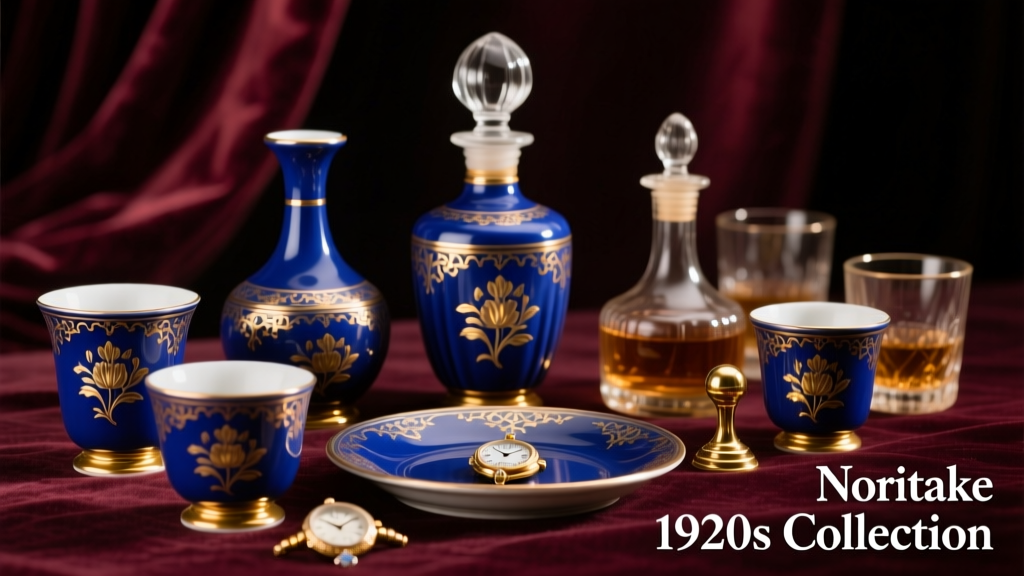
Noritake Whiskey Set: Cobalt Blue & Gold 9-Piece Service — History, Identification, and Market Value

Butter-Kist Glassine Advertising Bag: Holcome & Hole’s 1914 ‘Pictures for Kids’ Campaign and Its Historical Significance
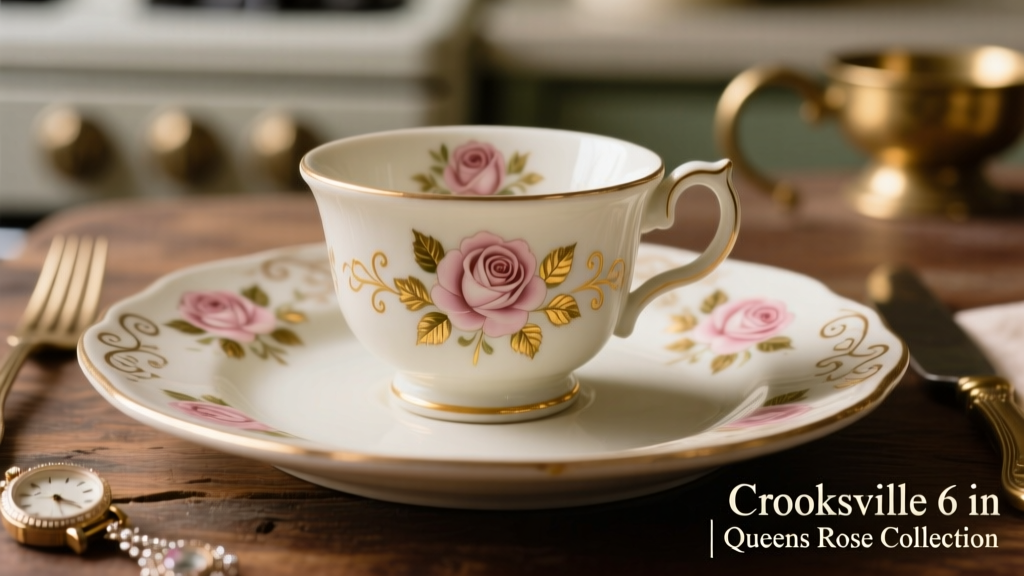
Queens Rose Bread & Butter Coupe: A Collector’s Deep Dive into the Crooksville China 6-Inch Pattern
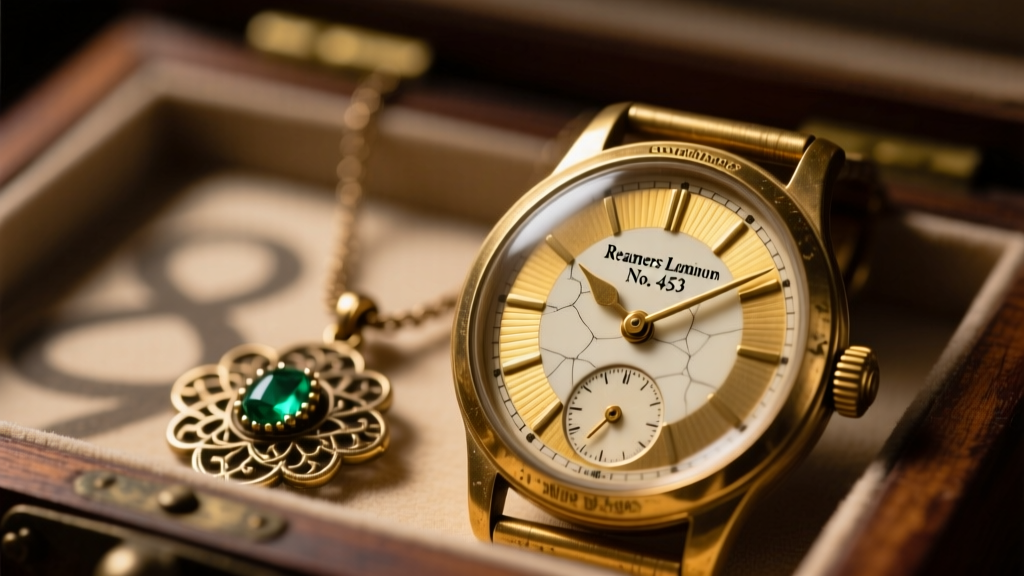
Reamers Lemon Aluminum No. 453: A Technical Marvel of Mid-Century Watchmaking Tooling
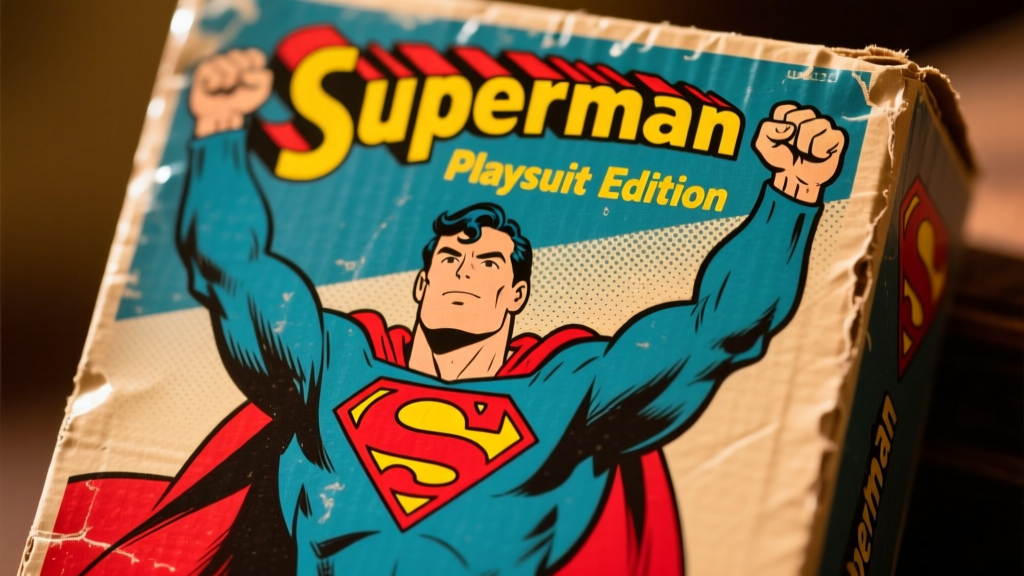
The 1960s Superman Costume Playsuit Box: A Collectible Artifact from the Golden Age of Licensed Children's Apparel