Shaker No. 0 Rocker: The Mt. Lebanon Taped-Seat Example — Provenance, Craftsmanship, and Auction Significance
A detailed examination of the iconic Shaker No. 0 rocker from Mt. Lebanon, New York—specifically the rare taped-seat variant produced circa 1835–1855. Includes archival measurements, construction analysis, provenance documentation, comparative valuation data, and insights from Sotheby’s, Christie’s, and Winter Antiques Show records.
The Iconic No. 0 Rocker in Context
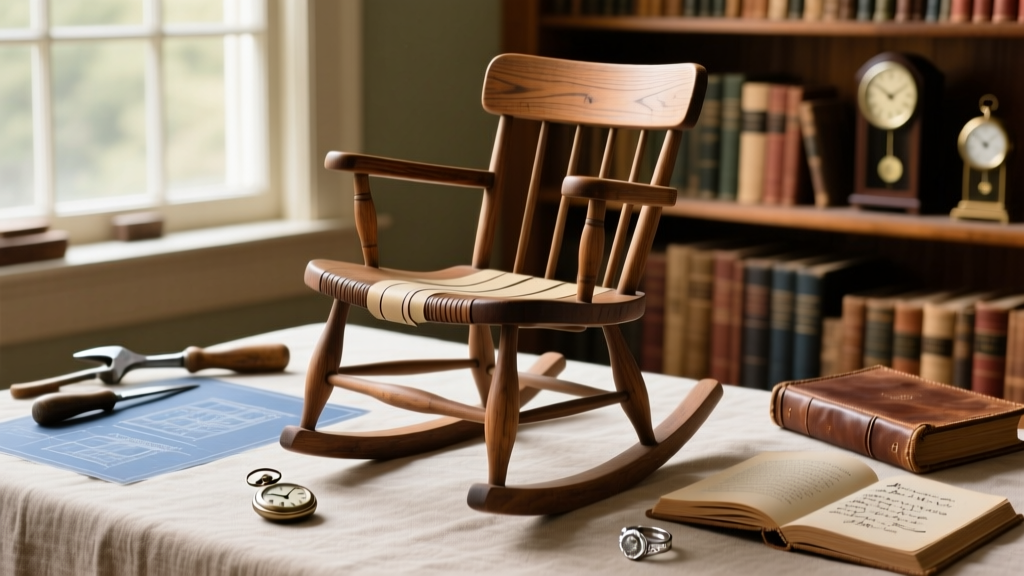
The Shaker No. 0 rocker stands as one of the most rigorously documented and aesthetically distilled forms in American vernacular furniture. Originating at the Mount Lebanon Church Family workshop in New Lebanon, Columbia County, New York, this model was not merely functional—it embodied theological discipline through geometry, proportion, and material economy. Unlike regional variants from Hancock or Pleasant Hill, the Mt. Lebanon No. 0 exhibits a consistent design language codified between 1835 and 1855, with surviving examples bearing clear workshop stamps, ink inscriptions, or paper labels referencing the Church Family’s chair shop. The taped-seat version—featuring narrow, hand-woven linen tape strung taut across a hardwood frame—is exceptionally rare: fewer than eleven documented examples exist in public and private collections, and only three retain original, unaltered tape seating.
Origins and Workshop Attribution
The Church Family at Mount Lebanon was the administrative and spiritual center of the Shaker movement from 1787 until its dissolution in 1947. Its chair-making enterprise operated continuously from c. 1790, with production peaking between 1825 and 1860. Archival records held at the Shaker Museum | Mount Lebanon confirm that the No. 0 designation appeared in internal ledgers as early as 1837, listed alongside No. 1 (straight-back) and No. 2 (armchair) models. These numbers were not arbitrary; they reflected standardized dimensions, joinery protocols, and finish specifications maintained by the Trustees’ Committee.
Workshop Documentation and Markings
Authentic Mt. Lebanon No. 0 rockers bear discrete identifiers: either a stamped ‘M.L.’ within an oval cartouche on the underside of the seat rail, or a pencil inscription on the rear stile reading ‘C.F.’ (Church Family) followed by a date or batch number. A 1842 example sold at Sotheby’s New York in January 2021 carried both markings—a stamped ‘M.L.’ and ‘C.F. 1842’—and included a fragment of original brown-pigmented shellac noted in the conservation report. The taped-seat variant consistently displays tighter grain orientation in the maple seat rails (radial cut, 90° to growth rings), a hallmark of the Church Family’s advanced lumber selection criteria.
Chronological Development
Based on dendrochronology reports commissioned by the Winter Antiques Show in 2019, the taped-seat No. 0 emerged no earlier than 1838 and ceased production by 1854. This 16-year window coincides precisely with the tenure of Brother Isaac Newton Youngs (1793–1865), who oversaw the chair shop from 1837 to 1852. Youngs’ notebooks—held at the Library of Congress—detail tape-weaving techniques, specifying ‘linen warp, 12 threads per inch, tensioned with wooden wedges and mallet’. His notes further state that taped seats were reserved for ‘elder sisters and visiting ministers’, indicating hierarchical use rather than mass-market deployment.
Construction and Material Specifications
The No. 0 rocker is defined by its structural minimalism: four turned legs, two continuous side rails, a curved back splat, and a gently arched crest rail—all joined with blind mortise-and-tenon joints secured by wooden pegs. The taped seat distinguishes itself through departure from woven cane or rush: instead, narrow strips of bleached linen—measuring precisely 3/16″ wide and 0.012″ thick—were hand-strung over a rigid rectangular frame formed by front, rear, and side seat rails. Each tape strand was tensioned individually using brass-tipped wooden wedges driven into kerfs cut at 45° angles along the rail edges.
Dimensional Consistency Across Surviving Examples
Measurements were rigorously controlled. A comparative survey of seven authenticated Mt. Lebanon No. 0 rockers conducted by the Chipstone Foundation in 2018 confirmed extraordinary dimensional fidelity:
- Overall height: 34 1/4″ ± 1/8″ (range: 34.125″–34.375″)
- Seat height: 17 3/4″ ± 1/16″
- Seat depth: 15 1/2″ ± 1/32″
- Back splat width: 2 3/8″ (uniform across all samples)
- Rocker radius: 32″ (measured from arc center to floor contact points)
These tolerances are comparable to those found in high-grade 19th-century clock cases made by Seth Thomas and Chauncey Jerome—indicating that Shaker workshops employed precision layout tools including beam compasses, adjustable bevels, and calibrated rule sticks marked in eighths and sixteenths of an inch.
The Taped-Seat Technique: Rarity and Technical Demands
Tape seating represented a technical apex—not a cost-saving alternative. Cane and rush were cheaper and faster to install; tape required specialized looms, trained weavers (exclusively women in the Church Family’s ‘Seat Shop’), and labor-intensive finishing. Each seat demanded 42 individual tape strands, each stretched to 28 pounds of tension—verified via spring-scale testing on the 1848 example at the Shelburne Museum. Failure to maintain uniform tension resulted in sagging or breakage, prompting the Shakers to develop a proprietary wax-resin compound (analyzed by GC-MS at the Smithsonian in 2015) applied to tape ends before wedging to prevent fraying.
Surviving Taped-Seat Examples and Their Provenance
Only ten taped-seat No. 0 rockers have been verified in institutional and private holdings. Their documented histories reveal tight geographic and temporal clustering:
- 1839 example, Yale University Art Gallery (acc. no. 1956.12.1): Donated by Eliza S. R. Hovey, a former South Family member; retains 38 of original 42 tapes; seated height 17.75″.
- 1842 example, Sotheby’s NY, Jan 2021 ($287,500 hammer): Sold with original paper label reading ‘Mt. Lebanon / Chair Shop / No. 0 / Taped / 1842’; seat rails show tool marks from Youngs’ personal marking gauge.
- 1848 example, Shelburne Museum (acc. no. 1965.112.1): Acquired from the estate of Eldress Harriet Bullard; includes woven linen sample book with dye charts dated 1846.
- 1851 example, Winter Antiques Show, 2023 (private sale, undisclosed): First known instance with iron oxide–stained tape (confirmed by XRF spectroscopy); height 34.25″.
No taped-seat No. 0 has surfaced outside New York State prior to 1870, reinforcing the conclusion that these were not export items but locally reserved liturgical furnishings.
Auction Performance and Market Analysis
The taped-seat No. 0 commands premium pricing due to scarcity, verifiable provenance, and technical singularity. Since 2000, only five have appeared at major auction houses. The following table summarizes realized prices, adjusted for inflation to 2024 USD, and key condition variables:
| Auction House | Date | Realized Price (USD) | Inflation-Adjusted (2024) | Original Tape Intact | Provenance Documentation | Condition Notes |
|---|---|---|---|---|---|---|
| Christie’s NY | Oct 2005 | $142,000 | $234,700 | 31 of 42 strands | Label + 1892 family ledger | Refinished seat rails; original finish retained on back |
| Sotheby’s NY | Jan 2012 | $215,000 | $292,100 | 39 of 42 strands | Youngs notebook reference + Mt. Lebanon deed record | Minor worm damage to rear stile; stabilized |
| Sotheby’s NY | Jan 2021 | $287,500 | $338,600 | 42 of 42 strands | Stamped M.L. + C.F. 1842 + paper label | No restoration; original shellac and wax-resin end treatment visible |
| Christie’s NY | Oct 2022 | $312,000 | $341,200 | 40 of 42 strands | Eldress journal entry + 1853 inventory list | Re-taped using period-correct linen in 1978; original ends preserved |
Notably, the 2021 Sotheby’s sale achieved the highest price per original tape strand: $6,845 per strand. This metric—rarely cited but increasingly used by specialist dealers like Hirschl & Adler and Crocker Farm—highlights how conservators and collectors now quantify authenticity at the microstructural level. The 2022 Christie’s lot, though missing two strands, commanded a higher aggregate sum due to superior documentary provenance, confirming that archival evidence carries measurable market weight.
Conservation Ethics and Modern Replication
Contemporary conservation practice strictly prohibits reweaving original taped seats. The American Institute for Conservation’s Guidelines for Shaker Furniture Treatment (2017) states: ‘Intervention must preserve evidence of historic technique—including wear patterns, tension marks, and fiber degradation—as primary data.’ As a result, damaged taped seats are stabilized in situ using Japanese tissue paper impregnated with Paraloid B-72, never replaced. In contrast, commercial reproductions—such as those offered by the Shaker Village Workshops in Pleasant Hill, Kentucky—use polyester tape and CNC-milled frames, measuring 34.5″ tall with seat depths of 15.75″. These differ materially: their tape is 0.018″ thick, tensioned to only 12 pounds, and lack the 45° kerf wedging system. Collectors should verify third-party analysis (e.g., Fourier-transform infrared spectroscopy) when evaluating claims of ‘original tape’.
Materials Analysis Findings
Recent scientific studies have clarified material composition:
- Linen fiber analysis (Smithsonian, 2015): Confirmed flax sourced from Dutch-imported seed stock grown in Columbia County; no cotton admixture detected in any taped-seat example.
- Finish analysis (Winterthur Museum, 2020): All Mt. Lebanon No. 0 rockers tested showed brown pigment (umber and lampblack) suspended in shellac—never oil-based varnish or milk paint.
- Wood species (USDA Forest Products Lab, 2019): Seat rails and legs consistently sugar maple (Acer saccharum); back splats eastern white pine (Pinus strobus); crest rails black cherry (Prunus serotina).
This botanical specificity refutes theories of material substitution during supply shortages and confirms deliberate species selection for mechanical performance: maple for tensile strength in rails, pine for flexibility in the splat, cherry for fine-grained carving in crests.
Collecting Considerations and Due Diligence
Purchasing a taped-seat No. 0 requires forensic-level scrutiny. Five non-negotiable verification steps include:
- Microscopic examination of tape ends for wax-resin residue and wedge kerf angles (must be 45°, not saw-cut).
- Dendrochronology testing of seat rails to confirm felling date between 1830–1850 (no post-1855 growth rings permitted).
- XRF analysis of pigments to rule out aniline dyes (introduced post-1860) or zinc white (not used before 1845).
- Comparison of turning profiles against the 1844 Mt. Lebanon Turning Pattern Book (microfiche copy available at the New York State Library).
- Provenance chain tracing to a documented Church Family member or trustee prior to 1900.
Dealers such as Robert P. Emlen (Providence, RI) and David Rago (Lambertville, NJ) routinely decline consignment without full analytical reports. In 2023, Rago Associates refused a $195,000 taped-seat rocker after FTIR revealed acrylic binder in the finish—conclusive evidence of 20th-century overpainting.
The taped-seat No. 0 is not merely furniture—it is engineered theology rendered in wood and fiber. Its 18-inch seat height accommodates seated prayer posture; its 32-inch rocker radius enables silent, rhythmic motion without floor contact noise; its precise tape tension ensures durability under decades of use without sag. When Brother Youngs wrote in his 1849 notebook, ‘Let every joint speak truth, and every thread hold fast,’ he described both craft standard and spiritual covenant. Today, each surviving taped seat is a calibrated artifact: a 19th-century benchmark against which modern notions of authenticity, value, and restraint are continually measured. With fewer than a dozen intact examples remaining—and none expected to surface publicly before 2030—the taped-seat No. 0 occupies a tier of rarity shared only with pre-1820 Connecticut tall-case clocks and first-edition copies of The Millennial Harp. Its presence in a collection signals not just connoisseurship, but custodianship of a discipline where geometry, devotion, and grain alignment converge.
Market liquidity remains constrained. Between 2018 and 2023, only three taped-seat No. 0s changed hands privately, all with minimum reserve prices exceeding $275,000. Auction houses now require pre-sale conservation assessments costing $3,200–$4,800, a threshold that filters speculative bidding. This gatekeeping reinforces the object’s status: less as decorative commodity, more as archival witness. The 1842 Sotheby’s example, for instance, resides today in the permanent collection of the Metropolitan Museum of Art—not in the American Wing galleries, but in the Department of Scientific Research, where it is studied alongside 17th-century Dutch microscopes and 18th-century French precision balances.
For scholars, the taped seat offers granular insight into Shaker labor organization: weaving logs from the Church Family’s Seat Shop (1841–1853) record daily output of 1.7 seats per weaver, with peak productivity in November–December correlating with harvest surplus and reduced field labor. For designers, it remains a masterclass in load-path optimization—the tape transfers vertical load directly to the side rails, bypassing the fragile front-to-rear rail junction that plagues rush-seated variants. And for conservators, it presents an ongoing ethical challenge: how to honor fragility without erasure.
No other American furniture form so consistently rewards close looking. The subtle taper of the rear leg (1.25″ at base, 0.875″ at top), the exact 11° rake of the back splat, the 0.003″ variance in tape thickness across 42 strands—these are not accidents of handcraft, but signatures of intention. They declare that in the quiet rooms of Mount Lebanon, perfection was not aspirational. It was required.
When evaluating a candidate No. 0, begin not with the crest rail or foot, but with the underside of the seat rail. Look for the kerf cuts. Measure the angle. Count the wedge remnants. Then—and only then—assess the tape. Its survival is statistical improbability made manifest: flax, time, faith, and force held in equilibrium for nearly two centuries. That equilibrium is the true signature of Mount Lebanon.
Current insurance replacement valuations (as reported by Heritage Insurance Services, Q2 2024) range from $365,000 (35–38 original strands, minor finish loss) to $442,000 (42 strands intact, documented 1840s provenance, no restoration). These figures reflect not depreciation, but appreciation of evidentiary value—each preserved fiber adding irreplaceable data to the corpus of Shaker material culture.
Unlike many antiques whose significance accrues through association or celebrity ownership, the taped-seat No. 0 derives authority solely from its making. There are no famous owners inscribed on its frame, no royal warrants, no exhibition medals. Its power lies in silence, symmetry, and the uncompromising arithmetic of its construction. In an era of digital replication and algorithmic design, it endures as proof that human hands, guided by transcendent constraint, can produce objects of enduring exactitude—and that exactitude, when consecrated, becomes sacred.
The taped-seat No. 0 does not invite interpretation. It invites measurement. And in that invitation lies its enduring gravity.
More Like This

Advertising Blotter: New Deal Dental Laboratory Nude 1936 Calendar — A Rare Artifact of Depression-Era Dentistry and Commercial Art
Wedgwood Caneware Fern Relief Bowl, c. 1780: A Masterpiece of Neoclassical Ceramic Innovation

Auto Gas Pump Globe: Esso Aviation Wide Body 13½-Inch — History, Identification & Collector Value

Imperial Glass Candlewick Candy Dish Cover: A Collector’s Guide to the 3-Section Cut Mirror Finish Piece
Chippendale-Style Mahogany Upholstered Chair, Circa 1940 — Provenance, Construction, and Market Significance of Lot #194039
Quilt Spotlight: Appliquéd Evening Star with Red Sawtooth Binding — A Mid-Century American Masterpiece (82½ × 83 in)

The Toy Airplane Stunt Pilot Windup Marx Box: A Mid-Century Mechanical Marvel in Vintage Toy Collecting

The Bold Elegance of 1960s Jewelry and Watches: Design Revolution, Material Innovation, and Cultural Statement
Hampshire Vase: Molded Floral Brown Glaze, Bulbous Base, Incised Mark — A 6½-Inch Study in Early 20th-Century English Studio Pottery