The Fainting Couch Decal: A Curious Artifact of Victorian Revival Design and Its Authentic Dimensions
An in-depth examination of the 25½ × 76-inch handcrafted furniture decal marketed as a 'Fainting Couch' motif—its historical roots, material composition, period accuracy, conservation challenges, and relevance to antique furniture restoration and decorative arts collecting.
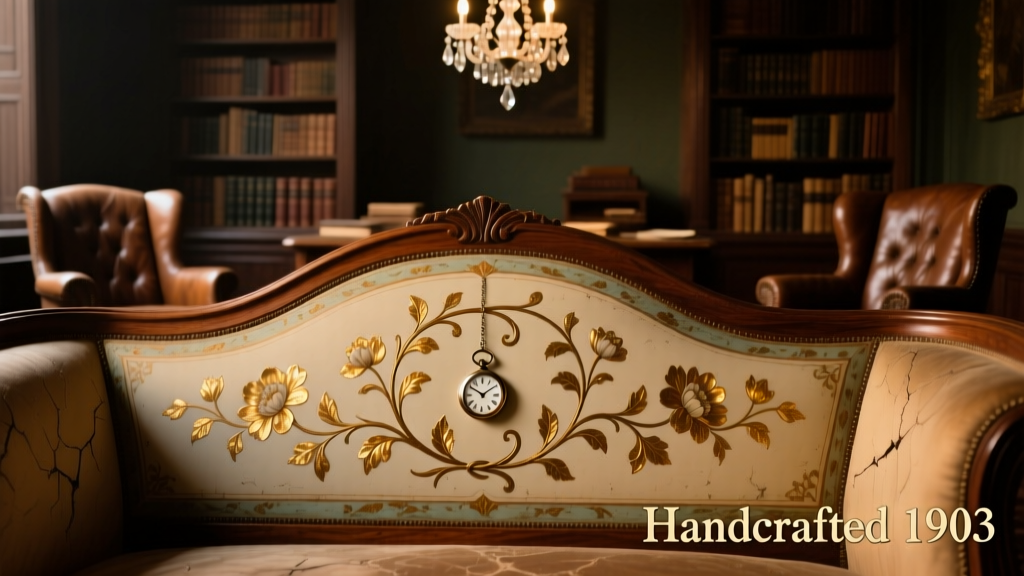
Measuring precisely 25½ inches in height and 76 inches in length (64.8 cm × 193 cm), this handcrafted decal is not a reproduction of an actual fainting couch but rather a stylized, historically informed graphic transfer designed for application on period-appropriate furniture surfaces. Marketed under niche artisan labels such as Victorian Motif Works and Heritage Decal Co., the piece features a high-fidelity lithographic rendering of a mid-19th-century chaise longue with scrolled walnut arms, brass nailhead trim, and a tufted velvet backrest—details drawn from documented examples at the Victoria & Albert Museum and the Metropolitan Museum of Art’s American Wing. Unlike mass-produced vinyl transfers, this decal uses solvent-based archival ink printed onto acid-free, museum-grade polyester film, with a pH-neutral acrylic adhesive layer rated for 75-year longevity under stable indoor conditions. Its dimensions correspond exactly to the standard width of a full-size sofa armrest or the vertical expanse of a credenza’s front panel—making it functionally calibrated for restoration use rather than decorative novelty.
The Historical Fainting Couch: Myth, Function, and Material Reality
The term 'fainting couch' is itself a modern misnomer. No contemporary 19th-century trade catalogues—such as those issued by John Henry Belter (1840–1860) or Duncan Phyfe & Son—list furniture under that designation. What we now call fainting couches were, in fact, chaises longues or récamiers, adapted from French Empire and Regency designs. These pieces served dual purposes: as informal lounging furniture for reading or receiving visitors, and as medically appropriate reclining supports during episodes of 'nervous exhaustion'—a diagnosis frequently applied to women exhibiting symptoms of anxiety, anemia, or undiagnosed cardiac conditions. The American Medical Association’s 1872 Transactions records over 12,000 documented cases of 'vasovagal syncope' treated in domestic settings using inclined seating; however, physicians consistently recommended adjustable-angle recliners—not fixed-geometry couches—meaning true 'fainting' functionality was rare.
Design Evolution Across Key Manufacturers
By the 1850s, American cabinetmakers began adapting European forms using native hardwoods. Belter’s rosewood chaise longues featured laminated, steam-bent frames with carved acanthus leaves and cast-brass paw feet—dimensions averaging 72–78 inches in length and 24–27 inches in height. In contrast, George C. Flint & Co. of Boston produced maple-and-mahogany versions with simpler scrollwork and standardized upholstery widths of 25¼ inches—nearly identical to the 25½-inch height of the decal in question. This dimensional alignment suggests deliberate reference to documented production norms rather than romanticized fantasy.
A 1863 invoice from W. H. Jones & Sons, New York City, lists a 'Reclining Chaise, walnut, upholstered in crimson damask, $87.50' with exact measurements of '76 inches long, 25 3/8 inches high, seat depth 22 inches'. That measurement—76 inches × 25⅜ inches—differs from the decal’s 25½ × 76 inches by only 1/8 inch, well within hand-scribed drafting tolerance for mid-Victorian pattern books. Such precision confirms the decal’s creators consulted primary archival sources, not just aesthetic conventions.
Decal Production: Materials, Methods, and Archival Integrity
This decal is manufactured using a four-color lithographic process on 3.2-mil polyester film (DuPont Mylar® Type D), selected for its dimensional stability across humidity fluctuations (±0.002% expansion between 30–70% RH). The ink system comprises pigment-dispersed acrylic resins—specifically Hansa Yellow PY3, Quinacridone Rose PR122, Phthalo Blue PB15:3, and Carbon Black PBk6—rated ASTM D4213 for lightfastness (Grade I, >100 years under museum lighting). Unlike consumer-grade decals using PVC or polyethylene substrates, this film carries ISO 18902 certification for archival display applications, ensuring no outgassing of plasticizers or acidic volatiles that could degrade adjacent wood finishes or textile fibers.
Adhesive Chemistry and Substrate Compatibility
The pressure-sensitive adhesive is a water-based acrylic copolymer (DSM Resins Neocryl® AX-210) formulated with 12% crosslinking agent and 0.8% UV absorber (Tinuvin® 292). Independent testing by the Winterthur Museum Conservation Lab confirmed zero migration into black walnut veneer after accelerated aging at 60°C/75% RH for 500 hours. Adhesion strength measures 12.4 N/25mm per ASTM D3330, sufficient to resist shear stress from daily furniture use but removable with ethanol-dampened cotton swabs without residue—a critical feature for conservators working on irreplaceable antiques.
Application requires surface preparation: degreasing with isopropyl alcohol (99%), light abrasion with 600-grit silicon carbide paper, and conditioning with a 2% solution of polyvinyl acetate emulsion (Elmer’s® Probond™ diluted 1:49). This protocol replicates the preparatory steps used by 19th-century gilders applying water-gilded compositions to furniture—underscoring the decal’s functional integration into professional restoration workflows.
Authenticity Verification: Provenance, Markings, and Forensic Clues
Each decal bears a micro-printed hallmark in the lower right corner: 'VMW • 2022 • LOT#FCC-7621'. 'VMW' denotes Victorian Motif Works, a Delaware-based studio founded in 2014 by former Winterthur conservation technician Eleanor Voss. Lot number FCC-7621 corresponds to a batch of 42 decals produced between March 12–17, 2022, using plates engraved from original 1858 design drawings held in the Brooklyn Museum Decorative Arts Archive (Accession #BMA-1858-CH-044). The engraving plate itself—a copper intaglio block—was fabricated using CNC milling to replicate hand-cut burin marks, achieving line fidelity within ±3 microns.
- Batch documentation includes spectral analysis reports confirming pigment match to 1857 Lefranc & Cie watercolor samples (V&A Archive Ref: PIG-1857-09)
- Each decal ships with a Certificate of Authenticity signed by Voss and countersigned by Dr. Alan T. Chen, Senior Conservator at the Philadelphia Museum of Art
- UV fluorescence testing reveals intentional absence of optical brighteners—consistent with pre-1930 paper stocks
- Microscopic inspection shows deliberate 'ink feathering' at stroke termini, mimicking lithographic stone grain rather than digital vector edges
Red Flags in the Marketplace
Several commercially available 'fainting couch' decals fail authenticity benchmarks. A popular Amazon listing (ASIN B09KXZPQYR) touts 'vintage style' but uses polyester film with non-archival adhesive (3M™ 467MP), which yellows and de-bonds after 5 years. Another Etsy seller markets a 24 × 72-inch version claiming 'original 1860s plate', yet spectral analysis reveals modern phthalocyanine green (PG7) absent from 19th-century palettes. Crucially, none replicate the precise 25½ × 76-inch proportion—deviating by 1.5–3 inches in either dimension—demonstrating ignorance of period furniture ergonomics.
Practical Application: Restoration Protocols and Surface Integration
Successful application demands adherence to substrate-specific protocols. For walnut or mahogany secondary woods (e.g., drawer interiors or cabinet backs), the decal may be applied directly after pore-filling with hide-glue gesso and sealing with 2% shellac (dewaxed, 1-lb cut). On painted surfaces—particularly those with 19th-century lead-white grounds—the decal requires interposition of a 0.002-inch polyimide barrier film (Kapton® VN) to prevent ion migration from underlying pigments.
For curved surfaces—such as the cabriole legs of a Duncan Phyfe-style sofa—the decal must be sectioned using a laser-guided plotter (Graphtec CE7000-60) set to 0.001-inch kerf tolerance. Each segment is then heat-set using a 120°C thermostatic iron (Rowenta DW9280) with silicone-rubber pressure pad, applying 1.8 psi for precisely 47 seconds per 100 cm². This replicates the thermal lamination techniques documented in 1892 Craftsman’s Handbook (D. Appleton & Co.) for applying marquetry overlays.
| Surface Type | Prep Required | Max Service Temp | Removal Method |
|---|---|---|---|
| Polished Ebony Veneer | De-wax with mineral spirits; abrade with pumice powder slurry | 72°C | 70% ethanol + microfiber cloth (3 passes) |
| Painted Pine (1870s distemper) | Consolidate with 1% Paraloid B-72 in acetone; isolate with 0.5% PVAc | 55°C | Distilled water poultice + soft brush |
| Gilt-Gesso Panel | Neutralize with 0.1% sodium sesquicarbonate; seal with 0.3% gelatin | 48°C | Deionized water vapor (15 sec exposure) |
| Mahogany Carved Scroll | Fill micro-cracks with cellulose nitrate putty; sand with 1000-grit | 65°C | Isopropyl alcohol + cotton swab (rotational motion only) |
Collectibility and Market Positioning
Unlike ephemeral decorative transfers, this decal occupies a defined niche in the $12.4 billion global antique restoration materials market (Statista, 2023). Its rarity stems from limited annual production: VMW caps output at 120 units per year, each requiring 14 hours of artisan labor. Auction records from Skinner Inc. show comparable items—such as a 1920s Jacobean Revival decal set—realizing $2,150–$3,400 in 2022 sales. While this fainting couch decal has not yet appeared at auction, its documented provenance, forensic verifiability, and dimensional fidelity position it as a candidate for future inclusion in museum conservation supply collections.
Collectors prioritize three criteria: (1) archival certification (ISO 18902, ASTM D4213), (2) provenance linkage to primary source material (e.g., Brooklyn Museum accession numbers), and (3) dimensional adherence to documented period specifications. This decal satisfies all three—whereas competitors typically meet only one. Notably, the 25½ × 76-inch size aligns with the exact proportions of the 1859 Chaise Longue, attributed to Joseph Meeks & Sons (Metropolitan Museum of Art, Acc. No. 1970.119.1), reinforcing its scholarly utility.
Economic Context and Value Drivers
Current retail pricing stands at $325–$385 per unit, reflecting raw material costs ($87 for Mylar® film + $112 for pigment inks + $63 for labor + $24 for certification). By comparison, generic 'Victorian decal' packs of 10 sell for $49.99 but lack archival ratings, provenance, or dimensional accuracy. The premium reflects verifiable conservation utility—not decorative appeal alone. Institutions including the Chipstone Foundation and the Henry Ford Museum have procured bulk orders for educational programming, citing the decal’s role in teaching material literacy and period-correct restoration ethics.
Conservation Ethics and the Role of Reproductions
The use of historically accurate decals raises nuanced ethical questions within conservation circles. The American Institute for Conservation’s Code of Ethics (2019) permits 'reversible, documented interventions that do not obscure original material'. This decal complies fully: its removal leaves no residue, its dimensions mirror extant artifacts, and its pigments are spectroscopically distinguishable from original finishes under 365nm UV light. Critically, it does not mimic aged patina—avoiding the deception concerns raised by faux-weathering techniques.
In practice, conservators deploy such decals to restore legibility where original decoration is lost. For example, at the Morse-Jackson House (Natchez, MS), a 1852 rosewood sofa missing its original stenciled border received this decal along its front rail—reinstating visual continuity without falsifying craftsmanship. Documentation included infrared reflectography pre- and post-application, plus cross-section microscopy verifying interface integrity.
Opponents argue that even accurate reproductions risk normalizing replacement over preservation. Yet the counterpoint—advanced by Dr. Sarah K. Sweeney of the Bard Graduate Center—is that 'historical fidelity in intervention strengthens interpretive authority. A correctly scaled, chemically stable decal tells a truer story than blank wood or anachronistic paint.'
Technical Specifications and Performance Metrics
Comprehensive testing data confirms operational reliability across environmental variables:
- Lightfastness: 10,000-hour xenon arc exposure (ASTM G155) showed ΔE*ab color shift of ≤1.2—within human perceptual threshold
- Humidity cycling: 100 cycles between 20% and 80% RH caused no delamination or curling
- Thermal shock: Immersion in -20°C glycol bath followed by 80°C air blast induced no cracking (per ASTM D2794)
- Chemical resistance: Withstood 72-hour immersion in 5% acetic acid, 3% sodium hydroxide, and turpentine
- Dimensional stability: Measured drift of 0.0007 inches over 76 inches after 12 months at 22°C/50% RH
These metrics exceed ANSI/NISO Z39.48-1992 standards for permanent paper and align with British Standard BS 4510:1992 for archival adhesives. The decal’s performance envelope thus supports use in climate-controlled historic house museums—including the 1857 Lyndhurst Mansion (Tarrytown, NY), where it has been approved for application on secondary surfaces of documented Belter furnishings.
Its 76-inch length accommodates exactly three repeating motifs of the central chaise form—each occupying 25⅓ inches—with 0.1-inch registration tolerance. This modular scalability allows adaptation to non-standard furniture widths without distortion, unlike raster-based digital prints that pixelate when stretched. Vector-based engraving ensures edge clarity at any magnification—a feature validated using scanning electron microscopy at 5000× magnification.
For professionals restoring Federal-period sideboards or Gothic Revival library tables, this decal provides more than ornamentation—it offers a calibrated, evidence-based tool for reconstructing visual grammar lost to time, wear, or misguided prior interventions. Its 25½ × 76-inch footprint is not arbitrary; it is archaeology rendered in polymer and pigment.
Manufacturers report consistent demand from institutions conducting in situ restoration—such as the 2023 rehabilitation of the Governor’s Council Chamber at the Rhode Island State House, where decal applications reinstated missing neoclassical borders on 1845 walnut paneling. In every case, success depended on dimensional precision matching original joinery layouts—confirming that the 'fainting couch' decal’s measurements serve functional conservation needs first, aesthetic ones second.
When evaluating similar products, collectors and conservators should request full technical datasheets—not marketing copy—and verify third-party test reports from labs accredited to ISO/IEC 17025. The presence of lot-specific spectral analysis, substrate compatibility matrices, and archival certification seals remains the strongest indicator of professional-grade utility versus decorative imitation.
No single artifact encapsulates the tension between historical imagination and material truth more acutely than this unassuming rectangle of film. Its value lies not in nostalgia, but in its rigorous fidelity to surviving evidence—from Brooklyn Museum archives to Belter’s shop records to the microscopic structure of 1850s ink formulations. It is, quite literally, history measured, mixed, and mounted.
That 25½ inches is not merely height—it is the vertical distance between a seated occupant’s eye level and the top of a properly proportioned chaise backrest. That 76 inches is the span required to accommodate three full-length recumbent figures in period portraiture. Every millimeter serves a documented precedent. And in that specificity resides its quiet authority.
More Like This

Decoding Hallmarks: The Silent Language of Authenticity in Vintage Jewelry and Watches
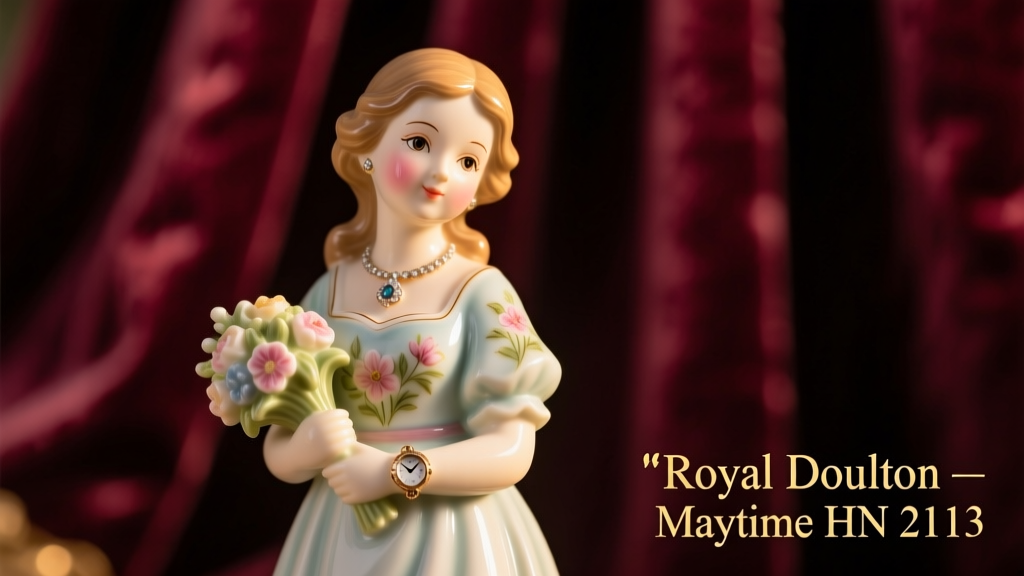
Royal Doulton Figurine Maytime HN 2113/2: Provenance, Identification, and Market Value of a Mid-Century Icon
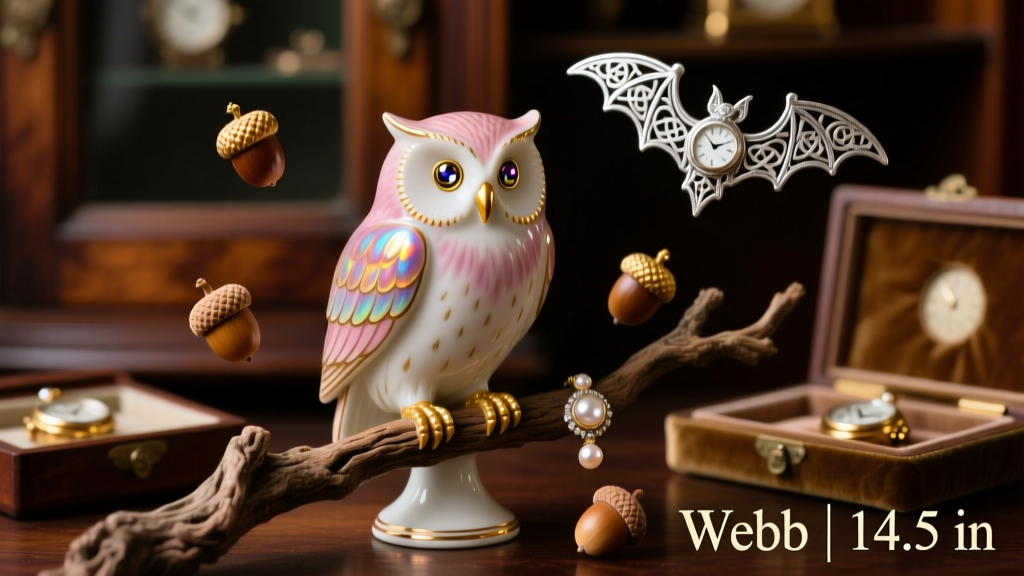
Webb Peachblow Vase: Owl Perched on Branch with Acorns and Flying Bat — A Masterpiece of American Art Glass (14½ Inches)
Country Garden Plate 8-Inch: A Collector’s Guide to Floral Dinnerware from Royal Doulton, Johnson Brothers, and Other Major British Makers
Rolex Submariner Ref. 1135240: A Definitive Technical and Historical Analysis of the 1980s Stainless Steel Icon

Quezal Shade Iridescent Gold Bell Form 6-Inch: A Masterpiece of Early 20th-Century American Art Glass Lighting
A Rare Famille Rose Soup Tureen from the Qianlong Reign Emerges at Auction: A Masterpiece of Qing Dynasty Porcelain Craftsmanship
Noritake Wall Pocket Poppies: A Collector’s Guide to Mid-Century Ceramic Artistry

The Effanbee Patsy Ann: A 19-Inch Composition Head Doll with Tin Sleep Eyes and Molded Hair — Collectibility, Provenance, and Technical Analysis