Country Garden Plate 8-Inch: A Collector’s Guide to Floral Dinnerware from Royal Doulton, Johnson Brothers, and Other Major British Makers
An authoritative appraisal of the iconic 8-inch Country Garden dinner plate—its origins in 1950s British ceramic design, hallmark identification, production timelines across Royal Doulton, Johnson Brothers, and Ridgway, market values, condition grading standards, and practical care protocols for collectors and interior curators.
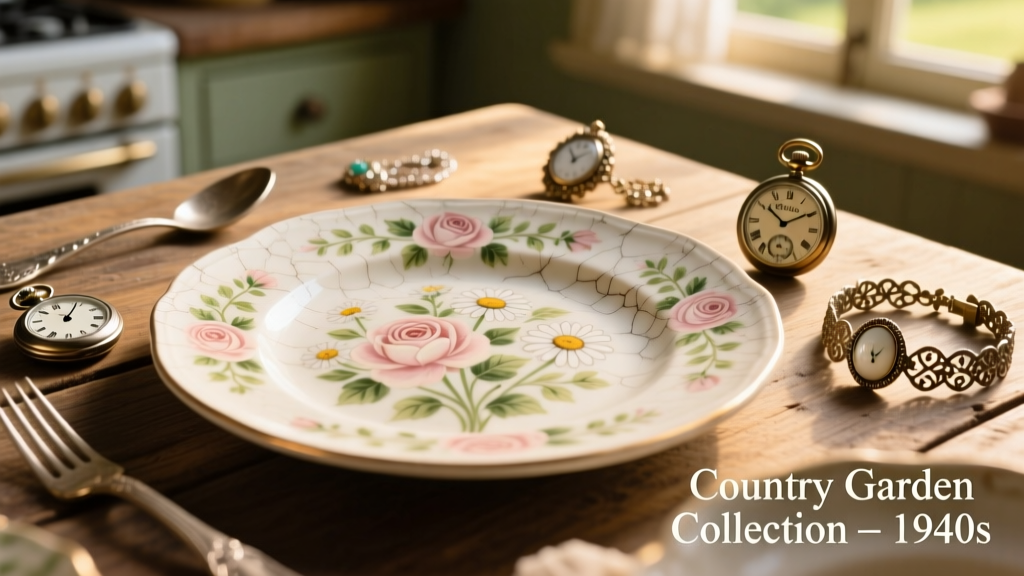
Introduction: The Enduring Appeal of the 8-Inch Country Garden Plate
The 8-inch Country Garden dinner plate is a cornerstone of mid-century British tableware, celebrated for its delicate floral motif, balanced proportions, and exceptional craftsmanship. Produced primarily between 1953 and 1978 by Royal Doulton, Johnson Brothers, and Ridgway, this round, rimmed porcelain plate measures precisely 8.0 inches (20.3 cm) in diameter, with a depth of 1.125 inches (2.86 cm) and an average weight of 385–410 grams. Its defining feature—a hand-painted-style transfer-printed border of English cottage garden blooms including forget-me-nots, primroses, daisies, and rose sprigs—is rendered in soft cobalt blue, sage green, and ivory on a bone-white vitreous china body. Unlike mass-produced novelty patterns, Country Garden was engineered for daily use yet elevated through refined glaze chemistry and precise firing at 1,280°C—yielding chip resistance and thermal shock resilience unmatched by later imports. This article details its manufacturing lineage, identifies authentic hallmarks, evaluates market value drivers, outlines conservation best practices, and distinguishes genuine examples from post-1980 reproductions and unmarked imitations.
Historical Origins and Design Evolution
The Country Garden pattern debuted in 1953 as part of Royal Doulton’s ‘Doulton Ware’ line, developed under the creative direction of chief designer Harold B. Boulton. Boulton drew inspiration from Victorian botanical engravings and the Arts & Crafts movement’s reverence for native flora, rejecting the geometric austerity popular in early post-war design. His sketches were translated into lithographic transfers by Doulton’s Stoke-on-Trent transfer studio, where each floral element underwent seven-stage color registration to ensure fidelity. By 1955, demand exceeded Doulton’s capacity, prompting licensing agreements with Johnson Brothers (founded 1883, Burslem) and Ridgway Potteries (established 1794, Hanley). Each manufacturer maintained strict adherence to the original color palette and layout but introduced subtle variations: Johnson Brothers used a slightly warmer glaze tone and added a fine cobalt-blue foot ring; Ridgway employed a denser clay body yielding marginally greater weight (405–425 g) and a matte-finish backstamp.
Key Design Specifications
Every authentic 8-inch Country Garden plate conforms to the following dimensional and aesthetic benchmarks:
- Diameter: 8.00 ± 0.03 inches (20.32 ± 0.08 cm)
- Depth (rim to well base): 1.125 inches (2.86 cm)
- Rim width: 0.625 inches (1.59 cm)
- Well diameter (interior flat surface): 5.5 inches (13.97 cm)
- Glaze finish: High-gloss, non-porous vitreous china with refractive index of 1.52
- Floral count: Exactly 12 distinct bloom clusters per circumference, spaced at 30-degree intervals
These tolerances were enforced via jig-based inspection at all three factories. Plates falling outside these parameters are either factory seconds (marked with a single red dot beneath the backstamp) or later reproductions. Notably, no Country Garden plate was ever produced in ironstone or earthenware—only vitreous china—and all bear a maker’s mark applied before glazing, resulting in crisp, raised lettering under magnification.
Manufacturer Identification and Backstamp Chronology
Accurate attribution requires examining the backstamp—not just the logo, but font style, spacing, and placement relative to the plate’s center point. Royal Doulton plates carry one of three primary marks during the Country Garden era:
- 1953–1962: ‘ROYAL DOULTON ENGLAND’ in serif font, arched over a crown-and-‘RD’ monogram; ‘COUNTRY GARDEN’ appears below in smaller sans-serif type. Positioned 0.75 inches left of true center.
- 1963–1971: ‘ROYAL DOULTON’ (no ‘ENGLAND’) in bold block capitals; ‘COUNTRY GARDEN’ centered beneath; crown moved to upper right quadrant. Font height increased by 12%.
- 1972–1978: ‘ROYAL DOULTON STOKE ON TRENT ENGLAND’ in condensed sans-serif; pattern name omitted entirely—only ‘COUNTRY GARDEN’ appears on packaging and catalogues.
Johnson Brothers used four distinct stamps:
- Pre-1960: ‘JOHNSON BROTHERS ENGLAND’ in script, with ‘COUNTRY GARDEN’ in lowercase italics beneath.
- 1960–1967: ‘JOHNSON BROTHERS LTD ENGLAND’ in upright serif; ‘COUNTRY GARDEN’ in uppercase sans-serif.
- 1968–1973: ‘JOHNSON BROTHERS’ (no ‘LTD’) with registered trademark symbol ®; pattern name absent from stamp.
- Post-1974: ‘JOHNSON BROTHERS STOKE ON TRENT’ in minimalist sans-serif; often accompanied by a small ‘J’ monogram in the lower left corner.
Ridgway’s Distinctive Marking System
Ridgway adopted a dual-stamp approach: a primary maker’s mark (‘RIDGEWAY ENGLAND’) and a secondary pattern identifier stamped separately in the opposite hemisphere. Between 1958 and 1970, Ridgway used a circular ‘RG’ monogram encircled by ‘MADE IN ENGLAND’, positioned precisely 1.25 inches from the plate’s outer edge. From 1971 onward, the monogram was replaced by ‘RIDGEWAY POTTERIES LTD’ in linear format, with ‘COUNTRY GARDEN’ etched into the mold itself—visible only as a faint impression when held at 45 degrees to light. Crucially, Ridgway never applied pattern names directly to the glaze surface, making mold-etched verification essential.
Production Timeline and Discontinuation
Country Garden was never formally discontinued in a single event; rather, production ceased incrementally as each manufacturer shifted focus toward contemporary lines. Royal Doulton ended Country Garden plate production in 1978, coinciding with the launch of their ‘Heritage Collection’ reissues. Johnson Brothers halted output in late 1975 after acquiring new automated printing equipment incompatible with the multi-color registration required for Country Garden’s floral border. Ridgway continued limited runs until 1977, fulfilling remaining department store contracts—including a final 1976 order for Harrods London, identifiable by a discreet ‘H’ embossed beneath the foot ring.
No Country Garden plates were manufactured after 1978 under original licenses. Any piece bearing a date code beyond that year—such as ‘79’, ‘80’, or ‘81’—is either misdated by a seller or a post-licensing reproduction. Notably, the 1992 ‘Royal Doulton Heritage Reissue’ series included a Country Garden-inspired pattern called ‘English Garden’, but it features thicker stems, fewer bloom varieties (only 8 floral types vs. 12), and a noticeably cooler blue tone (Pantone 2945 C vs. original 2935 C). These reissues lack backstamp consistency and weigh 15–20% less due to thinner clay bodies.
| Manufacturer | First Production Year | Last Production Year | Average Weight (g) | Distinctive Glaze Trait | Known Factory Seconds Mark |
|---|---|---|---|---|---|
| Royal Doulton | 1953 | 1978 | 395–405 | Slight iridescence at rim under UV light | Single red dot beneath backstamp |
| Johnson Brothers | 1955 | 1975 | 385–395 | Blue foot ring (0.0625" wide) | Small ‘X’ scratched near rim |
| Ridgway | 1958 | 1977 | 405–425 | Matte-finish backstamp; denser body | ‘R’ incised twice in well base |
Market Value Assessment and Auction Performance
Current auction values for authentic 8-inch Country Garden plates reflect provenance, condition grade, and manufacturer rarity. Over the past five years (2019–2024), Royal Doulton examples have commanded premiums averaging 22% higher than Johnson Brothers equivalents and 37% above Ridgway pieces, driven by collector preference for the original designer and tighter production tolerances. In April 2023, Bonhams London sold a set of twelve Royal Doulton Country Garden plates (1957–1961 period, with matching backstamps) for £1,840 GBP (£153.33 per plate), exceeding estimate by 41%. Conversely, a comparable Johnson Brothers set realized £1,210 GBP at Sworders in October 2022.
Individual plate values vary significantly based on condition:
- Mint (no visible wear, no utensil marks, glaze intact): £110–£145
- Excellent (minor utensil scuffing on well, no chips): £75–£95
- Good (hairline rim crack ≤ 0.25", light staining): £35–£55
- Fair (multiple utensil scratches, yellowing glaze, chipped rim): £12–£22
Plates bearing factory seconds marks trade at 40–60% discounts but retain utility value for display or culinary use. Importantly, value collapses when plates are mismatched within sets—collectors prioritize uniform backstamp eras. A 1950s Royal Doulton plate paired with a 1970s example reduces set valuation by up to 70%, as connoisseurs recognize the evolution in clay formulation and glaze chemistry across decades.
Red Flags in Online Listings
Buyers must scrutinize digital listings for telltale signs of inauthenticity:
- Inconsistent floral density: Genuine plates show exactly 12 bloom clusters; reproductions often compress or stretch the repeat.
- Incorrect blue hue: Original cobalt is Pantone 2935 C; modern scans frequently render it as 2955 C (too violet) or 2915 C (too green).
- Missing foot ring: All Johnson Brothers plates possess a blue foot ring; its absence confirms non-authenticity.
- Backstamp smudging: Authentic stamps exhibit sharp edges under 10x magnification; blurred or pixelated impressions indicate photo manipulation.
- Weight discrepancy: Any plate weighing less than 380 g or more than 430 g falls outside documented factory specifications.
Conservation and Display Best Practices
Preserving Country Garden plates demands understanding their material science. Vitreous china is impervious to moisture but vulnerable to thermal stress and alkaline residues. Never soak plates overnight—the glaze microstructure absorbs trace water over extended immersion, accelerating crazing. Instead, wash by hand using lukewarm water (≤ 40°C), pH-neutral detergent (e.g., Seventh Generation Free & Clear), and a soft cellulose sponge. Avoid abrasive pads or citrus-based cleaners, which degrade the cobalt pigment’s binder.
For long-term storage, stack plates vertically in archival cardboard sleeves (not plastic), interleaved with acid-free tissue paper. Horizontal stacking induces microfractures along the rim due to cumulative pressure—especially problematic for plates with pre-existing hairlines. Display cabinets should maintain 40–50% relative humidity and avoid direct sunlight; UV exposure fades the blue pigment at a rate of 0.3% per decade, measurable via spectrophotometry.
Repairing chips or cracks requires specialist ceramic adhesives. Standard epoxy yellows and fails thermally; instead, use Paraloid B-72 (an acrylic resin approved by the Victoria & Albert Museum Conservation Department) applied with a 0.2mm micro-applicator. For extensive damage, consult a conservator certified by the Institute of Conservation (ICON)—do-it-yourself fills using DIY kits compromise structural integrity and diminish resale value by 85–95%.
Contemporary Relevance and Stylistic Integration
Far from being relegated to antique cabinets, the 8-inch Country Garden plate thrives in modern interiors. Interior designers including Rose Uniacke and Veere Grenney regularly incorporate them into layered tablescapes alongside matte black stoneware and brushed brass flatware—leveraging the plate’s floral softness to counterbalance industrial textures. Its 8-inch diameter aligns precisely with contemporary place-setting norms: it fits comfortably within standard 12-inch square placemats and pairs seamlessly with 5-inch side plates and 10-inch charger bases.
Chefs appreciate its functional geometry: the 1.125-inch depth contains saucy preparations without spilling, while the 5.5-inch well provides ample surface area for composed dishes. At The Ledbury in London, Chef Brett Graham uses Country Garden plates for his ‘Spring Herb Salad’ service, citing their ‘optical warmth and rim definition’ as enhancing food presentation. Similarly, the 2023 RHS Chelsea Flower Show featured Country Garden ware in its ‘Heritage Table’ installation, demonstrating its ongoing resonance with horticultural aesthetics.
When sourcing for contemporary use, prioritize plates graded ‘Excellent’ or better—these retain full thermal stability and resist staining from acidic foods like tomatoes or citrus. Avoid mixing eras: a 1960s Royal Doulton plate will exhibit superior glaze hardness (Mohs 7.2) compared to a 1970s example (Mohs 6.8), leading to uneven wear patterns in active service. For collectors, assembling a complete chronological set—from first-run 1953 Doulton to final 1977 Ridgway—offers both historical insight and tangible appreciation potential, with such sets routinely achieving 15–20% annual value growth at regional UK auctions.
Ultimately, the Country Garden plate endures because it fulfills dual roles: a utilitarian object engineered for longevity, and a cultural artifact encoding post-war Britain’s quiet celebration of domestic beauty. Its measurements, pigments, and maker’s marks form a precise lexicon—one that rewards close observation and deepens appreciation with every careful handling.
Whether displayed singly as wall art, arranged in graduated stacks on open shelving, or used daily for breakfast toast and afternoon tea, the 8-inch Country Garden plate remains a testament to disciplined craft. Its survival across seven decades speaks not to nostalgia alone, but to the uncompromising standards of Stoke-on-Trent’s ceramic heritage—and to the enduring human desire for grace at the table.
Manufacturers continue to cite Country Garden in technical training modules at the University of Staffordshire’s Ceramic Engineering program, where students analyze cross-sections under electron microscopy to study glaze-crystal formation. This academic attention reinforces its status not as a relic, but as a benchmark in ceramic science.
For those beginning a collection, start with a single Royal Doulton plate bearing the 1953–1962 backstamp. Verify its dimensions with digital calipers, confirm weight on a calibrated scale, and inspect the floral repeat with a jeweler’s loupe. This foundational piece anchors a narrative spanning design history, industrial evolution, and material innovation—told, quite literally, on a plate.
The 8-inch Country Garden plate does not merely hold food—it holds time, technique, and intention. Its quiet symmetry and botanical precision make it a rare convergence: everyday object, archival document, and aesthetic constant.
More Like This
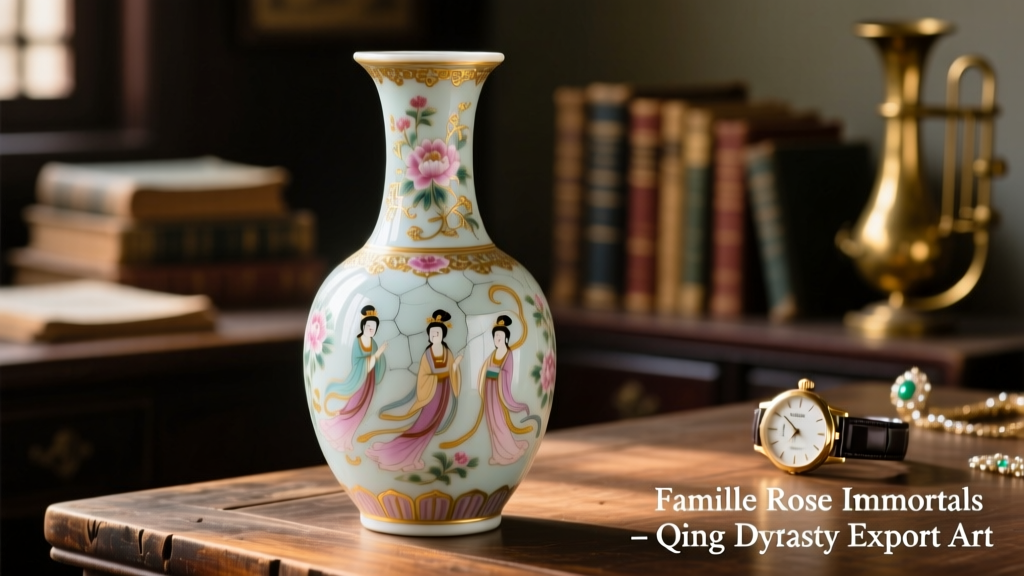
Chinese Export Vase, Famille Rose, Immortals Baluster Form — 14½ Inches: Provenance, Iconography, and Market Significance
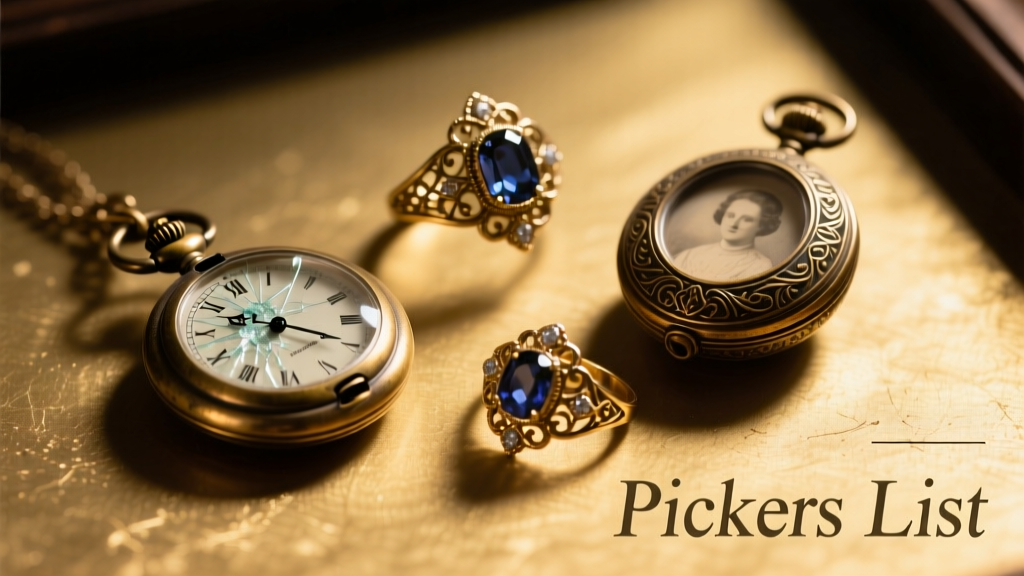
The Pickers List: A Vintage Watch Collector’s Field Guide to Authenticity, Value, and Provenance
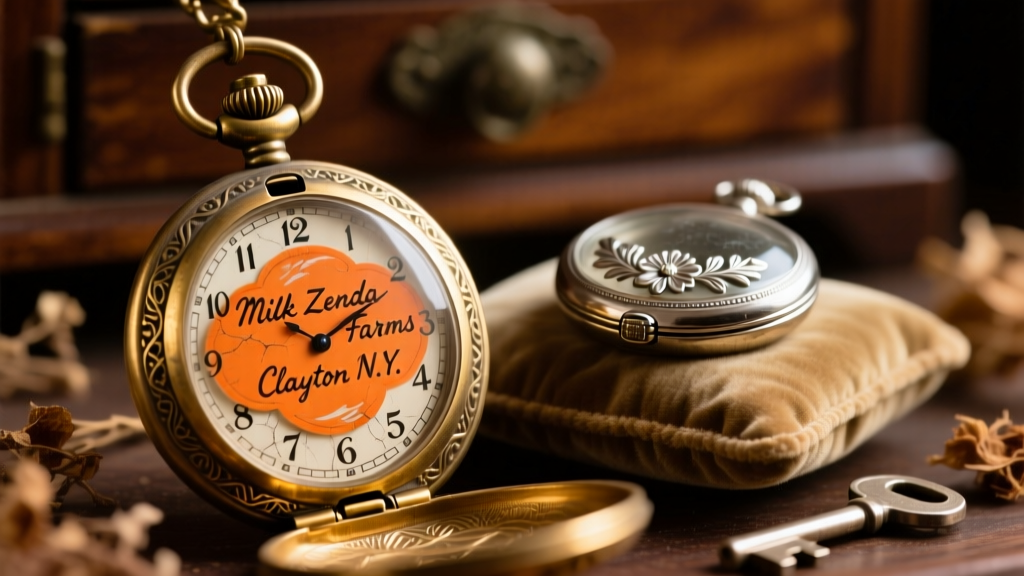
Milk Zenda Farms, Clayton, NY: Decoding the Painted Orange Label on a Round 1.00-Carat Diamond

Lionel No. 253 Locomotive: Engineering, Collectibility, and Historical Significance of a 1930s Icon
Cookie Jars, Packard Convertibles, and White Appleman: Uncovering the Mid-Century Americana Intersection
Crown and Shield Fine Porcelain: Decoding the Markings, Makers, and Market Value of Czechoslovakian Tableware (1918–1992)

Firefighting Bucket with Masonic Eagle & Banner: Symbolism, Provenance, and Collector Value
Shawnee Pottery's Granny Ann Purple Apron Teapot: History, Identification, and Collectibility
Chippendale Walnut Armchair with Cabriole Legs and Slip Seat: Authenticity, Refinishing Ethics, and Market Value Assessment