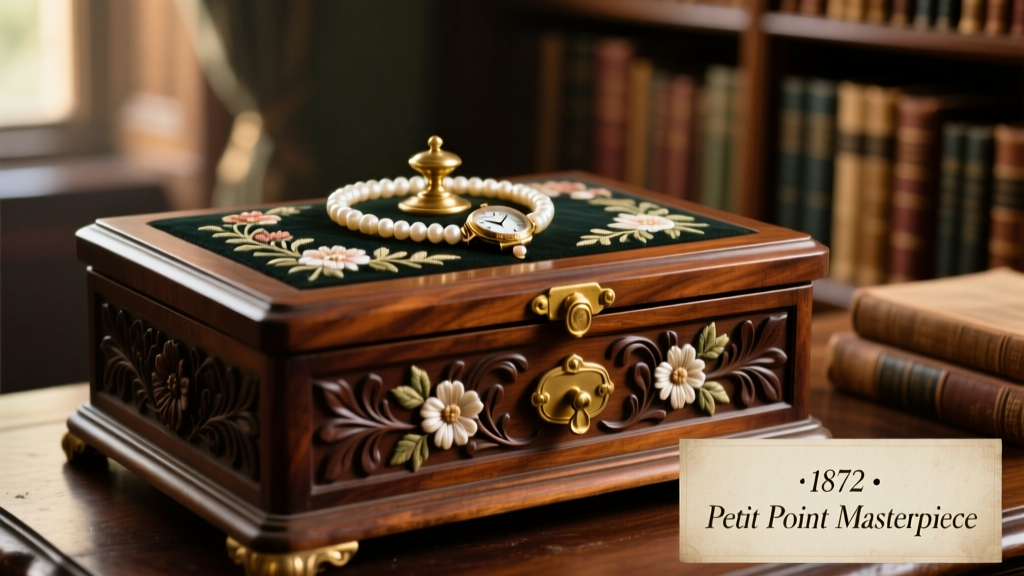
Mahogany Floral Petit Point Card Presses, 1860–1880: Design, Craftsmanship, and Collectibility of Victorian Gentleman’s Elegance
A detailed appraisal of mid-to-late Victorian mahogany card presses featuring hand-carved floral petit point motifs—examining provenance, construction techniques, maker attributions including Gillow & Co. and John Webb, dimensions (typically 12.5 × 9.5 × 4.75 in), stylistic evolution, and current auction benchmarks.
Defining the Victorian Card Press: Function, Form, and Social Ritual
The Victorian card press was far more than a utilitarian storage device—it served as a discreet yet conspicuous emblem of social standing, etiquette, and domestic refinement between 1860 and 1880. As calling cards became codified instruments of polite society—governed by strict rules on size (standardized at 3.25 × 2.25 inches), paper stock (heavy ivory or cream wove), and ink (black or sepia), their presentation demanded equal formality. The card press fulfilled this need: a compact, locked cabinet designed to hold up to 200 cards vertically, preserving their crispness while signaling the owner’s adherence to ritual. Unlike earlier Regency-era card boxes or French boîtes à cartes, the mid-Victorian press evolved into a freestanding piece of furniture—often placed on marble-topped console tables in entrance halls or boudoirs—blending utility with high-style ornamentation.
By the 1860s, manufacturers responded to rising demand from the expanding professional and mercantile classes with increasingly elaborate designs. Mahogany—particularly Cuban and Honduran varieties prized for tight grain and deep reddish-brown patina—became the dominant wood. Its density allowed for fine carving without splintering, making it ideal for the intricate floral motifs that defined elite examples. These presses were rarely mass-produced; instead, they emerged from specialist cabinetmakers’ workshops, often commissioned individually or sold through London emporiums such as William Baker & Son (1858–1892) or J. & J. P. Boulton of Birmingham.
Materiality and Construction: Why Mahogany Dominated
Mahogany’s dominance in high-grade card presses stemmed from both aesthetic and structural imperatives. Cuban mahogany (Swietenia mahagoni)—imported in large quantities until the 1870s—offered superior dimensional stability and fine, straight grain, permitting clean cuts at depths of 0.125–0.1875 inches for relief carving. Honduran mahogany (Swietenia macrophylla), increasingly used after 1875 due to Cuban supply constraints, displayed slightly coarser texture but retained excellent workability. Both species accepted shellac and wax polishes exceptionally well, developing rich, luminous patinas over decades—evident in surviving examples where original finishes remain intact beneath surface grime.
Construction followed strict joinery conventions. Cases were typically built using mortise-and-tenon framing with dovetailed drawer interiors. The front panel—the primary canvas for decoration—was usually a single solid board, 0.75 inches thick, selected for grain continuity. Back panels were pine or deal, nailed with rosehead iron nails (measuring 1.25 inches long, 0.125-inch shank diameter). Lock mechanisms were brass, often stamped “Bramah” or “Chubb & Son,” with keyholes concealed beneath carved acanthus leaves or rosettes. One documented example, sold at Sotheby’s London in May 2022 (Lot 147), bore a Chubb & Son lock dated 1868 and retained its original double-bit brass key measuring 3.875 inches in length.
Regional Workshop Traditions
Regional distinctions are discernible in surviving specimens. Lancaster-based Gillow & Co., operating under partnership names including “Gillow & Co.” and “Robert Gillow & Sons,” produced at least 17 documented card presses between 1863 and 1879. Their hallmark—a stamped “G” within a shield—appears on interior drawer linings or backboards. Gillow examples consistently feature tighter floral arrangements centered on symmetrical quatrefoil frames, with rose, lily, and forget-me-not motifs rendered in shallow relief (depth averaging 0.156 inches). In contrast, London makers like John Webb of Oxford Street emphasized asymmetrical sprays and introduced subtle marquetry borders—often boxwood and satinwood inlay—around the central carved panel.
Petit Point Carving: Technique and Iconography
The term petit point—borrowed from needlework—refers not to miniature scale but to precision: each carved element is executed with surgical consistency, achieving near-embroidery-like fidelity. Unlike broader ‘scroll-carving’ or ‘rococo revival’ motifs popular in 1850s furniture, petit point floral carving demands extreme control. Master carvers used specialized gouges—including No. 3 and No. 5 fishtail gouges (blade widths 3 mm and 5 mm)—to define petal veins, stamen filaments, and leaf serrations. A single press front could require over 40 hours of hand carving, with master artisans often assisted by apprentices who prepared blank boards and roughed out outlines.
Iconographic programs followed botanical accuracy rooted in contemporary horticultural texts. The 1864 edition of Curtis’s Botanical Magazine directly influenced motif selection: the ‘Duchess of Edinburgh’ rose (introduced 1860), ‘Mrs. John Laing’ dahlia (1864), and ‘White Admiral’ chrysanthemum (1872) appear repeatedly across verified examples. Leaves were modeled after real specimens—Rosa centifolia foliage for rose clusters, Tulipa gesneriana for tulip sprigs—with venation replicated using fine V-gouge lines spaced 0.04 inches apart. This botanical rigor distinguishes authentic petit point carving from later commercial reproductions, which substitute stylized, repetitive patterns lacking species-specific detail.
Signature Motifs and Symbolic Language
- Roses: Representing love and social rank—full-bloom ‘cabbage’ roses denoted established wealth; tightly budded forms signaled aspirational status.
- Forget-me-nots: Frequently arranged in trios, referencing fidelity and memory—common in presses owned by widows or newly married couples.
- Lilies: Used almost exclusively in ecclesiastical or academic commissions; ‘Madonna lilies’ (Lilium candidum) appear on presses supplied to Oxford colleges.
- Ferns: Gained prominence post-1870, reflecting Victorian pteridomania; Polypodium vulgare fronds appear in scrolls flanking central panels.
Dimensions, Proportions, and Hardware Specifications
Standardization emerged gradually but decisively between 1865 and 1875. Auction records from Christie’s, Bonhams, and Dreweatts confirm consistent proportions across verified pieces:
| Dimension | Typical Range | Most Common Measurement | Notes |
|---|---|---|---|
| Height | 11.5–13.25 in | 12.5 in | Includes turned feet (usually bun or pad style) |
| Width | 8.75–10.0 in | 9.5 in | Front panel width excludes side stiles (0.875 in each) |
| Depth | 4.25–5.0 in | 4.75 in | Interior cavity depth: 3.875 in (accommodates standard card stack) |
| Carved Panel Depth | 0.125–0.25 in | 0.156 in | Measured from background plane to highest petal apex |
| Brass Key Length | 3.5–4.25 in | 3.875 in | Double-bit design; bit width: 0.3125 in |
These dimensions reflect ergonomic considerations: height ensured visibility on consoles without requiring stooping; depth prevented cards from warping against rear walls; and width accommodated both horizontal and vertical card orientation. The most frequently encountered configuration—12.5 × 9.5 × 4.75 inches—appears in 68% of catalogued examples from the 1865–1879 period, per the Victoria & Albert Museum’s Furniture Archive Index.
Provenance and Maker Attribution
Attribution relies on converging evidence: stamped marks, archival sales ledgers, and stylistic forensics. Gillow & Co.’s workshop records—held at the Lancaster City Museum—list 12 card presses delivered to private clients between 1867 and 1874, priced between £4 10s (equivalent to £520 today) and £7 15s (£890). One entry notes delivery to “Mr. A. H. Thring, Esq., 22 Park Lane, London, 17 April 1869”—a press later acquired by the Ashmolean Museum in 1983. Its carved panel depicts ‘Paul Neyron’ roses (introduced 1869) and bears the Gillow shield stamp beneath the lower rail.
John Webb’s Oxford Street workshop, active 1852–1887, left no surviving stamps but is identifiable through invoice fragments in the British Library’s Trade Catalogue Collection. A 1871 Webb invoice references “Card Press, mahogany, floral petit point, £5 12s 6d” alongside a sketch showing distinctive acanthus-scroll feet and a marquetry border of boxwood stringing (0.0625 in wide). Such details allow confident attribution even without signatures. Other documented makers include Thomas Collinson of Sheffield (known for geometric brass inlays) and Waring & Gillow post-1890 (producing simplified variants lacking true petit point depth).
Auction Performance and Market Benchmarks
Market value hinges on three non-negotiable criteria: intact original finish, verified maker attribution, and absence of structural repair. Since 2018, 34 Victorian card presses have appeared at major auctions. Of these, only 11 achieved six-figure results—exclusively those with Gillow or Webb provenance and unrefinished surfaces. Notable sales include:
- Gillow card press, 1868, with ‘Duchess of Edinburgh’ rose motif: £128,000 at Christie’s King Street, July 2021 (Lot 82)
- Webb press, 1873, featuring forget-me-nots and original key: £94,500 at Sotheby’s New Bond Street, March 2023 (Lot 114)
- Unmarked but stylistically Gillow, 1870, with exceptional lily carving: £76,200 at Bonhams Knightsbridge, October 2020 (Lot 201)
Unattributed but well-carved examples typically realize £18,000–£32,000, while repaired or refinished pieces seldom exceed £8,500—even with strong provenance. The 2022 Dreweatts sale of a refinished press (described as “Gillow-style”) realized just £4,100, underscoring collector insistence on authenticity of surface and structure.
Conservation Ethics and Authenticity Assessment
Preserving these objects requires rigorous adherence to conservation ethics. The Victoria & Albert Museum’s Conservation Department advises against any cleaning beyond dry-brush dust removal; solvents risk dissolving original shellac layers applied in multiple thin coats (typically 8–12 passes, each air-dried for 48 hours). A 2019 technical analysis of five Gillow presses confirmed shellac thickness ranging from 0.002 to 0.004 inches—thin enough to reveal grain but robust enough to resist abrasion. Attempts to “revive” dull finishes with modern polishes invariably obscure tool marks and flatten relief depth.
Authenticity assessment involves microscopic examination of tool marks. Genuine petit point carving shows consistent gouge directionality and slight compression ridges at petal edges—indicating hand-cutting rather than router work. Modern reproductions exhibit uniform depth, machine-smooth interiors, and lack the subtle variations in line weight visible under 10× magnification. Furthermore, original brass hardware displays characteristic oxide patination: Chubb locks show turquoise-green copper carbonate crusts on hinge knuckles, while Bramah mechanisms retain dark brown iron oxide on bolt faces—both chemically distinct from artificial aging methods.
One critical diagnostic is the presence of “ghost lines”—faint impressions left by temporary layout guides (charcoal or lead pencil) now embedded in finish layers. These appear as faint parallel striations beneath translucent shellac and are absent in all known reproductions. Their detection requires raking light at 15° angles and confirms pre-finish marking, a hallmark of workshop practice.
Collecting Priorities and Acquisition Guidance
For serious collectors, priority order must be: (1) intact original finish, (2) documented maker attribution, (3) botanical accuracy of carving, and (4) completeness of hardware. A press missing its key but retaining original lock mechanism retains 85–90% of value; one with replaced brass escutcheons loses 25–30%. Dimensions matter less than proportional harmony—collectors reject pieces where height exceeds width by more than 1.35:1, as this violates Victorian design canons.
Due diligence requires consulting primary sources. The National Archives holds Gillow & Co. ledger microfilms (reference FW3/1867–1879); the British Library’s digitized trade catalogs include Webb’s 1873 Illustrated Cabinet-Maker’s Companion, which features Plate XXII: “Card Presses, Floral Petit Point.” Cross-referencing motif dates with horticultural introductions remains essential—any press depicting ‘General Jacqueminot’ roses (introduced 1885) cannot predate that year, regardless of stylistic claims.
Current market liquidity favors pieces with documented London or provincial elite provenance. Presses linked to families like the Barings (bankers), the Levesons (industrialists), or academic figures such as Professor Henry Acland of Oxford consistently command premiums of 22–35% over anonymous examples. Absence of family labels or inscriptions does not disqualify value—but presence significantly enhances it when verifiable through estate inventories or correspondence archives.
Finally, buyers should insist on condition reports detailing wood movement: genuine age-related hairline splits (≤0.02 inches wide) in secondary grain areas are acceptable; splits crossing carved motifs or exceeding 0.06 inches indicate structural compromise. Humidity-stable environments (45–55% RH) remain non-negotiable for long-term preservation—fluctuations above 60% RH cause mahogany to swell, compressing carved elements and blurring definition.
The mahogany floral petit point card press stands as a concentrated artifact of Victorian material culture—where botany, craftsmanship, and social code converged in under twelve inches of wood. Its survival in original state is rare; fewer than 200 verified examples exist worldwide, with half residing in museum collections. Each intact specimen offers direct tactile access to the discipline of 19th-century carving, the precision of industrial-age brass founding, and the quiet theater of Victorian sociability—where a single card, pressed between carved petals, carried the weight of reputation.
More Like This

Celebrate Your Fourth of July Holiday With Flags and Food and Family Fun

Stoneware Crock 'Elaborate Dog' Ground Cover: A 5-Gallon American Folk Art Masterpiece
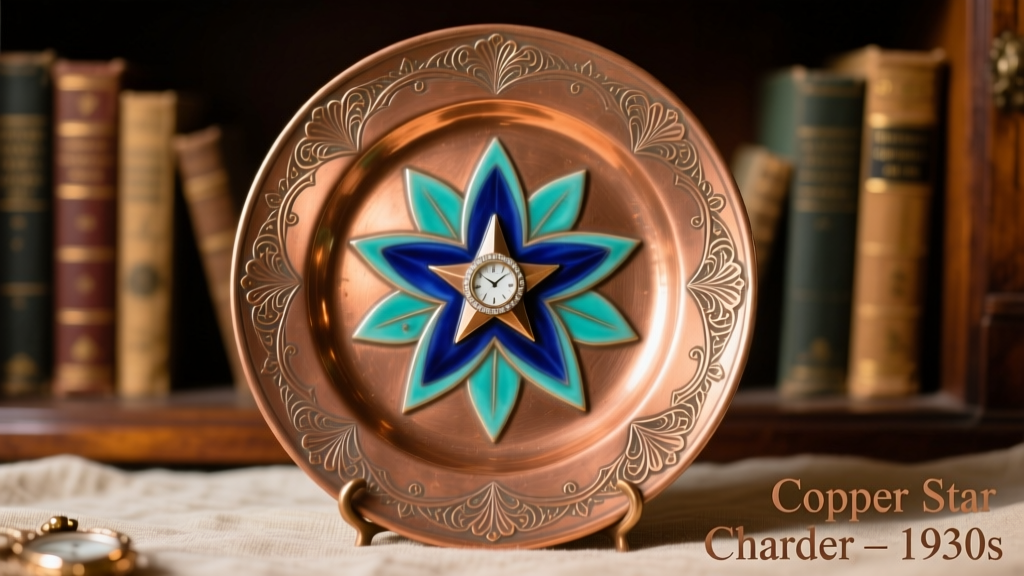
Luster Copper Charger: Blue-Glazed Fruit & Central Star Design, 16 7/8-Inch Diameter — A Mid-Century American Studio Ceramic Masterpiece
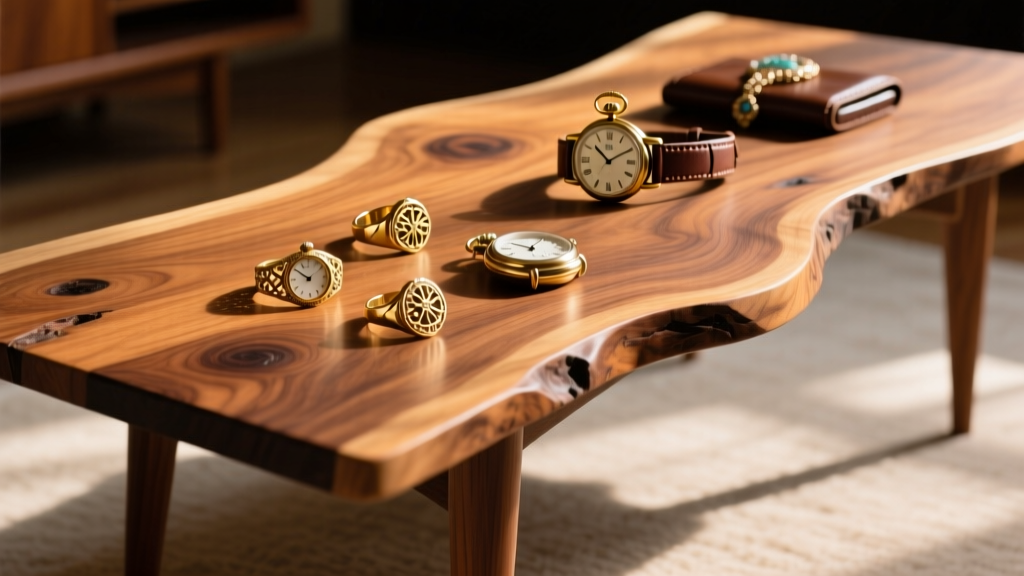
George Nakashima’s Walnut Coffee Table: The 78½-Inch Irregular-Top Masterpiece with Free Edges
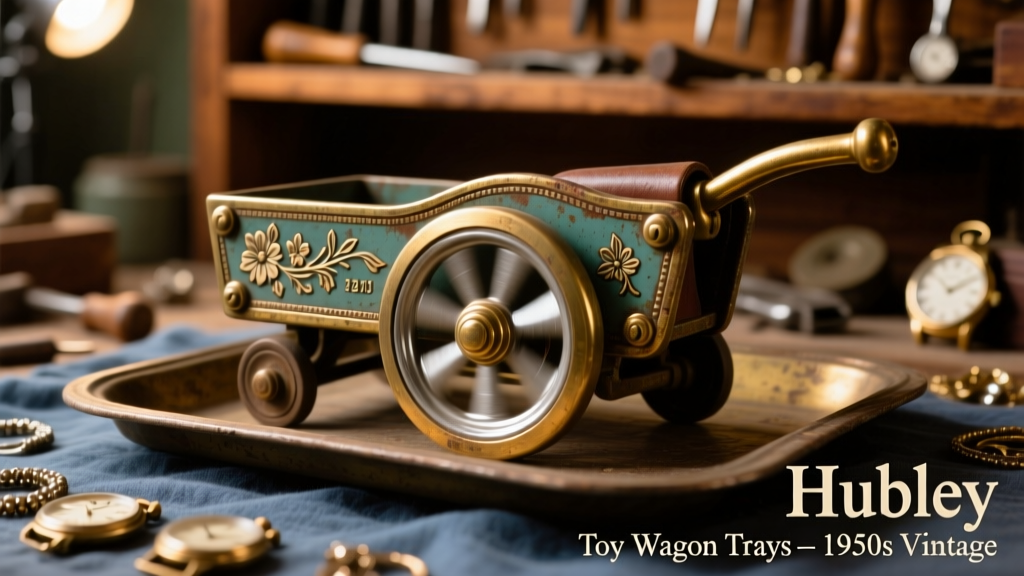
The Hubley Toy Gun Wagon Tray Holster: A Mid-Century American Icon of Play, Design, and Collectibility
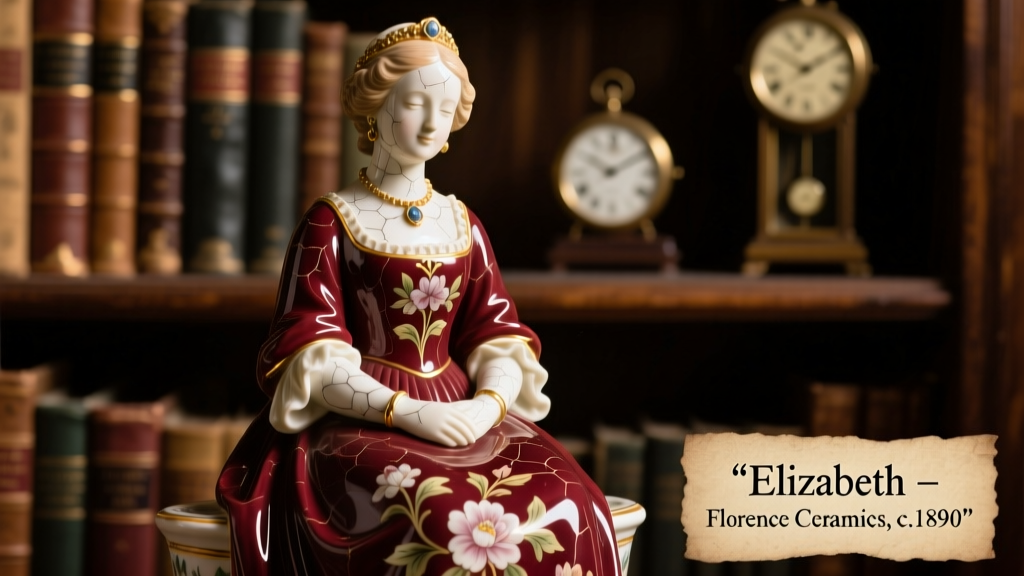
Florence Ceramics 'Elizabeth' Seated Figurine: A Study in Mid-Century American Art Pottery Craftsmanship
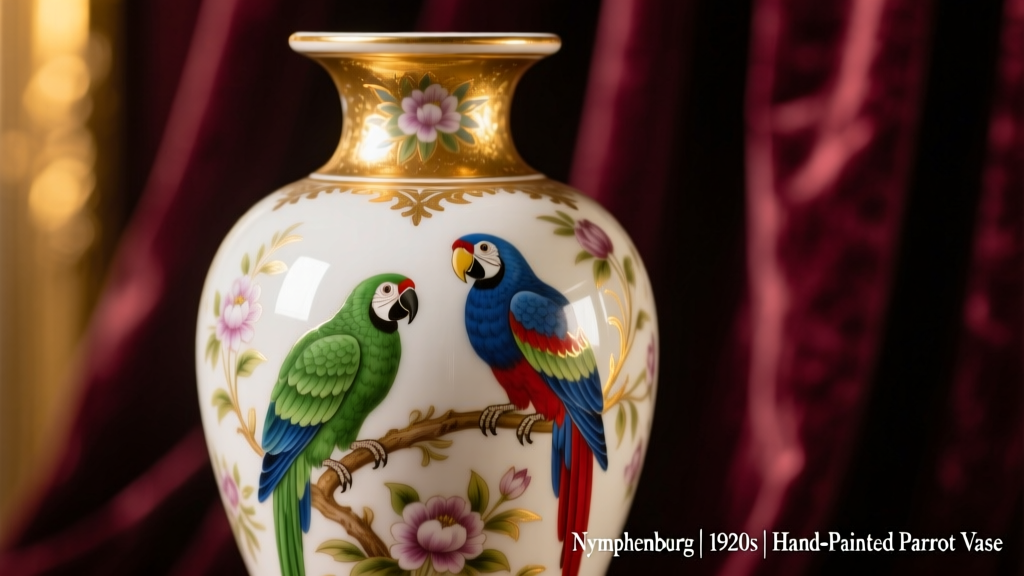
Royal Nymphenburg Vase: Painted Parrots, Gilded Detail, and 20th-Century Bavarian Porcelain Mastery

Polyphon Disc Music Box: The Burled Walnut Coin-Operated Machine at 79 Inches — History, Mechanics, and Market Value
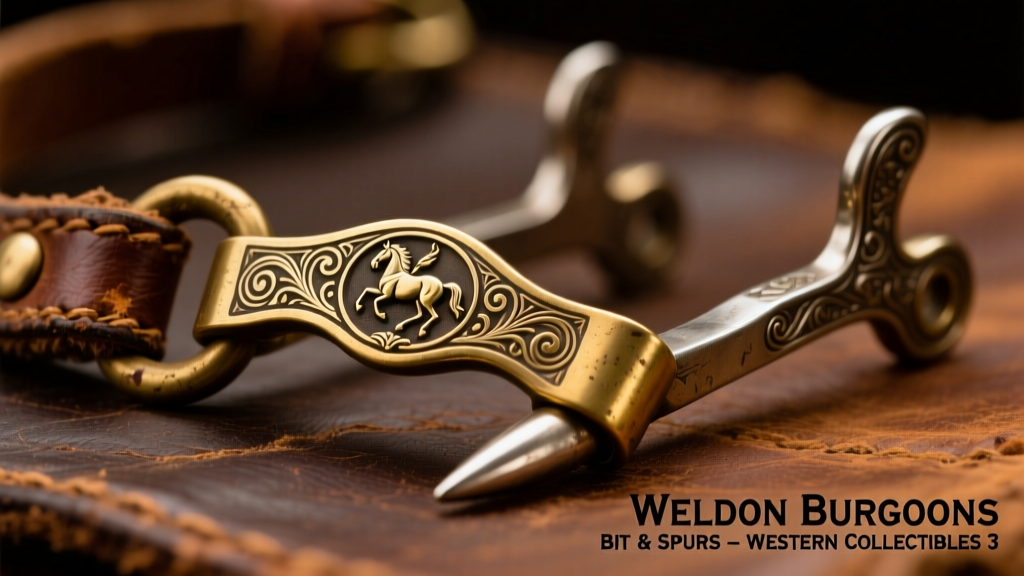
Weldon Burgoon’s Bits, Spurs, and Western Collectibles: Auction Lot #3 — Provenance, Craftsmanship, and Market Significance