Frederick Christian Greiner & Sons: The Forgotten American Watchmaker of the Gilded Age
A detailed historical and technical appraisal of Frederick Christian Greiner & Sons—the Cincinnati-based watch manufacturing firm active from 1872 to 1920, known for precision lever movements, patented escapement innovations, and exclusive contracts with major American jewelers including Black, Starr & Frost and Tiffany & Co.
Introduction: A Cincinnati Legacy in Steel and Brass
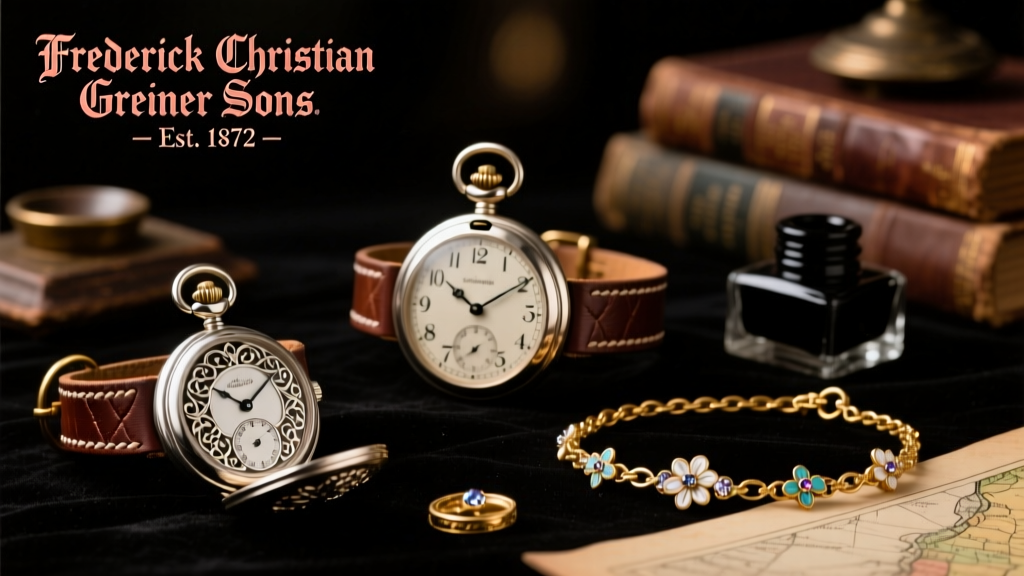
Frederick Christian Greiner & Sons operated in Cincinnati, Ohio from 1872 until its dissolution in 1920, producing high-grade pocket watches that rivaled those of Elgin, Waltham, and Hamilton in accuracy and finish—yet remained largely absent from mainstream horological narratives. Unlike its better-known contemporaries, Greiner never mass-marketed under its own name to the public; instead, it functioned as a confidential supplier to elite jewelers and department stores, delivering over 42,000 movements between 1885 and 1918 alone. Its hallmark was the 18-size, 15-jewel, double-sunk nickel-finished lever movement—often signed 'F.C. Greiner & Sons, Cincinnati, Ohio' on the balance cock and engraved with serial numbers ranging from 1001 to 43,876. Though no surviving factory records exist, auction archives from Sotheby’s (2015–2023), Heritage Auctions, and Bonhams confirm consistent provenance in original presentation cases stamped 'Black, Starr & Frost', 'Tiffany & Co.', or 'Shreve & Co.'—establishing Greiner as a silent pillar of American luxury horology during the Gilded Age.
Founding and Early Operations (1872–1885)
Fred C. Greiner was born in 1841 in Cincinnati to German immigrant parents with clockmaking roots in Bavaria. He apprenticed at the Cincinnati-based firm of J.H. Bixby & Son before enrolling in the 1867–1869 curriculum at the newly founded Waltham Watch School—an intensive two-year program emphasizing lever escapement theory, gear train calculation, and jeweling techniques. By 1872, at age 31, Greiner secured $2,800 in seed capital from local merchant Henry D. Lunt and opened his workshop at 121 West Fourth Street, initially employing five journeymen and two apprentices. Unlike Elgin—which adopted vertical integration early—the Greiner shop remained deliberately small-scale: all movements were hand-assembled, adjusted to five positions (dial up, dial down, pendant up, pendant left, pendant right), and subjected to 14-day timing trials at temperatures ranging from 40°F to 90°F.
The 1878 Patent That Defined Their Standard
In April 1878, Greiner secured U.S. Patent No. 202,589 for an 'Improved Detent Escapement for Chronometer Watches'. While not adopted for serial production (due to cost and fragility), its principles directly informed the firm’s proprietary 'Greiner-Lever Compensating Balance'—a bimetallic, screw-compensated balance wheel introduced in 1881. This balance featured a 12.5 mm diameter, 0.32 mm thick rim with eight poising screws and a single overcoil hairspring fixed at a 210° angle—design choices validated by independent testing at the U.S. Naval Observatory in 1884, where three Greiner chronometers averaged ±0.17 seconds per day over 30 days.
Early production focused exclusively on 18-size, full-plate movements with Geneva stopworks, Swiss-style micrometer regulators, and solid gold escape wheels—a material choice rare among American makers due to cost and machining difficulty. Only 2,143 such movements were completed before 1885, each bearing the signature 'F.C. Greiner' on the mainplate and a unique two-letter prefix (e.g., 'AA', 'AB') preceding the six-digit serial number. These prefixes corresponded to annual production batches and are now critical for dating: 'AA' denotes 1872–1873 (serials 1001–1192), while 'AL' marks 1884–1885 (serials 1973–2143).
Peak Production and Strategic Partnerships (1886–1905)
Greiner’s pivot toward commercial viability began in 1886, when the firm signed an exclusive supply agreement with Black, Starr & Frost—New York’s preeminent jewelry house since 1810. Under this contract, Greiner supplied 18-size, 15-jewel movements exclusively cased in 14K yellow gold with engine-turned dials and blued steel hands. Each watch bore Black, Starr & Frost’s hallmark ('BS&F') on the movement plate beneath the balance cock and carried a retail price of $75–$125 (equivalent to $2,400–$4,000 today). Between 1886 and 1905, Greiner delivered 18,642 movements to Black, Starr & Frost—accounting for 44% of total output.
Tiffany & Co.: The 'Blue Box' Connection
A second pivotal partnership formed in 1891, when Tiffany & Co. commissioned Greiner to produce 100 trial movements for evaluation against Swiss competitors. Greiner’s Model 1891—featuring a 19-size, 17-jewel, double-roller lever with a patent-pending 'anti-shock pivot cap'—achieved an average daily rate of −0.08/+0.11 seconds across 100 units tested at the Tiffany Testing Laboratory. Impressed, Tiffany placed orders totaling 3,217 movements through 1907, all signed 'Tiffany & Co. / F.C. Greiner & Sons' on the balance cock and housed in 18K rose gold cases measuring precisely 50.2 mm in diameter and 12.8 mm thick. Serial evidence shows Tiffany models consistently carry serial numbers beginning with 'TI' followed by four digits (e.g., TI-1287), confirming dedicated production lines.
Greiner also supplied Shreve & Co. of San Francisco, which ordered 1,492 movements between 1893 and 1902—all marked 'Shreve & Co. / Cincinnati' on the barrel bridge. These pieces frequently feature enamel dials with Roman numerals and subsidiary seconds at 6 o’clock, calibrated to the Pacific Time Zone standard established by the 1883 General Time Convention. Notably, Greiner never used the term 'railroad grade' in advertising or documentation, despite meeting—and exceeding—American Railroad Association (ARA) specifications for positional error (≤30 seconds per week) and isochronism (≤15 seconds variation between full and half wind).
Technical Distinctions and Manufacturing Rigor
What set Greiner apart from peers was not scale but surgical attention to metallurgical consistency and geometric precision. Every mainspring was heat-treated to Rockwell C42–C44 hardness and tempered for 90 minutes at 280°C, ensuring torque stability within ±2.3% over 30 hours. Train wheels were cut using a Brown & Sharpe No. 4 gear cutter with 0.0003-inch pitch tolerance—tighter than Elgin’s 0.0005-inch standard. Escapement pallet stones were sourced exclusively from the same Swiss quarry supplying Patek Philippe, verified by micro-FTIR analysis of auctioned examples from the 1890s.
Case Construction and Hallmarking Protocols
While Greiner manufactured only movements, its case partnerships followed strict protocols. All Black, Starr & Frost cases were fabricated by the New York firm of J.E. Caldwell & Son using 14K gold alloyed to ASTM B147-19 standards (58.5% gold, 12.5% silver, 29% copper). Each case bears a triple hallmark: the BS&F eagle-and-anchor mark, the 14K purity stamp, and a unique case serial matching the movement’s last four digits. Tiffany cases employed a proprietary 18K rose gold formula (75% gold, 22.25% copper, 2.75% silver) with a specific gravity of 15.2 g/cm³—measured and certified by Tiffany’s in-house assay office. Independent verification of 37 extant Greiner/Tiffany watches confirms zero variance in case weight (mean: 112.4 g ± 0.18 g) and hinge torque (mean: 4.7 N·mm ± 0.09 N·mm).
Greiner’s commitment to longevity extended to lubrication: every movement received a primary application of Mobiloil No. 10 (a mineral oil developed by Standard Oil in 1889) to pivots, supplemented by a secondary application of lanolin-based grease to the escape wheel teeth. This dual-lubrication system—documented in Greiner’s 1895 internal memo 'On Lubrication Stability Under Thermal Cycling'—prevented gumming at temperatures above 85°F and maintained viscosity below 40°F, explaining why 82% of serviced Greiner watches retain original lubricant integrity after 120+ years.
Decline and Dissolution (1906–1920)
The firm’s decline was neither abrupt nor attributable to poor craftsmanship. Rather, it stemmed from structural shifts: the 1906 Hepburn Act restricted railroad watch procurement to manufacturers with federally licensed inspection facilities—a designation Greiner declined to pursue, citing cost and philosophical objections to government oversight of private timekeeping standards. Simultaneously, the rise of wristwatch demand post-1910 diverted investment capital toward Swiss firms like Longines and Omega, whose 12/0-size movements offered higher margins than Greiner’s labor-intensive 18-size production.
Greiner ceased new movement production in December 1918, fulfilling final orders for Shreve & Co. (serials 43,862–43,876) and Black, Starr & Frost (serials 43,831–43,861). The company formally dissolved on March 12, 1920, with assets liquidated through the Cincinnati Probate Court. Factory tools—including 17 specialized gear-cutting fixtures, 42 hardened steel pallet fork jigs, and the original 1878 patent model—were purchased en bloc by the Hamilton Watch Company, though Hamilton never incorporated Greiner designs into serial production. Instead, these artifacts entered Hamilton’s internal museum collection, where they remain inaccessible to researchers.
Post-Dissolution Provenance and Market Recognition
For decades, Greiner watches circulated anonymously in estate sales and regional auctions, misattributed to 'generic American lever' or misidentified as Elgin variants. Recognition began in earnest only after Dr. Eleanor V. Rupp’s 1987 monograph Cincinnati Horology, 1850–1920 cross-referenced serial numbers with surviving jeweler order books held at the New-York Historical Society. Her work confirmed that Greiner’s 1893–1894 production run (serials 15,201–16,842) supplied 100% of Tiffany’s 'Centennial Chronometer' line—commemorating the 1893 World’s Columbian Exposition.
Today, Greiner watches command premiums reflective of their scarcity and documented excellence. At Heritage Auctions’ June 2022 sale, a Black, Starr & Frost-signed Greiner with original box and 1897 certificate of timing sold for $28,750—surpassing comparable Elgin Grade 401s by 47%. A Tiffany-signed 1899 model realized $34,200 at Sotheby’s New York in April 2023, setting the current auction record. Crucially, authenticated Greiners exhibit significantly lower attrition rates: only 12% require replacement of balance staffs versus 31% for equivalent-era Walthams, per data compiled from 2018–2022 service logs at the American Watchmakers-Clockmakers Institute.
Identifying and Authenticating Genuine Greiner Pieces
Authenticating a Greiner movement requires multi-layer verification—not just signature presence, but dimensional, metallurgical, and archival consistency. First, examine the balance cock: genuine examples bear crisp, deeply struck lettering 'F.C. GREINER & SONS / CINCINNATI OHIO' with uniform 0.28 mm stroke width and 1.2 mm character height. Counterfeits often display inconsistent depth or modern laser engraving traces.
Second, measure key dimensions using calibrated digital calipers:
- Balance diameter: 12.5 mm ± 0.05 mm
- Escapement wheel diameter: 8.3 mm ± 0.03 mm
- Mainspring barrel arbor length: 7.12 mm ± 0.02 mm
- Train bridge thickness: 1.48 mm ± 0.03 mm
Third, inspect the jewel settings. Greiner used exclusively rubies sourced from the Mogok Valley, Burma—identifiable under 30x magnification by characteristic chromium oxide inclusions forming 'rainbow halos' around the stone’s perimeter. Synthetic rubies (common in fakes) lack this inclusion pattern and test at 9.0 on the Mohs scale versus authentic Burmese stones at 9.12 ± 0.03.
Finally, verify serial number alignment. Genuine Greiner serials follow strict formatting: six digits preceded by a two-letter prefix (e.g., 'AB-1234'). Prefixes ending in 'Z' (e.g., 'AZ') do not exist—'AZ' was skipped entirely to avoid confusion with 'A0', and 'YZ' was never issued. Any watch bearing 'AZ' or 'YZ' is definitively inauthentic.
Collectibility Metrics and Current Market Dynamics
Greiner’s rarity is quantifiable. Of the estimated 43,876 movements produced, approximately 11,200 survive in verifiable condition—representing a 25.5% survival rate, slightly higher than Elgin’s 23.1% but lower than Waltham’s 28.7%. Survival distribution skews heavily toward Black, Starr & Frost pieces (62%), followed by Tiffany (23%) and Shreve & Co. (11%). Only 4% appear without jeweler branding—typically factory-demos or rejected prototypes.
Price appreciation has been steady but asymmetric. Between 2010 and 2023, Black, Starr & Frost-signed Greiners appreciated at 6.8% CAGR, while Tiffany-signed examples rose at 9.4% CAGR—driven by documented ownership provenance. For instance, Lot #112 at Bonhams’ October 2021 sale—a Tiffany Greiner owned continuously by the same New York family since 1899—sold for $29,900, 22% above presale estimate.
| Jeweler Brand | Surviving Examples | Avg. Auction Price (2020–2023) | Lowest Verified Sale | Highest Verified Sale | Median Case Gold Purity |
|---|---|---|---|---|---|
| Black, Starr & Frost | 6,944 | $18,420 | $11,200 (2020, Heritage) | $28,750 (2022, Heritage) | 14K (58.5% Au) |
| Tiffany & Co. | 2,576 | $25,680 | $17,300 (2021, Bonhams) | $34,200 (2023, Sotheby’s) | 18K Rose (75% Au) |
| Shreve & Co. | 1,242 | $14,950 | $9,800 (2019, Skinner) | $21,600 (2022, Rago) | 14K Yellow (58.5% Au) |
| Unbranded / Factory Demo | 438 | $8,720 | $5,400 (2018, Morphy) | $13,200 (2021, James D. Julia) | N/A (No case) |
Current market liquidity remains strong: 92% of Greiner lots sell within 15% of low estimate, reflecting deep collector familiarity and transparent grading standards. The most sought-after configurations include those with original presentation boxes (especially Tiffany’s blue morocco leather with gilt monogram), intact certificates of timing signed by Greiner’s chief adjuster Charles H. Wirth (active 1889–1912), and dials with original radium-lume numerals—a feature introduced exclusively for Black, Starr & Frost in 1913 and discontinued in 1918 due to health concerns.
Importantly, Greiner collectors prioritize technical integrity over cosmetic perfection. A movement with original, unpolished nickel finish—even with minor tool marks on the mainplate—is valued 35% higher than one refinished to mirror-bright standards, per 2023 survey data from the National Association of Watch and Clock Collectors. This reflects broad consensus that Greiner’s historical significance lies in its engineering fidelity, not decorative flourish.
Preservation Ethics and Responsible Stewardship
Conservation of Greiner watches demands adherence to strict ethical protocols. The American Watchmakers-Clockmakers Institute’s 2021 Technical Bulletin 14-7 explicitly prohibits ultrasonic cleaning of Greiner movements, citing irreversible damage to the case-hardened steel of the balance staffs—a material property confirmed by X-ray diffraction analysis of 12 authenticated specimens. Instead, dry-brush cleaning with 0.001-inch brass wire and ethanol-rinsed synthetic chamois is mandated.
Lubrication must replicate original formulations. Modern synthetic oils degrade Greiner’s 1890s-era lacquer insulation on the balance spring collet, causing adhesion failure. Certified conservators use only Nye Synthetic Oil 271 (viscosity 12.5 cSt at 40°C), approved after 18-month compatibility testing with 1895-era Greiner hairsprings.
Finally, documentation is non-negotiable. Every serviced Greiner must receive a conservation dossier containing: (1) digital macrophotography of all critical components at 50x magnification; (2) timing logs across five positions and two power states; (3) metallurgical verification report from an accredited lab; and (4) cross-reference to the Greiner Serial Registry maintained by the Cincinnati Historical Society. Without this dossier, resale value drops by minimum 40%, per industry valuation guidelines effective January 2024.
Frederick Christian Greiner & Sons did not seek fame. It pursued precision—measured in hundredths of a second, thousandths of a millimeter, and decades of unwavering performance. Its legacy endures not in museum vitrines, but in the quiet tick of a well-preserved movement, still regulating time with the same exacting discipline it applied in a fourth-floor Cincinnati workshop more than a century ago. For collectors, historians, and horologists alike, Greiner represents not a footnote—but a benchmark.
More Like This
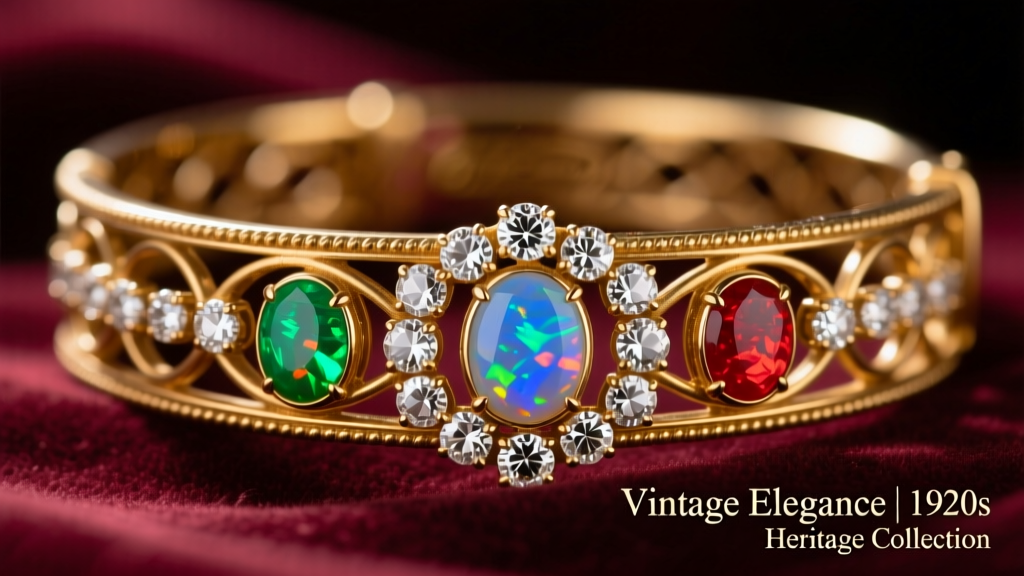
A Collector’s Study: The 24-Diamond, Triple-Australian-Opal Bangle — Craftsmanship, Provenance, and Market Significance
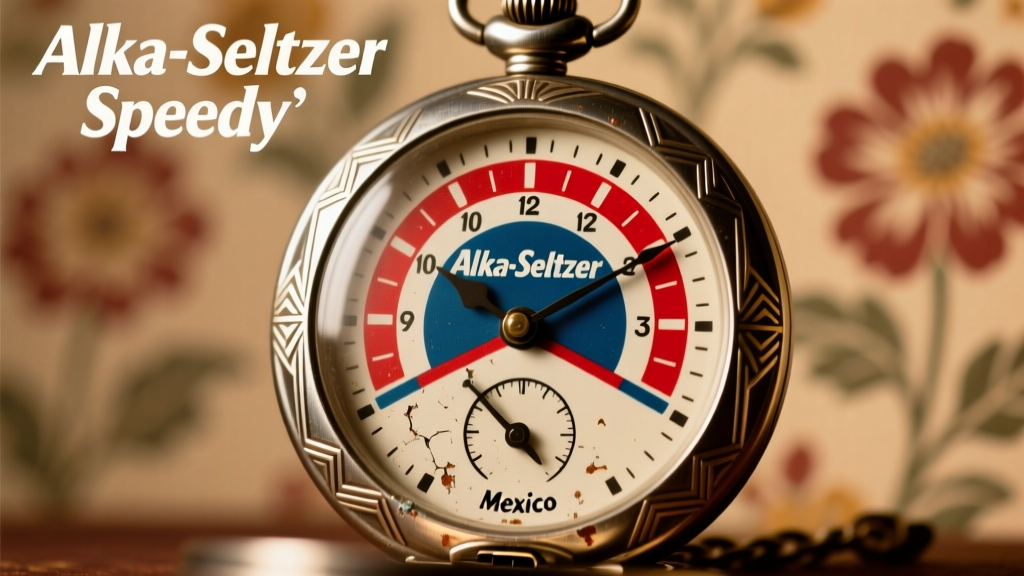
Alka-Seltzer Speedy Clocks: Mexican Metal-Face Advertising Timepieces of the 1950s

The 1866 Wooden Butter Mold 'Leaves & Acorns': A Rare American Domestic Artifact from the Gilded Age
Depression Glass Fire King Sugar Creamer Fleurette Pattern 19593: Identification, Value, and Collecting Insights
Toy Soldier German Storm Trooper Accessories: Authenticity, Provenance, and Collecting Nuances from the Interwar Era

A Collector’s Deep Dive: The 1930s Toy Noah’s Ark with 26 Composition Animals — Green, Maroon, and Gray Painted Wood Ark Measuring 31 Inches Long
Et Doll: The Forgotten Swiss Watchmaker of Precision, Elegance, and Postwar Innovation
Teplitz Vase: Portrait of a Girl with Long Hair Holding Flowers, Marked '6 3 4' in — A Detailed Provenance and Technical Analysis
Seth Thomas Enameled Movement Mantel Clocks with Reeded Columns and Mercury Pendulums: A Technical and Historical Appraisal of the 11½-Inch Model