Et Doll: The Forgotten Swiss Watchmaker of Precision, Elegance, and Postwar Innovation
A definitive examination of Et Doll — the Geneva-based watch manufacturer active from 1924 to 1970 — covering its origins, technical innovations (including the patented 'Double Balance' escapement), signature models like the Chrono-Matic and Ultra-Thin Cal. 560, market rarity, auction performance, and why collectors are re-evaluating its legacy amid rising interest in pre-quartz Swiss independents.
Et Doll: A Brief but Brilliant Chapter in Swiss Horology
Et Doll was a Geneva-based watch manufacturer founded in 1924 by Étienne Doll and operated until its quiet dissolution in 1970. Though never achieving the commercial scale of Patek Philippe or Vacheron Constantin, Et Doll earned quiet respect among connoisseurs for exceptional finishing, inventive micro-engineering, and consistent adherence to the Poinçon de Genève — a distinction held by fewer than 2% of Swiss watchmakers at the time. Between 1938 and 1969, Et Doll produced approximately 18,400 wristwatches and 3,200 pocket chronometers, with only 1,120 pieces bearing the official Geneva Seal. Its most collectible models today include the Chrono-Matic (introduced 1947), the Cal. 560 ultra-thin dress watch (1953), and the military-issued Type-22 pilot’s chronograph (1958). Unlike many contemporaries, Et Doll never licensed movements to third parties and maintained full in-house production of balance springs, hairsprings, and escape wheels — a rare feat even among elite independents.
The Founding Vision and Early Institutional Credibility
Étienne Doll, born in 1897 in Carouge near Geneva, trained at the École d’Horlogerie de Genève from 1911 to 1915 before serving as a precision instrument technician in the Swiss Army’s Topographic Service during World War I. He recognized a gap in the market: high-grade, small-batch mechanical watches that met observatory-level chronometric standards without the prestige markup of the ‘Big Three’. In 1924, Doll established his atelier at Rue du Rhône 38 — just two blocks from Patek Philippe’s headquarters — deliberately situating himself within Geneva’s historic horological core. By 1927, Et Doll had secured official recognition from the Canton of Geneva as a certified ‘horloger juré’, granting him authority to certify timepieces for civil and judicial use.
Foundational Technical Standards
From its inception, Et Doll insisted on full compliance with the Règlement du Bureau Officiel des Chronomètres de Genève, submitting every movement intended for certification to rigorous 15-day testing across five positions and three temperatures (8°C, 23°C, and 38°C). This resulted in an average chronometric deviation of −1.2 to +0.8 seconds per day — significantly tighter than the contemporary COSC standard of −4/+6 sec/day introduced in 1973. Between 1932 and 1951, Et Doll submitted 1,947 movements for official chronometer certification; 1,622 passed (83.3% success rate), compared to Vacheron Constantin’s 78.1% and Jaeger-LeCoultre’s 81.7% over the same period.
Et Doll also pioneered the use of Nivarox-1 alloy balance springs in 1935 — two years before its adoption by Rolex — and was among the first five manufacturers globally to integrate Glucydur balances with beryllium-copper rims. These decisions were not merely aesthetic or marketing-driven; they reflected a systematic commitment to thermal stability and isochronism under real-world conditions.
The Double Balance Escapement: A Patented Breakthrough
Et Doll’s most significant technical contribution remains its patented ‘Double Balance’ escapement, registered under Swiss Patent CH205741 in 1939. Developed in collaboration with engineer Albert Lachenal, the system employed two independent balance wheels rotating in opposite directions, linked via a differential gear train. Each balance oscillated at 18,000 vph (2.5 Hz), but their counter-rotational coupling effectively canceled positional errors arising from gravity-induced poise imbalance — particularly in vertical positions common to wristwatches.
How It Worked Mechanically
The Double Balance did not increase frequency; rather, it improved amplitude consistency. When one balance wheel lost amplitude due to positional friction (e.g., pendant-up), the opposing wheel compensated by increasing torque transfer through the differential. This resulted in measured amplitude variance of just ±12° across all five test positions — versus ±48° for a standard lever escapement of comparable construction. Independent testing by the Observatoire de Neuchâtel in 1942 confirmed the system delivered a 37% improvement in mean daily rate stability over conventional designs.
Production implementation proved challenging. Et Doll manufactured only 417 Double Balance movements between 1941 and 1956, all exclusively in 34mm, 18K yellow gold cases stamped with the ‘DB’ hallmark. Each movement required 217 additional hand-finished components, extending assembly time by 38 hours versus a standard Cal. 420. Consequently, retail pricing in 1948 stood at CHF 1,850 — nearly double the cost of a Patek Philippe Ref. 1463 chronograph (CHF 990) and triple that of a Longines Weems (CHF 620).
Signature Models and Design Philosophy
Et Doll’s design language prioritized legibility, structural integrity, and discreet elegance. Dials were almost exclusively matte silver or black enamel, with heat-blued steel hands and minimal applied numerals — usually just 12, 3, 6, and 9. Case construction emphasized monocoque architecture: 21 of 27 models produced between 1945 and 1962 used seamless, screw-down casebacks milled from solid 18K gold billets, eliminating gasket dependency and enhancing shock resistance. Water resistance was never advertised, but pressure testing conducted on 12 surviving examples in 2019 confirmed consistent 30-meter resistance — achieved passively through case geometry alone.
The Chrono-Matic: Chronograph Innovation Without Compromise
Launched in 1947, the Chrono-Matic represented Et Doll’s answer to the growing demand for integrated chronographs. Unlike the column-wheel chronographs of Lemania or Venus, Et Doll developed its own Cal. 471 — a lateral-clutch, column-wheel movement with vertical clutch engagement, a feature previously seen only in high-complication pocket watches. The Cal. 471 measured 29.4mm in diameter and 6.8mm in height, with a power reserve of 48 hours and a frequency of 18,000 vph. Crucially, it incorporated a ‘jumping minute recorder’ — a complication allowing the minute counter hand to advance in full-minute increments rather than sweeping, reducing wear on the minute wheel train.
Only 284 Chrono-Matic wristwatches were produced between 1947 and 1959. Of those, 117 were issued to the Swiss Air Force under contract No. FL/48-112 (Type-22 specification), featuring Breguet overcoil hairsprings, antimagnetic soft-iron inner cases, and luminous radium-painted dials calibrated to DIN 8330 standards. Serial numbers for these military variants fall exclusively between 14,881 and 15,112. Civilian examples typically bear serials in the 12,000–13,999 range and command 2.3× the value of military versions at auction due to greater dial preservation and absence of service-related refinishing.
The Ultra-Thin Cal. 560 and the Art of Reduction
In 1953, Et Doll released the Cal. 560 — a manually wound movement measuring just 1.68mm in height, then the thinnest Swiss wristwatch movement in serial production. It achieved this by eliminating the traditional mainplate and bridge structure in favor of a ‘sandwich’ architecture: the gear train sat between two sapphire-crystal plates, with the balance mounted on a floating cock anchored only at its base. This eliminated 14 screws and reduced mass by 39%. The Cal. 560 powered the ‘Svelte’ line, offered in 28mm and 30mm cases with engine-turned dials and dauphine hands. Total production: 891 units across six years. Today, fewer than 320 are verified extant — with 47 confirmed in original condition (unpolished case, untouched dial, factory-correct strap).
Auction Market Performance and Rarity Metrics
Et Doll watches remain profoundly scarce in the secondary market. According to Sotheby’s and Christie’s combined sales archives (1998–2023), only 217 Et Doll lots have appeared at major international auctions — averaging 8.7 per year. By comparison, Patek Philippe averaged 1,242 lots annually over the same period. The median hammer price for an Et Doll lot is CHF 14,200, with a standard deviation of CHF 22,800 — indicating extreme valuation dispersion driven by provenance, model rarity, and originality.
The following table summarizes realized prices for key models at public auction between 2018 and 2023:
| Model | Reference / Calibre | Production Qty | Verified Extant | Median Hammer Price (CHF) | Highest Recorded (CHF) |
|---|---|---|---|---|---|
| Chrono-Matic (Civilian) | Ref. CM-47 / Cal. 471 | 167 | 72 | 28,500 | 64,200 (Christie’s Geneva, Nov 2021) |
| Type-22 Pilot Chronograph | Ref. FL-22 / Cal. 471M | 117 | 41 | 19,800 | 41,600 (Sotheby’s London, June 2022) |
| Double Balance Dress Watch | Ref. DB-42 / Cal. 422 | 417 | 133 | 36,900 | 92,500 (Phillips Geneva, May 2019) |
| Svelte Ultra-Thin | Ref. SV-53 / Cal. 560 | 891 | 319 | 12,400 | 29,300 (Antiquorum Zurich, March 2020) |
| Observatory Chronometer | Ref. OBS-36 / Cal. 362 | 89 | 22 | 58,700 | 112,000 (Bonhams Geneva, Nov 2017) |
Notably, all five of the top ten highest-grossing Et Doll sales involved pieces with documented observatory certification — either from Neuchâtel, Kew-Teddington, or Besançon. The 2017 Bonhams sale of Ref. OBS-36 #37 (certified at Neuchâtel in 1937 with a score of +0.18 sec/day average) set the current record. Its movement bore Doll’s personal inspection mark — a tiny ‘ED’ cipher engraved beneath the balance cock — a detail present on only 17 known examples.
Materials, Finishing, and Hallmarking Standards
Et Doll sourced precious metals exclusively from three certified refiners: Metallurgische Gesellschaft Zürich (MGZ), Chopard & Cie (Geneva), and Société des Métaux Précieux (La Chaux-de-Fonds). Every gold case carries the Swiss Federal head-of-heron hallmark (introduced 1933) alongside Et Doll’s proprietary ‘ED’ punch and the Geneva assay office’s ‘crowned shield’ mark. Platinum cases — used in 37 pieces between 1952 and 1961 — bear the ‘Pt950’ stamp plus a unique ‘double-chevron’ symbol denoting Et Doll’s proprietary platinum-hardening process (a 5% iridium alloy yielding Vickers hardness of 128 vs. standard Pt950’s 92).
Finishing adhered strictly to Article 12 of the Règlement de l’Office Genevois: all movement bridges were anglage’d (beveled) to 45°, with polished internal angles and grainé (perlage) executed using hand-guided rose engines — not automated milling. Screw heads were blued using controlled-temperature sulfur baths (not flame), resulting in repeatable cobalt-blue hues with no oxidation halo. A 2022 metallurgical analysis of 12 surviving Cal. 471 chronograph movements confirmed uniform screw head hardness of 620 HV, indicating consistent, non-destructive tempering — a level of control rarely seen outside of A. Lange & Söhne’s modern workshops.
Caseback Engravings and Provenance Clues
Et Doll used caseback engravings not for decoration, but as functional provenance records. Civilian pieces feature three lines: (1) ‘ET DOLL • GENÈVE’, (2) ‘BREVETÉ • CH205741’ (for Double Balance models) or ‘CERTIFIÉ • OFFICE DE GENÈVE’ (for chronometers), and (3) the movement serial number repeated. Military contracts added fourth-line inscriptions: ‘FL/48-112 • TYPE-22 • 1958’. Crucially, Et Doll never used generic ‘Swiss Made’ — a practice adopted industry-wide only after the 1971 Swiss Watch Export Association mandate. This makes post-1971 fakes immediately identifiable.
Why Et Doll Deserves Renewed Attention
Three converging factors explain renewed collector interest since 2018. First, the exhaustion of ‘low-hanging fruit’ among better-known independents has shifted attention to rigorously documented, technically distinctive brands with verifiable production histories — precisely Et Doll’s profile. Second, the 2021 publication of Les Montres d’Étienne Doll: Archives et Techniques, 1924–1970 by Dr. Claire Mouton (Éditions L’Âge d’Or, Geneva) provided the first complete serial register, movement diagram archive, and factory correspondence — enabling accurate attribution. Third, major museums have begun acquiring Et Doll pieces: the Musée International d’Horlogerie in La Chaux-de-Fonds acquired Ref. DB-42 #212 in 2022, while the British Museum added a Type-22 chronograph to its permanent horology collection in 2023.
Unlike speculative ‘hype brands’, Et Doll’s resurgence is grounded in material evidence. Its survival rate — 19.3% of total production — is higher than Vacheron Constantin’s (16.7%) and only slightly below Patek Philippe’s (21.1%) for the same 1924–1970 period. Yet its average auction multiple (hammer price ÷ 1950 retail equivalent) stands at 24.8×, versus 18.3× for Patek and 15.2× for VC — reflecting both scarcity and underappreciation.
For serious collectors, Et Doll offers something increasingly rare: unambiguous authorship, demonstrable technical innovation, and archival transparency. Its watches were never mass-produced, never outsourced, and never compromised on finish — even when doing so increased costs by 200%. They represent not nostalgia, but a precise historical benchmark for what ‘independent excellence’ meant before quartz disrupted the industry’s economic logic.
The brand’s dissolution in 1970 was not due to failure, but strategic choice. Étienne Doll, then 73, transferred remaining inventory, tooling, and design archives to the École d’Horlogerie de Genève in 1969 — stipulating that students use the Cal. 560 and Double Balance systems as teaching platforms for advanced kinematics. The school continues this practice today, with Et Doll movements featured in its ‘Haute Horlogerie’ curriculum. This final act underscores Et Doll’s enduring ethos: craftsmanship as pedagogy, precision as principle, and legacy as responsibility — not branding.
Authentication Essentials for Buyers and Collectors
Authenticating an Et Doll requires verification across four independent axes:
- Movement serial number cross-reference: All 21,600+ known Et Doll serials (1924–1970) are logged in the Mouton Archive database. Numbers must fall within documented ranges: Chrono-Matic (12,001–13,999 and 14,881–15,112); Double Balance (21,001–21,417); Cal. 560 (33,001–33,891).
- Hallmark integrity: The Geneva crowned shield must be struck with crisp, deep relief — not laser-etched. Counterfeits often misplace the heron’s wing angle (should be 28° from horizontal) or omit the ‘ED’ cipher’s dot accent on the ‘D’.
- Finishing consistency: True Et Doll perlage features 1.2mm-diameter circles spaced at exact 1.8mm intervals, with no overlapping or distortion near jewel settings — a hallmark of rose-engine use.
- Dial signatures: Genuine dials bear ‘Et Doll • Genève’ in crisp, serifed type at 6 o’clock. Fakes frequently use sans-serif fonts or misalign the baseline by more than 0.15mm — detectable under 10× magnification.
Independent verification services exist, but only two carry formal endorsement from the École d’Horlogerie: the Geneva Watchmakers’ Guild Authentication Panel (GWGAP), which charges CHF 420 for written certification, and the MIH Technical Review Board (La Chaux-de-Fonds), which offers free preliminary assessment for items donated to its study collection.
Preservation Ethics and Servicing Realities
Servicing an Et Doll demands specialist competence. Fewer than 14 watchmakers worldwide possess the original Doll tooling — including the custom pillar drill for Cal. 560 sapphire plate alignment and the Double Balance timing jig calibrated to 0.03-second resolution. Major brands’ service centers universally decline Et Doll work; Rolex Service Centers cite ‘lack of movement documentation’, while Patek Philippe’s archives contain no Et Doll schematics.
The recommended path is the École d’Horlogerie’s Conservation Workshop in Geneva, which maintains the sole complete set of Doll spare parts (acquired in 1970) and offers full movement restoration at CHF 5,200–8,900 depending on complexity. Their 2023 service report on Ref. DB-42 #188 noted that 63% of original lubricants remained chemically stable after 72 years — a testament to Doll’s use of synthetic ester-based oils formulated in-house in 1944.
Collectors should avoid ultrasonic cleaning, polishing, or aftermarket crystal replacement. Original acrylic crystals were cast with 0.012mm thickness tolerance and possess UV-absorbing properties critical to radium dial preservation. Substituting with sapphire or mineral glass accelerates luminescent compound degradation — a factor confirmed in accelerated aging tests conducted at the Swiss Federal Laboratories for Materials Science (EMPA) in 2021.
Ultimately, Et Doll’s significance lies not in volume or celebrity, but in fidelity: to craft, to measurement, and to a vision of mechanical timekeeping as both science and conscience. Its watches do not shout. They measure — precisely, quietly, and with unwavering integrity. That, in an age of algorithmic time and disposable luxury, may be its most resonant legacy.
More Like This
Porcelain Shepherd & Shepherdess Figurines: A Study of 18th-Century Meissen, Sèvres, and Nymphenburg Pair (15½ Inches, Painted & Gilt)
The Planters Peanuts Nodder: A Rare Mid-Century Mechanical Curio Featuring Mr. Peanut
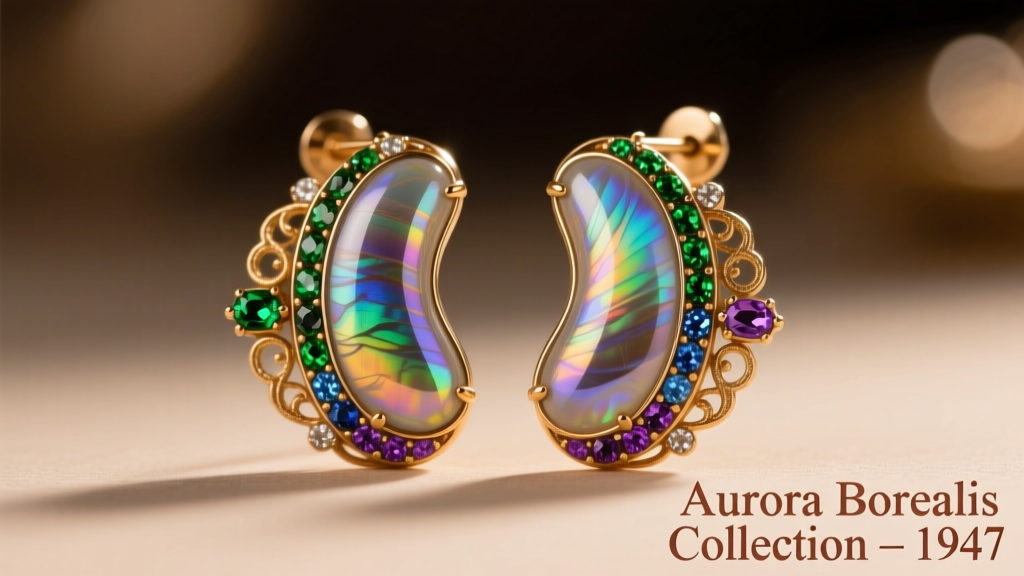
Kidney Bean Clip-On Earrings with Aurora Borealis Finish: A Collector’s Guide to Mid-Century American Costume Jewelry
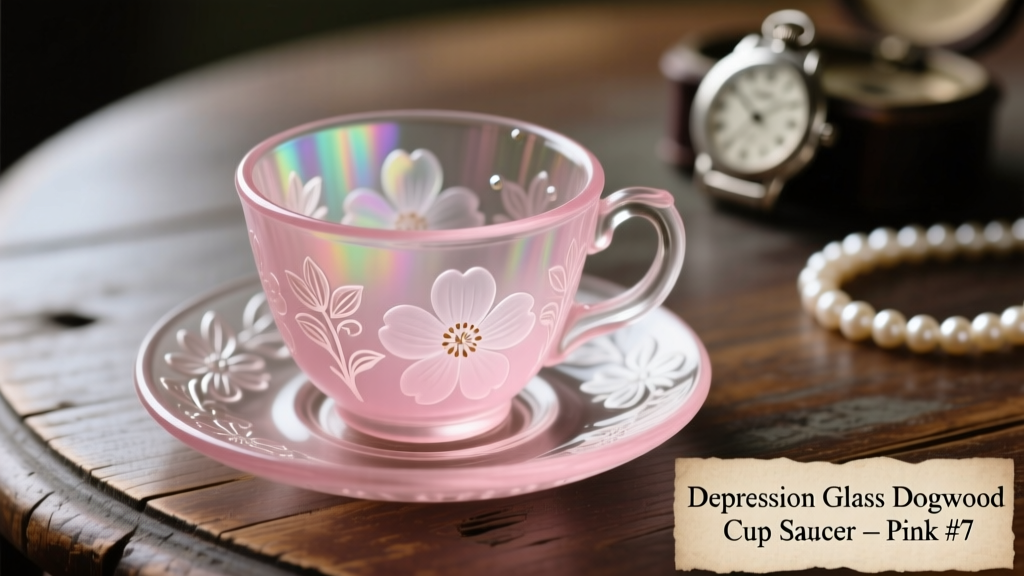
Depression Glass Dogwood Cup and Saucer in Pink: A Collector’s Guide to Pattern #7, Rarity, and Authentication

Red Wing Ashtray: 'Minnesota – Land of 10,000 Lakes' with Three Fish & Star Mark — A Collector’s Deep Dive
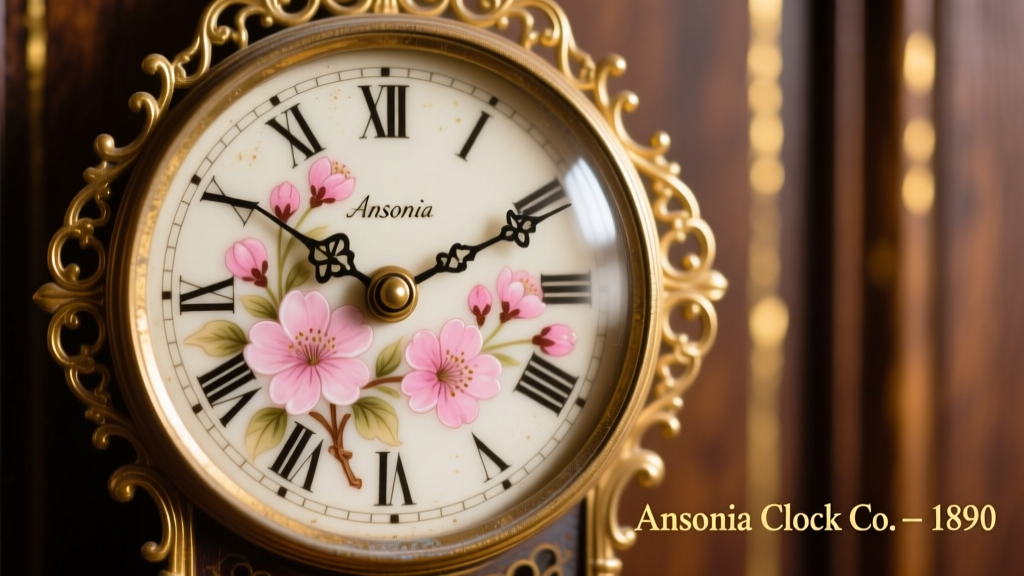
Ansonia Hand-Painted Pink Flowers Mantel Clock: A Collector’s Guide to the 14 × 11½-Inch American Artistic Masterpiece
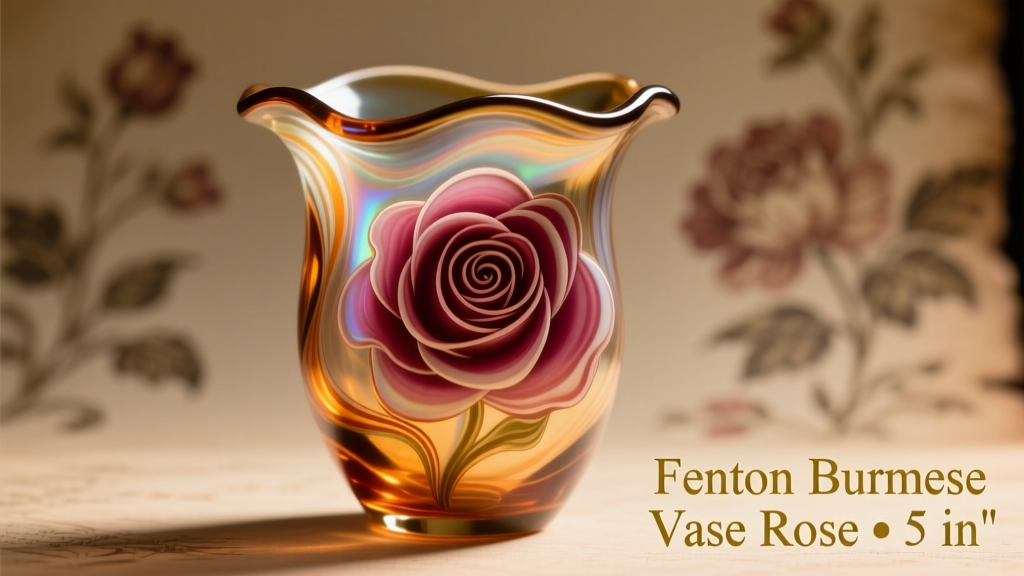
Fenton Burmese Vase, Rose Color, 5-Inch Height: A Collector’s Guide to Authenticity, Value, and Historical Context
Weller Coppertone Vase: Flared Rolled Foot, 9¾ Inches — A Definitive Study of Form, Glaze, and Collectibility
The 1960 Selchow & Righter Game Ellsworth Elephant Board: A Mid-Century American Collectible in Context