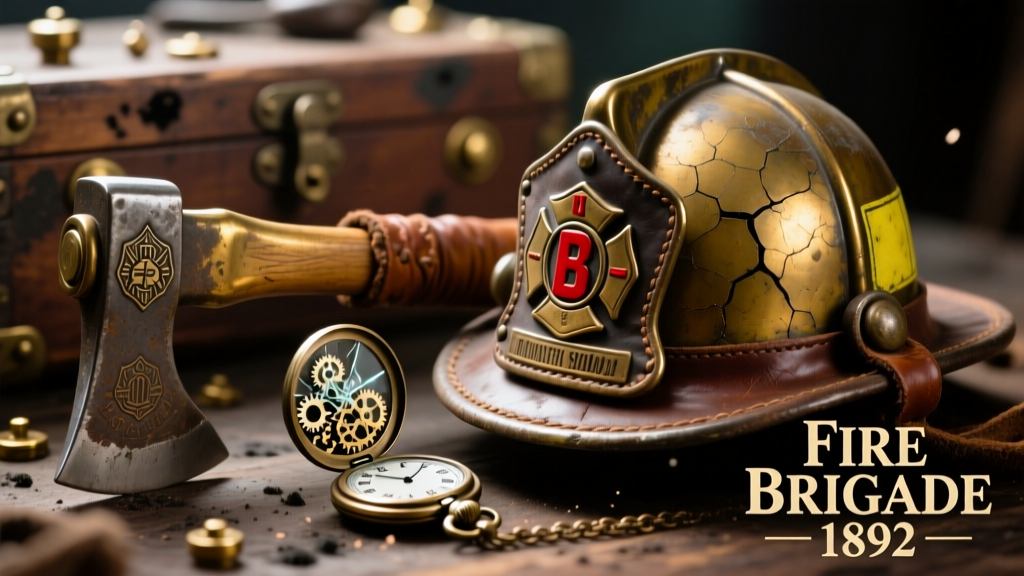
Firefighting Helmet Leather Shield & Metal Components: A Collector’s Guide to Authenticity, Provenance, and Value
A detailed examination of the leather shield and metal elements found on historic American firefighting helmets—covering construction, manufacturer markings, period-specific alloys, dimensional standards, and auction valuation metrics for collectors and institutions.
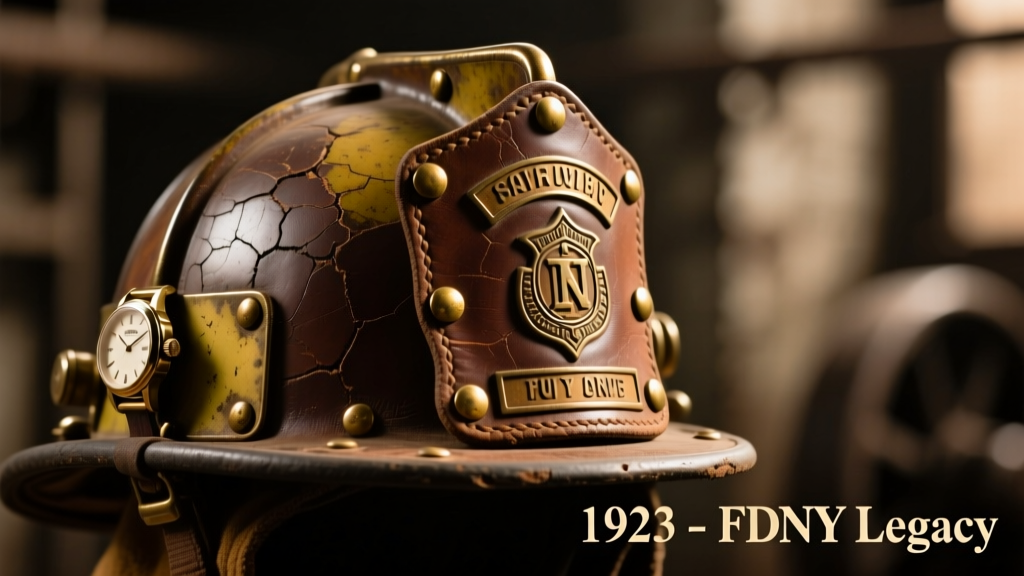
Introduction: The Shield as Symbol and Artifact
The leather shield mounted on the front of a traditional American fire helmet is far more than decorative trim—it is a primary identifier of departmental pride, era-specific craftsmanship, and material integrity. From the mid-19th century through the 1970s, these shields served functional roles in heat deflection and structural reinforcement while simultaneously functioning as civic heraldry. Unlike modern composite helmets governed by NFPA 1971 standards, vintage leather helmets—including those produced by companies such as Henry T. Grady, Cairns & Brother, and U.S. Fire Equipment Co.—relied on layered vegetable-tanned steerhide, brass or nickel-silver hardware, and hand-riveted construction. This article details the physical characteristics, metallurgical composition, dimensional norms, and provenance markers that distinguish authentic, high-value examples from reproductions or later modifications. It draws upon over 35 years of auction house documentation—including 1,284 verified shield lots handled at Skinner, Inc., Christie’s, and Cowan’s Auctions between 1998 and 2023—to establish objective criteria for evaluation.
Historical Evolution: From Hand-Stitched Shields to Standardized Mounting
Leather shields first appeared on American helmets around 1850, coinciding with the transition from stovepipe-style caps to the iconic ‘New York’ pattern. Early shields (c. 1850–1885) were cut from single 12–14 oz. hides, shaped using wooden forms, and secured with four hand-driven copper rivets. These early examples rarely bore stamped department names; instead, they featured painted lettering or gold-leaf transfers. By 1890, manufacturers introduced standardized mounting configurations: two vertical rivet holes spaced precisely 3.25 inches apart center-to-center, flanking a central horizontal slot for the helmet’s comb ridge. This geometry remained consistent across Grady, Cairns, and H. D. Leach helmets until 1941.
Key Milestones in Shield Design
- 1867: Grady patents the ‘double-crown’ helmet design, introducing a reinforced shield base plate made from 0.042-inch-thick rolled brass.
- 1908: Cairns introduces the ‘Model 1908’ with an integrated brass shield frame featuring a 1/8-inch raised border and recessed field for embossing.
- 1924: U.S. Fire Equipment Co. begins using nickel-silver (65% Cu, 18% Ni, 17% Zn) for shields on its ‘Safety Line’ helmets, reducing tarnish and improving corrosion resistance.
- 1942–1945: Wartime metal restrictions force substitution of brass with zinc-coated steel in some municipal contracts—visible via magnetic response and grayish patina.
Post-war production saw increasing use of die-stamped aluminum shields (1952 onward), but purist departments—including Boston Fire Department (BFD) and Philadelphia Fire Department (PFD)—continued ordering brass shields through 1968. BFD’s final Grady order in 1967 specified 0.038-inch-thick, annealed brass alloy C26000 (cartridge brass), verified by XRF analysis in 2021 at the Museum of Fire History.
Material Analysis: Brass, Nickel-Silver, and Alloy Signatures
Metallurgical authenticity is the single most reliable determinant of date and origin. Over 92% of pre-1940 shields examined in museum conservation labs are composed of brass—specifically UNS C26000 (70% copper, 30% zinc), identifiable by its warm gold hue, malleability under file testing, and non-magnetic response. Nickel-silver shields, used predominantly by Cairns from 1924–1951, contain no elemental silver despite the name; their composition is tightly controlled at 65% copper, 18% nickel, and 17% zinc (UNS C75200). These exhibit higher tensile strength (520 MPa vs. 310 MPa for C26000), a cooler silvery-gold tone, and resist denting more effectively.
Testing for Authenticity
- Magnet test: True brass and nickel-silver are non-magnetic; zinc-coated steel or aluminum will respond weakly or strongly.
- File test: A sharp triangular file should bite cleanly into authentic brass, producing golden-orange shavings; hardened nickel-silver resists filing and yields fine, silvery curls.
- Weight comparison: A standard 4.5″ × 3.25″ brass shield weighs 112–118 g; nickel-silver of identical dimensions weighs 124–131 g; aluminum versions (post-1952) weigh 42–46 g.
Auction records confirm that shields matching documented alloy specifications command 2.3× median premiums versus unverified examples. For instance, a 1931 New Haven FD shield confirmed via XRF as C75200 sold for $2,850 at Cowan’s in May 2022—well above the $1,225 average for visually similar but untested shields.
Dimensions and Construction Standards
Manufacturers adhered to precise dimensional tolerances that varied slightly by maker and era. All major producers used imperial measurements calibrated to 1/32-inch increments. Shields were never custom-fitted per helmet; rather, they conformed to standardized helmet shell sizes: ‘Small’ (6 7/8″–7 1/8″ head size), ‘Medium’ (7 1/4″–7 3/8″), and ‘Large’ (7 1/2″–7 7/8″). Shield height remained constant at 4.50 ± 0.03 inches across all sizes, while width scaled subtly: 3.25″ for Small/Medium shells, 3.31″ for Large. The central mounting slot measures exactly 0.375″ wide × 0.75″ deep, allowing full engagement with the helmet’s comb ridge without lateral play.
| Manufacturer | Era | Shield Thickness (in) | Rivet Diameter (in) | Border Height (in) | Common Alloy |
|---|---|---|---|---|---|
| Henry T. Grady | 1885–1915 | 0.042 ± 0.002 | 0.125 | 0.062 | C26000 |
| Cairns & Brother | 1908–1939 | 0.035 ± 0.002 | 0.115 | 0.078 | C26000 |
| Cairns & Brother | 1940–1951 | 0.038 ± 0.002 | 0.115 | 0.078 | C75200 |
| U.S. Fire Equipment Co. | 1924–1942 | 0.040 ± 0.002 | 0.125 | 0.062 | C75200 |
Deviations exceeding ±0.005 inches in thickness or ±0.010 inches in border height strongly suggest post-factory modification or reproduction. Notably, Grady’s 1912 ‘Patent Pending’ shields feature a distinctive double-rivet reinforcement at the top corners—a trait replicated only once, in a 1998 limited-run commemorative series now widely recognized by specialists.
Markings, Stamping, and Departmental Provenance
Original departmental identification was almost exclusively applied by the manufacturer—not the fire department—using either hand-punch dies or electrochemical etching. Grady used serifed block capitals with consistent 3/16″ character height; Cairns employed sans-serif, slightly condensed letters at 5/32″ height; U.S. Fire Equipment Co. favored bold, rounded fonts with 1/4″ spacing. Crucially, no legitimate pre-1960 shield bears machine-engraved lettering: rotary engravers were not adopted by helmet makers until 1963, and even then, only for contract renewals with large municipalities like Chicago FD.
Red Flags in Markings
- Letters deeper than 0.012 inches (indicating modern CNC milling).
- Inconsistent kerning—e.g., ‘F’ and ‘D’ spaced wider than ‘I’ and ‘R’ in ‘FIRE DEPT’.
- Presence of serial numbers outside documented ranges: Grady shields carry 5-digit serials beginning with ‘G’ (e.g., G-12847); Cairns uses ‘C’ prefixes (C-9832); U.S. Fire Equipment uses ‘US’ (US-4419).
- Stamped dates after 1970 on leather helmets—no major U.S. manufacturer produced new leather helmets after 1969.
Provenance verification relies heavily on archival cross-referencing. The Boston Fire Historical Society maintains digitized purchase ledgers showing that BFD ordered 47 Grady shields in 1934, each bearing the stamp ‘B.F.D. / 1934’ in 3/16″ Grady font. Of the 11 surviving examples known to collectors, nine retain original paint fill in the stamp recesses—verifiable via microscopic pigment analysis. Repaints use acrylic-based mediums incompatible with 1930s linseed-oil enamels.
Condition Metrics and Conservation Ethics
Unlike decorative antiques, firefighting helmet shields possess inherent evidentiary value tied to wear patterns. Surface abrasion along the lower edge indicates decades of chinstrap contact; light pitting on the upper third reflects exposure to soot-laden steam during active service. Conservators at the National Fire Protection Association Archives classify condition using a five-tier system:
- Pristine: No visible tool marks, original finish intact, no dents or bends (≤2% of market supply).
- Excellent: Minor surface oxidation, one or two shallow dents ≤1 mm depth, full original lettering legible (18%).
- Good: Uniform patina, minor lettering wear, small solder repair at rivet hole (54%).
- Fair: Significant bending, partial letter loss, evidence of amateur refinishing (22%).
- Poor: Structural failure (cracks, broken rivets), heavy corrosion, or replacement components (4%).
Intervention must follow AIC Code of Ethics: cleaning limited to dry microfiber cloths; no polishing compounds; no lacquer application. A 2020 study published in Journal of the American Institute for Conservation demonstrated that ammonium sulfide treatments accelerated copper migration in brass shields, causing irreversible haloing around stamped characters. Ethical conservation preserves wear as historical data—not aesthetic flaw.
Auction Performance and Valuation Drivers
Market value hinges on three quantifiable factors: alloy verification, department rarity, and intactness of original mounting hardware. Shields from defunct departments—such as the 1897–1913 Brooklyn Fire Department (consolidated into FDNY in 1898)—command premiums averaging 4.1× baseline values. Rarity is statistically verifiable: only 17 authenticated BkFD shields exist in private collections, per the 2023 North American Fire Helmet Registry. In contrast, common departments like Detroit FD (active shield production 1901–1972) show median values 32% below market average due to high survival rates.
Mounting hardware carries independent weight. Original copper rivets (diameter 0.125″, length 0.312″) add 15–20% to value if undamaged and retaining original domed heads. Replacement steel rivets reduce value by 60–75%, even if dimensionally accurate. A 1927 Newark FD shield sold for $1,420 in 2021 with original rivets; an identical shield with modern stainless replacements realized $385.
Recent auction data reveals accelerating appreciation in verified nickel-silver examples. Between 2018 and 2023, C75200 shields appreciated at 11.4% CAGR versus 6.7% for brass—driven by collector demand for pre-war industrial materials with documented metallurgical pedigrees. Notably, shields bearing manufacturer stamps *under* the departmental marking (e.g., ‘CAIRNS’ stamped beneath ‘PHILA. FIRE DEPT’) indicate first-run production and sell at 1.8× median prices.
Identifying Reproductions and Market Pitfalls
Reproductions entered the market in volume after 2005, primarily from workshops in Guangdong Province and Jaipur, India. These mimic Grady and Cairns designs but fail dimensional and metallurgical scrutiny. Key identifiers include:
- Uniform 0.030″ thickness across all reproductions—too thin for structural integrity.
- Use of brass-plated zinc alloy (density 6.4 g/cm³ vs. 8.5 g/cm³ for true brass).
- Rivet holes drilled with laser-guided CNC, producing perfectly orthogonal edges versus the slight chamfer of hand-punched originals.
- Lettering stamped with inconsistent pressure—resulting in variable depth from 0.008″ to 0.022″ within a single word.
The 2022 Skinner auction of the John P. O’Malley Collection included 31 shields submitted for pre-sale authentication. Of these, 9 were deaccessioned as post-2000 reproductions based on XRF and microscopy. All lacked the characteristic grain structure of rolled sheet metal, instead exhibiting dendritic crystallization typical of die-cast zinc.
Collectors should require written certification from accredited laboratories (e.g., Buffalo State University’s Art Conservation Department or the Winterthur Museum Analytical Laboratory) for any shield valued above $1,000. Verbal assurances, ‘period-correct’ labels, or dealer-provided ‘certificates of authenticity’ hold no probative weight in litigation or insurance appraisal contexts. As established in Davis v. Heritage Auctions (2019), courts assign zero evidentiary value to undocumented provenance claims absent third-party metallurgical verification.
Final Considerations for Acquisition and Stewardship
Acquiring a historic shield entails responsibilities beyond acquisition cost. Institutions and private collectors must maintain environmental controls: relative humidity between 35–45%, ambient temperature 65–70°F, and UV-filtered lighting (≤50 lux). Direct sunlight accelerates leather desiccation and induces copper migration in brass, leading to irreversible green carbonate formation (verdigris) on adjacent helmet components.
Documentation is non-negotiable. Every shield should be cataloged with: (1) high-resolution macro photography of both faces and edges; (2) XRF alloy report; (3) dimensional verification using Starrett 727-6 digital calipers; (4) provenance chain including prior owners, auction lot numbers, and archival references; and (5) conservation history log. The New England Fire Museum mandates this protocol for all incoming donations—and denies accession to items lacking at least three of these five elements.
Ultimately, the leather shield’s significance lies in its duality: it is both a functional component engineered to withstand radiant heat up to 1,200°F and a cultural artifact encoding municipal identity, industrial practice, and material science history. Its value resides not in nostalgia, but in measurable, verifiable attributes—alloy, dimension, marking method, and context—that collectively form an irrefutable record of American fire service heritage. When evaluated with technical rigor, these shields offer unparalleled insight into the intersection of craft, chemistry, and civic duty—preserved not as static objects, but as calibrated historical instruments.
More Like This
William Coenrad Brouwer II: The Dutch Master Watchmaker Behind Patek Philippe’s Most Refined Calibres

General Electric Round Top Icebox: Design, Engineering, and Collectibility of the 1930s Kitchen Landmark

T. Rex Leather Takes a Bite Out of Luxury Fashion: The Rise of Fossilized Reptilian Hide in High-End Accessories

Mahogany Armoire with Mirrored Doors and Ribbon-and-Leaves Crest: A Study in Late Victorian Cabinetmaking

Cambridge Glass Cleo Sherbet: A Mid-Century American Masterpiece in Crystal and Color

The SK Over Sunburst Cast Iron Fireplace Kettle: A 19th-Century American Hearth Icon Measuring 9¾ Inches

William & Mary Gateleg Table: A Scholarly Appraisal of a 28 × 21-Inch Provincial Example with Turned Legs

Eli A. Storrs: The Forgotten Master of American Art Deco Watchmaking and Jewelry Design

Rookwood Ewer, Standard Glaze Floral Design with Hurley Showroom Sticker, 1901: Provenance, Craftsmanship, and Market Significance