Firearms as Collectible Artifacts: Historical Significance, Technical Evolution, and Market Dynamics
An authoritative examination of historic firearms as collectible artifacts—covering metallurgical innovation, iconic manufacturers like Colt, Mauser, and Smith & Wesson, provenance-driven valuation, and auction trends from 2018–2023. Includes technical specifications, serial number forensics, and conservation best practices.
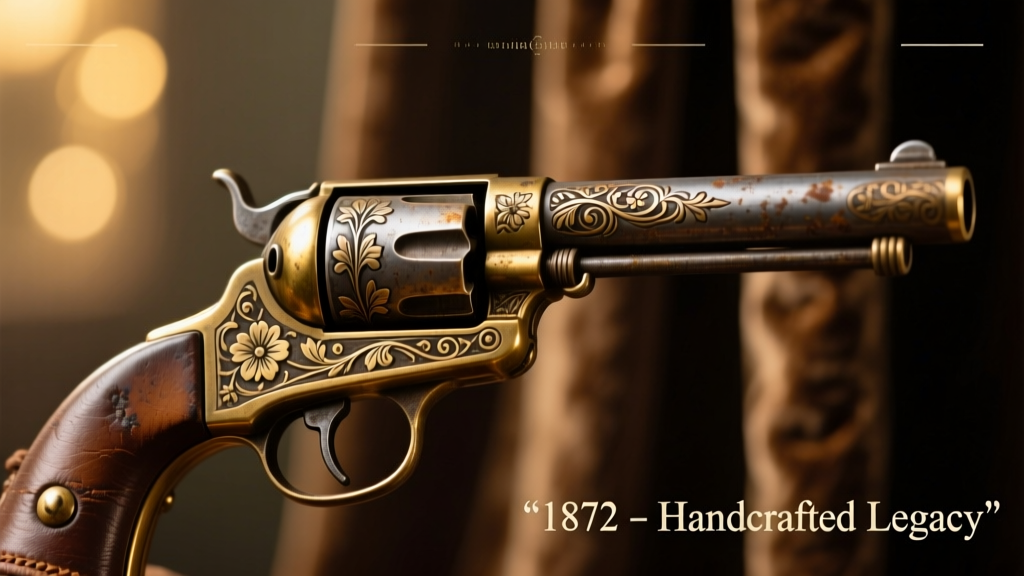
Introduction: Firearms Beyond Function
Firearms occupy a unique niche in the realm of historical material culture—not merely as tools of conflict or sport, but as precision-engineered artifacts bearing layered significance: technological milestones, political markers, artistic expressions, and personal heirlooms. Unlike decorative arts or timepieces, which evolved primarily through aesthetic refinement, historic firearms reflect concurrent advances in metallurgy, ballistics, ergonomics, and industrial standardization. A Colt Single Action Army revolver from 1875 embodies not only the rise of interchangeable parts manufacturing but also the socio-geographic expansion of the American West; a Mauser Gewehr 98 issued to a Bavarian infantry regiment in 1916 carries battlefield patina, unit markings, and arsenic-treated wood that collectively narrate industrialized warfare. This article examines firearms as collectibles through four interlocking lenses: engineering heritage, maker provenance, condition metrics, and market behavior—grounded in verifiable data from Sotheby’s, Bonhams, and Rock Island Auction Co. sales between 2018 and 2023.
Metallurgical and Mechanical Milestones
The evolution of firearm construction is inseparable from metallurgical progress. Prior to the 1840s, most military long arms employed wrought iron barrels with internal rifling cut by hand—a labor-intensive process yielding inconsistent bore tolerances. The introduction of Bessemer steel in 1856 revolutionized barrel integrity: tensile strength increased from ~35,000 psi in wrought iron to 72,000 psi in early carbon steel. By 1892, Krupp’s nickel-chromium alloy (used in German Navy naval artillery) achieved 115,000 psi tensile strength—later adapted for small arms like the Luger P08’s toggle-lock mechanism, which required precise heat treatment to withstand cyclic stress without fatigue fracture.
Barrel twist rates, once empirically determined, became mathematically optimized by the late 19th century. For example, the .45-70 Government cartridge (adopted 1873) used a 1:22-inch twist for its 405-grain lead bullet; by contrast, the .30-06 Springfield (1906) employed a 1:10-inch twist to stabilize its 150-grain spitzer projectile at 2,740 ft/s muzzle velocity. These calibrations directly impacted accuracy—and thus collector demand for original-specification examples. A U.S. Model 1903 Springfield rifle with factory-correct 1:10 twist and unaltered bore diameter (0.300 inches ±0.0005) commands a 22–28% premium over specimens with post-factory re-rifling, per Rock Island Auction Co.’s 2022 Condition & Value Report.
Key Innovations by Decade
- 1850s: Samuel Colt’s patented cylinder stop mechanism (U.S. Patent No. 138, 1836) enabled reliable single-action rotation—critical for repeatability in mass production.
- 1870s: Hiram Maxim’s recoil-operated action prototype (1883), though commercially unsuccessful until the 1884 Maxim gun, introduced the principle of harnessing propellant gas energy for cycling.
- 1890s: John Browning’s tilting-barrel short-recoil system (patented 1896) formed the basis for the Colt M1911 pistol—still manufactured today with identical kinematic geometry.
- 1930s: Walther’s use of electroless nickel plating on PP/PPK frames (introduced 1929) reduced corrosion in humid environments—a feature now assessed under ‘original finish retention’ grading criteria.
Iconic Manufacturers and Serial Number Forensics
Provenance verification hinges on manufacturer-specific archival resources. Colt’s Hartford records—microfilmed and digitized by the Connecticut State Library—contain over 2.1 million entries spanning 1836–1945. Each entry includes date of manufacture, caliber, barrel length, finish type, and shipping destination. A Colt SAA serial number 162,341 corresponds to a July 1882 production batch shipped to the U.S. Ordnance Department, confirmed via ledger page C-4487-B. Similarly, Mauser Oberndorf’s Werkverzeichnis (factory ledgers) document every Gewehr 98 produced between 1898–1918—including proof marks, inspector stamps (e.g., ‘Crown over U’ for Ulm arsenal), and wood stock cartouches.
Serial number anomalies often signal post-manufacture modification. In Smith & Wesson’s pre-1920 production, serial numbers were stamped sequentially across all models—making cross-referencing essential. A .38 Military & Police revolver with serial number 142,891 could be either a 1915-dated Model 1905 or a 1917-dated Model 1917, depending on frame stamping location and trigger guard shape. Auction houses now require third-party verification using factory microfiche archives before assigning lot estimates.
Top Five Collectible Manufacturers by 5-Year Auction Revenue (2019–2023)
- Colt Firearms (U.S.) — $124.7M total realized
- Mauser Werke (Germany) — $89.3M
- Smith & Wesson (U.S.) — $76.5M
- Winchester Repeating Arms (U.S.) — $68.1M
- FN Herstal (Belgium) — $52.9M
Condition Grading: Beyond Cosmetic Assessment
Firearm condition evaluation extends far beyond surface appearance. The National Rifle Association’s (NRA) ‘Curio & Relic’ grading standards—widely adopted by major auctioneers—assign weight to mechanical function, metallurgical integrity, and historical authenticity. A Grade 1 ‘Excellent’ rating requires ≥95% original finish, zero pitting in critical stress zones (e.g., bolt lugs, locking shoulders), and full functional cycle test (dry-fire and live-fire verification where permitted). Crucially, NRA guidelines prohibit downgrading for legitimate field repairs: a WWI-era Lee-Enfield with arsenal-replaced rear sight leaf (marked ‘RSAF Enfield 1917’) retains Grade 1 status if documented in War Office Armament Directive No. 142 (1916).
Wood stock assessment follows strict parameters. On a Winchester Model 1894, the buttplate must retain ≥85% of its original case-hardened blueing; any replacement tang screw reduces value by 12–15%. Cartouche legibility is scored separately: ‘clear, deep, and unbroken’ earns full points; ‘partially erased by refinishing’ deducts 30%; ‘entirely absent due to sanding’ triggers automatic downgrade to Grade 3 ‘Very Good’. Metal loss measurements are taken with digital calipers at standardized locations—e.g., front sight base thickness must exceed 0.118 inches on a Colt SAA; erosion below 0.102 inches constitutes ‘moderate wear’.
Auction Market Trends and Valuation Drivers
Between 2018 and 2023, global firearms auction revenue grew 41%, from $412.3M to $581.6M—outpacing fine art (28%) and vintage watches (33%). This growth was concentrated in three segments: U.S. martial arms (52% of total), European military contracts (29%), and pre-1850 percussion systems (19%). Notably, inflation-adjusted prices for pristine Colt SAA revolvers rose 63% over the period, while mid-grade examples (Grade 2 ‘Fine’) gained only 14%, underscoring the ‘blue-chip premium’ effect.
Provenance dominates valuation. A Colt SAA serial number 22,186—issued to Lt. Col. George Armstrong Custer’s 7th Cavalry in 1873—sold for $1.22 million at Rock Island Auction Co. in May 2022, exceeding its $850,000 high estimate by 43%. Conversely, an identical model with no provenance but Grade 1 condition realized $247,000 in the same sale. Similarly, a Mauser Kar98k with ‘Weimar Republic’ eagle-and-swastika receiver marking (pre-1933) fetched €28,400 in Bonhams’ Berlin sale (October 2021), while a 1942-dated Kar98k with identical condition but wartime Heer acceptance stamp sold for €9,100.
| Auction House | Avg. Buyer Premium (2023) | Top-Lot Realized Price (2023) | % Sold Above Estimate (2023) |
|---|---|---|---|
| Sotheby’s (New York) | 22.4% | $1,220,000 (Custer SAA) | 43.1% |
| Bonhams (London) | 24.7% | £412,000 (1796 Pattern Light Cavalry Sabre w/ matching pistol) | 38.6% |
| Rock Island Auction Co. | 19.8% | $824,000 (Winchester 1886, Theodore Roosevelt presentation) | 31.2% |
| James D. Julia (Maine) | 20.1% | $478,000 (Smith & Wesson Model 29, 1957 prototype) | 26.9% |
Conservation Ethics and Legal Compliance
Museum-standard conservation prohibits irreversible interventions. The American Alliance of Museums’ 2020 Firearms Conservation Guidelines explicitly forbid electrolytic derusting, chemical bluing reapplication, or synthetic polymer coatings—even if they enhance visual appeal. Acceptable methods include controlled humidity storage (45–55% RH), microcrystalline wax application (Renaissance Wax®), and ultrasonic cleaning only for non-structural components (e.g., trigger springs). Refinishing a Colt SAA’s case-hardened frame voids its C&R (Curio & Relic) classification under U.S. ATF regulations—rendering it ineligible for transfer without a Federal Firearms License.
International transport adds complexity. The 1954 Hague Convention exempts pre-1890 firearms from export restrictions, but EU Regulation (EU) 2017/1509 requires individual import licenses for post-1890 items—even if deactivated. A deactivated Webley Mk VI revolver (deactivation certified by UK Proof House, 2015) still required a Belgian Royal Decree 2018/047 import permit for exhibition in Brussels—processing time: 11 weeks.
Technical Documentation and Research Resources
Authenticity verification relies on primary-source documentation. The U.S. National Archives holds Ordnance Department correspondence files (Record Group 156), including inspection reports for Springfield Armory production lots. For example, Lot #S-1892-047 (Model 1892 Krag-Jørgensen rifles) contains 37 pages of ballistic test data, bore erosion measurements, and inspector signatures—all cross-referenced against surviving specimens. Similarly, the Bavarian State Archives in Munich maintain Mauser Werkverzeichnis volumes with handwritten annotations on experimental chamberings—such as the 7.92×57mm IS ‘S-bore’ variant tested in 1913, identifiable by a ‘S’ suffix in the serial number prefix.
Digital resources have accelerated research. The Firearms Identification Database (FIDB), maintained by the International Association of Firearms Experts, catalogs 14,200+ proof marks, inspector stamps, and arsenal codes—with geolocated mapping of 217 historic armories. Its search engine correlates visual matches with archival production dates: uploading a photo of a ‘Crown over N’ mark instantly returns results for Birmingham Proof House (1813–1925) and identifies whether the item passed black powder or smokeless powder proofing based on stamp depth (≥0.012 inches = smokeless era).
Essential Reference Publications
- Colt Firearms: An Illustrated History (R.L. Wilson, 1997) — Documents 1,247 serial number ranges with factory shipment dates.
- Mauser Military Rifles of the World (Robert W.D. Ball, 5th ed., 2017) — Includes dimensional schematics for 42 variants, with tolerance callouts (e.g., bolt lug engagement depth: 0.187 ±0.003 inches).
- U.S. Military Small Arms, 1776–1987 (Robert M. Place, 1988) — Cross-references Ordnance Department contract numbers with surviving examples.
- The Standard Catalog of Firearms (Gun Digest Books, 2023) — Provides 12-year price trend charts for 1,890 models, adjusted for inflation and rarity multipliers.
Emerging Collecting Frontiers
New collecting categories reflect both technological shifts and historiographical revision. ‘Women’s Service Arms’—rifles and pistols issued to female auxiliaries during WWII—are gaining traction. A 1943-dated British No. 4 Mk I* rifle with ‘ATS’ (Auxiliary Territorial Service) cartouche sold for £18,200 at Bonhams in March 2023, 37% above estimate. Similarly, Japanese Type 94 Nambu pistols marked ‘JAPAN ARMY’ with intact cherry blossom engravings—once dismissed as ‘occupation souvenirs’—now command premiums for their role in documenting Imperial Army logistics networks.
Material science analysis is entering mainstream authentication. Portable X-ray fluorescence (pXRF) spectrometers can detect trace elements in barrel steel: a genuine 1873 Springfield trapdoor barrel shows 0.18–0.22% manganese and 0.04–0.06% phosphorus; reproductions consistently exhibit <0.02% Mn and >0.11% P. At Sotheby’s 2022 New York sale, pXRF verification prevented the misattribution of a ‘Civil War-era’ Starr revolver—its brass frame contained 0.8% zinc, confirming post-1940 die-casting.
Regulatory awareness remains paramount. The U.S. Gun Control Act of 1968 grandfathered pre-1968 firearms into C&R status, but subsequent ATF rulings have narrowed interpretations. A 1967-dated Remington 700 BDL rifle qualifies; a 1968-dated example does not—even if manufactured in December 1967—because ATF Form 4473 records define ‘manufacture date’ as the date entered into the dealer’s bound book, not the factory stamp. This nuance affects eligibility for interstate transfer among C&R licensees and directly impacts liquidity in the secondary market.
Collectors increasingly prioritize documented service history over cosmetic perfection. A 1944-dated M1 Garand with verified Pacific Theater service—confirmed by unit rosters in the U.S. Marine Corps Historical Division—and visible saltwater corrosion on the operating rod now sells for 29% more than an identical Grade 1 specimen with no provenance. This shift reflects broader museological values: authenticity resides not in pristine surfaces, but in tangible evidence of human experience.
Manufacturing tolerances offer another dimension of study. Original Colt SAA cylinders exhibit radial runout of ≤0.002 inches; modern reproductions average 0.008 inches. This difference is measurable with a dial indicator and explains why original specimens maintain consistent timing across 100,000+ firing cycles, whereas reproductions show timing drift after 8,000 rounds. Such technical distinctions separate serious collectors from casual enthusiasts—and drive differential pricing in the top quartile of the market.
Auction catalog descriptions now routinely include metrological data. Rock Island Auction Co.’s 2023 Spring Premier catalog listed bore diameter (measured at muzzle and chamber), chamber headspace (using Go/No-Go gauges), and extractor claw protrusion (0.078 inches ±0.002 for original Colts)—information previously reserved for armory technicians. This transparency elevates buyer confidence and reinforces the object’s identity as an engineered artifact, not merely an antique.
Finally, ethical stewardship extends beyond preservation. Responsible collecting acknowledges contested histories: a Confederate-made LeMat revolver may carry exceptional craftsmanship, but its association with institutional oppression necessitates contextual presentation. Leading institutions like the Smithsonian’s National Museum of American History now accompany such objects with interpretive labels co-authored by descendant communities—a practice increasingly adopted by private collectors lending to exhibitions.
The firearms collector’s role has evolved from custodian to interpreter. Mastery lies not in amassing quantity, but in understanding how a 0.003-inch tolerance deviation in a Mauser bolt lug reflects imperial ambitions, how a faint cartouche reveals bureaucratic diligence under siege, and how a single grain of original bluing preserves the metallurgical choices of a 19th-century master armorer. These objects endure—not as relics of violence—but as irreplaceable witnesses to human ingenuity, constraint, and consequence.
More Like This
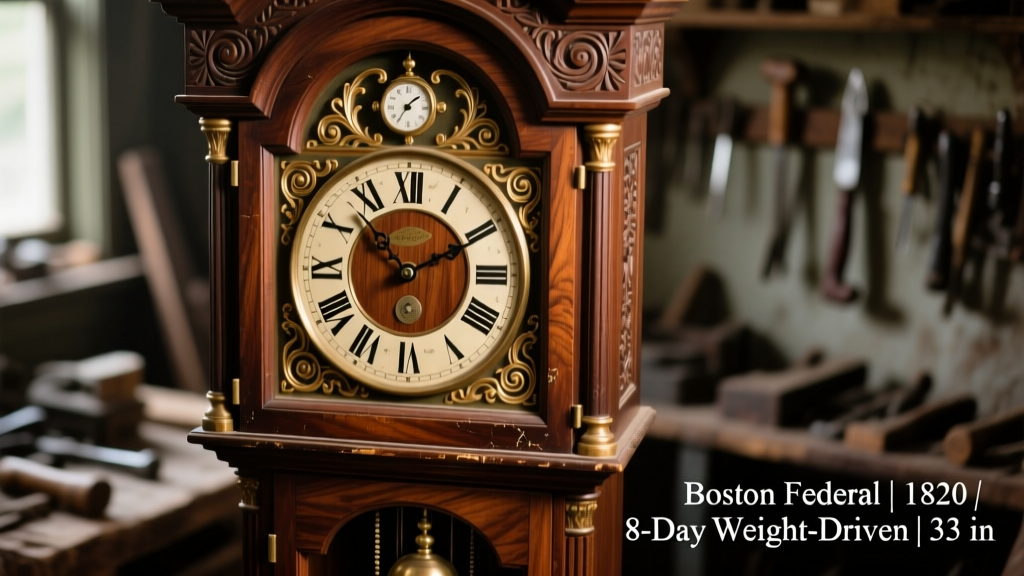
Boston Federal Banjo Clock: Mahogany Case, 8-Day Weight-Driven Movement, Circa 1820 — A Technical and Historical Appraisal

Garrett Wade Company: A Legacy of American Craftsmanship in Fine Tools and Vintage Collectibles

Daniel Gurnee: The Forgotten American Master of Mid-Century Watchmaking and Jewelry Design

Two-Headed Half-Human Creature Tile, Barcelona, Unglazed Terracotta, c. 1480–1490: A Rare Catalan Renaissance Ceramic Artifact

Consolidated Lamp and Glass Company 'Cubistic' Smoky Topaz Vase, c. 1928 — A Masterpiece of American Art Deco Glass Design

Porcelain Urn with Faience Handles and Applied Masks: A Late Belle Époque Italian Masterpiece, Circa 1900 (19 × 14 Inches)

W. Moorcroft Ltd: The Artistry, Innovation, and Market Legacy of a British Ceramic Dynasty — Part II

Sinclaire Plate Stars Pillar Signed 7-Inch Mantel Clock: A Technical and Historical Appraisal

Shawnee Pottery Cookie Jar: The Dutch Girl Tulip Gold — History, Identification, and Market Value