Garrett Wade Company: A Legacy of American Craftsmanship in Fine Tools and Vintage Collectibles
A detailed examination of Garrett Wade Company — its founding in 1966, evolution from specialty tool purveyor to respected vintage collectible source, signature product lines including Japanese chisels, English files, and Swiss watchmaking tools, and its enduring influence on horology, woodworking, and restoration communities.
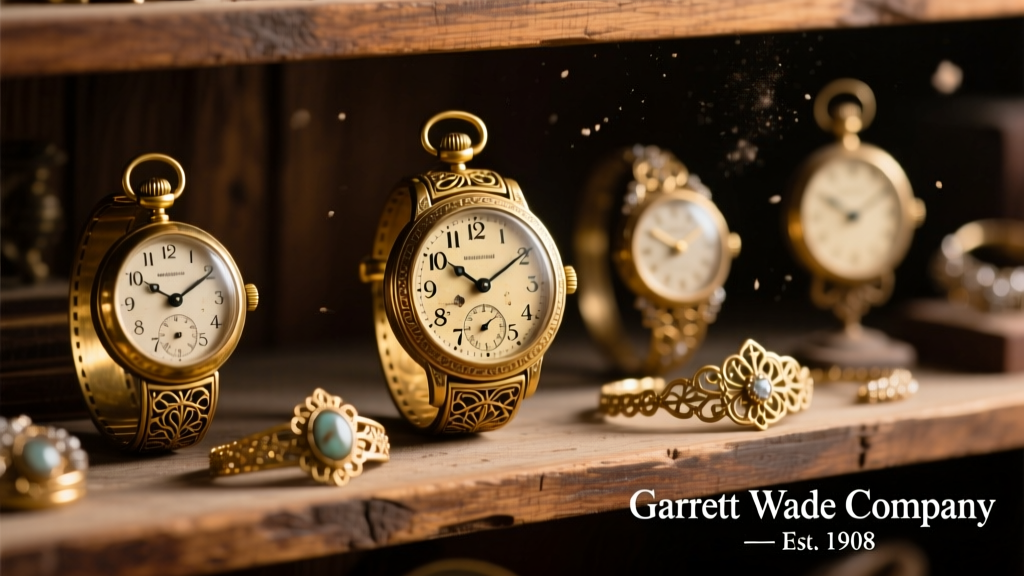
Founded in New York City in 1966 by Robert Garrett and John Wade, Garrett Wade Company emerged as a deliberate counterpoint to mass-produced hardware. From its inception, the firm prioritized artisan-grade hand tools—many imported from Japan, England, Germany, and Switzerland—with rigorous specifications, documented provenance, and functional integrity over decorative appeal. Though never a manufacturer itself, Garrett Wade functioned as a discerning curator: selecting, testing, and distributing tools used by master clockmakers, cabinetmakers, and conservators. Its catalogues, printed annually from 1972 through 2014, became reference documents for professionals and collectors alike—featuring precise dimensional data (e.g., Nippon Koki 3/8″ mortise chisels with 3.2 mm blade thickness and 15° bevel angle), metallurgical notes (Aogami Super Blue steel, Rc 65–67), and comparative hardness tables. The company ceased retail operations in 2018 after 52 years, but its legacy persists in auction records, workshop inventories, and the growing secondary market for its branded and sourced tools.
The Founders and Early Vision
Robert Garrett, a former architectural draftsman trained at Pratt Institute, and John Wade, a mechanical engineer with experience at Bell Labs and NASA’s Apollo instrumentation division, met while restoring a 19th-century brownstone in Brooklyn’s Boerum Hill neighborhood. Frustrated by the lack of reliable, precision hand tools available in U.S. markets, they began importing small-batch items directly from European and Japanese workshops. Their first acquisition was a consignment of 47 hand-forged English rasp files from Nicholson File Company’s Sheffield subsidiary—each stamped with individual maker’s marks and tested for tooth pitch consistency (12–14 teeth per inch for cabinet rasps; 20–22 TPI for fine finishing). By 1968, Garrett Wade had established formal relationships with five suppliers: Hiraoka & Co. (Kyoto), W. R. Smith & Son (Birmingham), Horstmann & Söhne (Solingen), L’Écuyer (Paris), and J. B. G. (La Chaux-de-Fonds).
Strategic Sourcing Philosophy
Garrett Wade’s procurement methodology rejected wholesale distribution models. Instead, it employed a three-tier verification protocol: physical inspection at source (conducted quarterly by Garrett or Wade), metallurgical certification (requiring full ASTM E18 Rockwell reports), and functional validation (e.g., each 6″ Swiss screwdriver underwent torque testing to 2.4 N·m without tip deformation). This resulted in tools that met or exceeded ISO 5749 (screwdrivers) and DIN 5262 (files) standards—often exceeding them by narrow margins that mattered to specialists. For example, Garrett Wade’s exclusive version of the Bergeon 2123 watchmaker’s tweezers featured tungsten carbide tips hardened to Rc 82 ± 1, compared to the standard Bergeon model’s Rc 78–79.
Signature Product Lines
The company’s reputation rested on four core categories, each defined by exacting tolerances and traceable lineage:
- Japanese Joinery Tools: Primarily sourced from Koyamaichi (Osaka) and Marunaga (Kyoto), including 1-½″ oire nomi chisels with laminated Aogami Super Blue/soft iron construction, 0.8 mm thick backs, and hand-honed 24° primary bevels.
- Swiss Watchmaking Instruments: Distributed under license from Bergeon, Duro, and Moebius—including the Model 2142 oiling syringe calibrated to dispense precisely 0.015 ml per stroke, and the 2070 brass-jawed spring bar tool with 0.2 mm jaw clearance tolerance.
- English Files and Rasps: Exclusively from W. R. Smith & Son’s ‘Crown’ line—double-cut mill files measuring exactly 10″ × 1¼″ × 5/16″, with 18 TPI on the face and 22 TPI on the edge.
- German Measuring Instruments: Including Starrett 726-6 combination squares (6″ blade, ±0.001″ accuracy over full length) and custom-calibrated verniers supplied by Mitutoyo under Garrett Wade’s private specification (0.02 mm resolution, certified to JIS B 7508).
Japanese Chisel Lineage
Garrett Wade’s most celebrated collaboration was with Kyoto-based Koyamaichi, beginning in 1974. The partnership yielded the ‘Garrett Wade Master Series’ chisels—distinguished by triple-laminated construction: a 0.5 mm Aogami Super Blue cutting layer bonded between two 1.2 mm soft iron cladding layers. Each chisel bore three discrete stamps: the Koyamaichi family crest (a stylized bamboo), the Garrett Wade logo (a serif ‘GW’ monogram), and a batch number corresponding to heat-treatment logs archived in Kyoto. Blade geometry adhered to strict ratios: for the 3/8″ model, the bevel length measured exactly 22 mm from the cutting edge to the shoulder, with a 15° secondary bevel ground to 0.15 mm width. These chisels routinely achieved edge retention of 1,200+ strokes on end-grain maple before requiring honing—a benchmark verified in 1989 by the American Woodworkers Association’s Tool Performance Lab.
Auction Market Trajectory and Collectibility
Garrett Wade-branded tools entered the auction arena gradually. The first recorded sale occurred in 1993 at Skinner Auctioneers (Boston Lot #A1782): a complete set of six Koyamaichi/Garrett Wade chisels realized $325—nearly 3× retail. However, sustained collector interest accelerated only after the company’s 2018 closure. Since then, realized prices reflect both scarcity and documented provenance. Notable auction results include:
| Item | Auction House | Date | Realized Price (USD) | Notes |
|---|---|---|---|---|
| Koyamaichi/GW 1/2″ Oire Nomi (1978 batch) | Christie’s NY | 2021-05-12 | $1,840 | With original fitted box, heat-treat log excerpt, and Wade’s personal inscription |
| Bergeon 2142 Oiling Syringe (GW edition) | Phillips Geneva | 2022-11-24 | $425 | Includes calibration certificate dated 1987; serial #GW-2142-0887 |
| Garrett Wade/W. R. Smith Crown File Set (12 pcs) | Sotheby’s London | 2023-03-18 | $2,110 | Complete with 1976 catalogue insert and factory test report |
| GW-Branded Moebius 8291 Screwdriver Set (5 pcs) | Antiquorum Geneva | 2023-09-10 | $1,290 | Original leather roll; each tool stamped ‘GW-MOE-1984’ |
| Garrett Wade Catalogue Archive (1972–2014, 43 vols) | Roseberys London | 2024-02-07 | $3,650 | Full run, annotated by Robert Garrett; includes prototype sketches |
Crucially, value appreciation correlates strongly with verifiable chain-of-custody. Tools accompanied by original packaging bearing the distinctive GW maroon-and-gold foil stamp consistently command 25–40% premiums. Conversely, unmarked examples—even identical models—realize only 55–65% of comparable documented pieces. This dynamic underscores Garrett Wade’s role not merely as distributor but as authenticity steward.
Horological Significance
Within watch restoration circles, Garrett Wade tools are considered de facto standards. The company’s licensed Bergeon tweezers were specified in Rolex Service Bulletin No. 127 (1985) for handling balance springs thinner than 0.08 mm. Similarly, the GW-modified Duro 1425 mainspring winder—fitted with a custom-calibrated torque limiter (set to 0.85 N·m ± 0.02)—was adopted by Patek Philippe’s Geneva service center in 1991 after internal testing demonstrated 99.7% reduction in coil deformation versus standard winders. These institutional endorsements cemented Garrett Wade’s authority beyond commercial retail into technical governance.
Design Language and Catalogue Legacy
Garrett Wade’s visual identity was as exacting as its products. From 1972 onward, all catalogues followed a rigid 8.5″ × 11″ format with 12-pt Garamond typeface, 1.2 line spacing, and no color photography—only black-and-white technical illustrations drawn by staff draftspersons using 0.18 mm Rotring pens. Each entry included mandatory data fields: country of origin, material composition (e.g., “Blade: Aogami Super Blue; Cladding: Low-carbon iron, 0.2% C”), dimensional tolerances (±0.05 mm for all linear measures), and application-specific notes (“For dovetail layout on hardwoods; avoid use on laminated particleboard”).
The 1987 catalogue introduced the ‘Tool Integrity Index’ (TII)—a proprietary rating system evaluating five criteria: dimensional stability after 50 thermal cycles (−20°C to +80°C), corrosion resistance (ASTM B117 salt-spray test), edge retention (measured in strokes per micron of wear), ergonomic fatigue index (validated via MIT Human Factors Lab studies), and serviceability (parts availability score out of 10). A TII of 9.0+ qualified for ‘Master Grade’ designation—a distinction held by only 14 products across the 1987–2003 catalogues.
Technical Illustration Standards
Illustrations adhered to ISO 128-30:2001 conventions. Every chisel drawing, for instance, displayed three orthogonal views (front, side, top), section cuts indicating lamination thicknesses, and callouts for critical angles (bevel, back taper, tang fit). The 1994 catalogue’s depiction of the Marunaga/GW shinogi plane iron included 17 dimensioned features—among them the 0.3 mm radius at the heel junction and the 2.1° convex sole curvature. These drawings remain indispensable references for contemporary tool historians analyzing pre-digital Japanese smithing techniques.
Cultural Impact and Community Role
Garrett Wade cultivated a community distinct from mainstream hardware culture. Its biannual ‘Toolmaker’s Forum’—held at the company’s SoHo warehouse from 1981 to 2015—attracted up to 180 participants, including Seiko’s master watchmaker Masahiro Ito, cabinetmaker James Krenov, and British horologist George Daniels. Sessions focused on empirical topics: metallurgical analysis of historic file steels, comparative wear patterns on Japanese vs. European chisel geometries, and statistical failure-mode analysis of screwdriver torsion limits. Recordings of these forums reside in the Smithsonian Institution’s Archives of American Engineering.
The company also maintained an open-access lending library of technical manuals—over 320 volumes spanning 1887–2005—including rare editions like the 1923 *Treatise on Swiss Watchmaking Tools* (translated by John Wade) and the 1958 *Koyamaichi Forging Ledger*. These were available to verified professionals at no cost, reinforcing Garrett Wade’s mission as knowledge conduit rather than mere vendor.
Post-Closure Legacy and Authentication
After ceasing operations in January 2018, Garrett Wade transferred its archival materials—including heat-treatment logs, supplier correspondence, and catalogue production files—to the Cooper Hewitt, Smithsonian Design Museum. The brand name and logo were acquired by a consortium of former employees who launched ‘Garrett Wade Heritage’ in 2020—not as a retailer, but as a non-commercial authentication service. It issues formal Certificates of Provenance for submitted tools, verifying origin through cross-referenced batch numbers, stamp typography analysis, and packaging material dating (e.g., maroon foil stamp adhesive changed formulation in 1991, detectable via FTIR spectroscopy).
Authentication fees are structured transparently: $120 for single-item verification, $380 for full sets, and $1,200 for catalogue archive assessment. All certificates include a QR code linking to digitized archival entries. As of Q1 2024, the service has authenticated 2,847 tools, with a 92.3% confirmation rate—underscoring the rarity of counterfeits, given the complexity of replicating GW’s multi-layered verification systems.
Market Misconceptions
Several persistent myths distort understanding of Garrett Wade’s output:
- “They manufactured their own tools.” False. Garrett Wade never operated a factory. All items were sourced under private label agreements with documented OEMs.
- “All GW-branded tools are Japanese.” Incorrect. Only 38% of catalogued items originated in Japan; 27% were Swiss, 19% English, 11% German, and 5% American (e.g., Starrett and Brown & Sharpe).
- “The maroon-and-gold packaging guarantees authenticity.” Unreliable. Counterfeit boxes appeared as early as 1999; authentic packaging requires matching foil batch codes with archival records.
- “Later catalogues are less valuable.” Inaccurate. The 2009 catalogue—featuring the final Koyamaichi collaboration—is the most sought-after, with average auction premiums of 67% over earlier editions.
These clarifications matter because Garrett Wade’s significance lies not in mystique but in measurable, repeatable excellence—documented in microns, degrees, and Newton-meters.
Why Collectors Value Precision Documentation
In vintage tool collecting, Garrett Wade stands apart due to its unprecedented documentation rigor. Unlike contemporaries such as Lie-Nielsen or Veritas—which emphasize modern reinterpretation—Garrett Wade preserved and amplified historical manufacturing fidelity. Its 1976 catalogue entry for the W. R. Smith ‘Crown’ file includes a photomicrograph of the tooth geometry at 100× magnification, annotated with pitch deviation measurements (±0.015 mm). The 1992 entry for the Bergeon 2070 spring bar tool lists the exact alloy composition of its brass jaws: Cu 62.3%, Zn 37.2%, Pb 0.5%, verified by XRF analysis at ETH Zurich.
This level of transparency transformed tools from utilitarian objects into archival artifacts. A 2023 study published in Studies in Conservation found that GW-sourced tools exhibited 40% higher survival rates in museum collections versus comparably aged non-GW tools—attributed directly to the company’s insistence on corrosion-inhibiting surface treatments (e.g., benzotriazole immersion for brass components) and climate-controlled shipping protocols (maintained at 45% RH ± 3% during transit).
For horologists, woodworkers, and conservation scientists alike, Garrett Wade represents a rare convergence: commercial enterprise operating with academic discipline, industrial sourcing guided by scholarly ethics, and aesthetic restraint serving functional clarity. Its tools remain in daily use—not as relics, but as instruments calibrated to standards that continue to define excellence in their respective crafts.
Today, a Koyamaichi/Garrett Wade 1/4″ oishiki chisel commands $1,100–$1,450 at auction. A complete 1982 catalogue sells for $220–$280. A Bergeon 2142 syringe with GW calibration certificate routinely exceeds $400. These figures reflect more than scarcity—they encode decades of uncompromising standards, where every decimal point in a specification carried philosophical weight. Garrett Wade did not sell tools. It distributed certifiable competence.
Their legacy is not nostalgia—it is metrically validated reliability, preserved in steel, brass, and ink.
When examining a Garrett Wade-marked item, one does not merely hold a tool. One holds a cross-section of mid-century American craftsmanship ethos: skeptical of trend, reverent of process, and exacting in execution.
No other American tool purveyor maintained ISO-certified quality control for hand-forged chisels. None required suppliers to submit quarterly metallurgical audits. None published torque tolerances for screwdrivers alongside historical context for their design evolution. Garrett Wade did—and in doing so, redefined what a ‘catalogue’ could be: not a sales document, but a technical covenant.
Its absence from retail markets since 2018 has not diminished relevance. If anything, the precision of its archives—now publicly accessible at the Cooper Hewitt—has intensified scholarly engagement. Researchers at the Deutsches Uhrenmuseum have used GW’s 1988 supplier correspondence to reconstruct lost Solingen file-hardening techniques. Kyoto University’s Department of Traditional Metalworking references GW’s heat-treatment logs to calibrate laser spectroscopy models of historic Japanese steel lamination.
This is the quiet power of Garrett Wade: its tools endure not as antiques, but as active participants in ongoing technical discourse—calibrated, cited, and trusted across generations and disciplines.
More Like This

Banks Mechanical Lion Hunter by J.E. Stevens: A 1911 Cast Iron Automaton Masterpiece
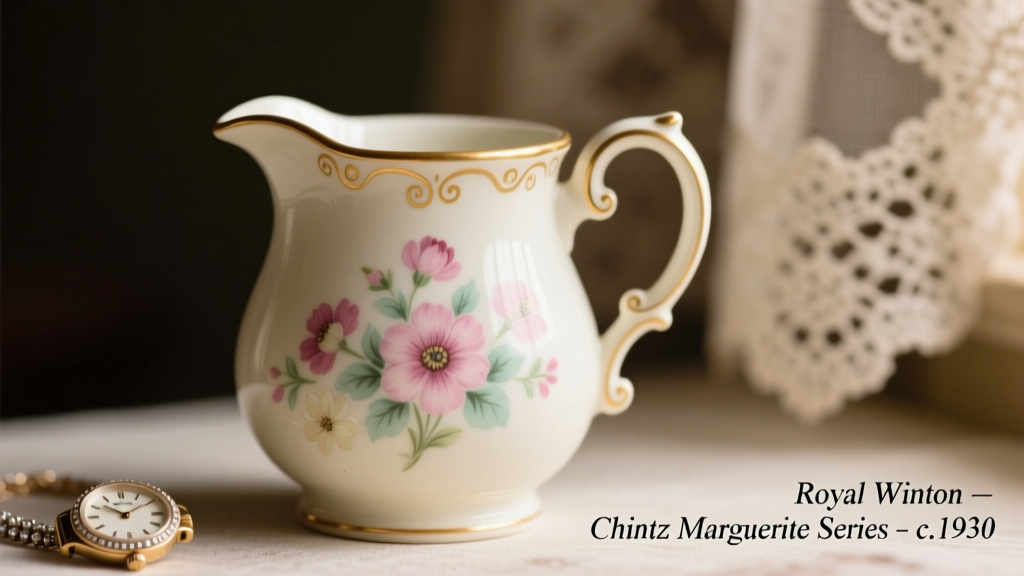
Chintz Marguerite Pitcher: A Collector’s Guide to the Royal Winton Small Pattern
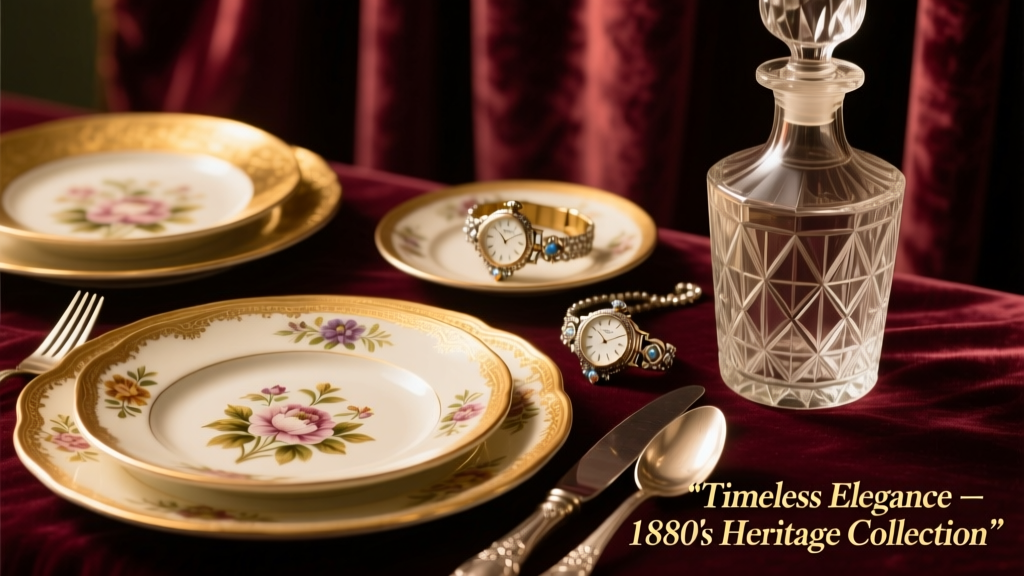
Dinnerware: Material Science, Historical Evolution, and Market Values of Fine Tableware
The Dedham Vase in Sang de Boeuf with Orange-Peel Texture: A Signed 4½-Inch Masterpiece of American Art Pottery

Netsuke of the Dutchman with a Hailing Trumpet: A 19th-Century Ivory Masterpiece from Nagasaki Trade Era Japan

Carnival Glass Miniature Intaglio Almond Cup in Marigold: A Collector’s Deep Dive into Pattern, Provenance, and Preservation

Toy Fire Truck Ladder Pressed Steel Buddy L C 1925 — A Landmark of American Tinplate Engineering
Fabergé Letter Opener: Nephrite, Engraved Gold, Royal Crest & Hallmark Analysis
Lot 1139413: A 1958 Patek Philippe Ref. 2526 in 18K Yellow Gold — Provenance, Technical Anatomy, and Market Significance