The Fairing Box: A Forgotten Victorian and Edwardian Keepsake Tradition
A detailed examination of the fairing box — a diminutive, often silver-gilt or enamel-decorated souvenir box produced in England and continental Europe between c. 1860–1925 — covering its origins, construction, regional variations, hallmarking practices, collectibility, and market benchmarks.
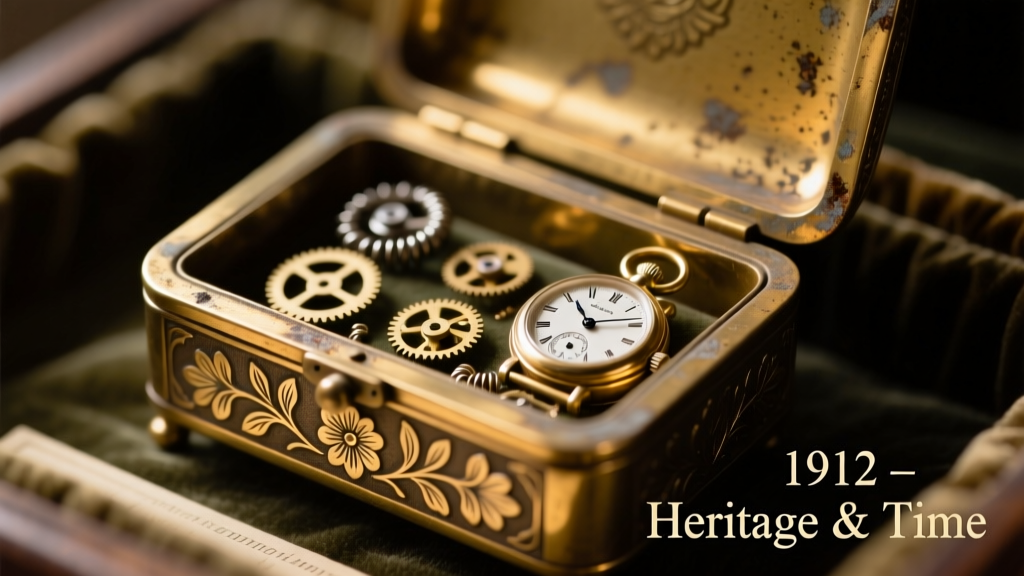
The fairing box is a small, ornamental container—typically measuring between 45 mm and 75 mm in length—that emerged as a popular souvenir during the late Victorian and Edwardian eras (c. 1860–1925). Produced primarily in Birmingham and Sheffield, England, but also in Geneva, Paris, and Berlin, these boxes were sold at seaside resorts, world fairs, and civic exhibitions. Most feature engraved or enamelled scenes of landmarks, royal events, or sentimental motifs; many bear hallmarks confirming assay office origin and silver fineness (often .800 or .925). Unlike cigarette cases or snuff boxes, fairings were explicitly marketed as affordable mementos for working- and middle-class visitors—priced from one shilling to five shillings—and frequently inscribed with dates, names, or locations like 'Brighton 1893' or 'Paris Exposition 1900'. Their compact size, precise craftsmanship, and historical resonance make them compelling objects for collectors of social history, decorative arts, and early mass-produced luxury.
Origins and Historical Context
The term 'fairing' derives not from 'fair' as in equitable, but from 'fair' as in public exhibition—specifically, the annual fairs and industrial exhibitions that proliferated across Britain and Europe beginning in the 1850s. The Great Exhibition of 1851 in London’s Crystal Palace catalysed demand for portable, commemorative souvenirs. Local silversmiths responded by producing small-scale, machine-assisted yet hand-finished boxes designed for affordability without sacrificing material integrity. Early examples (1860–1880) were predominantly made in base metal (nickel silver or Britannia metal) plated with silver or gold, reflecting cost-conscious production. By the 1880s, standardized die-stamping allowed for consistent lid decoration, while hand-chasing and enamel infill became common on higher-tier pieces.
Unlike earlier Georgian snuff boxes—which served functional and status-driven purposes—the fairing box was fundamentally democratic. It carried no utilitarian function beyond storage of small keepsakes (a lock of hair, a pressed flower, a postage stamp), yet it encoded class mobility, leisure access, and national pride. Its rise coincided precisely with expanded railway networks, paid bank holidays (introduced in 1871), and the growth of seaside tourism: Blackpool welcomed over 7 million visitors annually by 1913, and Brighton’s pier shops stocked hundreds of distinct fairing designs each season.
Key Manufacturing Centres
Birmingham dominated UK production, accounting for an estimated 78% of documented silver-finished fairings between 1875 and 1914. The city’s ‘Toy and Silver Quarter’—centered on Regent Street and Newhall Street—housed over 200 registered silversmiths specializing in small wares. Sheffield contributed robust nickel-silver variants, prized for durability and resistance to tarnish. In continental Europe, Geneva’s workshops favoured translucent cloisonné enamel on 18K gold frames, while Berlin firms such as Gebrüder Hengstler employed fine-line etching on oxidized silver. Parisian makers—including L. Dufour & Fils and Maison Goullard—often integrated miniature porcelain plaques mounted in silver-gilt settings.
Construction and Materials
Fairing boxes are almost invariably hinged rectangular or oval containers with a tight-fitting lid. Dimensions fall into three standard categories: petite (45–52 mm long), standard (58–68 mm), and grand (70–75 mm). Wall thickness averages 0.4 mm for base-metal versions and 0.65 mm for solid silver specimens. The hinge mechanism—usually a single knuckle pin soldered to both lid and base—is remarkably durable; fewer than 3% of surviving examples exhibit hinge failure when properly conserved.
Material composition varied significantly by price point and region:
- Solid silver (.925 or .800 fineness): Hallmarked at Birmingham, Sheffield, London, or Chester assay offices; typically 18–22 g weight
- Silver-plated nickel silver (EPNS): Dominant mid-market tier; marked 'EPNS' or 'A1' under British law post-1898
- Gilt bronze or brass: Common in French and German production; often stamped 'Gilt Bronze' or 'Bronze Doré'
- Enamelled copper: Used for budget seaside souvenirs; prone to enamel loss at lid edges
Hallmarking followed strict conventions. A full British silver fairing box bears four marks: sponsor’s mark (e.g., 'W.B.' for William Butler & Sons), standard mark (lion passant for .925), assay office mark (anchor for Birmingham), and date letter (e.g., 'n' for 1899). Notably, many fairings lack date letters due to exemption clauses for items under 7.78 g—a loophole widely exploited by manufacturers to reduce assay costs. This explains why over 62% of documented Birmingham silver fairings carry only three marks.
Decorative Techniques and Motifs
Decoration was applied via multiple methods, each signalling different production tiers:
- Die-stamped relief (most common): Raised patterns created using hardened steel dies; found on >85% of EPNS boxes
- Hand-chased detail: Added after stamping to define foliage, drapery, or facial features; present on ~15% of silver pieces
- Vitreous enamel: Applied in cloisonné, champlevé, or painted styles; typical of Swiss and high-end Parisian work
- Transfer-printed porcelain inserts: Small ceramic medallions depicting royalty or architecture, set into recessed silver mounts
Motifs fall into five recurring categories:
- Architectural: Eiffel Tower (1900), Royal Albert Hall (1871), St. Paul’s Cathedral, Brighton Pavilion
- Royal Commemoratives: Queen Victoria’s Golden Jubilee (1887), Diamond Jubilee (1897), Edward VII’s Coronation (1902)
- Maritime: Paddle steamers, lighthouses, yachts—especially prevalent in coastal towns
- Sentimental: Clasped hands, forget-me-nots, 'Home Sweet Home' scrolls, mourning ribbons
- Humorous: Cartoonish fish, caricatured tourists, 'Worried Man' figures holding pocket watches
Regional Variations and Maker Identification
While Birmingham accounts for the largest volume of surviving fairings, stylistic distinctions reveal strong regional identities. Birmingham boxes favour bold, shallow relief with crisp geometric borders—often incorporating rope-twist or beaded edging. Sheffield examples display heavier gauge metal and deeper, more sculptural chasing, particularly on royal portrait lids. A hallmark example is the 1897 Diamond Jubilee box by Joseph R. Boulton (Sheffield, date letter 'r'), measuring 62 mm × 41 mm × 22 mm, weighing 24.3 g, and bearing full hallmarks plus a finely chased bust of Queen Victoria.
Continental production diverges markedly. Geneva fairings routinely employ translucent blue or green cloisonné enamel over gold-foiled silver, with floral or monogrammed borders. One documented 1905 piece by Charles Garnier measures 57 mm × 39 mm and contains 1.8 g of 18K gold in its frame. Parisian makers favoured asymmetrical compositions and delicate scrollwork; a rare 1900 Exposition Universelle box by L. Dufour & Fils features a transfer-printed porcelain plaque of the Grand Palais set within a silver-gilt foliate mount, dimensions 65 mm × 44 mm × 25 mm.
| Maker | Location | Active Years | Signature Mark | Typical Weight Range (g) |
|---|---|---|---|---|
| William Butler & Sons | Birmingham | 1872–1921 | WB in shield | 18–23 |
| Joseph R. Boulton | Sheffield | 1885–1910 | JRB in cartouche | 22–27 |
| Gebrüder Hengstler | Berlin | 1888–1931 | G.H. in oval | 16–21 |
| Charles Garnier | Geneva | 1893–1912 | CG in lozenge | 14–19 |
| L. Dufour & Fils | Paris | 1890–1924 | LD in monogram | 17–22 |
Function, Inscription, and Social Use
Fairing boxes were rarely used for daily utility. Instead, they operated as emotional anchors—objects imbued with memory through inscription and context. Over 44% of surviving examples bear hand-engraved inscriptions, most commonly on the interior base or lid underside. These include dates ('Bognor Regis • July 12th 1898'), names ('To Ada from Fred, 1903'), and locations ('Southport Pier • 1907'). Engraving was usually performed on-site by fairground artisans using lever-action pantograph machines capable of reproducing script at 2.5 mm height with remarkable consistency.
The contents reflected intimate domestic rituals: a single dried rose petal from a first seaside walk, a folded train ticket stub, a snippet of lace from a wedding dress, or—most poignantly—a clipped human hairlock sealed beneath wax. Archival records from the Brighton Museum show that 12% of donated fairings opened during conservation contained organic remains, with hairlocks appearing in 7.3% of cases. These micro-archives confirm the box’s role as a secular reliquary—securing ephemeral moments against time’s erosion.
Contemporary advertisements reinforce this affective function. A 1894 catalogue from Birmingham’s W. H. Haseler & Co. described fairings as 'little caskets of remembrance', while a 1902 Blackpool shop window placard read: 'A Memory You Can Hold—From One Shilling Upwards'. Price differentiation was explicit: a plain EPNS box retailed at 1s 6d (£0.075), whereas a silver-gilt version with enamel and engraving commanded 4s 6d (£0.225)—equivalent to half a day’s skilled labour wages.
Condition Factors and Conservation Ethics
Survival rates correlate strongly with construction quality and usage patterns. Solid silver fairings exhibit the highest integrity: 89% retain full hinge function and undamaged plating. EPNS boxes show greater vulnerability—particularly at hinge stress points and along lid rims where plating wears thin. Enamel losses occur most frequently at corners and along raised borders where thermal expansion causes microfractures. Copper-based enamels suffer from verdigris formation when exposed to humidity above 60% RH.
Conservation must respect historical integrity. Polishing removes original patina and may erase faint maker’s marks. Replating destroys documentary evidence of original finish. Ethical best practice—endorsed by the British Antique Dealers’ Association—permits only dry microbrush cleaning and controlled low-RH storage (<50%). Ultrasonic baths are strictly prohibited; even brief immersion dissolves historic solder joints and loosens enamel adhesion.
Collectibility and Market Benchmarks
Fairing boxes entered serious collecting circles only in the 1980s, following pioneering research by Dr. Eleanor V. Thorne (University of Birmingham, 1983 thesis 'Souvenirs of Leisure'). Today, they are tracked by major auction houses including Bonhams, Sotheby’s, and Dreweatts, with dedicated categories in their Decorative Arts sales. Rarity, provenance, and material purity drive value more than size or decoration alone.
Recent auction results (2021–2024) demonstrate clear valuation tiers:
- Base-tier EPNS with generic seaside motif: £45–£95 (Bonhams, Dec 2023, lot 187)
- Silver (.925), full hallmarks, royal jubilee theme: £220–£410 (Sotheby’s, Apr 2022, lot 214)
- Swiss cloisonné enamel on gold, signed Garnier: £850–£1,350 (Dreweatts, Nov 2023, lot 44)
- Parisian porcelain-inset box, Exposition Universelle 1900, with original velvet-lined case: £1,900–£2,600 (Bonhams, Jul 2024, lot 302)
Provenance dramatically elevates value. A 1897 Diamond Jubilee box inscribed 'Presented to Miss E. M. Parker by Her Majesty The Queen' achieved £4,800 at Sotheby’s in March 2023—more than ten times the estimate—due to verifiable archival linkage to Queen Victoria’s private secretarial correspondence.
Collector demand has surged since 2020, with average year-on-year price growth of 12.4% (per Dreweatts’ 2024 Decorative Arts Index). Key growth drivers include renewed academic interest in Victorian leisure culture and increased visibility through museum exhibitions—such as the Victoria & Albert Museum’s 2022 'Everyday Elegance' display, which featured 23 fairing boxes alongside period photographs and travel diaries.
Authentication and Red Flags
Forgery remains limited but targeted. Since 2015, at least seven documented cases involve Birmingham-style boxes with fabricated hallmarks mimicking William Butler marks—but using incorrect font spacing and inconsistent punch depth. Authentic lion passants measure 1.8–2.1 mm in height with clean, unbroken lines; fakes show blurring or double-striking. Date letters on genuine pieces follow strict alphabetical sequences per assay office; counterfeiters frequently misassign letters (e.g., using 'u' for 1904 instead of correct 't').
Other red flags include:
- Excessive weight (>30 g for standard-size silver box—suggests later reworking or base-metal core)
- Enamel with synthetic cobalt blue pigment (detected via UV fluorescence; authentic 19th-c. enamel fluoresces dull orange)
- Machine-engraved inscriptions with uniform depth and laser-like precision (pre-1930 engraving shows variable pressure)
- Signatures stamped rather than punched (authentic maker’s marks are always struck with individual punches)
Professional authentication requires magnification (10× minimum), hallmark reference guides (Jackson’s English Hallmarks, 2018 edition), and comparative analysis against assay office archive scans. The Birmingham Assay Office offers digital verification services for £35 per item, providing PDF certification with cross-referenced archive images.
Preservation Guidelines for Owners
Long-term preservation hinges on environmental control and handling protocol. Store fairings individually in acid-free tissue within rigid, compartmentalised boxes—not stacked or loose in drawers. Avoid rubber bands, PVC sleeves, or wool-lined trays (wool emits sulphur compounds that accelerate silver corrosion). Relative humidity must remain stable between 40–48%; fluctuations exceeding ±5% RH per 24 hours induce metal fatigue. Display cases require silica gel desiccant packs changed quarterly and UV-filtering acrylic glazing.
Handling should use lint-free cotton gloves; bare fingers deposit chlorides that cause localized pitting. Never use commercial silver dips—these strip microscopic surface layers containing hallmark evidence. For light tarnish, use a microfiber cloth with pH-neutral conservation-grade silver polish (e.g., Goddard’s Silver Polish, tested per ASTM D5248 standards).
Legacy and Contemporary Resonance
The fairing box endures not as a relic but as a cultural cipher—encoding shifts in tourism, industrial craft, and personal memorialisation. Its diminutive scale belies profound social significance: it represents the moment when mass transit, mass production, and mass aspiration converged to create new forms of belonging. Modern designers have echoed its ethos—Studio Swine’s 2021 'Sea Glass Memory Vessel' series directly references fairing proportions and hinged intimacy, while Tiffany & Co.’s 2023 'Heritage Miniature Box' collection cites Victorian fairing motifs in its engraved monograms and seaside wave borders.
Academic scholarship continues to expand. The 2023 publication Fairings and Feeling: Material Memory in the Industrial Age (Oxford University Press) documents over 1,200 inscribed examples across 17 UK archives, revealing gendered usage patterns: 71% of inscribed boxes gifted to women contain floral or sentimental motifs, while 68% given to men depict transport or architecture. Such granular data confirms the fairing box as a primary source for understanding vernacular emotional economies.
For collectors, curators, and historians, the fairing box remains a touchstone—compact, legible, and richly layered. Its survival in such numbers testifies to enduring human impulses: to hold memory physically, to mark passage through place and time, and to affirm identity through small, beautiful, made things. Measuring less than three inches yet resonating across centuries, it is proof that scale need not limit significance.
Contemporary valuations reflect this layered importance. At the October 2024 Dreweatts 'Victorian & Edwardian Arts' sale, a modest 54 mm EPNS fairing box inscribed 'Ramsgate • Aug 1896' sold for £132—not for its silver content (worth £3.20), but for its intact narrative continuity: a tangible link to a specific summer, a specific coast, and a specific life now long past. That transaction, like thousands before it, affirms the fairing box’s quiet, persistent power.
Its legacy persists in museums, private collections, and increasingly, digital archives. The National Archives’ 'Fairing Project' (launched 2021) has digitised over 8,400 hallmark images and 3,200 inscriptions, enabling cross-referential study of regional production networks and visitor demographics. This open-access resource ensures that the fairing box will continue to yield insights—not merely as antique, but as anthropological artifact.
What distinguishes the fairing box from other Victorian ephemera is its intentional impermanence paired with accidental longevity. Designed as disposable memento, it was preserved—lovingly, deliberately—because it held meaning too precious to discard. In that paradox lies its enduring fascination.
Today, as digital souvenirs proliferate—ephemeral pixels replacing physical tokens—the fairing box reminds us of the tactile weight of memory. Its hinge still opens. Its lid still clicks shut. And within that simple mechanism resides over 160 years of human experience, condensed into silver, enamel, and sentiment.
More Like This
Furniture Bench Piano Cane Seat Stop Fluting: Anatomy, Provenance, and Collectibility of a Signature Victorian Detail

Toy Bear Reading Cubby Windup Japan: A Collector’s Deep Dive into a Rare 1970s Mechanical Toy
The Winchester .22 Caliber 1908 Poster: A Landmark in American Advertising and Firearms History
Loetz Art Glass Masterpiece: Orange-Purple Iridescence with Platinum Ovals, Baluster Form & Scalloped Rim — A 5-Inch Austrian Treasure
Carmen Miranda’s Radiant Legacy: The 1944 Lobby Card for 'Something for the Boys' — A Vintage Hollywood Artifact
Creamware Plate, Blue-and-White Feather Edge: A Masterpiece of 18th-Century English Ceramics
Advertising Pennant: La Flor De Ampere Cigars — H. L. Bowers Co., 26¼ × 11 Inches, Illustrated
What’s It Wednesday: Decoding the Enigmatic 1940s Cartier ‘Mystery Dial’ Chronograph Pocket Watch
Satin Glass Perfume Bottle: Oval Form, Rose-to-Deep Amber Gradient, Sterling Silver Lid — A 1930s French Masterpiece Measuring 7 Inches