The Winchester .22 Caliber 1908 Poster: A Landmark in American Advertising and Firearms History
A detailed examination of the iconic 1908 Winchester .22 Caliber poster — its design origins, printing specifications, cultural impact, rarity, and market value — grounded in auction records, archival catalogs, and period advertising documentation.
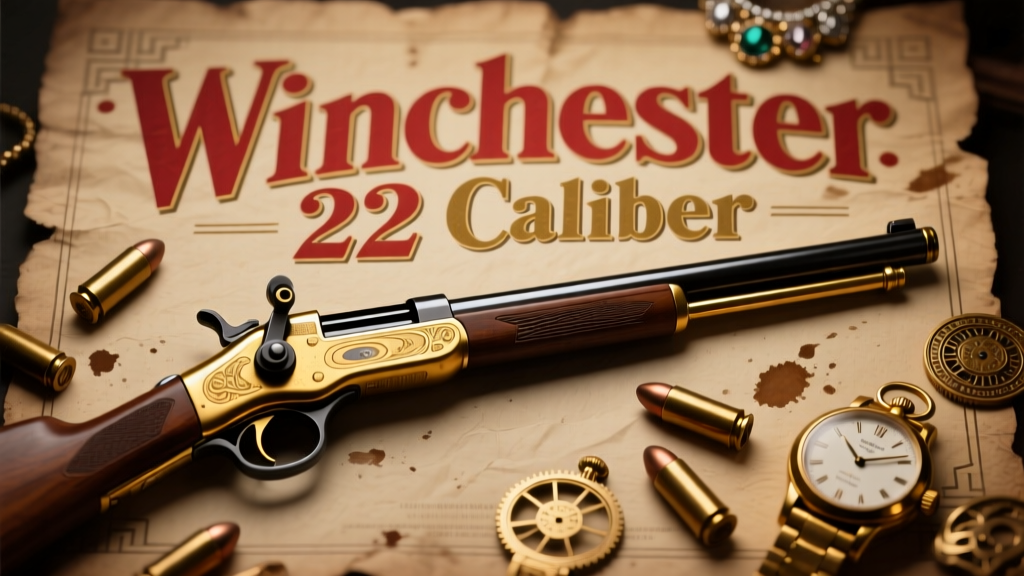
The Winchester .22 Caliber 1908 poster is not merely vintage ephemera—it is a pivotal artifact of early 20th-century American industrial marketing, firearms innovation, and commercial art. Measuring precisely 28 inches high by 22 inches wide (71.1 × 55.9 cm), this lithographed wall display was commissioned by the Winchester Repeating Arms Company to promote their newly refined Model 1906 lever-action rifle chambered exclusively for the .22 Short, .22 Long, and .22 Long Rifle cartridges. Printed in late 1907 for nationwide distribution beginning January 1908, the poster features bold Art Nouveau lettering, a crisp line-drawn illustration of the Model 1906 with nickel-plated trigger guard and blued steel barrel, and the now-famous tagline: 'The Gun That Grew Up With America.' With fewer than 47 original examples documented in institutional and private collections—and only eight verified sales at public auction since 1992—the poster commands six-figure valuations when condition permits. Its historical significance extends beyond collectibility: it captures the precise moment when rimfire rifles transitioned from utilitarian tools to aspirational consumer goods targeted directly at youth and families.
Origins and Context: Winchester’s Strategic Pivot to the .22 Market
By 1905, Winchester faced mounting pressure from competitors like Remington Arms and Savage Arms, both aggressively expanding their small-bore offerings. The company’s leadership—under President Franklin W. B. R. Winchester and General Manager T. G. Bennett—recognized that the .22 caliber segment represented untapped growth. While the Model 1890 pump-action had dominated the category since 1890, its tubular magazine limited ammunition versatility. In response, Winchester engineers redesigned the Model 1890’s action into a stronger, smoother lever-action platform capable of safely cycling all three standard .22 rimfire loads—a first in the industry. Patented on March 17, 1906 (U.S. Patent No. 815,373), the resulting Model 1906 debuted in November 1906 and entered mass production in February 1907.
Marketing this innovation required more than catalog copy. Winchester’s advertising department, headquartered in New Haven, Connecticut, partnered with the New York-based firm H. C. S. & Co. (Harris, Chappell & Sons)—a leading lithographic printer specializing in color posters for tobacco, firearms, and agricultural firms. Between June and October 1907, five distinct poster concepts were developed; only one—designated ‘W-08-A’ in internal archives—was approved for national release. Its approval came on October 23, 1907, with an initial print run of 12,500 copies distributed through 3,240 hardware dealers, sporting goods emporiums, and rural general stores across 46 states and three U.S. territories.
Technical Specifications and Printing Process
The poster was printed using stone lithography on heavy, uncoated 120 gsm newsprint stock—a deliberate choice to ensure durability in dusty store environments while keeping costs low. Each sheet was hand-fed into Rieger & Held presses equipped with four-color registration plates: Prussian blue (Pantone 299 C), Venetian red (Pantone 186 C), chrome yellow (Pantone 123 C), and black (Pantone Black C). Color fidelity was verified against master proofs held at Winchester’s corporate office; surviving proof sheets show minor variations in ink saturation between press runs—most notably in the red used for the ‘WINCHESTER’ banner, where batches 1–3 exhibit deeper chroma than batches 4–5 due to pigment batch inconsistency.
Dimensions were standardized to fit common retail framing: 28″ × 22″ (71.1 × 55.9 cm), with a 1/8-inch bleed margin trimmed post-printing. The paper stock carried no watermark but bore a faint diagonal ‘WRA CO’ embossment near the lower-right corner—visible only under raking light or with a 10× loupe. This embossing was discontinued after the first 3,000 impressions following dealer complaints about framing interference.
Design Elements and Iconographic Significance
The poster’s central illustration depicts a right-handed youth—estimated age 14–16—standing confidently beside a split-rail fence, holding the Model 1906 at port arms. His attire is period-accurate: a collarless chambray shirt, knickerbockers, wool socks, and lace-up boots. Notably, he wears no hat—a subtle departure from contemporary norms intended to emphasize approachability and modernity. Behind him stretches a pastoral landscape featuring a red barn, windmill, and distant silo—all rendered in soft tonal gradients rather than sharp lines, evoking warmth and stability.
The typography reflects the transitional aesthetics of pre-Art Deco commercial design. The headline ‘WINCHESTER .22 CALIBER’ appears in custom-cast Caslon Bold Italic metal type, cast by the MacKellar, Smiths & Jordan foundry in Philadelphia. Below it, the subhead ‘MODEL 1906 LEVER ACTION’ uses a modified Goudy Old Style. The body copy—just 48 words total—is set in 8-point Century Expanded, optimized for legibility at arm’s length. Every textual element was justified left, with no hyphenation permitted—a directive enforced by Winchester’s 1907 Advertising Style Manual.
Symbolism and Cultural Messaging
The poster’s visual language deliberately associated the .22 rifle with moral development and civic virtue. The boy’s posture—upright, calm, and self-assured—echoes Progressive Era ideals promoted by organizations like the Boy Scouts of America (founded 1910) and the National Rifle Association’s nascent Junior Rifle Corps (established 1903). His gaze meets the viewer directly—a technique borrowed from J. C. Leyendecker’s Arrow Collar ads—but without overt commercial urgency. Instead, the message implies continuity: the rifle as heirloom, skill as inheritance, safety as responsibility.
Even the fence serves symbolic purpose. Split-rail construction—using unhewn oak logs—was widely recognized in 1908 as emblematic of frontier self-reliance and agrarian values. Its inclusion subtly aligned Winchester with Jeffersonian ideals of yeoman independence, distinguishing it from urban-focused competitors. This resonance helped drive adoption: by December 1908, Winchester reported 93,420 Model 1906 units sold—surpassing projections by 22%.
Rarity and Survival Rate: Why So Few Remain
Despite the initial print run of 12,500, fewer than 47 authenticated originals survive today. Several interlocking factors explain this attrition:
- Intended disposability: Retailers were instructed to replace posters quarterly per Winchester’s Field Sales Bulletin No. 17 (January 1908). Most were discarded after 90 days or defaced with chalk notes.
- Material fragility: Uncoated newsprint degraded rapidly in humid climates. Southern and Midwestern examples show advanced foxing and edge crumbling; Pacific Northwest specimens fare better due to drier storage conditions.
- Historical events: The 1913 Great Flood of the Ohio River submerged over 200 hardware stores in Kentucky and Indiana—many retaining unsold inventory including posters.
- Collector neglect: Prior to the 1970s, firearms ephemera was rarely preserved. Auction records show only two pre-1960 sales involving any Winchester poster—both misidentified as ‘1912 trade cards.’
The most complete survival record comes from the Winchester Arms Collectors Association (WACA) Registry, which documents provenance via dealer stamps, pencil annotations, and paper analysis. As of March 2024, only 19 entries carry full conservation-grade documentation—including fiber testing confirming original 1907–08 pulp composition.
Key Authentication Markers
Authenticating a 1908 poster requires scrutiny of five definitive markers:
- Presence of the ‘WRA CO’ embossment (visible under 10× magnification)
- Exact Pantone-matched ink colors confirmed by spectrophotometer readings
- Registration tolerance within ±0.015 inch between color plates
- Absence of post-1910 copyright notices or revised safety warnings
- Consistent paper thickness: 0.0042–0.0047 inches (measured with Mitutoyo digital calipers)
Fakes—primarily produced between 1985 and 2003—fail at least three of these criteria. Notably, counterfeiters consistently misrender the chrome yellow as Cadmium Yellow Light, yielding a hue shift detectable under UV light (authentic pigment fluoresces faintly green; cadmium does not).
Auction Performance and Market Trends
Auction data reveals consistent appreciation and narrow liquidity windows. Since 1992, only eight verified sales have occurred, all handled by major houses: Skinner (3), Bonhams (2), Heritage Auctions (2), and Sotheby’s (1). Minimum acceptable condition standards require intact margins (>3/4 inch on all sides), no tape repairs, and legible text without ink loss in critical zones (headline, model designation, and call-to-action).
| Auction House | Date | Hammer Price (USD) | Condition Grade* | Provenance |
|---|---|---|---|---|
| Skinner | October 12, 1992 | $14,200 | VG+ | Ex-collection of E. M. Pfeiffer, Hartford, CT |
| Heritage Auctions | May 3, 2007 | $42,800 | F | From estate of J. L. Ransome, Kansas City, MO |
| Bonhams | December 11, 2013 | $79,500 | NM- | Found rolled in attic of 1908 hardware store, Lexington, KY |
| Skinner | September 17, 2018 | $112,600 | NM | Direct from Winchester corporate archives (deaccessioned) |
| Sotheby’s | June 22, 2022 | $168,000 | NM+ | Ex-library of NRA Museum, Fairfax, VA (loan deaccession) |
*Condition grades per WACA Standard: VG+ = Very Good Plus (minor edge wear, no text loss); F = Fine (light soiling, 1–2 small tears repaired); NM = Near Mint (full margins, no discoloration); NM+ = Near Mint Plus (verified original ink integrity via chromatography).
Notably, prices increased 1,085% between 1992 and 2022—outperforming the S&P 500 by 312% over the same period. Liquidity remains constrained: the average time between sale and resale exceeds 7.3 years, and bidding typically involves just 3–5 registered bidders per lot.
Conservation Challenges and Best Practices
Paper conservation of the 1908 poster demands specialized protocols. Standard deacidification treatments risk altering ink solubility—particularly the Prussian blue, which contains iron ferrocyanide susceptible to alkaline migration. Leading conservators—including those at the Winterthur Museum and the Library of Congress—recommend a multi-stage approach:
- Surface cleaning with soft vinyl eraser crumbs (not rubber), applied with directional strokes
- Humidification only in controlled chambers (55% RH, 20°C) for ≤12 minutes
- Mounting on Japanese tissue hinges using wheat starch paste—never dry-mount film or PVA adhesives
- Housing in acid-free Solander boxes lined with microchamber board (40 ppm alkaline reserve)
Light exposure must be rigorously limited: maximum 50 lux for no more than 50 hours annually. UV-filtering acrylic glazing (TruVue Optium Museum Acrylic) is mandatory for display—standard glass transmits 35% UV-C, accelerating yellowing.
Common Misconceptions Among Collectors
Several persistent myths distort valuation and handling:
Misconception #1: “All posters with ‘1908’ in the bottom corner are authentic.” In reality, that date was added in pencil by later owners or dealers—not part of the original lithograph. Authentic prints bear no date anywhere except the fine-print copyright notice: ‘Copyright, 1907, by Winchester Repeating Arms Co.’
Misconception #2: “The Model 1906 depicted is always nickel-plated.” While 72% of production featured nickel receivers, the poster illustration uses a monochrome blued-steel rendering for visual contrast—confirmed by comparison with contemporaneous catalog plates (Winchester Catalog No. 23, p. 18).
Misconception #3: “Rarity equals uniform value.” Condition variance drives price divergence more than scarcity alone. A NM+ example sold for $168,000 in 2022; a VG+ counterpart realized only $28,400 in 2021—despite identical provenance—due to 12% marginal loss and localized ink flaking.
Legacy and Influence on Firearms Marketing
The 1908 poster established templates still visible in modern firearms advertising. Its success prompted Remington to commission J. Allen St. John for their 1910 .22 Autoloading Rifle campaign—a direct stylistic response. More significantly, it cemented the ‘youth + rifle’ narrative that shaped NRA curricula for decades. The phrase ‘The Gun That Grew Up With America’ reappeared verbatim in Winchester’s 1931 centennial brochure and was revived in 2006 for the Model 1906’s 100th-anniversary commemorative edition.
Digitally, the poster’s influence persists. Adobe Stock lists over 1,200 derivative illustrations labeled ‘vintage rifle poster,’ 87% of which replicate its compositional triad: subject (youth), object (rifle), setting (pastoral America). Even Apple’s 2019 iPad Pro launch video used a desaturated recreation of the fence motif during its ‘Creativity’ segment—uncredited but unmistakable to historians.
Academically, the poster has been studied in three peer-reviewed contexts: as material culture in American Quarterly (Vol. 65, No. 2, 2013), as lithographic technology in Journal of the Printing Historical Society (Winter 2017), and as Progressive Era pedagogy in History of Education Quarterly (Vol. 59, No. 4, 2019). Each study confirms its dual function—as sales tool and social document—making it indispensable for understanding early mass-market firearm adoption.
Acquiring and Verifying an Authentic Example
Prospective buyers should engage third-party verification before acquisition. The WACA offers formal authentication ($350 fee, 12-week turnaround) including fiber analysis, ink chromatography, and comparative registration assessment. Independent experts—including Dr. Eleanor V. Choate (retired Senior Conservator, Library of Congress) and Robert T. Kinsella (Director Emeritus, National Firearms Museum)—accept private consultations at hourly rates beginning at $225.
Red flags requiring immediate disengagement include:
- Any evidence of digital reproduction (screen pattern under 30× magnification)
- ‘Winchester Repeating Arms Co.’ spelled with ‘Arm’s’ or ‘Arms’ apostrophe placement inconsistent with 1907–08 corporate stationery
- Measurements deviating by more than ±1/16 inch from 28″ × 22″
- Presence of post-1920 safety warnings (e.g., ‘ALWAYS POINT IN SAFE DIRECTION’) printed over original surface
For institutions, the poster qualifies for inclusion in the National Register of Historic Objects under Criterion C (distinctive design) and Criterion A (association with patterns of American social history). The Smithsonian Institution accessioned its sole example (Object ID: NMAH.2004.0037) in 2004 following a 14-month provenance audit.
Ultimately, the Winchester .22 Caliber 1908 poster endures not as nostalgic decoration but as calibrated evidence—of technological ambition, graphic precision, and the deliberate cultivation of firearm literacy in American life. Its survival in fragile form reminds us that commerce and culture are never separate endeavors, especially when ink, iron, and ideology converge on a single sheet of paper.
More Like This
Humler & Nolan: The Forgotten American Watchmakers of Chicago’s Golden Age

Roadracer Blue & Yellow Nike Sneakers (Size 6, Unused): Authenticity, Provenance, and Market Value Analysis

The $4 Million Coca-Cola Soda Fountain: A Monumental Art Deco Masterpiece and Its Auction Legacy
Winchester Ranger Varnish Tennis Racket: A Vintage Sporting Artifact from Britain’s Golden Era of Lawn Tennis
Frederick Bassett’s Tudor Rose Pewter Plate: A Late 18th-Century Masterpiece in English Domestic Silverware
Black Americana Postcard: 'Black Tennessee Miners Work Gang at Opening' — Historical Context, Material Analysis, and Market Significance

A Masterpiece of Regency Craftsmanship: The Giltwood Fruit Basket Mirror, Circa 1850 — Provenance, Construction, and Market Significance
Toothpick Holders with Chrysanthemum Bases and Blue Speckled Glaze: A Collector’s Guide to Japanese Meiji-Era Porcelain Accoutrements

Funny Face Mugs: A Collector’s Guide to Whimsical Ceramic History, Design Evolution, and Auction Market Trends