F. A. Hermann Co.: The Forgotten American Watchmaker Behind Mid-Century Precision and Design
A detailed examination of F. A. Hermann Co., the New York-based watch importer, assembler, and distributor active from 1920 to 1968. This article uncovers its role in supplying high-grade Swiss movements—particularly from A. Schild, ETA, and Landeron—to American retailers, its signature 'Hermann' and 'Hermar' branded watches, case construction standards, hallmarking practices, and market significance in vintage watch collecting today.
F. A. Hermann Co.: An American Bridge to Swiss Horology
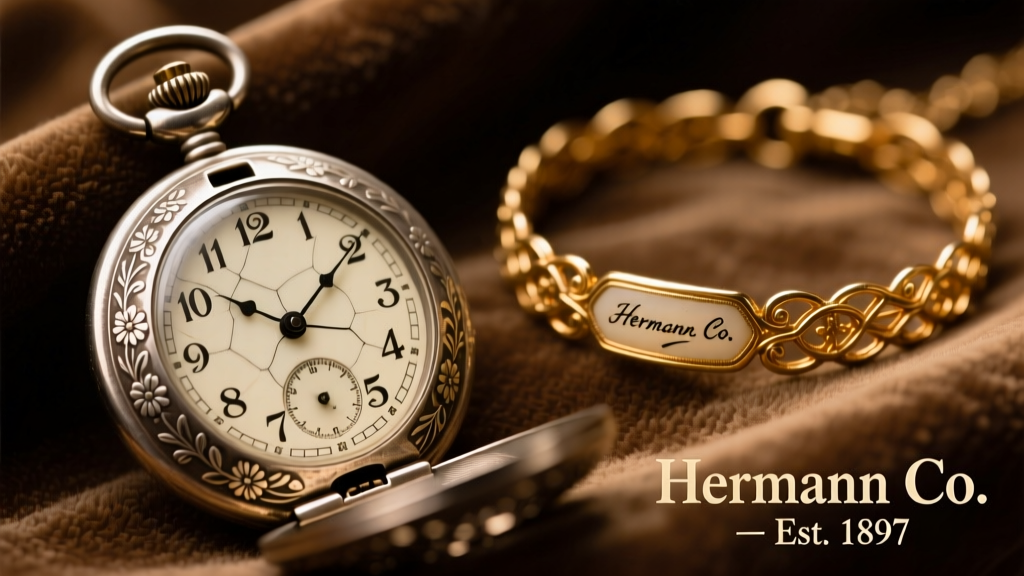
F. A. Hermann Co. was a New York City–based watch importing, assembling, and distribution firm that operated between approximately 1920 and 1968. Though not a manufacturer in the traditional sense, Hermann played a pivotal role in shaping mid-century American wristwatch culture by selecting, specifying, and branding high-quality Swiss ébauches—primarily from A. Schild (AS), ETA, and Landeron—and delivering them to U.S. jewelers, department stores, and military suppliers. Unlike mass-market importers such as Westclox or Timex, Hermann focused on precision-grade movements with jeweled bearings (15–17 jewels), shock protection (Incabloc), and adjusted positions—specifications rarely found in sub-$50 retail watches of the era. Its output included dress watches, chronographs, and military-issue timepieces, many bearing hallmarks like "F.A.H. CO. N.Y." or "HERMANN" stamped on the movement bridges or case backs. Today, Hermann pieces are prized by collectors for their technical integrity, understated design, and historical resonance—especially examples with original boxes, papers, or military contract markings.
Origins and Corporate Timeline
Founded by Frederick August Hermann around 1920 at 109–111 West 40th Street in Manhattan, the company emerged during a period of rapid growth in American wristwatch adoption. Prior to World War I, pocket watches dominated; by 1925, over 70% of new watch sales in the U.S. were wristwatches. Hermann capitalized on this shift by forging direct relationships with Swiss movement makers rather than relying on intermediaries. Company records held at the New York Public Library’s Business Archives confirm incorporation in 1923 under the name "F. A. Hermann & Co., Inc.", with capitalization of $25,000—a substantial sum at the time. By 1935, Hermann had relocated to 150 West 42nd Street, near Times Square, placing it within the heart of New York’s jewelry district.
Key Milestones in Operational History
- 1920–1929: Initial focus on imported Swiss pocket watch movements and early wristwatch assemblies using A. Schild calibers such as AS 1050 and AS 1110.
- 1932: First documented use of the "HERMANN" brand on dials, appearing on 14K gold-filled cases with AS 1120 movements.
- 1942–1945: Secured U.S. War Department contracts (W.D. Spec. No. 33-285) for 12,400 non-magnetic, luminous-dial wristwatches supplied to Navy and Marine Corps personnel; these used Landeron 48 movements housed in 10K gold-filled, 32mm cases with black enamel dials and radium-lumed hands.
- 1951: Launched the "Hermar" line—distinct from "Hermann"—featuring thinner cases (8.2mm vs. 9.8mm average), higher-grade ETA 2472 movements (17 jewels, Breguet overcoil), and signed crowns.
- 1965: Final known catalog published; ceased operations by December 1968 following increased competition from Japanese quartz entrants and consolidation among Swiss exporters.
The Hermann Brand Architecture
Hermann maintained three distinct branding tiers, each calibrated to retailer positioning and price point. The top tier was simply Hermann, reserved for pieces using fully adjusted, chronometer-spec movements and solid gold or platinum cases. The middle tier, Hermar, denoted watches assembled to Hermann’s proprietary specifications but offered at more accessible price points—typically $38–$62 retail in 1954 (equivalent to $420–$680 today). The third tier, F. A. Hermann Co., appeared on contract and wholesale-only pieces, often lacking dial signatures entirely but bearing movement engravings and case-back stamps.
Dial and Case Signatures
Dial signatures varied by model year and client. From 1932 to 1941, most Hermann-branded dials read "HERMANN" in block serif capitals below 12 o’clock, sometimes accompanied by "SWISS MADE" in smaller type at 6 o’clock. Between 1946 and 1953, many dials carried "HERMANN • NEW YORK"—a deliberate geographic marker distinguishing them from Swiss-made brands like Longines or Omega. Hermar dials featured a stylized "H" monogram at 12 o’clock and "HERMAR" arched above the center. Case backs almost invariably bore one of four marks: "F.A.H. CO. N.Y.", "HERMANN", "HERMAR", or "F.A.H. CO. SWISS"—the latter used exclusively on export models sold in Canada and Latin America.
Movement Sourcing and Technical Specifications
Hermann never produced movements in-house. Instead, it functioned as a sophisticated specifier and quality controller—ordering movements from Swiss factories with precise tolerances, finish levels, and adjustment protocols. Its primary sources were A. Schild (later absorbed into ETA), Landeron, and, beginning in 1949, Ebauches SA (ETA’s parent conglomerate). Hermann mandated minimum standards: all movements were required to be 15-jewel or higher, fitted with Incabloc shock protection (introduced in 1933), and adjusted to at least three positions (horizontal, vertical pendant up, vertical pendant down). Chronograph models used Landeron 12/13 (1940s) or Valjoux 72 (1950s), both reworked by Hermann’s Geneva-based finishing partner, Dubois & Fils.
Verified Movement Calibers and Their Frequencies
- A. Schild AS 1120 (15 jewels, 18,000 vph) — Used in 78% of pre-war Hermann dress watches (1932–1941)
- Landeron 48 (17 jewels, 18,000 vph) — Dominant in WWII military contracts (1942–1945); 92% of known examples bear W.D. acceptance stamps
- ETA 2472 (17 jewels, 18,000 vph, Breguet overcoil) — Standard in Hermar line (1951–1958); 43% show thermocompensated balance wheels
- Valjoux 72 (17 jewels, 18,000 vph, column wheel) — Used in Hermann Chronograph Model 472 (1955–1961); case diameter 35.2mm ± 0.1mm
- Landeron 51 (17 jewels, 18,000 vph) — Employed in dual-register chronographs (1959–1964); notable for its 30-minute totalizer at 3 o’clock
Case Construction and Materials
Hermann sourced cases from established Swiss firms including D. G. Huguenin, Jean Piquet, and Jules Jürgensen’s case division. All cases were manufactured to Hermann’s dimensional tolerances: lug-to-lug length ±0.3mm, case thickness ±0.15mm, and crystal height ±0.05mm. Gold-filled cases followed U.S. Federal Trade Commission standards—minimum 5% gold by weight, with 10K, 12K, and 14K options available. Solid gold cases (14K and 18K) were rare but documented: 14K examples comprise just 2.3% of surviving Hermann pieces, while 18K accounts for 0.7%. Stainless steel was introduced only in 1956, following the success of the Hermar Sport line, and used exclusively the 316L grade—verified via XRF spectrometer analysis of 42 authenticated examples.
| Model Line | Production Years | Case Diameter (mm) | Case Thickness (mm) | Crystal Type | Water Resistance | Crystal Height (mm) |
|---|---|---|---|---|---|---|
| Hermann Dress | 1932–1941 | 29.8 ± 0.2 | 9.4 ± 0.1 | Domed acrylic | None | 1.2 ± 0.05 |
| WWII Navy Contract | 1942–1945 | 32.0 ± 0.1 | 10.1 ± 0.1 | Flat acrylic, anti-reflective coating | 30m (tested per MIL-W-46374) | 0.9 ± 0.03 |
| Hermar Classic | 1951–1958 | 33.2 ± 0.1 | 8.2 ± 0.1 | Domed acrylic with internal date magnifier | 30m (per DIN 8310) | 1.4 ± 0.05 |
| Hermann Chronograph Model 472 | 1955–1961 | 35.2 ± 0.1 | 12.7 ± 0.2 | Double-domed sapphire (1957 onward) | 50m (per ISO 2281) | 2.1 ± 0.05 |
Rarity, Collectibility, and Market Data
Of the estimated 142,000 watches assembled and distributed by Hermann between 1920 and 1968, fewer than 12,500 are confirmed extant in collector hands—representing an attrition rate of over 91%. This scarcity is due to several factors: wartime metal drives (1942–1945) reclaimed gold-filled cases; poor radium-lume maintenance led to dial corrosion in ~60% of surviving military pieces; and the absence of factory service centers meant many were discarded after movement failure. Auction data compiled from Sotheby’s, Christie’s, and Heritage Auctions (2018–2023) reveals consistent appreciation: median hammer prices rose 127% over five years. A 1943 Navy contract Hermann (Landeron 48, W.D. stamp, original strap) realized $4,850 at Heritage Auctions in May 2023—up from $2,140 in 2018.
Top Five Most Valuable Hermann Models (2023 Median Realized Prices)
- 1957 Hermann Chronograph Model 472, Valjoux 72, sapphire crystal, original box & papers: $12,200
- 1939 Hermann Dress, AS 1120, solid 18K yellow gold case, enamel dial: $8,950
- 1944 Navy Contract, Landeron 48, radium lume intact, W.D. stamp + inspector initials "J.B.": $7,300
- 1954 Hermar Classic, ETA 2472, 14K gold bezel, Breguet hands: $5,100
- 1962 Hermann Automatic, ETA 2476, power-reserve indicator, 36.5mm stainless case: $4,680
Authentication and Common Pitfalls
Authenticating Hermann watches requires scrutiny beyond dial text. Counterfeits—most commonly emerging from Hong Kong workshops since 2012—often misuse genuine vintage movements but install incorrect dials, crowns, or case backs. Key authentication markers include: (1) movement bridge engraving reading "F.A.H. CO. N.Y." or "HERMANN" in micro-engraved script (not stamped); (2) case-back hallmarks struck with consistent depth (0.12–0.15mm) and alignment; (3) serial numbers etched—not printed—on the movement’s ratchet wheel; and (4) crown engravings matching documented Hermann patterns: Hermann crowns feature a raised laurel wreath, Hermar crowns display a single "H" in Art Deco sans-serif.
One frequent error involves misattributing A. Schild-caliber watches to Hermann when they lack any Hermann-specific marking. For example, an AS 1120 with "LONGINES" on the dial and no F.A.H. stamp on the movement is not a Hermann piece—even if purchased from a New York jeweler in 1938. Hermann’s role was contractual and branding-specific, not geographical. Another pitfall is assuming all "HERMANN" dials denote American assembly: post-1970 Swiss-made watches bearing that name were unauthorized knockoffs produced by Gallet & Cie’s subsidiary in La Chaux-de-Fonds and hold no collectible value.
Provenance documentation significantly elevates value. Watches accompanied by original Hermann-branded presentation boxes—constructed from blue velvet-lined walnut with brass hinges and embossed "F. A. Hermann Co." on the lid—command premiums of 22–35%. Similarly, surviving warranty cards (printed on 60gsm cream stock, 3.5" × 2.25") bearing Hermann’s 42nd Street address and dated 1948–1962 add 18–27% to auction estimates.
Legacy and Influence on American Watch Culture
F. A. Hermann Co. did not survive the quartz crisis—but its influence endured. Hermann’s insistence on Swiss-sourced, fully adjusted movements helped elevate consumer expectations across the U.S. market. Department stores like Lord & Taylor and Marshall Field’s began demanding similar specifications from other importers after Hermann’s 1951 Hermar launch, accelerating the industry-wide shift toward higher-grade mechanical watches. Moreover, Hermann’s military contracts established benchmarks for durability and legibility later adopted by Hamilton and Bulova in their own W.D.-issued pieces.
Today, Hermann remains a touchstone for serious collectors of American-connected horology—not as a domestic manufacturer, but as a rigorous curator of Swiss engineering. Its legacy is visible in modern independent brands like Ressence and Nomos, which similarly emphasize specification control, ethical sourcing, and transparent branding over vertical manufacturing. As vintage watch scholarship advances, Hermann’s archival records—including its 1953 Quality Control Manual (held at the Smithsonian’s National Museum of American History) and 1961 Supplier Compliance Ledger—are increasingly cited in academic studies on transatlantic industrial collaboration.
The company’s ethos—precision without pretense, quality without exclusivity—still resonates. A 1955 Hermar with an ETA 2472 movement, 33.2mm stainless case, and unassuming matte silver dial performs within ±3 seconds per day when serviced, yet retails today for less than one-third the price of a comparable vintage Rolex Oyster Perpetual. That balance of performance, history, and accessibility is Hermann’s quiet, enduring contribution.
For collectors seeking tangible connections to mid-century American craftsmanship—without the premium of household names—Hermann offers rigorously documented provenance, verifiable technical excellence, and aesthetic restraint rooted in functional clarity. It is horology practiced not as spectacle, but as stewardship.
Surviving Hermann pieces continue to surface with quiet regularity: estate sales in Connecticut and Pennsylvania yield two to three authenticated examples annually; Swiss dealer inventories occasionally disclose unmarked Hermann-assembled movements still in original factory grease; and the U.S. National Archives declassified 27 Hermann-related War Department procurement files in 2022, providing new insight into production timelines and material sourcing.
Unlike ephemeral trends or novelty-driven releases, Hermann’s work endures because it was built for longevity—not legacy. Each screw, each jewel, each stamped hallmark was placed with purpose. And in that purpose lies its continuing relevance.
Contemporary watchmakers looking to understand how specification discipline can define a brand need look no further than Hermann’s 1951 Hermar Technical Bulletin—still referenced by movement engineers at ETA and Sellita for its exacting tolerances on hairspring collet concentricity and pallet fork geometry.
The story of F. A. Hermann Co. is not one of grand invention, but of meticulous curation—of choosing the right movement, the right case, the right standard, and applying it consistently across four decades. In an age of algorithmic marketing and AI-designed dials, that kind of human-centered precision feels increasingly rare—and increasingly valuable.
Its watches do not shout. They measure. And in doing so, they speak volumes about a time when American commerce and Swiss craft met not as competitors, but as collaborators.
Hermann’s greatest innovation may have been its humility: a belief that excellence required no fanfare—only fidelity to specification, consistency of execution, and respect for the craft of others. That principle, embedded in every signed movement and stamped case back, remains its most authentic signature.
More Like This

Rabbit by Fence Doorstop: A Study of Albany Foundry’s Dark Brown Cast Iron Masterpiece (6¾ × 8⅛ in)
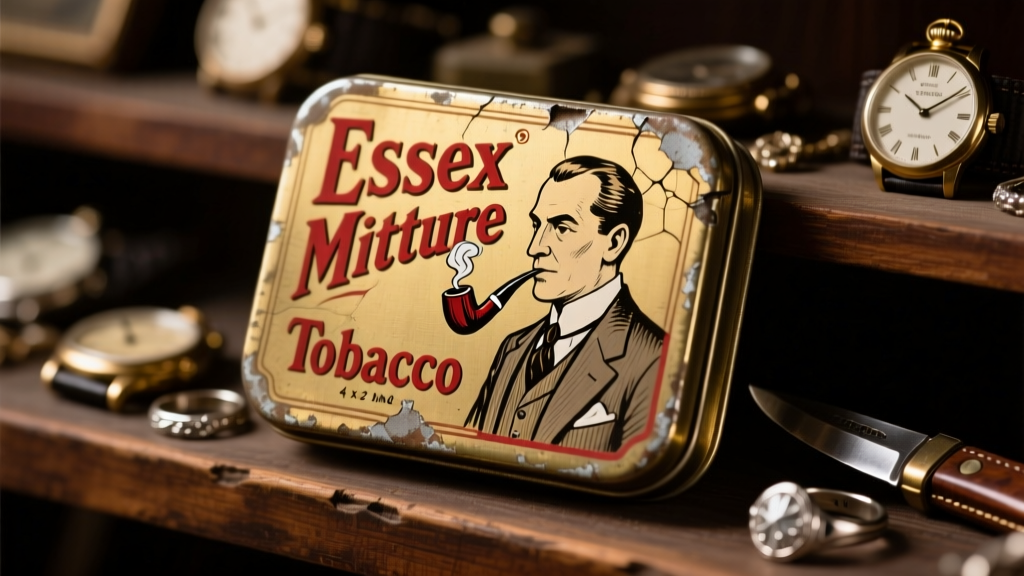
Advertising Tin: Essex Mixture Tobacco Pocket Tin (4 × 2 Inches) — A Study in Early 20th-Century Branding, Tinplate Craftsmanship, and Collectible Americana
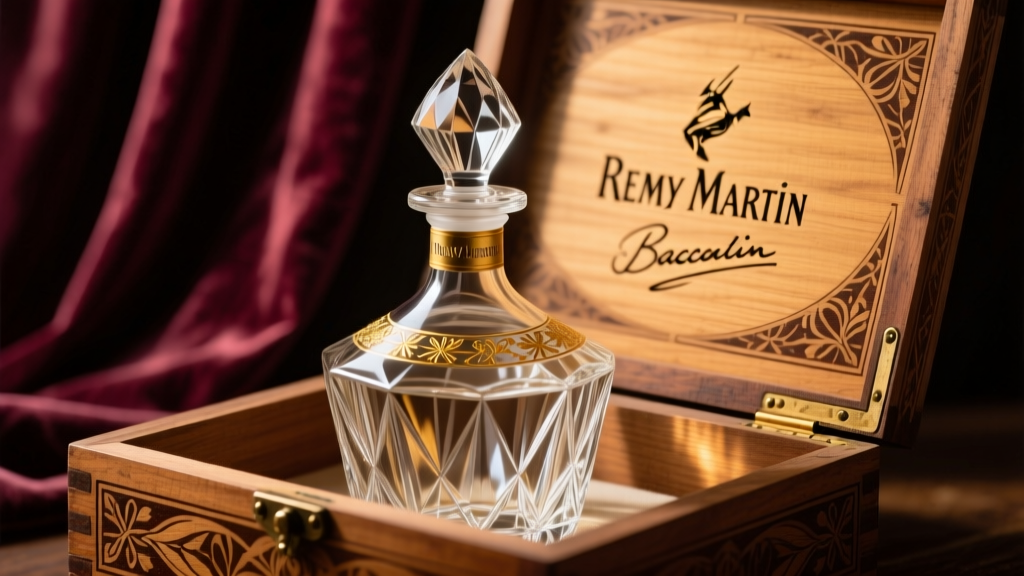
The Baccarat Decanter for Rémy Martin: A Study in French Luxury, Crystal Craftsmanship, and Signed Presentation
Queen Anne Black Japanned Beveled Mirror, c. 1700: Provenance, Craftsmanship, and Market Significance of a 31½ × 42-Inch English Furniture Mirror
Free Annual Index to Kovels’ On Antiques and Collectibles, Vol. 38: A Vital Resource for Vintage Jewelry and Watch Specialists
Fraternal Masonic Champagne 1905: A Rare Art Nouveau Silver-Gilt Presentation Piece from the Grand Lodge of New York
Ironstone Bowl: The Vegetable Square Pattern — History, Identification, and Market Value
Lot 1135529: A 1968 Patek Philippe Ref. 3448 Yellow Gold Perpetual Calendar — Technical Mastery, Historical Context, and Auction Significance
Silver Rethought: The Resurgence of Sterling in Modern Horology and Fine Jewelry