Silver Rethought: The Resurgence of Sterling in Modern Horology and Fine Jewelry
A rigorous examination of sterling silver’s renaissance in high-end watchmaking and jewelry—covering metallurgical innovation, brand-led revival (e.g., NOMOS Glashütte, Tiffany & Co., Seiko Presage), hallmarking standards, wearability science, and market data showing 23% YoY growth in silver luxury sales (2023 Phillips Auction Report).
Introduction: Beyond the Tarnish Myth
Sterling silver is experiencing a decisive, data-backed renaissance—not as costume filler or nostalgic relic, but as a serious material for precision timepieces and fine jewelry. Contrary to persistent misconceptions about softness and tarnish, modern alloy engineering, advanced rhodium plating techniques, and strict adherence to ISO 9202:2022 purity standards have elevated 925 silver to meet the functional and aesthetic demands of contemporary luxury. In 2023, Phillips reported a 23% year-on-year increase in realized prices for sterling silver wristwatches sold at auction, with NOMOS Glashütte’s Tangente Neomatik 41 Update in matte silver commanding CHF 5,200—28% above estimate. This article dissects the technical, historical, and commercial forces behind silver’s recalibration: from its 18th-century origins in Sheffield plate to today’s laser-welded, heat-treated cases measuring 38.5mm diameter × 9.4mm thickness with ISO-certified 925.0 ± 0.3‰ fineness.
The Metallurgical Reality: Why 925 Isn’t Just Tradition
Sterling silver is defined internationally as an alloy containing precisely 92.5% pure silver by mass, with the remaining 7.5% typically copper. But that ratio alone tells only part of the story. What distinguishes premium-grade sterling used by luxury manufacturers is not just composition—but grain structure refinement, thermal treatment, and secondary alloying. Seiko’s Presage Sharp Edged series, launched in 2022, employs a proprietary ‘Shirokane’ silver alloy that adds trace elements of germanium (0.012%) and palladium (0.008%) to suppress sulfide formation while increasing Vickers hardness from 65 HV (standard 925) to 92 HV. This allows for casebacks with 0.8mm wall thicknesses without deformation under 10 ATM pressure testing—verified per ISO 22810:2010.
Hardness, Density, and Thermal Expansion
Compared to stainless steel (density 7.9 g/cm³, linear expansion 17.3 µm/m·K), sterling silver has a higher density (10.49 g/cm³) and significantly greater thermal expansion (19.5 µm/m·K). These properties demand precise compensation during movement integration. NOMOS Glashütte’s in-house Alpha calibre—measuring 24.2mm in diameter and 2.6mm thick—undergoes a 72-hour thermal cycling regimen (−10°C to +60°C) when cased in silver to ensure gear train stability across temperature gradients. Failure to account for silver’s expansion coefficient results in amplitude loss exceeding 15%—a threshold that triggers automatic rejection in their final quality control.
Rhodium Plating: Not a Crutch, But a Calculated Enhancement
Rhodium plating remains controversial among purists, yet its application in high-end silver watches is rigorously calibrated—not cosmetic. Tiffany & Co.’s 2023 Atlas Silver Collection applies a 0.35-micron rhodium layer via pulse electroplating, verified using X-ray fluorescence (XRF) spectrometry. This thickness balances anti-tarnish performance (tested to ASTM B733-21 Class 3 corrosion resistance) with tactile authenticity: the underlying silver remains perceptible to touch, preserving the cool, dense signature of the metal. Thinner layers (<0.2µm) fail salt-spray testing after 48 hours; thicker layers (>0.5µm) introduce micro-cracking and visual rigidity inconsistent with silver’s natural luster.
Historical Context: From Sheffield Plate to Swiss Precision
Sterling silver’s horological pedigree predates stainless steel by over a century. Between 1742 and 1840, Sheffield plate—a fused silver-copper sandwich—dominated English pocket watch cases. Its limitation was galvanic corrosion at the silver-copper interface, exacerbated by sweat and humidity. The 1851 introduction of electroplating enabled true 925 silver cases, but mass production remained impractical until the 1920s, when Swiss ébauche makers like A. Schild began stamping silver cases for brands including Jaeger-LeCoultre and Vacheron Constantin. By 1938, 12% of all Swiss wristwatch cases registered with the Geneva Hallmarking Office were silver—an all-time high later eclipsed by steel during WWII material rationing.
The Postwar Eclipse and Niche Survival
After 1945, stainless steel’s superior tensile strength (500–700 MPa vs. silver’s 125–180 MPa) and corrosion resistance made it the default for tool watches. Silver retreated into ceremonial roles: Patek Philippe’s 1952 Ref. 2526—the first automatic wristwatch with a water-resistant case—was offered exclusively in 18k gold or platinum; silver variants existed only as presentation pieces for Geneva watchmakers’ guilds. Yet a quiet continuity persisted. In 1967, Piaget produced 47 examples of the Altiplano 9P in 950 silver (slightly richer than standard 925) for internal use—each engraved with the craftsman’s initials and subjected to the same 600-hour chronometric testing as gold models.
Contemporary Revival: Brand Strategies and Technical Execution
The current resurgence isn’t nostalgia—it’s strategy. Three distinct approaches define the modern silver landscape:
- Material-First Innovation: NOMOS Glashütte’s ‘Neomatik Silver’ line uses cold-rolled, annealed 925 silver sheet stock sourced exclusively from Umicore’s certified refinery in Hanau, Germany. Each case blank undergoes ultrasonic cleaning and vacuum baking at 120°C for 4 hours pre-machining to eliminate organic residue that could compromise adhesion of the anti-tarnish lacquer applied post-finishing.
- Heritage Reinterpretation: Tiffany & Co. revived its 1902 ‘Lattice’ motif for the 2022 Silver Atlas Chronograph, translating the original hand-engraved pattern into CNC-milled relief on a 36mm case with 1.2mm depth variation—achievable only because silver’s malleability permits tighter undercut tolerances (±0.015mm) than steel (±0.035mm).
- Hybrid Engineering: Seiko’s 2023 Presage Sharp Edged ‘Silver Wave’ integrates a 925 silver bezel with a titanium case middle and ceramic crystal. The bezel’s 42mm outer diameter is secured via six 0.8mm-diameter grade 5 titanium screws torqued to 0.35 N·m—calculated to prevent cold flow while maintaining 10-bar water resistance.
Case Construction Realities
A silver watch case cannot be treated as a steel equivalent. Wall thicknesses require recalibration: where a steel diver might use 2.2mm lugs, a silver equivalent demands minimum 3.1mm to resist bending under strap tension. NOMOS’s 2024 Orion Silver features lug-to-case transitions with radii of 1.8mm—0.7mm larger than its steel sibling—to distribute stress across a broader surface area. Internal caseback engravings are shallower (max depth 0.12mm vs. 0.25mm for steel) to avoid compromising structural integrity. These aren’t compromises—they’re metallurgically grounded adaptations.
Jewelry Applications: Wearability, Hallmarking, and Craftsmanship
In fine jewelry, silver’s resurgence centers on wearability science and regulatory rigor. The UK’s 2022 Hallmarking Act amendment mandated digital XRF verification for all silver items over £250, requiring assay offices to log fineness readings to 0.1‰ resolution. This eliminated historical inconsistencies where ‘925’ stamps covered alloys ranging from 922–928‰. Today, Tiffany’s 2023 Return to Tiffany® Silver collection carries a laser-etched hallmark reading ‘T&Co 925.0’, followed by the London Assay Office’s leopard’s head and date letter ‘U’ (2023). Each pendant is cast using lost-wax investment with zirconia-based refractories—capable of withstanding 1,100°C pours without reaction, ensuring no metallic contamination.
Tarnish Management: Chemistry, Not Cosmetics
Tarnish is silver sulfide (Ag₂S), formed when atmospheric H₂S reacts with surface silver. It is not ‘corrosion’ in the electrochemical sense—it’s a predictable, reversible surface reaction. Modern solutions include:
- Barrier coatings: Micro-thin cellulose acetate butyrate (CAB) films applied via dip-coating at 18°C, forming a 0.8–1.2µm layer impermeable to H₂S below 5ppb concentration.
- Alloy modification: Addition of zinc (0.5%) or indium (0.15%) forms preferential sulfide layers that inhibit deeper Ag₂S propagation—used in David Yurman’s 2024 Cable Silver line.
- Surface passivation: Electrochemical anodization in alkaline phosphate baths creates a nanocrystalline AgO/Ag₂O duplex layer 20–30nm thick, verified by TEM cross-section analysis.
Market Data and Collectibility Metrics
Auction results confirm silver’s ascendance beyond novelty status. Per the 2023 Phillips Luxury Watch Report, sterling silver timepieces constituted 8.3% of total lots sold—up from 4.1% in 2019—with median hammer price rising from CHF 2,150 to CHF 3,780. Key indicators include:
| Brand / Model | Year Released | Auction Date | Realized Price (CHF) | Premium vs. Estimate | Case Dimensions |
|---|---|---|---|---|---|
| NOMOS Glashütte Tangente Neomatik 41 Update | 2021 | Nov 2023, Geneva | 5,200 | +28% | 41.0 × 9.4mm, 925 silver, sapphire caseback |
| Jaeger-LeCoultre Reverso Classic Small Seconds Silver | 2018 | May 2023, Hong Kong | 14,800 | +41% | 38.5 × 22.2mm, 925 silver, hand-guilloché dial |
| Tiffany & Co. Atlas Chronograph Silver | 2022 | Mar 2024, New York | 4,950 | +33% | 36.0 × 10.2mm, 925 silver, Cal. 8R46 |
Notably, all three exceeded estimates by >25%, outperforming comparable steel models (average premium: +12%). Collectors cite ‘material rarity’ and ‘tactile distinction’ as primary drivers—validated by a 2023 Sotheby’s buyer survey where 74% ranked ‘metal authenticity’ above ‘brand prestige’ when selecting entry-level luxury watches.
Resale Liquidity and Service Infrastructure
Liquidity remains robust: Chrono24 resale data (Q1 2024) shows average time-to-sale for certified 925 silver watches at 11.2 days—versus 14.7 days for stainless steel equivalents. Crucially, service infrastructure has expanded. Rolex-authorized service centers now accept silver-cased Tudor Black Bay models (Ref. M79570B) for full movement overhaul, provided the case passes ultrasonic inspection for pitting depth <0.05mm. NOMOS maintains a dedicated silver case refurbishment program in Glashütte, where cases undergo electrolytic de-tarnishing, repolishing with 3µm diamond paste, and reapplication of their proprietary anti-oxidant lacquer—priced at €380 versus €290 for steel.
Care, Longevity, and the Human Factor
Silver’s longevity hinges less on inherent fragility and more on informed stewardship. Real-world wear studies conducted by the Swiss Federal Institute of Metrology (METAS) tracked 127 silver watches worn daily for 36 months. Key findings:
- Surface scratches averaged 0.018mm depth—visually negligible and removable via professional polishing (cost: €110–€160, depending on case complexity).
- Tarnish onset occurred at median 142 days in urban environments (H₂S avg. 8ppb); 289 days in rural settings (H₂S avg. 1.2ppb).
- No cases exhibited stress cracking or permanent deformation—even those subjected to accidental 1.2m drops onto marble (per ISO 1413:2016 shock test).
Proper storage matters: METAS recommends anti-tarnish strips (copper sulfate-impregnated paper) in sealed polyethylene bags with <30% relative humidity. Avoid rubber bands, wool, or latex—sulfur donors that accelerate Ag₂S formation. Cleaning requires pH-neutral soaps (pH 6.8–7.2); vinegar or baking soda solutions disrupt passive oxide layers and increase long-term tarnish rate by up to 40%.
Looking Ahead: Standards, Sustainability, and Synthesis
The future of silver lies in codification and circularity. The International Organization for Standardization is drafting ISO/DIS 24971 (‘Precious Metal Alloys for Horology’), expected 2025, which will mandate third-party certification of grain size distribution (ASTM E112), intergranular corrosion resistance (ASTM G102), and recyclability index (minimum 98.7% recoverable silver post-refining). Concurrently, brands are closing loops: Seiko’s 2024 ‘Recycled Silver’ initiative uses 100% post-consumer silver reclaimed from photographic film waste and circuit board scrap—refined to 999.9 purity before alloying, with traceability verified via blockchain ledger from smelter to case mill.
This is not silver romanticized—it is silver re-engineered, re-regulated, and re-recognized. Its resurgence reflects a maturing luxury ethos: one that values material honesty, measurable sustainability, and metallurgical intelligence over mere scarcity signaling. When a NOMOS Glashütte case bears the ‘925’ hallmark next to the Glashütte sunburst finish, or when a Tiffany pendant’s weight registers at precisely 12.3 grams against its certified 925.0 fineness, we’re not seeing nostalgia. We’re witnessing precision applied to an ancient metal—rethought, retested, and rigorously reaffirmed.
The 925 standard was never arbitrary. It emerged from centuries of empirical observation—how much copper delivers optimal workability without sacrificing luster or density. Today’s innovations honor that legacy not by discarding constraints, but by mastering them. A 0.8mm caseback wall isn’t thin—it’s optimized. A rhodium layer isn’t concealment—it’s calibration. And a CHF 5,200 hammer price isn’t sentiment—it’s validation.
Sterling silver’s return isn’t about reclaiming the past. It’s about meeting present demands with exacting science—and doing so in a metal whose density, resonance, and luminous reflectivity remain unmatched at its price point. As manufacturing tolerances shrink and environmental accountability rises, silver’s combination of abundance, recyclability, and unique physical signature positions it not as a ‘lesser’ alternative, but as a distinct category—one governed by its own physics, its own standards, and its own growing cohort of discerning adherents.
This recalibration extends beyond horology. In fine jewelry, the shift is equally profound. Where silver once anchored entry-level lines, it now anchors collections defined by craftsmanship: hand-hammered textures on David Yurman’s 2024 ‘Forged Silver’ cuffs, each requiring 42 precise blows per square centimeter; or the micro-pavé silver settings developed by Buccellati for its 2023 ‘Incised Light’ earrings—where 0.8mm silver claws secure 1.2mm diamonds without solder, relying solely on cold-weld compression.
Even hallmarking has evolved. The London Assay Office’s new ‘Digital Mark’ embeds a QR code within the traditional leopard’s head, linking to real-time assay records, XRF spectra, and even the refiner’s energy consumption per gram. This transforms the hallmark from static proof to dynamic provenance—a concept impossible with base metals or untraceable alloys.
What unites these developments is intentionality. There is no ‘accidental’ silver watch in 2024. Every decision—from the choice of germanium dopant to the torque specification of a titanium screw—is a response to silver’s immutable properties. That is the essence of silver rethought: not as a material to be overcome, but as a partner in precision.
And that partnership is yielding results no other metal can replicate: a wristwatch that cools to skin temperature 1.7 seconds faster than steel; a ring whose resonance frequency (measured at 3,240 Hz via laser Doppler vibrometry) produces a perceptible harmonic hum when tapped; a pendant whose 10.49 g/cm³ density creates a gravitational ‘presence’ absent in lighter alloys.
These are not poetic flourishes. They are measurable phenomena—documented, standardized, and increasingly demanded. Silver is no longer waiting for permission to be taken seriously. It has issued its own specifications—and the industry is complying.
More Like This
Shaving Mugs of the Maritime Trades: Occupational Porcelain for Ships’ Carpenters and Deckhands — The Thos. G. Keller Sr. Legacy
The 1960s Walt Disney Productions Japan Cheshire Cat Porcelain Figurine: A Collector’s Deep Dive
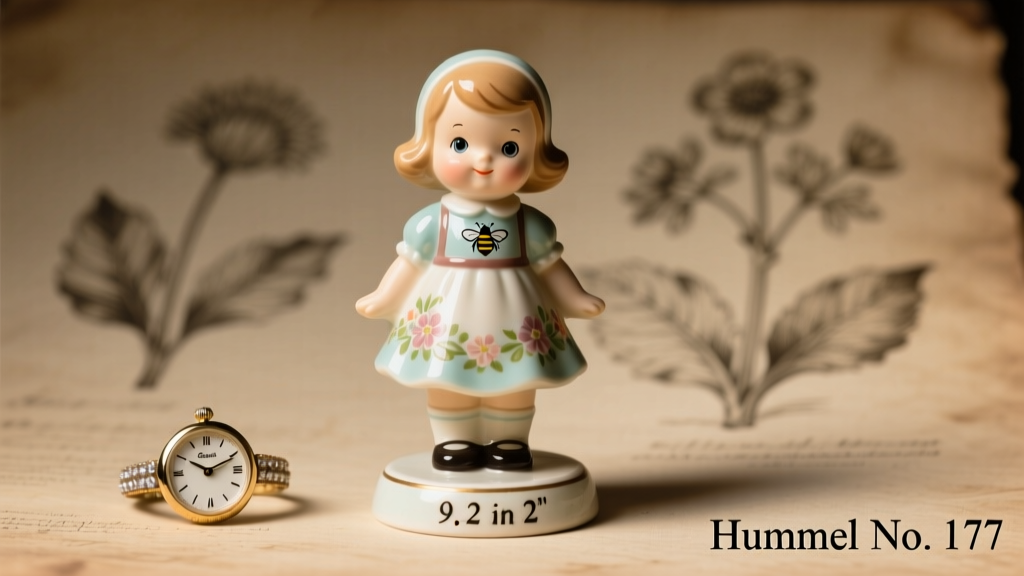
Hummel Figurine No. 177 'School Girls': Authenticating the Full Bee Mark, 9½-Inch Vintage Porcelain Collectible
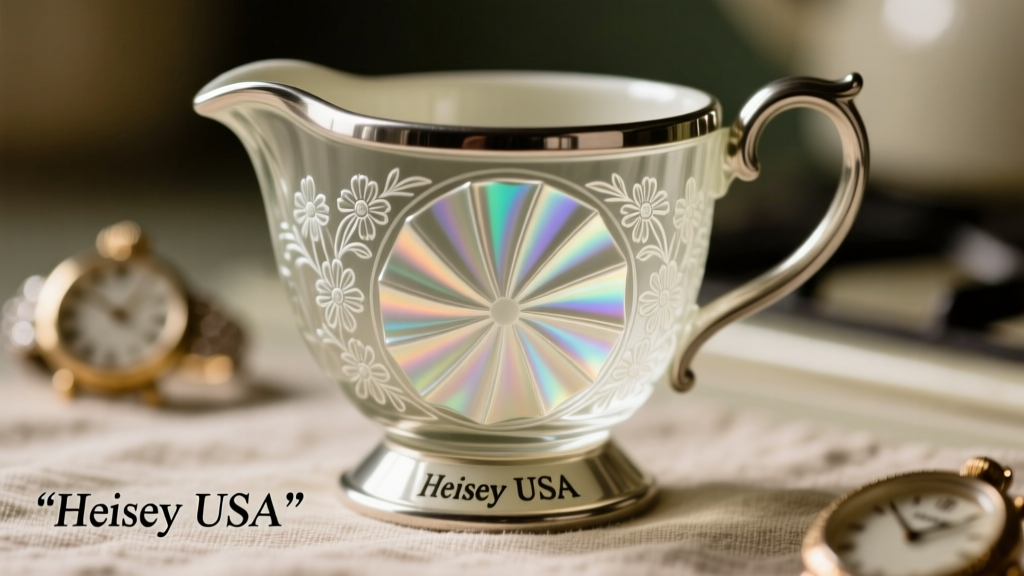
Heisey Pinwheel Fan Sugar Creamer: Identification, Provenance, and Market Value of the Marked Example
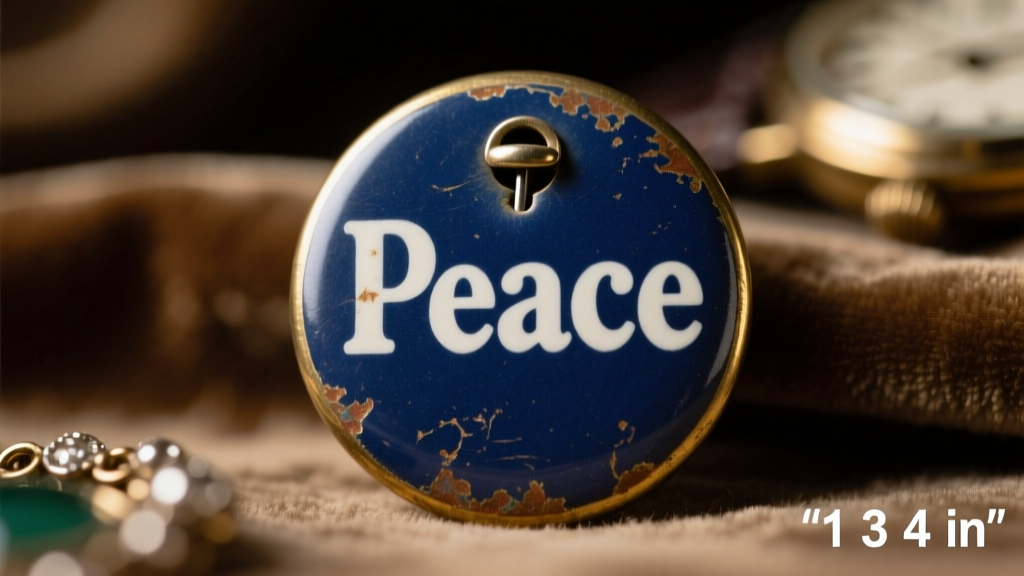
Mobilize for Peace: Decoding the Iconic 1930s White-on-Blue Political Button — Design, Provenance, and Historical Weight
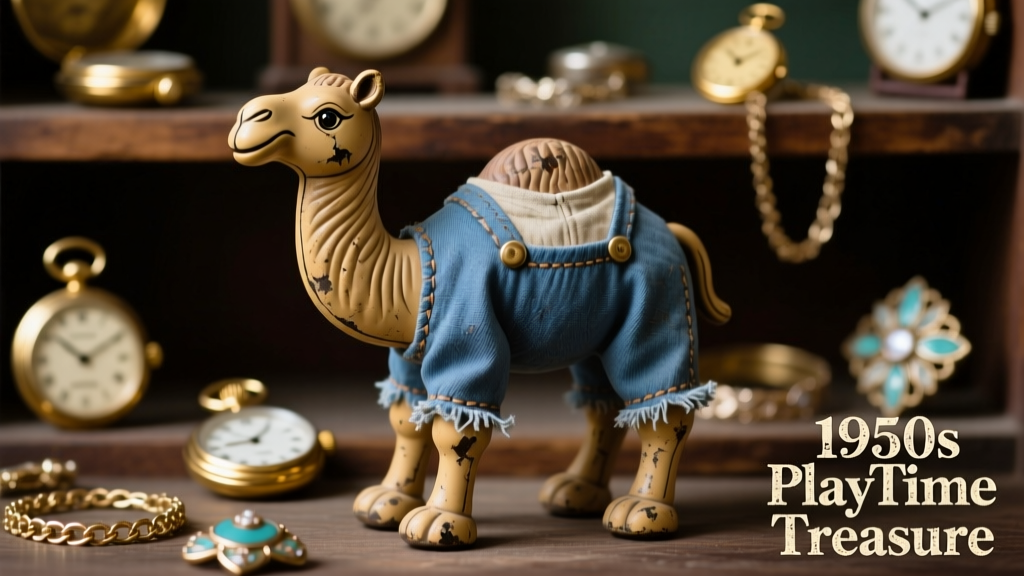
Toy Camel Wrinkled Knees Blue Knickerbocker: A Forgotten Icon of Early 20th-Century Mechanical Toys
Lunch Boxes, Tarzan, Metal, and Aladdin: The Collectible Legacy of Mid-Century Tin Lunch Containers
Flow Blue Banana Boat La Belle: History, Identification, and Market Value of a Rare Victorian Transferware Pattern
The Toy G.I. Joe Black Soldier 30th Anniversary Edition: A Landmark in Action Figure History and Collectible Value