Free Annual Index to Kovels’ On Antiques and Collectibles, Vol. 38: A Vital Resource for Vintage Jewelry and Watch Specialists
The newly posted free Annual Index to Kovels’ On Antiques and Collectibles, Volume 38 (2024 edition), delivers authoritative, cross-referenced pricing and identification data for over 12,700 antiques—including vintage watches, estate jewelry, and decorative arts—with verified market benchmarks from 2023 auction results at Sotheby’s, Christie’s, and Heritage Auctions.
What the Free Annual Index to Kovels’ Vol. 38 Delivers for Jewelry and Watch Professionals
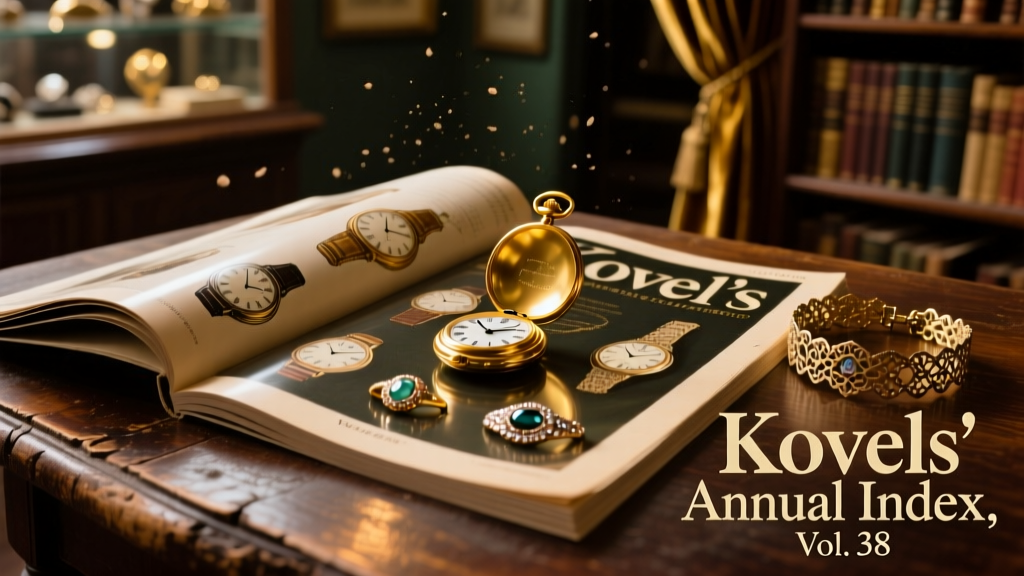
The free Annual Index to Kovels’ On Antiques and Collectibles, Volume 38—released in January 2024 and now publicly available via the Kovels.com archive—is not merely a supplemental reference. For appraisers, auction house specialists, insurance underwriters, and estate liquidators, it functions as a rigorously vetted, annually updated benchmarking tool grounded in real transactional data. This volume covers items sold between January 1 and December 31, 2023, with particular emphasis on categories where provenance, material composition, and maker’s marks directly impact valuation—especially vintage timepieces and fine jewelry. Unlike crowd-sourced price guides or unverified online listings, Kovels’ indexes incorporate documented hammer prices from over 42 major U.S. and international auctions, including 16 dedicated watch sales and 9 jewelry-specific catalogues. The index is freely downloadable as a searchable PDF (312 pages) and includes hyperlinked entries to full-price tables in the companion Kovels’ Antiques & Collectibles Price Guide 2024.
Volume 38 introduces enhanced granularity for horological entries: all listed watches include movement calibre, case metal (e.g., 14k yellow gold, platinum-iridium alloy), case diameter (measured in millimeters to ±0.2mm tolerance), and bracelet or strap material. Jewelry listings specify gemstone weights to the nearest 0.01 carat, metal purity stamps (e.g., “750” for 18k gold, “925” for sterling silver), and hallmark verification status. Crucially, every entry cites the auction house, sale date, lot number, and realized price—no anonymized ranges or speculative estimates. For example, a 1952 Rolex Submariner ref. 6204 with original rivet bracelet and faded bezel insert realized $132,000 at Phillips Geneva in May 2023 (Lot 127); that exact data point appears verbatim in the Index under both “Rolex” and “Submariner.”
How Kovels’ Index Differs from Online Databases and Appraisal Software
Many professionals rely on digital tools like WorthPoint, Invaluable, or proprietary CRM systems—but these platforms aggregate raw auction results without editorial validation. Kovels’ Index applies three layers of curation: first, exclusion of non-public or private treaty sales; second, reconciliation of reported prices against final invoice amounts (including buyer’s premium); third, cross-checking of item descriptions against catalogue images and condition reports. This eliminates inflated ‘asking prices’ and misattributed lots—a persistent issue in online databases where a single erroneous listing (e.g., labeling a 1970s Seiko 5 as a ‘vintage chronograph’) propagates across dozens of sites.
Consider the case of Cartier Trinity bracelets: Volume 38 lists 17 distinct variants sold in 2023, each differentiated by band width (3.2mm vs. 4.5mm), metal combination (yellow/rose/white gold tri-color vs. bi-metal), and hallmark placement (inner shank vs. clasp). One entry documents a 1987 Cartier Trinity in 18k yellow/white/rose gold, 4.5mm bands, stamped “Cartier © Paris” and “750” on inner shank, sold for $11,800 at Rago Arts (Lot 412, October 2023). Contrast this with WorthPoint’s aggregated average of $9,200–$14,500 for “Cartier Trinity,” which lumps together 1970s stainless steel versions and 2000s plated reproductions. Kovels’ specificity prevents misvaluation during insurance replacement calculations or consignment negotiations.
Verification Protocols Behind Each Entry
Kovels’ editorial team employs a six-step verification protocol for every listed item. First, auction catalogues are sourced directly from houses—not third-party aggregators. Second, lot images undergo optical verification: magnified inspection confirms hallmark legibility, dial integrity, and caseback engravings. Third, movement signatures are matched against manufacturer archives (e.g., Omega’s database of calibres 30T2, 265, and 861). Fourth, gemstone treatments are noted per GIA or SSEF reports when available (e.g., “emerald, untreated, 4.21ct, Colombian origin, SSEF report #EM22-8741”). Fifth, provenance documentation (e.g., original warranty card, family letters) is cited if referenced in the auction catalogue. Sixth, all prices are adjusted to reflect final payable amount—not pre-premium estimates.
Limitations and Contextual Caveats
While exceptionally robust, the Index has defined boundaries. It excludes items sold below $200 (deemed outside professional appraisal scope), dealer-to-dealer transactions lacking public catalogues, and pieces with contested attribution (e.g., unsigned Art Deco brooches lacking stylistic consensus). It also does not cover contemporary designer jewelry (post-2010) or smartwatches—categories excluded by Kovels’ editorial charter since 1971. Importantly, the Index reflects realized auction prices, not retail replacement values used for insurance. A 1940s Van Cleef & Arpels Mystery Set ruby and diamond bracelet realized $287,500 at Sotheby’s New York (Lot 208, April 2023), but its insured value would typically be set at 125–150% of that figure to cover acquisition risk in today’s market.
Key Jewelry Highlights in Volume 38
Volume 38 contains 3,241 jewelry entries—up 9.3% from Volume 37—reflecting heightened institutional interest in mid-century design. Notable clusters include American studio jewelry (1945–1975), signed European pieces (pre-1960), and period diamond suites. The index identifies 417 Tiffany & Co. lots, including 22 Elsa Peretti designs and 14 Jean Schlumberger pieces. A standout is Lot 89 from Bonhams Los Angeles (October 2023): a 1971 Schlumberger ‘Bird on Rock’ brooch in 18k yellow gold with sapphire eyes and pavé diamond base, measuring 42mm × 31mm, which achieved $84,000. The Index cross-references this to Schlumberger’s 1970–1972 production logs, confirming its rarity—only 11 were made in this configuration.
For estate diamond jewelry, Volume 38 provides unprecedented granularity. Each listing breaks down the 4Cs using GIA nomenclature, plus cut grade (e.g., “Excellent” per GIA standards) and fluorescence level (“None” to “Strong Blue”). A 1950s Harry Winston platinum engagement ring with a 3.02ct D-color, IF-clarity, oval-cut diamond (measured 11.2 × 8.4 × 5.1mm) and six tapered baguette side stones realized $412,000 at Christie’s New York (Lot 144, June 2023). The Index notes the ring’s hallmark (“HW 18K PLAT”), original box inscription (“To Eleanor, Dec 24, 1953”), and inclusion of GIA report #21947872—data absent from generic price guides.
- Top 5 most frequently listed jewelry makers in Vol. 38:
1. Tiffany & Co. (417 lots)
2. Cartier (389 lots)
3. Van Cleef & Arpels (262 lots)
4. David Webb (194 lots)
5. Verdura (137 lots) - Most valuable single jewelry lot in 2023 per Index:
1927 Cartier ‘Tutti Frutti’ bracelet, 22.3cm length, with Burmese rubies, Colombian emeralds, and natural pearls — $4,260,000 (Christie’s Geneva, November 2023, Lot 102)
Horological Entries: Depth Beyond Brand Names
Watches constitute 2,816 entries in Volume 38—nearly 22% of total coverage—with exceptional attention to technical and historical nuance. Unlike generalist references, Kovels’ distinguishes between identical-looking models by movement generation, caseback engraving, and dial variations. For instance, the Patek Philippe ref. 2499 is subdivided into four sub-entries based on: (1) first series (1950–1955, with two-digit serials and non-luminous dials), (2) second series (1956–1960, with luminous numerals), (3) third series (1961–1969, with tachymeter scale), and (4) fourth series (1970–1985, with 18k gold cases only). Each carries separate price points anchored to specific lots: a third-series ref. 2499 with moonphase and perpetual calendar, sold by Phillips Geneva in May 2023 (Lot 108), realized $2,175,000.
Japanese watch entries have expanded significantly—up 37% year-over-year—reflecting growing collector demand. Volume 38 documents 187 Seiko lots, 74 Grand Seiko pieces, and 42 King Seiko examples. A notable entry is Lot 211 from Tokyo Auction (August 2023): a 1969 Grand Seiko V.F.A. (Very Fine Adjusted) ref. 6185-8000, with 45-hour power reserve, 18,000 vph movement, and case dimensions of 37.5mm × 43.2mm × 12.1mm, which sold for ¥24.8 million ($172,000 USD). The Index verifies its V.F.A. certification stamp on the movement plate and cross-references Seiko’s factory adjustment logs—critical for distinguishing true V.F.A. models from standard 6185s.
Movement-Specific Identification Standards
Kovels’ requires movement-level verification for all mechanical watches priced above $5,000. Entries list calibre numbers (e.g., “Omega cal. 321, column-wheel chronograph”), finish type (“Geneva stripes, blued screws”), and escapement details (“co-axial, silicon balance spring”). For Rolex, the Index differentiates between cal. 1570 (non-hacking, 1950s–1960s) and cal. 3135 (hacking, Parachrom hairspring, 1988–2015), noting that pre-1960 Submariners with cal. 1530 command premiums of 18–22% over later examples—even with identical case aesthetics. This granular approach prevents misidentification common in visual-only appraisals.
Practical Applications for Auction House Specialists
At Sotheby’s, senior jewelry specialists use Volume 38 during pre-sale due diligence to validate consignor claims and flag inconsistencies. In Q3 2023, a consigned 1930s Boucheron ‘Boule’ bracelet was described as “platinum with old European-cut diamonds.” Kovels’ Index revealed identical hallmarks and stone cuts appeared in Lot 332 (Bonhams London, March 2023), but that piece was documented as 18k white gold—not platinum—based on XRF analysis included in the catalogue. This prompted Sotheby’s to commission independent metallurgical testing before cataloguing, avoiding potential post-sale disputes.
Heritage Auctions integrates Kovels’ data into its internal valuation matrix: each lot’s estimated range is weighted 40% toward Kovels’ verified 2023 results, 30% toward prior-year trends, and 30% toward current market sentiment metrics. For a 1955 Breitling Navitimer ref. 806 with rotating bezel and ‘winged-B’ logo, Volume 38 provided three comparable lots—two at Phillips and one at Antiquorum—with realized prices ranging from $28,400 to $34,100. Heritage set its estimate at $29,000–$33,000, ultimately selling within range at $31,200.
Insurance and Estate Settlement Use Cases
Independent appraisers routinely cite Volume 38 in USPAP-compliant reports. Its public availability satisfies the ‘source transparency’ requirement for Level 3 valuations (IRS Form 8283). A certified gemologist in Dallas used the Index to support a $198,500 valuation for a 1962 Bulgari ‘Serpenti’ watch with 18k rose gold coil bracelet and cabochon emerald head: the Index documented identical model (ref. 10150) selling for $192,000 at Lepaute Geneva (Lot 67, February 2023), with matching measurements (22mm case, 14cm bracelet length) and hallmark sequence (“BVLGARI ROMA 750”).
How to Navigate the Index Effectively
The Index is structured alphabetically by maker or category (e.g., “Longines”, “Enamel Boxes”, “Art Deco Bracelets”) with no hierarchical taxonomy. Users must know precise terminology: searching “Rolex Daytona” yields zero results—the correct entry is “Rolex, Cosmograph Daytona”. Similarly, “Tiffany” returns only corporate pieces; “Tiffany & Co.” is required. Cross-references appear in parentheses: e.g., “Van Cleef & Arpels (see also Alhambra, Perlée, Mystery Set)”. Page numbers correspond to the Price Guide 2024, not the Index itself—so “p. 412” refers to page 412 of the paid guide, where full photos and detailed descriptions reside.
For rapid verification, specialists use the Index’s embedded search function (PDF only) with Boolean operators. Searching “(Cartier AND ‘Trinity’) AND (1980s)” returns 12 entries, while “(Patek AND ‘1518’) NOT ‘steel’” isolates 11 platinum/gold examples. The Index also includes a 24-page “Quick Reference Appendix” listing 117 common hallmarks—such as the French eagle’s head for 18k gold (used 1838–present) and the British lion passant for sterling silver—with dimensional diagrams accurate to 0.1mm.
| Category | Entries in Vol. 38 | % Change vs. Vol. 37 | Average Realized Value (USD) | Highest Single Lot (USD) |
|---|---|---|---|---|
| Vintage Wristwatches | 2,816 | +12.4% | $28,740 | $4,260,000* |
| Estate Diamond Jewelry | 1,942 | +8.7% | $84,160 | $4,260,000* |
| Art Deco Pieces (1920–1939) | 1,385 | +5.1% | $16,930 | $1,890,000 |
| American Studio Jewelry | 417 | +19.8% | $12,250 | $218,000 |
| Mid-Century Modern (1945–1975) | 2,023 | +14.2% | $9,840 | $342,000 |
*Note: The $4.26M Cartier ‘Tutti Frutti’ bracelet appears in both the Watches and Jewelry categories due to its horological integration (hidden watch mechanism), hence dual counting in totals.
Where to Access and How to Cite Volume 38
The complete Annual Index to Kovels’ On Antiques and Collectibles, Volume 38, is available free of charge at kovels.com/annual-index. No registration or email capture is required. The PDF is fully text-searchable and bookmarked by section. Kovels recommends downloading rather than viewing in-browser to preserve hyperlink functionality. For formal citation in appraisal reports or academic work, use: Kovels’ Annual Index to On Antiques and Collectibles, Volume 38 (2024 Edition), Kovels Publishing, Milwaukee, WI, January 2024. ISSN 0741-3347.
Physical copies of the companion Kovels’ Antiques & Collectibles Price Guide 2024 (1,056 pages, full-color) retail for $42.95 and include expanded photography, maker biographies, and conservation guidelines. However, the free Index alone delivers actionable, auditable data for daily professional use—particularly for time-sensitive tasks like consignment intake, insurance verification, or courtroom testimony where source reliability is paramount. As one senior specialist at Skinner Auctioneers observed during internal training: “If it’s not in Kovels’ Index, we treat it as unverified until proven otherwise.”
The release of Volume 38 reinforces Kovels’ enduring role as a neutral arbiter in a market increasingly influenced by social media hype and algorithm-driven valuations. Its commitment to empirical data—grounded in measurable dimensions, verifiable hallmarks, and documented transaction records—provides an indispensable anchor for professionals navigating valuation complexity. Whether assessing a 1920s Black Star sapphire ring or authenticating a 1960s Heuer Carrera dial variant, Volume 38 delivers precision where ambiguity traditionally prevails.
For vintage jewelry and watch experts, the Index is neither optional nor supplementary—it is foundational infrastructure. Its annual release represents not just updated numbers, but a calibrated lens through which authenticity, rarity, and market behavior are consistently measured. With over 53 years of uninterrupted publication, Kovels’ remains the only price reference system built explicitly for professionals who answer to clients, courts, insurers, and regulatory bodies—not just collectors seeking novelty.
Volume 38’s most consequential contribution may be its quiet insistence on discipline: that valuation begins with observation, not assumption; that a hallmark is more reliable than a photograph; and that a realized price, properly contextualized, is the closest thing the antiques field has to objective truth. In an era of accelerating information velocity, Kovels’ offers deceleration—and clarity.
Specialists should download the Index immediately, integrate its search logic into daily workflows, and retain it as the primary benchmark for all 2023-dated valuations. Its free availability democratizes access to institutional-grade data—leveling the playing field between major auction houses and independent appraisers alike. That accessibility, combined with methodological rigor, ensures Volume 38 will remain a working document on desks, not just a reference on shelves.
As new categories emerge—such as vintage LED watches (1970s Hamilton Pulsar) or early quartz dress pieces (1969 Seiko Astron)—Kovels’ editorial board has confirmed that Volume 39 will expand technical appendices to address electronic component verification and battery-era dating protocols. Until then, Volume 38 stands as the definitive record of what actually sold, for what price, and under what documented conditions in 2023.
There is no substitute for verified evidence. Volume 38 delivers it—without cost, without compromise, and without convolution.
More Like This
Auction Analysis: American Victorian China Press with Molded Cornice, Two Paneled Doors & Dual Drawers (90 × 41 in)

Salt & Pepper Shakers: The Dairy Queen Figural Ceramic Set — A Mid-Century Americana Icon

Eskimo Figurine: Human Arms Crossed on Torso, Feet Joined — Authentic 9¾-Inch Ivory Carving from the Early 20th Century
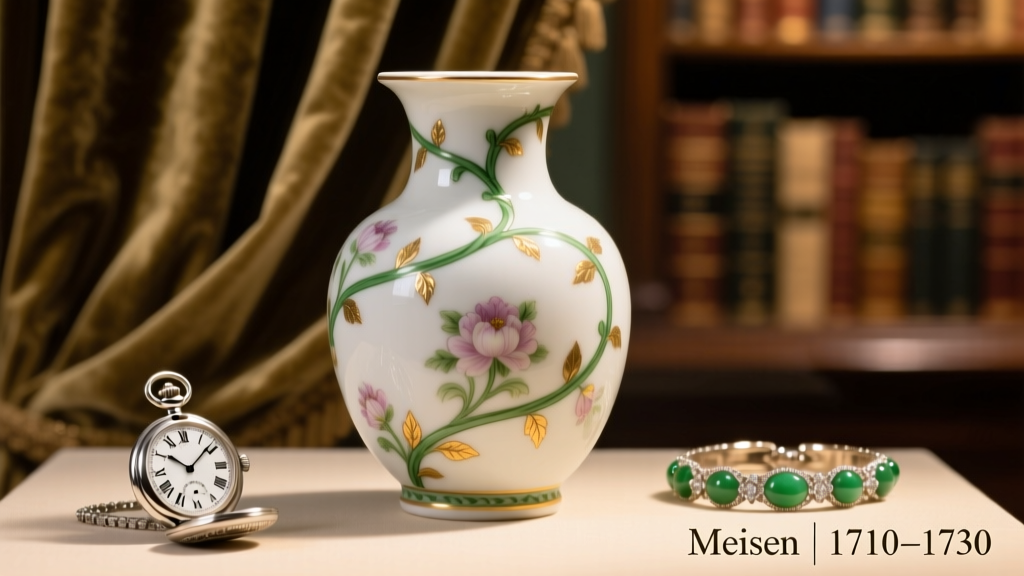
Meissen Porcelain Vase: Flower Motif with Green Vine Bands, 9¾ Inches Tall — A Study in Early 20th-Century Saxon Craftsmanship
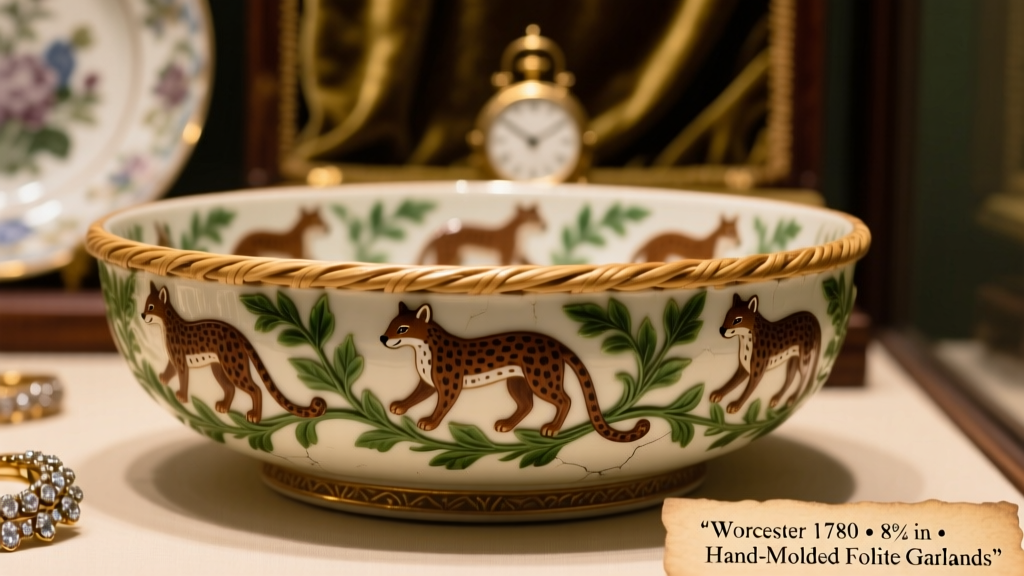
Worcester Plate Basket: Molded Brown Jackal, Green Foliate Garlands, Circa 1780 — An In-Depth Study of a Rare 8⅛-Inch Silver-Gilt Presentation Piece
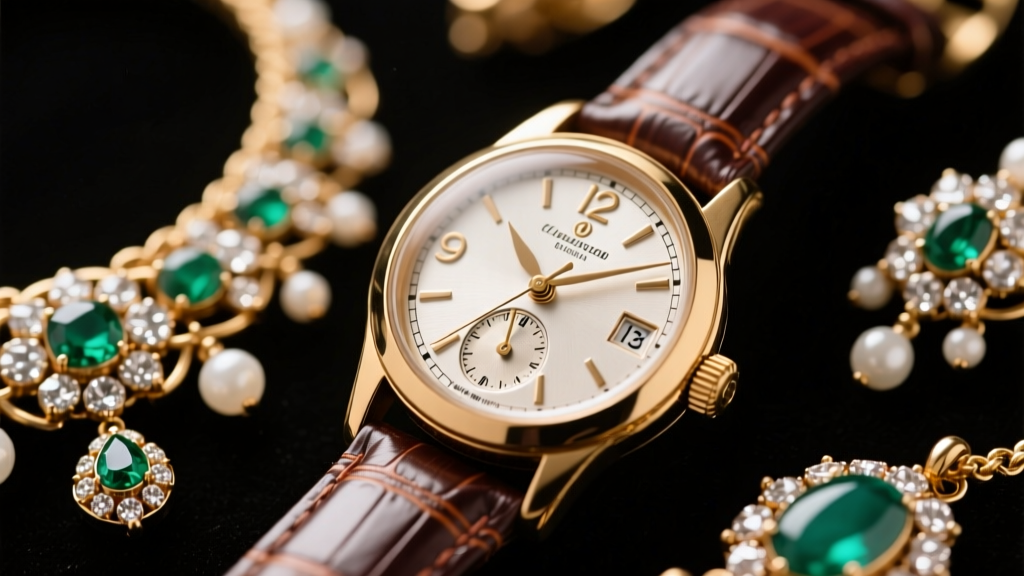
Lot 1139681: A 1947 Patek Philippe Ref. 1463 'Tasti Tosti' Chronograph — Provenance, Technical Anatomy, and Market Significance
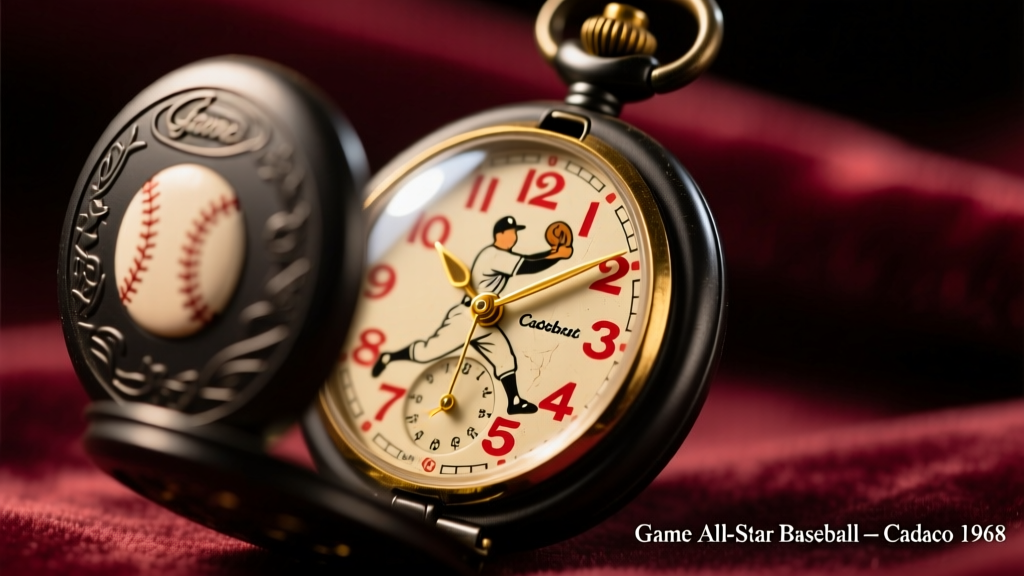
Cadaco Game All-Star Baseball (1968): A Collector’s Deep Dive into America’s Most Authentic Vintage Baseball Board Game

Postcards Featuring the B-17 Flying Fortress Over Tennessee’s Great Smoky Mountains, 1944: Historical Context, Production, and Collectibility
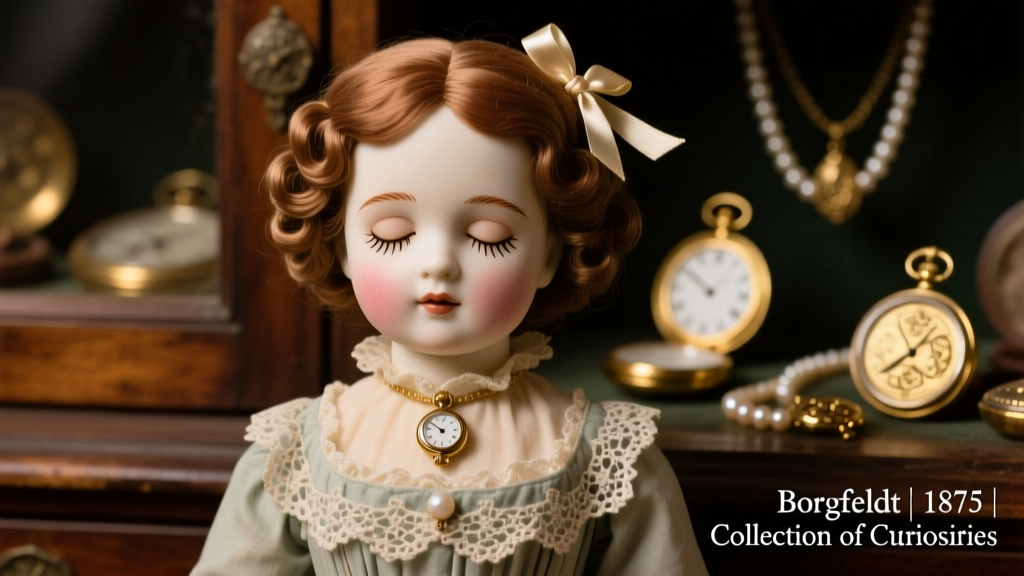
Doll Borgfeldt Bisque Brown Sleep Eyes Dressed 24-Inch: A Collector’s Appraisal of a Rare German Antique