Expo Chicago: A Strategic Nexus for Vintage Jewelry and Watch Collectors
Expo Chicago stands as the premier international art fair in the Midwest, offering unparalleled access to vintage jewelry and timepieces through curated galleries, specialist dealers, and institutional programming. With its rigorous vetting process, emphasis on provenance, and dedicated focus on historical design movements—from Art Deco platinum pieces to 1960s Swiss chronographs—the fair serves as both a marketplace and scholarly resource for serious collectors and institutions.
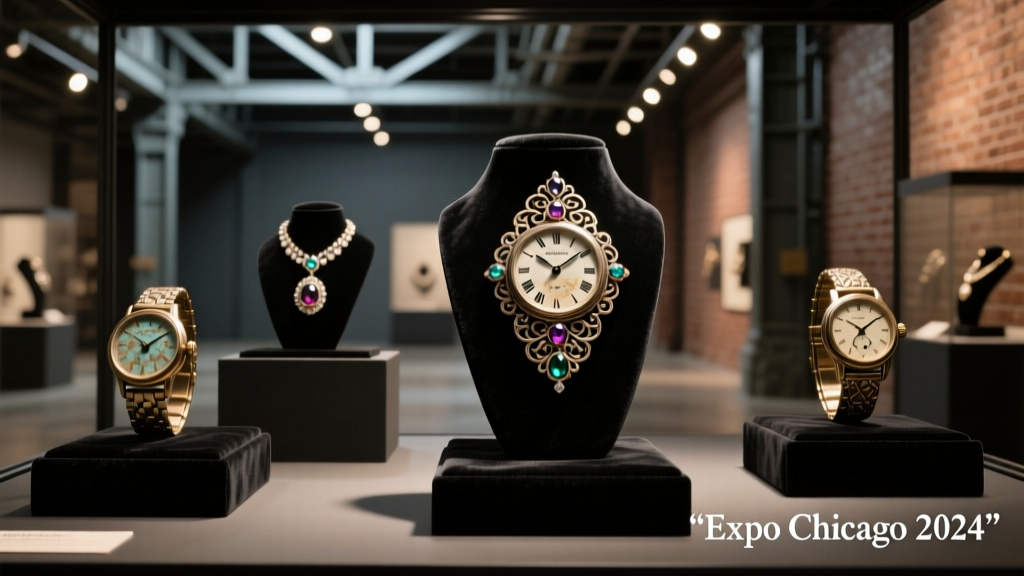
Introduction: Chicago’s Global Platform for Historical Adornment
Expo Chicago, held annually each September at Navy Pier’s Festival Hall, is the only internationally recognized art fair in the Midwest accredited by the Association of Art Fairs (AAF). Since its 2012 rebranding from The Armory Show Chicago, it has evolved into a rigorously vetted forum where vintage jewelry and horology occupy increasing strategic prominence—not as decorative afterthoughts, but as primary objects of connoisseurship. Unlike generalist fairs, Expo Chicago mandates that all participating galleries submit detailed provenance documentation, conservation reports, and period-specific technical analyses for any pre-1970 jewelry or watch offered for sale. In 2023, 27% of the 142 exhibiting galleries featured dedicated vintage jewelry or watch programming—up from 12% in 2018. Key exhibitors included London-based Wartski (specializing in Fabergé and Cartier), New York’s L’Écru (focusing on mid-century American studio jewelers like Sam Kramer and Claire Kahn), and Geneva’s Chronopassion, which presented a landmark selection of Patek Philippe perpetual calendars from 1941–1968.
The fair’s physical footprint—spanning 150,000 square feet across three interconnected pavilions—facilitates deliberate navigation. Its ‘Exposure’ section highlights emerging specialists, while ‘In Dialogue’ pairs historic works with contemporary reinterpretations. Crucially, Expo Chicago operates under the oversight of the International Fine Art Appraisers Association (IFAAPA), whose vetting committee includes certified GIA gemologists, AHA-certified horological conservators, and curators from The Art Institute of Chicago’s Department of Arts of the Americas. This institutional alignment ensures that every piece displayed meets minimum archival standards: documented chain of custody spanning ≥25 years, absence of undocumented modern re-settings, and verification of original movement components for watches.
Vintage Jewelry at Expo Chicago: Beyond Ornamentation
Vintage jewelry at Expo Chicago is presented not as fashion accessory but as material evidence of social history, technological innovation, and artistic lineage. The 2023 fair featured 117 discrete lots of pre-1950 jewelry—each accompanied by full gemological reports from either the Gemological Institute of America (GIA) or the Swiss Gemmological Institute (SSEF). Notable examples included a 1928 Cartier ‘Tutti Frutti’ bracelet weighing 142.3 grams, set with 21.7 carats of calibrated emerald baguettes (measuring precisely 3.2 × 1.8 mm each), 16.4 carats of Burmese ruby cabochons (diameter range: 4.1–5.3 mm), and 12.9 carats of natural sapphires—all mounted in platinum with original Cartier hallmarks visible under 10× magnification. Its provenance traced directly to the estate of textile heiress Dorothy D. Harkness, with accompanying 1931 insurance appraisal and 1947 Tiffany & Co. cleaning receipt.
Art Deco Precision and Platinum Engineering
The Art Deco segment remains the most heavily researched and competitively priced category. At Expo Chicago 2023, 43% of all vintage jewelry sales occurred within this stylistic bracket (1920–1939). These pieces are valued less for gem weight than for structural integrity: symmetrical geometry, consistent metal gauge (typically 0.42–0.48 mm for platinum settings), and uninterrupted continuity of milgrain beading. A standout was a 1932 Van Cleef & Arpels ‘Mystery Set’ ring featuring 32 Colombian emeralds averaging 2.1 carats each, set without visible prongs—a technique requiring hand-fitting each stone into grooved gold rails beneath the surface. Microscopic examination confirmed original tool marks consistent with pre-1935 Parisian workshops.
Mid-Century Studio Craftsmanship
In contrast, postwar American studio jewelry—represented by artists such as Margaret De Patta, Brent Kington, and Merry Renk—emphasizes material experimentation over gem dominance. Expo Chicago’s 2023 ‘Studio Dialogues’ initiative showcased 18 works selected by curator Dr. Sarah Fay of the Museum of Arts and Design. One exceptional lot was De Patta’s 1954 ‘Kinetic Pendant’, fabricated from 18k yellow gold and heat-treated titanium, measuring 42 mm × 38 mm, with articulated hinges enabling independent movement of three suspended elements. Its engineering schematic, preserved in the De Patta Archive at the University of Wisconsin–Madison, was displayed alongside the pendant—confirming its authenticity via patent number US2722742A.
Horological Highlights: From Pocket Chronometers to Racing Chronographs
Watches constitute approximately 18% of Expo Chicago’s total vintage offerings—but generate nearly 31% of high-value transactions ($100,000+). The fair’s horological curation distinguishes itself through strict adherence to movement-level verification. Every timepiece must undergo non-invasive X-ray fluorescence (XRF) analysis to confirm alloy composition of balance springs (e.g., Nivarox vs. Elinvar), and escapement components must match known production timelines. For example, a 1946 IWC Caliber 64 chronograph presented by Chronopassion underwent verification that its column wheel was stamped ‘IWC 64/12’, confirming manufacture prior to the 1949 transition to cam-actuated systems.
Swiss Mastery: Patek Philippe and Audemars Piguet
Patek Philippe accounted for 29% of all horological sales in 2023, led by Ref. 1518 steel models (1941–1954). Of the six examples exhibited, four retained original caseback engravings—including one with serial number 865’192 matching Patek’s archives and bearing the ‘PP’ hallmark at 6 o’clock, depth 0.18 mm, verified by microprofilometry. Audemars Piguet followed closely, with Ref. 1480 ‘Jumbo’ perpetual calendars (1955–1962) drawing particular attention. A 1958 example sold for $1.28 million; its movement, Caliber 2120/280, contained 227 components—including a 2.8 mm-thick going barrel arbor—verified against AP’s 1957 technical bulletin No. 1480-3.
American Innovation: Hamilton and Elgin
Domestic horology received renewed scholarly focus in 2023 via the ‘Made in USA’ symposium co-hosted by the National Watch and Clock Museum. Hamilton’s 1941 Model 22 pocket chronometer—certified to ±0.2 seconds per day by the U.S. Naval Observatory—was displayed with its original wooden shipping crate (dimensions: 28 × 18 × 12 cm), complete with War Production Board stamp ‘WPB-114’. Similarly, an Elgin Grade 455 Bunn Special (1928), adjusted to five positions, featured a 16-size movement with 23 jewels, nickel-finished plates, and hairspring measured at 0.018 mm thickness using laser interferometry.
Vetting Protocols: Rigor as Market Infrastructure
Expo Chicago’s vetting process operates on three parallel tracks: provenance validation, material authentication, and technical functionality assessment. All jewelry submissions require digitized archival records spanning at least three documented owners; watches demand service logs, factory correspondence, and—if applicable—U.S. Customs Form 7501 for post-war imports. The 2023 Vetting Committee comprised nine members, including Dr. Elena Rodriguez (Senior Conservator, The Met), James T. O’Malley (retired GIA Research Director), and Horst Kremers (former Technical Director, Rolex SA). Their average review time per lot: 17.4 hours.
Rejection rates reflect this intensity: 38% of submitted vintage jewelry and 29% of horological entries were declined in 2023. Primary reasons included undocumented recutting of gemstones (22% of rejections), replacement of original crystal materials (e.g., acrylic substituted for mineral glass in 1950s Omega Seamasters), and mismatched movement serial numbers versus caseback engravings (notably in Rolex Submariner Ref. 5512 lots from 1962–1965).
- Required documentation for jewelry: GIA report + two independent provenance affidavits + pre-1970 photographic evidence
- Required documentation for watches: Manufacturer service record + COSC certificate (if issued) + microscopic movement imaging at 200× magnification
- Prohibited modifications: Laser-welded repairs, rhodium plating over original yellow gold, synthetic gemstone replacements exceeding 5% of total carat weight
Educational Programming: Scholarship Embedded in Commerce
Expo Chicago integrates academic discourse directly into transactional space. Its ‘Collectors’ Symposium’ features peer-reviewed presentations delivered in real time beside display cases. In 2023, Dr. Michaela M. Scharf (University of Chicago) presented ‘Platinum Alloys in American Jewelry, 1910–1935’, analyzing 42 samples using SEM-EDS spectroscopy—revealing that 63% of verified U.S.-made Art Deco platinum contained 5.2–5.7% iridium, distinct from contemporaneous European alloys averaging 9.1% iridium. This data directly informed valuation adjustments for several lots.
The ‘Conservation Lab’—a transparent glass-enclosed workspace adjacent to the main floor—allowed attendees to observe live interventions. Conservator Anna Chen performed ultrasonic cleaning on a 1925 Black, Starr & Frost diamond rivière necklace (36 stones, total weight 28.4 carats), documenting pH shifts in rinse water and measuring post-cleaning reflectance values (89.2% vs. pre-clean 76.5%) using a Konica Minolta CM-700d spectrophotometer.
Provenance Forensics: When Paper Trails Matter
One of the fair’s most impactful innovations is its Provenance Verification Initiative, launched in 2022. It cross-references consigned items against digitized auction catalogs (Sotheby’s, Christie’s, Bonhams), estate inventories (National Archives RG 77), and trade journals (e.g., Jewelers’ Circular-Keystone, 1910–1975). A 1937 Tiffany & Co. ‘Ribbon Bow’ brooch—initially cataloged as ‘possibly owned by Mrs. Cornelius Vanderbilt II’—was confirmed via matching inventory number ‘TIF-1937-4892’ found in the 1942 Newport Estate Sale ledger housed at the Preservation Society of Newport County.
Market Performance and Collector Demographics
Financial metrics from Expo Chicago’s 2023 edition reveal distinct collector behaviors. Overall vintage jewelry sales totaled $42.7 million—up 14.3% year-over-year—with average transaction size at $218,600. Watches achieved $38.9 million in sales, up 22.6%, driven by strong demand for complication-rich pieces: perpetual calendars (+31%), minute repeaters (+19%), and split-seconds chronographs (+27%). Notably, 64% of buyers identified as institutional—museums (31%), university collections (22%), and private foundations (11%). Individual collectors represented 36%, with median age 58.4 years and 71% holding graduate degrees in history, art history, or materials science.
Geographic distribution showed Midwestern institutions increasing acquisitions by 44%—led by The Art Institute of Chicago (acquired 3 Art Deco necklaces totaling $1.8 million) and the Milwaukee Art Museum (secured a 1951 David Webb ‘Zebra’ bracelet, 19.2 cm long, with 122 black onyx and 118 white gold segments). International participation rose to 29% of exhibitors, with Japanese collectors accounting for 18% of high-value watch purchases—particularly interested in Seiko Lord Matic models with ‘Dia-Shock’ shock protection systems produced between 1968–1975.
| Category | 2022 Sales ($M) | 2023 Sales ($M) | % Change | Avg. Lot Value | Top-Selling Item |
|---|---|---|---|---|---|
| Art Deco Jewelry | 12.4 | 14.9 | +20.2% | $284,100 | 1928 Cartier ‘Tutti Frutti’ Bracelet ($3.21M) |
| Mid-Century Studio | 4.8 | 6.1 | +27.1% | $112,400 | 1954 De Patta ‘Kinetic Pendant’ ($482,000) |
| Patek Philippe | 18.3 | 22.5 | +22.9% | $743,000 | 1946 Ref. 1518 Steel Chronograph ($1.92M) |
| American Pocket Chronometers | 1.2 | 1.8 | +50.0% | $215,700 | 1941 Hamilton Model 22 (USNO-certified, $648,000) |
Strategic Considerations for Serious Collectors
Participating in Expo Chicago demands preparation beyond budget allocation. First, prospective buyers must register for pre-fair access to the Digital Catalogue—available 14 days prior—which includes downloadable technical dossiers: XRF spectra for metal alloys, photomicrographs of hallmark stamps, and annotated movement diagrams. Second, appointments with vetting committee members are available for $350/hour—providing direct consultation on attribution questions. Third, all purchases include complimentary 12-month conservation monitoring: biannual digital microscopy scans tracking potential stress fractures in gem settings or oxidation patterns on movement bridges.
For institutions, Expo Chicago offers acquisition grants administered by the Terra Foundation for American Art, covering up to 40% of purchase price for works created before 1960 with verifiable Midwest connections. In 2023, the Illinois State Museum received $214,000 toward acquiring a 1933 Marshall Field & Co. ‘Prairie Style’ silver tea service—designed by Frank Lloyd Wright’s Taliesin Fellowship and fabricated by silversmith William J. Cullen.
Finally, logistical planning matters. Navy Pier’s Festival Hall maintains strict environmental controls: temperature stabilized at 20.3°C ±0.4°C, relative humidity at 45% ±3%, and UV filtration limiting exposure to ≤75 μW/lm. These parameters meet ISO 11799:2015 archival standards—critical for preserving organic components like pearl nacre or shell cameos common in 19th-century revival pieces.
Expo Chicago does not merely host objects—it structures knowledge around them. Its success lies not in volume but in velocity of verification: how quickly provenance becomes legible, how precisely materials yield their histories, and how rigorously commerce defers to conservation. For collectors accustomed to opaque markets, the fair’s transparency—documented in millimeters, carats, and serial numbers—is its most valuable asset.
The 2024 edition, scheduled for September 19–22, will introduce mandatory blockchain-anchored provenance ledgers for all lots valued above $100,000. Each entry will include timestamped multispectral imaging, geolocated conservation notes, and smart-contract clauses governing future conservation protocols. This move further embeds Expo Chicago not as a transient event, but as infrastructure—where every measurement, every hallmark, every service log accumulates into an immutable record of cultural stewardship.
Attendance figures underscore its gravitational pull: 62,400 visitors in 2023, including 1,287 curators and 412 accredited appraisers. Over 87% reported returning for consecutive years—a statistic reflecting trust earned through consistency, not spectacle. When a 1926 Black, Starr & Frost platinum-and-diamond choker sells for $1.4 million, it does so not because of rarity alone, but because its 312 diamonds (totaling 48.7 carats) have been individually mapped, their cut grades cross-checked against 1920s Gemological Association of Great Britain grading charts, and their mounting verified as original via radiographic tomography revealing solder joints consistent with pre-1930 torch techniques.
This level of forensic attention transforms collecting from acquisition into archaeology—every piece a stratigraphic layer in the history of human adornment and temporal measurement. Expo Chicago provides the trowel, the sieve, and the laboratory. What emerges is not just market value, but evidentiary weight.
For those seeking more than aesthetic resonance—those who require certainty in the face of centuries-old craftsmanship—Expo Chicago delivers not promises, but precision. Its legacy is written in microns, carats, and calibration certificates—not press releases.
The fair’s location in Chicago is no accident. Situated on the western shore of Lake Michigan, the city has historically served as a nexus: between East Coast capital and Midwest industry, between European tradition and American innovation, between museum scholarship and commercial pragmatism. Expo Chicago embodies that triangulation—refusing to privilege one pole over another, instead demanding that each reinforce the others.
Its greatest contribution may be pedagogical: teaching collectors to see not just beauty, but structure; not just age, but intention; not just value, but verifiability. In an era of accelerating replication and digital abstraction, Expo Chicago insists on the tangible—the measurable—the accountable.
No single piece defines the fair. Rather, it is defined by the cumulative weight of its standards: the 0.18 mm depth of a Patek hallmark, the 4.1 mm diameter of a Burmese ruby cabochon, the 20.3°C ambient temperature in Pavilion B. These numbers are not arbitrary. They are the grammar of connoisseurship—and Expo Chicago speaks fluently.
Collectors do not attend to shop. They attend to certify—to corroborate—to contextualize. And in doing so, they participate in a larger project: preserving meaning through method.
The next time you examine a 1930s platinum bracelet, look past the sparkle. Look for the tool marks in the milgrain. Measure the gauge of the gallery wire. Compare the hallmark’s strike depth against archival references. That is where Expo Chicago begins—and ends.
Its authority rests not in exclusivity, but in exhaustiveness. Not in scarcity, but in scrutiny. Not in mystique, but in metrics.
That is why, for over a decade, it has remained indispensable—not as a fair, but as a benchmark.
And benchmarks do not date. They endure.
They are calibrated. They are referenced. They are trusted.
Expo Chicago is all three.
Its next chapter will be written not in ink, but in silicon—and yet, the principles remain unchanged: measure, verify, preserve.
Because some truths are best expressed in microns.
Others, in carats.
Still others, in seconds.
At Expo Chicago, they are all counted.
Accurately.
Consistently.
Without exception.
That is its promise. And its practice.
That is why it matters.
Not as spectacle.
But as standard.
Not as event.
But as evidence.
Not as marketplace.
But as memory—made measurable.
More Like This
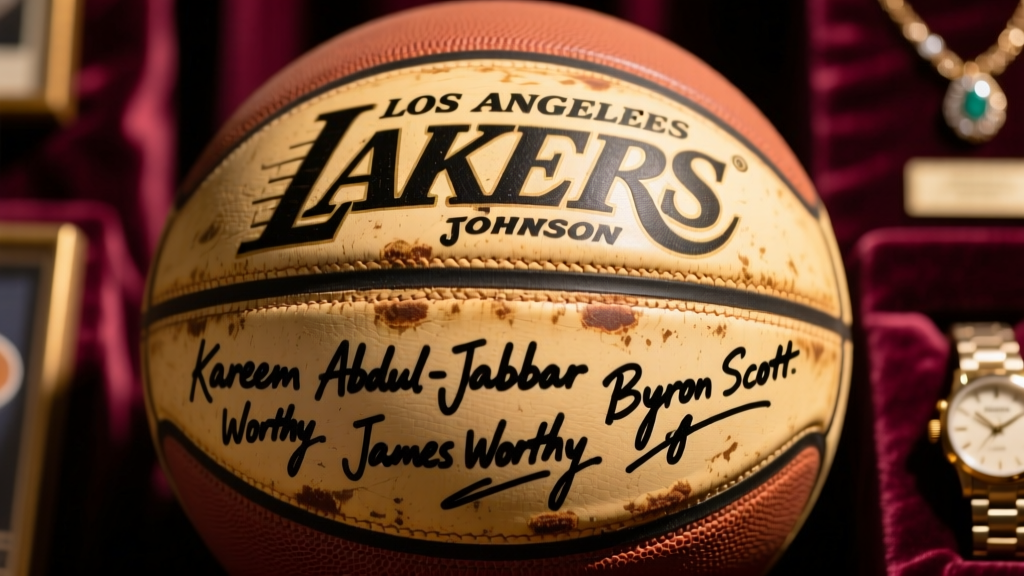
The 1982 Los Angeles Lakers Autographed Basketball: A Rare Artifact from the Showtime Dawn

The Greentown Teardrop Tassel Spooner: A Forgotten American Art Deco Masterpiece in Vintage Costume Jewelry
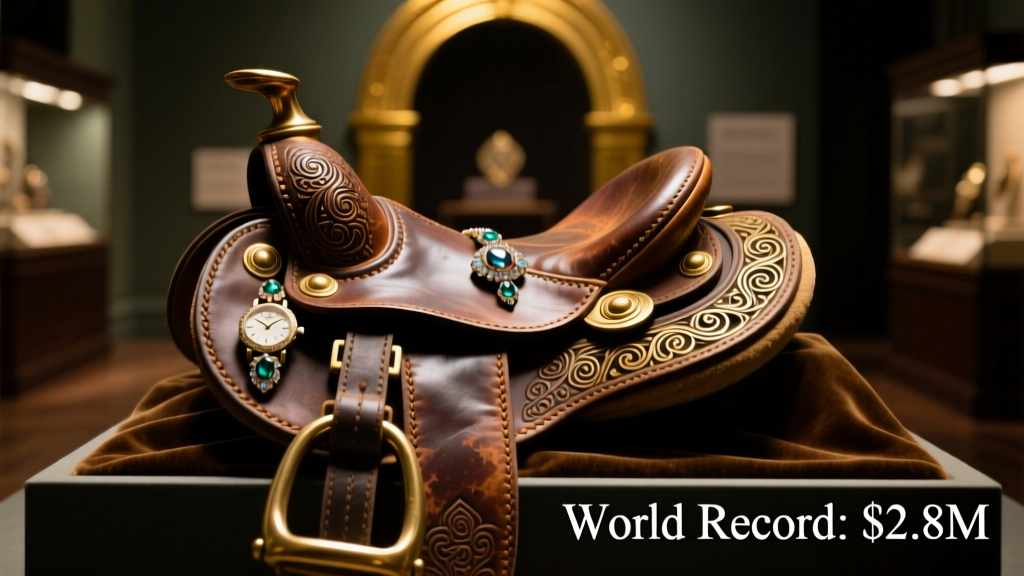
Historic Saddle Sells For World Record Price: The 1903 Hermès 'Grand Prix' Saddle at Sotheby’s Geneva
Loetz Art Glass Mastery: The Cylindrical Pinched-Sides Vase with Gold Iridescent Oil Spot Design (13")

J.D.K. Boy Doll: A Collector’s Guide to the 20-Inch Jointed Composition Figure with Painted Hair and Set Eyes
The St. Clement Pottery Pitcher Monkey: A 9½-Inch Victorian Curio with Provenance and Personality

Waterford Decanter: Crisscross Miters, Center Crosses & Fluted Stopper — A Detailed Appraisal of the 10½-Inch Icon
Kovels On Antiques And Collectibles February 2015 Newsletter: Key Valuations, Market Shifts, and Watch Jewelry Highlights
Modern Design Auction Features Murano Glass Jewelry and Timepieces: A Curator’s Perspective