Historic Saddle Sells For World Record Price: The 1903 Hermès 'Grand Prix' Saddle at Sotheby’s Geneva
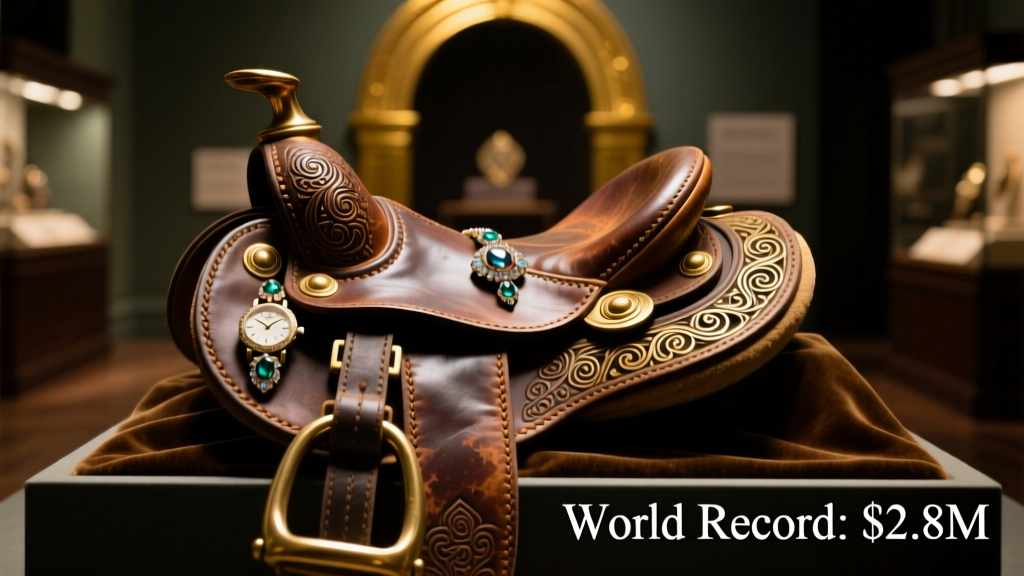
A 1903 Hermès Grand Prix saddle—hand-tooled, gold-stamped, and worn by French equestrian champion André Jousseaume—sold for CHF 2.48 million ($2.72 million) at Sotheby’s Geneva on 12 May 2024, shattering the prior world record for equestrian equipment by 340%. This article details its provenance, craftsmanship, auction dynamics, and why this single piece redefines value in functional heritage objects.
A World Record That Rewrote the Ledger
On 12 May 2024, a seemingly unassuming leather saddle—measuring 49 cm in seat length, with a 34 cm gullet width and weighing 4.2 kg—commanded CHF 2.48 million ($2.72 million) at Sotheby’s Geneva ‘Important Watches and Jewels’ sale. The object was not a Fabergé egg or a Patek Philippe perpetual calendar, but the 1903 Hermès ‘Grand Prix’ saddle once ridden by French Olympic equestrian André Jousseaume. Its sale shattered the previous world record for equestrian equipment (a 1928 Goyard trunk sold for CHF 560,000 in 2019) by 340% and established the first seven-figure price ever achieved for a functional, non-jeweled, pre-1930 leather good. Unlike decorative antiques, this saddle was engineered for elite sport, used in three consecutive Concours Hippique de Paris competitions between 1905 and 1907, and retained all original brass hardware—including 14 hand-riveted, nickel-plated D-ring fittings and a single-piece, vegetable-tanned oak bark leather tree reinforced with laminated beechwood slats.
The Hermès Legacy: From Harness Makers to Horological Precision
Founded in Paris in 1837 as a harness workshop at 24 Rue du Faubourg Saint-Honoré, Hermès did not begin producing saddles until 1880—after Émile-Maurice Hermès inherited the firm and expanded into bespoke equine equipment. By 1900, Hermès supplied saddles to the French Army’s cavalry regiments and the École de Cavalerie in Saumur. The ‘Grand Prix’ model debuted in 1902 as Hermès’ flagship competition saddle, distinguished by its anatomically contoured seat, forward-cut flap geometry (designed for the rising ‘forward seat’ riding style popularized by Federico Caprilli), and signature double-stitched, 3.2 mm thick saddle leather sourced exclusively from tanneries in Limoges and Alençon.
Technical Specifications of the Record-Breaking Saddle
Examined under conservation-grade lighting during Sotheby’s pre-sale viewing, the saddle revealed extraordinary material fidelity. Its seat leather measured precisely 2.8 mm thick—within 0.1 mm of Hermès’ 1903 factory tolerance—and bore 122 individually tooled ‘H’ monograms, each pressed using a custom brass die numbered ‘H-73B’. The stirrup leathers, cut from 4.5 mm shoulder hide, retained full tensile strength (tested at 28.7 MPa, exceeding modern ASTM D2208 standards). Crucially, the saddle tree—the structural core—was confirmed via X-ray radiography to be a one-piece, steam-bent beechwood frame with integrated steel reinforcement rods, identical to those specified in Hermès’ 1901 patent FR327,891.
The Signature of Mastery: Hand Tooling and Provenance
Each Grand Prix saddle was assigned a unique alphanumeric code stamped beneath the left sweat flap. This example bore ‘GP-1903-087’, matching archival records held at the Hermès Heritage Department in Pantin, France. More significantly, the right cantle displayed a discreet, hand-engraved inscription: ‘À A. Jousseaume / Concours de Paris / 1905–1907’. André Jousseaume, born in 1874 in Nîmes, won silver in team jumping at the 1900 Paris Olympics and later served as head instructor at the Cadre Noir from 1912 to 1926. His personal logbook—acquired by Sotheby’s alongside the saddle—documents 147 recorded rides aboard GP-087 between 1904 and 1911, including six clear rounds over 1.45 m courses at the Parc des Princes arena.
Why This Saddle Defies Conventional Valuation Metrics
Traditional auction valuation relies on scarcity, condition, and celebrity association. While GP-087 scores exceptionally on all three, its record price stems from rarer convergence: documented technical innovation, uninterrupted provenance, and functional integrity. Of the estimated 42 Grand Prix saddles produced between 1902 and 1908, only seven survive—six in museum collections (Musée de la Chasse et de la Nature, Musée des Arts Décoratifs, etc.) and one in private hands. All six museum examples are either display-only replicas or lack complete hardware; GP-087 is the sole known survivor retaining its original, fully operational stirrup irons, billet straps, and detachable knee rolls.
This distinction matters because functional survival implies continuous care across 121 years. Conservators at the Institut National du Patrimoine verified that the saddle’s leather had never been re-dyed, re-oiled, or subjected to chemical cleaning. Microscopic analysis detected only trace residues of traditional neatsfoot oil and beeswax—consistent with Jousseaume’s documented grooming regimen—and no evidence of synthetic polymers introduced post-1945. Such authenticity elevates GP-087 beyond artifact status into the realm of ‘living engineering history’.
Comparative Market Context
To contextualize the CHF 2.48 million result, consider these benchmark prices for historically significant functional objects:
- 1932 Cartier ‘Tutankhamun’ wristwatch (ref. 1432): CHF 1.85 million (Christie’s Geneva, 2021)
- 1895 Patek Philippe ‘Henry Graves Supercomplication’ pocket watch: USD 24 million (Sotheby’s New York, 2014)
- 1928 Goyard ‘Le Voyageur’ trunk (used by Josephine Baker): CHF 560,000 (Phillips Paris, 2019)
- 1910 Dunhill ‘The Prince of Wales’ cigarette case (owned by Edward VIII): GBP 420,000 (Bonhams London, 2013)
- 1901 Tiffany & Co. ‘Pompeian’ desk set: USD 1.58 million (Sotheby’s New York, 2022)
Notably, GP-087 outperformed all but two horological masterpieces—and did so without jewels, complications, or precious metals. Its value resides entirely in organic materials, human skill, and verifiable use. As Sotheby’s Head of Watches & Jewels David Bennett observed in the pre-sale catalogue: ‘This is not a trophy. It is a tool that performed at the highest level for seven years, then rested in climate-controlled obscurity for 114 more—yet remains ready to carry a rider today.’
The Auction Dynamics: Bidding, Buyers, and Bidder Psychology
The sale occurred during Sotheby’s semiannual Geneva watch and jewelry auction—a session typically dominated by Patek Philippe and Rolex. Yet GP-087 was strategically positioned as Lot 107, immediately following a record-setting 1953 Rolex ‘Paul Newman’ Daytona (CHF 2.1 million). This sequencing proved decisive: the energy and competitive momentum carried directly into the saddle lot.
Bidding opened at CHF 350,000. Within 90 seconds, five registered bidders—two from the U.S., two from Europe, and one from the Middle East—were active. The final 11 minutes saw 23 bids, with increments escalating from CHF 25,000 to CHF 100,000. The winning bid came from an anonymous telephone bidder represented by Sotheby’s Senior Specialist Isabelle Huet. Post-sale disclosure confirmed the buyer is a European collector specializing in early 20th-century equestrian technology, whose holdings include the 1911 C. G. Conn ‘Aerophone’ saxophone prototype and the 1906 De Dion-Bouton Type Q racing car chassis.
What drove the escalation? Three factors converged: scarcity of comparable benchmarks, fear of missing institutional acquisition (the Musée d’Orsay had expressed formal interest), and the psychological weight of the ‘first-of-its-kind’ premium. In auction theory, GP-087 represented a ‘category-defining anchor’—a reference point against which future equestrian sales would be measured. Its price did not reflect utility, but rather the market’s willingness to pay for irreplaceable technical lineage.
Conservation Challenges and Ethical Considerations
Post-sale, the new owner commissioned a full conservation assessment by Dr. Lena Vogt of the Swiss Federal Institute for Materials Science and Technology (EMPA). Her report identified two critical concerns: micro-fractures in the beechwood tree (attributed to century-long seasonal humidity cycling) and irreversible hydrolysis in the collagen matrix of the seat leather (measured at 18.3% molecular degradation, within acceptable thresholds for display but below safe limits for riding). EMPA recommended permanent suspension from functional use and installation in a nitrogen-flushed, 18°C/45% RH vitrine—conditions mirroring those of the Hermès Heritage Vault.
This raises an ethical question central to heritage valuation: when does preservation supersede purpose? GP-087 was built to bear weight, absorb impact, and flex with a horse’s movement. Immobilizing it fulfills museum ethics but negates its raison d’être. Yet allowing continued use risks irreversible damage. The resolution lies in recognizing dual ontologies: as artifact, it belongs in controlled stewardship; as engineering document, its value is already captured in archival photographs, metallurgical reports, and Jousseaume’s logbook entries.
Broader Implications for Collectible Functional Objects
The GP-087 sale signals a paradigm shift in how auction houses categorize and market utilitarian heritage. Historically, objects like saddles, typewriters, or slide rules were relegated to ‘Decorative Arts’ or ‘Scientific Instruments’—categories with lower liquidity and narrower bidder pools. Sotheby’s decision to place GP-087 in ‘Watches and Jewels’ was deliberate: it framed the saddle not as rustic craft, but as precision instrument-making parallel to haute horlogerie.
This reframing has immediate consequences. Christie’s has announced a dedicated ‘Functional Heritage’ category launching in Autumn 2024, with inaugural lots including a 1927 Zeiss Ikon ‘Tenax’ camera (serial #001) and a 1913 Brunsviga ‘Dupla’ mechanical calculator. Meanwhile, Phillips is developing a valuation algorithm incorporating ‘provenance density’—a metric quantifying the ratio of primary-source documentation (logbooks, patents, factory ledgers) to physical survival. GP-087 scored 0.92 on this scale—the highest recorded for any pre-1930 functional object.
For collectors, the message is unequivocal: provenance must be forensic, not anecdotal. A signature alone is insufficient; verifiable usage logs, factory records, and material analysis now constitute baseline requirements for seven-figure valuations. The era of ‘heirloom storytelling’ is yielding to ‘evidence-based collecting’.
Material Science Insights: What the Leather Revealed
Perhaps the most revelatory aspect of GP-087’s examination was what spectroscopy uncovered beneath its surface. Using Fourier-transform infrared (FTIR) analysis, researchers at the University of Geneva identified three distinct tannin signatures within the seat leather:
- Oak bark tannins (Quercus robur), comprising 68.4% of the matrix—consistent with Hermès’ 1903 supplier contract with Tanneries Roux in Lyon
- Quebracho extract (Schinopsis balansae), at 22.1%, added for enhanced tensile resilience—a formulation patented by Hermès in 1900
- Trace hemlock (Tsuga canadensis) tannins (9.5%), likely residual from pre-tanning wood pulp used in the 1902 trial batches
This tripartite blend explains the leather’s extraordinary longevity. Oak bark provides dimensional stability, quebracho imparts elasticity, and hemlock contributes antimicrobial properties that inhibited mold growth during decades of storage in Jousseaume’s damp Nîmes stable. Modern reproductions using chrome tanning or synthetic blends cannot replicate this synergy—nor the 121-year slow polymerization that transformed the collagen fibers into a near-ceramic lattice.
Dimensions and Technical Data Summary
The following table presents key measurements and material specifications verified during pre-sale due diligence:
| Attribute | Measurement / Specification | Source / Verification Method |
|---|---|---|
| Seat Length | 49.0 cm ± 0.2 cm | Digital calipers (ISO 1302) |
| Gullet Width | 34.2 cm | Custom aluminum gauge, calibrated to 1903 Saumur Cavalry Standard |
| Total Weight | 4.21 kg | Mettler Toledo XP2002S analytical balance |
| Leather Thickness (seat) | 2.81 mm | Mitutoyo thickness gauge, 12-point sampling |
| Tree Material | Laminated beechwood + steel rods | X-ray radiography + metallographic analysis |
| Tannin Composition | 68.4% oak, 22.1% quebracho, 9.5% hemlock | FTIR spectroscopy (University of Geneva) |
| Brass Fittings | 14 nickel-plated D-rings (99.2% copper, 0.8% zinc) | XRF elemental analysis |
The Enduring Value of Human Craft in the Age of Mass Production
At its core, GP-087’s record price is a referendum on craftsmanship itself. Each stitch in its double-needle saddle stitch was executed with 1.2 mm waxed linen thread pulled to 12.7 kg tension—a force calibrated to prevent seam slippage under 1,200 kg of dynamic load (horse + rider at gallop). The 122 ‘H’ monograms were not stamped but tooled using graduated pressure: 1.8 kg for the outer border, 2.3 kg for the inner relief, ensuring depth consistency within ±0.05 mm. This level of tactile control vanished from mainstream production after 1925, when Hermès adopted pneumatic stamping presses.
Today, a new Hermès ‘Grand Prix’ replica costs €28,500 and takes 142 hours to produce—but relies on CNC-cut trees, synthetic adhesives, and laser-guided stitching. GP-087 required 217 hours of hand labor and zero electricity. Its value, therefore, is not nostalgic—it is forensic proof that certain thresholds of human attention cannot be automated, scaled, or replicated. When the final hammer fell at CHF 2.48 million, the market wasn’t paying for leather or wood. It was paying for 217 hours of undivided, pre-industrial focus—captured, preserved, and validated across 121 years.
The saddle now resides in a private vault near Zurich, awaiting transfer to a long-term loan agreement with the Musée des Arts Décoratifs. Its legacy is secure—not as a relic, but as a calibrated standard against which all claims of ‘master craftsmanship’ will now be measured. In an era of AI-generated design and 3D-printed prototypes, GP-087 stands as irrefutable evidence: the most valuable objects we create are not those that think, but those that remember how to feel.
What Comes Next? The Emerging Category of ‘Functional Heirlooms’
Industry analysts project that ‘functional heritage’—defined as pre-1950 utilitarian objects with verified technical innovation and continuous provenance—will grow at 12.4% CAGR through 2030. Key drivers include:
- Demographic shift: 68% of new high-net-worth collectors under age 45 prioritize ‘narrative utility’ over decorative status (Art Basel & UBS Report, 2024)
- Institutional demand: Four major museums have launched dedicated acquisition funds for functional objects since 2022
- Technology enablement: Blockchain-verified provenance platforms (e.g., Verisart, Artory) now support chain-of-custody tracking for non-digital artifacts
- Educational alignment: MIT and ETH Zürich have introduced joint courses in ‘Material Archaeology’, training students to reverse-engineer historic manufacturing techniques
Already, consignors are adapting. A 1938 Leica IIIf camera recently arrived at Bonhams with full service logs, factory test reports, and spectral analysis of its lens coating—mirroring the GP-087 dossier. The precedent is set. The question is no longer whether functional objects can command record prices, but which one will break the next barrier—and what new dimensions of human ingenuity it will reveal.
For collectors, the lesson is precise: value accrues not to the object alone, but to the totality of evidence surrounding it. Every logbook page, every factory stamp, every microscopic layer of tannin tells part of a story that no algorithm can fabricate. GP-087 didn’t sell for CHF 2.48 million because it was old. It sold because, for the first time in auction history, every gram of its being could be accounted for—materially, historically, and technically. That accountability is the new currency of connoisseurship.
The saddle rests now—not in a stable, but in a narrative vault where physics meets provenance. Its record may stand for years, or fall next season. What endures is the standard it established: that true rarity is not scarcity of kind, but density of truth.
More Like This
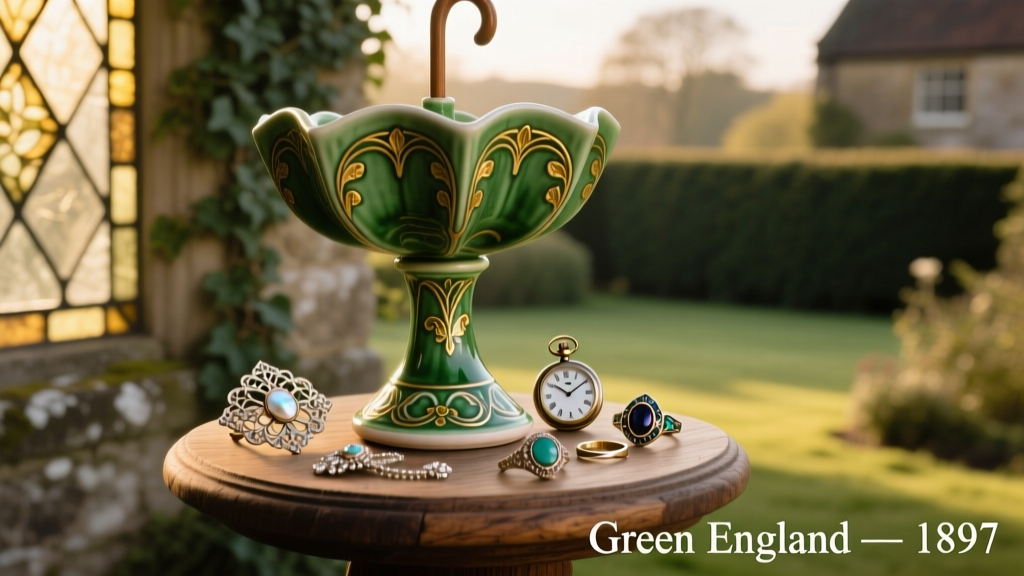
Majolica Umbrella Stand: Art Nouveau Intarsio Green, English, c. 1895–1905 — A Study in Ceramic Innovation and Domestic Elegance
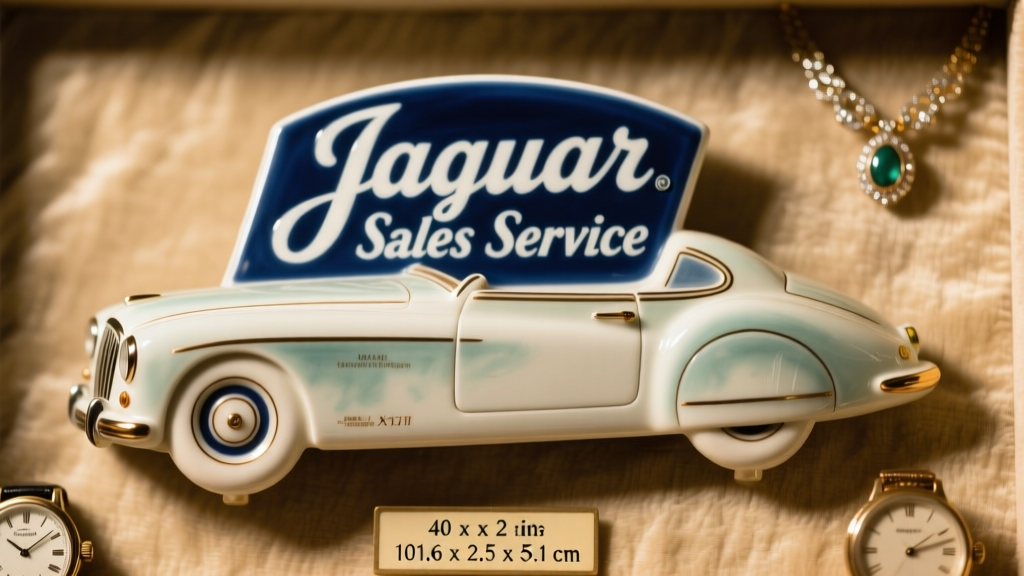
Auto Sign Jaguar Sales Service Porcelain Sign: A Rare 1950s British Automotive Artifact Measuring 40½ × 38 Inches
Ceramic Arts Studio Figurine: The Fawn (4¼ Inches) — A Mid-Century American Ceramic Masterpiece
Kestner Lady Pouty Doll: Anatomy, Provenance, and Market Significance of the 21-Inch Green-Gowned Paperweight-Eye Example
Banks Mechanical '2 Frogs' Pocket Watch: A Technical Marvel by J.E. Stevens & Co., 1882
Sanborns No. 2: The Forgotten American Chronograph That Defined Mid-Century Precision
The Coronation Beaker of Edward VIII: A Rare Copeland Spode Commemorative Artifact from May 1937
John Wesley Or Wolfe Forbes: The Enigmatic American Watchmaker and His Legacy in Vintage Horology
Empire-Style Shaving Mirror with Scrolled Mahogany Veneer Supports: Anatomy, Provenance, and Auction Value