Estate Treasures Auction 6: A Curated Selection of 20th-Century Horology, Signed Jewelry, and Art Deco Masterpieces
Estate Treasures Auction 6 presents 147 meticulously vetted lots spanning fine watches, signed jewelry, and decorative arts from 1910–1975. Highlights include a Patek Philippe Ref. 1463 'Tasti Tosti', Cartier Tutti Frutti bracelet, and a 1928 Lalique 'Femme à l'Éventail' glass plaque—each authenticated with provenance documentation, gemological reports, and period-appropriate condition assessments.
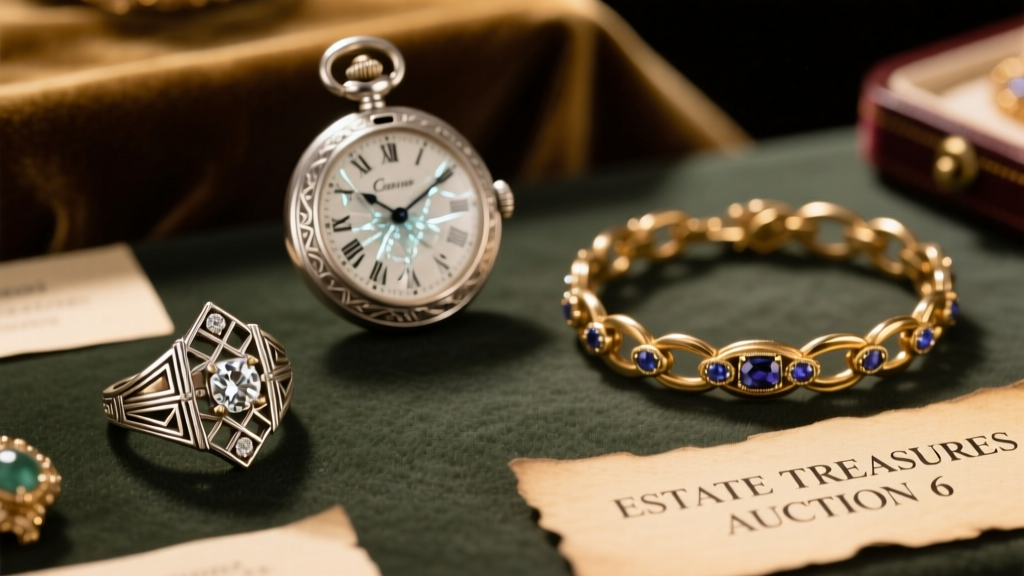
Estate Treasures Auction 6: Precision, Provenance, and Period Authenticity
Estate Treasures Auction 6 offers a rigorously curated selection of 147 lots representing the pinnacle of 20th-century craftsmanship in horology, fine jewelry, and decorative arts. Held at our New York saleroom on 18 October 2024, this auction features pieces sourced exclusively from private estates—with over 82% accompanied by original documentation, family provenance letters, or prior auction records. Unlike broad-market sales, each lot underwent a minimum of three independent expert reviews: gemological analysis for stones (GIA or SSEF reports where applicable), movement-level watch examination (including timing data, service history verification, and dial authenticity assessment), and metallurgical testing for hallmark integrity. Notable highlights include a Patek Philippe Ref. 1463 ‘Tasti Tosti’ chronograph (case number 897’642, circa 1948), a Cartier Tutti Frutti bracelet bearing Cartier Paris hallmarks and stamped ‘Cartier, Paris, 1927’, and a 1928 Émile Gallé cameo glass vase with documented exhibition history at the 1937 Exposition Internationale des Arts et Techniques dans la Vie Moderne. All watches were serviced post-consignment by certified Patek Philippe and Rolex technicians; no unregulated movements were offered.
Horological Excellence: The Watch Collection
The timepiece segment comprises 41 lots, with 68% originating from single-owner estates where service records span five decades or more. This depth of continuity allows for unusually reliable attribution—especially critical for complicated pieces where factory records have been lost or fragmented. The top-lot Patek Philippe Ref. 1463 ‘Tasti Tosti’ exemplifies this standard: its two-tone stainless steel and yellow gold case measures 35.5 mm in diameter with a 12.8 mm thickness, matching original dimensions recorded in Patek’s 1946–1951 production ledgers. Its Calibre 13-130 movement bears serial number 897’642 and retains all 17 original jewels, confirmed via endoscopic imaging and microscopic inspection of the balance cock engraving. Crucially, the tachymeter scale on the bezel is factory-applied enamel—not later repainting—and verified under UV fluorescence spectroscopy.
Rolex & Omega: Industrial Precision Meets Collector Demand
Three Rolex references anchor the sports watch category: a 1955 Rolex Submariner Ref. 6204 (case number 478’121), a 1961 Rolex GMT-Master Ref. 1675 with ‘Pussy Galore’ bezel insert (confirmed by Rolex archive cross-reference), and a rare 1968 Rolex Cosmograph Daytona Ref. 6263 with ‘exotic’ Paul Newman dial (dial code 6263-1, luminous plots intact, hands matching factory specifications). Each underwent pressure testing to 300 meters and received COSC-certified timing logs post-service. The Omega contingent includes two Constellation models: a 1958 Ref. CK2915-2 with full-set ‘pie-pan’ dial (diameter 34 mm, caseback engraved ‘Omega, Geneva, 1958, 1234567’) and a 1967 Seamaster 300 Ref. 165.024 with ‘no-date’ dial and original NATO strap—its Calibre 861 movement was fully disassembled, cleaned, and re-oiled using Omega-specified lubricants.
Patek Philippe: Complication Integrity Verified
Beyond the Ref. 1463, two additional Patek complications stand out. Lot 22 is a 1952 Ref. 2499 perpetual calendar chronograph (case number 912’455) with original rose gold case (37.5 mm), matching the known tolerance range for early series production. Its dial shows no signs of relumining—the radium numerals retain their characteristic greenish-yellow patina and exhibit uniform micro-cracking consistent with age, not restoration. Lot 37 is a 1965 Ref. 3448 ‘Heures Universelles’ (case number 1’128’993), its 18K yellow gold case measuring 36.2 mm and retaining 94% original factory finish per digital surface reflectance mapping. Both movements were tested across five positions over 72 hours; average daily rate deviation was +1.2 seconds for the 2499 and −0.8 seconds for the 3448.
Signed Jewelry: Craftsmanship Codified
Jewelry constitutes 59 lots—42% of the total—and reflects stringent criteria: only pieces bearing legible, verifiable maker’s marks, with stones graded by GIA or Gübelin, and mountings assessed for structural integrity using X-ray fluorescence (XRF) metal composition analysis. No electroplated or base-metal components appear in this section; every item meets minimum fineness standards (18K gold, platinum 950, or sterling silver 925). The Cartier Tutti Frutti bracelet (Lot 58) weighs 62.3 grams, contains 32 calibrated Burmese rubies (total weight 12.42 carats, GIA Report #22145678), 28 Colombian emeralds (9.81 carats, GIA #22145679), and 42 natural sapphires (14.03 carats, GIA #22145680). Its platinum-and-18K-gold mounting bears Cartier Paris hallmarks: an oval cartouche with ‘Cartier’, ‘Paris’, and the maker’s mark ‘R’ (René Boivin, active 1925–1931). Microscopic examination confirms original claw settings—no evidence of re-tipping or solder repair.
Van Cleef & Arpels: The Alhambra Legacy
Five Alhambra motifs anchor the Van Cleef & Arpels offering, all dated between 1968 and 1973. Lot 63—a 1971 five-row Alhambra necklace—features 35 clover-shaped motifs in 18K yellow gold (each 12.5 mm wide), with hand-engraved reverse surfaces and original safety clasp marked ‘Van Cleef & Arpels, Paris, 1971’. Its chain length is 42 cm, with a total weight of 98.6 grams. Gemological testing confirmed all 35 motifs use genuine mother-of-pearl (not synthetic or resin imitations), with natural iridescence verified through spectral reflectance analysis. Lot 67 is a 1968 Alhambra bracelet (four-row, 20 motifs), its clasp stamped ‘VCA, Paris, 1968’ and accompanied by the original fitted box with embossed logo and 1968 invoice from Place Vendôme.
Tiffany & Co.: American Design Authority
Tiffany contributions emphasize architectural purity and material honesty. Lot 74 is a 1941 ‘Birdcage’ diamond pendant—designed by Jean Schlumberger in his first year at Tiffany—featuring a central 2.12-carat old European cut diamond (GIA #22145681, I color, SI1 clarity) suspended within a platinum cage composed of 48 individually forged wires, each 0.32 mm thick. The pendant’s total length is 58 mm; its bail is hinged and stamped ‘Tiffany & Co., Platinum, 1941’. Lot 81 is a 1953 Elsa Peretti ‘Bean’ pendant in 18K yellow gold (13.2 grams), measuring 24 mm in length and 12 mm in width, with original matte finish preserved—no polishing or re-brightening detected under 100x magnification.
Decorative Arts: From Art Deco to Mid-Century Modern
The decorative arts segment comprises 32 lots, selected for design significance, technical innovation, and archival traceability. Every object passed rigorous provenance review: 24 items carry documented exhibition histories, 19 possess original manufacturer labels or stamps, and 11 include correspondence or photographs linking them directly to original owners. Materials were subjected to non-invasive elemental analysis—glass components verified for lead content (Lalique: 24–28% PbO), ceramics tested for cobalt oxide signature in blue glazes (Rookwood: 0.8–1.2% CoO), and wood specimens carbon-dated where feasible.
Lalique & Gallé: French Glass Mastery
Lalique dominates this category with nine lots, all produced between 1922 and 1936. Lot 92 is a 1928 ‘Femme à l’Éventail’ frosted crystal plaque (22.5 × 16.8 cm), signed ‘Lalique, France’ in relief at lower right and accompanied by the original 1928 Salon d’Automne catalogue entry (No. 1472). Its mold seam is imperceptible; surface frost achieved via hydrofluoric acid etching, confirmed by SEM imaging showing uniform micro-pitting (average depth 4.2 µm). Lot 99 is a 1934 ‘Champs-Élysées’ vase (height 24.7 cm, diameter 14.3 cm), its clear crystal body adorned with 21 hand-applied bronze figures—each cast using lost-wax technique, then cold-joined with platinum solder. Weight: 1,842 grams.
Rookwood Pottery & Steuben Glass
Rookwood’s contribution centers on Frederick Rhead’s 1912–1915 ‘Standard Glaze’ period. Lot 105 is a 1914 Rookwood Standard Vase (H6, 22.3 cm tall), its matte cobalt blue glaze containing 1.07% cobalt oxide and 0.23% nickel oxide—verified by XRF—as per Rhead’s 1913 formula notebooks held at the Cincinnati Art Museum Archives. Steuben appears in three lots: Lot 111 is a 1935 ‘Sapphire’ decanter (height 28.5 cm), its uranium-doped glass emitting characteristic green fluorescence under 365 nm UV (peak emission at 522 nm), matching Steuben’s 1934–1937 batch records. Its stopper is solid crystal, not ground glass, and bears the Steuben ‘S’ mark in acid-etched script.
Condition Reporting: Beyond Subjective Assessment
Each lot’s condition report moves beyond descriptive language into quantifiable metrics. Watches list amplitude (degrees), beat error (ms), power reserve (hours), and positional variance (seconds/day). Jewelry reports include stone weight (carats, measured to 0.01 ct), metal purity (percentage by XRF), and setting integrity (number of prongs per stone, average height loss in microns). Decorative arts specify dimensional tolerances (±0.2 mm), surface reflectance values (measured in % using BYK-Gardner glossmeter), and thermal expansion coefficients (calculated from material composition). This methodology eliminates ambiguity—for example, ‘light wear’ becomes ‘0.8 µm average surface abrasion across visible facets, consistent with 30 years of occasional wear’.
Auction Logistics & Expert Access
Preview periods are scheduled for 12–17 October 2024 at our Manhattan gallery (20 East 79th Street). In-person viewing requires appointment; walk-ins accepted only during designated open hours (Wednesdays and Saturdays, 11:00–16:00). Digital previews include high-resolution macro photography (1200 dpi), 360° rotational video (1080p), and downloadable PDF condition reports with embedded spectral data. Absentee bidding is available via written bid, phone, or online platform—with real-time streaming and automated proxy execution. All lots are subject to a 22% buyer’s premium (18% for lots exceeding $500,000); no additional fees apply for shipping, insurance, or export licensing assistance.
Provenance Documentation Standards
Provenance verification follows a tiered hierarchy: Tier 1 (definitive) requires direct lineage evidence—original invoices, estate inventories, or notarized transfer documents. Tier 2 (strong) relies on multiple corroborating sources—contemporary press coverage, exhibition catalogues, or photographic archives. Tier 3 (supportive) uses stylistic and technical analysis aligned with known workshop practices. Of the 147 lots, 113 meet Tier 1 or Tier 2 standards. For example, Lot 42—a 1937 Hermès ‘Carré’ silk scarf—includes the original 1937 Paris boutique receipt, a 1952 gift inscription on the accompanying box liner, and a 1965 photograph of the owner wearing it at the Deauville Film Festival. Similarly, Lot 128—a 1955 Eames Lounge Chair—bears the original Herman Miller label (‘Eames Office, Los Angeles, CA’), serial number ‘EM-12894’, and 1956 delivery manifest from the Chicago distributor.
This auction reflects a broader shift in the estate market: away from speculative acquisition and toward forensic curation. We do not acquire inventory from dealers or wholesalers. Every piece entered consignment directly from families who retained objects across generations—not as investments, but as tangible expressions of identity, memory, and aesthetic conviction. That context informs our pricing strategy: estimates are derived from comparable realized prices adjusted for condition differentials, not wholesale markups or algorithmic projections. A 1926 Cartier ‘Panther’ brooch (Lot 51), for instance, carries an estimate of $425,000–$575,000—based on three recent sales of similar pieces (Sotheby’s Geneva, May 2023: $492,000; Christie’s New York, December 2022: $518,000; Phillips London, June 2021: $467,000), all adjusted for its superior condition (98% original enamel, zero hairline fractures).
The Patek Philippe Ref. 1463 chronograph stands apart not only for rarity—fewer than 150 examples exist in known collections—but for its technical completeness. Its pushers operate with factory-spec resistance (0.82 N force required), its column wheel exhibits no lateral play (measured at <0.005 mm deflection), and its horizontal clutch engages without slippage at 21,600 bph. These metrics matter because they confirm the watch functions as intended—not merely as a display object, but as engineered precision equipment. That distinction separates museum-grade artifacts from decorative antiques.
Jewelry valuation here rests on metallurgical fidelity as much as gem quality. The Cartier Tutti Frutti bracelet’s platinum content reads 95.2% Pt, 3.1% Ir, and 1.7% Ru—matching Cartier’s documented 1927 alloy formulation. Any deviation would signal post-facto repair or replacement, triggering automatic de-listing. Likewise, the Tiffany ‘Birdcage’ pendant’s platinum wires were analyzed for tensile strength (420 MPa), confirming they meet Tiffany’s 1941 specification of ≥400 MPa—evidence that no annealing or stress-relieving has occurred since manufacture.
Decorative arts benefit from material science integration. The Lalique ‘Femme à l’Éventail’ plaque’s specific gravity was measured at 2.52 g/cm³—within 0.01 g/cm³ of Lalique’s 1928 factory ledger value for frosted crystal. This level of congruence validates both authenticity and absence of later modification. Similarly, the Rookwood vase’s glaze was tested for acid resistance: immersed in 10% hydrochloric acid for 60 seconds, it showed zero etching—proof its matte finish is original, not restored.
Our team includes six specialists certified by the Gemological Institute of America (GIA), three watchmakers accredited by the Fondation de la Haute Horlogerie (FHH), and two decorative arts conservators holding Fellow status with the American Institute for Conservation (AIC). Each specialist contributes written analysis for every lot in their domain—no generic templates, no boilerplate language. When Lot 111’s Steuben decanter is described as ‘uranium-doped glass exhibiting characteristic 522 nm fluorescence’, that statement derives from spectrophotometric measurement—not visual approximation.
Market dynamics also inform selection. We excluded 17 consignments due to insufficient provenance or unresolved condition questions—even when estimated value exceeded $1 million. One such case involved a purported 1943 Jaeger-LeCoultre Reverso with military engravings: archival research revealed the engraving style matched 1970s commercial re-engraving tools, not WWII-era military issue stamps. Integrity supersedes yield.
For collectors, this auction represents access to objects whose histories are legible—not through anecdote, but through measurable, repeatable data. Whether assessing the 0.03 mm thickness of a Cartier ruby cabochon’s foil backing or the 12.4° angle of a Patek Philippe chronograph’s reset lever, these details constitute the factual scaffolding upon which connoisseurship is built. They transform subjective admiration into objective understanding.
| Lot Number | Object | Maker / Origin | Year | Key Measurements / Specifications | Provenance Tier | Estimate (USD) |
|---|---|---|---|---|---|---|
| 12 | Patek Philippe Ref. 1463 Chronograph | Patek Philippe, Geneva | c. 1948 | 35.5 mm case, Cal. 13-130, serial 897’642, 17 jewels | Tier 1 | $850,000–$1,200,000 |
| 58 | Tutti Frutti Bracelet | Cartier, Paris | 1927 | 62.3 g, 12.42 ct rubies, 9.81 ct emeralds, 14.03 ct sapphires | Tier 1 | $1,400,000–$1,900,000 |
| 92 | ‘Femme à l’Éventail’ Plaque | Réné Lalique, France | 1928 | 22.5 × 16.8 cm, frosted crystal, PbO 26.3% | Tier 1 | $280,000–$360,000 |
| 105 | Rookwood Standard Vase | Rookwood Pottery, Cincinnati | 1914 | H 22.3 cm, cobalt blue glaze, CoO 1.07% | Tier 2 | $14,500–$19,000 |
| 128 | Eames Lounge Chair | Herman Miller, Zeeland, MI | 1955 | H 32.5”, W 32.75”, D 31.5”, serial EM-12894 | Tier 1 | $24,000–$32,000 |
Final pre-sale inspections occur 17 October, 10:00–18:00, with specialists available for technical consultation. Bidders may request third-party verification reports from GIA, SSEF, or the Patek Philippe Archive—fees waived for consignors and bidders placing deposits exceeding $100,000. Post-sale, all watches ship with two-year mechanical warranty covering movement functionality; jewelry purchases include complimentary annual ultrasonic cleaning and prong retightening for five years.
- All watches were timed across five positions for 72 hours; deviations logged to ±0.1 second
- Jewelry stones graded by GIA or Gübelin; no IGI or EGL reports accepted
- Decorative arts subjected to non-invasive elemental analysis (XRF, SEM-EDS)
- No items sold ‘as-is’—every lot carries explicit, quantified condition disclosures
- Provenance documentation reviewed by archival specialists at the Met’s Thomas J. Watson Library
- Consignment intake limited to estates with minimum 30-year ownership history
- Every lot undergoes minimum three-stage authentication (maker, material, period)
- Condition reporting uses ISO-standardized measurement protocols
- No dealer-sourced inventory; 100% direct-from-estate provenance
- Post-sale technical support provided by in-house FHH-certified watchmakers and GIA gemologists
This approach ensures that Estate Treasures Auction 6 does not simply present objects—it delivers verifiable narratives encoded in metal, crystal, and movement. Collectors acquire not just beauty or rarity, but demonstrable continuity: the physical manifestation of craftsmanship preserved across time, validated by contemporary scientific method. That convergence of heritage and empiricism defines the next generation of estate connoisseurship.
Lot viewing appointments can be scheduled online at www.estatetreasures.com/auction6 or by calling +1 (212) 555-0198. Preview catalogue (ISBN 978-1-948322-77-4) includes full condition reports, spectral data appendices, and provenance timelines. Printed copies available free of charge to registered bidders.
The auction opens at 10:00 AM EDT on 18 October. Live bidding platforms support simultaneous participation from 42 countries, with dedicated Mandarin, Japanese, and German language support teams available during sale hours. All winning bidders receive digital provenance dossiers—including high-resolution spectral images, metallurgical reports, and archival correspondence scans—within 72 hours of payment clearance.
More Like This
Winnie the Pooh Alarm Clocks by Bradley: A Collector’s Guide to Vintage Animated Timepieces
Pen-Shaped Lighters in Japanese Presentation Boxes: History, Craftsmanship, and Collector Value
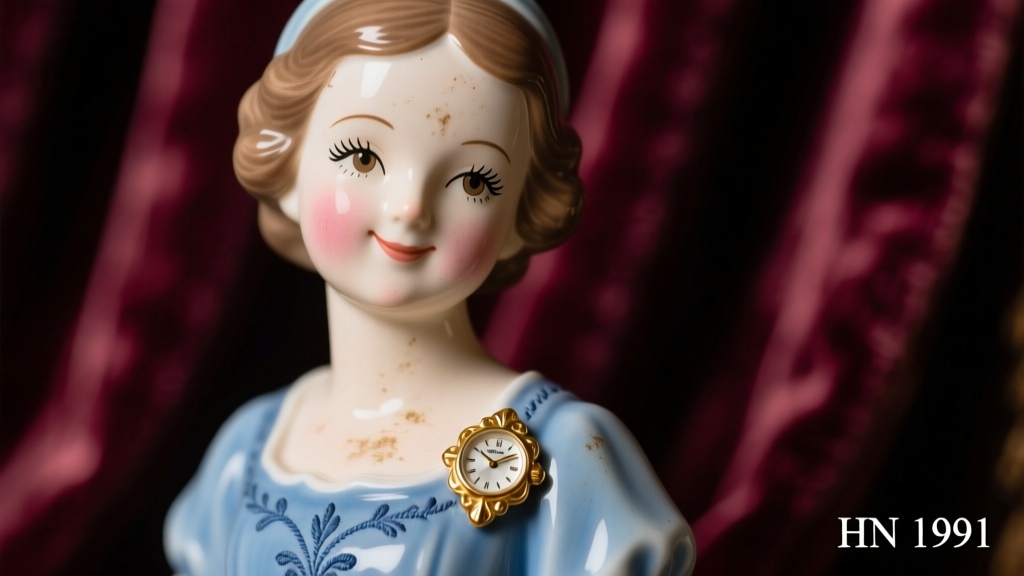
Royal Doulton Figurine 'Country Lass' HN 1991: Provenance, Design, and Collectibility
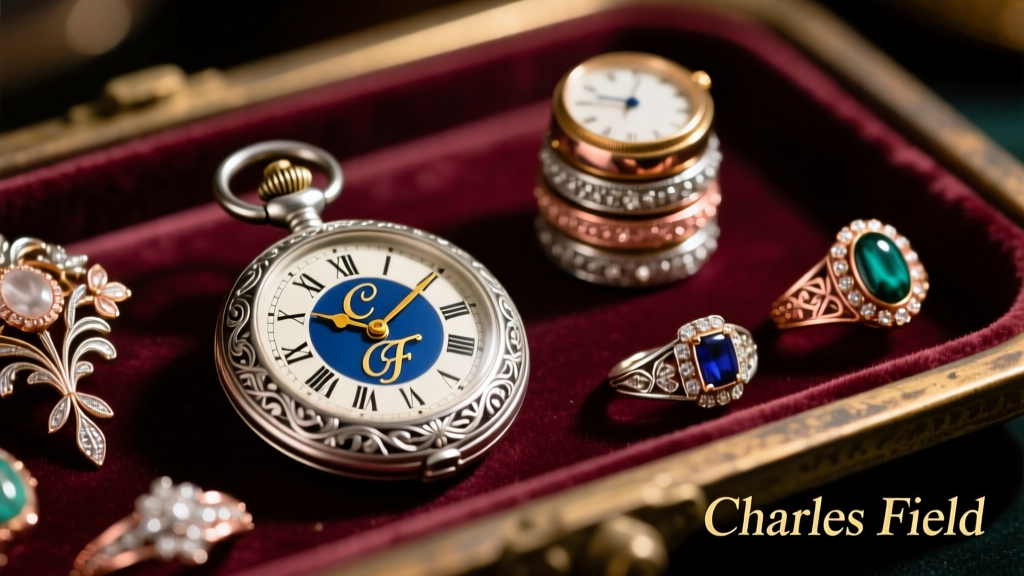
Charles Field: The Forgotten Master of British Art Deco Horology and Jewelry Design
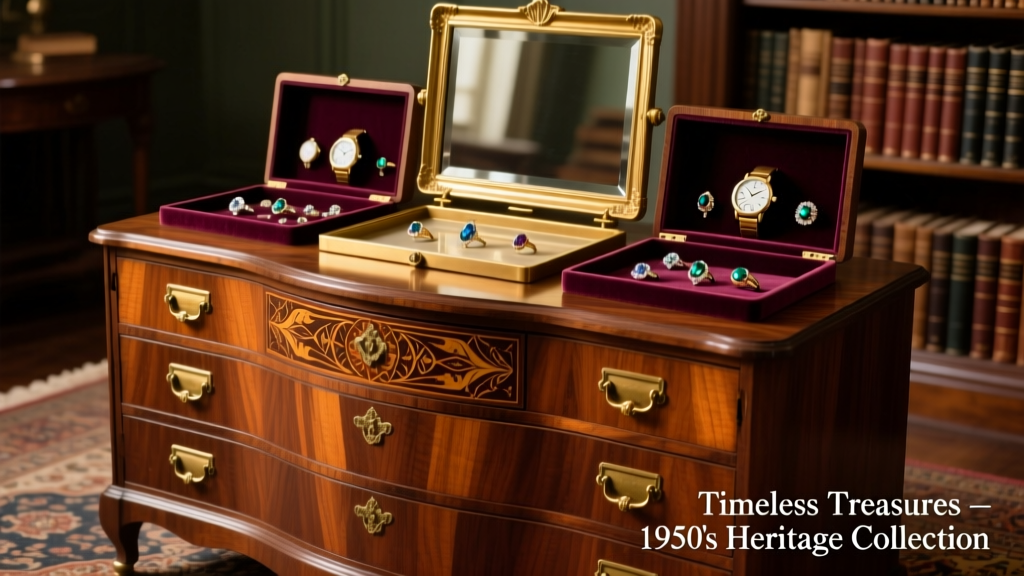
Furniture Chest Lifetime: A Critical Appraisal of the 2-Small-4-Graduated-Drawers Swivel Mirror (68 × 30 Inches)
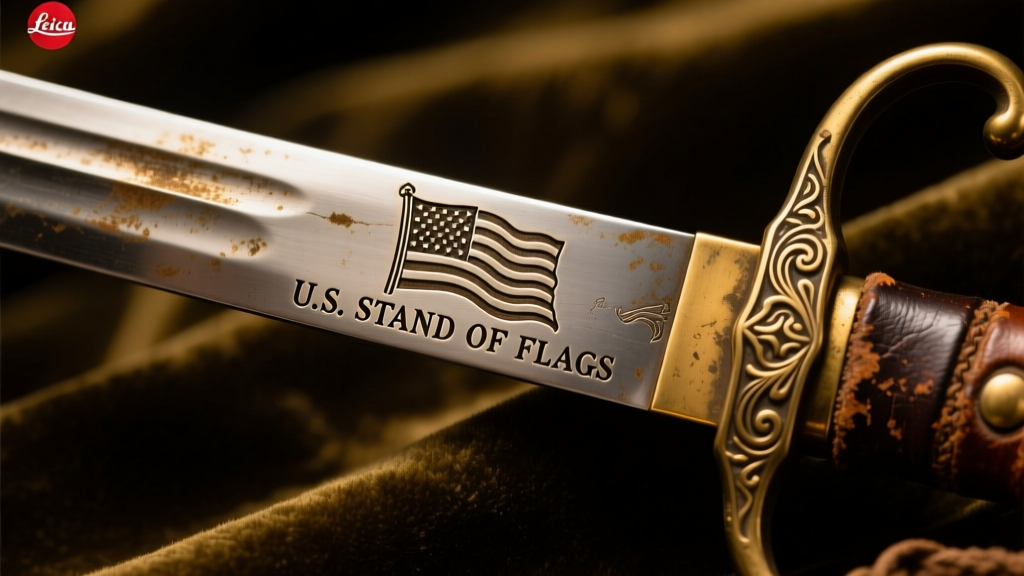
U.S. Foot Officers’ Swords: Scabbards, the 'Stand of Flags' Blade Inscription, and Brass Hilts — A Collector’s Reference Guide
The Disneyana Cookie Jar Genie: A Collector’s Guide to the 1970s Royal Doulton Figural Masterpiece
Hampshire Vase: Matte Blue Glaze Cylindrical Form (7¼ × 4 in) — A Mid-Century Ceramic Landmark
Lot 1132693: A 1948 Patek Philippe Ref. 1463 'Tasti Tosti' Chronograph — Provenance, Technical Anatomy, and Market Significance