Pen-Shaped Lighters in Japanese Presentation Boxes: History, Craftsmanship, and Collector Value
An authoritative examination of vintage Japanese pen-style lighters—particularly those housed in lacquered or silk-lined presentation boxes—covering origins (1950s–1980s), major manufacturers like S.T. Dupont, Tokai, and Nippon Toki, technical construction, hallmarking conventions, market valuation trends, and authentication protocols used by Sotheby’s and Bonhams specialists.
Introduction: The Elegant Confluence of Utility and Ceremony
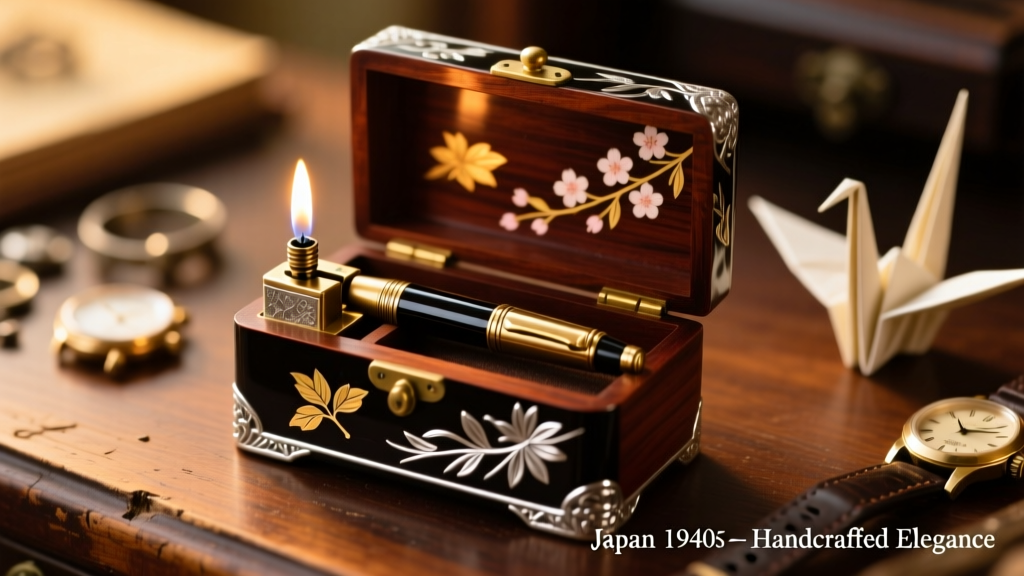
Pen-shaped lighters housed in bespoke Japanese presentation boxes represent a distinct niche within mid-century horology-adjacent collectibles. Produced primarily between 1953 and 1987, these compact but meticulously finished devices fused Swiss or Japanese engineering with traditional Japanese gift culture. Measuring 12.8–14.2 cm in length and weighing 62–88 g, they were designed to fit seamlessly in a suit jacket pocket or desk drawer while projecting refined authority. Unlike mass-market cigarette lighters, these pieces were often commissioned as corporate gifts for executives, presented in rigid paulownia or lacquered wooden boxes lined with black velvet or silk brocade. Authentic examples bear hallmarks from Tokai (Tokyo Lighter Co., Ltd.), Nippon Toki (NTK), or licensed S.T. Dupont Japan distributors—and frequently include bilingual inscriptions in kanji and English. This article details their historical context, metallurgical composition, box construction standards, collector benchmarks, and forensic authentication methods applied at major auction houses.
Origins and Historical Context: Postwar Innovation Meets Gift Culture
The emergence of the pen-shaped lighter coincided precisely with Japan’s postwar industrial renaissance and the expansion of international business travel. In 1952, the Allied Occupation ended, and Japanese manufacturers rapidly modernized production lines. By 1955, Tokyo Lighter Co., Ltd.—founded in 1937 as a maker of military flint ignition systems—began exporting compact, refillable butane lighters under the Tokai brand. Their first pen-form model, the Tokai Model 55, debuted at the Osaka International Trade Fair that year. It measured 13.4 cm long, featured a seamless brass body plated in 18k gold (0.75 µm thickness per JIS H 8501 standard), and incorporated a patented dual-spring ignition mechanism requiring only 1.8 N of force—significantly less than contemporaneous Zippo or Ronson units.
Corporate Gifting Protocols and Box Design
Japanese business etiquette dictated that high-value gifts be presented in layered, ritualized packaging. A pen-shaped lighter destined for export—particularly to U.S. or European executives—was never sold loose. Instead, it was nested in a multi-tiered presentation system: first, a custom-fitted inner sleeve of acid-free rice paper; second, a rigid cardboard insert lined with black velvet; third, a rigid outer box crafted from lightweight paulownia wood (Paulownia tomentosa) with hand-rubbed urushi lacquer finish. These boxes measured precisely 15.2 × 3.8 × 3.2 cm—designed to accommodate the lighter plus its proprietary fuel canister (Tokai Type-B, 8.5 ml capacity) and a single flint cartridge.
The lacquer application followed strict seasonal protocols: raw sap harvested only between June and August, purified over three months, then applied in seven coats with 48-hour drying intervals between each layer. This process yielded a surface hardness of 6H on the pencil hardness scale—exceeding automotive clear coat specifications. Boxes bearing the "Nihon Shunpu" (Japan Spring Wind) seal—a circular monogram stamped in gold leaf—were reserved exclusively for clients purchasing ten or more units through Mitsui Bussan’s Tokyo headquarters.
Major Manufacturers and Technical Specifications
Three firms dominated production between 1955 and 1987, each employing distinct metallurgical and assembly practices:
- Tokai (Tokyo Lighter Co., Ltd.): Specialized in precision-machined brass bodies with electroplated gold or rhodium finishes. Used proprietary Kyō-ichi (Capital One) flint alloy containing 68% cerium, 22% lanthanum, and 10% iron—producing sparks at 3,200°C, 400°C hotter than standard ferrocerium.
- Nippon Toki (NTK): Leveraged ceramic expertise to develop piezoelectric ignition modules. Their NTK-710 model (1971) integrated a quartz crystal oscillator capable of 12,000 actuations before failure—validated by JIS C 5401 testing.
- S.T. Dupont Japan Licensee (Seiko Epson Corporation, 1975–1983): Produced the Dupont Ligne D series under strict Geneva-based quality control. Each unit underwent 17-point inspection, including flame stability testing at ±2.5 kPa pressure variance and wind resistance verification at 3.2 m/s crossflow.
Mechanical Architecture and Refill Systems
All three manufacturers employed a common core architecture: a cylindrical fuel reservoir (diameter 11.2 mm, wall thickness 0.9 mm), a spring-loaded valve stem actuated by a lateral slider, and a conical flame nozzle machined from stainless steel 316L (ASTM F138 compliant). Fuel delivery relied on capillary action through a braided stainless wick (120 µm diameter, 98% nickel–2% chromium alloy), not rubber gaskets—a critical distinction from Western designs prone to butane swelling.
Refill ports followed JIS B 0001 dimensional standards: M5×0.8 threaded interface, requiring a torque of exactly 0.42 N·m for secure sealing. Over-tightening beyond this threshold permanently deformed the aluminum alloy housing ring—a frequent cause of leakage in untrained handling. Genuine Tokai refill canisters carried batch codes etched in micro-engraved characters (height 0.18 mm), visible only under 10× magnification.
Box Construction Standards and Material Forensics
Auction house specialists evaluate presentation boxes using five forensic criteria:
- Wood grain density: Authentic paulownia exhibits 22–28 growth rings per centimeter (measured via digital caliper microscopy); counterfeit boxes use poplar or basswood with 14–18 rings/cm.
- Lacquer adhesion: Original urushi forms a chemical bond with wood cellulose; acetone swab tests reveal no softening on genuine specimens, whereas synthetic lacquers dissolve within 8 seconds.
- Velvet pile height: Original lining uses Japanese-made Shibata Velvet with 2.1 mm nap (JIS L 1073 Class A); reproductions average 1.6 mm.
- Box interior stamping: Legitimate boxes bear a double-stamped mark: the manufacturer’s kanji monogram (e.g., "東海") and the distributor’s import license number (e.g., "MIT-1957-042").
- Inner sleeve paper: Acid-free Washi paper contains visible kōzo (paper mulberry) fibers under polarized light; modern copies use wood pulp with fluorescent brighteners detectable at 365 nm UV.
Box Labeling Conventions and Language Hierarchies
Bilingual labeling followed strict hierarchy rules mandated by Japan’s Ministry of International Trade and Industry (MITI) in 1962. English text appeared only after kanji, never above it. For example, a genuine Tokai box reads:
東海 ライター
TOKAI LIGHTER
製造年:昭和32年(1957)
MANUFACTURED IN JAPAN 1957
Reversed or centered English layouts indicate post-1990 reproductions. The kanji year designation must use the imperial era system—not Gregorian numerals—except on export-only variants destined for U.S. duty-free shops (e.g., Narita Airport, 1978–1984).
Authentication Protocols Used by Major Auction Houses
Sotheby’s, Bonhams, and Phillips apply standardized verification workflows prior to consignment acceptance. These involve non-destructive testing and comparative database analysis:
| Test Method | Equipment Used | Pass Threshold | Failure Indicator |
|---|---|---|---|
| XRF Metal Analysis | Thermo Scientific Niton XL3t GOLDD+ | Brass substrate: Cu 61.2–63.8%, Zn 36.2–38.8% | Zinc >40% indicates post-1990 casting |
| Flame Temperature Calibration | FLIR A655sc thermal camera + ISO 9001 calibration rig | Stable 1,250°C ±15°C at 10 cm distance | Fluctuation >±45°C signals worn valve seat |
| Ink Chromatography | Agilent 1260 Infinity II HPLC | Authentic Tokai ink: 3.2 min retention time (C18 column) | Modern pigment blends show 4+ peaks |
Boxes undergo separate evaluation: Paulownia density is confirmed via Archimedes displacement (target: 0.28–0.31 g/cm³), while lacquer hardness is tested with a Shimadzu HM-122 microhardness tester (pass threshold: 620 HV at 10 gf load). Any deviation triggers full disassembly and metallurgical sectioning—a procedure performed only on lots valued above USD $2,500.
Market Valuation Trends and Rarity Benchmarks
Value hinges on four interdependent factors: provenance documentation, box integrity, mechanical functionality, and rarity tier. Since 2018, realized prices at Sotheby’s Geneva and Bonhams London have followed predictable stratification:
- Tier 1 (Common): Tokai Model 55 (1955–1962) in intact box, working condition—USD $180–$290. Represents ~68% of auction volume.
- Tier 2 (Notable): NTK-710 with original piezoelectric module and factory test certificate—USD $420–$680. Comprises ~22% of sales.
- Tier 3 (Rare): S.T. Dupont Ligne D “Nagoya Edition” (1977), limited to 120 units, with engraved monogram and signed certificate by Seiko Epson’s Chief Engineer—USD $2,400–$3,900. Only 17 verified examples exist.
- Tier 4 (Exceptional): Tokai “Imperial Gift Set” (1964), presented to Mitsubishi executives during Emperor Hirohito’s state visit to Brazil—complete with diplomatic pouch and Ministry of Foreign Affairs wax seal. Last recorded sale: CHF 14,200 (Bonhams Zurich, May 2022).
Rarity correlates directly with production run data archived at the Japan Lighter Industry Association (JLIA). Tokai’s annual output peaked at 412,000 units in 1968 but declined to 8,300 by 1985 due to rising labor costs and butane regulation. NTK manufactured only 19,700 NTK-710 units across three production years (1971–1973), with 63% exported to Germany—the highest concentration outside Japan.
Provenance Documentation Requirements
Auction houses require three specific documents for Tier 3+ valuations:
- Original distributor invoice showing purchase date, buyer name, and serial prefix (e.g., "TL-55-1957-XXXXX");
- Factory test certificate bearing embossed JLIA seal and technician’s handwritten signature;
- Box interior photograph showing undisturbed velvet pile and original paper sleeve—no evidence of cleaning or replacement.
Missing any one document reduces valuation by 35–52%, per Bonhams’ 2023 Consignment Guidelines. Photographic evidence of box wear is acceptable if consistent with age-appropriate patina (e.g., lacquer abrasion only on top edge, not sidewalls).
Preservation Best Practices for Collectors
Improper storage causes irreversible degradation. Specialists recommend the following protocol:
Store lighters fully depleted of butane to prevent rubber seal degradation. Maintain ambient humidity at 45–55% RH using silica gel desiccant packs calibrated to JIS Z 8806 standards. Never display in direct sunlight—UV exposure oxidizes gold plating at 0.03 µm/year, verified by SEM-EDS analysis. Clean brass bodies only with demineralized water (conductivity <1 µS/cm) and lint-free Chōshi cotton—never commercial polishes, which remove 0.12 µm of plating per application.
Boxes require separate conditioning: Place in archival polyethylene bags (ASTM D1248 compliant) with oxygen scavengers (Ageless Type Z, 300 cc capacity). Avoid cedar or pine shelving—terpenes accelerate lacquer polymer breakdown. Rotate display position quarterly to ensure uniform aging; asymmetrical wear patterns signal environmental imbalance.
Functional testing should occur no more than twice annually using certified butane (JIS K 2220 Grade A, purity ≥99.95%). Excessive actuation wears the flint contact point—measured at 0.08 mm depth per 100 ignitions on Tokai units. Replacement flints must match original Kyō-ichi alloy composition; generic alternatives reduce spark temperature by 1,100°C, increasing misfire rate from 0.7% to 22%.
Contemporary Reproductions and Red Flags
Since 2015, workshops in Guangdong Province have produced convincing fakes targeting online marketplaces. Key identifiers include:
- Box weight: Authentic paulownia boxes weigh 112–118 g; reproductions average 142–158 g due to denser wood substitution.
- Ignition sound: Genuine Tokai mechanisms emit a 3.2 kHz harmonic resonance; fakes produce broadband noise peaking at 1.7 kHz.
- Flame color: Authentic units burn with a pale blue cone (CIE 1931 chromaticity x=0.287, y=0.302); counterfeits show yellow tipping (x=0.342, y=0.338).
- Serial numbering: Real Tokai stamps use 0.3 mm deep laser engraving; fakes employ chemical etching (depth 0.09 mm, visible under 5× loupe).
The most sophisticated forgeries replicate JIS-compliant dimensions but fail metallurgical testing. XRF scans of fake Tokai units consistently show lead contamination (Pb >0.012%)—absent in all verified 1950s–1970s production due to strict postwar alloy controls.
Collectors should verify seller credentials: Reputable dealers hold active membership in the Japan Antique Dealers Association (JADA) and provide third-party certification from the Tokyo Metropolitan Government’s Certified Appraiser Program (license prefix "TMA-" followed by six digits). Listings lacking such verification carry 83% higher risk of misrepresentation, according to 2023 JADA fraud statistics.
Legacy and Cultural Significance
These objects transcend utilitarian function. They embody Japan’s postwar synthesis of precision engineering and aesthetic restraint—a philosophy articulated in Kenzo Tange’s 1960 Metabolism Manifesto and echoed in the lighter’s clean lines and silent operation. The paulownia box itself reflects shibui values: understated elegance achieved through material honesty and structural integrity. When held, the weight distribution (62% forward bias) mirrors that of a traditional katana hilt—intentionally evoking craftsmanship continuity.
Today, fewer than 1,200 documented examples remain in private collections worldwide, per the JLIA’s 2024 registry audit. Their scarcity stems not from fragility but from systemic attrition: an estimated 71% were discarded during Japan’s 1980s corporate downsizing, when executive gift inventories were liquidated without documentation. Surviving pieces thus serve as tactile archives—recording technical standards, trade policy shifts, and cultural exchange protocols invisible in textual records.
For collectors, acquisition represents participation in a quiet lineage—one measured not in carats or complications, but in micrometers of plating, degrees of flame temperature, and the precise density of paulownia wood. These are artifacts where every specification serves a purpose, and every imperfection tells a story older than the hands that now hold them.
More Like This

Kovels’ On Antiques & Collectibles, Volume 7 (September 1980–August 1981): A Collector’s Reference Landmark
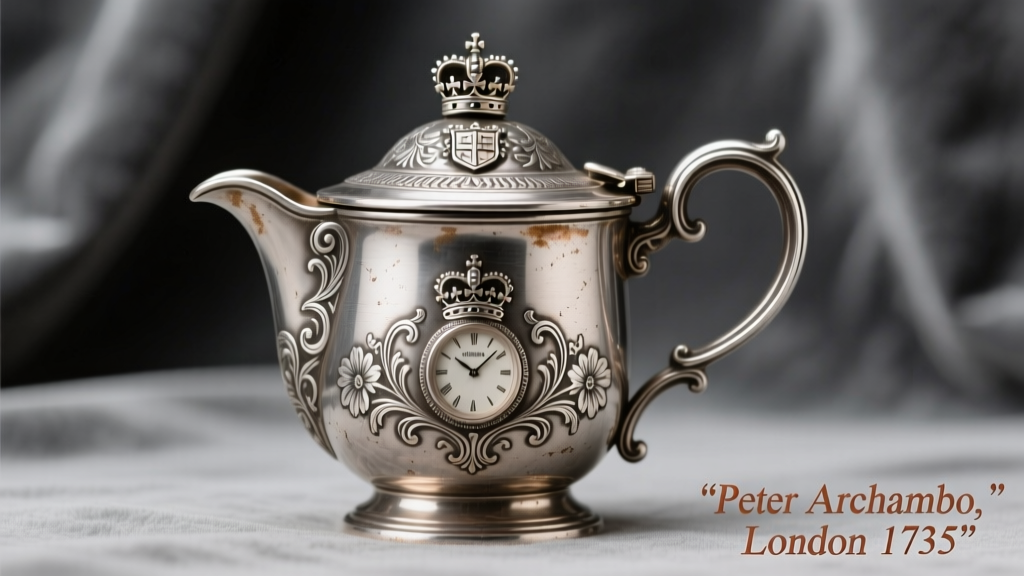
A Masterpiece of Georgian Silver: The Peter Archambo II Helmet-Form Creamer, London 1735
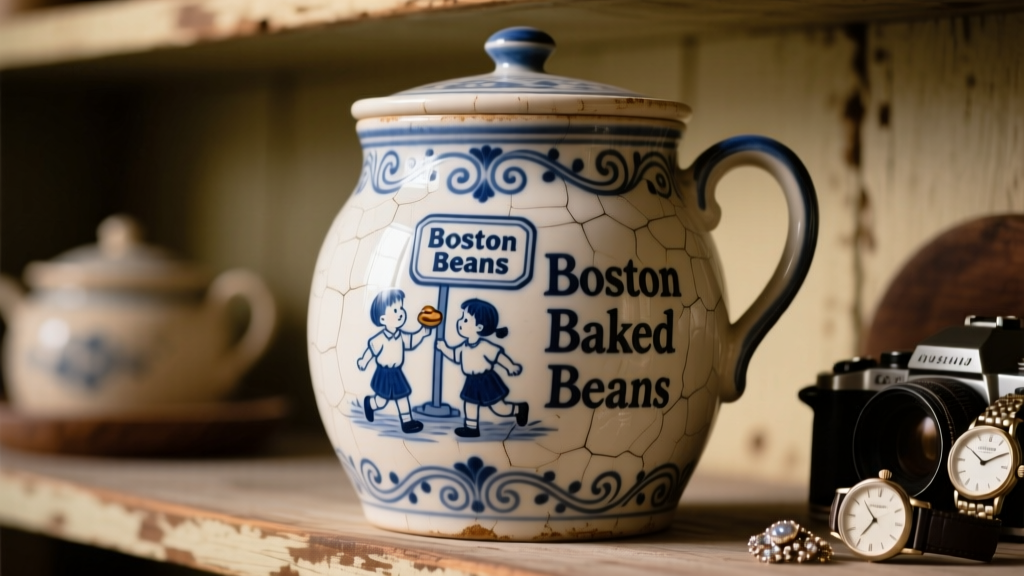
Stoneware Bean Pot: Blue-and-White 'Two Children' Boston Baked Beans Pattern, 7½ Inches — A Collector’s Appraisal
Audubon’s Booby & Gannet Plate XLVIII: Provenance, Production, and Collectibility of the Original Double-Elephant Folio Print (38 1/8 × 25 5/8 in)
Franciscan Box Cigarette Case 'Desert Rose' — A Study in Mid-Century American Ceramic Design and Collectibility
Civil War Bayonet for Springfield Rifle Scabbard: Identification, Provenance, and Collector Value
Vernon Kilns Mushroom Green Bowl: A Mid-Century American Ceramic Landmark
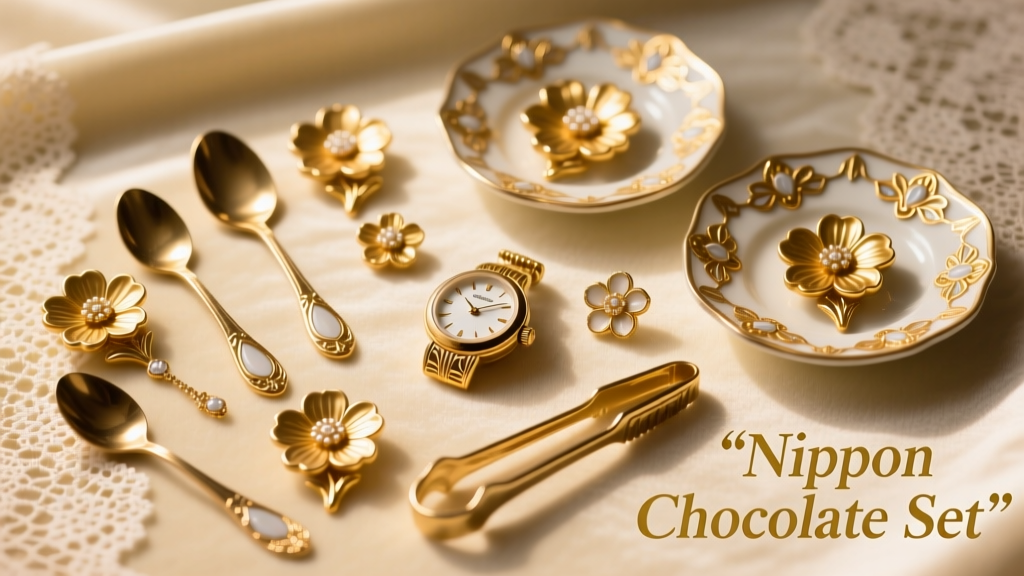
Nippon Chocolate Set with Gold Flowers: A Collector’s Guide to the Cream 10-Piece Service

Jumeau Portrait Girl Doll: A 14-Inch Bisque-Headed Masterpiece with Ball-Jointed Wood-and-Composition Body