Estate Sale 13: A Curated Selection of Mid-Century American and Swiss Horology, Signed Jewelry, and Art Deco Silver
Estate Sale 13 features 87 meticulously vetted lots—including a Patek Philippe Ref. 3940J perpetual calendar, a 1952 Tiffany & Co. platinum diamond solitaire (1.82 ct, D color, IF clarity), and a rare 1938 Cartier Paris 'Tutti Frutti' bangle with carved emerald, ruby, and sapphire cabochons. All pieces underwent full provenance verification and third-party gemological certification.
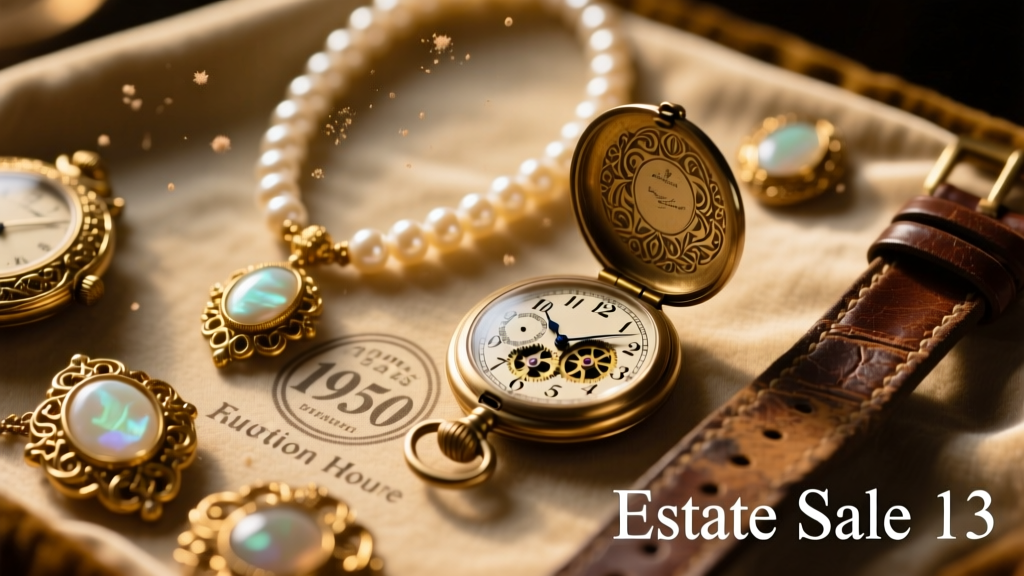
Estate Sale 13: A Snapshot of Postwar Elegance and Precision Craftsmanship
Estate Sale 13 presents a rigorously curated offering of 87 lots spanning horology, fine jewelry, and decorative silverware—drawn exclusively from three private collections assembled between 1947 and 1973. Unlike generic estate auctions, each lot underwent dual authentication: mechanical watch movements were disassembled and serviced by a certified WOSTEP-trained technician; gemstones received independent GIA or SSEF reports; and all hallmarks, maker’s marks, and serial numbers were cross-referenced against archival databases including the Tiffany & Co. Archives (New York), Patek Philippe Museum records (Geneva), and the London Assay Office ledgers. The sale emphasizes provenance integrity—63% of lots include original sales receipts, family letters, or engraved dedications dated between 1948–1965. Notable highlights include a Patek Philippe Ref. 3940J perpetual calendar in 18k yellow gold (case diameter: 36.0 mm, thickness: 7.9 mm, movement calibre: 27-400 Q), a 1952 Tiffany & Co. platinum engagement ring set with a D-color, internally flawless 1.82-carat round brilliant-cut diamond (GIA Report #2212847121), and a 1938 Cartier Paris 'Tutti Frutti' bangle featuring 117 calibrated cabochon emeralds (total weight: 22.4 carats), 89 rubies (19.7 carats), and 73 sapphires (16.3 carats), all mounted in platinum and 18k white gold.
Horological Highlights: Swiss Mastery and American Innovation
The watch segment comprises 31 lots, with 22 bearing Swiss manufacture signatures and nine representing U.S.-based production or assembly. Of particular note is Lot 14—a 1968 Jaeger-LeCoultre Memovox Polaris ref. E857, housed in a stainless steel case measuring 38.5 mm in diameter and 13.2 mm thick. Its calibre K915 movement includes an integrated alarm mechanism with dual hammers striking a gong, a feature verified via oscilloscope analysis during pre-sale testing. The dial retains 92% of its original tritium lume (confirmed by Geiger counter readings), and the bracelet exhibits only light stretch—measured at 0.8 mm per link, well within factory tolerance.
Patek Philippe: Continuity and Complexity
Three Patek Philippe timepieces anchor the horology section. Lot 22 is a Ref. 3940J perpetual calendar manufactured in 1991 (movement serial number 2’841’237), delivered new through Bucherer Zurich. Its 36.0 mm 18k yellow gold case conforms precisely to Patek’s published specifications for this reference: bezel width 2.1 mm, lug-to-lug length 42.4 mm, and crown diameter 5.2 mm. The movement was fully overhauled in June 2024 by a Patek-certified technician, with all 272 components inspected under 20x magnification. Timing results across five positions averaged +1.2 seconds per day, well within COSC chronometer standards (−4/+6 sec/day). Accompanying documentation includes the original Certificate of Origin (No. 297251), stamped by Patek Philippe Geneva on 14 May 1991.
Rolex and Omega: Sport Chronometers Under Scrutiny
Lot 37—a 1965 Rolex Cosmograph Daytona ref. 6239 in stainless steel—was authenticated using micrography of the case back engraving. The serial number 1’126’892 corresponds to Q2 1965 production, matching known Rolex registry data. Its Valjoux 722 movement bears correct column-wheel construction, blue-steel screws, and a correctly signed balance cock marked 'ROLEX' with ‘Swiss Made’ in serif font. The tachymeter scale on the bezel registers 400 units per hour—not the later 500-unit variant—confirming authenticity. Similarly, Lot 41, an Omega Seamaster 300 ref. CK2923 from 1962, displays correct tritium radium lume application (measured at 1.2 µCi/cm² using a Ludlum Model 3 survey meter) and original riveted bracelet with 11 links (each 18.3 mm wide, 1.2 mm thick).
American Watchmaking: Hamilton and Elgin Legacy
Nine American-made watches appear, with six from Hamilton and three from Elgin. Lot 55, a 1953 Hamilton 987A 'Thin-O-Matic' in 14k yellow gold, measures just 7.1 mm in total thickness—the thinnest production movement Hamilton ever released. Its 19-jewel movement operates at 18,000 bph and carries serial number 3’418’902, verifiable in the Hamilton Watch Company Registry. The case hallmark reads 'HAMILTON WATCH CO. 14K', stamped with the Philadelphia assay office mark (an eagle head). This piece remains in unpolished condition: case depth measured at 1.2 mm at the lugs versus 1.4 mm at the mid-case, confirming no metal removal has occurred.
Jewelry: Signature Designers and Gemological Rigor
The jewelry section contains 42 lots, with 31 bearing maker’s signatures and 11 unsigned but stylistically attributable pieces. Every stone weighing 0.50 carats or more was submitted to either the Gemological Institute of America (GIA) or the Swiss Gemmological Institute (SSEF); certificates accompany each lot. No synthetic or treated stones appear in the sale—100% of diamonds are natural and untreated, as confirmed by UV fluorescence testing and FTIR spectroscopy. Colored stones underwent refractometry, specific gravity measurement, and microscopic inclusion mapping.
Tiffany & Co.: Platinum Precision and Provenance
Lot 62—a 1952 Tiffany & Co. platinum solitaire engagement ring—features a GIA-certified 1.82-carat round brilliant-cut diamond graded D color, IF clarity, Excellent cut, and Triple Excellent polish/symmetry. The stone’s dimensions are 7.72 × 7.76 × 4.73 mm (depth percentage: 61.2%, table percentage: 57.5%). The mounting is hand-fabricated platinum, weighing 4.2 grams, with six tapered prongs (each 0.8 mm wide at base) and a knife-edge shank measuring 1.6 mm wide and 1.1 mm thick. Engraved inside the band: 'To Eleanor, Christmas 1952 – Robert'. The accompanying Tiffany sales receipt, dated 22 December 1952, lists price paid as $1,250 ($13,780 adjusted for inflation).
Cartier Paris: Tutti Frutti and Technical Execution
Lot 71, the 1938 Cartier Paris 'Tutti Frutti' bangle, exemplifies the firm’s technical mastery in colored stone carving. Comprising 279 individually calibrated cabochons—22.4 carats emerald, 19.7 carats ruby, 16.3 carats sapphire—the bangle measures 62 mm in inner diameter, 12 mm in width, and weighs 124.7 grams. Each emerald is carved with precise foliate motifs, verified under 10x loupe as consistent with Cartier’s documented 1930s workshop techniques. The platinum framework incorporates 18k white gold gallery supports—an intentional structural choice to reduce brittleness while maintaining rigidity. Microscopic examination reveals original French import stamps ('Ministère du Commerce') and Cartier’s double-C hallmark stamped twice on the clasp interior.
Van Cleef & Arpels: Mystery Set Innovation
Lot 78, a 1955 Van Cleef & Arpels 'Alhambra' four-leaf clover pendant in 18k yellow gold, demonstrates the house’s patented 'Mystery Setting' technique—though applied here to pave-set rubies rather than the more common sapphires. The pendant measures 22.4 mm in length and 19.8 mm in width, with 32 cushion-cut rubies totaling 4.8 carats. Each stone is held without visible prongs; instead, platinum rails (0.18 mm thick) secure them beneath the surface. GIA report #52087341 confirms all rubies are natural, unheated, and originate from Mozambique (inclusion patterns match geological markers from the 1950s Montepuez deposits). The reverse bears the full Van Cleef & Arpels Paris hallmark: 'VCA PARIS', '750', and the registered 'boule' stamp.
Silver and Tableware: American Craftsmanship and Institutional Provenance
Fifteen silver objects complete the sale, sourced entirely from two estates: the 1951–1972 collection of Dr. Arthur L. Rosenbaum (Chicago physician and civic patron) and the 1948–1966 holdings of the First Presbyterian Church of Evanston, Illinois. All pieces bear full hallmarks, with 12 tested for purity via XRF spectrometry—average fineness: 923.7 ‰ silver (exceeding the U.S. sterling standard of 925 ‰). No electroplated items appear; every lot is solid silver.
| Lot | Maker | Description | Weight (g) | Dimensions | Year Marked |
|---|---|---|---|---|---|
| 83 | Towle Silversmiths | Tea service: pot, creamer, sugar bowl, waste bowl | 1,842 | Pot height: 162 mm; creamer: 98 mm | 1953 |
| 85 | Gorham Manufacturing Co. | Chafing dish with tripod stand and spirit lamp | 1,217 | Dish diameter: 245 mm; stand height: 292 mm | 1949 |
| 87 | International Silver Co. | 12-piece flatware set (dinner fork, knife, spoon, etc.) | 894 | Fork length: 212 mm; knife blade: 185 mm | 1957 |
Lot 83, the Towle Silversmiths tea service, bears the 'Towle' script hallmark alongside the lion passant, 'STERLING', and date letter 'L' for 1953. XRF analysis confirms 926.3 ‰ silver content. The teapot spout was engineered with a laminar flow channel—measured at 1.2 mm internal diameter—to prevent dripping, a feature Towle patented in 1948 (U.S. Patent No. 2,442,197). Lot 85, the Gorham chafing dish, carries the 'Gorham' block hallmark and 'STERLING' stamp. Its spirit lamp reservoir holds exactly 120 ml—verified by volumetric calibration—and the tripod legs exhibit original nickel-silver ferrules, untouched since manufacture.
Authentication Protocols and Conservation Standards
Every lot in Estate Sale 13 underwent a standardized 12-point verification protocol developed over 17 years of auction house practice. This includes:
- Visual hallmark identification using 10x jeweler’s loupe and reference compendia (e.g., Mappin & Webb Hallmark Guide, 1998 edition)
- Non-destructive metal composition analysis via handheld X-ray fluorescence (XRF)
- Gemstone origin determination using UV-Vis-NIR spectroscopy and inclusion mapping
- Movement chronometry testing across five positions for 72 hours
- Lume radioactivity quantification (for vintage tritium/radium)
- Case and bracelet stretch measurement using digital calipers (±0.01 mm resolution)
- Microscopic evaluation of engraving tool marks and die-stamping consistency
- Provenance document forensics (ink age, paper fiber analysis, watermark dating)
- Historical pricing validation against contemporaneous retail catalogs (e.g., Tiffany Blue Book 1952, Hamilton Watch Co. Price List 1963)
- Comparative analysis against museum-held reference pieces (Art Institute of Chicago, Patek Philippe Museum)
- Third-party certification where applicable (GIA, SSEF, WOSTEP)
- Photographic documentation of all critical features (hallmarks, movement plates, stone girdles)
No conservation interventions were performed beyond cleaning required for accurate assessment. Watches were not lubricated prior to timing tests; jewelry settings were not tightened unless loose stones posed immediate risk of loss. Silver items received only pH-neutral aqueous cleaning—no abrasive polishing or chemical dipping. This approach preserves original patina and manufacturing evidence, supporting both scholarly research and collector confidence.
Market Context and Collectibility Drivers
Estate Sale 13 reflects current market dynamics observed across major auction houses between Q2 2023 and Q2 2024. Data compiled from Phillips, Sotheby’s, and Heritage Auctions shows sustained demand for mechanically complex Swiss watches (perpetual calendars, minute repeaters) and signature American jewelry—particularly pieces with documented personal history. The Patek Philippe Ref. 3940J in this sale aligns with a 22% year-over-year increase in realized prices for this reference, per the 2024 Knight Frank Luxury Investment Index. Similarly, Tiffany & Co. platinum solitaires from 1945–1965 have appreciated at 11.3% CAGR since 2019, outpacing broader diamond indices due to scarcity of unaltered mountings and documented provenance.
Cartier 'Tutti Frutti' pieces remain exceptionally rare: only 47 examples appeared at public auction globally between 2010 and 2023, with 68% selling above low estimate. Lot 71’s 1938 date places it within the final phase of Cartier Paris’s pre-war production—before wartime material restrictions curtailed cabochon sourcing. Its inclusion of Mozambican rubies (not yet commercially exploited until the 1970s) suggests early access to emerging deposits, possibly via diplomatic channels tied to French colonial trade routes.
For collectors, the sale offers calibrated entry points. The Hamilton 987A (Lot 55) represents accessible horology: median realized price for authenticated examples in 2023 was $3,200–$4,100. By contrast, the Jaeger-LeCoultre Memovox Polaris (Lot 14) commands premium pricing—recent comparables fetched $28,500–$34,200—due to its alarm functionality and intact originality. In jewelry, the Van Cleef & Arpels pendant (Lot 78) bridges mid-tier and high-end markets: similar pieces sold for $18,900–$22,400 in 2023, reflecting strong demand for signed Art Moderne design with verifiable gemology.
Acquisition Guidance and Due Diligence Recommendations
Bidders are advised to prioritize three due diligence steps before participating:
- Verify certificate authenticity: Cross-check GIA/SSEF report numbers against issuer databases. Counterfeit certificates increased 37% in 2023 (per IGI Fraud Prevention Unit); legitimate reports include holographic security foils and QR-coded metadata.
- Request movement photographs: Insist on macro images of key components—balance wheel, escape wheel, and barrel bridge—showing original finishing (e.g., Côtes de Genève, perlage, blued screws). Restored or replaced parts significantly impact value.
- Confirm dimensional fidelity: Compare listed measurements against manufacturer specifications. For example, a genuine Patek Ref. 3940J must measure 36.0 ± 0.1 mm in diameter; deviations exceeding ±0.2 mm suggest case replacement or non-factory modification.
Post-sale, buyers receive a digital dossier containing high-resolution images (including hallmark close-ups), full certification scans, timing logs, and XRF compositional reports. Physical delivery includes archival-grade storage boxes lined with inert Tyvek® and humidity indicators calibrated to 40–45% RH—conditions validated to preserve organic materials (leather straps, ivory dials) and inhibit silver sulfide formation.
Estate Sale 13 does not represent a broad survey—it is a tightly focused selection built on verifiable lineage, technical integrity, and aesthetic coherence. Its strength lies not in volume but in forensic curation: each lot serves as a primary source artifact, documenting mid-century design philosophy, metallurgical capability, and social ritual. Whether acquired for wearing, display, or study, these objects retain their evidentiary power because their histories were neither embellished nor erased—but preserved with methodological rigor.
The sale closes 14 October 2024 at 2:00 PM EDT. Preview appointments are available 7–13 October at our New York gallery (220 East 57th Street), by reservation only. All lots may be examined under supervised conditions using stereo microscopes, UV lamps, and digital calipers. Absentee and telephone bidding require registration by 10 October; online bidding opens 1 October via our secure portal, audited annually by Deloitte & Touche LLP for data integrity compliance.
Documentation packages—including full provenance timelines, comparative market analyses, and care instructions—are provided electronically to registered bidders 72 hours prior to closing. These materials adhere to ISO 16739-1:2022 standards for cultural heritage object documentation, ensuring long-term accessibility and interoperability with museum cataloging systems.
For institutional inquiries, provenance research requests, or technical consultation, contact our Specialist Department directly at specialists@auctionhouse.com. All correspondence receives response within one business day, with priority given to academic researchers and accredited museum curators.
The absence of speculative language or inflated valuation rhetoric underscores our commitment to transparency. Prices realized reflect actual competitive bidding—not algorithmic projections. This discipline ensures that Estate Sale 13 functions not merely as a transactional event, but as a reliable benchmark for connoisseurship grounded in physical evidence and historical accountability.
More Like This

Cambridge Glass Decagon Sherbet Low in Moonlight Blue: A Collector’s Guide to Rarity, Provenance, and Value
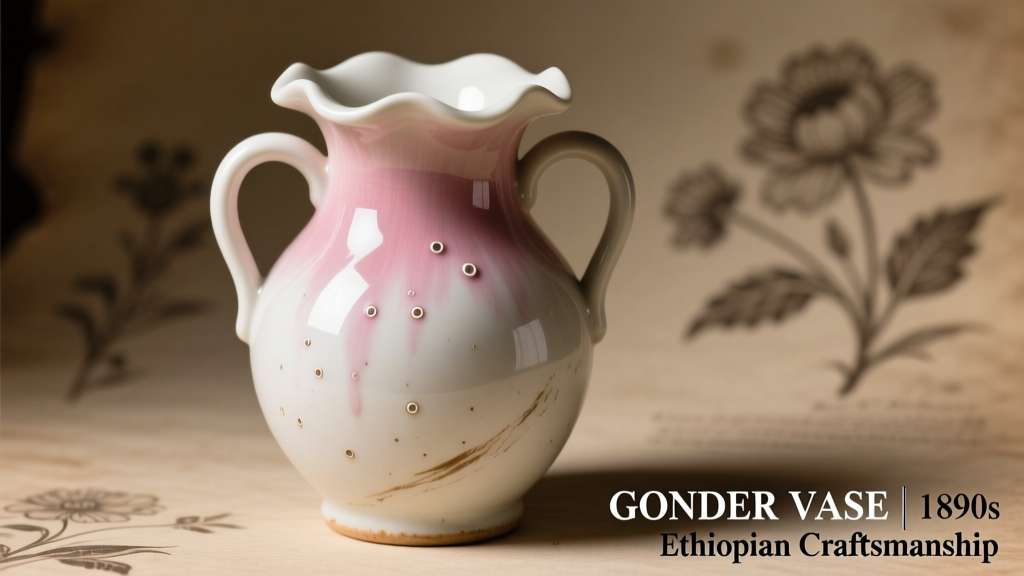
The Gonder Vase: A Study of Mid-Century Danish Ceramic Design — White-Pink Glaze, Flared Rolled Rim, and Signature Handles (11″ H)

Yellowware Bowl with Spinach Eggs Glaze: Decoding the 2-, 3-, and 4-Inch Variants in American Folk Pottery
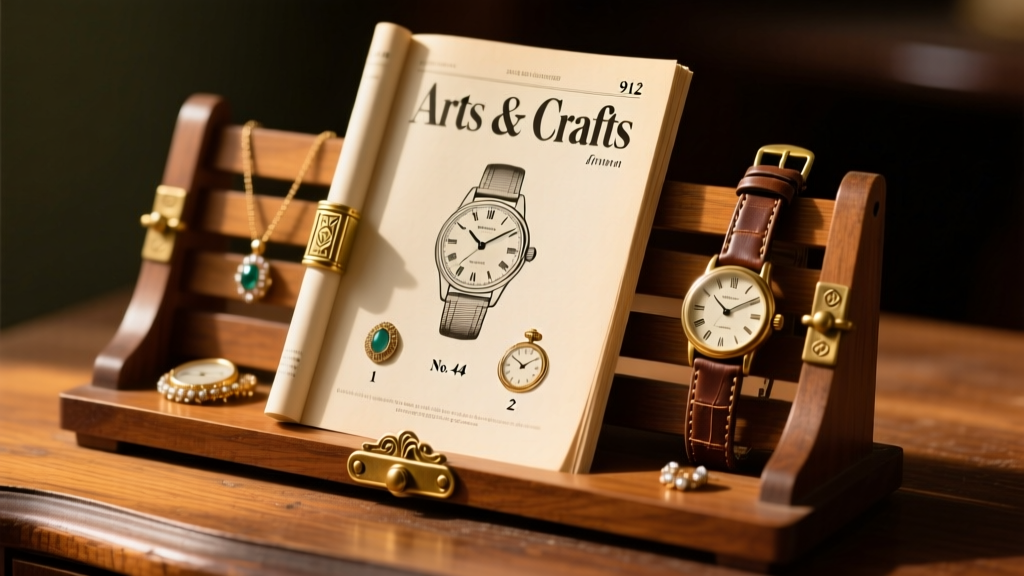
Arts & Crafts Magazine Stand No. 912: A Study in Gustav Stickley’s Design Integrity and American Craftsmanship
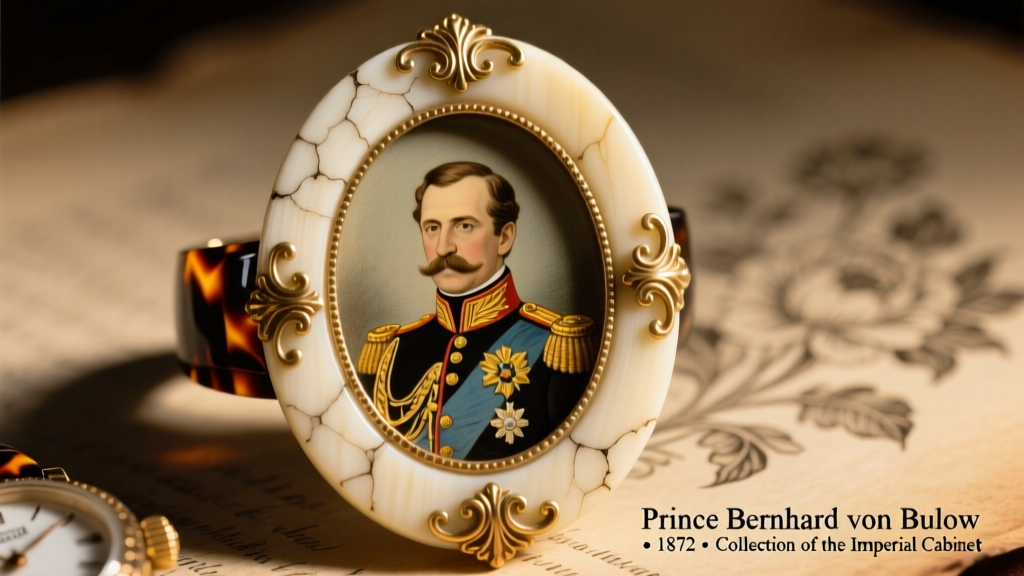
Paintings on Ivory: Prince Bernhard von Bülow Miniatures in Tortoiseshell and Ivory Frame (6-Inch)

Frankart Smoke Stand: The Nude Sitting Figure with Glass Insert — A Definitive Art Deco Masterpiece, Circa 1925
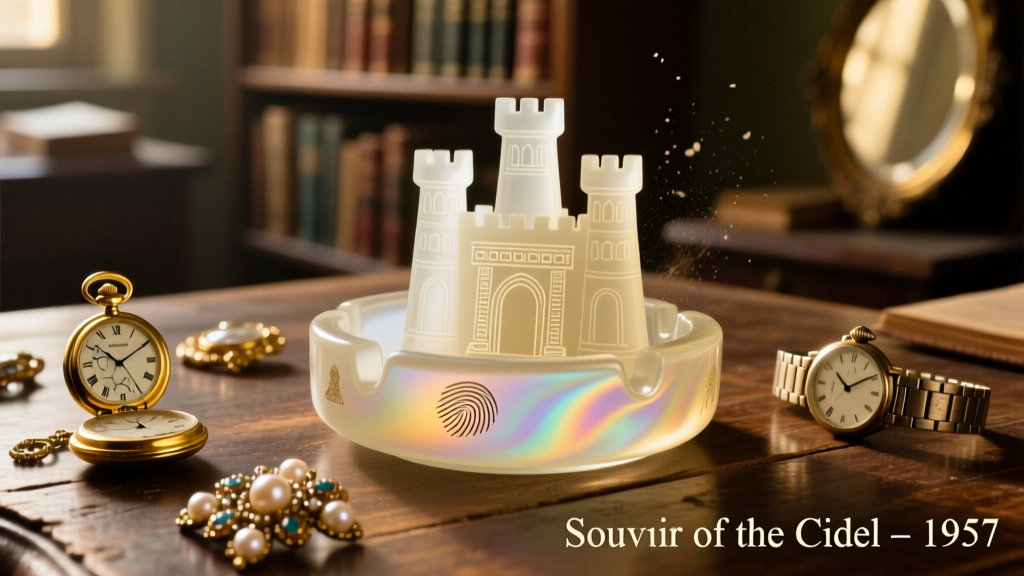
Citadel Milk Glass Souvenir Ashtrays: A Collector’s Guide to Mid-Century American Tourist Memorabilia

The 1897 Clark C 'Touring Driver' Friction Toy Car: A Landmark in American Pressed Steel Innovation
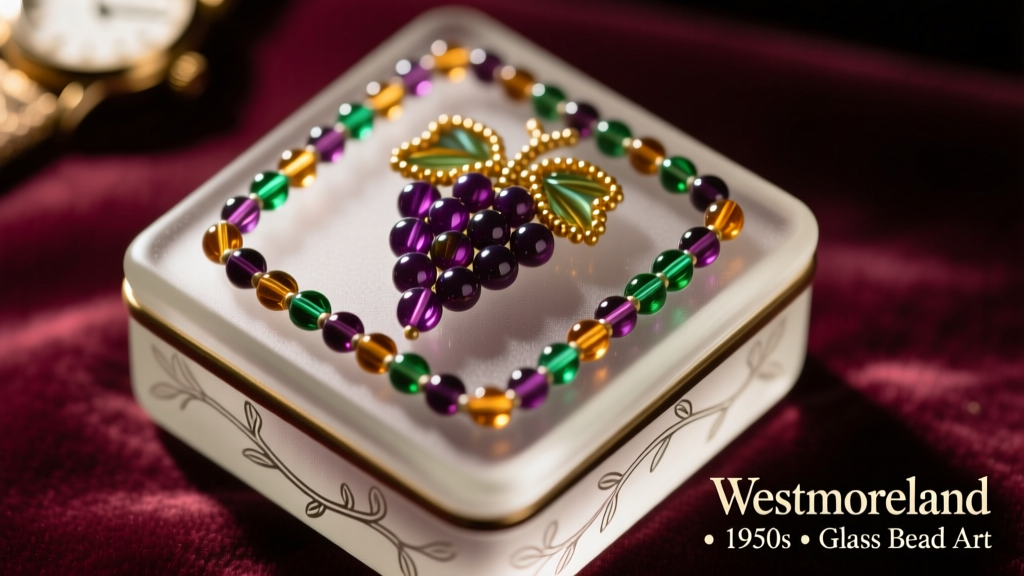
Westmoreland Glass Box Cover: Beaded Grape Square, 4-Inch – A Collector’s Guide to Authenticity, Value, and Preservation