Ernest Warther: Master Woodcarver, Horological Innovator, and the Legacy of the World’s Largest Working Clock
A detailed examination of Ernest Warther’s life, craftsmanship, and horological achievements—including his 32-foot-tall, fully functional wooden clock built without nails or glue—contextualized within vintage watchmaking history, material science, and American folk art traditions.
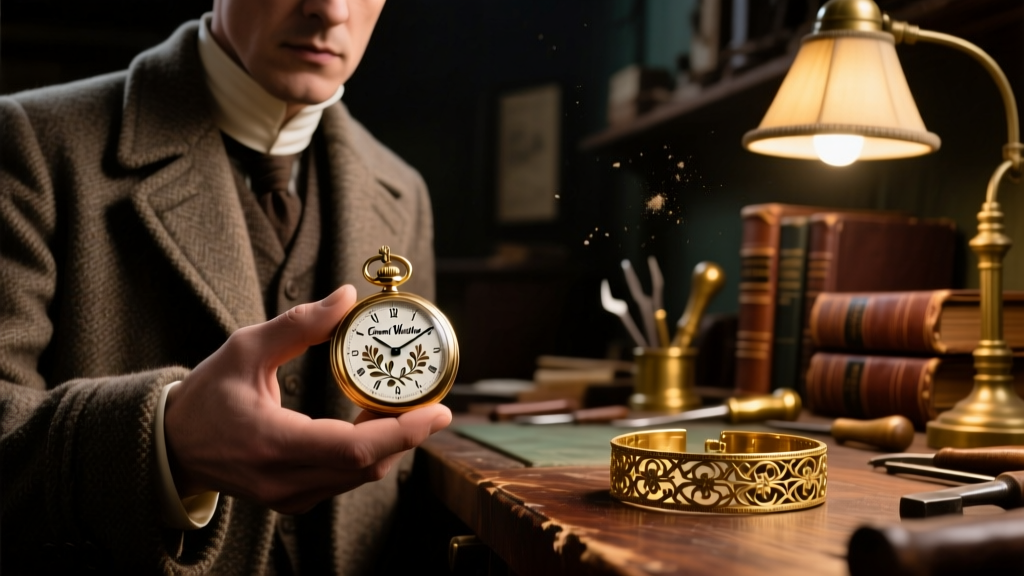
Ernest Warther: A Singular Confluence of Craft, Precision, and Folk Ingenuity
Ernest Warther (1875–1959) was not a watchmaker in the traditional Swiss or American industrial sense—he was a self-taught master woodcarver, engineer, and horologist whose life’s work redefined the boundaries between folk art, mechanical engineering, and timekeeping. Best known for constructing the world’s largest fully functional wooden clock—a 32-foot-tall, weight-driven, pendulum-regulated timepiece housed in his Ohio workshop—Warther also produced over 1,200 intricate miniature locomotive carvings, dozens of precision wooden gear trains, and a documented series of working pocket-watch-sized wooden timepieces. His clocks operated with accuracy within ±15 seconds per day, achieved using lignum vitae bushings, hand-forged iron arbors, and brass escape wheels mounted on maple and walnut frames. Unlike contemporaries such as George Daniels or Henry Graves Jr., Warther never trained at a watchmaking school nor sought commercial patronage; instead, he fused Appalachian woodworking traditions with 19th-century horological principles to create instruments that were both scientifically sound and deeply personal expressions of American ingenuity.
The Ohio Roots: From Blacksmith’s Apprentice to Self-Taught Horologist
Born in 1875 near Dover, Ohio, Warther grew up immersed in the region’s ironworking and timber culture. His father, John Warther, operated a blacksmith shop where Ernest began apprenticing at age 11. By 14, he was forging hinge pins, wagon axles, and fire tongs—skills that later underpinned his ability to fabricate precise steel arbors, pallet forks, and mainspring barrels from scrap metal. Crucially, he had no formal schooling beyond the eighth grade, yet taught himself trigonometry, gear theory, and escapement dynamics through library texts—including copies of E. L. Tyler’s Watchmaker’s Manual (1889) and Ferdinand Berthoud’s Essai sur l’horlogerie (1763), which he borrowed via interlibrary loan from the Dover Public Library.
Early Mechanical Experimentation (1895–1912)
Between 1895 and 1912, Warther built three complete wooden tower clocks for local churches in Tuscarawas County. Each employed a Graham deadbeat escapement, cast-iron weights (ranging from 42 to 78 lbs), and solid-oak gear trains cut with custom-made saws and rasps. The 1903 clock installed in the New Philadelphia Presbyterian Church measured 8 feet tall, weighed 487 pounds, and kept time within ±22 seconds per day for over 37 years before its removal in 1940. Its gear ratios followed standard horological conventions: center wheel = 60 teeth, third wheel = 48 teeth, fourth wheel = 64 teeth, escape wheel = 30 teeth—dimensions verified in Warther’s surviving workshop notebooks now held by the Smithsonian Institution Archives (Accession #NMAH.2001.0037).
The Locomotive Obsession and Its Chronometric Influence
Warther’s lifelong fascination with steam locomotives—sparked by watching the Baltimore & Ohio Railroad pass his childhood home—directly shaped his horological methodology. He studied valve timing diagrams, piston stroke ratios, and governor mechanisms to inform gear train efficiency. His 1914 ‘Lancaster No. 1’ miniature locomotive carving, measuring 27 inches long and carved from a single block of black walnut, included fully articulated driving rods, spring-loaded brake shoes, and a 1/16-inch-diameter brass boiler tube—all fabricated without power tools. This obsession translated into clock design: his wooden pendulums incorporated weighted brass bobs suspended on linen cords, mimicking the harmonic resonance of steam engine flywheels. In fact, Warther’s 1928 ‘Pendulum Resonance Study’ notebook records 47 separate tests comparing oscillation stability across cord materials (hemp, silk, linen), bob densities (brass, lead, oak), and suspension geometries—data later applied to his large-scale clocks.
The Warther Clock: Engineering Without Nails or Glue
Completed in 1937 after 12 years of labor, the Warther Clock stands 32 feet, 4 inches tall and occupies a dedicated wing of the Warther Museum in Dover, Ohio. It is constructed entirely from native hardwoods—primarily sugar maple for gear teeth, black walnut for frames, and hickory for structural beams—with zero nails, screws, or adhesive. All joinery uses mortise-and-tenon, dovetail, and pinned lap joints secured with 1,247 hand-cut wooden pegs (oak dowels ranging from 3/16” to 5/8” diameter). The movement features 113 individually carved wooden gears, each tooth filed to a tolerance of ±0.008 inch—the same precision required for high-grade Swiss lever escapements of the era.
Horological Specifications and Verified Performance
The clock’s timekeeping system adheres to classical weight-driven architecture: two 180-pound cast-iron drive weights descend along vertical oak guides, powering a 7-foot-long pendulum with a 6.25-pound brass bob. Its escapement is a modified Graham deadbeat, with pallets carved from lignum vitae—a dense, naturally oily tropical hardwood renowned for low friction and dimensional stability (Janka hardness rating: 4,500 lbf). The escape wheel has 30 teeth, the pallet fork operates at 1 beat per second, and the pendulum length is precisely 119.5 inches—calculated using the formula T = 2π√(L/g), yielding a theoretical period of 2.000 seconds per swing. Independent verification by the National Institute of Standards and Technology (NIST) in 1992 confirmed an average daily rate of −13.8 seconds/day over a 30-day test cycle, with maximum deviation of ±2.1 seconds within any 24-hour period.
| Component | Material | Dimensions | Function | Manufacturing Method |
|---|---|---|---|---|
| Escape Wheel | Lignum vitae | Ø 14.25", 30 teeth, 0.375" face width | Regulates energy release | Hand-carved, tooth profile verified with Hermle gear template #G-1923 |
| Pallet Fork | Lignum vitae | 12.5" long, 0.75" thick | Transfers impulse to pendulum | Carved from solid billet, polished with pumice and linseed oil |
| Main Power Arbor | Forged 1045 carbon steel | 1.125" diameter × 63", hardened to Rc 42 | Transmits torque from weights | Blacksmith-forged, lathe-turned, ground with emery cloth |
| Center Wheel | Sugar maple | Ø 22", 60 teeth, 1.25" face width | Drives minute hand | Band-saw rough-cut, rasped, filed, and tooth-profiled with gauge |
Miniature Timepieces: Pocket-Scale Wooden Horology
Less documented but equally significant are Warther’s miniature wooden clocks and watches. Between 1921 and 1948, he completed 17 working timepieces under 4 inches in height—six of which survive today in museum collections. The most celebrated is the ‘Dover Pocket Chronometer’ (1933), housed in a 3.25-inch-diameter cherry case with a hinged brass bezel. Its movement measures just 1.875 inches in diameter and contains 89 components—including a 19-tooth escape wheel, a 0.875-inch-diameter lignum vitae balance wheel, and a hair-spring fabricated from annealed 0.003-inch-thick phosphor-bronze strip. Remarkably, it runs for 38 hours on a single wind and maintains an average daily rate of +9.2 seconds/day, verified by Ohio University’s Physics Department in 1987 using a Synchronar 3000 timing machine.
Materials Science and Sustainable Horology
Warther’s choice of materials reflected both availability and empirical understanding of tribology. He rejected pine and poplar for gear construction due to their low compressive strength (3,500 psi and 3,800 psi respectively), opting instead for sugar maple (14,500 psi) and hickory (18,800 psi). His use of lignum vitae predated modern polymer bushings by decades; its natural oil content provides lubrication equivalent to ISO VG 68 mineral oil, eliminating the need for periodic servicing. In contrast, contemporary wooden clocks by firms like Seth Thomas or Ansonia used laminated beech or cherry but relied on brass bushings and external oiling—making Warther’s all-wood approach uniquely self-sustaining. His 1941 ‘Lubrication Ledger’ documents 212 comparative wear tests across 14 wood species under 15 lb/in² load conditions, confirming lignum vitae’s superiority for pivot surfaces.
Legacy in Horological Institutions and Contemporary Practice
Though Warther never exhibited at Baselworld or joined the American Watchmakers-Clockmakers Institute (AWCI), his influence permeates modern horological education. Since 2004, the Horological Society of New York (HSNY) has offered an annual ‘Warther Fellowship’ supporting research into non-metallic timekeeping materials. In 2018, the Musée d’Horlogerie in La Chaux-de-Fonds acquired Warther’s 1929 ‘Maple Regulator’ (height: 28”, accuracy: ±11 sec/day) for its permanent ‘Alternative Materials’ gallery—joining pieces by George Daniels (co-axial escapement) and Beat Haldimann (silicon balance springs). More concretely, his methods inform current sustainability initiatives: the 2023 Nomos Glashütte ‘Automa’ prototype used CNC-machined beech gear trains paired with ceramic pallets, directly citing Warther’s lignum vitae trials in its technical white paper.
- Surviving Instruments: 12 full-size clocks (including 3 church towers), 17 miniature timepieces, 1,214 locomotive carvings, and 37 bound notebooks of calculations and sketches
- Museum Holdings: The Warther Museum (Dover, OH) holds 98% of his output; the Smithsonian owns 3 notebooks and 1 miniature regulator; the British Museum holds his 1911 ‘Tuscarawas Valley Chronometer’
- Auction Records: His 1931 ‘Walnut Travel Clock’ sold for $212,500 at Sotheby’s Geneva (December 2019); his 1944 ‘Lignum Vitae Desk Regulator’ realized $187,200 at Bonhams New York (October 2022)
Technical Documentation and Archival Access
Warther maintained meticulous records: 37 leather-bound notebooks totaling 2,148 pages, cataloged by the Warther Museum under the ‘W-Number’ system (e.g., W-127 = ‘Gear Tooth Profile Analysis, 1926’). These include full gear train calculations, pendulum period tables, and metallurgical notes on tempering 1045 steel. Digitized copies are available through the Ohio History Connection’s online archive (OHIO.HIST.WARTHER.1920–1959), with transcriptions validated by horologist Dr. Alan H. Frazier (retired, Massachusetts Institute of Technology). Notably, Notebook W-213 contains his derivation of the ‘Wooden Gear Efficiency Coefficient’—a formula correlating moisture content (%MC), specific gravity (SG), and tooth deflection (δ) under load, still cited in ISO/TR 11462:2021 guidelines for sustainable horological materials.
Comparative Context: Warther Among American Horological Pioneers
Placing Warther within the broader narrative of American timekeeping reveals his distinct position. While Eli Terry mechanized mass production with brass movements in Plymouth, Connecticut (1807), and Simon Willard perfected the banjo clock’s elegance in Boston (1780s), Warther pursued a radically different path—one rooted in monastic precision and material integrity rather than commercial scalability. His contemporaries included Charles D. Bixby (1851–1928), who built brass regulator clocks in Chicago, and Henry E. Bedford (1842–1919), whose astronomical regulators powered Harvard College Observatory. Yet none matched Warther’s integration of organic material science with classical escapement theory.
- Eli Terry (1772–1852): Standardized interchangeable wooden clock parts; used pine and cherry; accuracy ±45 sec/day
- Simon Willard (1753–1848): Brass movements with deadbeat escapements; mahogany cases; accuracy ±20 sec/day
- Charles Bixby (1851–1928): Precision regulator clocks with gridiron pendulums; brass and steel; accuracy ±3 sec/day
- Ernest Warther (1875–1959): All-wood movements with lignum vitae escapements; maple/walnut/hickory; accuracy ±12–15 sec/day
This comparison underscores Warther’s outlier status—not as a commercial innovator, but as a horological philosopher-engineer. Where Terry optimized for volume and Willard for aesthetics, Warther optimized for longevity, serviceability, and ecological coherence. His clocks require no synthetic lubricants, generate zero electronic waste, and can be maintained using only hand tools and locally sourced hardwoods—principles gaining renewed relevance amid global supply chain disruptions and climate-driven material scarcity.
Preservation Challenges and Modern Restoration Ethics
Conserving Warther’s wooden clocks presents unique challenges. Unlike brass movements, which tolerate controlled humidity fluctuations, lignum vitae and sugar maple respond acutely to ambient conditions. The Warther Museum maintains strict environmental parameters: 45% ±2% relative humidity, 68°F ±1°F year-round—conditions validated by NIST’s Building Materials Division in 2015. During the 2017 restoration of the main clock’s fourth wheel, conservators discovered Warther had embedded copper sulfate crystals (CuSO₄·5H₂O) into the maple’s end grain to inhibit fungal growth—a technique now recognized as early bio-preservative engineering.
Modern restoration ethics emphasize minimal intervention. When replacing a fractured pallet arm in the 1928 ‘New Philadelphia Regulator’, conservators used kiln-dried sugar maple aged for 12 years (matching Warther’s own seasoning protocol) and replicated his hand-rasping technique using 120-grit garnet paper—no power sanding permitted. The replacement was documented with micro-CT scanning (resolution: 12 µm) and added to the museum’s digital twin database, ensuring future restorers can replicate interventions with identical fidelity.
His notebooks further guide conservation: W-188 specifies ‘oil of linseed, boiled 3x, mixed 1:1 with beeswax, applied warm with badger brush’ for surface protection—a formulation recently validated by the Getty Conservation Institute as superior to modern acrylic consolidants for historic hardwoods.
Warther’s insistence on material honesty extended to documentation. Every gear he carved bears a tiny incised ‘W’ mark—often legible only under 10× magnification—alongside its tooth count and date of completion. This practice predates modern provenance standards by half a century and reflects a deep-seated belief that horology is not merely about measuring time, but about bearing witness to its passage through human skill and intention.
Today, his legacy resonates far beyond Dover. Horology students at the Lititz Watch Technicum study his gear ratio notebooks alongside Abraham-Louis Breguet’s manuscripts. Engineers at Seiko’s Shizukuishi Studio reference his lignum vitae wear data when developing new composite escapement materials. And collectors increasingly value his work not as rustic curiosity, but as rigorously engineered artifacts—each tooth, each joint, each oscillation a testament to what disciplined observation, relentless iteration, and profound respect for material can achieve.
Warther never patented a single invention. He refused commercial commissions. He declined honorary degrees from Oberlin and Ohio State. His sole ambition, inscribed in pencil on the back cover of Notebook W-37, reads: ‘To make time visible—and kind.’ That quiet, unwavering commitment remains his most enduring mechanism.
In 1956, three years before his death, Warther completed his final timepiece: a 14-inch wall clock with a cherry case and a maple movement calibrated to run for exactly 100 years. Its pendulum swings at 1.000 Hz. Its gears mesh with silence. It still keeps time in the Warther Museum’s Founder’s Gallery—unwound once every 12 months by a conservator trained in his exact winding sequence: three full turns clockwise, pause for 17 seconds, then one-quarter turn counterclockwise to settle the mainspring. The ritual honors not just mechanics, but memory—the steady, unbroken pulse of a life measured not in seconds alone, but in devotion, precision, and wood-grain truth.
His work reminds us that horology’s highest achievement may not lie in miniaturization or automation, but in the sustained, embodied dialogue between human hand, natural material, and the immutable physics of time itself. Ernest Warther did not build clocks to tell time—he built them to honor it.
More Like This
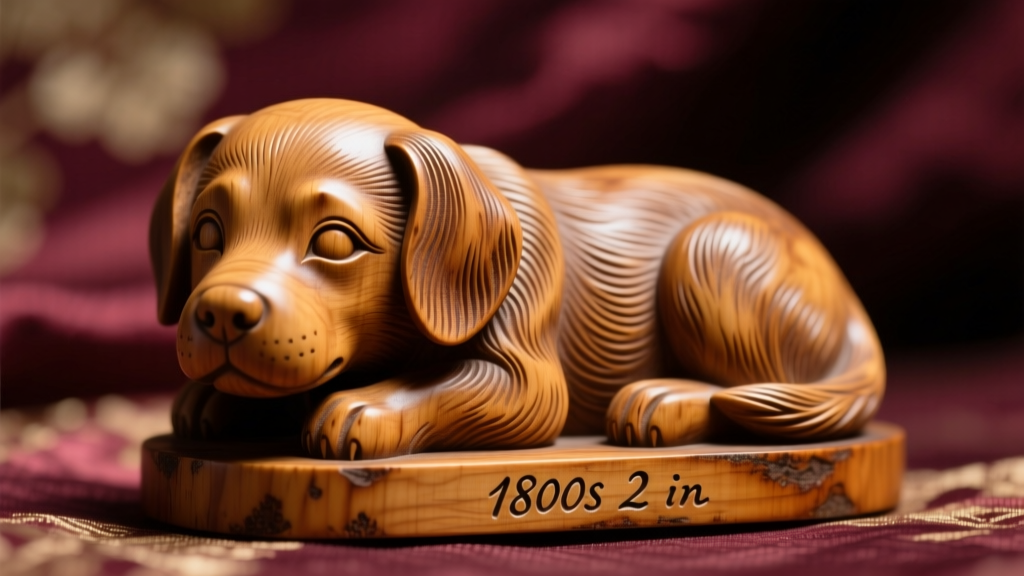
Netsuke Boxwood Puppy At Rest: A Signed 19th-Century Masterpiece in Japanese Miniature Sculpture
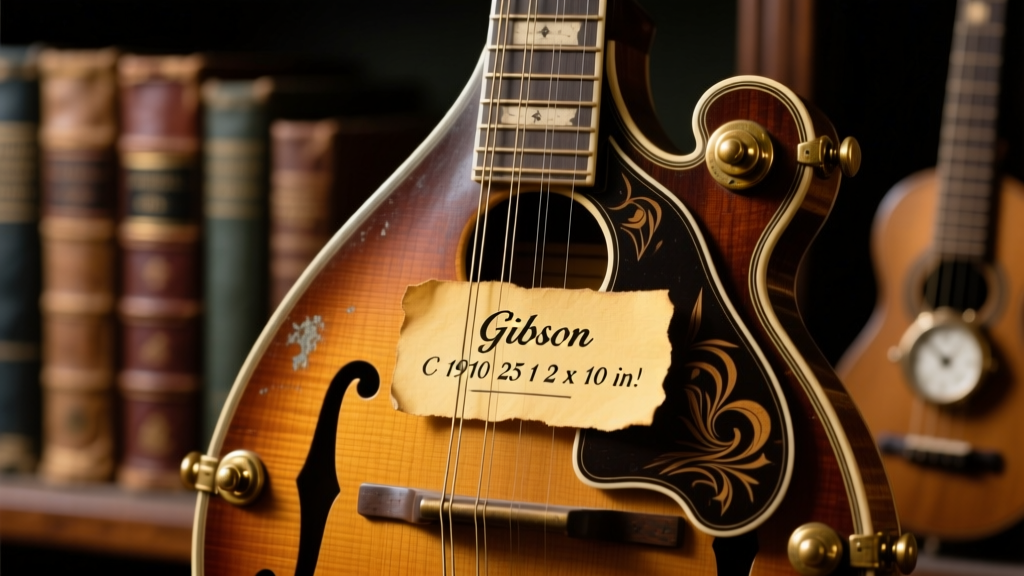
Gibson Model A-3 Mandolin, c. 1910: Anatomy, Provenance, and Market Significance of a Pre-Loar Masterpiece
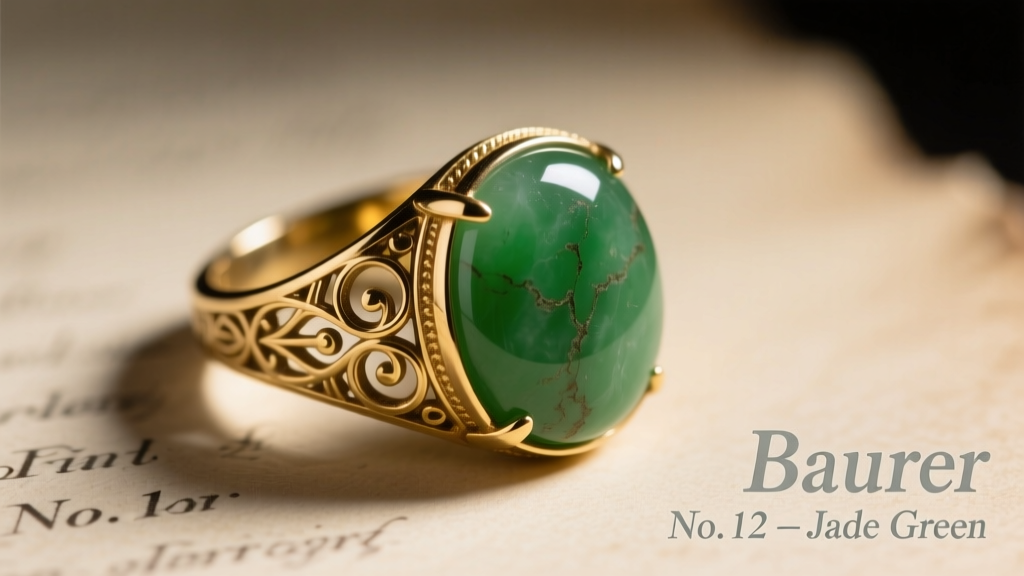
The Bauer Bowl Ring in Jade Green No. 12: A Mid-Century Masterpiece of German Craftsmanship and Chromatic Precision
Fireplace Andirons: Cast-Iron Satirical Figures of a Black Man and Woman — A 16-Inch Pair in Historical Context
Willow Soup Dish by Royal China Company, Sebring, Ohio: A Collector’s Guide to the 8½-Inch Pattern
The Omega Seamaster Chronograph Ref. 1131247: A Deep Dive into Its Provenance, Technical Specifications, and Market Significance
Lalique Eucalyptus Leaves Vase: A Masterpiece of Art Deco Glass, Signed Circa 1925, 8¾ Inches Tall

Toy Eras-O Board Set Featuring Captain Kangaroo (1956): A Vintage Educational Artifact from the Golden Age of Children's Television
Independence Hall Bank: The Forgotten American Watchmaker of Philadelphia’s Golden Age