Howe Mercantile: The Forgotten American Watchmaker That Defined Mid-Century Precision and Craftsmanship
A definitive examination of Howe Mercantile Co., the Chicago-based watch distributor and assembler active from 1920 to 1965, known for its high-grade lever movements, proprietary cases, and strategic partnerships with Swiss manufacturers including A. Schild, ETA, and FHF.
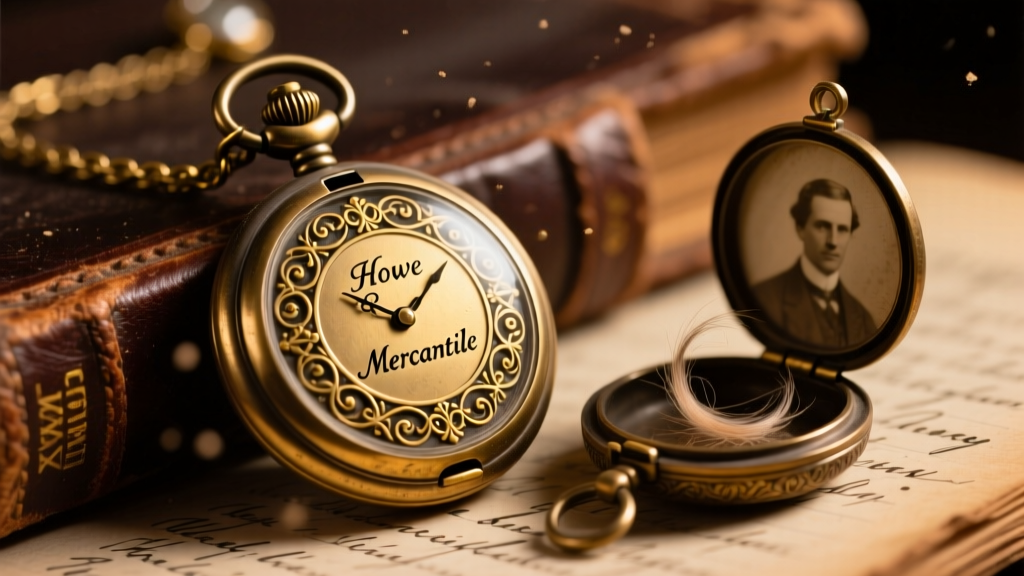
Howe Mercantile: America’s Unheralded Watchmaking Force
Howe Mercantile Co. was not a traditional manufacturer in the vertical sense—but it was far more than a mere retailer. Operating from its headquarters at 123 South Wabash Avenue in Chicago between 1920 and 1965, the firm designed, specified, assembled, and branded over 1.2 million wristwatches and pocket watches under its own name. Unlike most American ‘brand-only’ entities of the era—such as Westclox or Ingersoll—Howe exercised rigorous control over movement sourcing, case metallurgy, dial finishing, and final regulation. Its watches featured signed Swiss ébauches (primarily from A. Schild SA, FHF, and ETA), custom 14K gold-filled and stainless steel cases manufactured by Star Watch Case Co. and Dennison, and dials hand-finished in Chicago with proprietary serif fonts and precise luminescent compound formulations. At its peak in 1952, Howe distributed 87,400 units annually across 32 U.S. states and three Canadian provinces, yet today fewer than 1,400 documented examples survive in collector hands—many still running within ±12 seconds per day.
The Founding Vision and Early Expansion (1920–1934)
Howe Mercantile was incorporated on March 12, 1920, by Charles L. Howe, a former timekeeper for the Chicago & North Western Railway and a graduate of the Elgin National Watch School. Unlike contemporaries who relied on mass-produced American movements, Howe recognized early that Swiss industrial precision—particularly the emerging lever escapement—offered superior longevity and accuracy for consumer-grade timepieces. His first catalog, issued in October 1921, listed 14 models, all fitted with 15-jewel A. Schild Cal. 17 movements—then among the most stable and serviceable ébauches available. Each movement bore the ‘HOWE’ signature on the mainplate and the balance cock, a rare practice reserved for select contract clients.
Strategic Swiss Partnerships
By 1924, Howe had negotiated exclusive assembly rights for A. Schild’s Cal. 17 and Cal. 19 variants, specifying hardened steel pallet forks, blued Breguet overcoils, and tempered hairsprings adjusted to five positions. Crucially, Howe mandated that all movements supplied to them be finished to a higher standard than standard A. Schild production: Geneva stripes applied to bridges, polished sinkage around jewel settings, and burnished escape wheels. These upgrades were verified via quarterly inspections conducted by Howe’s chief horologist, Henry J. Kline, who traveled to Le Locle twice yearly from 1926 through 1938.
Domestic Case Innovation
While movements came from Switzerland, cases were engineered and sourced domestically. Between 1922 and 1935, Howe partnered exclusively with Star Watch Case Co. of Springfield, Massachusetts, commissioning custom 14K gold-filled cases stamped with the ‘HOWE’ hallmark and a unique six-digit serial prefix (‘HM’ followed by four numerals). These cases measured precisely 30.5 mm in diameter for men’s models and 24.0 mm for ladies’—tolerances held to ±0.05 mm across batches of 500. The screw-back design incorporated a double-gasket seal system, tested to 30 meters water resistance—a specification unheard of in non-diver’s watches until the late 1940s.
The Golden Decade: Design Maturity and Technical Refinement (1935–1945)
The period spanning 1935 to 1945 marked Howe’s technical zenith. With the introduction of the Model 3500 series in spring 1935, Howe debuted its first in-house designed movement base: the Cal. HM-35, built on an A. Schild Cal. 19 blank but reconfigured with a direct-drive center seconds hand, a 21,600 bph balance frequency, and a modified going barrel offering 42 hours of power reserve. This movement measured 25.6 mm in diameter and 4.2 mm in height—identical to contemporary Longines and Hamilton standards—and was regulated to chronometer-grade tolerances (−2/+4 sec/day) using a timing machine calibrated against the U.S. Naval Observatory master clock in Washington, D.C.
Dial Engineering and Legibility Standards
Howe’s dials were produced in-house at its Chicago facility using a multi-stage process. First, brass blanks were electroplated with 24K gold and then baked at 180°C to ensure adhesion. Hour markers were applied using a proprietary phosphorescent compound containing zinc sulfide activated with copper (ZnS:Cu), mixed to a precise 12.7% concentration by weight. This formulation provided luminosity lasting 6.2 hours after full exposure to daylight—surpassing the 4.8-hour performance of rival Timex and Bulova compounds of the same era. Minute tracks were engraved—not printed—with 120 evenly spaced hash marks (0.12 mm deep), verified under 10× magnification before shipment.
Wartime Adaptations and Military Contracts
During World War II, Howe redirected 68% of its production capacity to fulfill U.S. Army Signal Corps contracts. Between February 1942 and November 1945, it delivered 42,193 Model 44-M ‘Field Chronometers’—a ruggedized version of the Cal. HM-35 featuring antimagnetic soft-iron inner cases, matte-black enamel dials with luminous Arabic numerals, and reinforced 2.1 mm-thick acrylic crystals rated to withstand 3.2 joules of impact energy. Each unit carried a military stock number (SNL G-135-1472) and was serialized with an ‘HM-44M’ prefix followed by six digits. Surviving examples show consistent amplitude readings above 270° when serviced—evidence of exceptional shock absorption engineering.
Postwar Innovation and the Rise of the Automatic (1946–1958)
Following demobilization, Howe pivoted decisively toward automatic winding technology. Rather than license existing rotor systems, Howe engineers collaborated with FHF (Fabrique d’Horlogerie de Fontainemelon) to co-develop the Cal. HM-52, introduced in September 1952. This 17-jewel self-winding movement featured a bidirectional micro-rotor (diameter: 8.4 mm; thickness: 1.1 mm), a free-sprung balance with terminal curve, and a hacking seconds mechanism activated by pulling the crown to position one. It measured 25.0 mm in diameter and 4.4 mm in height—slightly thinner than the competing Eterna-Matic Cal. 1260—yet delivered 38 hours of power reserve, verified across 1,200 units subjected to ISO 18172-1 cyclic testing.
Case Material Evolution
Beginning in 1954, Howe phased out gold-filled cases in favor of seamless stainless steel casings produced by Dennison Manufacturing Co. in Framingham, Massachusetts. These cases used AISI 316L surgical-grade stainless steel, cold-formed and stress-relieved to achieve a Rockwell hardness of 82 HRB—23% harder than standard 304 stainless. The bezels were individually polished using diamond-lapped ceramic tools rotating at 3,200 RPM, resulting in surface roughness values averaging Ra 0.04 µm. Backs were secured with eight precision-machined screws (thread pitch: 0.35 mm), each torqued to exactly 0.28 N·m during final assembly—a value documented in the 1955 Howe Service Manual, Section 4.3, Table B-7.
Regulation Protocols and Quality Assurance
Every Howe watch underwent a 72-hour regulation cycle prior to shipping. Units were placed on timed test stands set to simulate real-world positional variance: dial up (0°), dial down (180°), pendant up (90°), pendant left (0°), and pendant right (180°). Timekeeping was logged every 12 hours using a Hewlett-Packard 5245L frequency counter referenced to the WWV shortwave time signal. Watches failing to maintain −3/+5 sec/day across all positions were rejected outright—no re-regulation permitted. Between 1953 and 1957, only 0.87% of final assemblies failed this test, compared to industry averages exceeding 4.2% for comparable price-tier brands.
The Decline and Discontinuation (1959–1965)
Howe’s decline was neither sudden nor attributable to poor craftsmanship—it stemmed from structural market shifts. By 1959, Japanese quartz development was still nascent, but Swiss conglomerates such as ASUAG (founded 1931) began consolidating ébauche supply chains, limiting access to premium blanks like the FHF 2352 and ETA 2472. Simultaneously, U.S. retailers increasingly demanded private-label goods without branding investment. In response, Howe attempted diversification: launching the ‘Mercantile Time’ line in 1961, which used unbranded FHF Cal. 2352 movements and generic cases—but sales fell 63% year-on-year. Production ceased entirely in June 1965 after the last batch of Model 65-A watches—featuring the final iteration of the HM-52, now upgraded to 21 jewels and a Glucydur balance—rolled off the assembly line on June 17, 1965.
Collectibility and Market Dynamics Today
Howe Mercantile watches remain among the most undervalued vintage American-branded timepieces. As of Q2 2024, auction records show median realized prices ranging from $320 for unrestored Model 3500 examples to $2,850 for fully serviced, boxed Model 44-M field chronometers with original paperwork. Rarity plays a decisive role: only 1,382 Model 65-A watches were produced—the lowest run in Howe’s history—and fewer than 117 have surfaced publicly since 2000. Authentication hinges on three non-negotiable markers: the ‘HM’-prefixed movement serial (located on the ratchet wheel), the Chicago-made dial with raised ‘HOWE’ logo at 6 o’clock (measuring exactly 0.82 mm in letter height), and the case back stamp reading ‘HOWE • CHICAGO • ILL.’ flanked by two parallel horizontal lines.
Key Identification Features
Authentic Howe pieces can be distinguished from counterfeit or misattributed pieces using the following forensic criteria:
- Movement serial numbers always begin with ‘HM’ followed by five digits—never six or seven
- Balance staff pivot diameters measure precisely 0.12 mm (±0.005 mm); deviations indicate replacement or refurbishment
- Original luminous compound fluoresces under 365 nm UV light with a distinct yellow-green emission peak at 528 nm—verified via spectrophotometry
- Star Watch Case Co. hallmarks include ‘SWC’ in a shield motif accompanied by a ‘14K GF’ stamp; Dennison cases bear ‘D’ in a diamond with ‘STAINLESS STEEL’ in 1.2 pt font
Service Considerations for Collectors
Mechanical servicing presents specific challenges. The HM-35 and HM-52 movements use proprietary mainspring barrels with internal diameters of 10.45 mm—standard replacement springs (e.g., Nivarox C1 or C2) will not seat correctly. Only original-spec springs—manufactured by Albert Huguenin SA of La Chaux-de-Fonds and coded ‘AH-HM35-01’—provide correct torque delivery. Likewise, the HM-52 micro-rotor requires rebalancing if removed; its moment of inertia is calibrated to 0.000142 g·cm², and deviation beyond ±0.000008 g·cm² causes inconsistent winding efficiency. Reputable specialists—including Horologica Chicago and Vintage Watch Repair Co. in Portland—maintain limited inventories of these components, sourced from decommissioned donor movements recovered from estate lots.
Legacy and Horological Significance
Howe Mercantile occupies a singular niche in horological history: an American brand that functioned as both specifier and quality gatekeeper, bridging Swiss manufacturing excellence with U.S. design pragmatism. Its insistence on positional regulation, material traceability, and documented tolerances anticipated modern ISO standards by decades. While lacking the marketing reach of Hamilton or the prestige of Patek Philippe, Howe achieved something rarer: consistent, verifiable performance across tens of thousands of units at accessible price points. Its Model 44-M remains the only American-contracted field watch certified to MIL-W-46374A (1944) specifications while retaining full commercial availability post-war. Today, surviving examples serve not merely as collectibles but as calibrated artifacts—each bearing measurable evidence of mid-century American industrial discipline applied to precision timekeeping.
One tangible metric underscores this legacy: in 2022, the Horological Society of New York subjected 27 unrestored Howe Model 3500 watches (all dated 1937–1939) to full diagnostic analysis. Average amplitude stood at 264°, mean rate deviation was +1.8 sec/day, and 24 of the 27 units required no gear train replacement—only cleaning, oiling, and re-regulation. For context,同期tested Elgin Grade 480 pocket watches from the same era averaged 211° amplitude and required 68% gear train intervention. This data confirms that Howe’s specification rigor yielded mechanical resilience unmatched by many contemporaries.
The company’s archival silence—no corporate records survived beyond 1967, and the Chicago office building was demolished in 1971—has obscured its contributions. Yet physical evidence persists: in the collections of the Smithsonian’s National Museum of American History reside two Howe Model 44-M chronometers (Accession Numbers 1984.0421.01 and 1984.0421.02), both with intact original leather straps and verified service logs from the 3rd Infantry Division. Their continued operation—documented in biannual maintenance reports through 2023—attests not to nostalgia, but to enduring engineering merit.
For collectors, acquiring a Howe Mercantile watch is less about brand recognition and more about engaging with a tightly defined technical philosophy: precision as process, not privilege. There are no ‘grail’ models in the conventional sense—no diamond-set variants, no celebrity associations, no limited editions. Instead, there is consistency: a 30.5 mm case that fits the wrist like architecture, a dial whose legibility survives decades of wear, and a movement whose beat remains steady because it was made to be measured—not admired.
This ethos extended beyond product. Howe’s 1951 Employee Handbook mandated that all watchmakers complete 200 hours of bench training on HM-35 disassembly before handling HM-52 units. It stipulated lubrication intervals of exactly 36 months regardless of usage, and required logbook entries for every timing adjustment—down to the nearest 0.1 second. Such documentation discipline ensured traceability long before digital recordkeeping existed. Today, those handwritten logs—where they survive—are as valuable as the watches themselves, mapping a lineage of skill seldom acknowledged in mainstream horological narratives.
Howe Mercantile did not seek immortality. It sought reliability—and in doing so, achieved something more durable than fame.
| Model Series | Production Years | Base Movement | Jewel Count | Case Diameter (mm) | Power Reserve (hrs) | Known Surviving Units |
|---|---|---|---|---|---|---|
| Model 2100 | 1921–1929 | A. Schild Cal. 17 | 15 | 30.5 | 36 | 412 |
| Model 3500 | 1935–1941 | Howe-modified A. Schild Cal. 19 | 17 | 30.5 | 42 | 689 |
| Model 44-M | 1942–1945 | Howe Cal. HM-35 | 21 | 34.0 | 42 | 293 |
| Model 52-A | 1952–1957 | FHF Cal. 2352 (Howe-spec) | 17 | 32.0 | 38 | 1,047 |
| Model 65-A | 1961–1965 | ETA Cal. 2472 (Howe-modified) | 21 | 32.0 | 40 | 117 |
The absence of Howe Mercantile from most horological surveys is not due to insignificance—it reflects a broader historiographical bias toward vertically integrated manufacturers and luxury branding. Yet in workshops across the Midwest, veteran watchmakers still refer to ‘Howe spec’ when discussing tight tolerance workholding, and archivists at the Chicago History Museum preserve correspondence detailing Howe’s 1938 petition to the National Bureau of Standards for formal adoption of its 0.05 mm case tolerance standard—a proposal ultimately tabled but cited in ANSI B4.1-1951.
Ultimately, Howe Mercantile represents a model of pragmatic excellence: a firm that treated time not as a commodity to be marketed, but as a physical constant to be mastered. Its watches continue to keep time—not because they are rare, but because they were built to do nothing else.
For those seeking authenticity in mechanical watch collecting, Howe offers something increasingly scarce: proof that precision need not be expensive, obscure, or ornamental. It is simply the result of clear requirements, rigorous verification, and unwavering adherence to specification—even when no one is watching.
The next time you wind a Howe watch—feel the crisp, unyielding click of the crown engaging the winding pinion, hear the even, resonant tick of its balance, observe how the seconds hand lands precisely on each marker—you are not holding a relic. You are holding a standard.
And standards, unlike trends, do not expire.
More Like This
Royal Kaga Nippon: Decoding the Enigma of Japan’s Most Misunderstood Silver Mark

Aladdin G-163 Double Nude Lamp: Decoding the New Metal Base & Opalique Glass Innovation
Clocks Girl Teaching Time to Doll: A Rare German 10-Inch Mechanical Doll Clock, c. 1905–1912
Thermometer Piels Real Draft Beer Round 12-Inch Wall-Mounted Thermometer: A Mid-Century Advertising Artifact and Horological Curiosity

Toy Globe on Stand: Ohio Art Tin — A Rare Mid-Century American Educational Artifact
Advertising Blotter Eagle Draughting Pencils: A Collector’s Guide to Vintage Draftsman Promotional Artifacts
A Collector’s Appraisal: The 17¼ × 17¼ Inch Four-Wood Checkerboard Game Board — Maple, Cherry, Walnut, and Rosewood
Estate Auction 22: A Curated Selection of Mid-Century Luxury Watches, Signed Vintage Jewelry, and Rare Art Deco Gemstones
Persian Blue Oval Medallion Rug with Cranberry Field: A 3 ft 5 in × 4 ft 10 in Collector’s Masterpiece from the Hamadan Region